I Tried 35mm vs 135mm: The Travel Dilemma? | 7Artisans 135mm f1.8
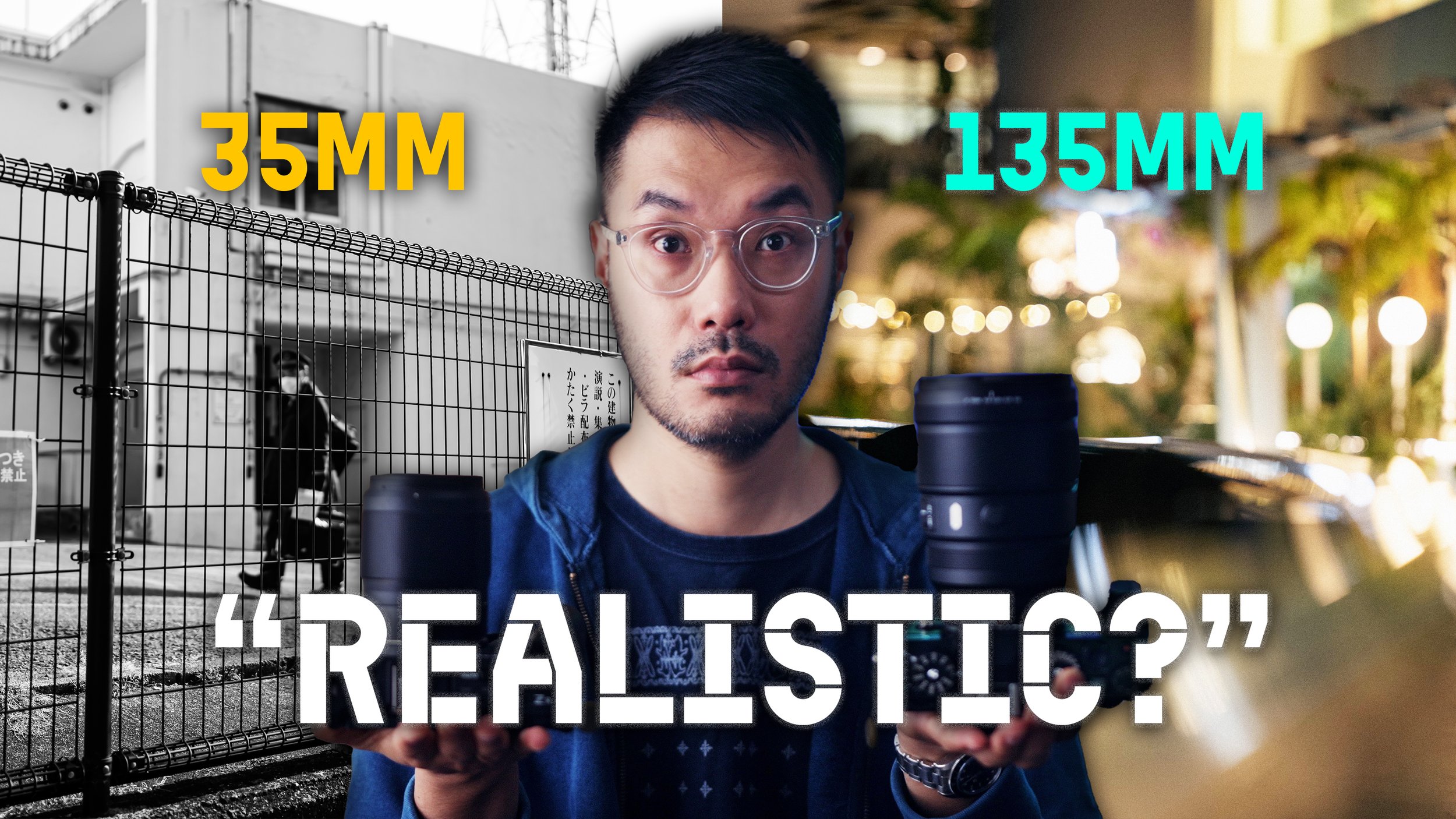
35 mm lenses are made for documenting. What if I want to escape reality?
135 mm can easily blur out everything around me, but you don't need a lens this tight for abstract photography. All of your photos inspired me with 6 techniques for 35 mm, each of which creates a bit of mystery.
Does 135mm add too much curiosity?
Do abstract photos lose their meaning?
This is another episode of our Lens Lab series: how to get more travel photos you're happy with, one lens at a time. Today we're considering two.
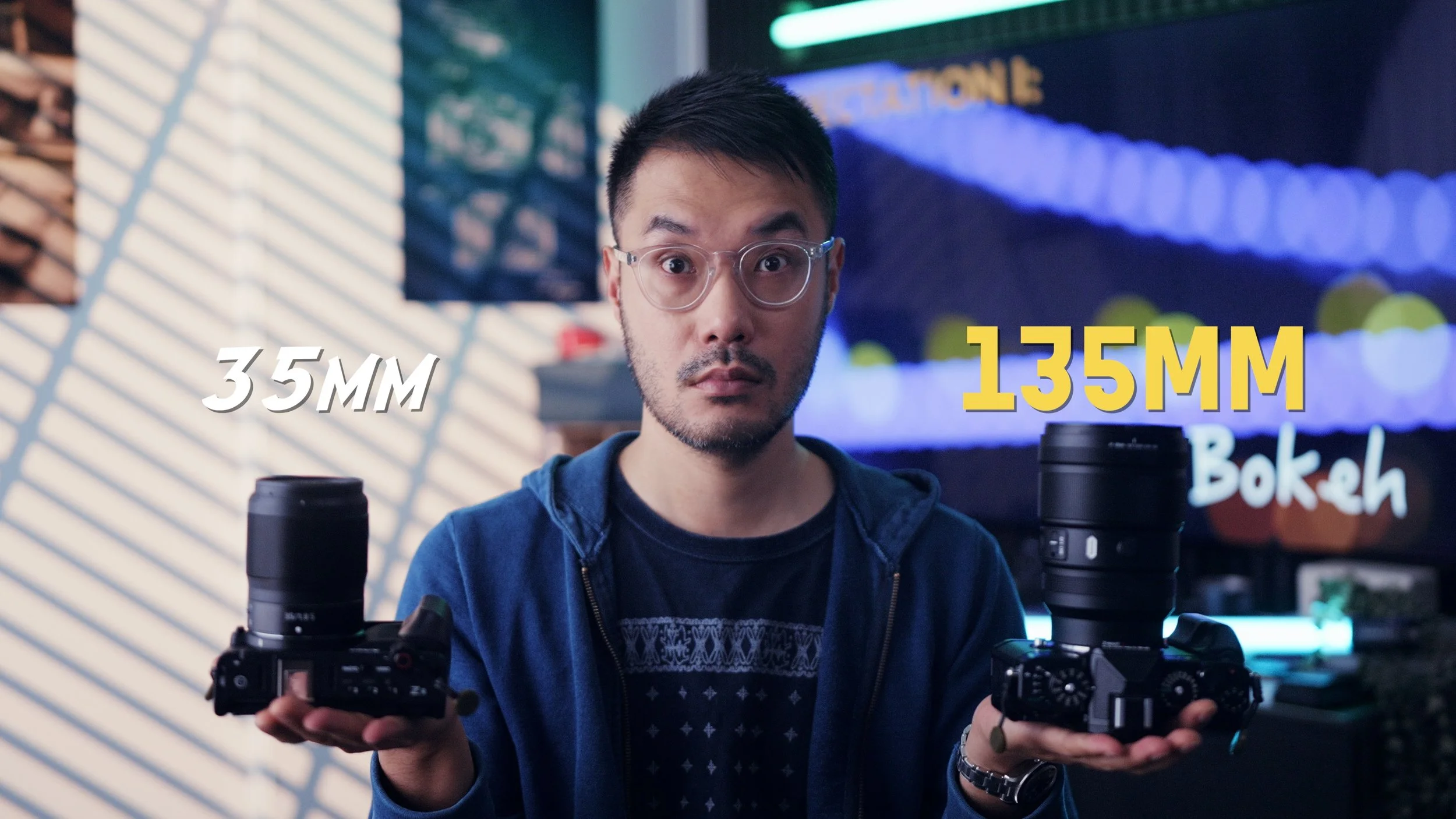
35 mm is the classic documentary lens for realistic rendering, whereas telephoto lenses like this 7Artisans 135mm F1.8, can make everything look abstract and dreamy. I owned the Nikon Plena very briefly. Can this much cheaper 135mm even compete or have I over romanticized my memories?
It's hard to romanticize 35mm.
It covers more area than you think, but less than you'd like.
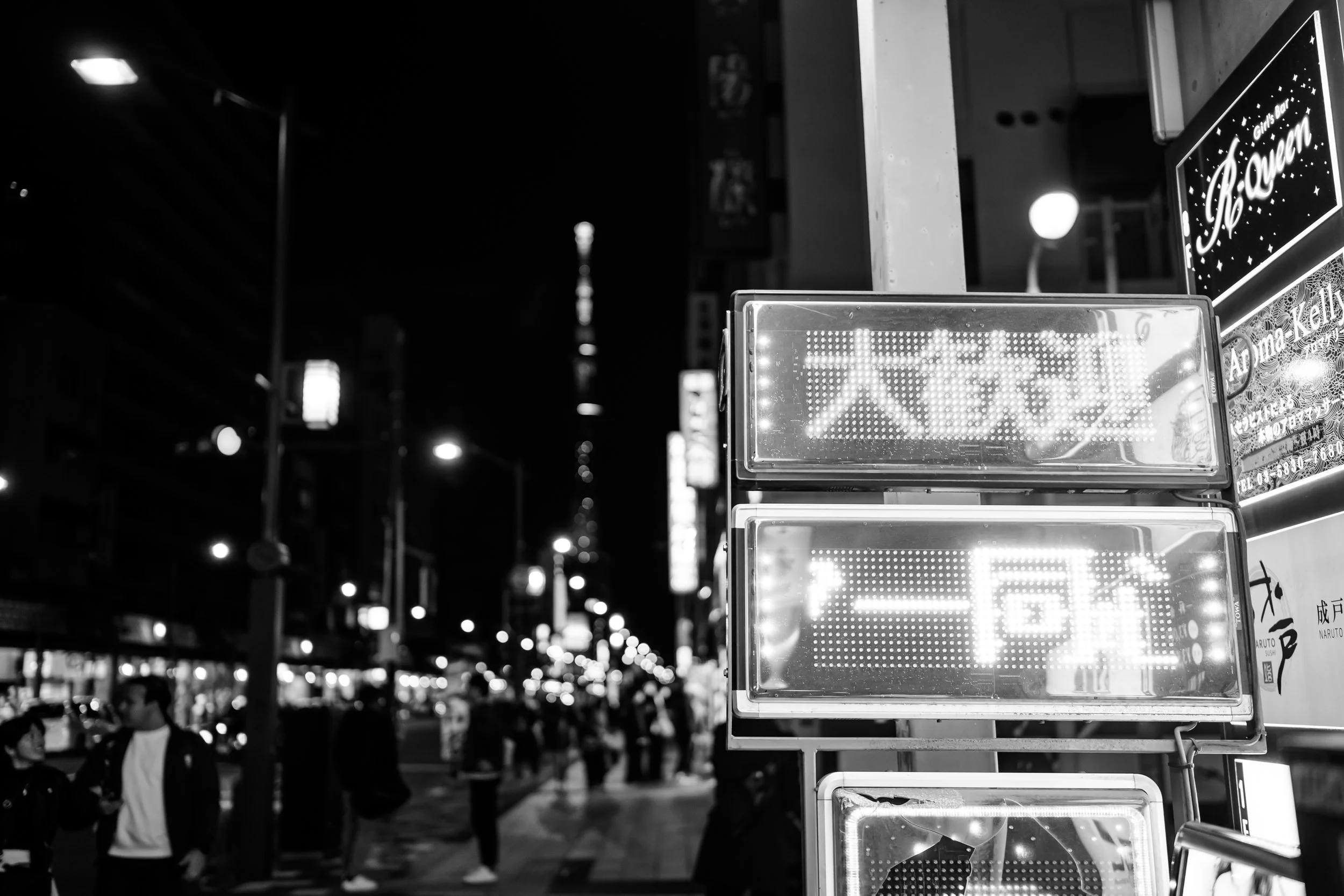
A neutral perspective with equal emphasis on faces and spaces. What I've learnt is 35 mm works best through addition by subtraction, leaning more towards either faces or spaces, to create some mystery for the other.
This brings me to the first abstraction technique:
1. Blur.
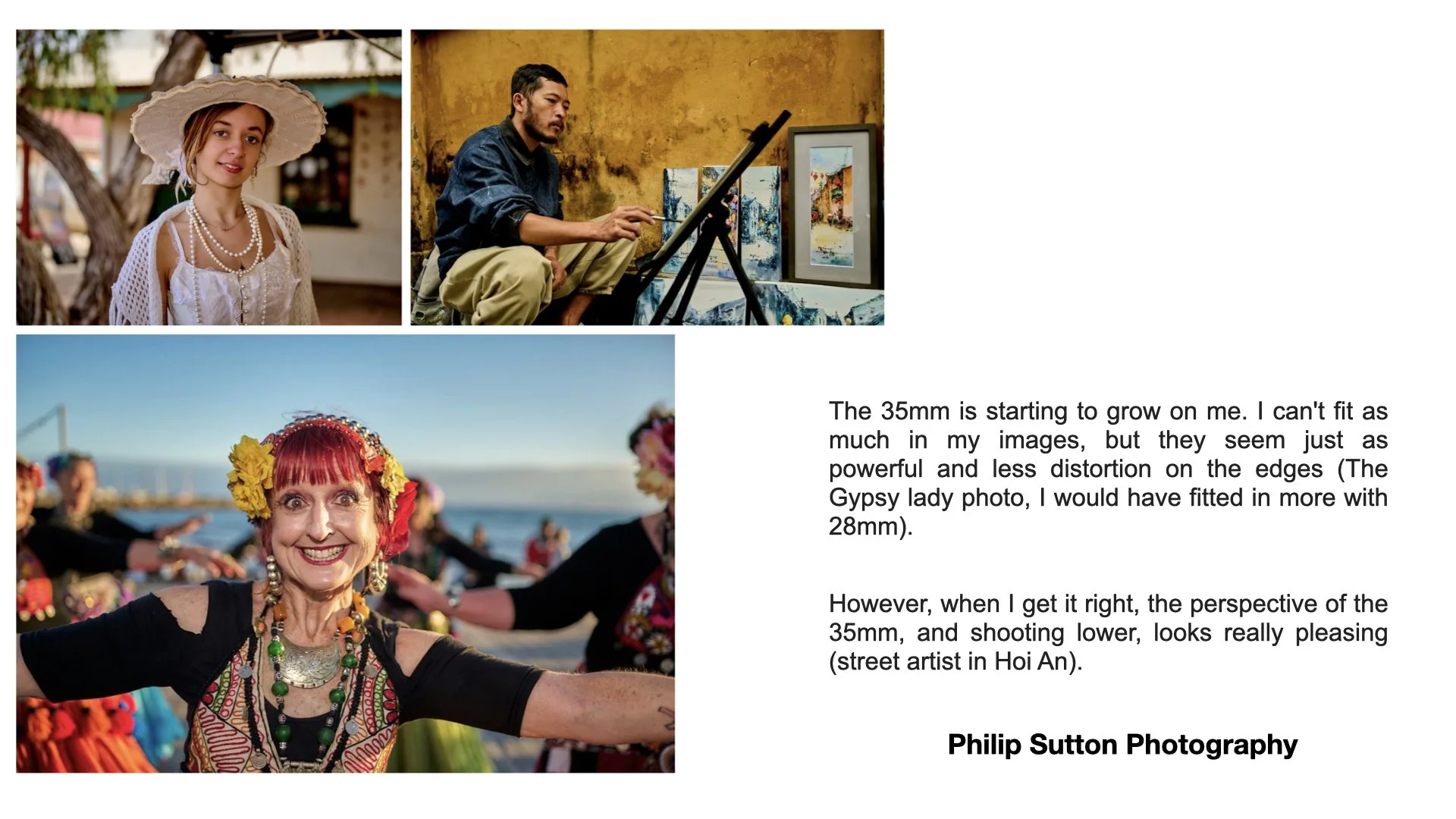
These first set of 35 mm photos come courtesy of Philip Sutton. Being a 28mm shooter, Philip says 35mm feels tight but at different angles there's less distortion. Perhaps more powerful like in these environmental street portraits. Unlike 28 mm, on 35mm you can get some separation, even on F1.8.
Leaning more towards faces without losing the spaces, which poses an extra question to viewer. Can you figure out where this is happening?
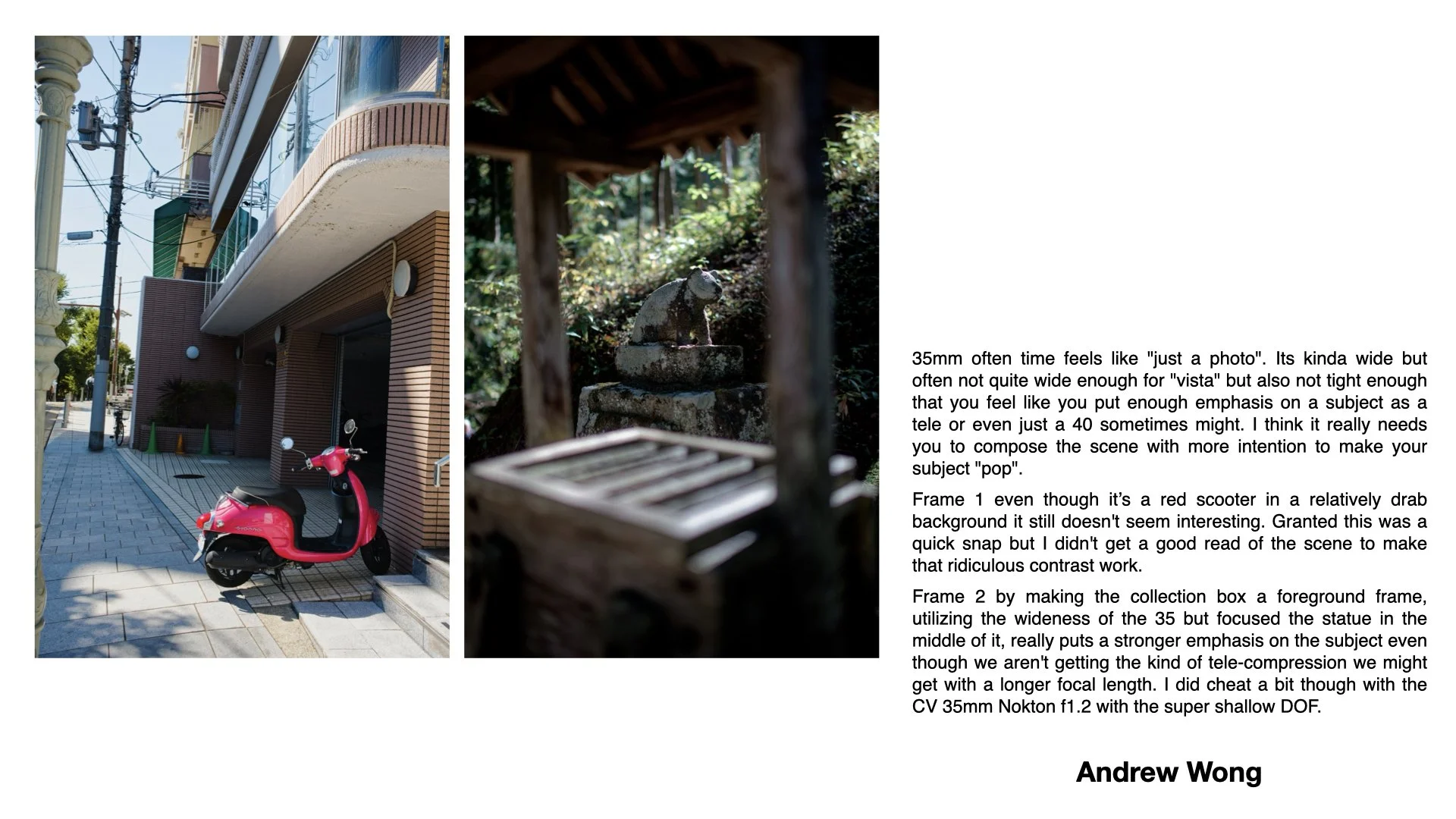
In these 2 photos, Andrew Wong told me something that really resonates. 35mm often feels like just a photo. You can't get a good frame unless you compose with intention. On the frame on the right, with an ultra fast 35mm (Voigtlander 35mm f1.2), there's both foreground and background separation for depth, and a little more abstraction around this subject.
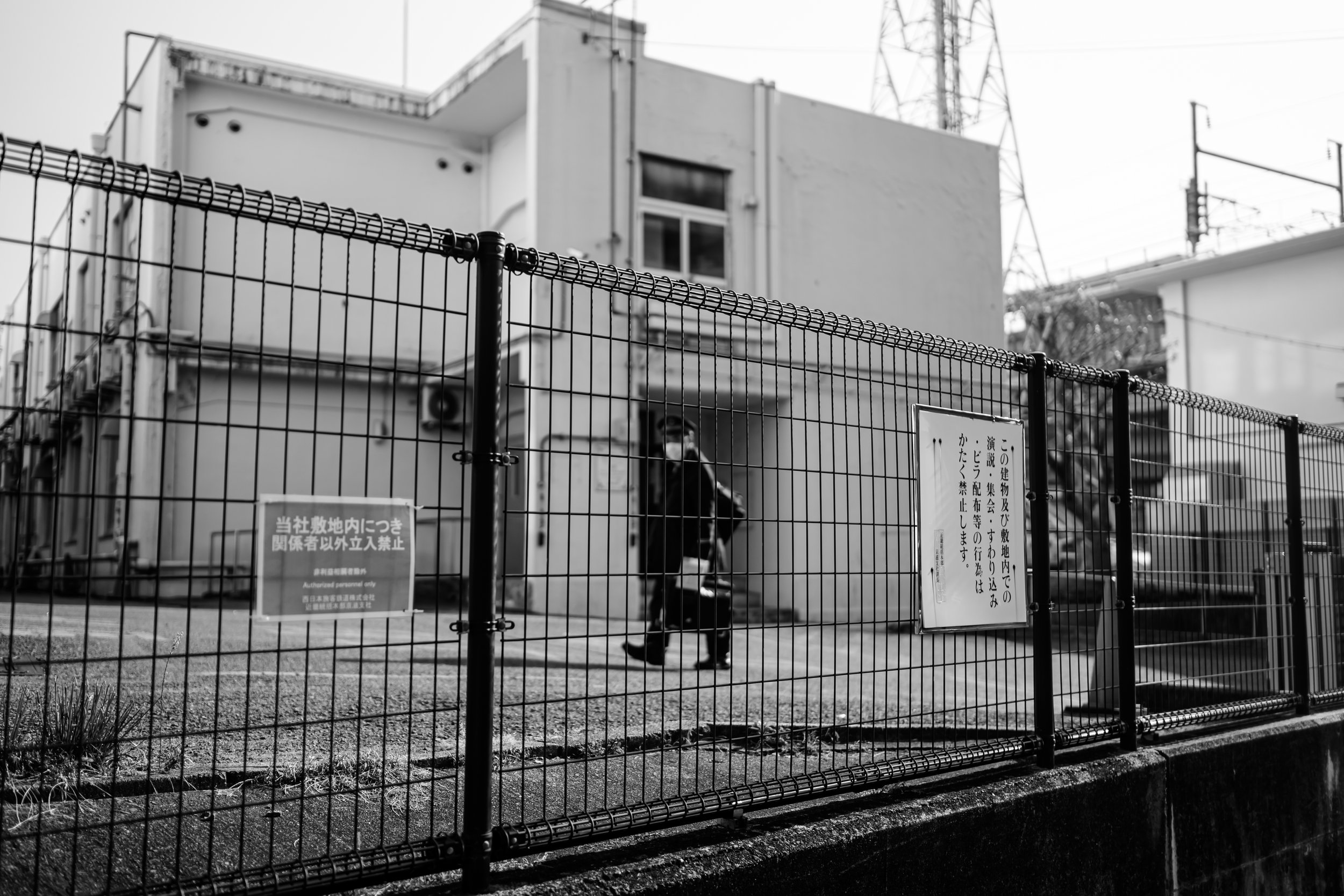
The best part about 35 mm to me is that you can still recognize what's been blurred out. I personally like to use blur to lean more into spaces than faces, concealing people's identity without compromising the story. You can still clearly make out this is a policeman, even though they're blurred out behind this fence. They're walking to work in this police building.
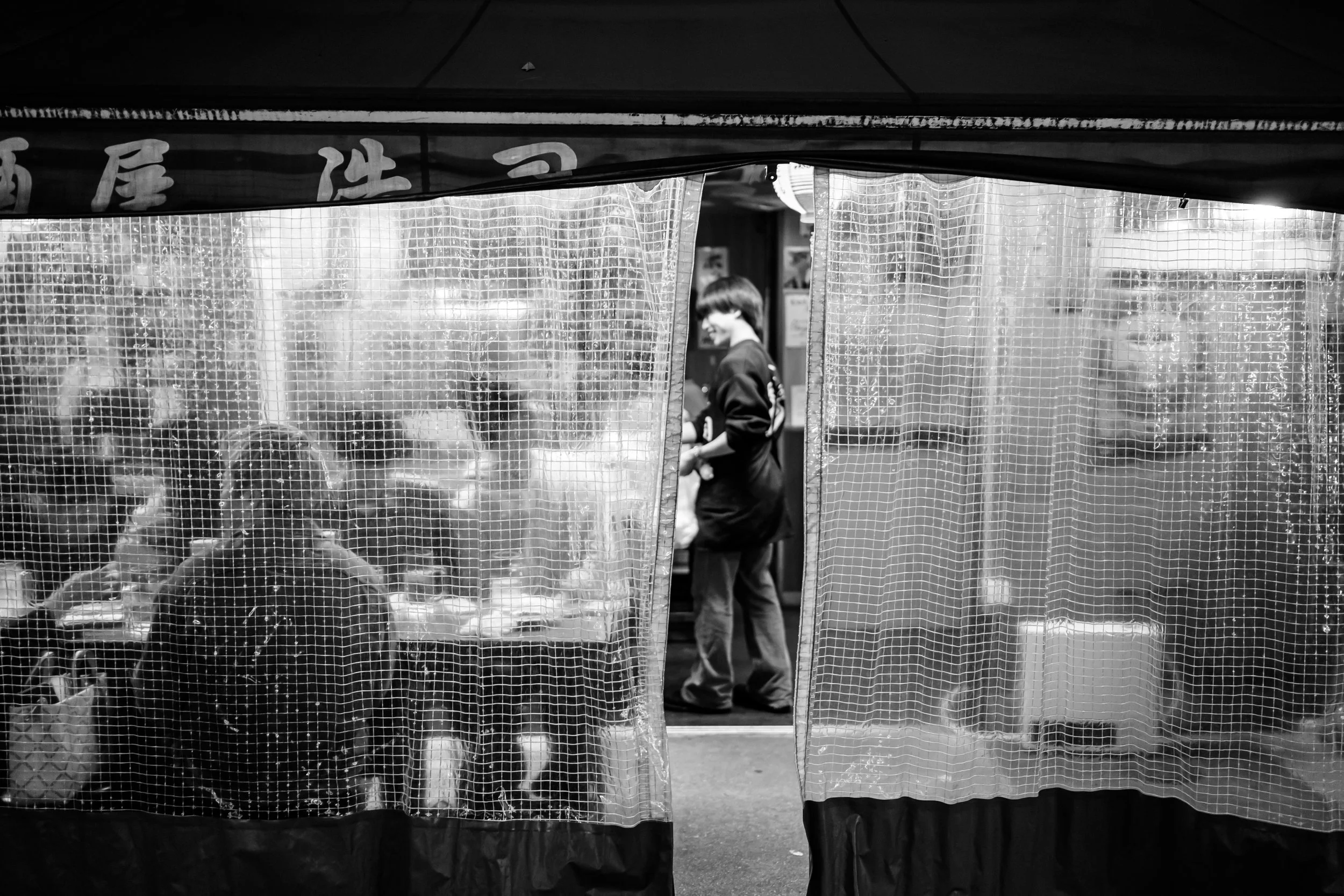
This restaurant worker’s smile, against all odds serving drunk customers late into the night. You can still tell it's a restaurant scene based on the framing. The space, does the heavy lifting visually, but the slightly blurred out subjects on a 35mm can still tell the story of where you're visiting just with a bit of mystery.
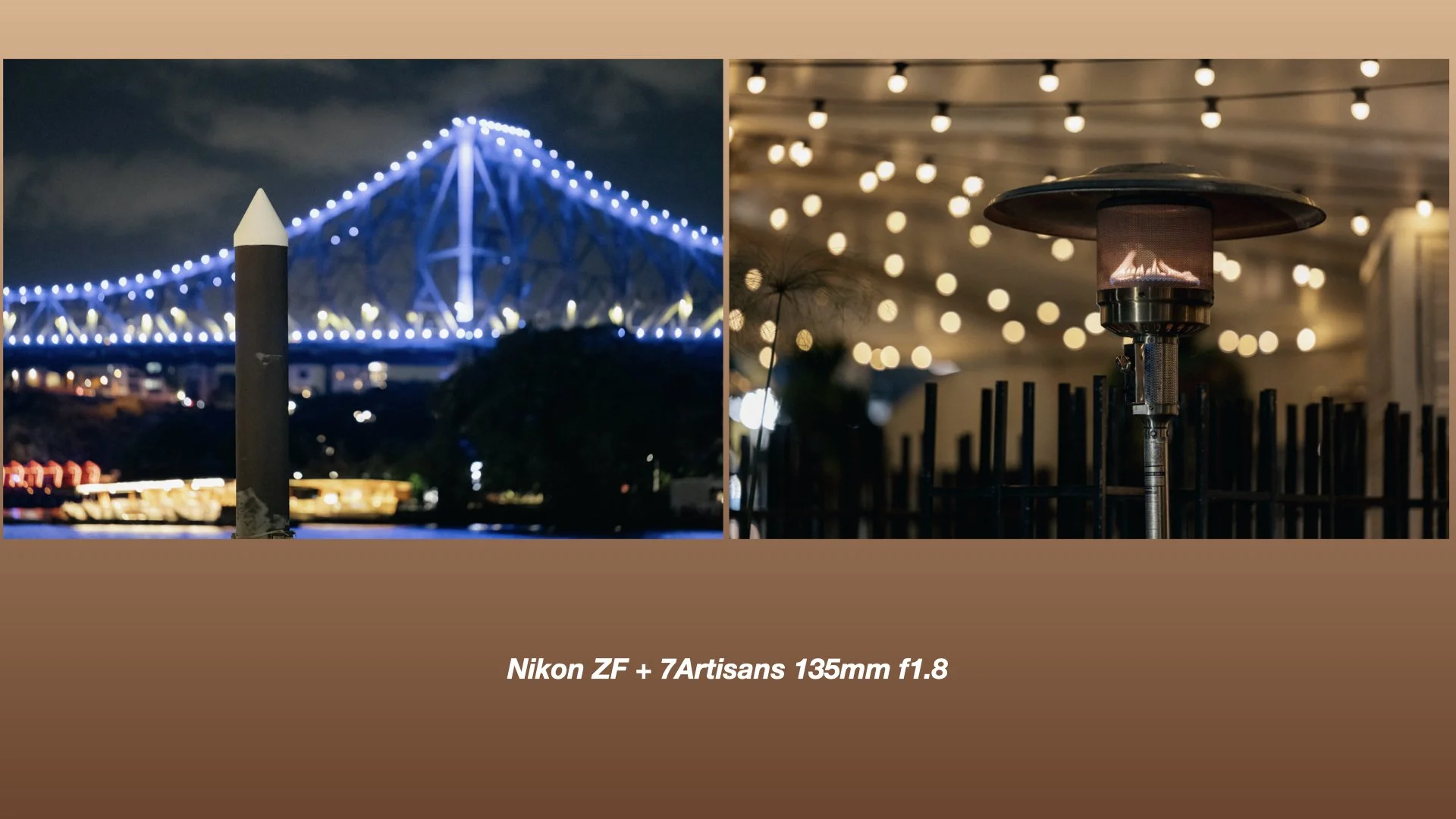
The most extreme version of this may be 135mm. Compared to a 50mm or an 85mm, 135 mm is the tightest prime I've ever considered for travel and street. Any tighter, you should just go for a Zoom? 70 to 200mm, at least you can zoom back if you need.
At 135mm, especially at F1.8, everything is blurry without even trying. Firmly tilted and biased towards faces and portraits, it's hard to create a sense of space unless it's a specific landmark in the distance.
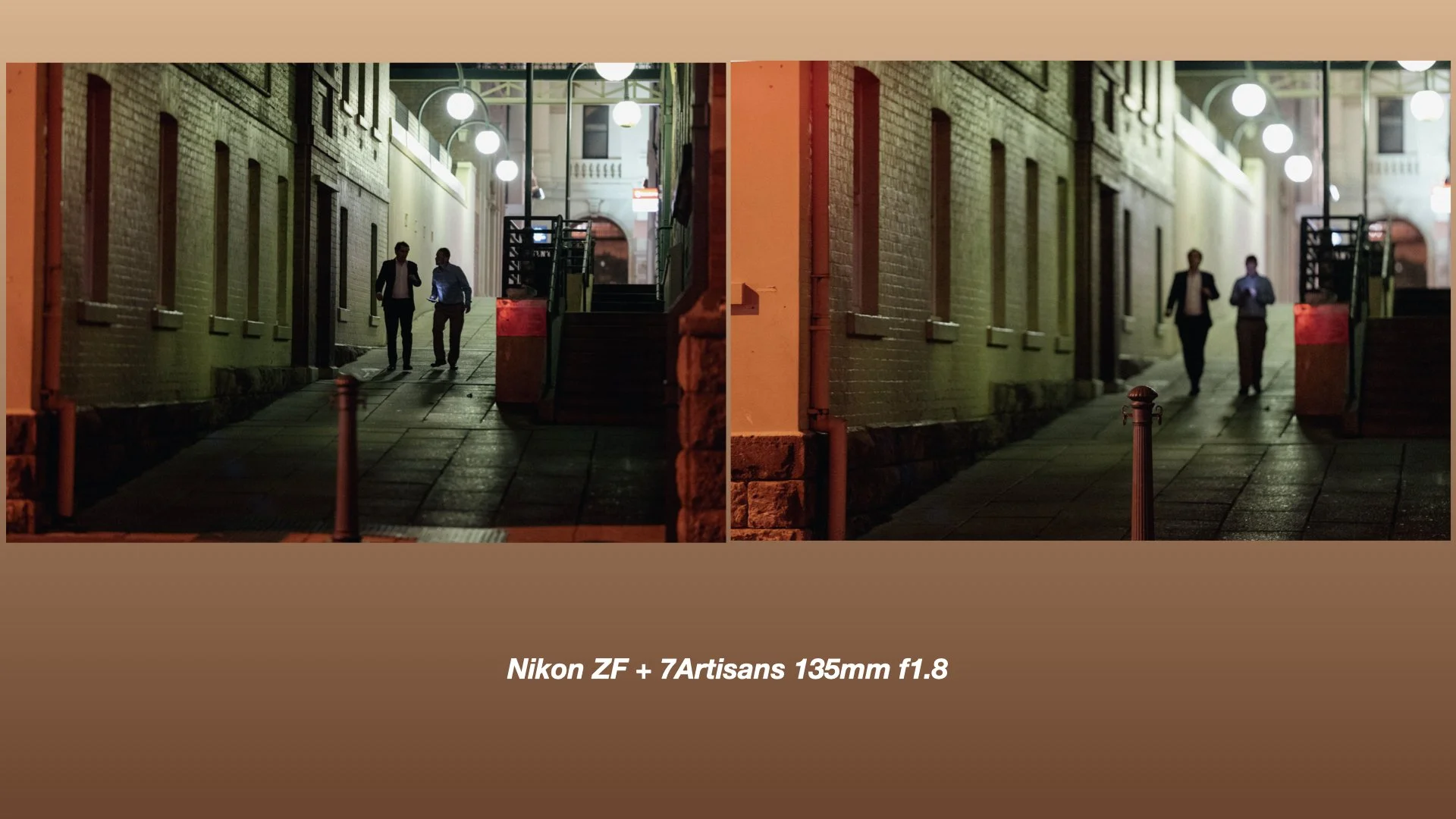
I chose to focus on things across the street to get anything usable on 135mm. When focusing on this bollard, you can see these two gentlemen. They are blurred out, silhouetted, but you can still make out what and who they are.
It's too easy to abstract a visual element on a 135mm. There's very few context clues that help you tell the story of the moment.
But to be fair, I'm out of practice.
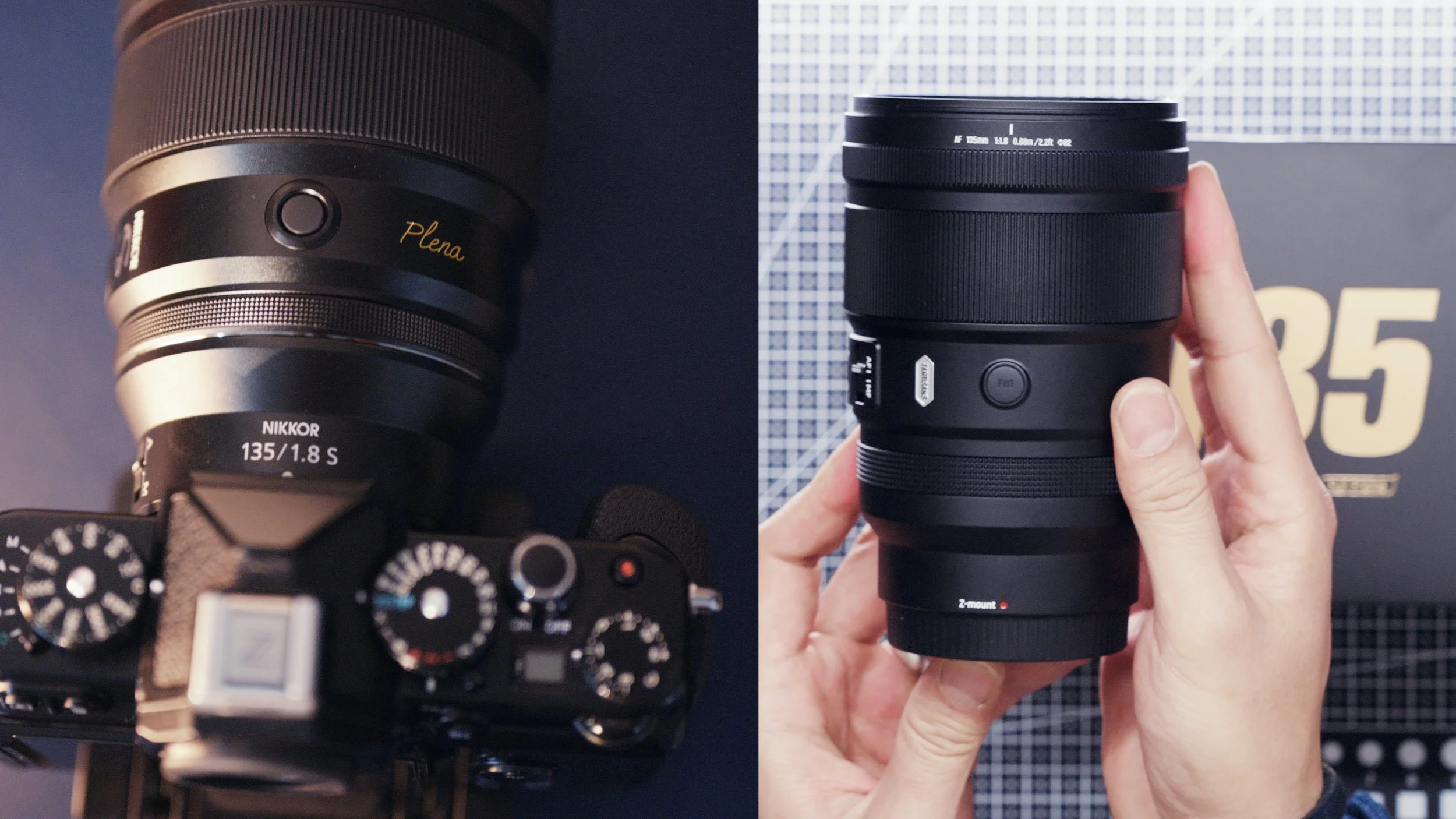
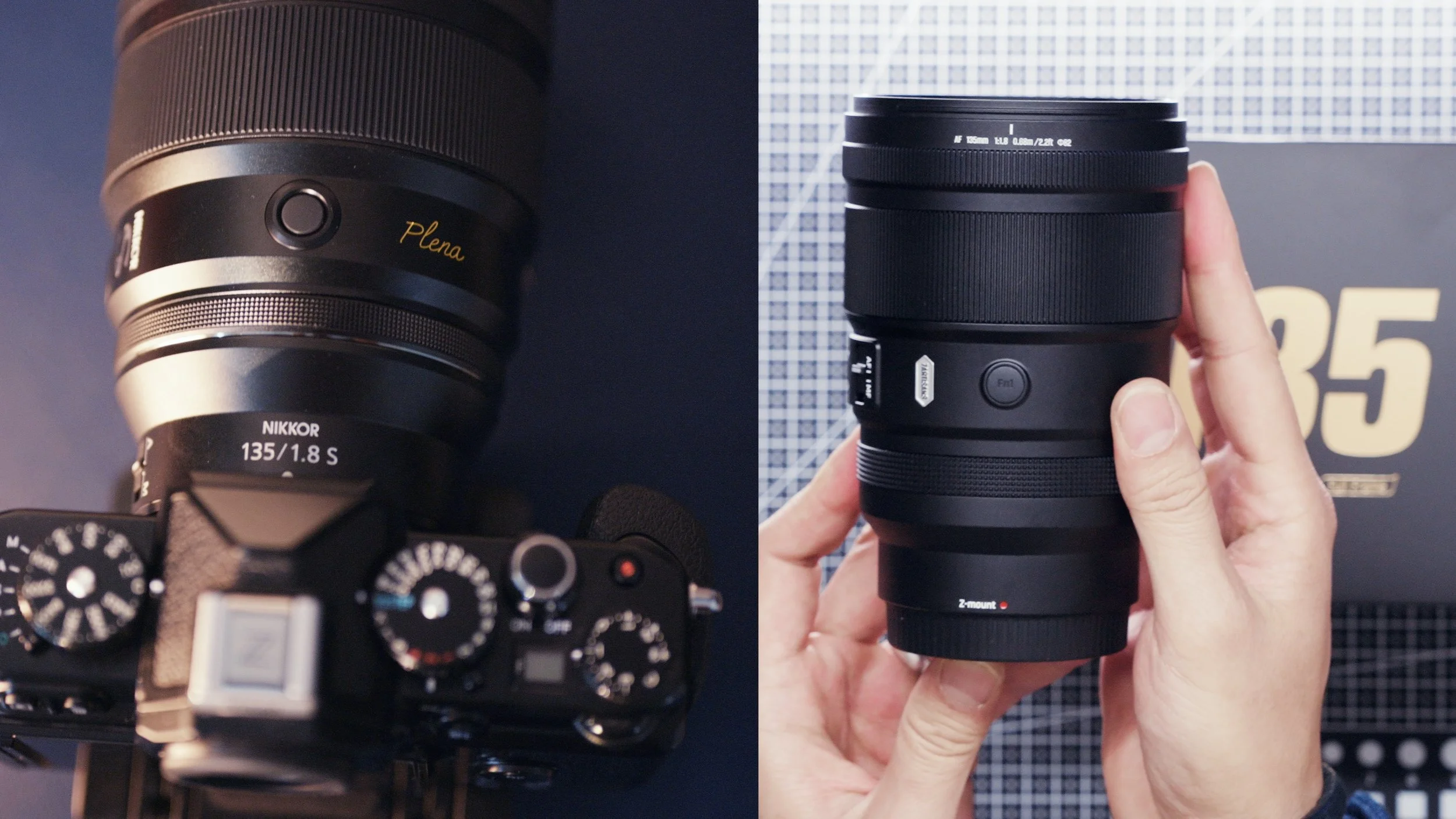
It's been a year since I last used 135mm when I still had my Plena. Its handling feels almost identical to this 7Artisans. I only owned the Plena for a couple of months before being forced to sell it to fund my flooding repairs. But this 7Artisans has the same all metal construction, the same dimensions with the same 82mm front filter thread. It's all deja vu, and a fraction of the price, what's the catch?
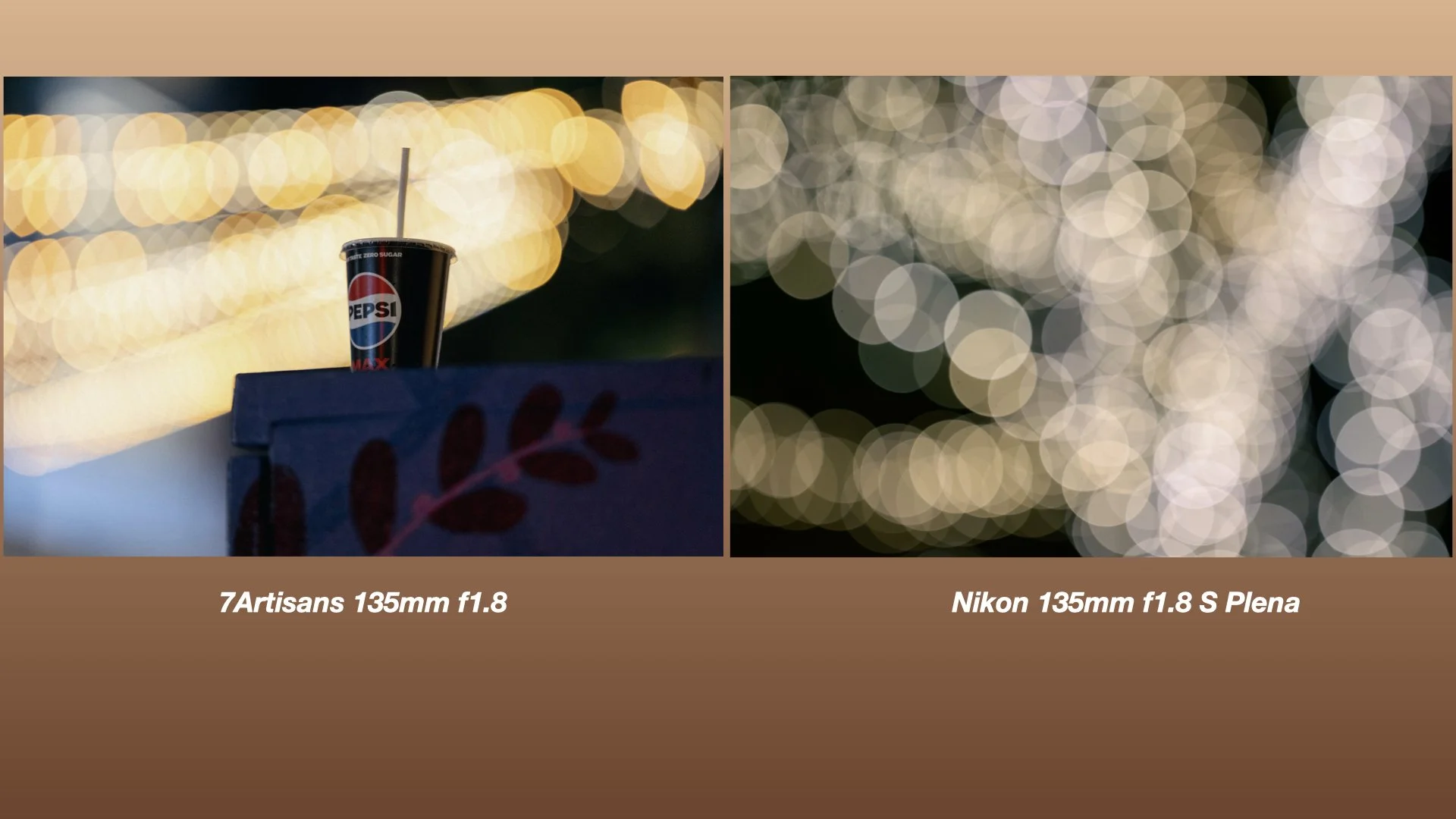
It's sharp, extremely sharp. The Plena’s namesake however, round bokeh all the way out to the edges, is missing here. You can see catseye bokeh clearly around the edges, whereas the plena is circular to the corners of the frame.
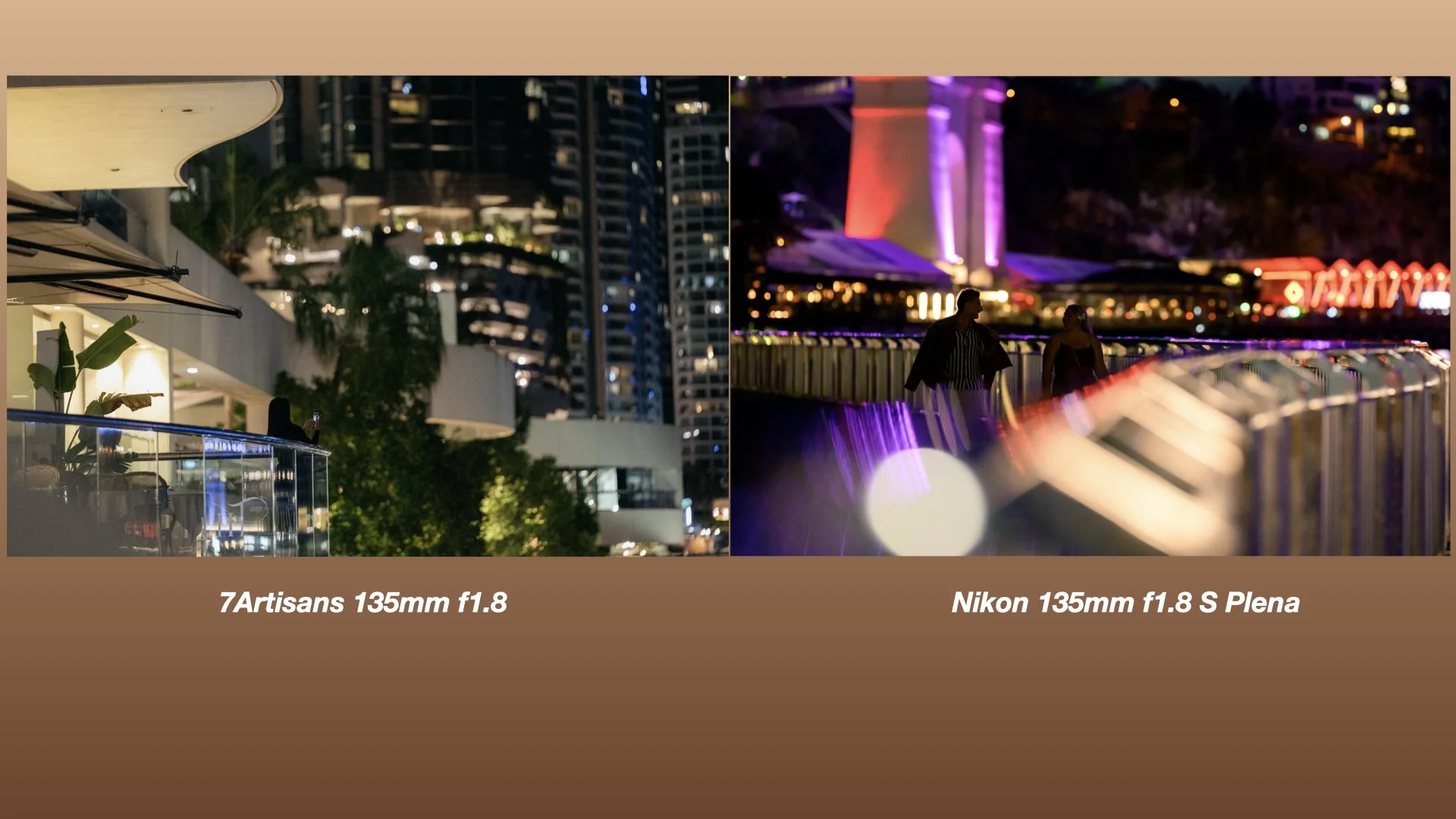
There's also a bit less contrast than on the Plena. But the 7Artisans can do one thing the Plena can't.
With either lens though, there's a risk. The line between completely abstract, unrecognizable elements and completely recognizable, too easily identifiable faces, is razor thin on 135mm.
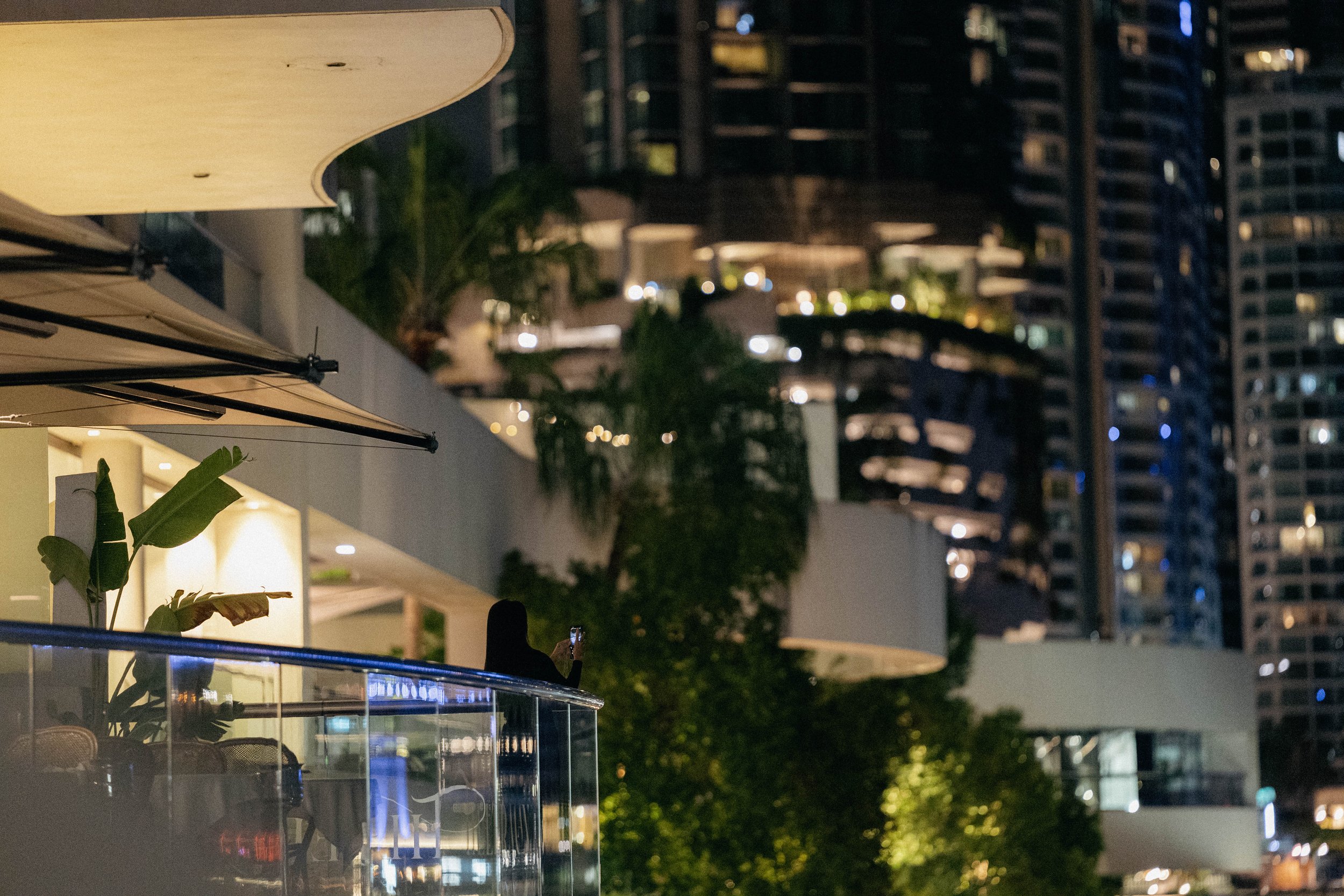
7Artisans 135mm 1.8
I'm not a photo journalist. I don't have media credentials. I don't want or need this many close ups of strangers. With the way all privacy laws across the world are moving, I need to find a way to keep this hobby going.
Abstraction technique 2, leans all the way into:
2. Spaces
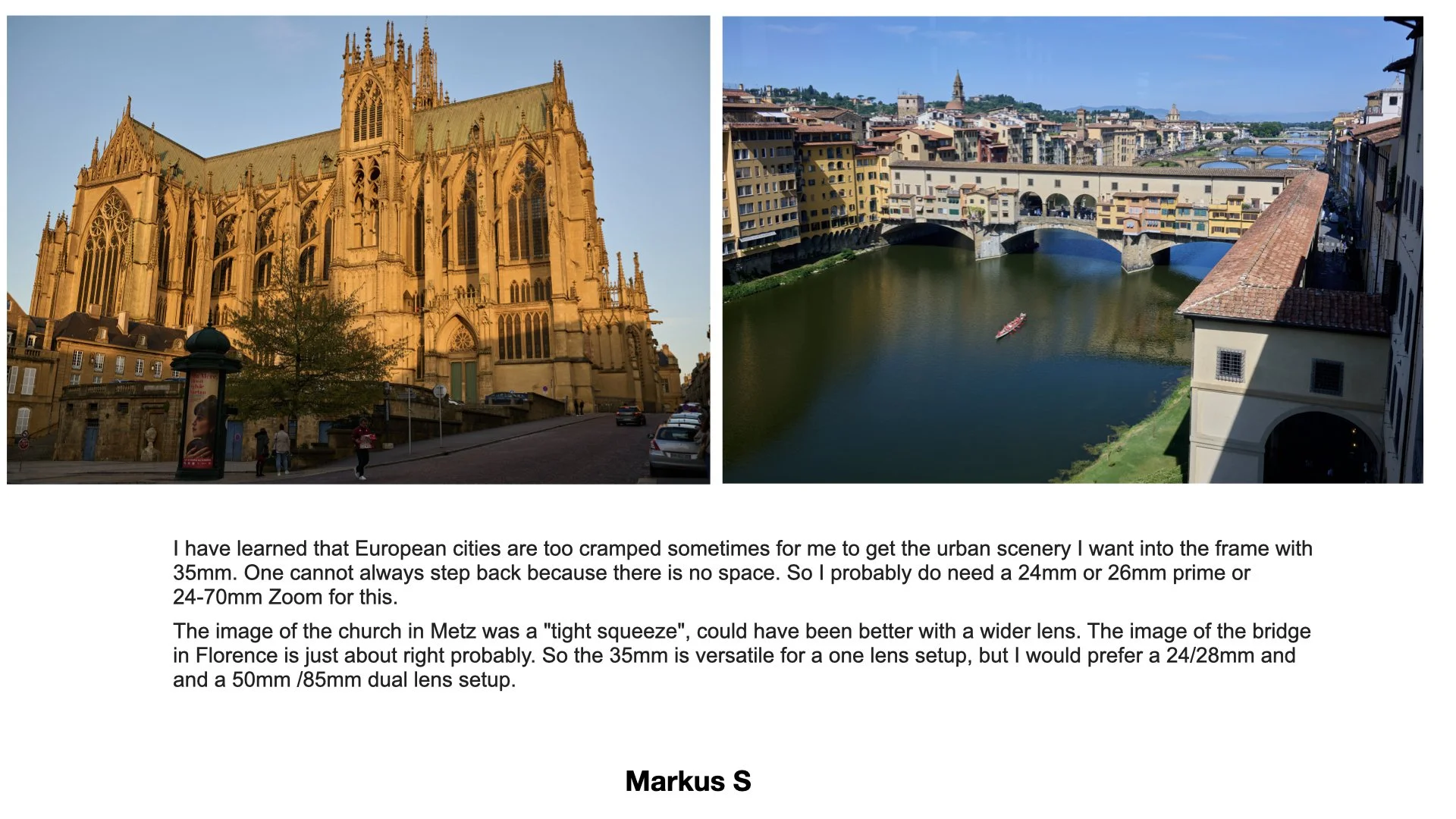
No people whatsoever in frame, just the location. This is very common for travel, but again, 35mm forces you to leave things out. Marcus S says as much in these two frames from Europe. It's a tight squeeze on these beautiful architecture shots. Marcus says he would have preferred either a 24 or a 26mm to get more of the surroundings. 35 mm is a nice one lens compromise. A 35 mm isn't meant to capture the whole vista because you can't go wider. There's always the option of going tighter, moving closer to the church to focus on just one part of his architecture.
That's the approach taken by G 240 photography:
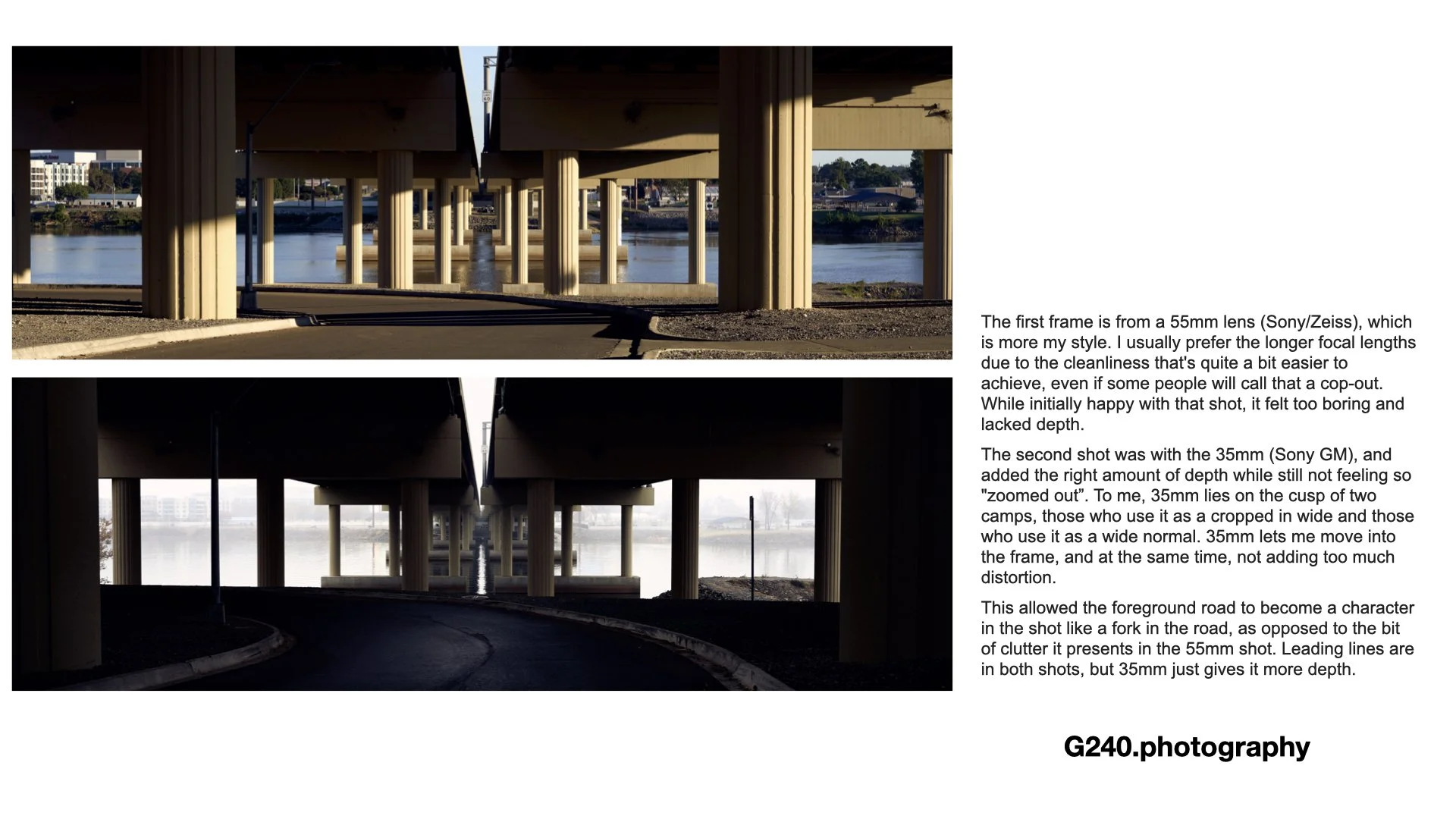
The top frame was taken on a 55mm. They focused on the geometry underneath the bridge, rather than the whole bridge overhead. In the bottom frame, this was taken using 35mm in comparison. Even though it's the same crop, you can see this leading road in the foreground, there was more room for it on 35mm. Both frames work because I think G240 knew what to leave out intentionally from the space in his framing.
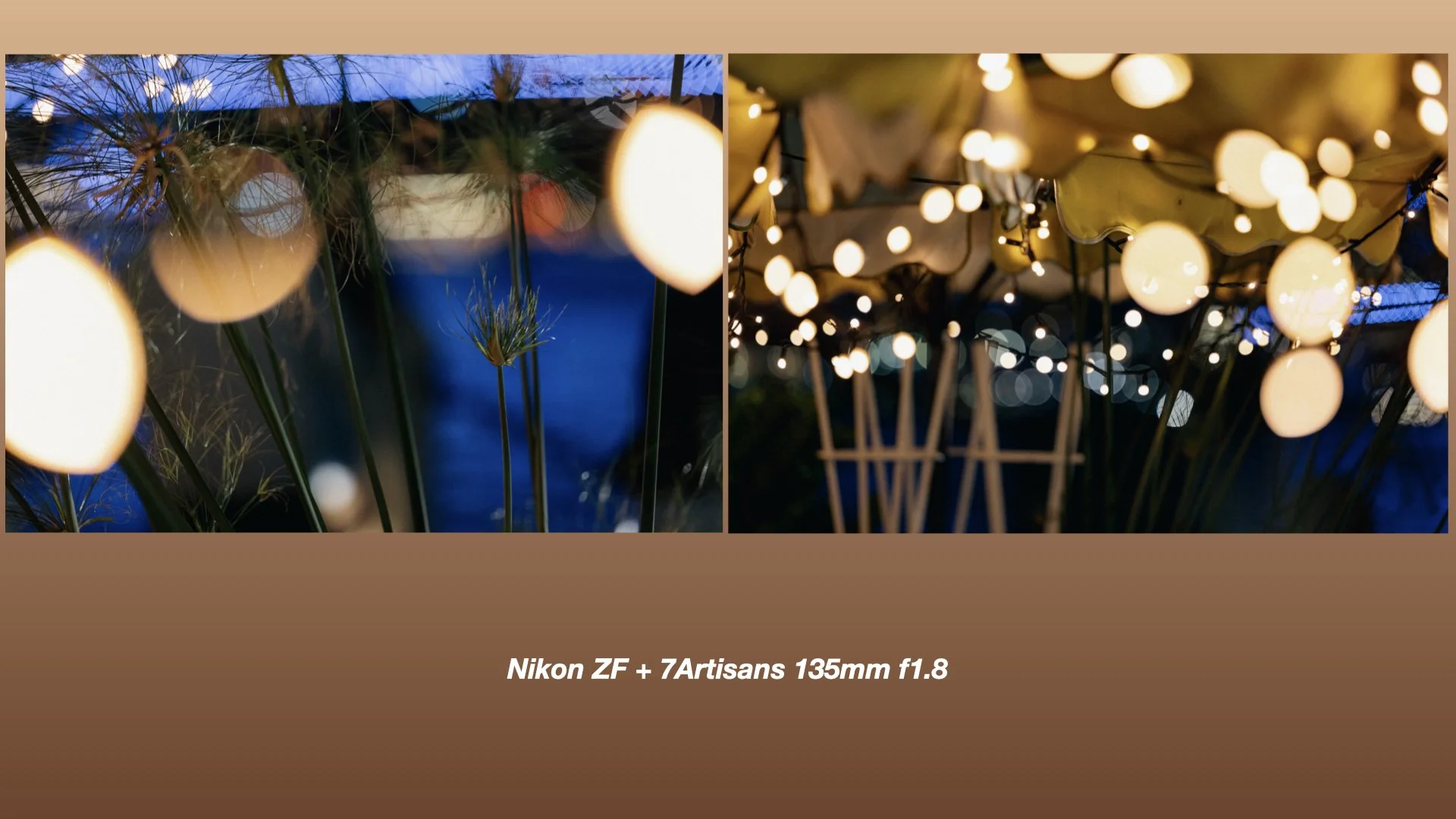
That's the same approach you need to have on 135mm. Forced to leave out almost everything except a landmark in the distance. But another approach to this is to hone in on something within an arm's length away.
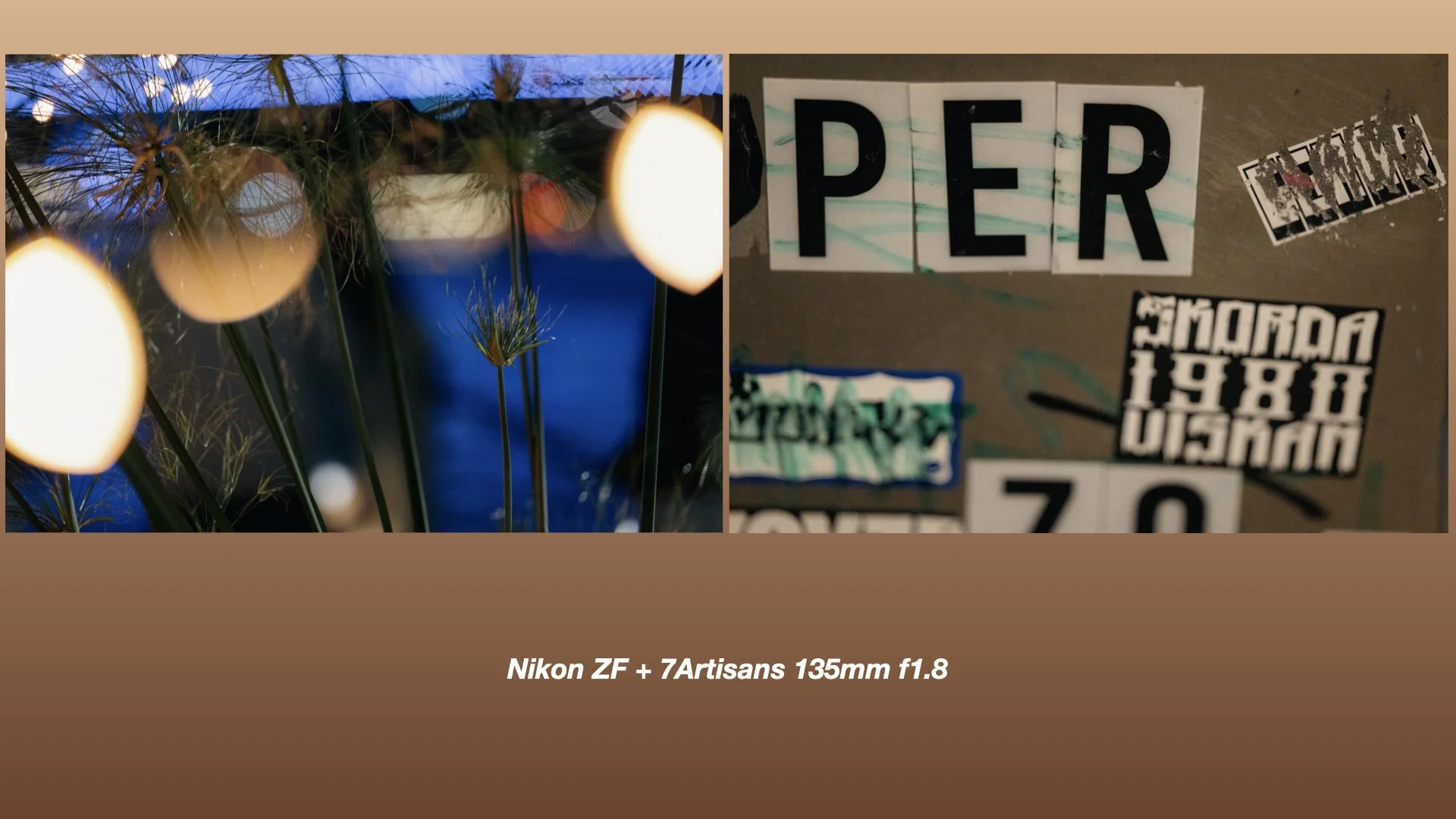
A 135mm can close that visual distance dramatically, and everyday objects will take on a different look. For this use case, 7Artisans beats the Plena. A closer minimum focusing distance, 0.68 meters, almost 15 centimeters closer than the Plena. a raindrop here, speckled ferry lights here, wide open, it still retains the detail.
There's no CA or purple fringing I can see, on the 7Artisans, it’s very well-controlled. Its autofocus up close struggled a little bit until I updated the lens to the latest firmware (via the USB-C port at the back).
The next abstraction technique is the one that changed how I compose with 35mm the most:
3.Obscure
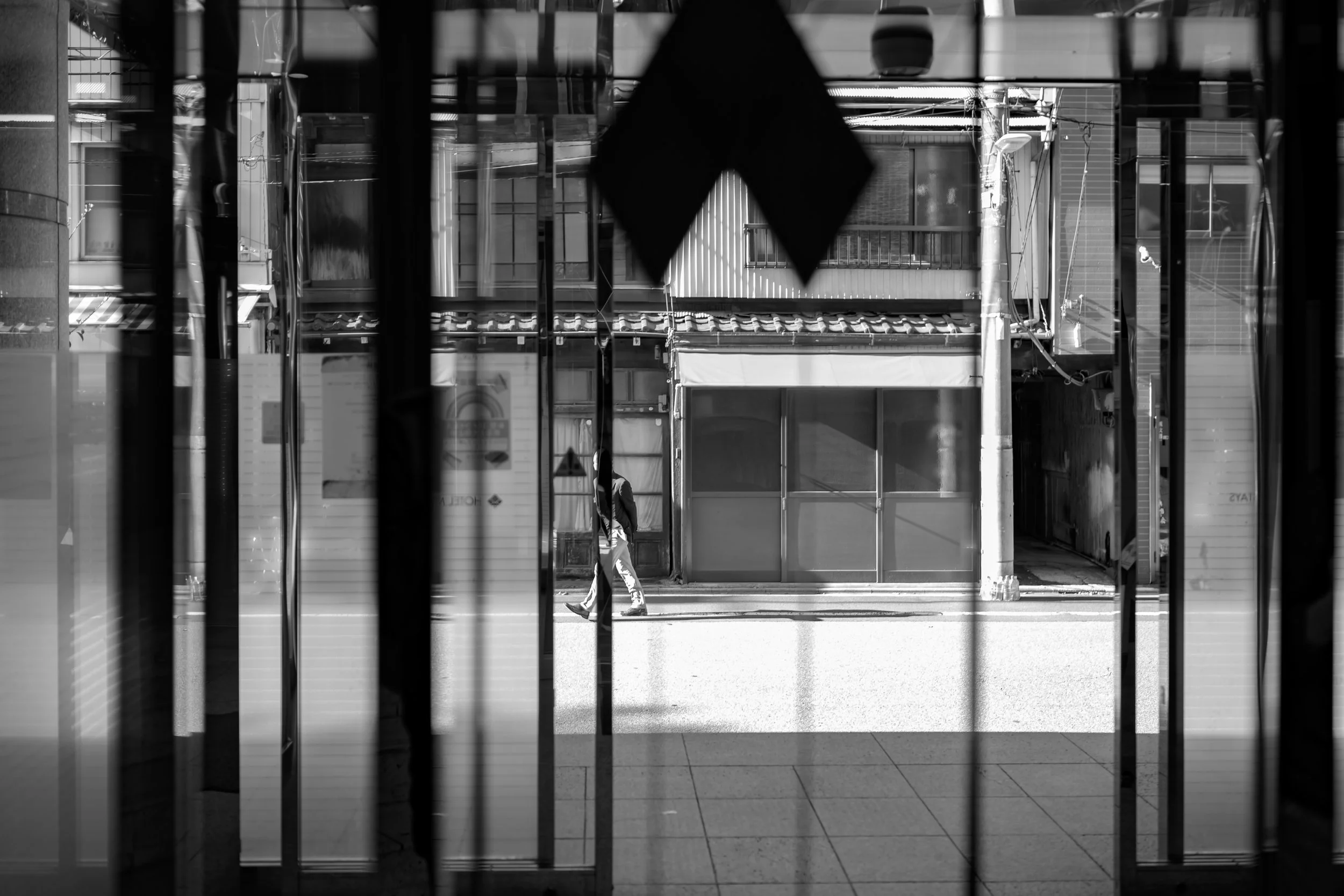
Layering in and around the subject, obscuring their face with a corner of a door, leading lines in and around the corners, shadows, and reflections.
Subjects anchor these frames, they're still the focal point, but obscuring their identity through addition by subtraction.
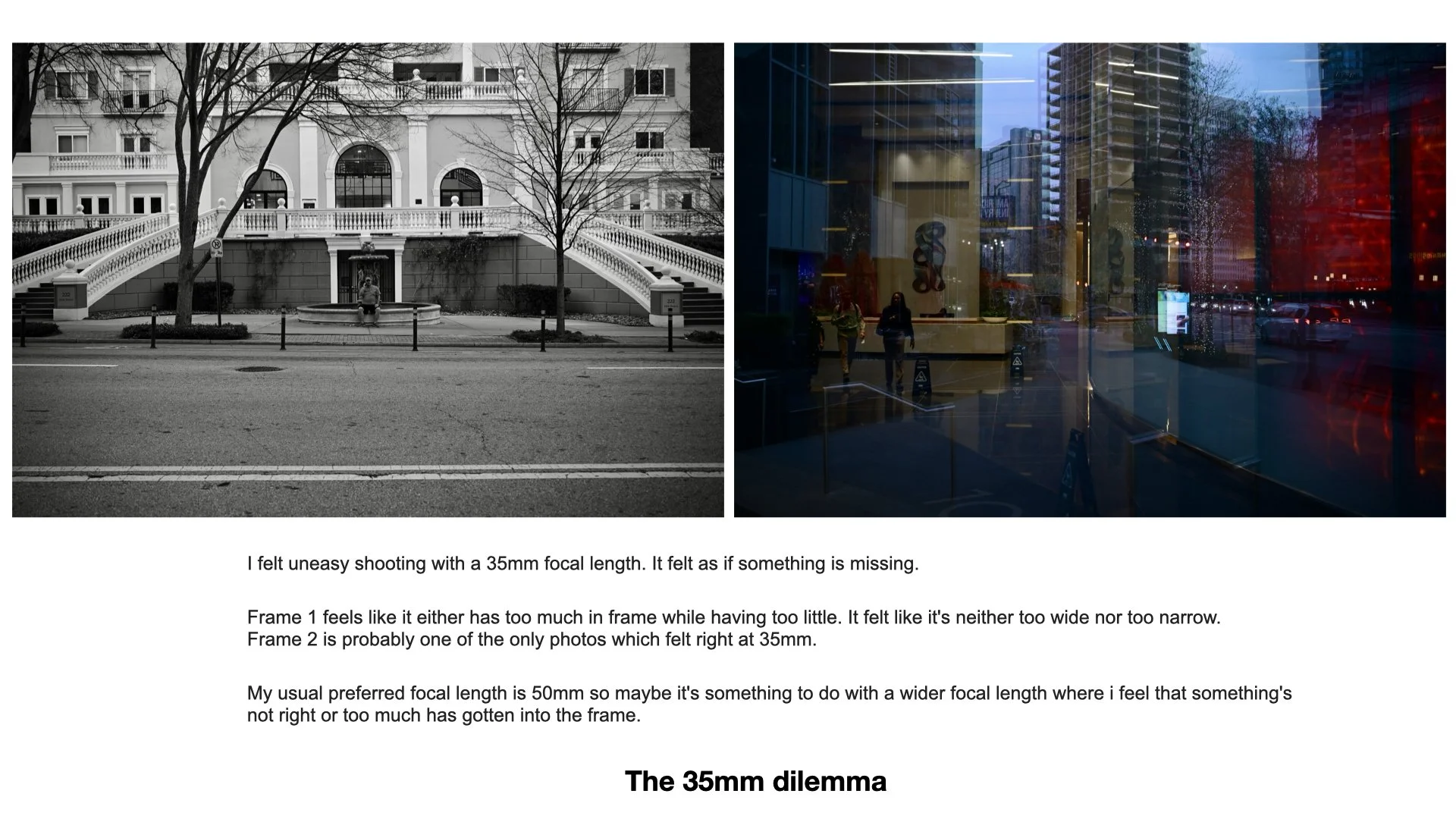
The 35 mm dilemma is a viewer who also feels uneasy with 35. It's either too much or too little. The frame of the left has some nice symmetry. It's minimal. There is a subject, I think, centrally composed, but they felt something was missing, where the frame on the right felt right. Perhaps made more interesting through reflections, and for reflections, the width of 35 captures enough of these diffractions to make it visually compelling.
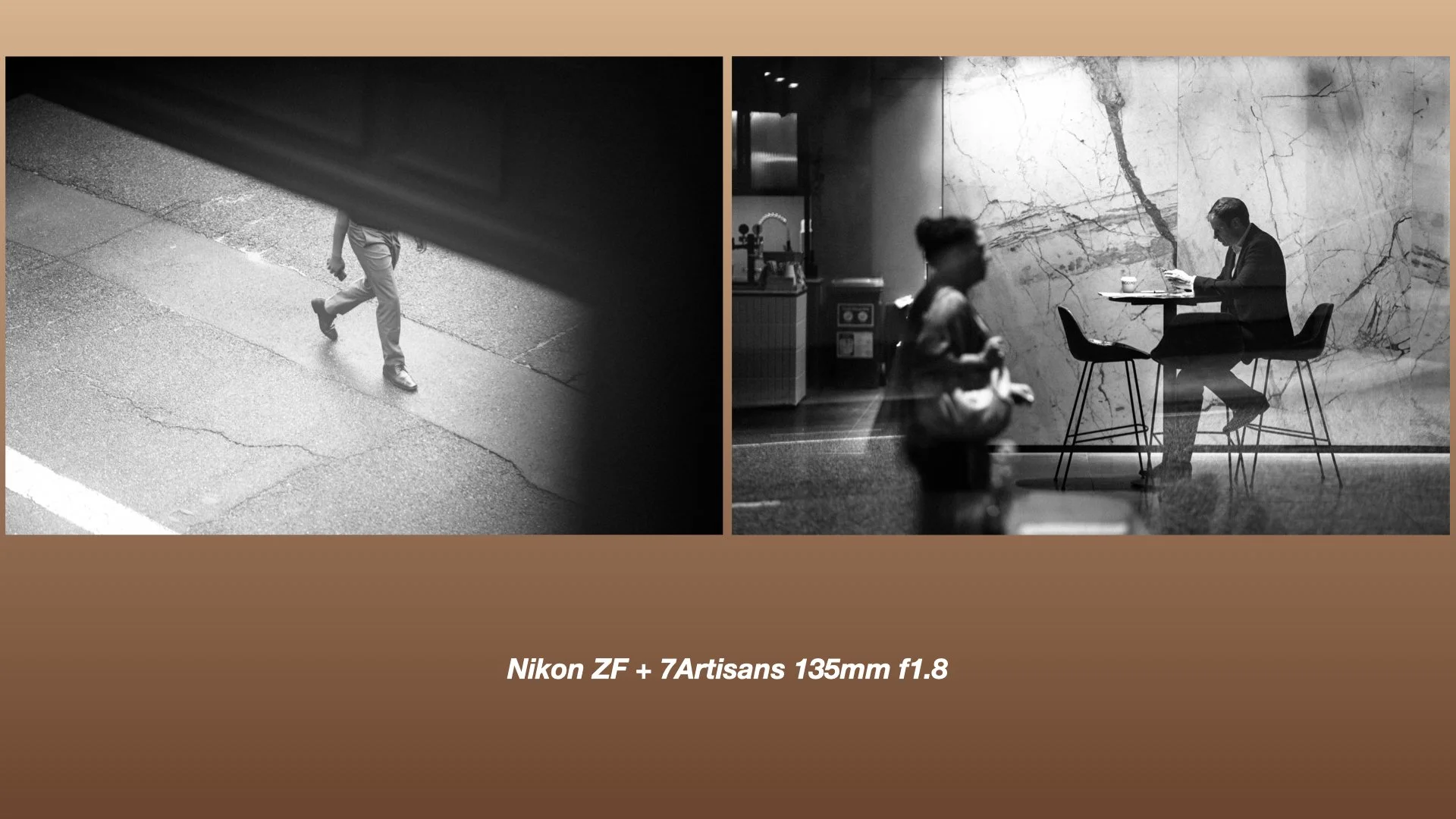
You can do this obscuring with 135mm, of course, but it's much harder. You're lucky enough to frame up a subject neatly, let alone obscure them on short notice. It's still too much of them in frame.
Thank you to everyone who's submitted their photos for this episode. I had a blast looking at all of them and reading your commentary. If you'd like to share your photos in the next LensLab episode on 50mm you can fill in the form at the bottom of this page.
The video for this episode is linked below:
4.Silhouettes
Other than literally blocking a subject's face with architecture or reflective surfaces, you can use silhouettes, which work best on backlit subjects, with a big light source behind them. You'll need to use either highlight weighted metering or matrix metering with an exposure compensation of -0.3, -0.7 for this to work in camera, like Goldfish did in both of these frames.
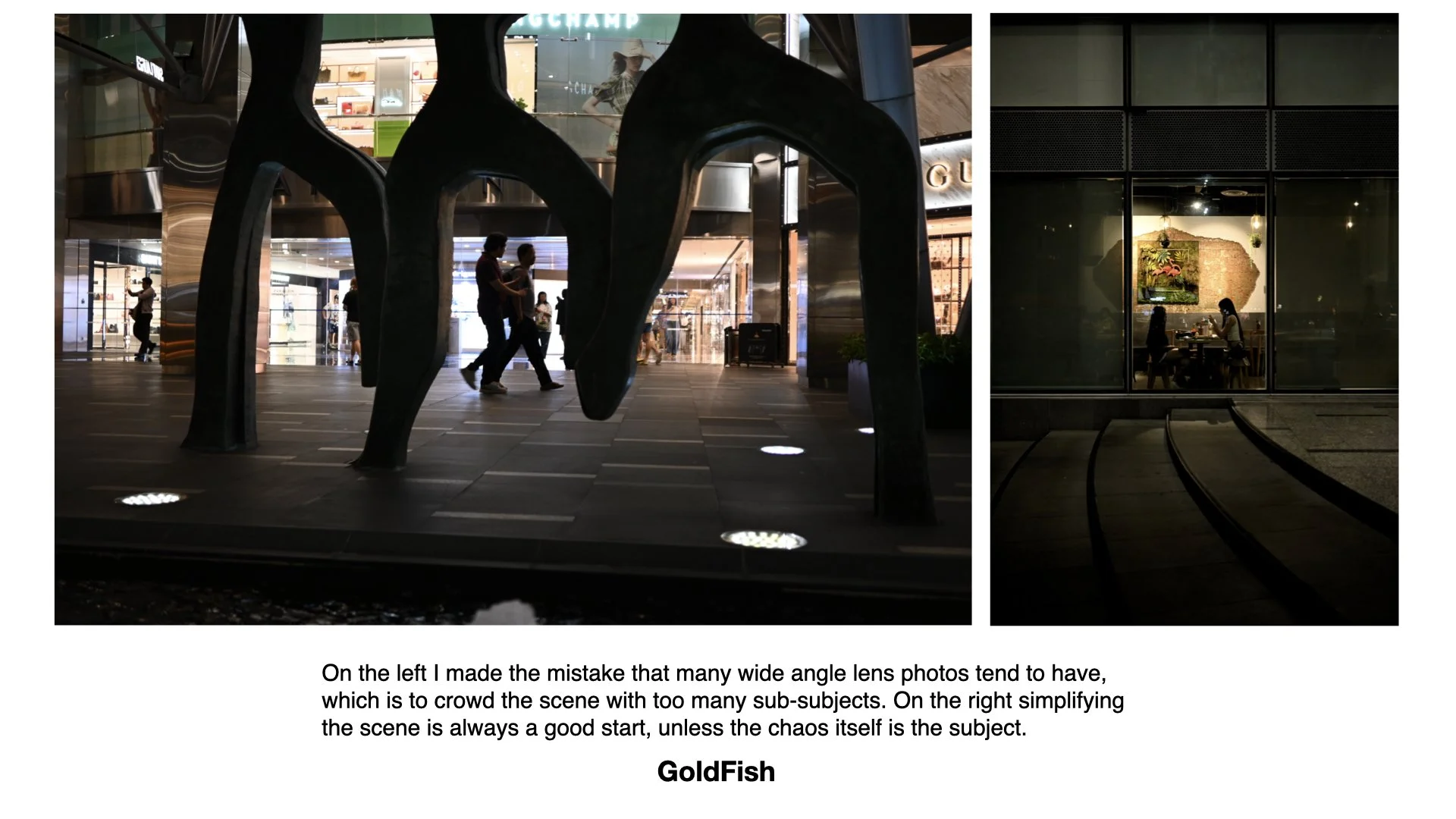
Goldfish likes the frame on the right better due to its simplicity. Goldfish feels the frame of the left is a bit too crowded, maybe a few more elements than they liked. Comes back again to addition via subtraction.
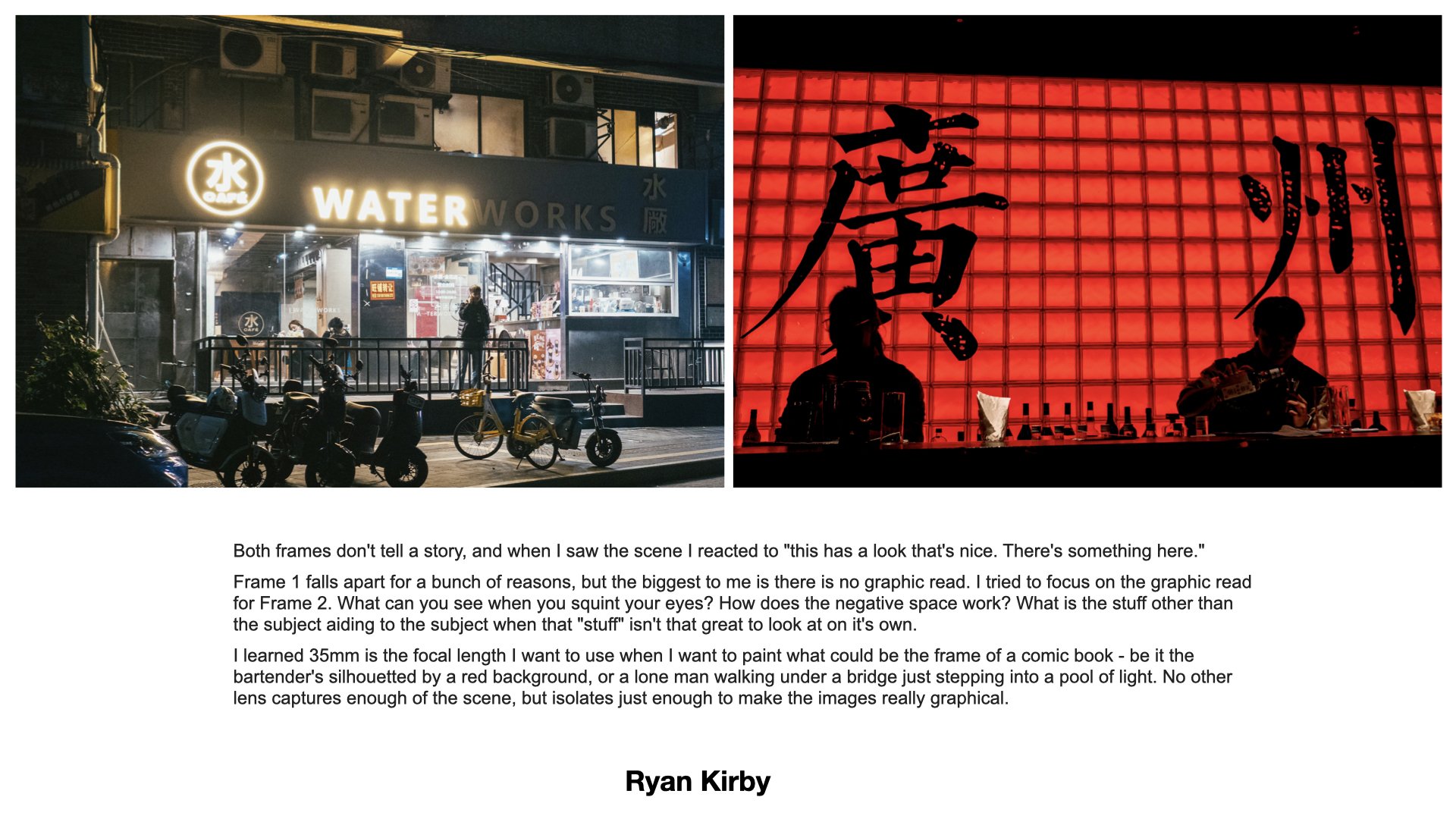
Ryan Kirby has an interesting take on this. Using 35 mm like a frame in comics. The bartenders silhouetted by this background, the giant graphic read of the kanji characters behind them. I like this left frame as well, although Ryan feels the negative space doesn't work quite as well.
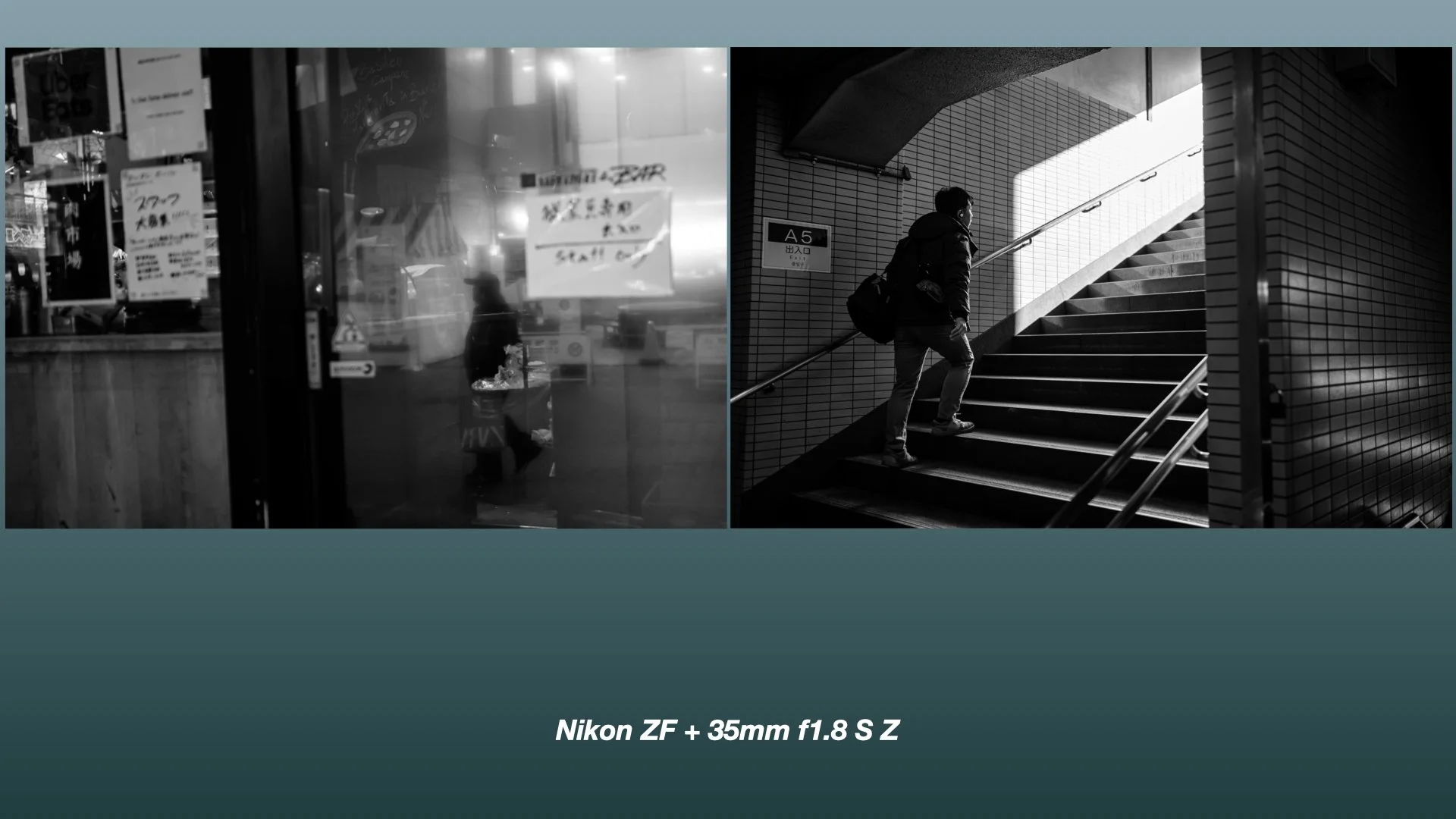
It is much easier to meter with this approach using a light source and framing on 35mm. You can include or exclude light sources with its normal field of view without too much work.
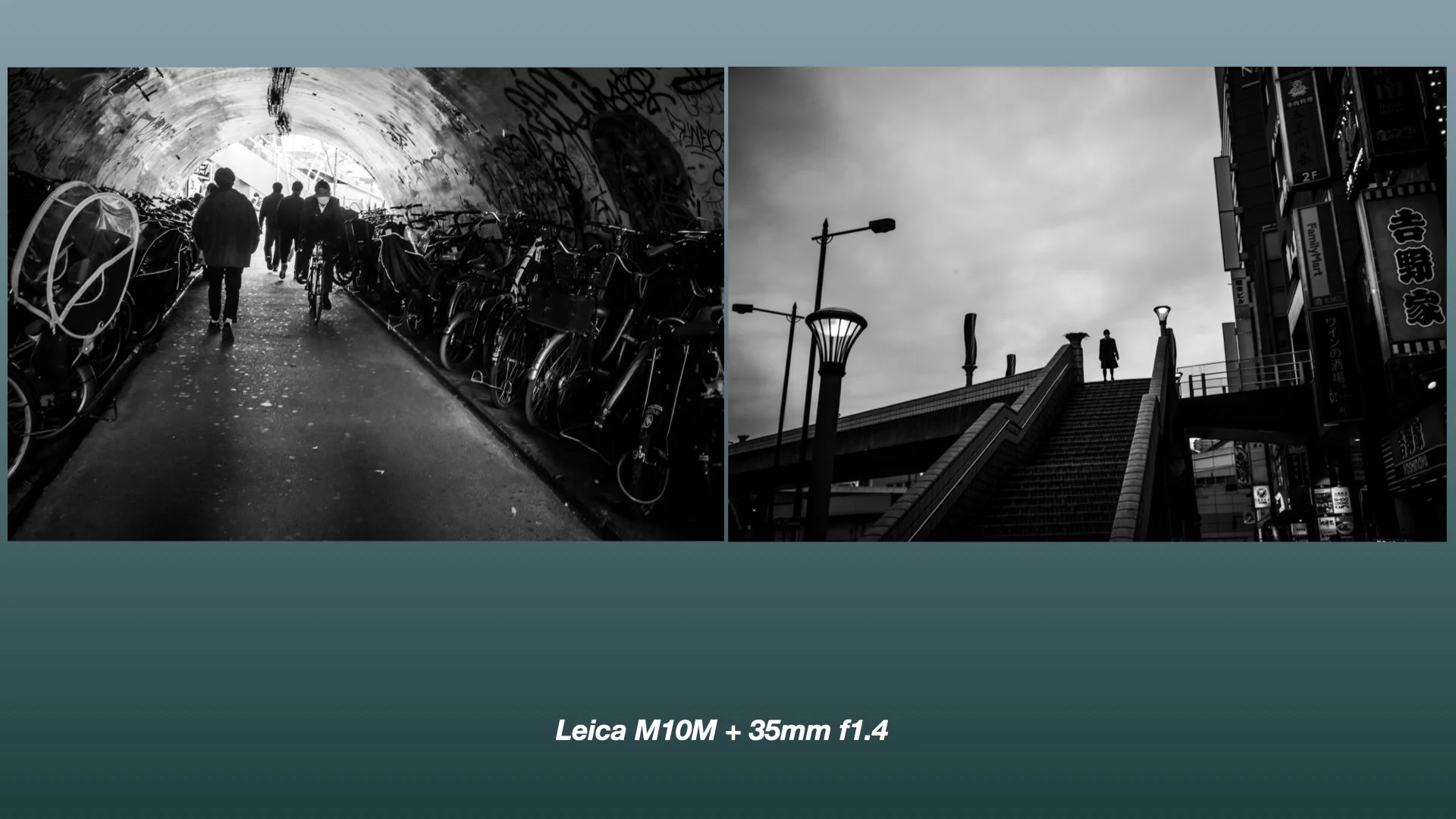
This backlet tunnel in Shibuya, the emerging cyclists are backlit, silhouetted, these bikes, you can still see them. Or a single silhouette on top of the stairs in Ueno crossing with the entire sky backlighting the scene.
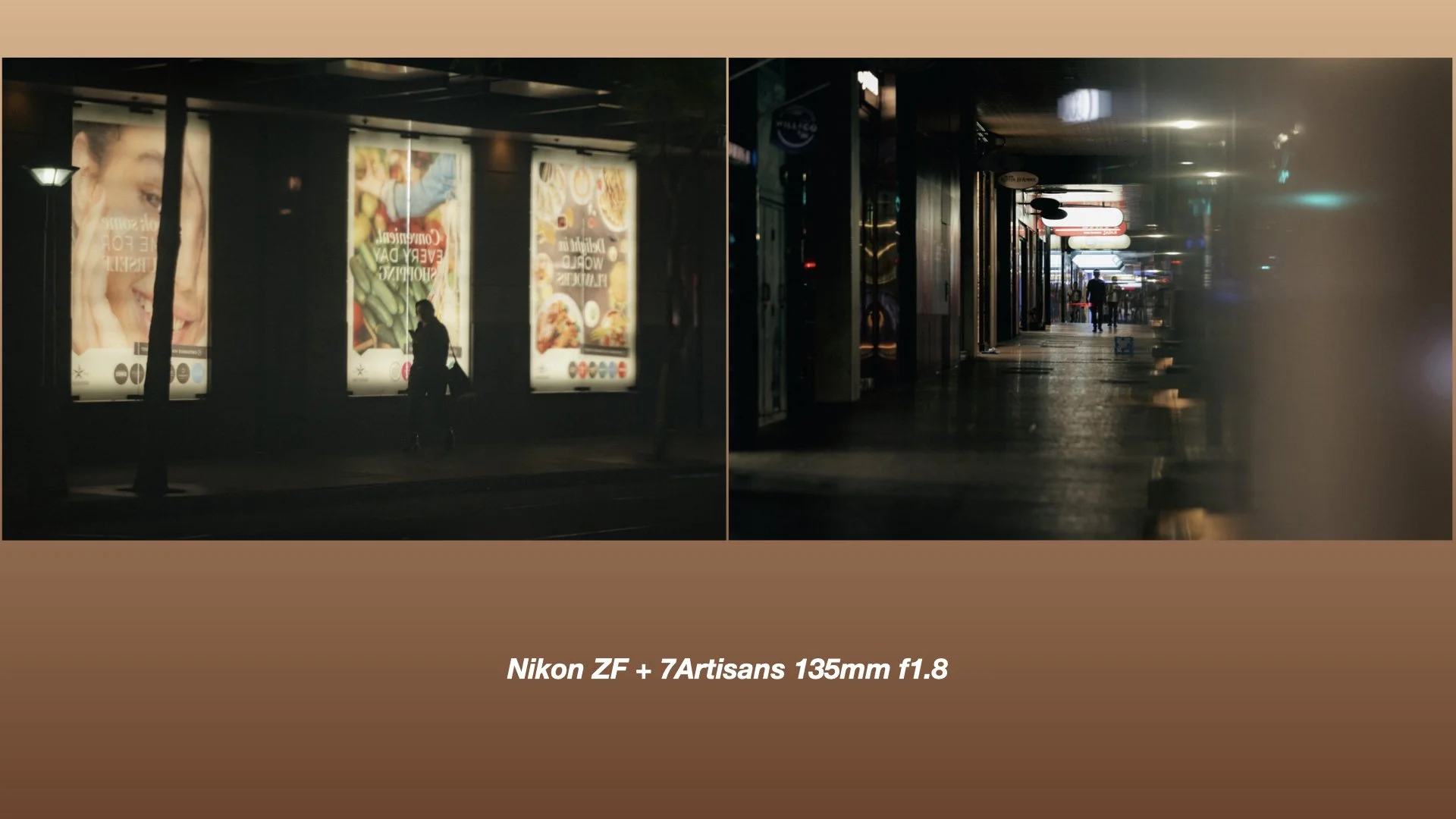
It's not so easy on a 135mm to get both a light source and a subject in frame. I had to be so far away, much less practical than on a 35 mm, using abstraction to move the emphasis from faces to spaces.
5. Texture.
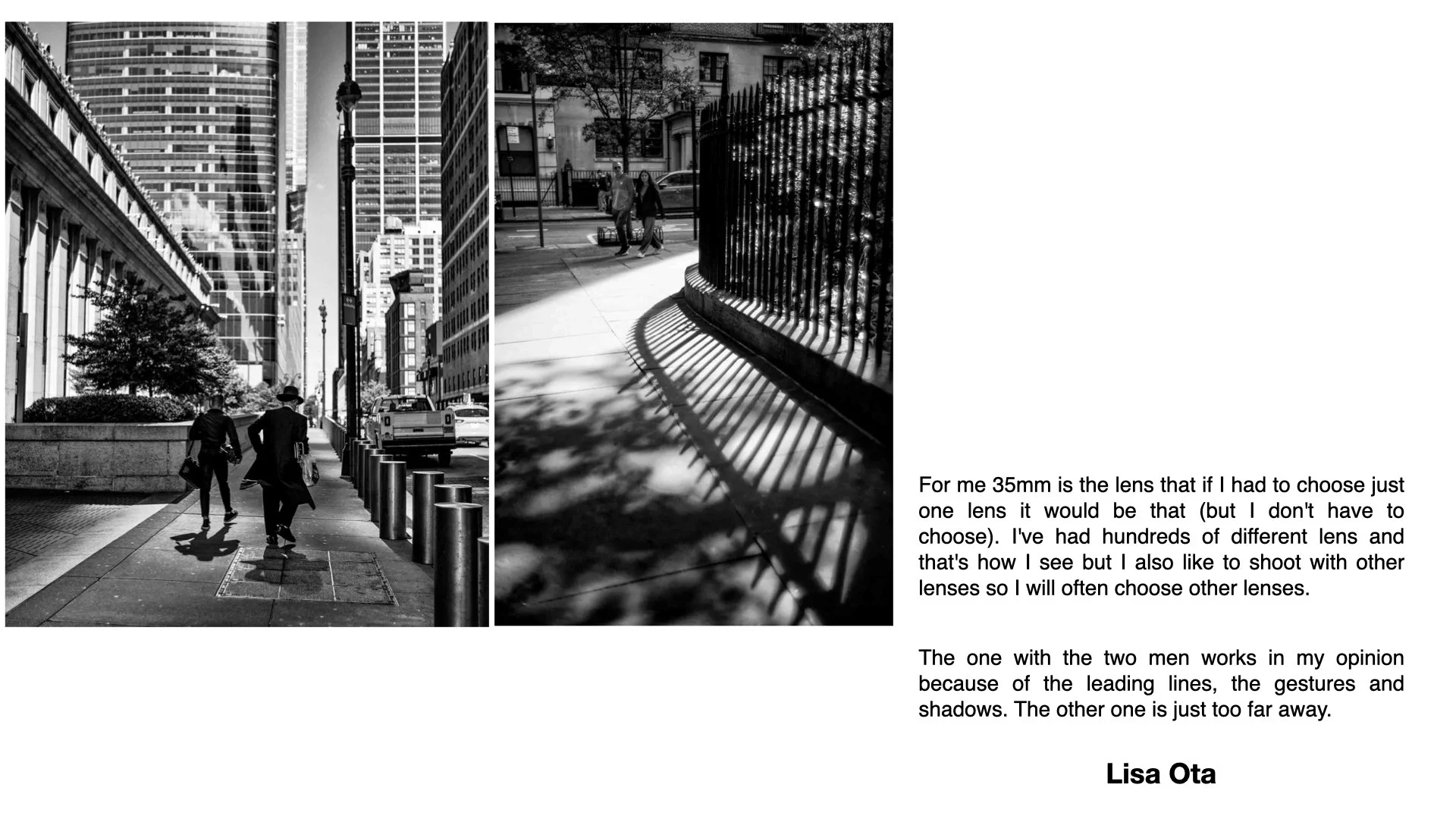
If you make the texture of the space eye-catching enough, any subject will naturally fade into the distance. The visual balance will tilt more towards the space than any face, whether it's the beautiful architecture and shadows from Lisa.
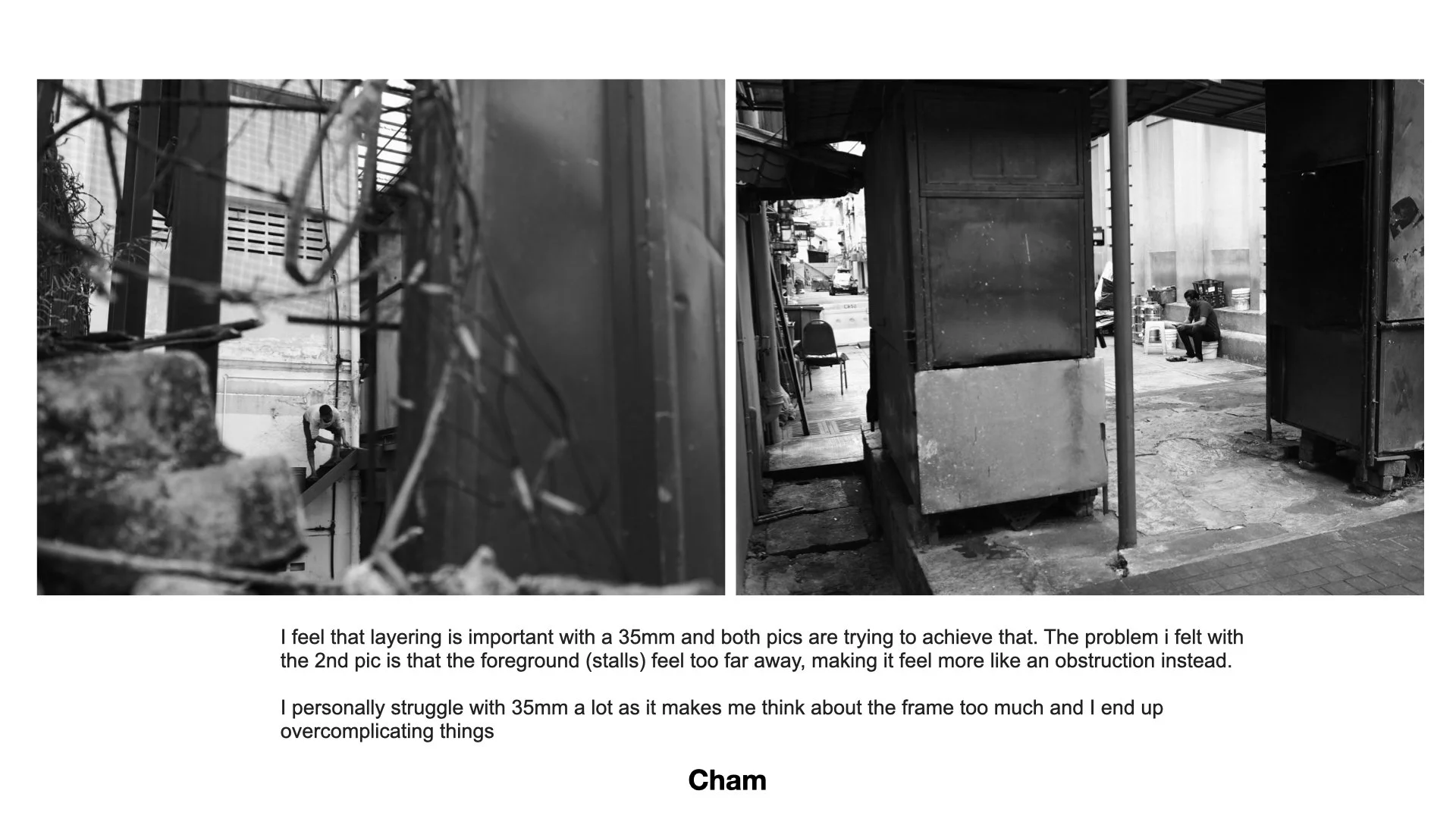
Or Cham’s scaffolded construction site layering. The texture of these layers really added something to the subject in action. The space added more visual texture for me.
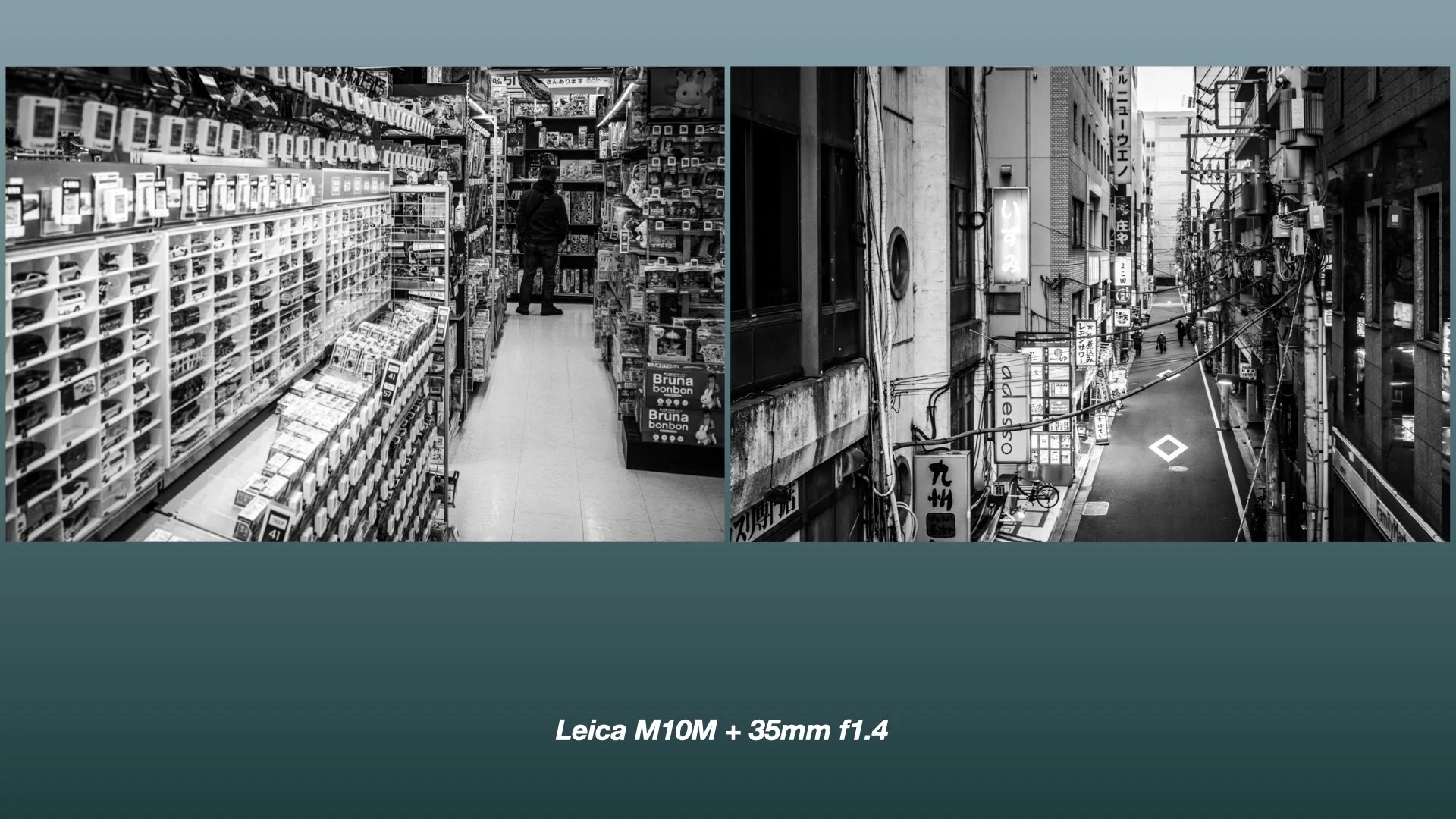
It's what I tried to do with all these shelves of toys on the left side of the frame, or this overhead architecture leading down this lane.
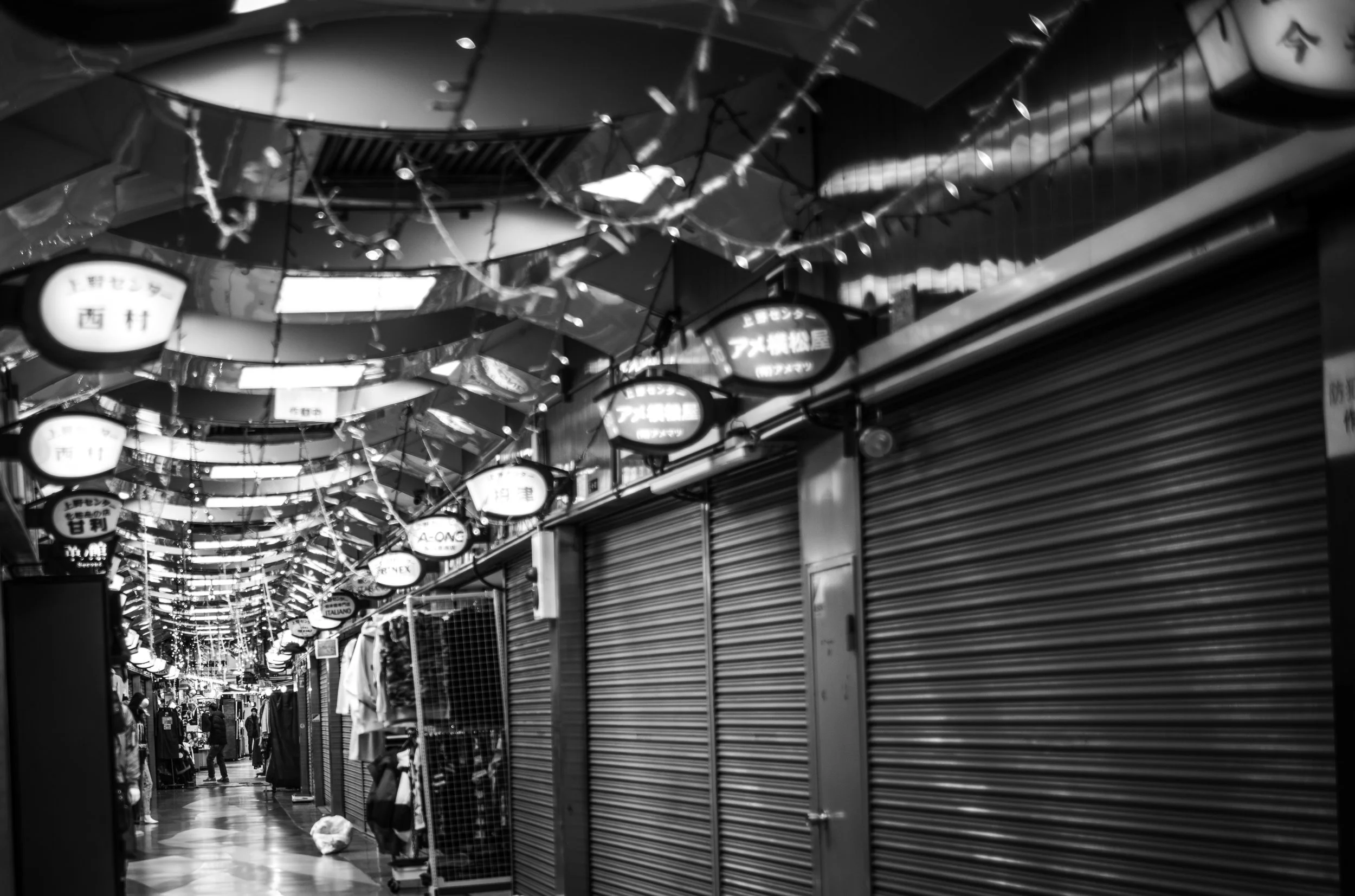
The string of lights, leading lines, scaffolded roller doors. If there's enough texture in the space, any faces become incidental rather than crucial to the main story.
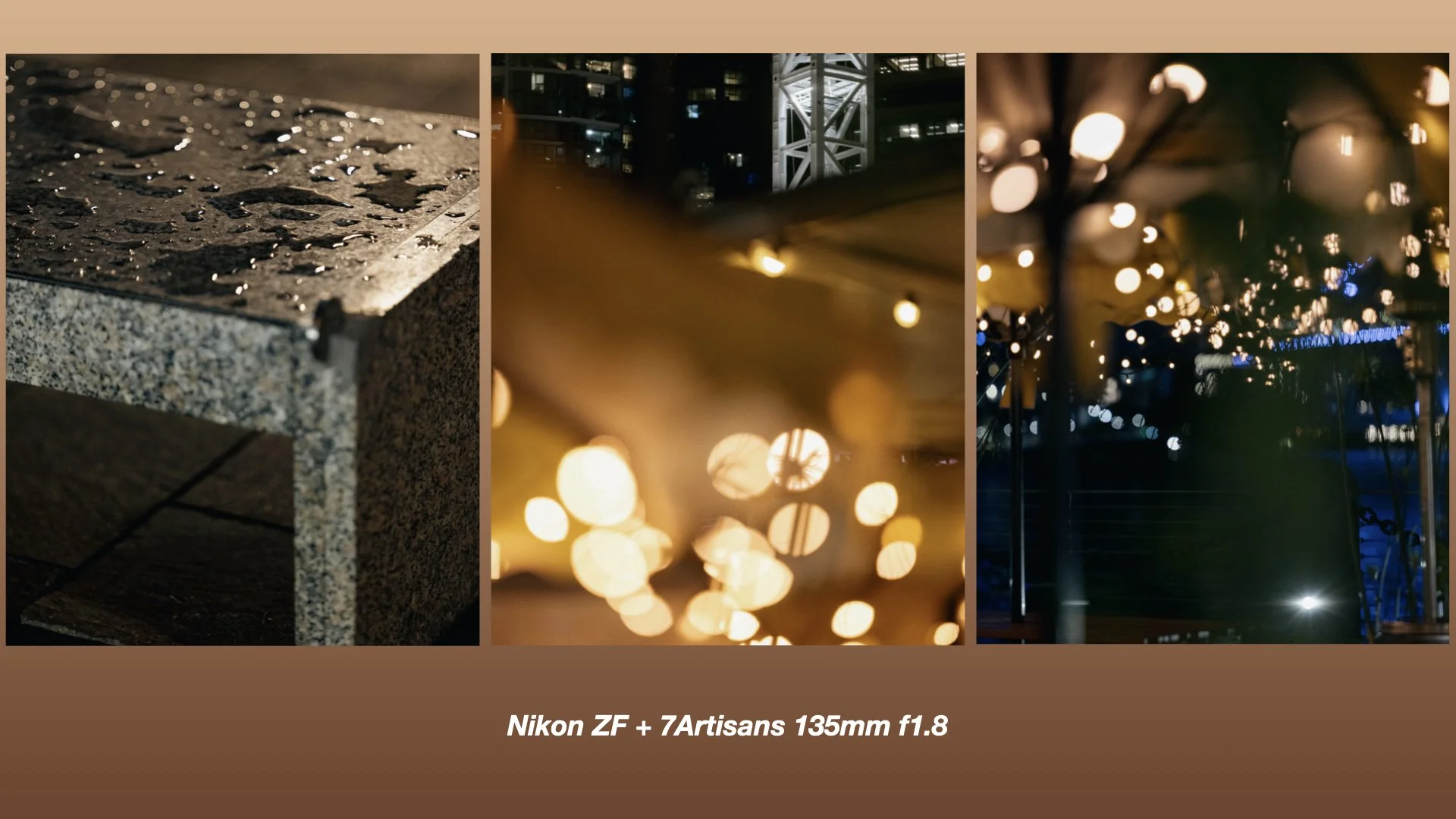
On 135mm, however, the details have to be the main story. But is this too close? There's no sense, a place or any face and frame. Where's the story in this type of abstract ephemeral photography?
This brings us to the final abstraction technique, which isn't, at first glance, what you think:
6. Scale Vs Proximity.
Both of these 35mm frames tell a story:
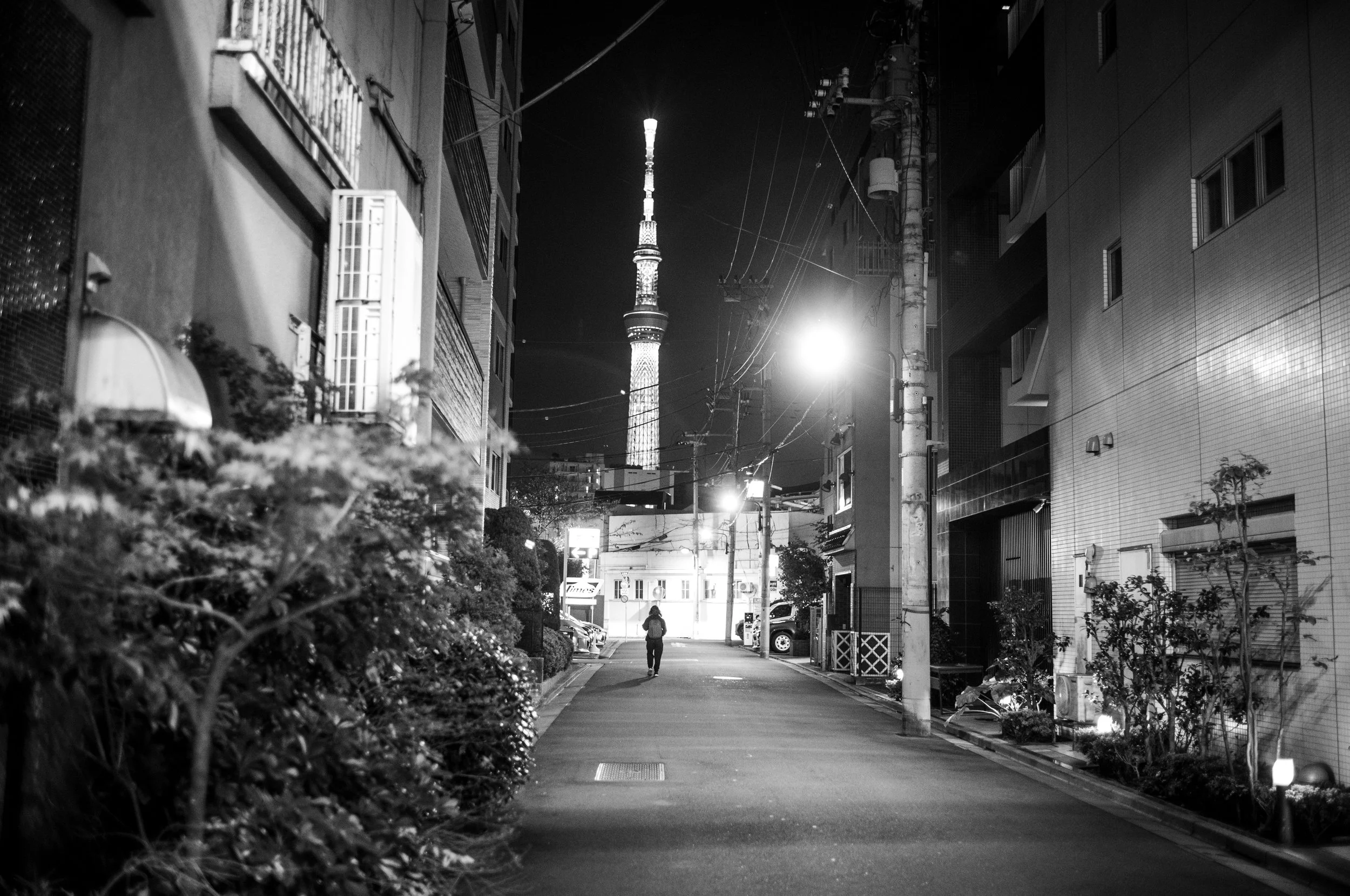
A silhouette walking towards Tokyo Skytree Tower at night.
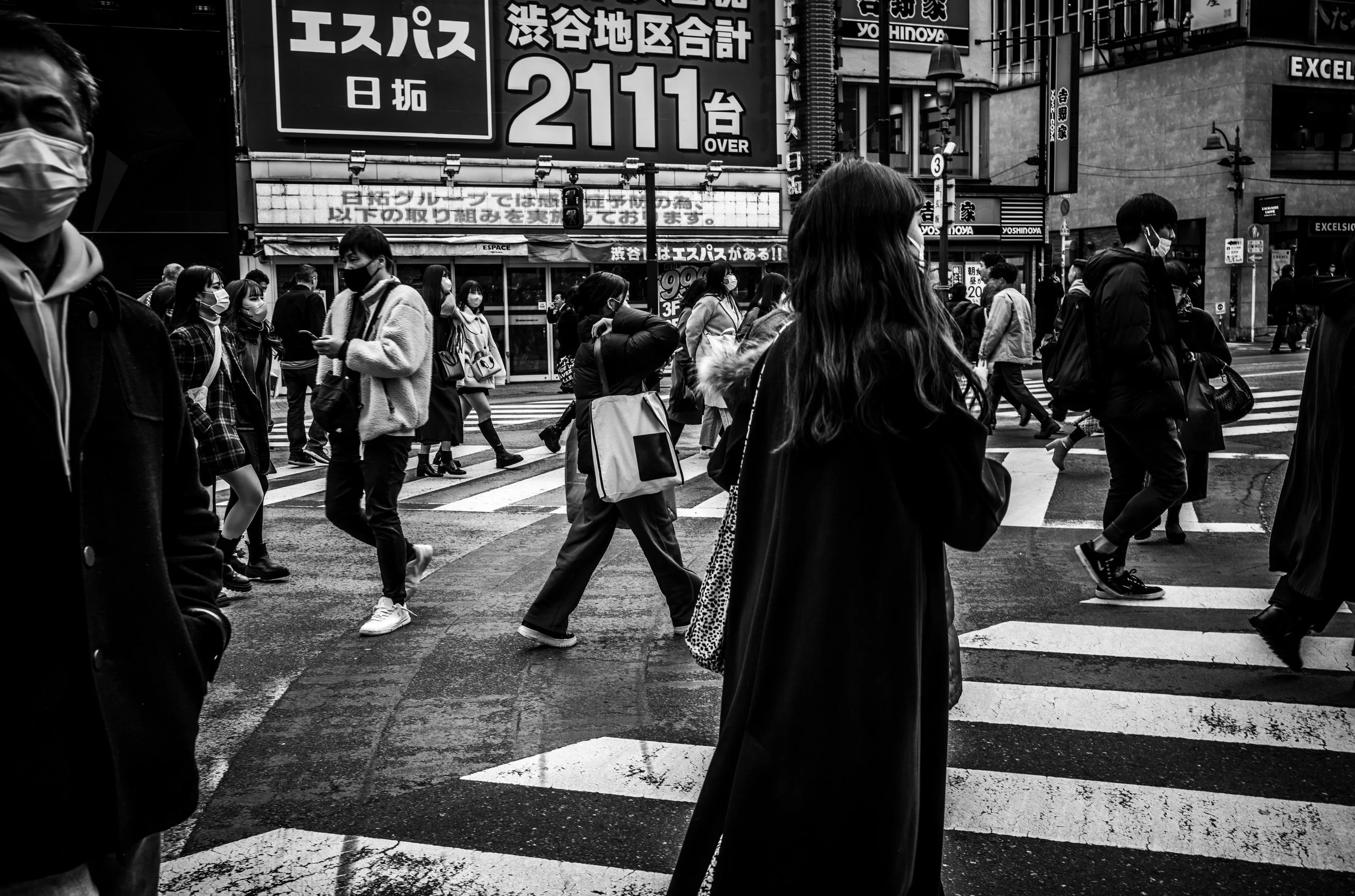
Or this chest level POV of all these commuters at Shibuya Crossing.
One uses distance and scale, the other leans on proximity, and one of the most misappropriated pieces of photography advice is from Robert Capa:
“If your photos aren't good enough, it's because you're not close enough”.
But this alone doesn't tell the whole story.
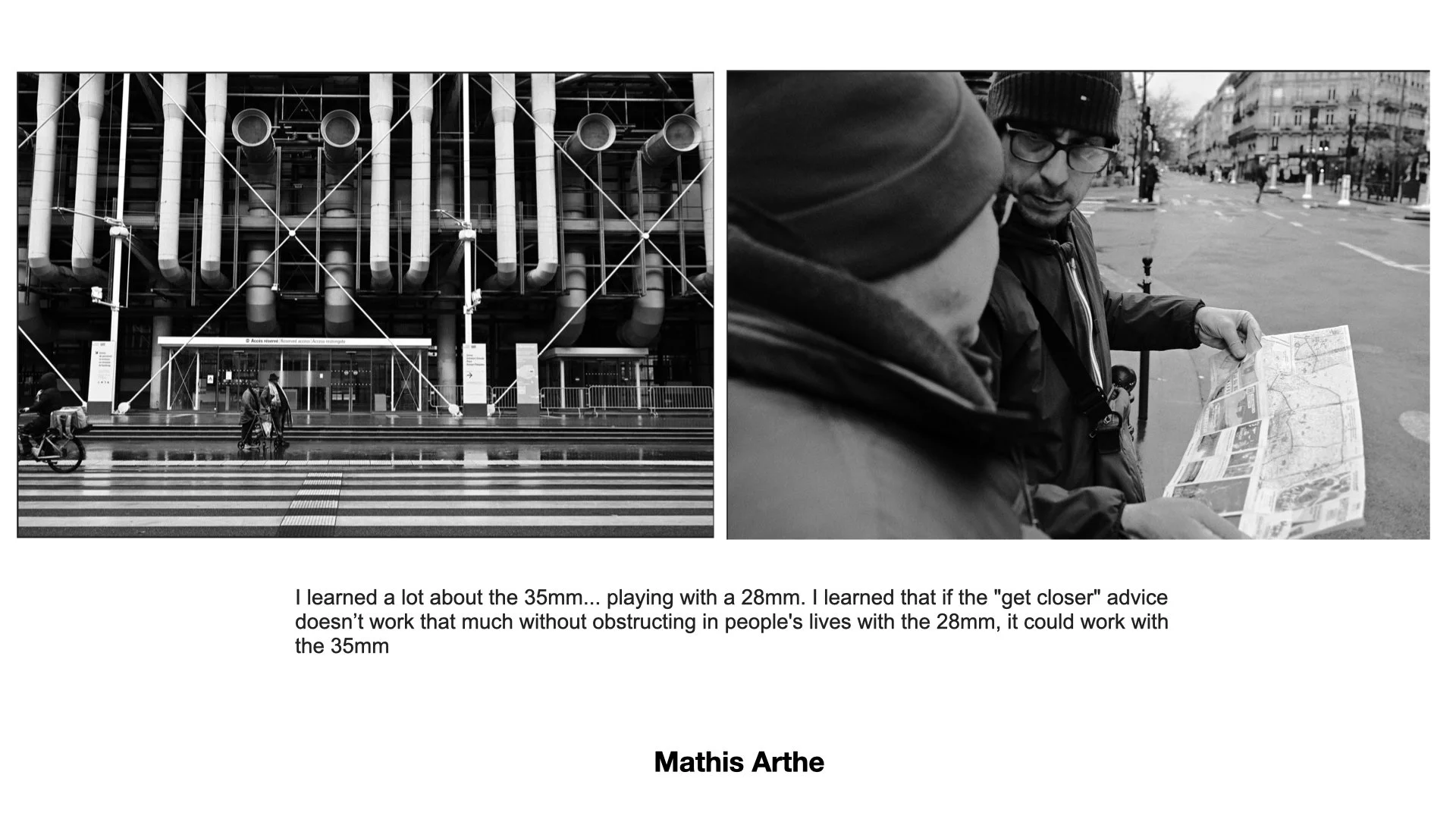
You could argue, Mathis' frame on the right is better, due to how close it is to these two map reading gentlemen. But I like the scale of the geometry, and texture on the frame of the left, which makes up for its distance or lack thereof to the subjects. I think this map reading frame works because of the space as well. There's context in the distance, a hint of where they need to head to reach their destination. You can't see the reaction of this man in the foreground, adding a little bit more mystery.
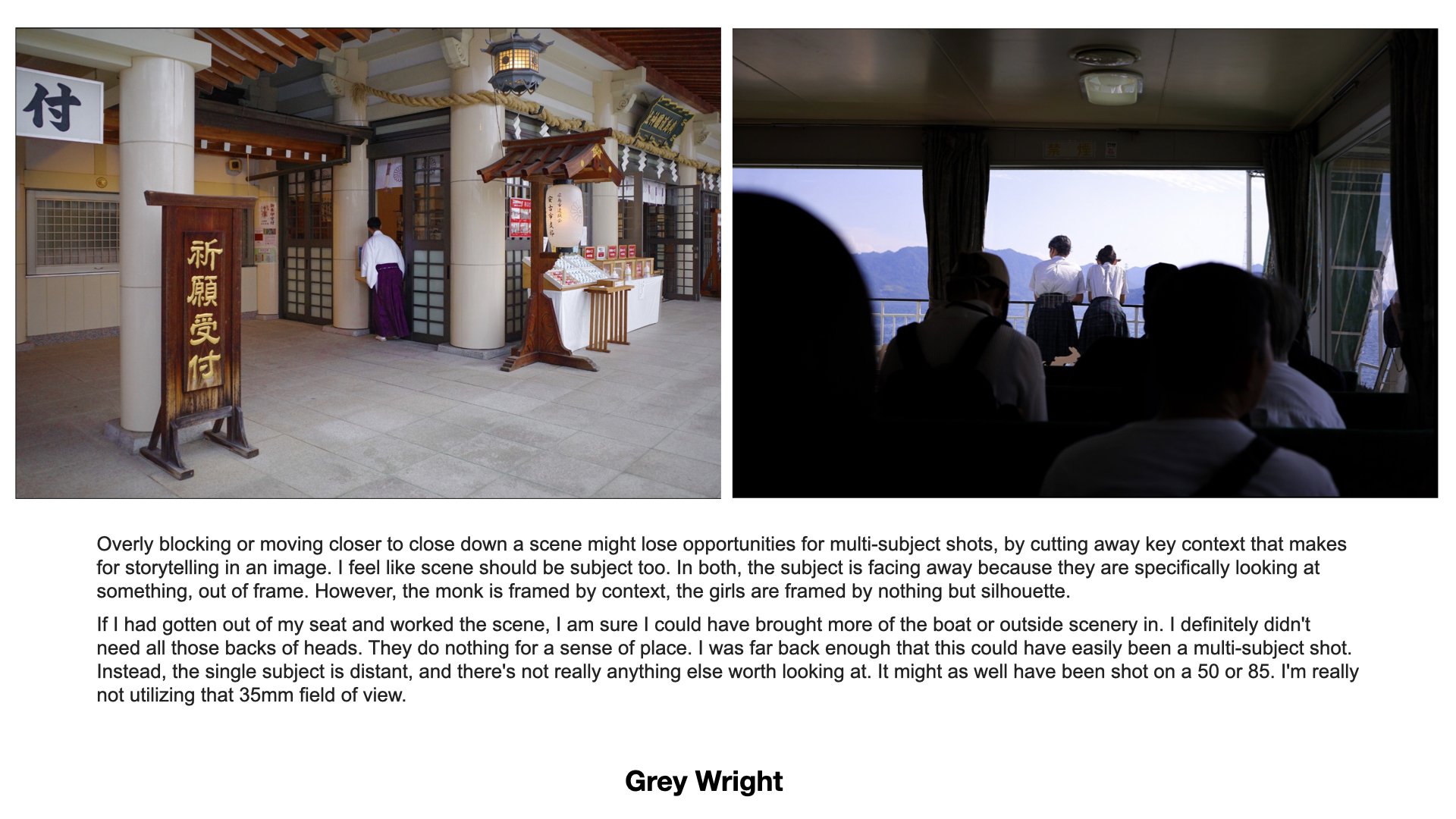
Grey also illustrates this idea in the next pair of frames. This monk is framed further away from the sensor scale, the details of the place. It adds more information, despite being further away. These two girls on the right side of the frame are closer to the camera, the rest of these subjects are silhouetted out. Grey says, even though there's more emphasis on the subject, the rest of the frame lacks something. It's harder to see the story.
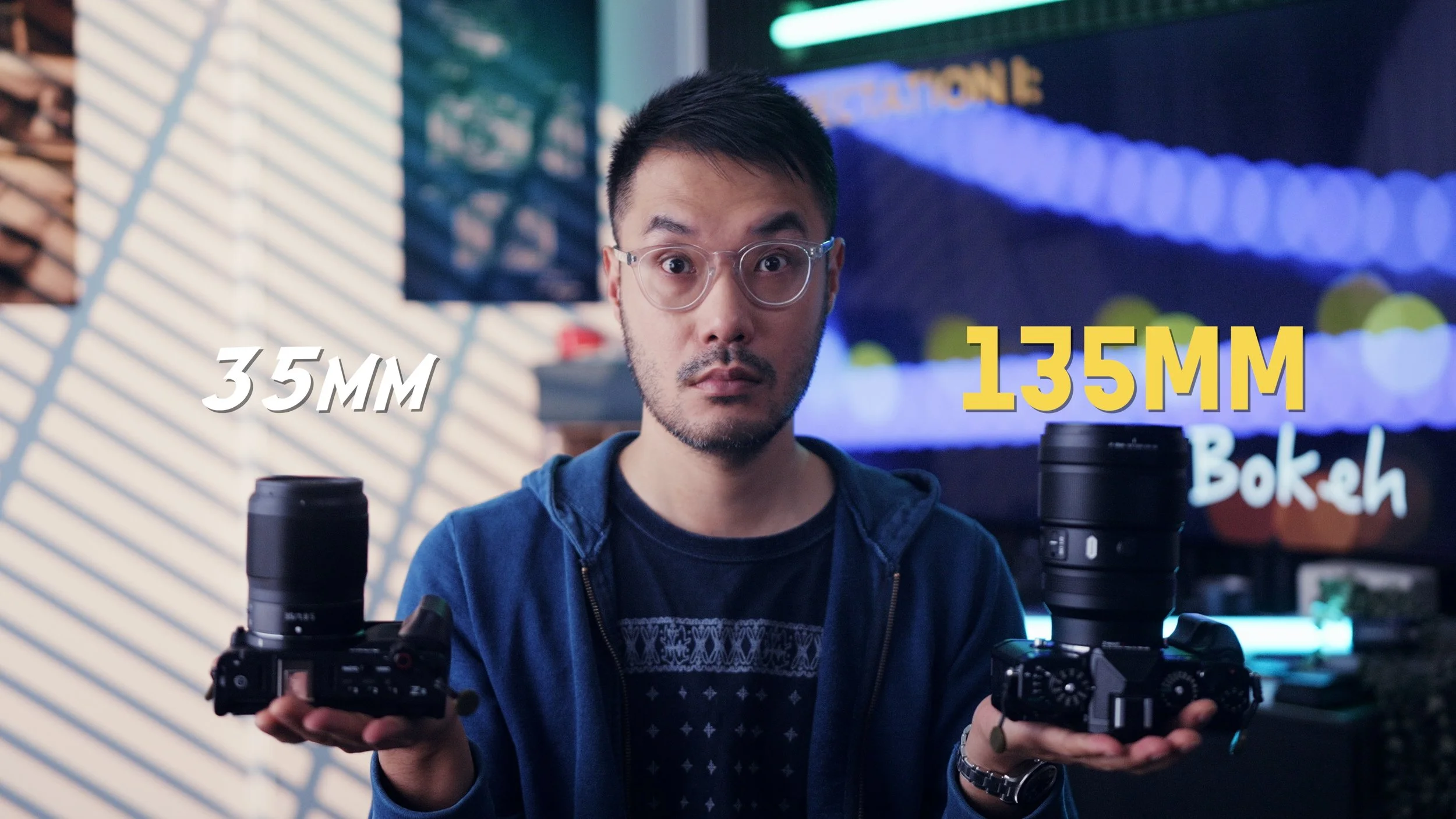
No matter the lens, or focal length, this is always the hardest part about photography. Finding a way to rearrange the world to create some meaning.
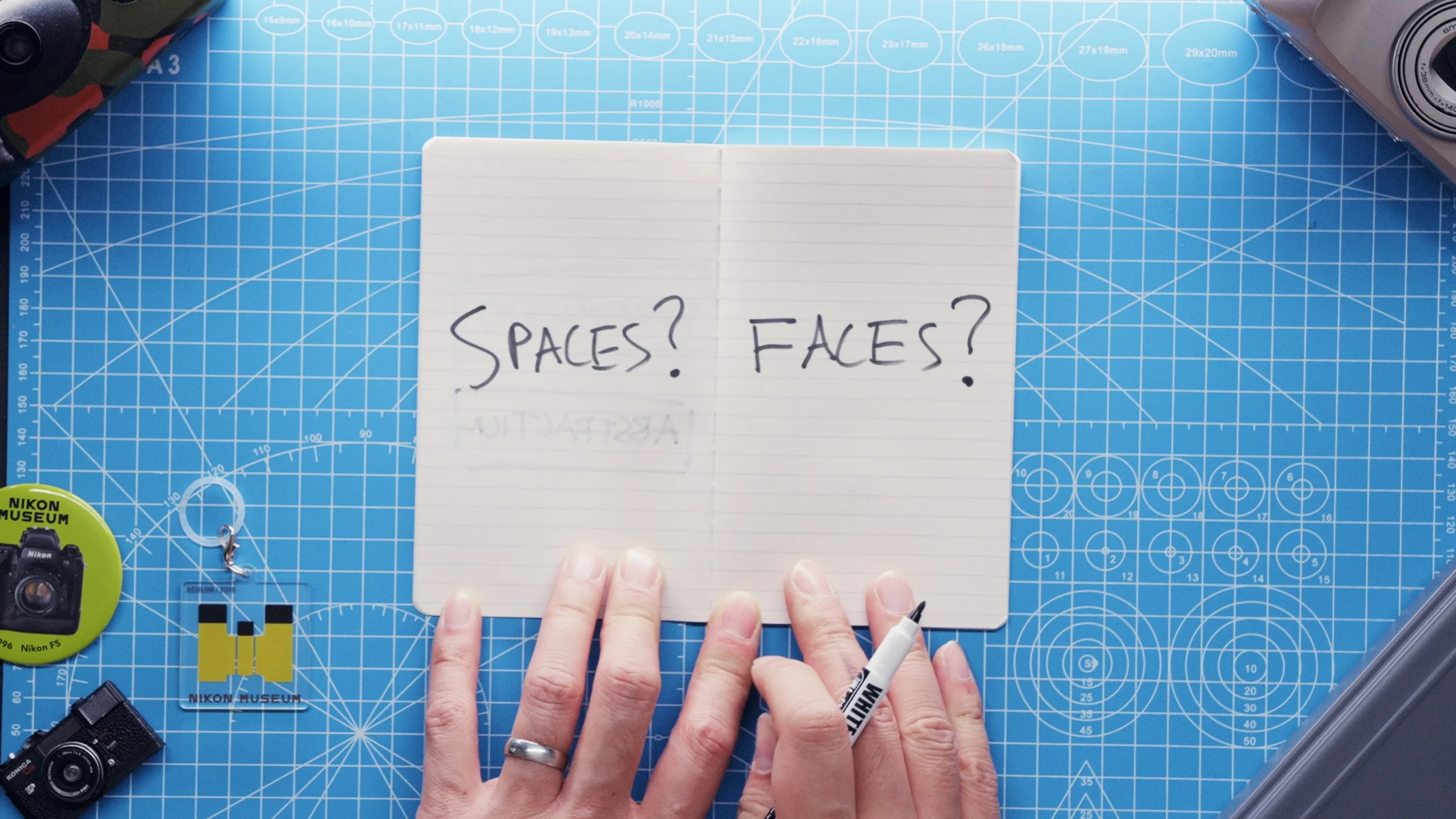
Why I love 35mm is that it forces me to think. Its neutral perspective forces you to take a creative stand, leave something out or hone in. To calibrate that spaces versus faces dynamic, to find your story.
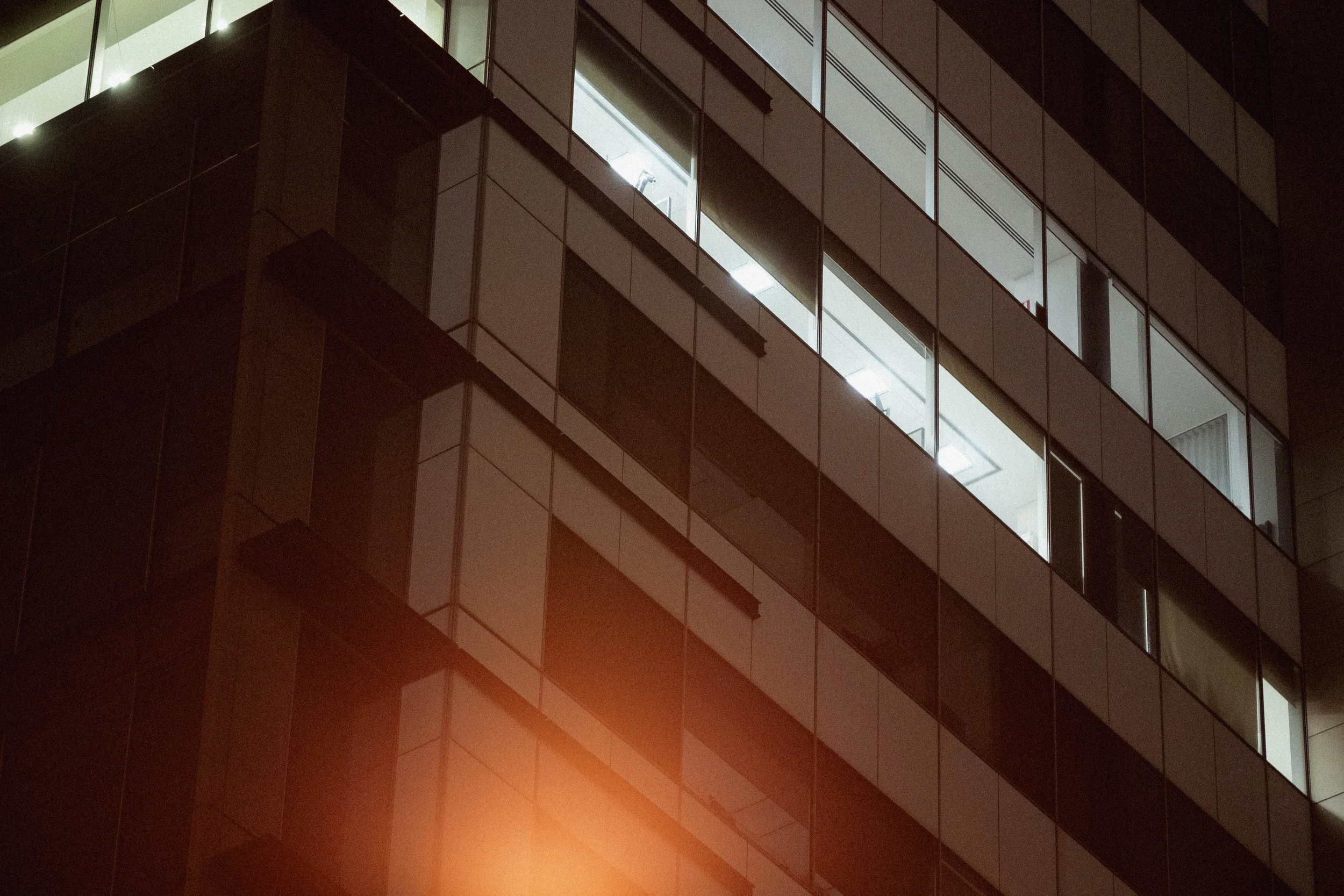
7Artisans 135mm f1.8
135mm makes more of that decision for you, but I want stories beyond unsolicited portraits of strangers on the street. The glow of an office building. Invisible workers still here, late at night.
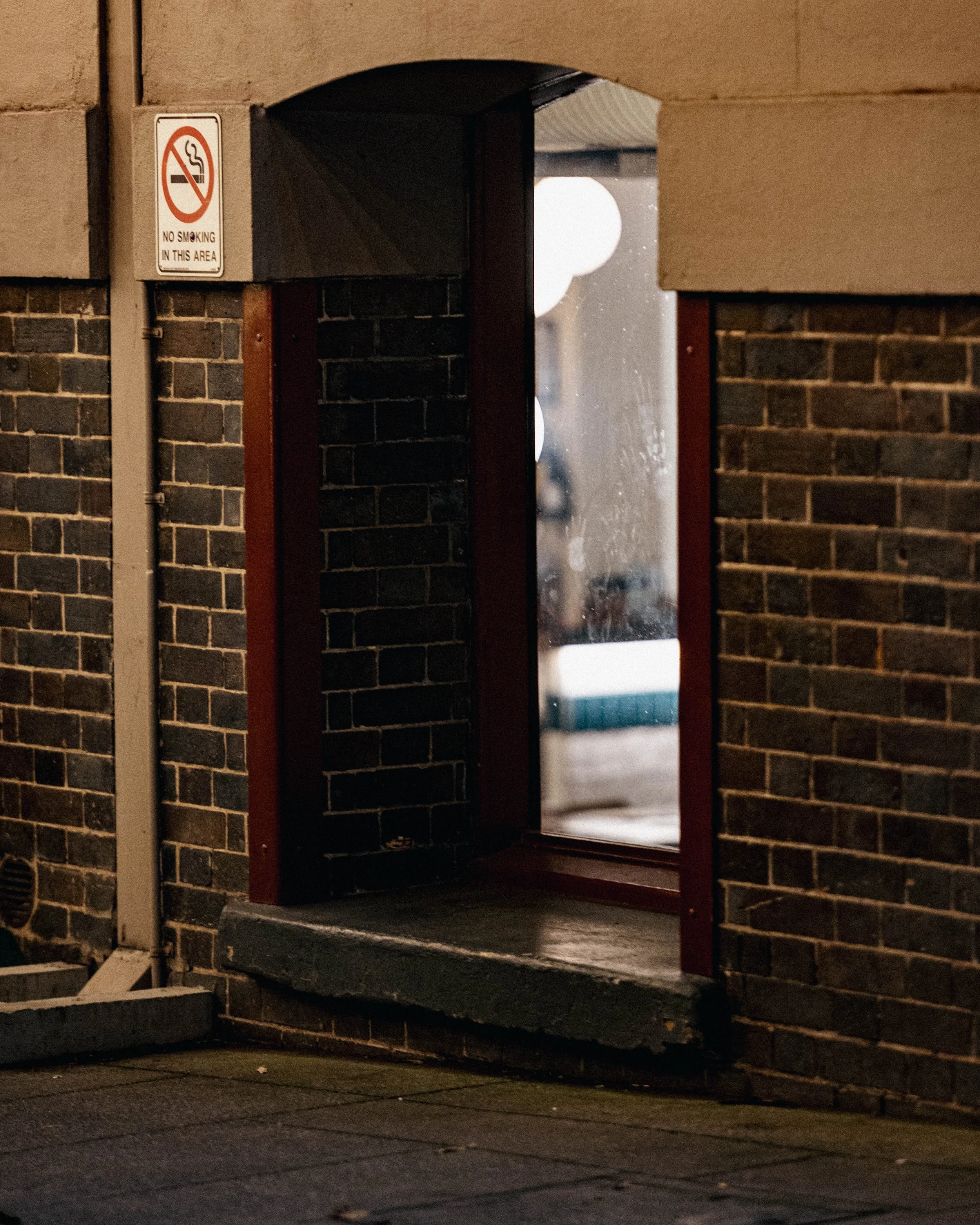
7Artisans 135mm f1.8
Handprints, on a restaurant window, at closing time. The trace evidence of faces is enough to fill the space, for me.
A hint of abstraction (and this LensLab series) is how I plan to keep this hobby going.
If you'd like to share your 50mm photos with me and this community (>20K YouTube, 1K newsletter)?
Fill in the form below:
Til the next episode, happy creating.
Jack.
All my sample images in this blog post were edited from RAW files using my free Chrome emulation preset. They work with most RAW files from different cameras as long as you use “Adobe Color” as the starting base. Download it for free here.
If you’d like to support my work please consider purchasing gear through my affiliate links:
7Artisans 135mm f1.8: https://geni.us/7artisans135mm
Nikon 35mm f1.8 S: https://geni.us/HYuWa
Nikon Zf: https://geni.us/YOH8bh7
Nikon ZR: https://geni.us/KH4uMvX
ZR wooden grip: https://geni.us/ZR-wood-grip
17-28mm f2.8: https://geni.us/MnNbu
Nikon 105mm f2.8 S macro: https://geni.us/nikon-105mm-macro
Nikon 85mm f1.8 S: https://geni.us/ItonAtp
Nikon 50mm f1.8S: https://geni.us/sQ55h
Nikon 40mm f2 Z: https://geni.us/0AAhXJ
Nikon 28mm f2.8 Z: https://geni.us/tyZX2A
DJI Osmo Nano: https://geni.us/OSovmT
Wotancraft 10L Messenger bag: https://geni.us/wotancraft-salt-pepper
Wotancraft leather strap: https://geni.us/wotancraft-leather-st