Nikon’s Last DSLR | D780 vs Z5ii
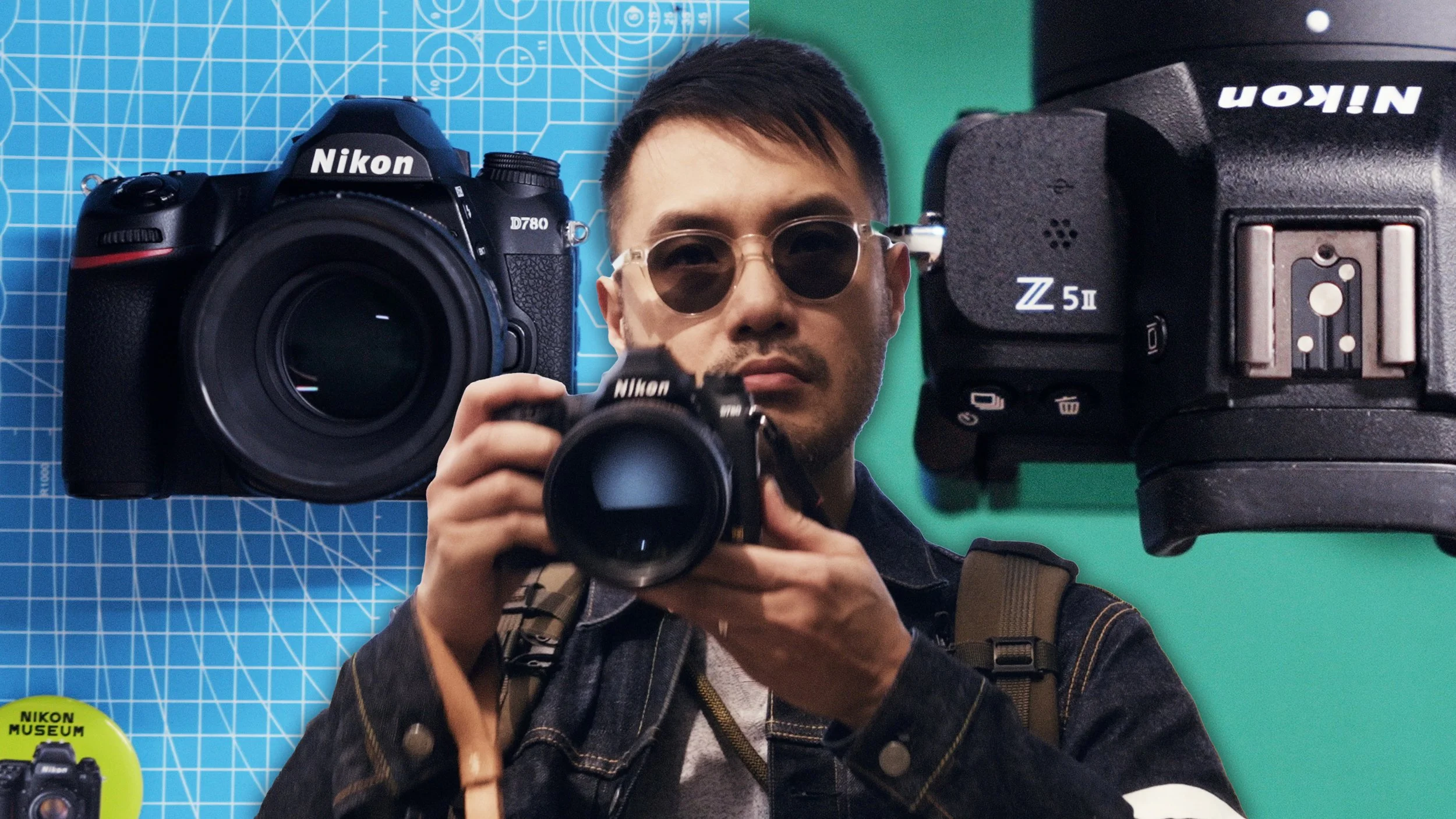
Nikon’s Last DSLR is bigger, slower, more expensive than their cheapest full-frame mirrorless camera. Why would anyone pick this over a fresh start? While Nikon have Z-mount updates for almost all their F-mount glass, there are still holes in the lineup. After testing 3 legendary F primes against their closest Z counterparts, the truth is nothing comes close.
Is this reason enough to double down on the last DSLR, or is it time for a fresh start?
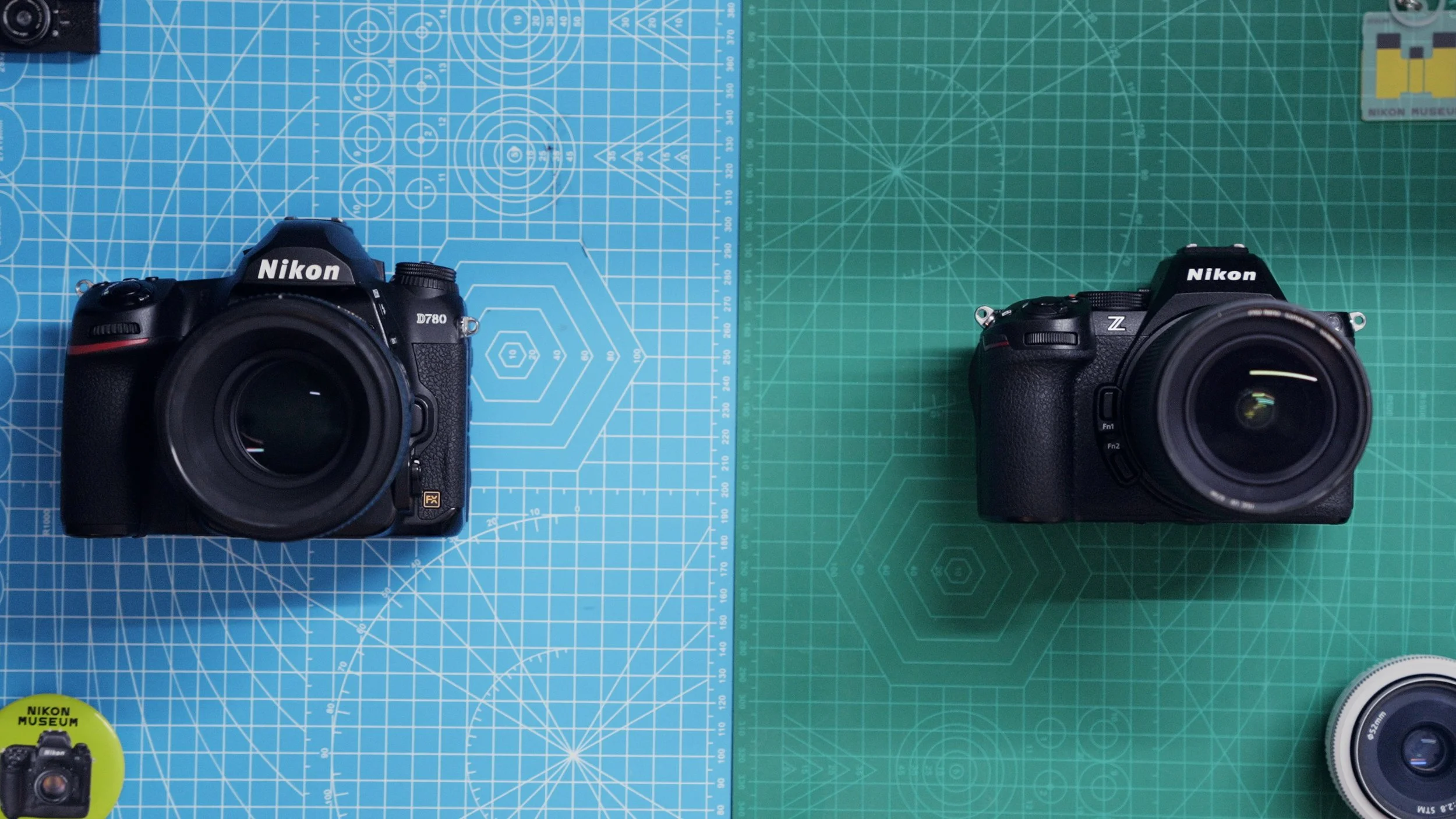
When I asked to borrow the D780, and a trio of F-mount primes from Nikon Australia, I wasn’t competing against many (if any) creators?
Everyone’s moved to mirrorless, DSLRs are less interesting, but I’ve long recommended them for anyone new to photography. After testing the Z5ii, I have to think twice before giving that same advice. You can pick it up new or used at well under 2000 US dollars. It feels more future proof in a way no other entry-level camera has ever felt to me.
But Nikon’s last DSLR, is still worth it for now, at least until these 3 legendary lenses come to Z-mount.
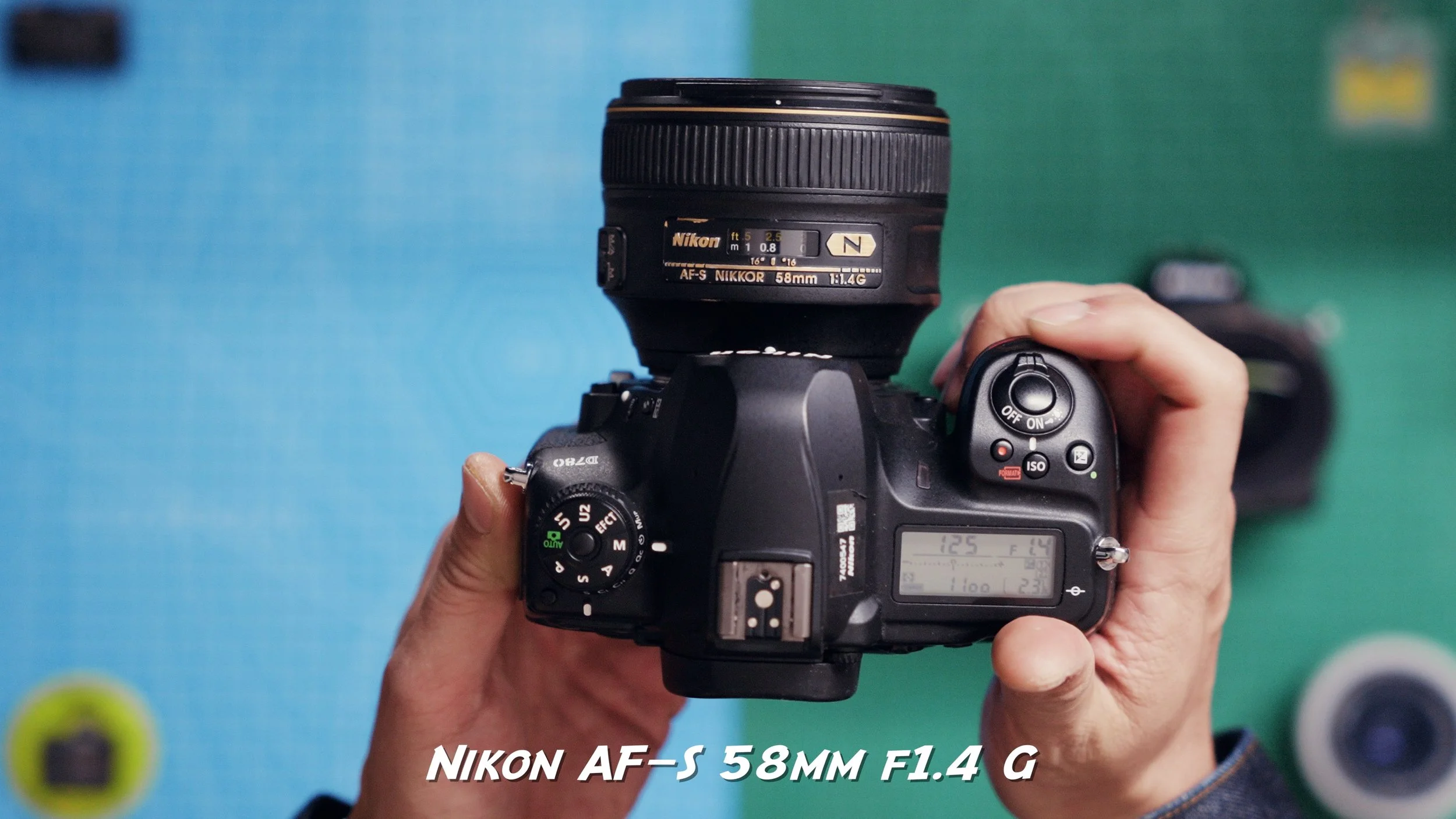
The first legendary F-mount lens I’d like to see a Z-mount refresh of is one made for everyday carry - the 58mm f1.4 G. Tighter field of view and faster aperture than most nifty fifties on the market, all in a small-ish and light-ish form factor. I don’t have any Z-mount lenses that come close to this lens (unless you count the manual focus only, gigantic 58mm f0.95 noct).
What makes it special isn’t that it’s “vintage”. It’s still very sharp in the centre, contrasty, not the worst when it comes to chromatic aberration or flaring. No Z-mount lenses I’ve tried come close to this rendering, here’s how it looks compared to my Z-mount stand in - the 50mm f1.8 S.
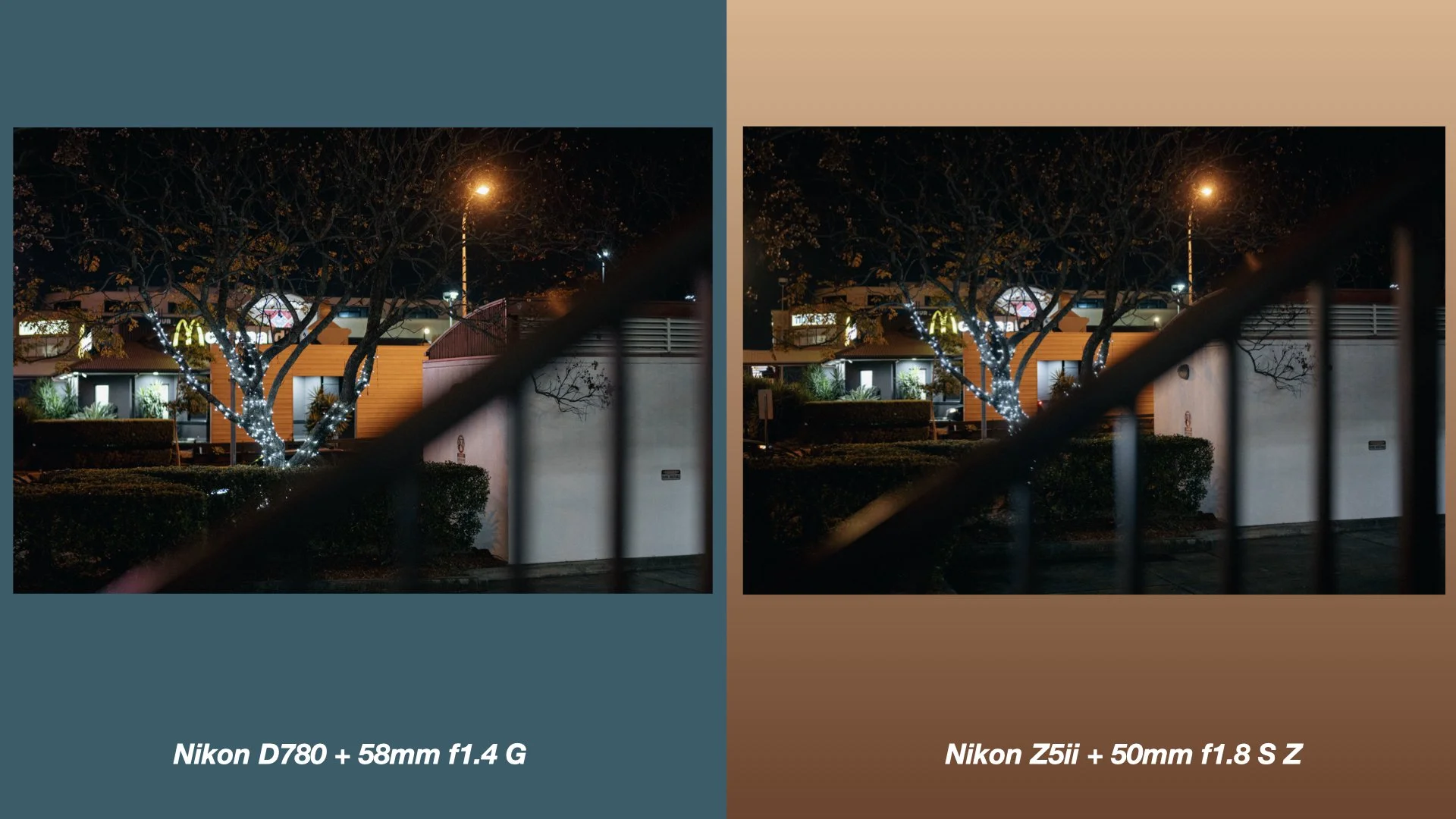
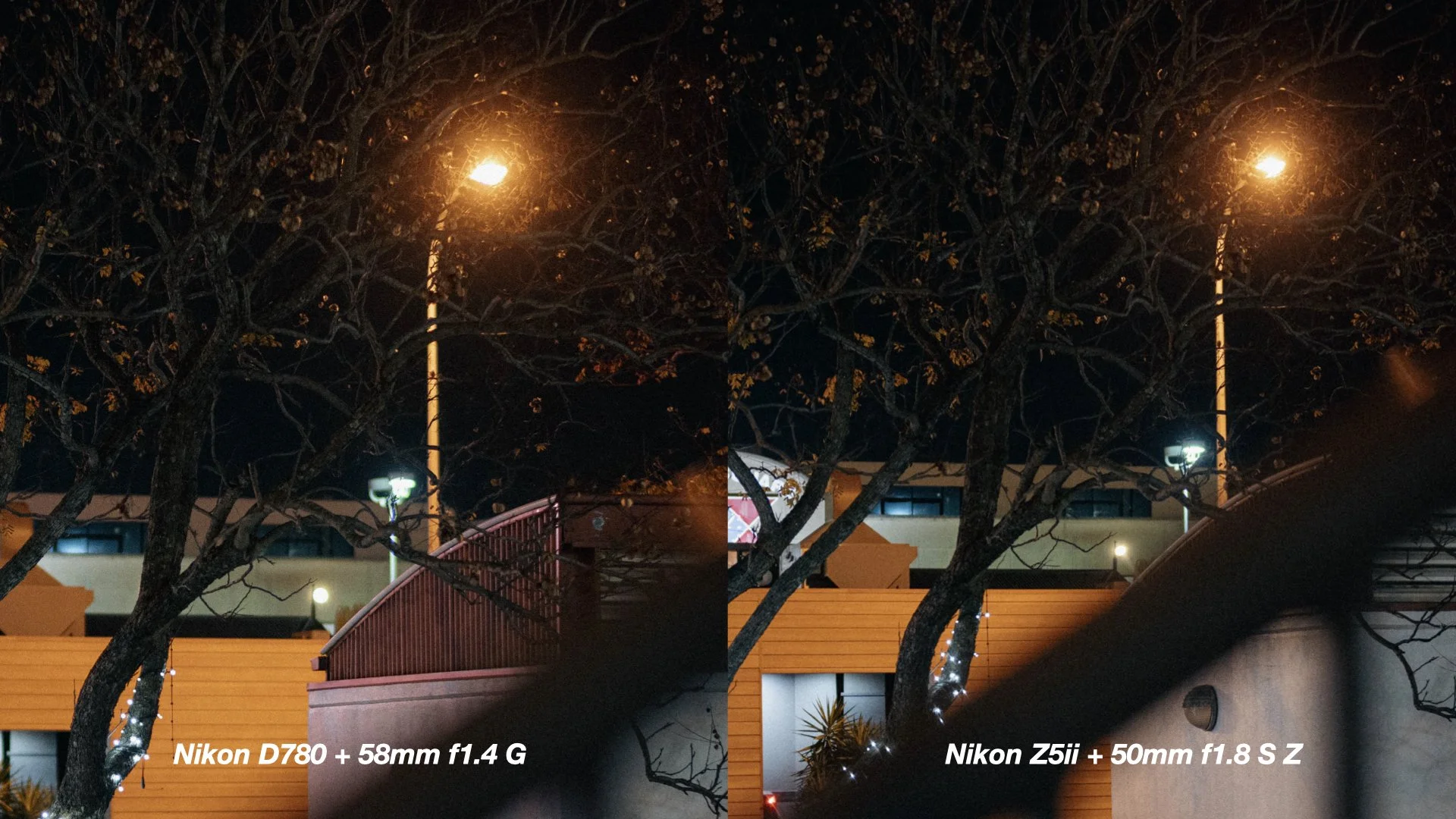
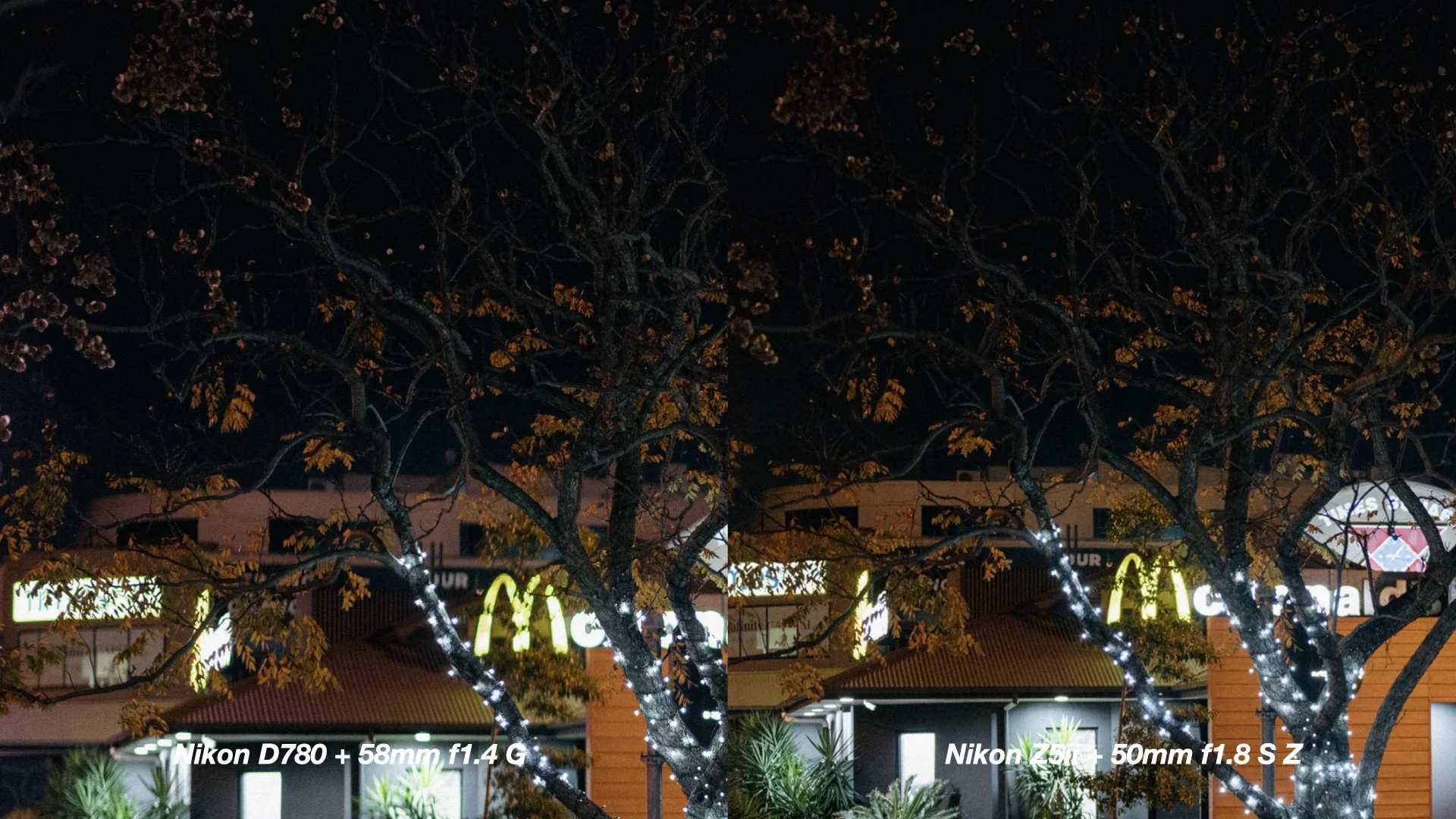
You can see the sharpness in the centre isn’t that far off. But as soon as you move towards the corners the Z-mount lens pulls ahead. You can also see the tighter field of view on a 58mm - it is a different look and user experience compared to 50mm.
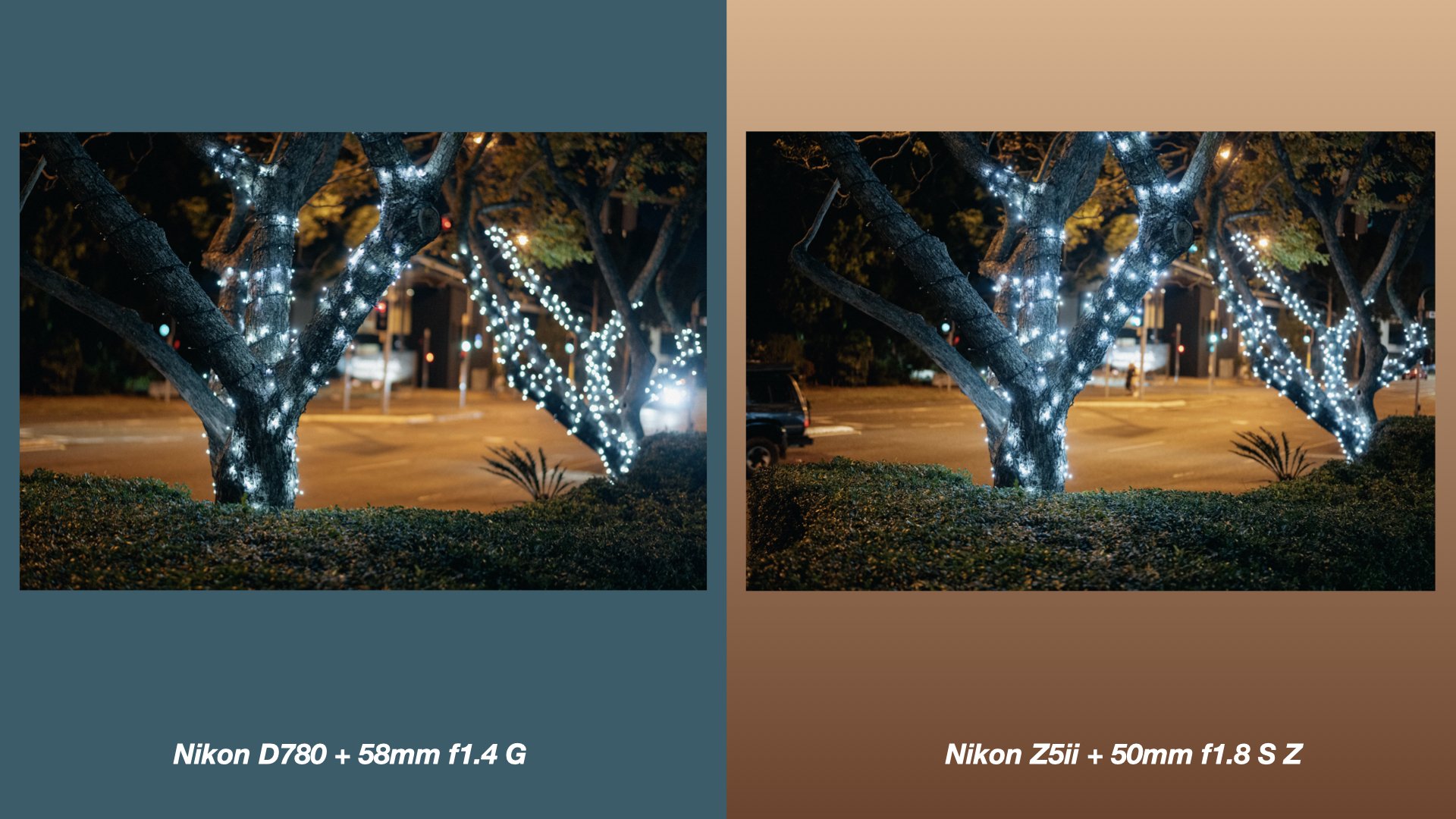
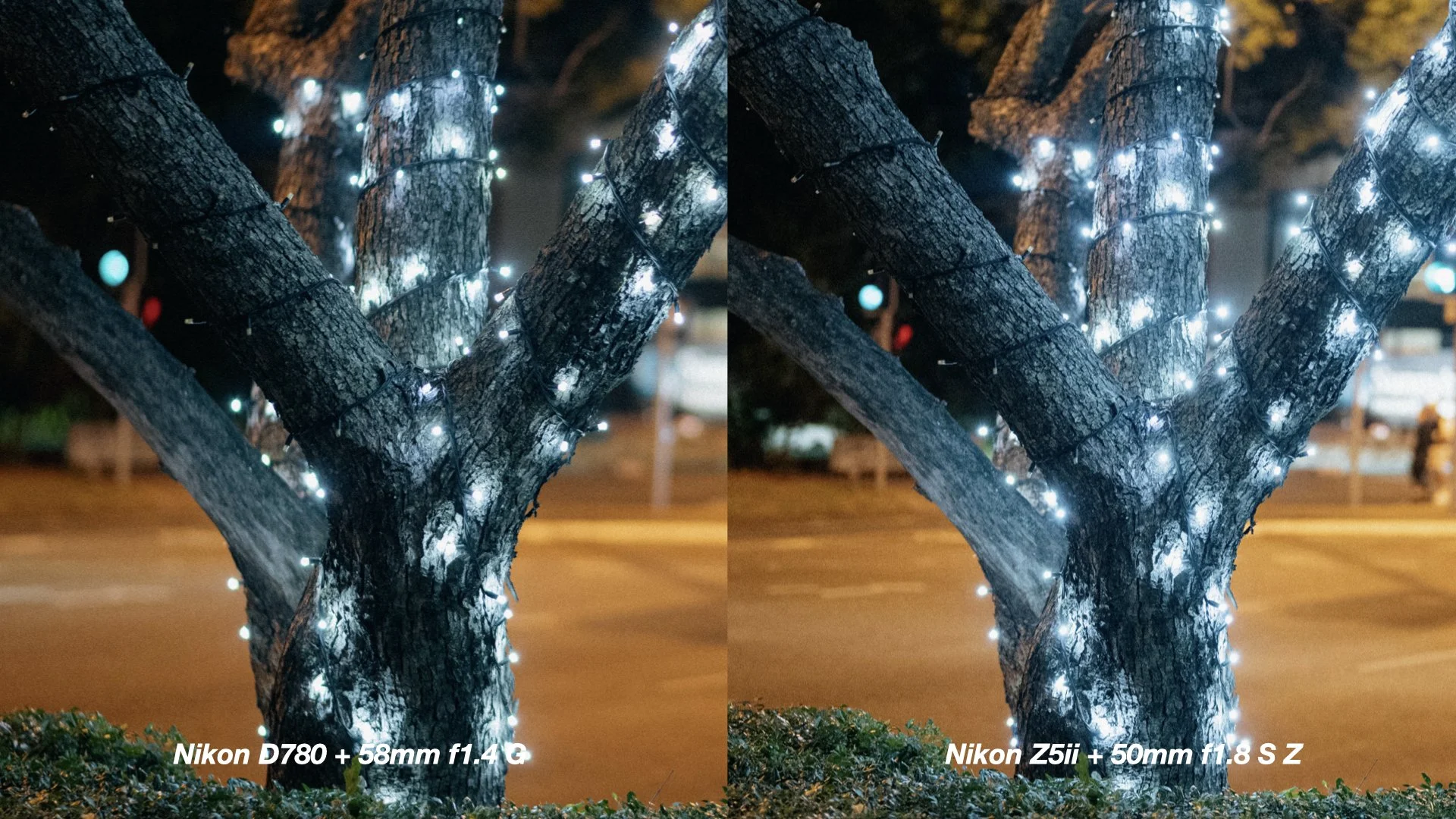
But the biggest difference between this lens and any of the current Z-mount offerings comes down to two things:
How it renders the fall-off wide open - gradual, smooth, rather than razor sharp and abrupt. Add a hint of that vintage glow but not too much so.
The handling.
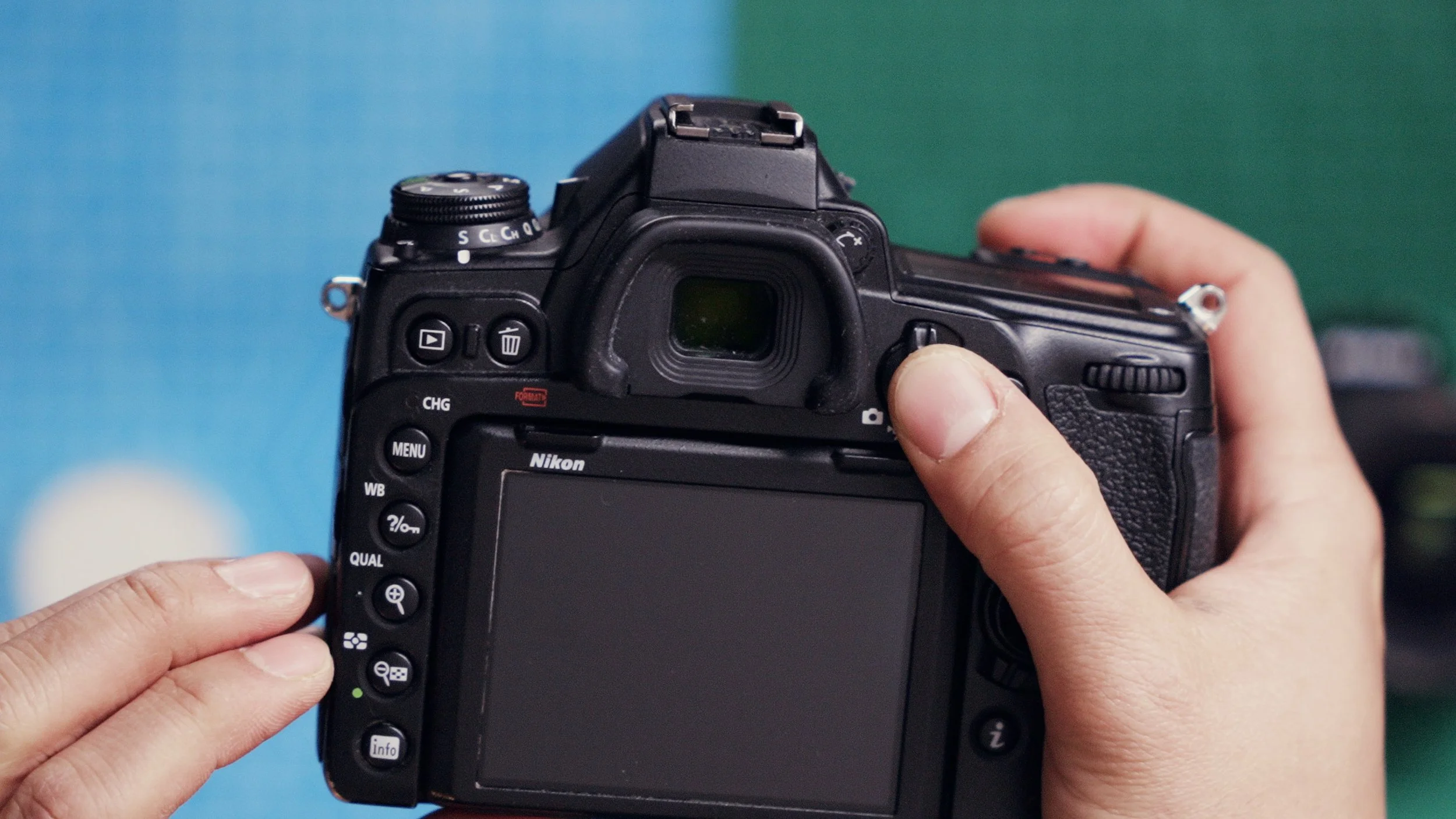
This 58mm was never meant to be the fastest focusing, but the D780 is Nikon’s Last DSLR - it should have the most up to date AF-module, and I found this lens focused great on this body. Not just in single point focus and recompose, but continuous autofocus, 3D tracking through the optical viewfinder worked great too. The tracking AF points only covered the centre portion of the viewfinder, not the whole frame, I found it worked really well in all but a couple of situations.
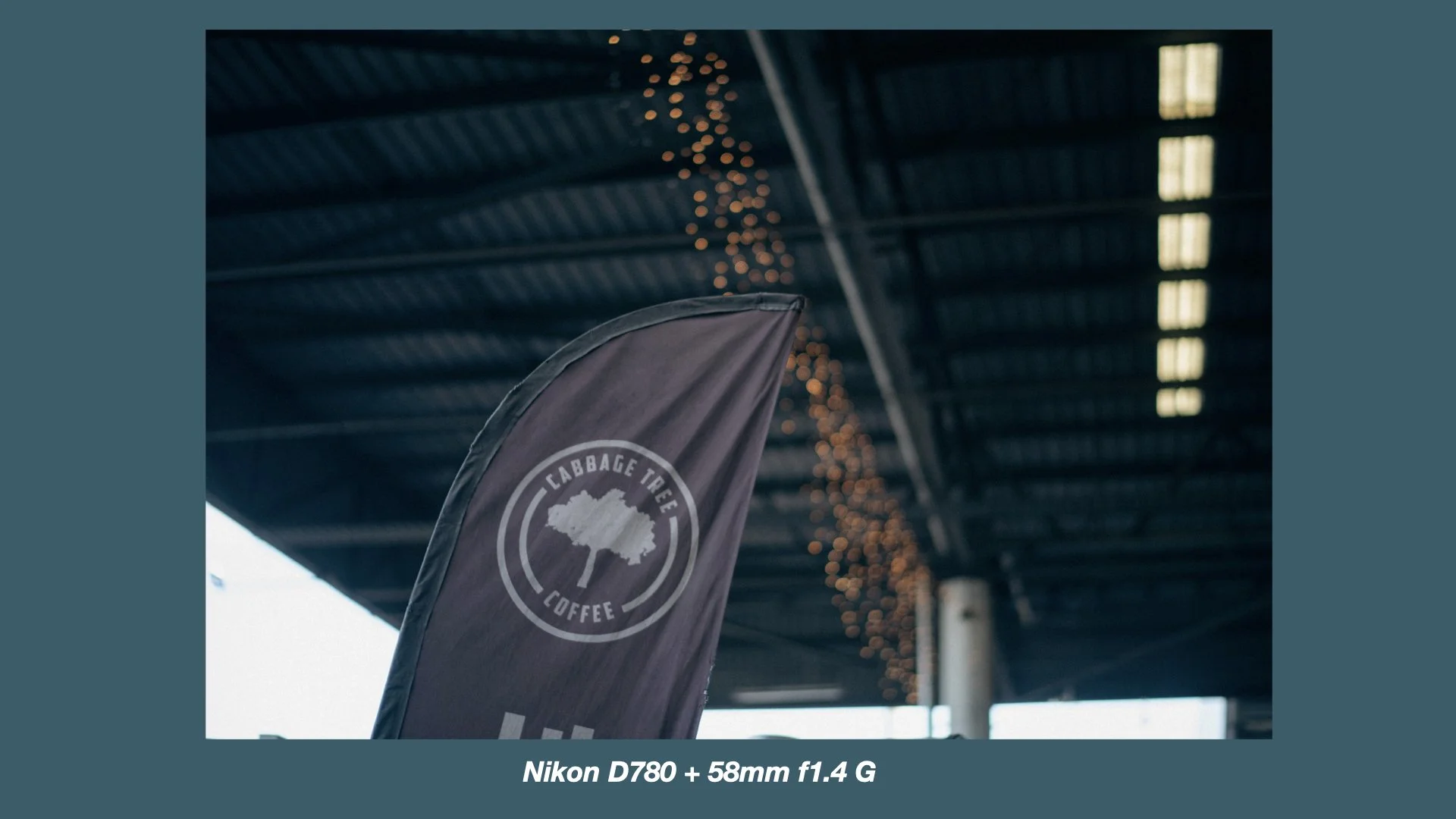
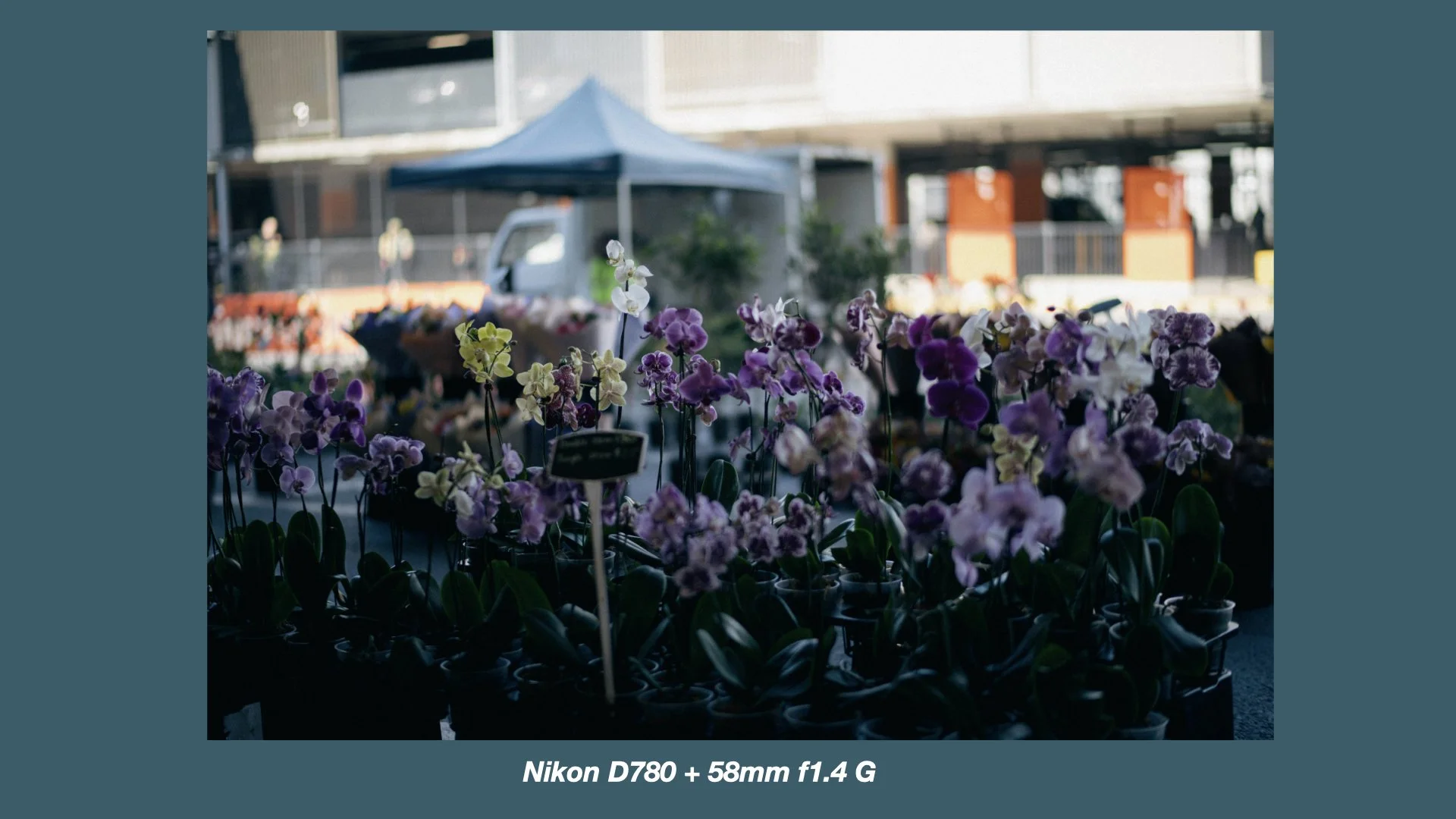
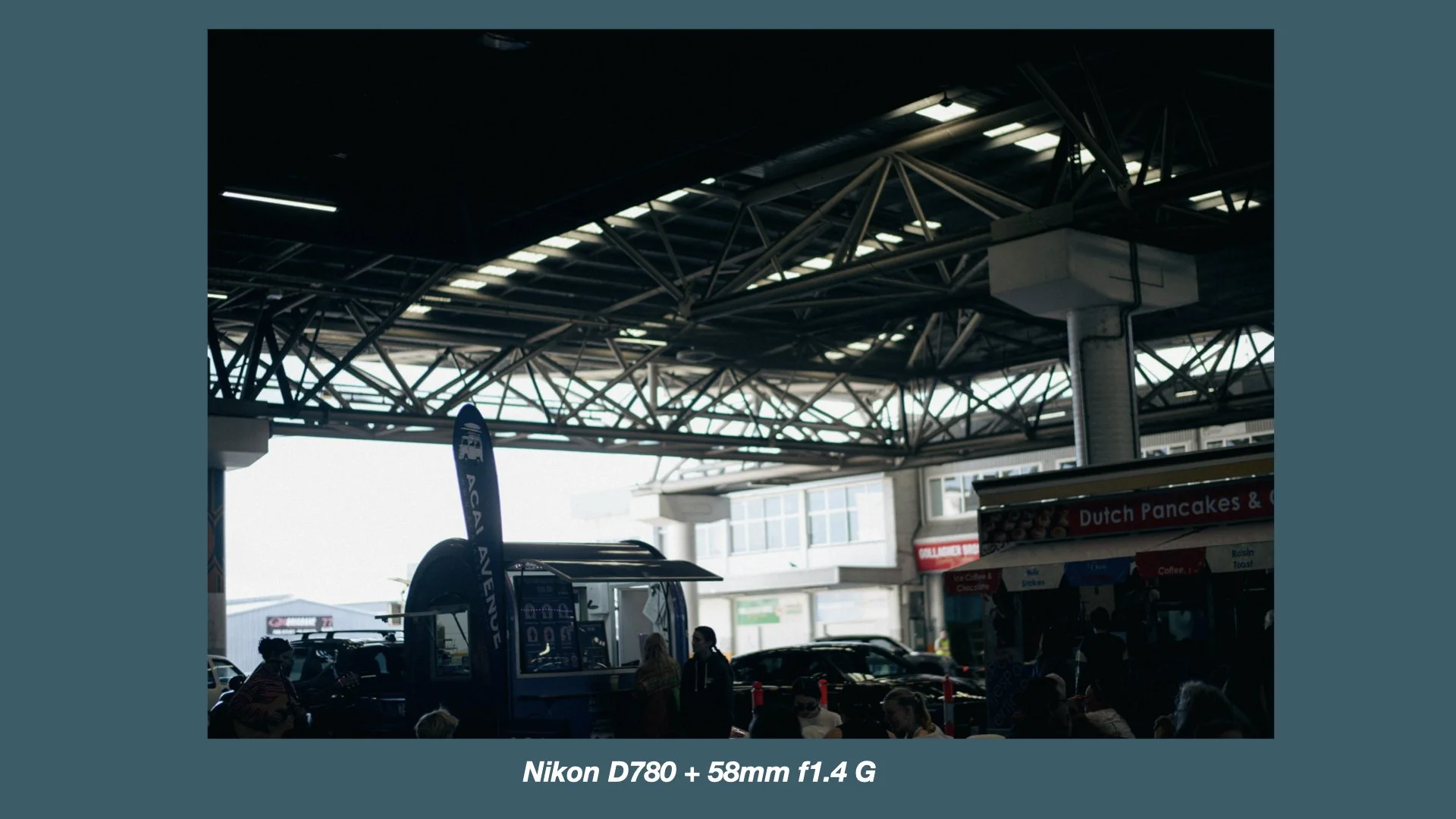
In extremely backlit situations - the full midday sun vs undercover market stalls, the focus is less reliable, and when I’m attempting to layer with elements in the foreground, the focus point may not be small enough to catch the subject in the background.
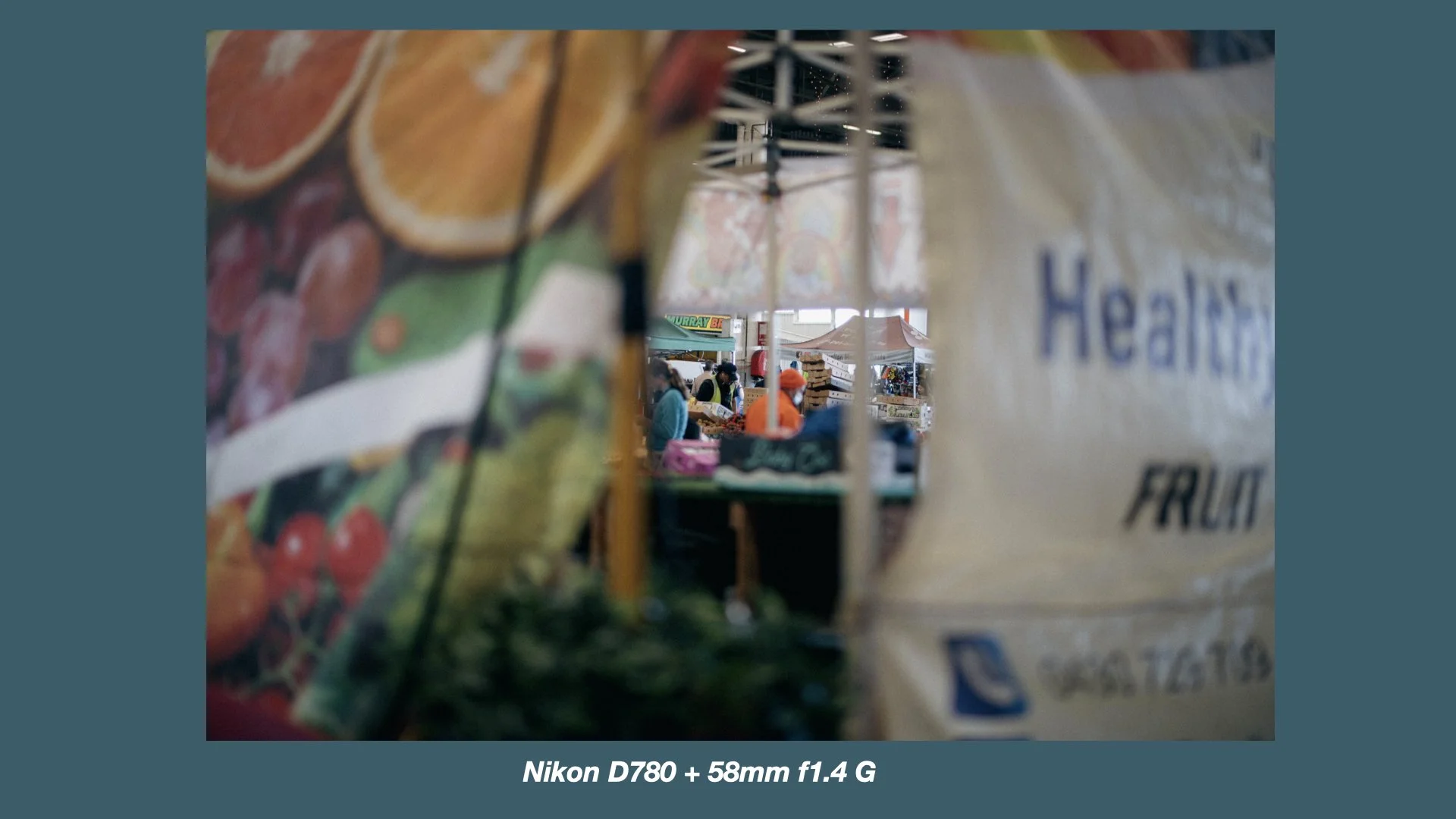
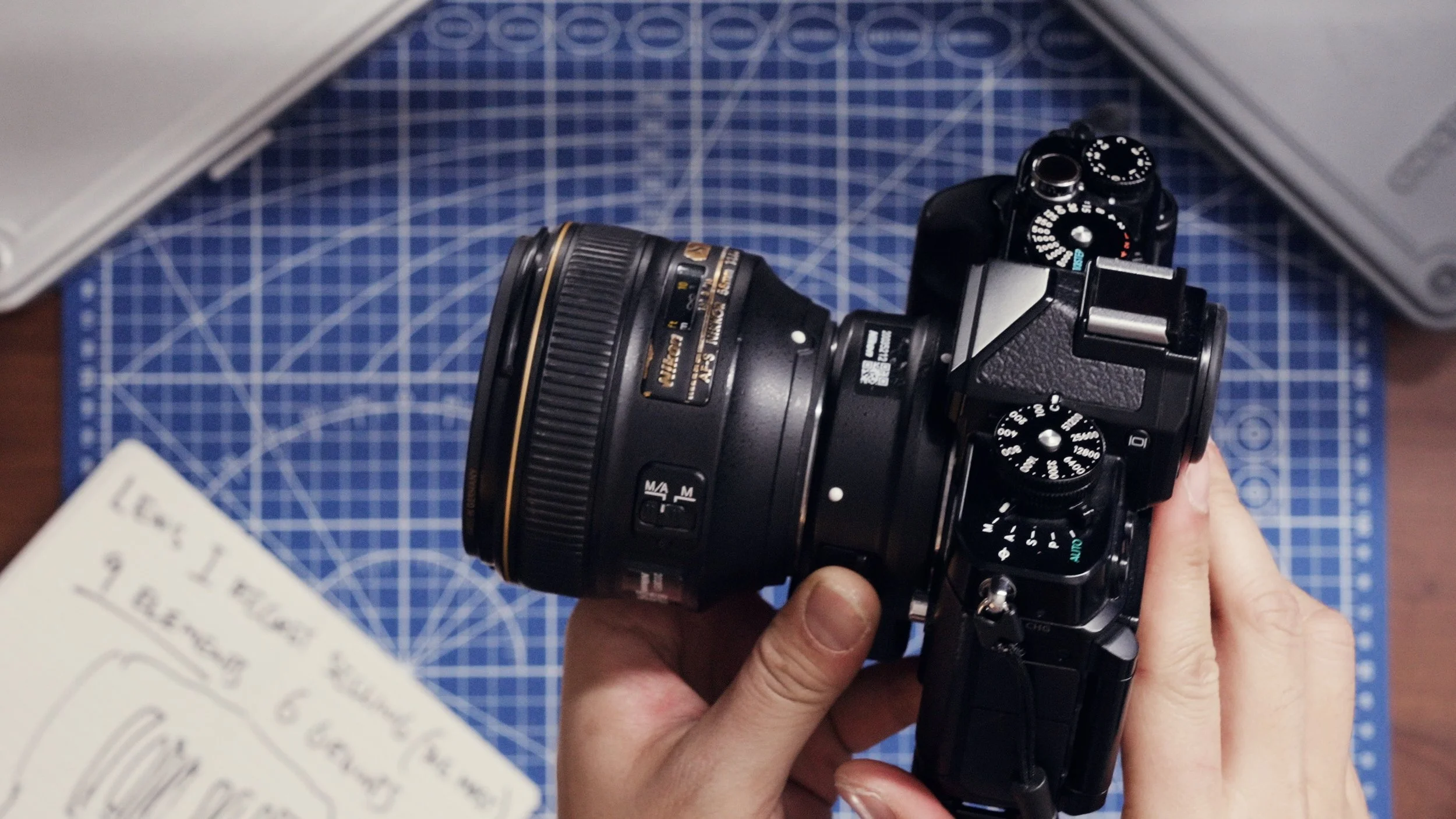
Other than that the viewfinder is fun to use, never feels like staring into a screen, you just need to trade some AF accuracy. When I switched the 58mm onto the Z5ii with the FTZ adapter, that accuracy came back. 3D tracking via the EVF or the screen both worked flawlessly as you’d expect, just like a modern Z lens. Shooting through layers of glass, backlit subjects, foreground layering, it never missed a beat. The metering was a bit more consistent too in these high contrast scenes, the benefit of mirrorless technology.
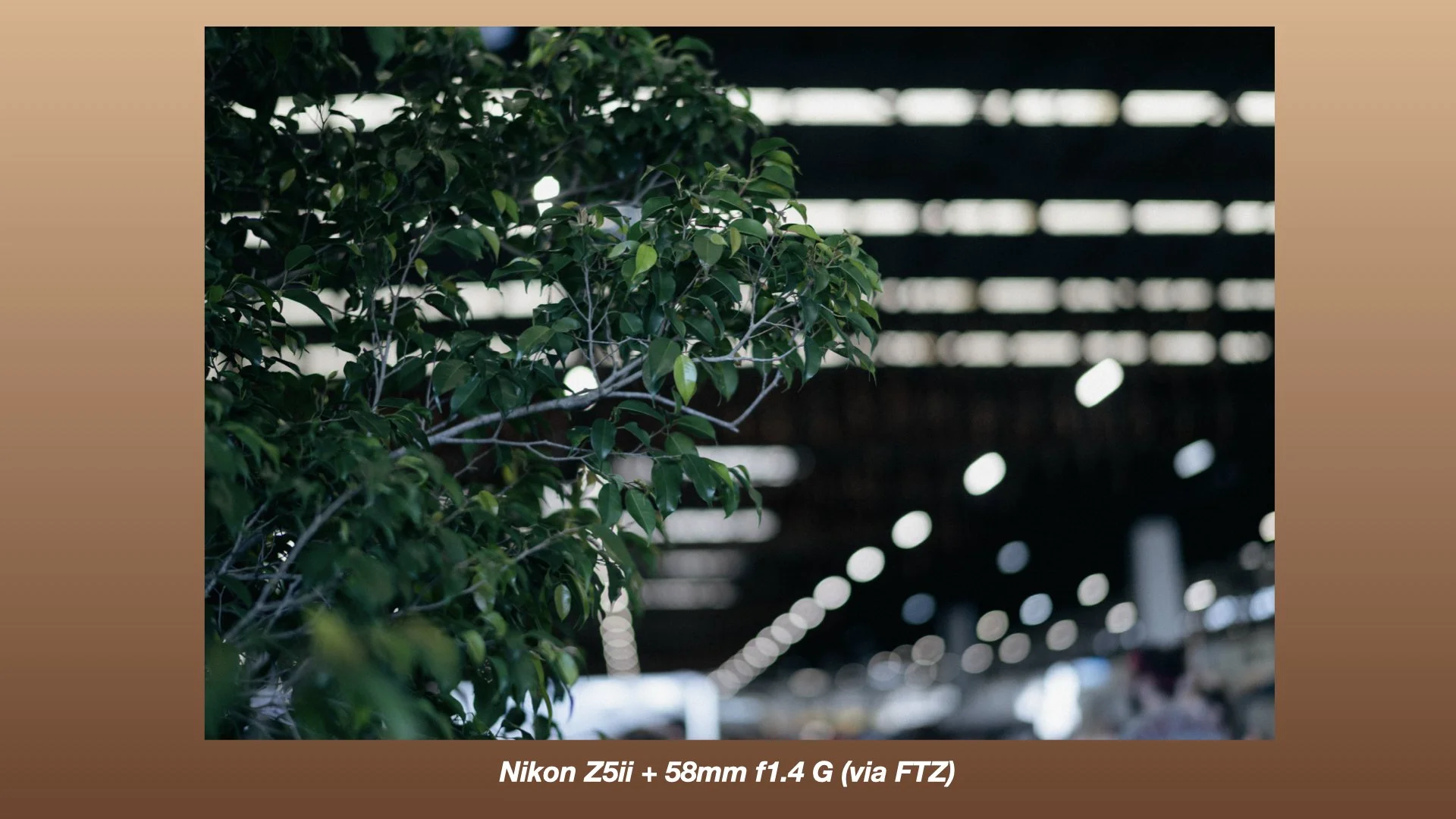
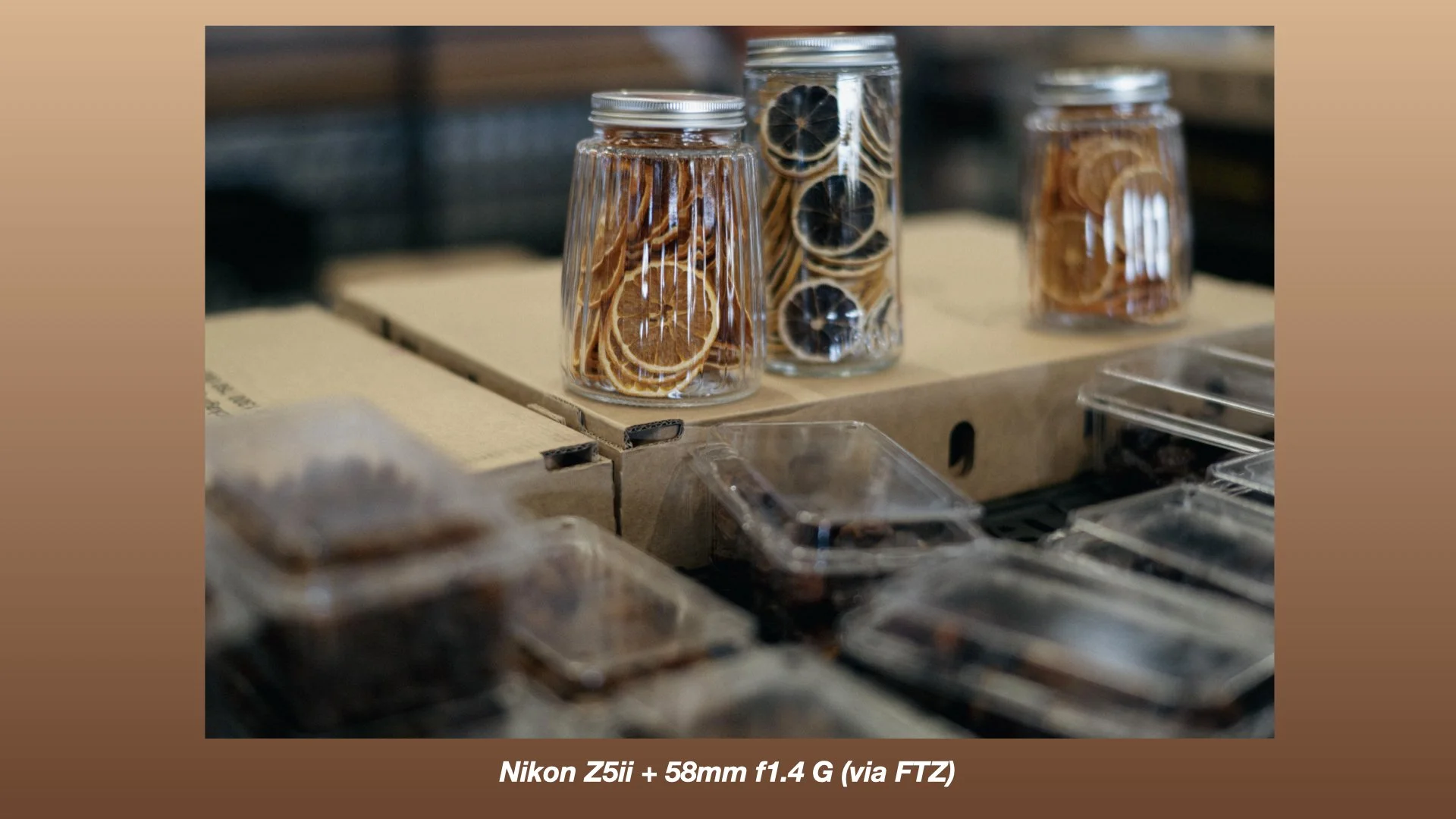
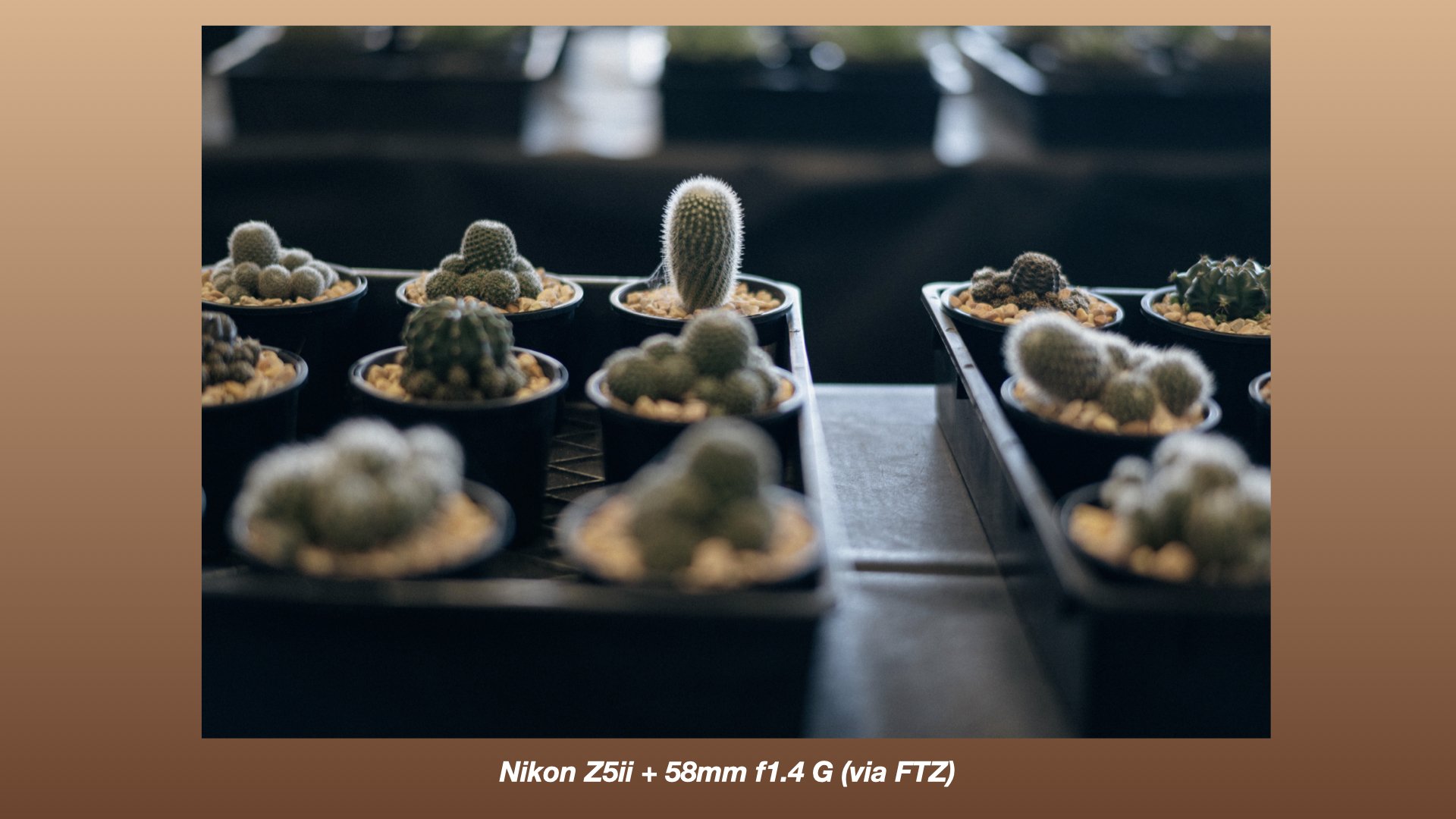
What I noticed as well is the types of shots I was getting felt more casual. Using the screen meant I can hold the smaller Z5ii further away from my body, get closer to random jars, puddles, and reflections for different compositions.
The reason I still preferred using the 58mm on the D780 however, is the handling The grip on the Z5ii is great, but D780’s taller grip is on another level comfort wise, even if it means it fits less easily into a bag. Paired with the 58mm 1.4 it’s a perfect match.
Despite its bright f1.4 aperture the 58mm“short and thick” - it’s quite light as well, 385 grams, under half a kilo, which makes it balanced on the heavier D780. When adapted using FTZ on the Z5ii, it sticks out from the lens mount much more. The handling isn’t as nice, the centre of gravity shifts to the front, which is a bit of an issue with most Z-mount lenses (other than the 26mm, 28mm, and 40mm Z lenses). For now there’s nothing quite renders like this 58mm, just one of the reasons you should hang on to a DSLR.
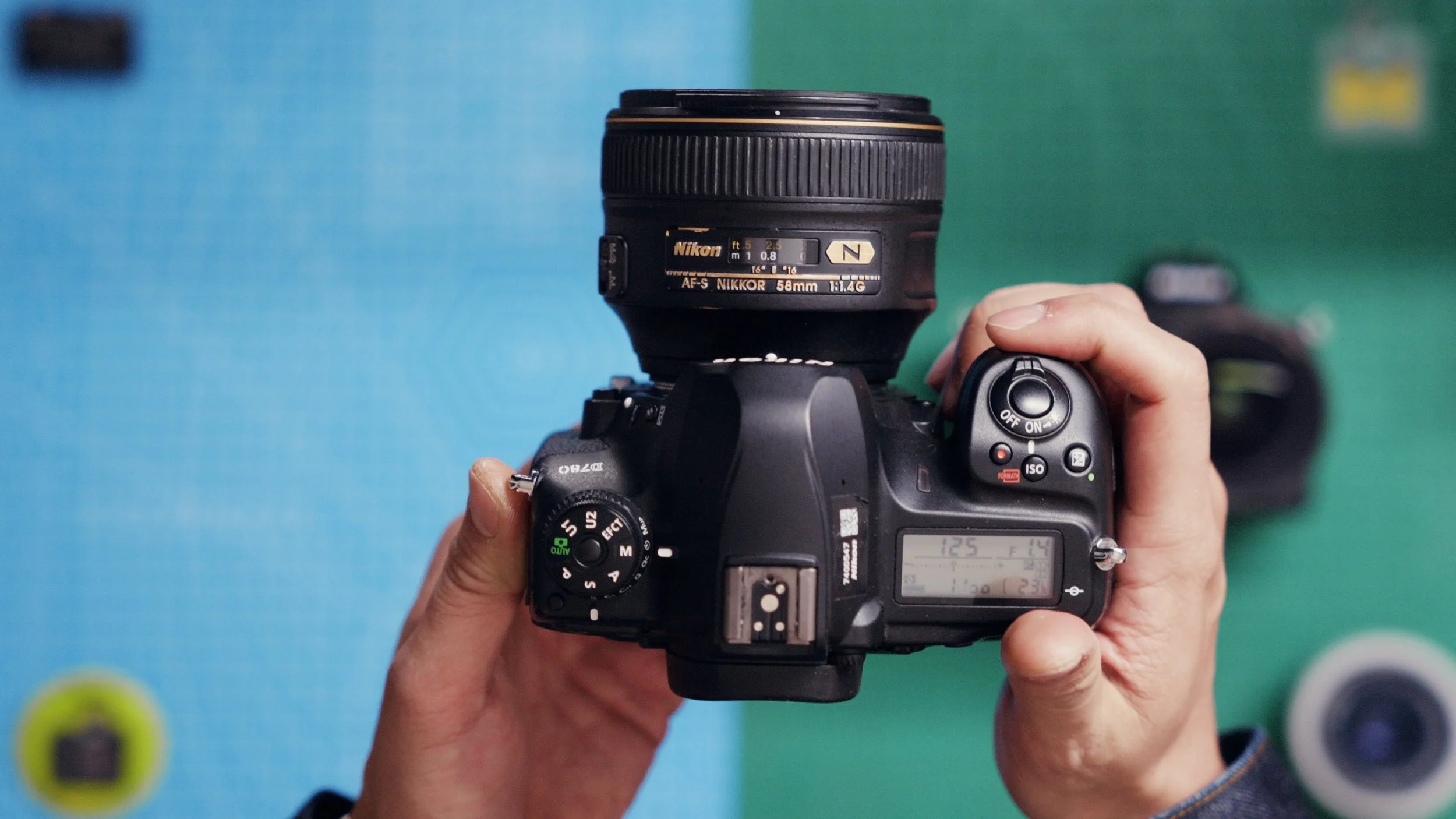
The reason why I recommend DSLRs for anyone new to photography is not just because they’ve become so cheap. DSLRs’ optical viewfinder means you’re not staring at a screen. Not limited to your phone’s built in colour profiles, or the exposure preview, you make more mistakes, and learn to see what’s around you differently.
But my bias is I prefer older things. The feeling I was born 20 years later than I ought to be? Now that mirrorless has become more affordable, entry-level cameras so capable, does the last DSLR still make sense?
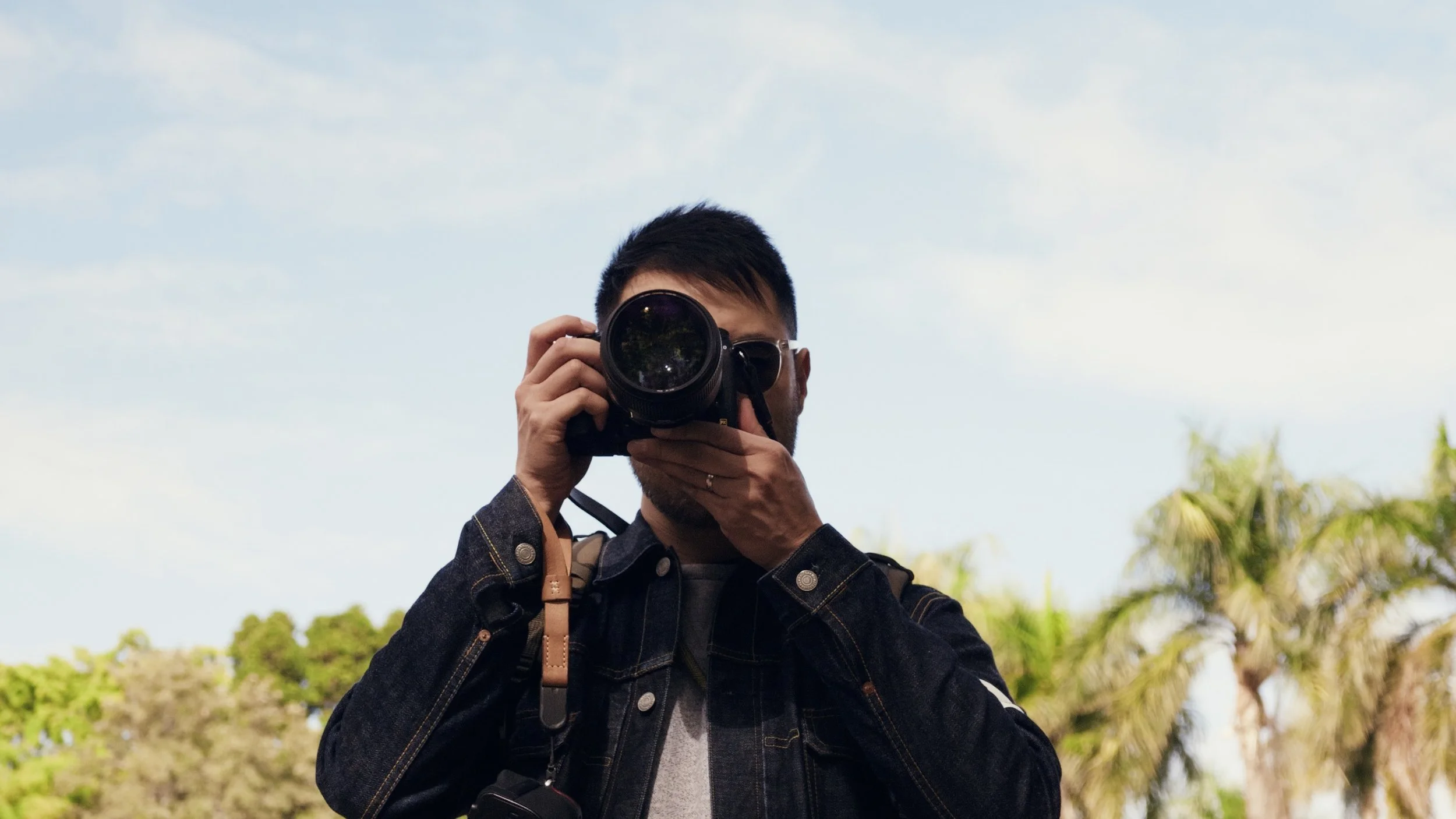
If it’s just to access the second legendary F-mount lens then yes. There’s no Z-mount equivalent yet, the 105mm f1.4 E. I’d love to be comparing this 105 f1.4 against a 105 1.8S on Z-mount, but that lens doesn’t exist, at least not yet.
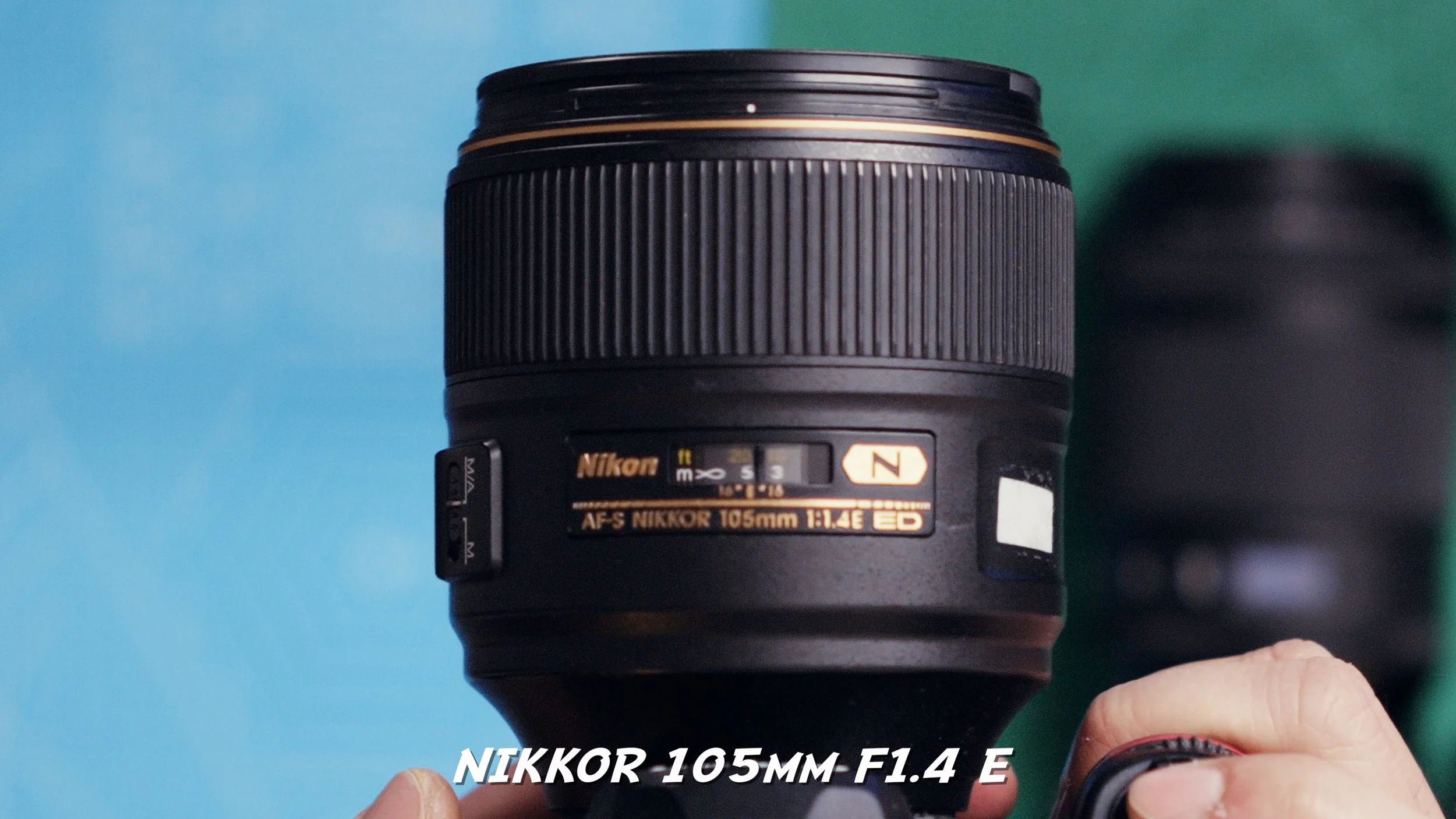
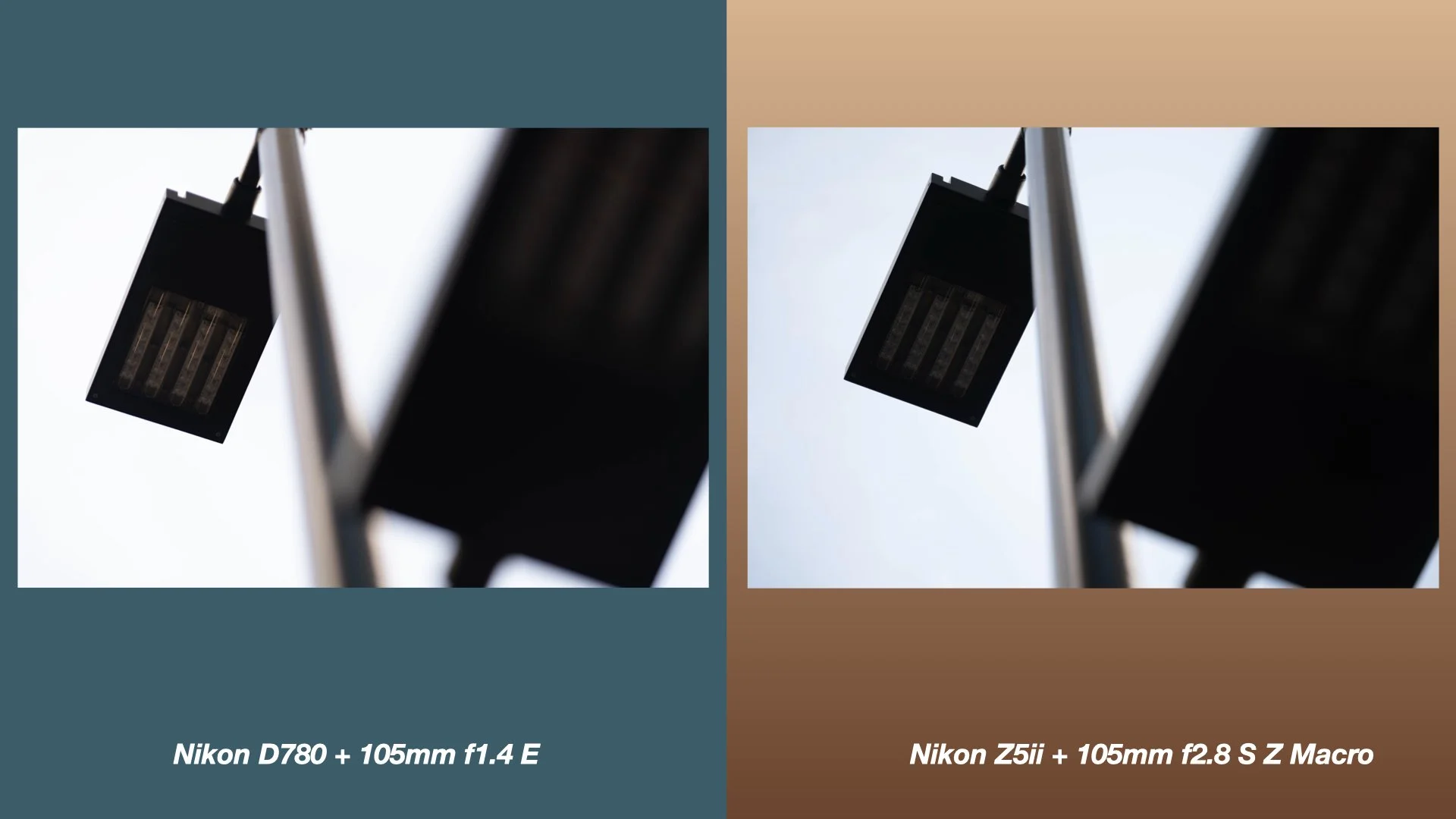
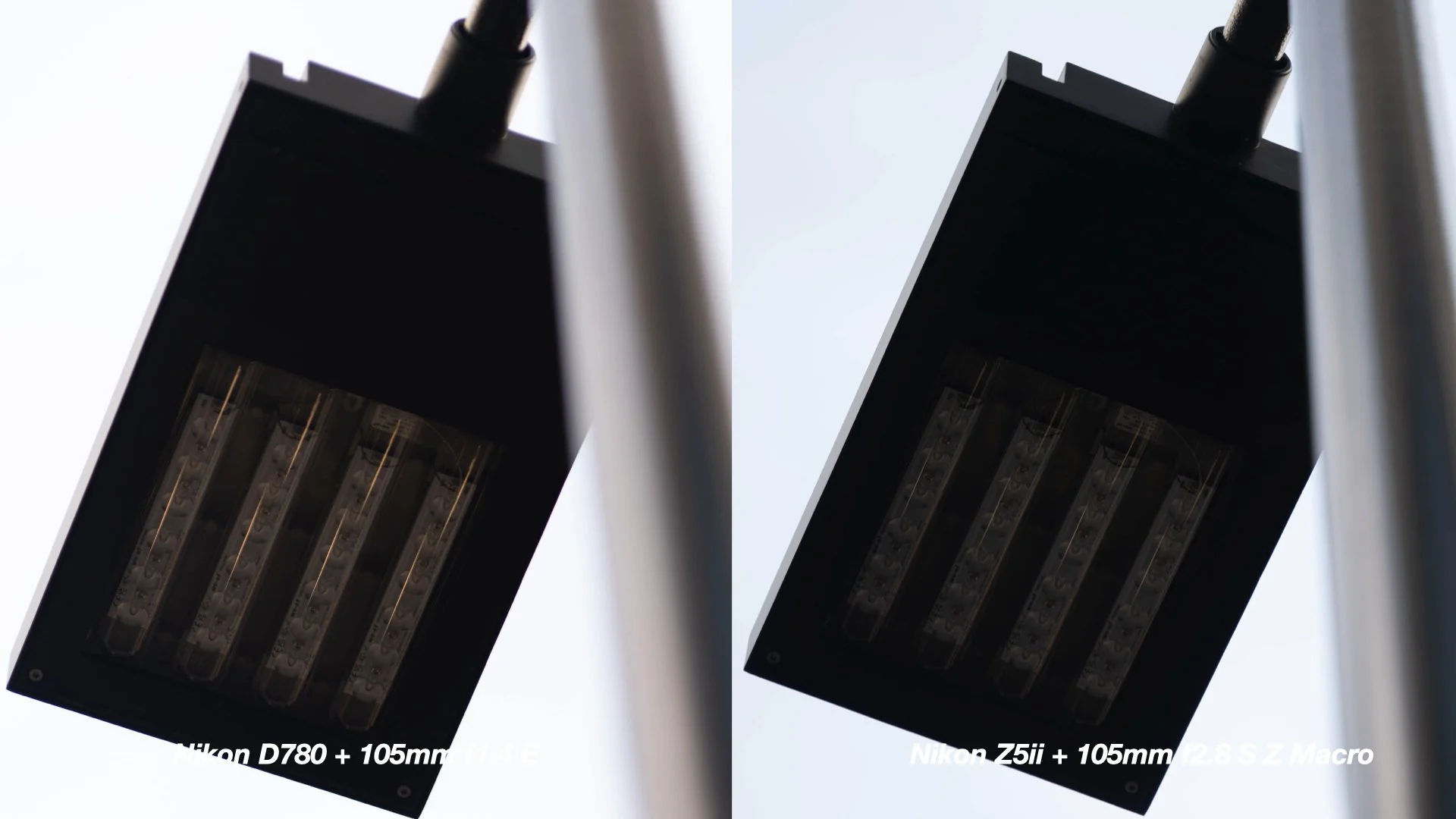
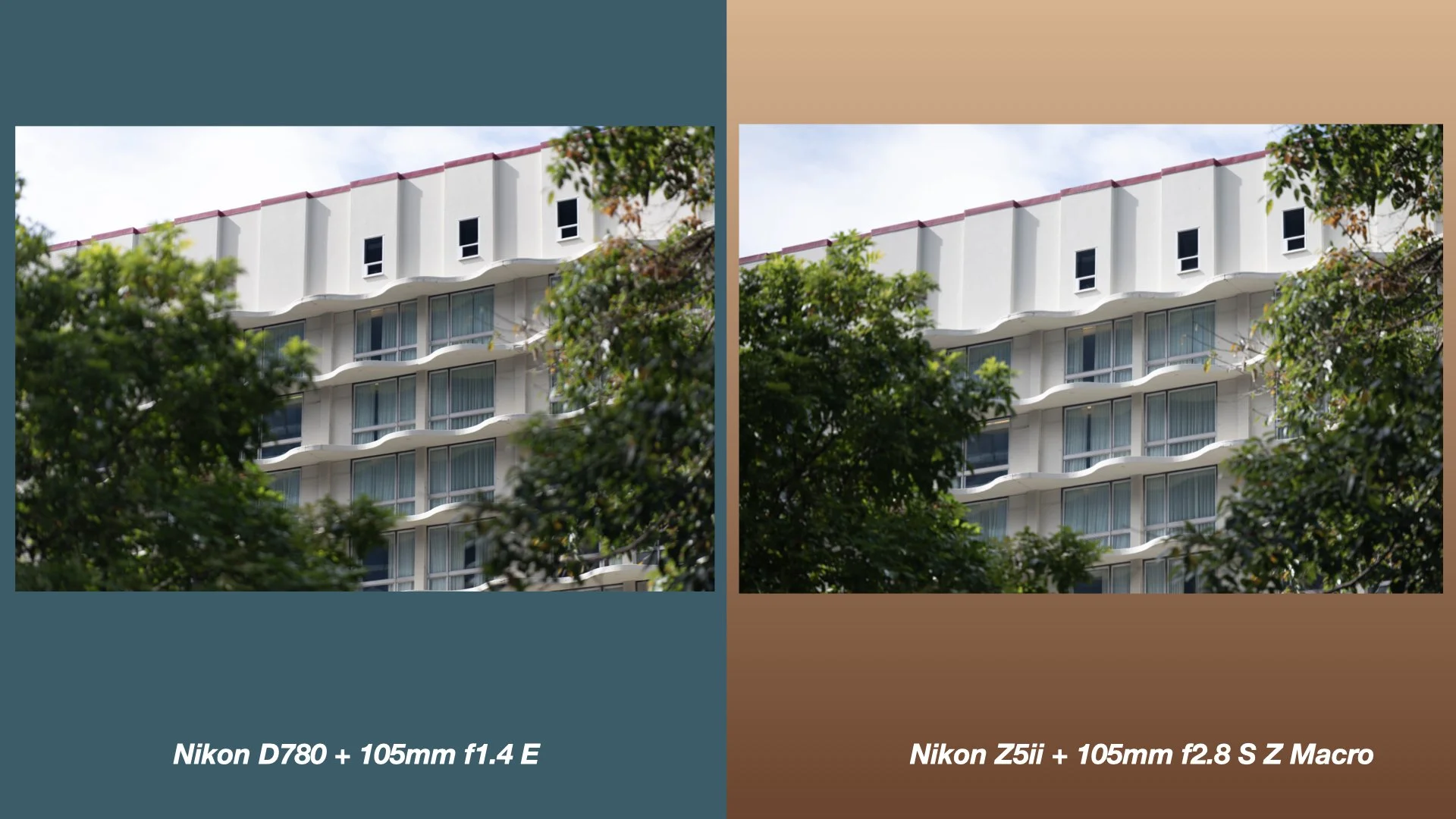
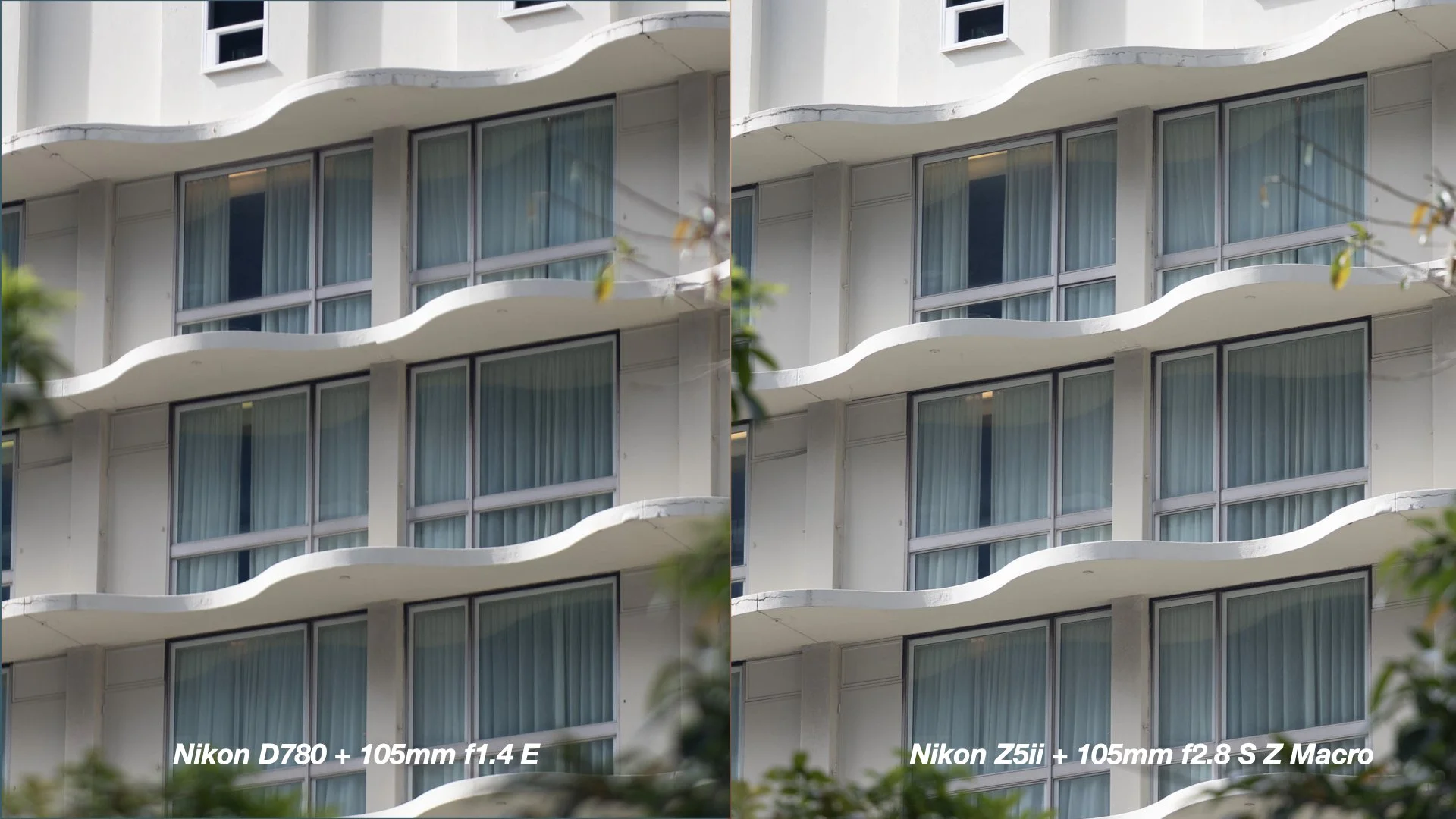
On this day-time photowalk in the central business district, that extra reach let me capture some abstract architecture. It’s as big as I’d want a prime to be for everyday photography, and the image quality is amazing. It’s not a fair fight, but for what it’s worth wide open it’s sharp, but not as sharp as the lens I’m comparing it against - the only Z-mount 105mm currently in production, the 105 f2.8 S Z macro.
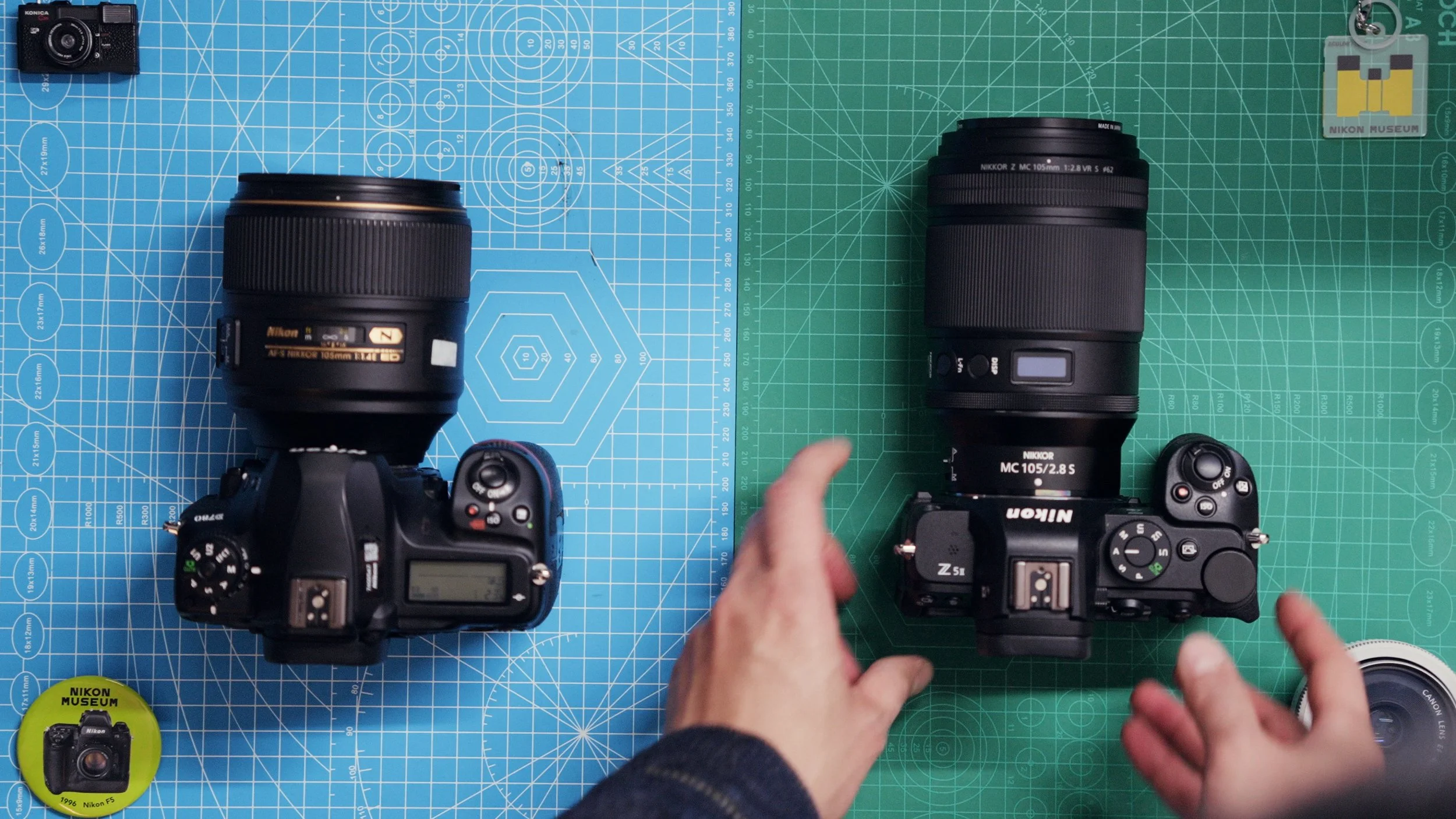
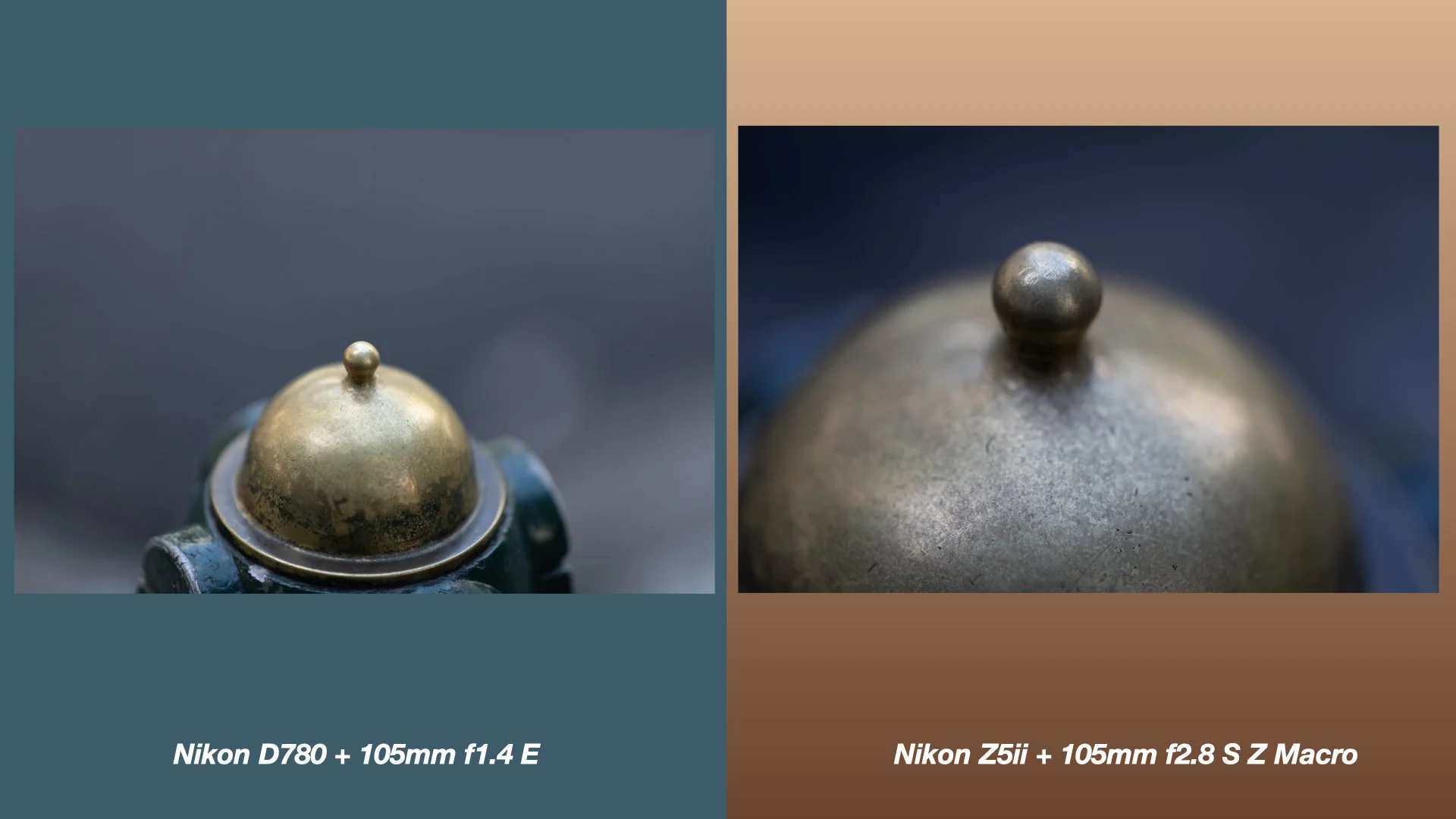
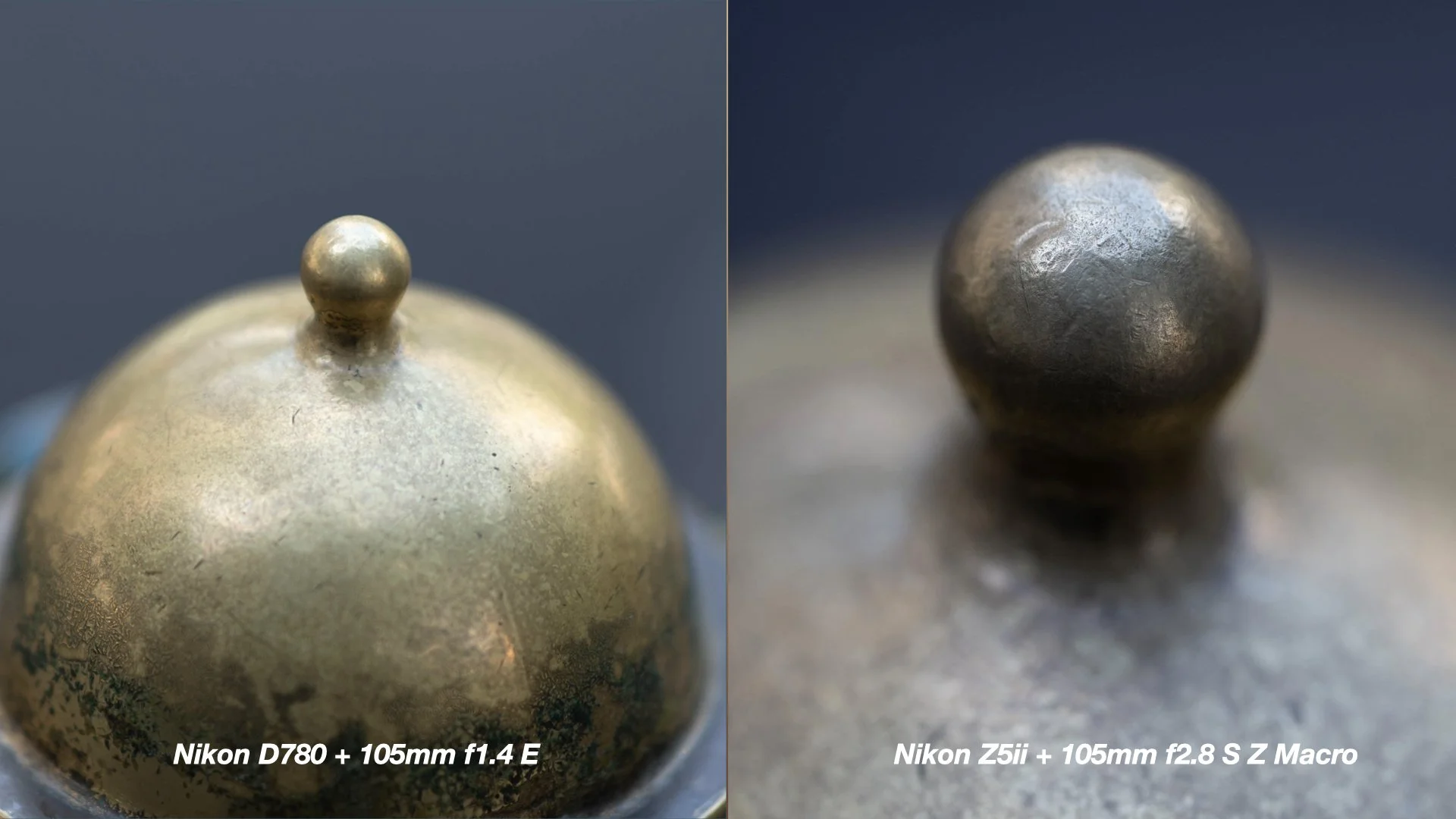
The macro of course gets so much closer. I found it surprisingly versatile for street photography. It’s a big lens but it’s very light so it was a balanced setup to cart around.
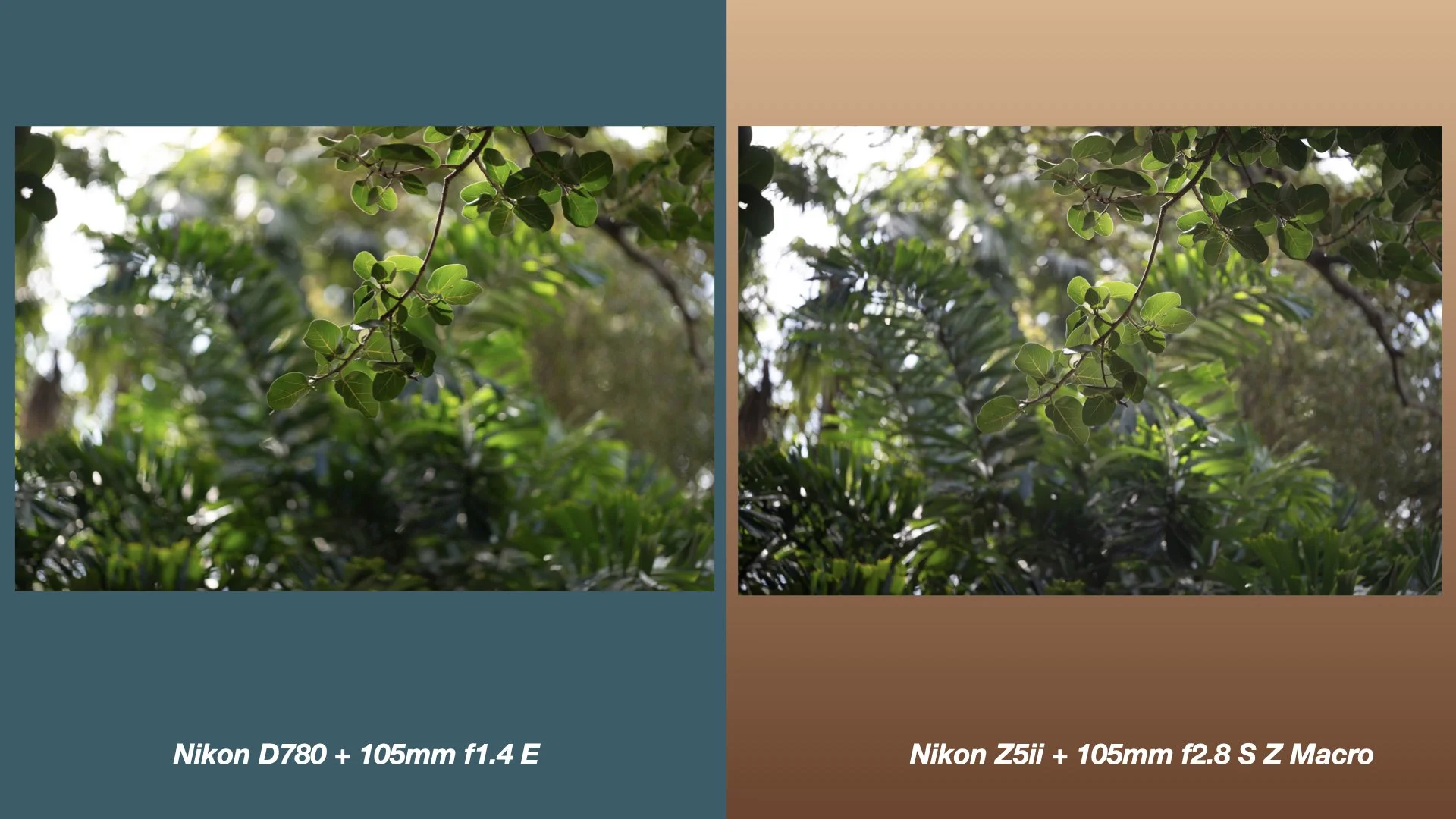
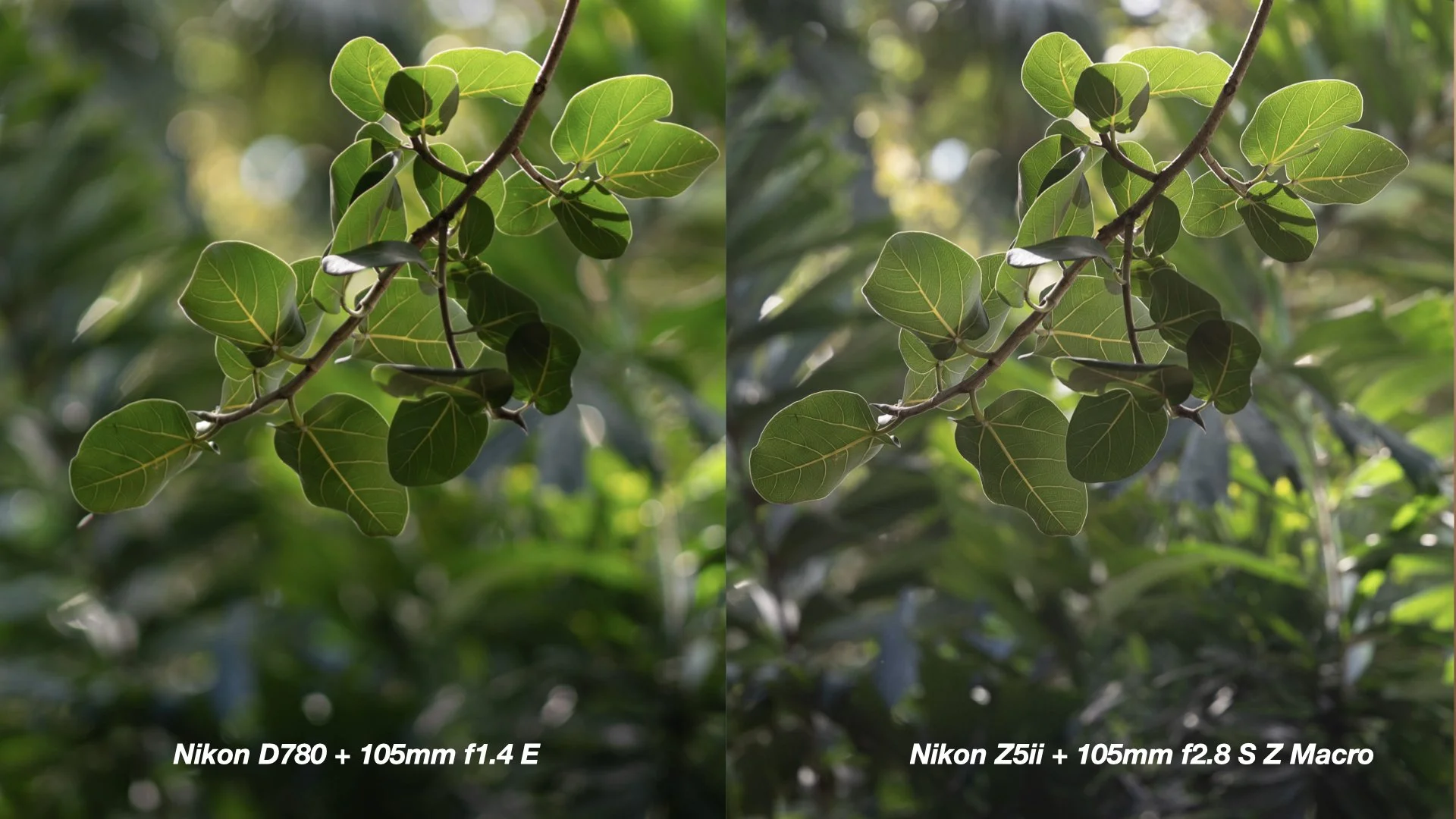
Booth 105mm lenses are very well controlled for aberrations. The 105mm f1.4 is one of the last F-mount primes released in 2016. Its development must have overlapped with Z-mount. Its lens coatings dampen flaring in a very pleasing way, just like the way it handles subject separation.
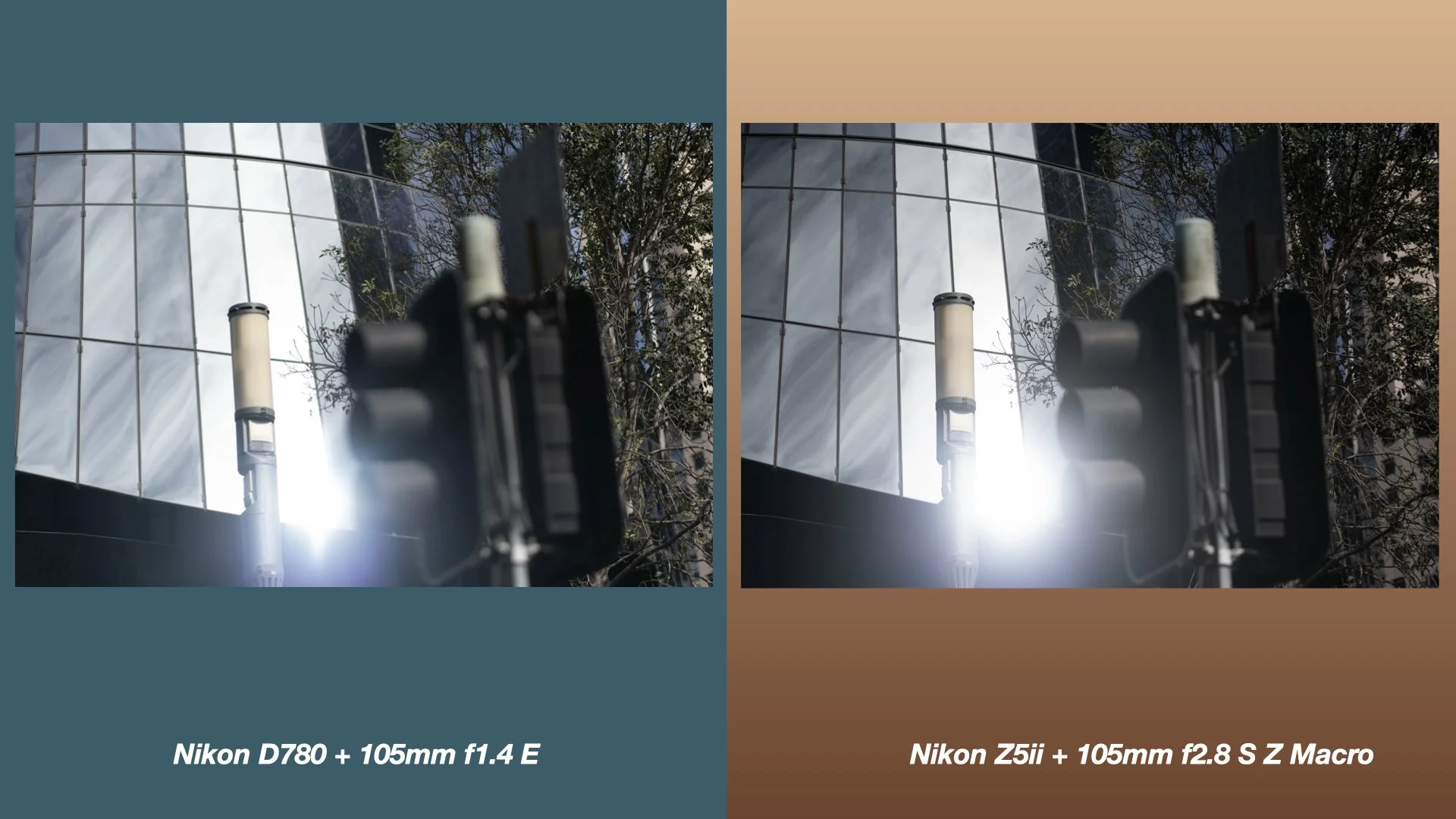
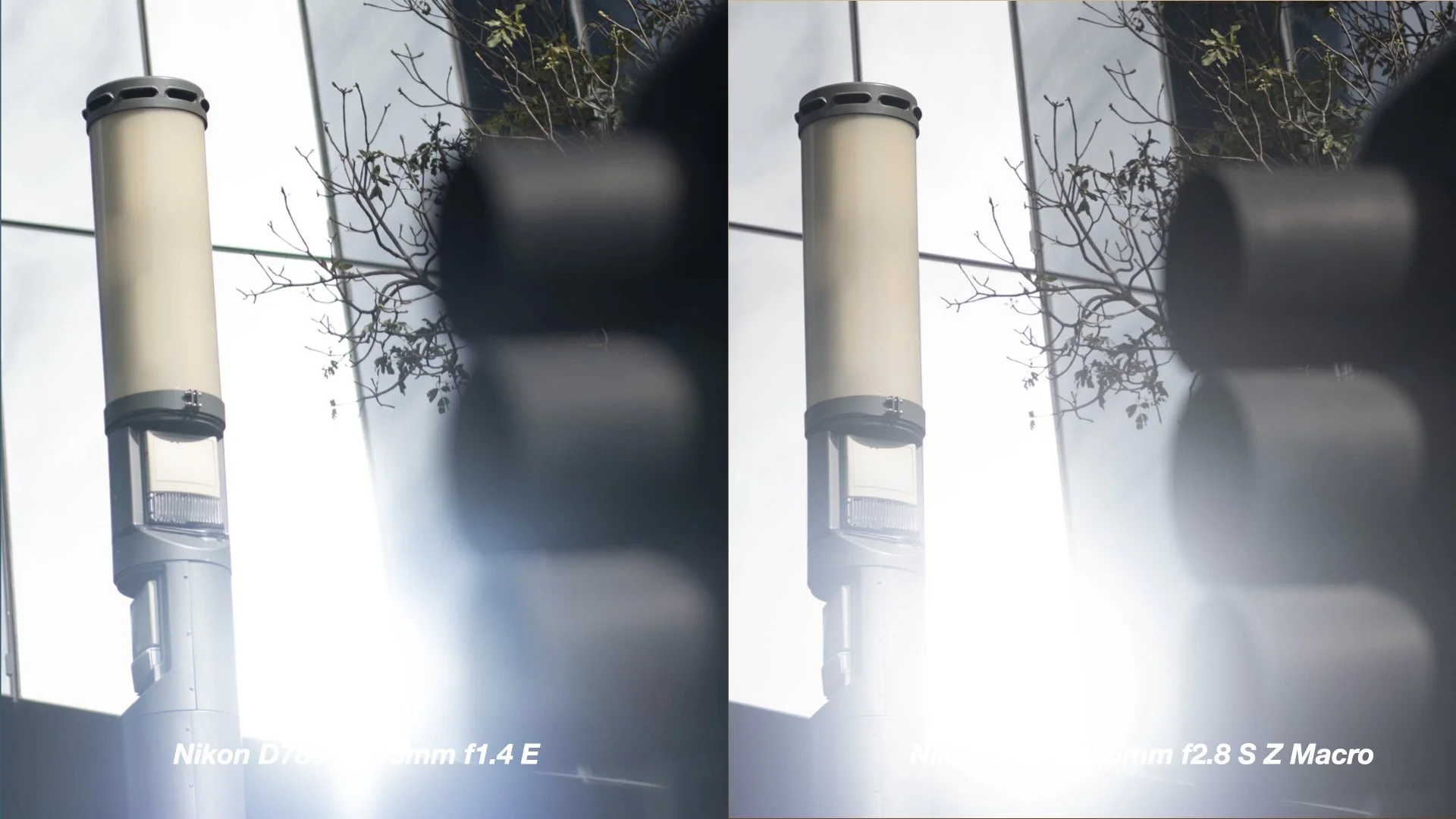
Like the 58mm the 105mm 1.4 is smooth, gradual, a pleasing transition between in and out of focus. Its bokeh catseye around the corners, but there’s not too much soap bubbly swirl, incredibly flattering for portraits.
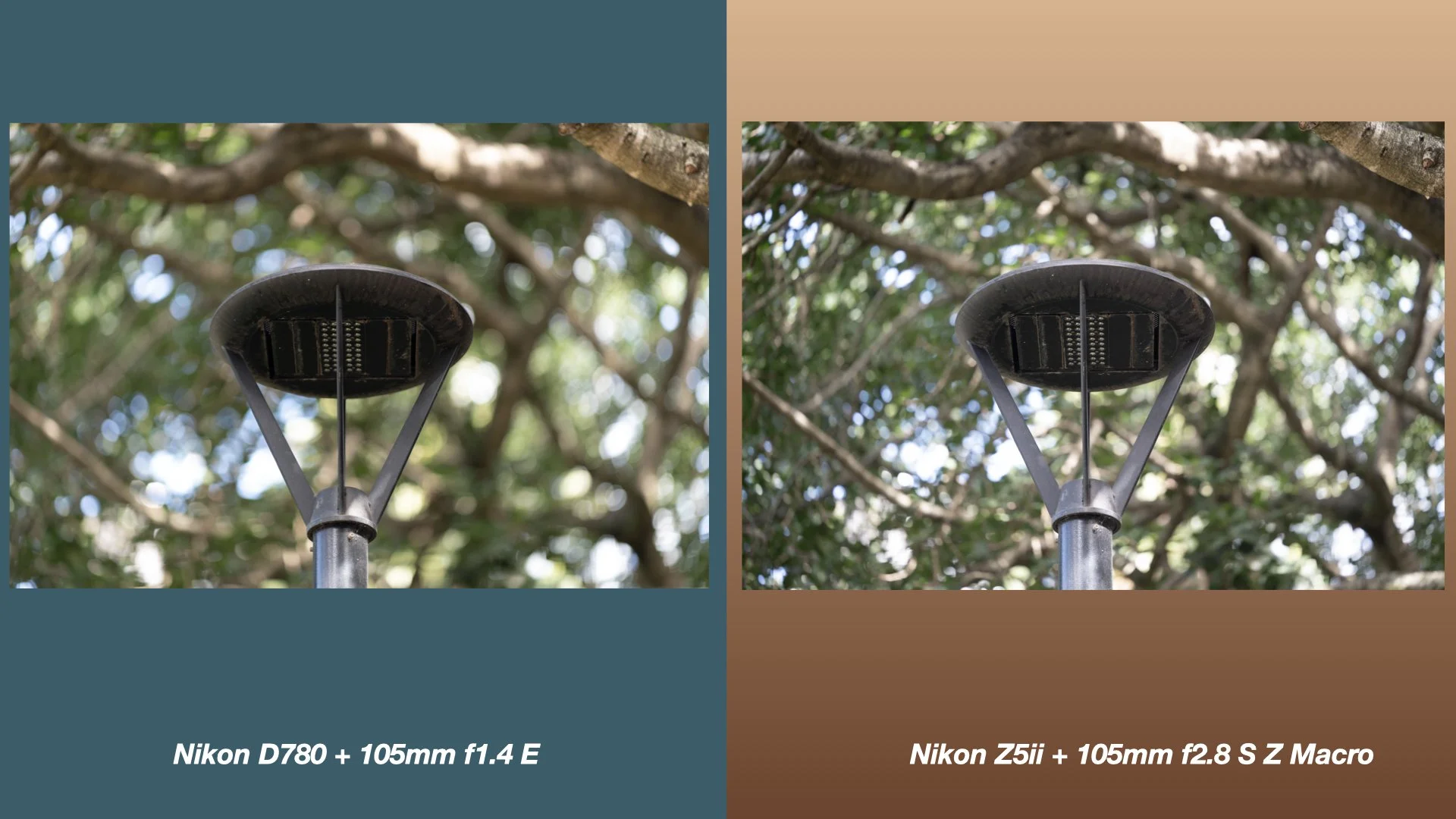
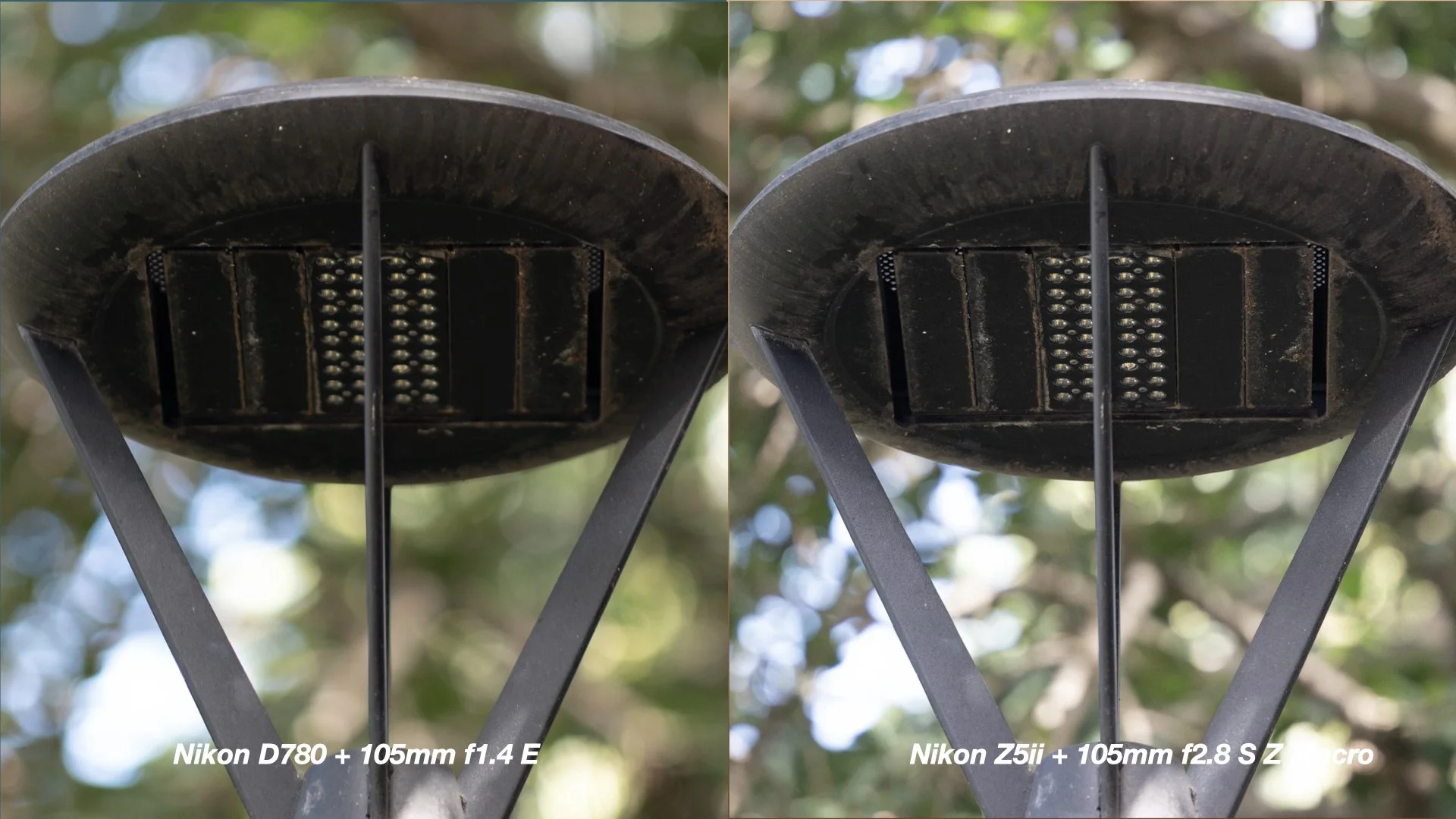
As much as I like optical viewfinders, I have to concede on this super bright sunny day the EVF was more useful. I was trying to compare the bokeh of these two lenses, that out of focus rendering, which is much easier to see on an EVF. f1.4 in bright day light, the D780’s OVF and max 1/8000th of a second shutter speed meant I was at risk of over-exposing constantly. On a few of these shots on the D780 I didn’t realise until I got home they were blown out. Whereas on an EVF’s live exposure preview it’s no longer a thing.
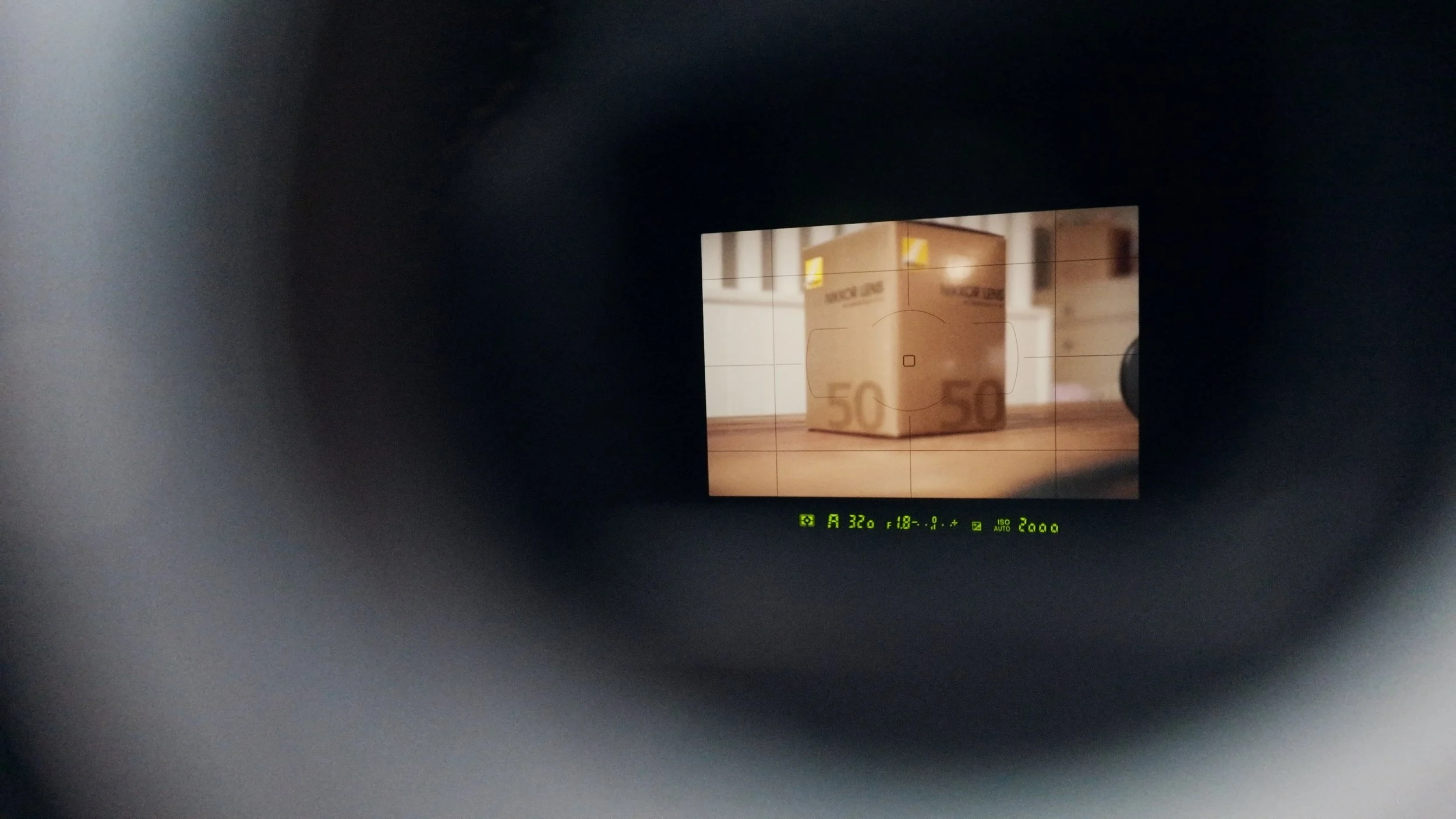
The difference between an average versus a great optical viewfinder isn’t worlds apart - it’s the real world you’re seeing. But for EVFs it’s another story. Most are small, low resolution, and dim, upgrading from DSLRs to mirrorless used to be an immediate viewfinder downgrade, but now even the entry-level Z5ii now has a viewfinder that’s fantastic.
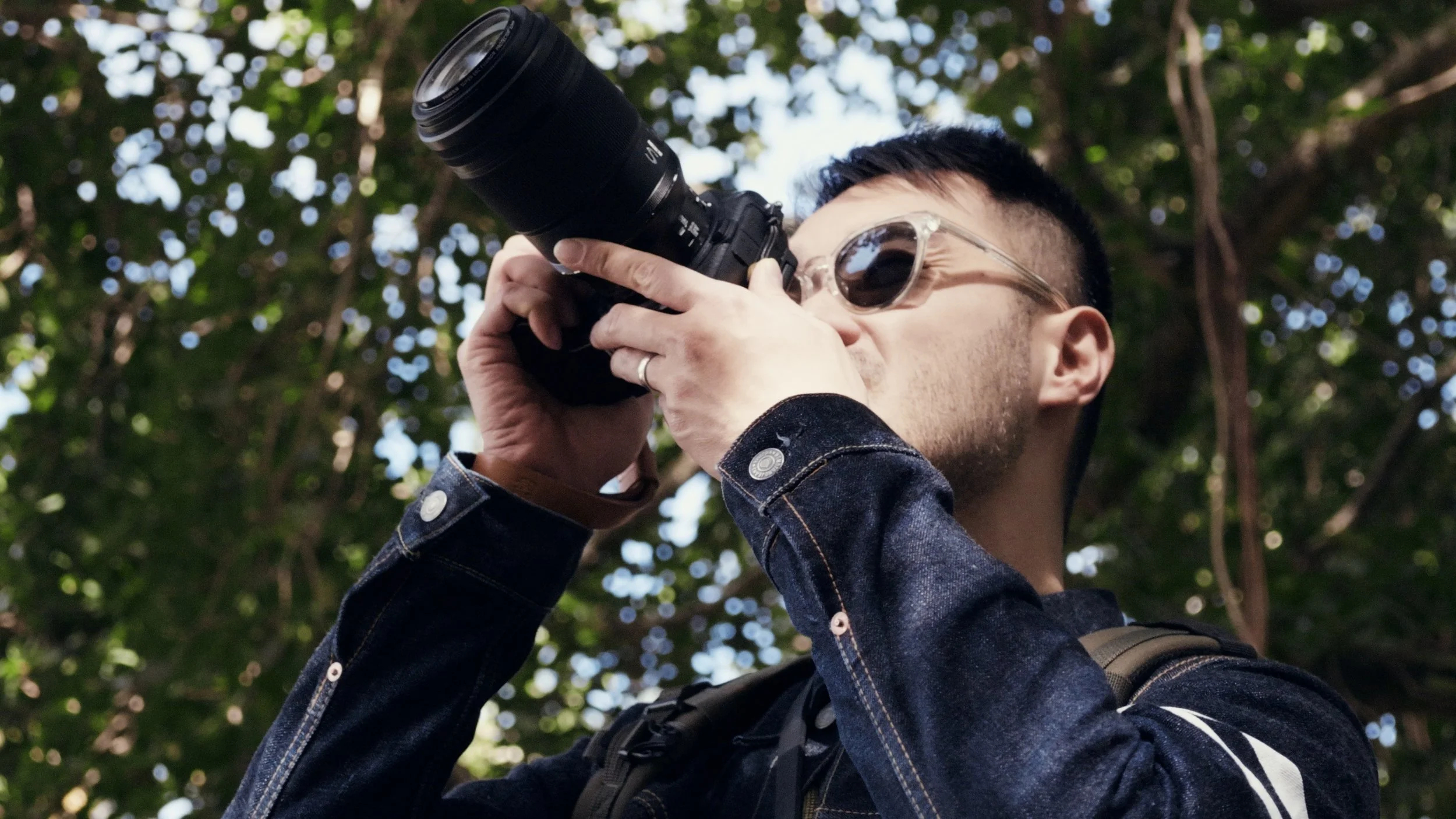
It’s big enough at 0.8X magnification, bright enough at up to 3000 nits. I can wear sunglasses and still compose very clearly to not over-expose the shot. Brand new the Z5ii is significantly cheaper than the D780, if you still haven’t upgraded to mirrorless this may be the best time to do so. A smaller and lighter package with great autofocus, a great EVF, FTZ to adapt your old lenses until you decide to switch to Z-mount, and IBIS.
What about image quality?
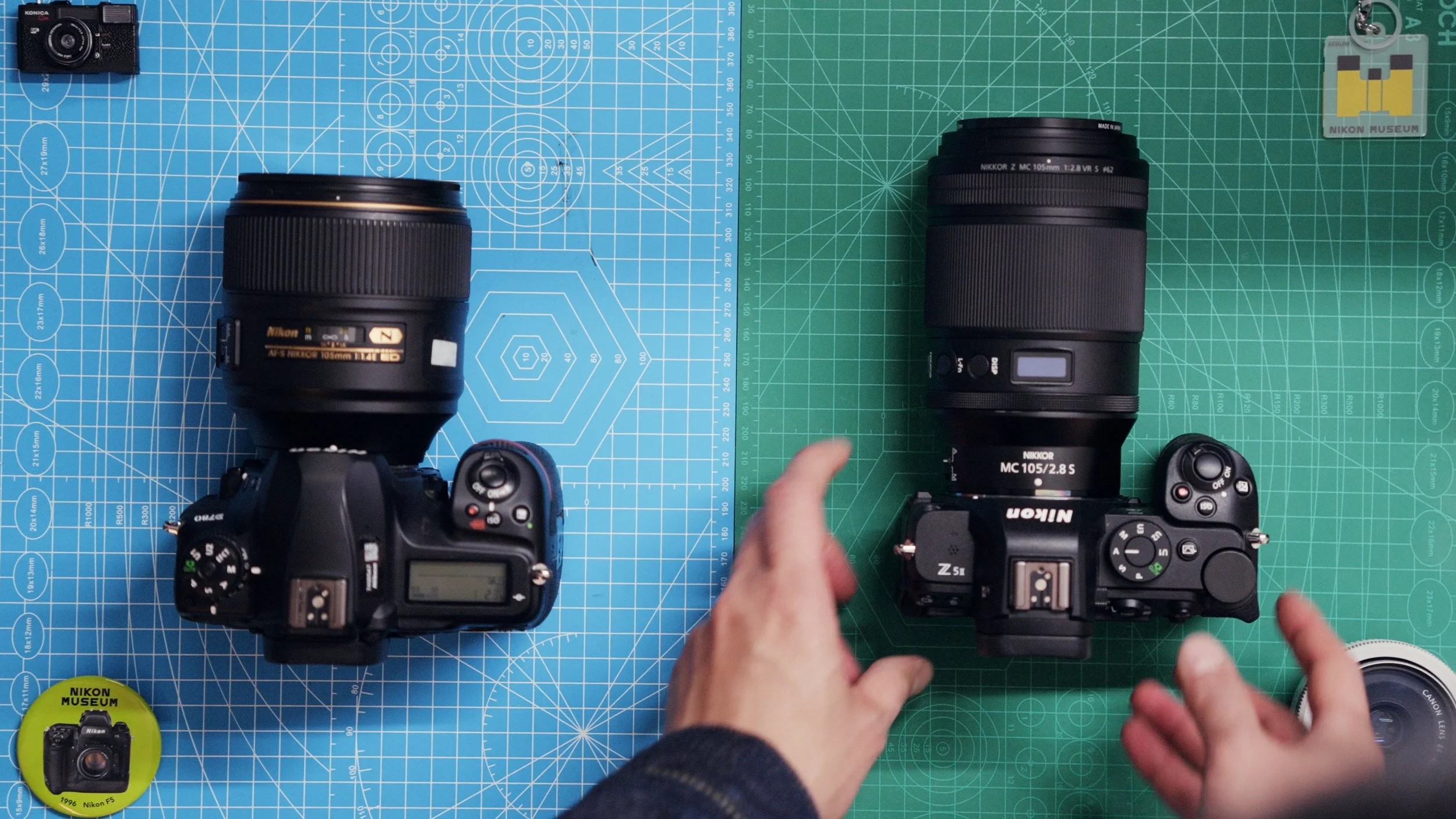
As far as I could find, these two cameras share the same sensor. In all these side by side comparisons so far I edited the RAW files from both cameras using the exact same Lightroom preset. I didn’t correct the white balance for any of them, let the cameras figure it out.
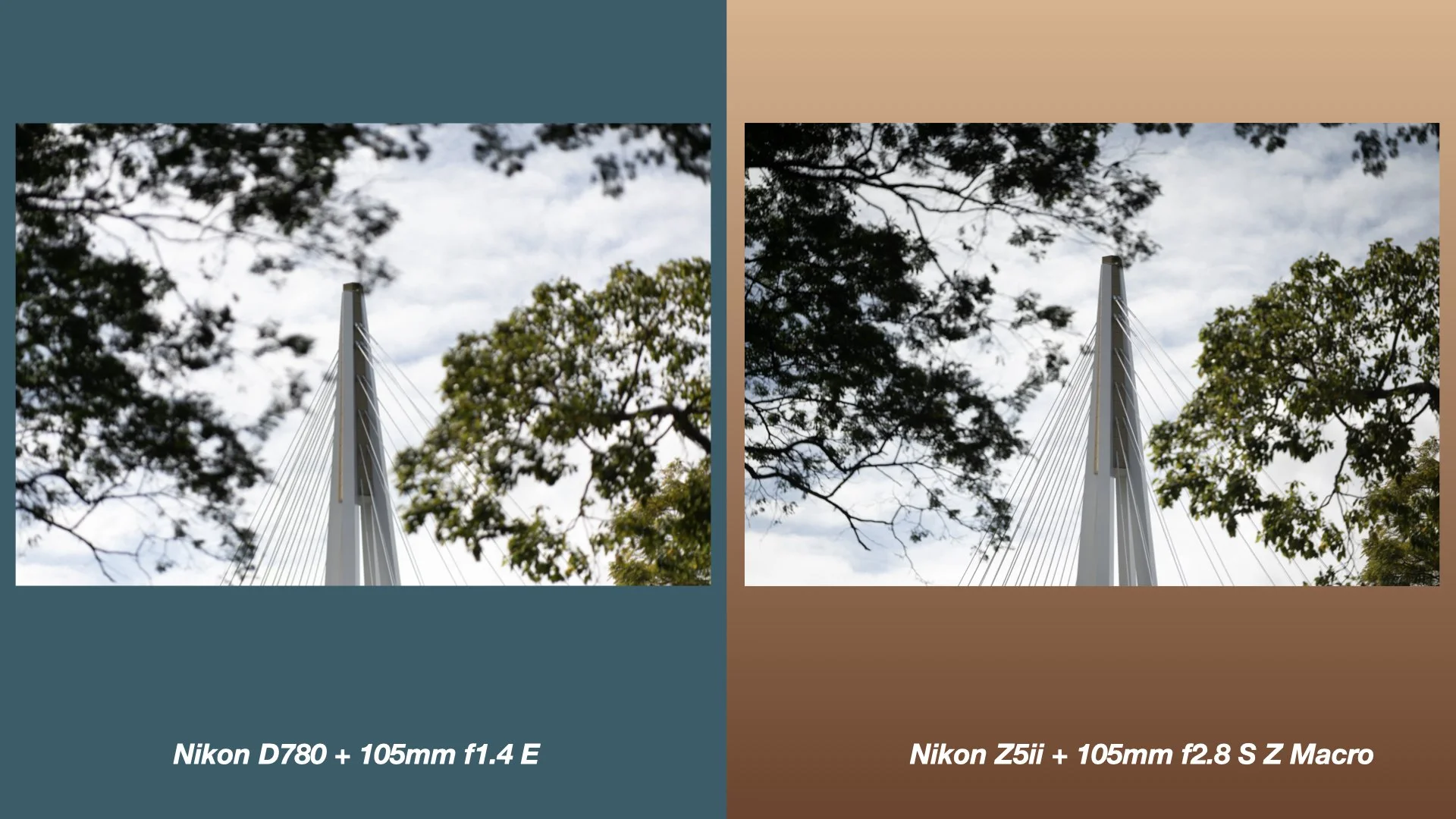
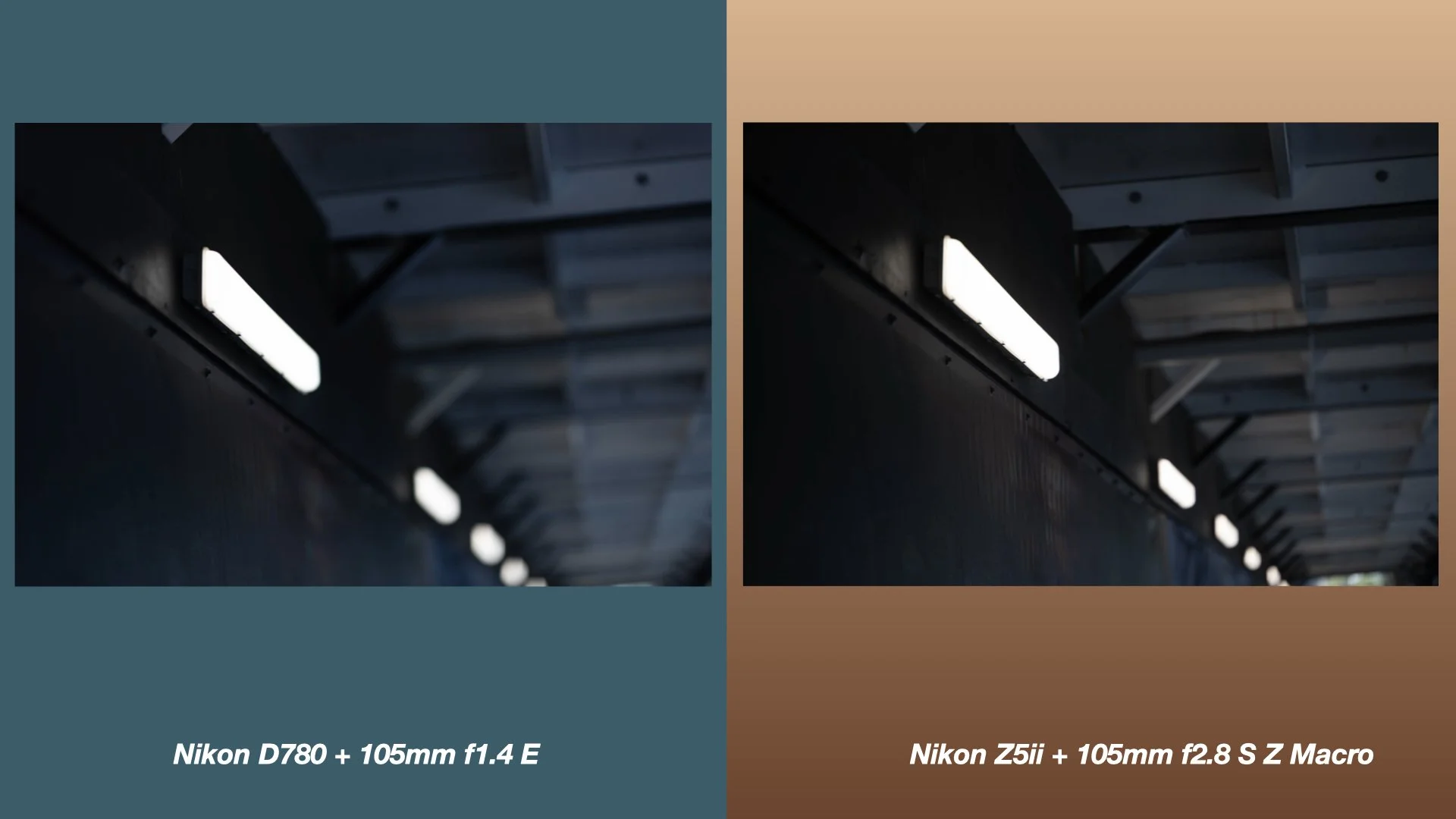
Other than the metering being a little less consistent on the D780, the colours are very similar straight out of camera on both. They share the same 24.5 megapixel non-stacked, Back Side illuminated CMOS sensor found in the original Z6, it’s my favourite full-frame sensor when it comes to image quality.
There should be no need to compare the image quality side by side - but the Z5ii does use an updated Expeed 7 processor. In some cases an improved processor can improve IQ - the most recent example is the Sony A7RIV to A7RV. For my own peace of mind more than anything else I decided to test low light.
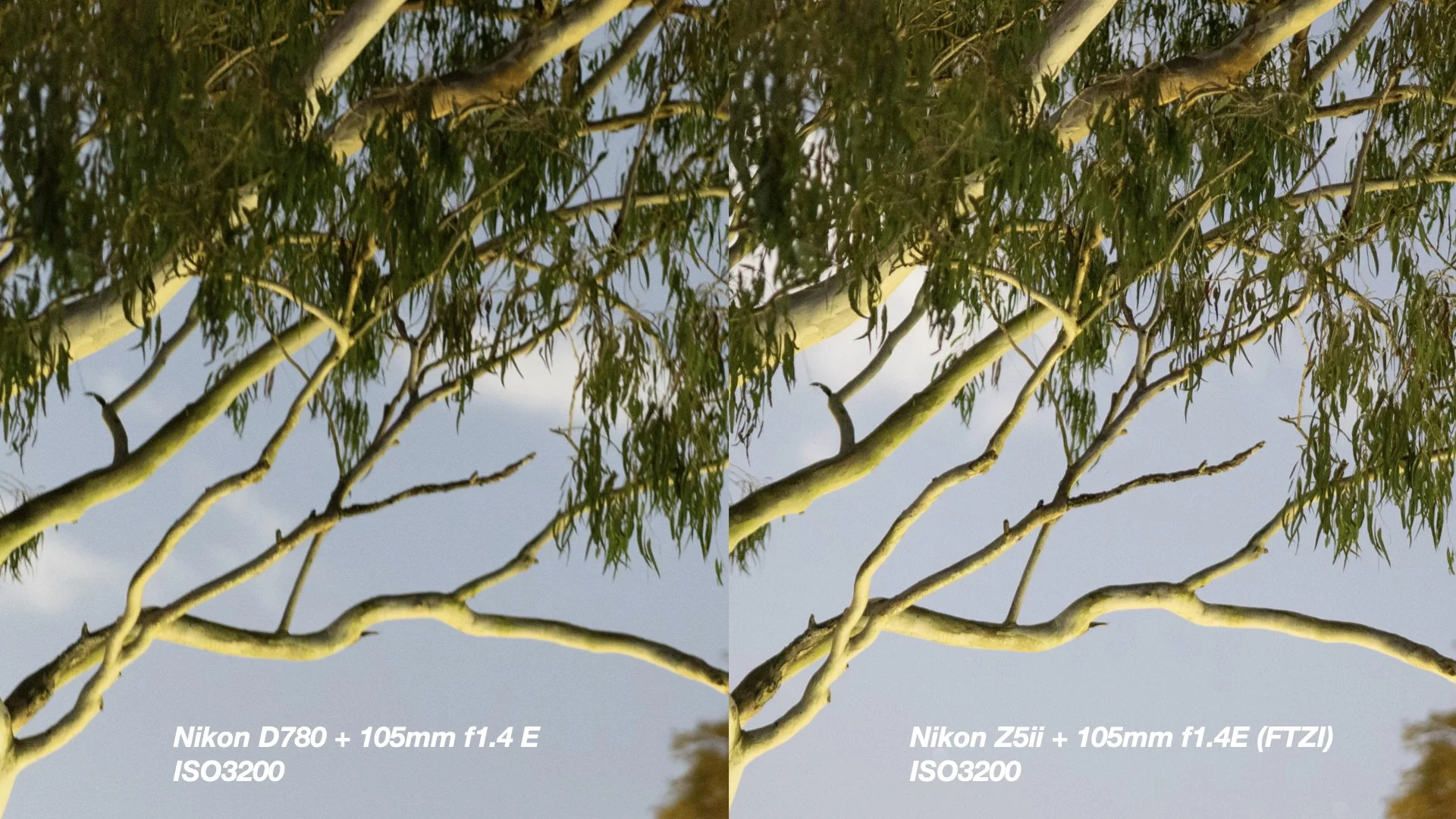
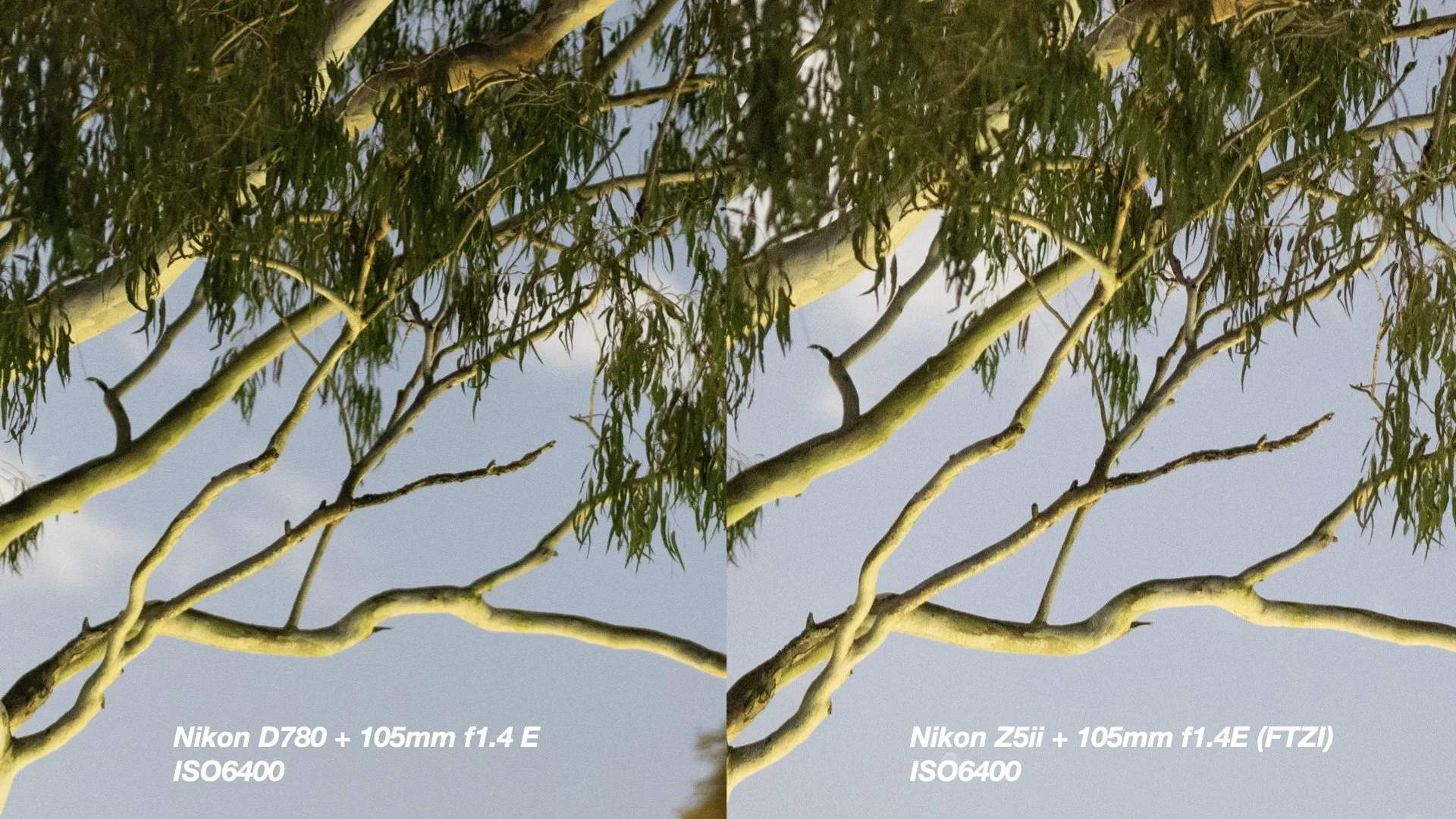
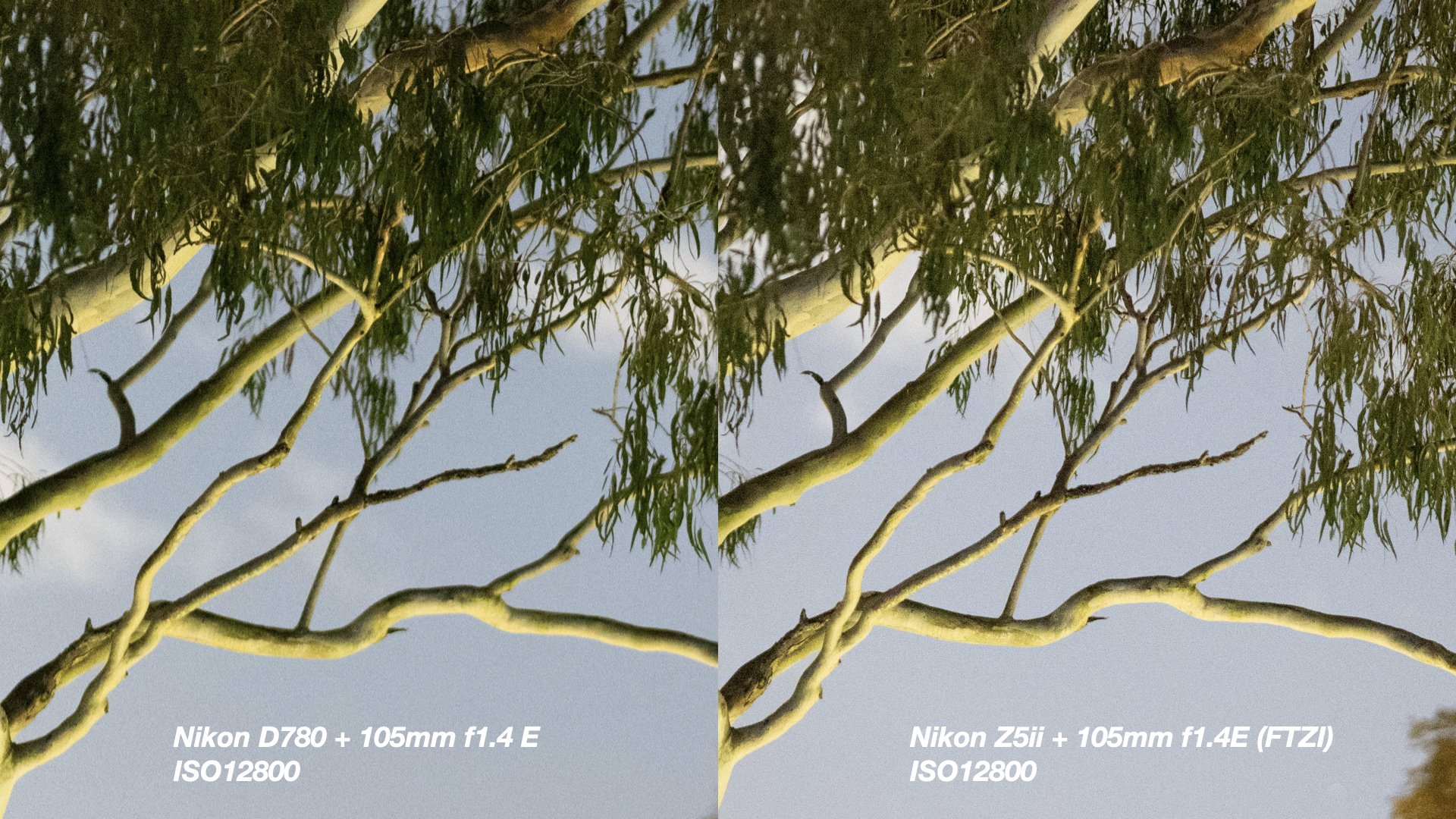
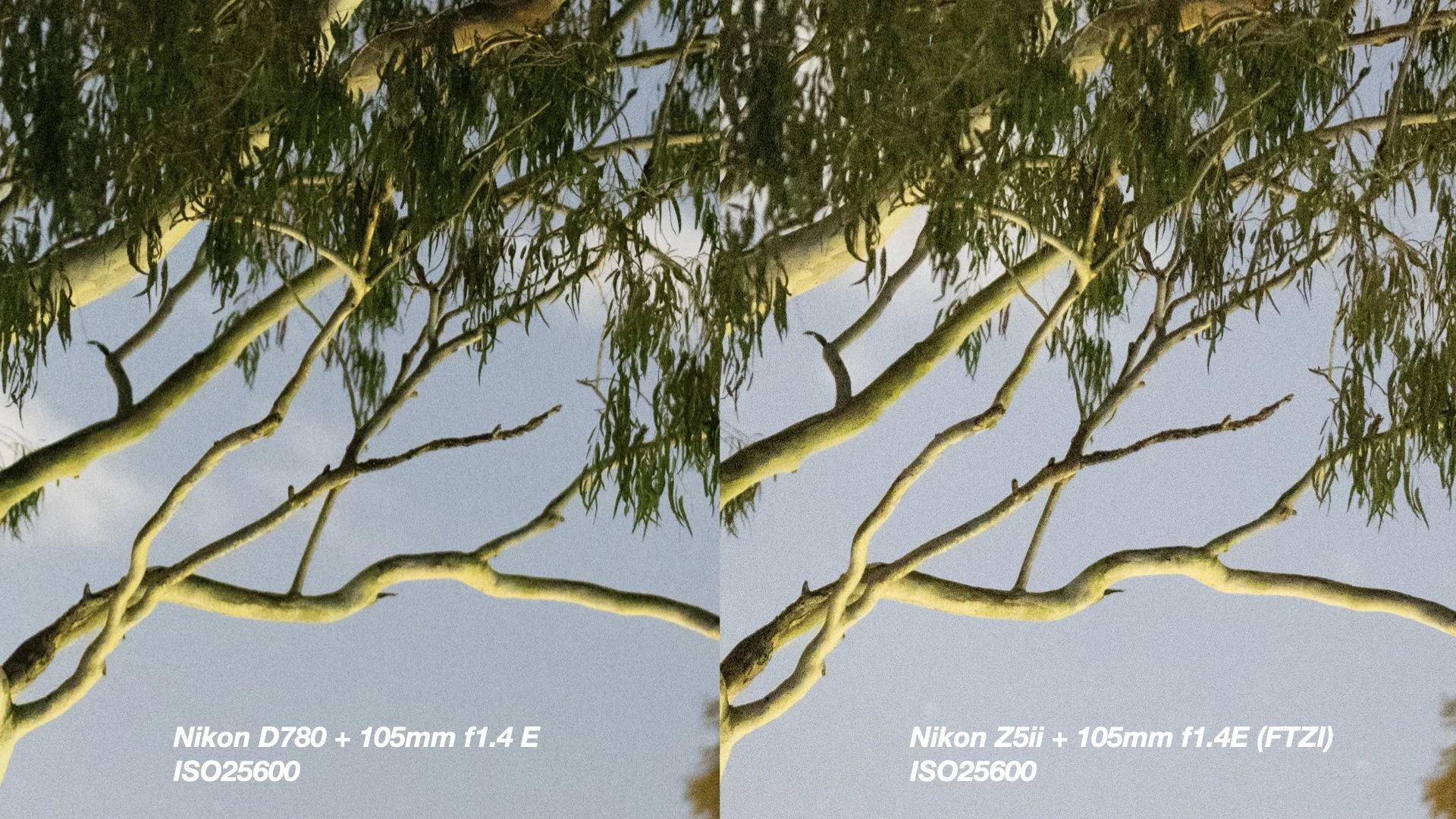
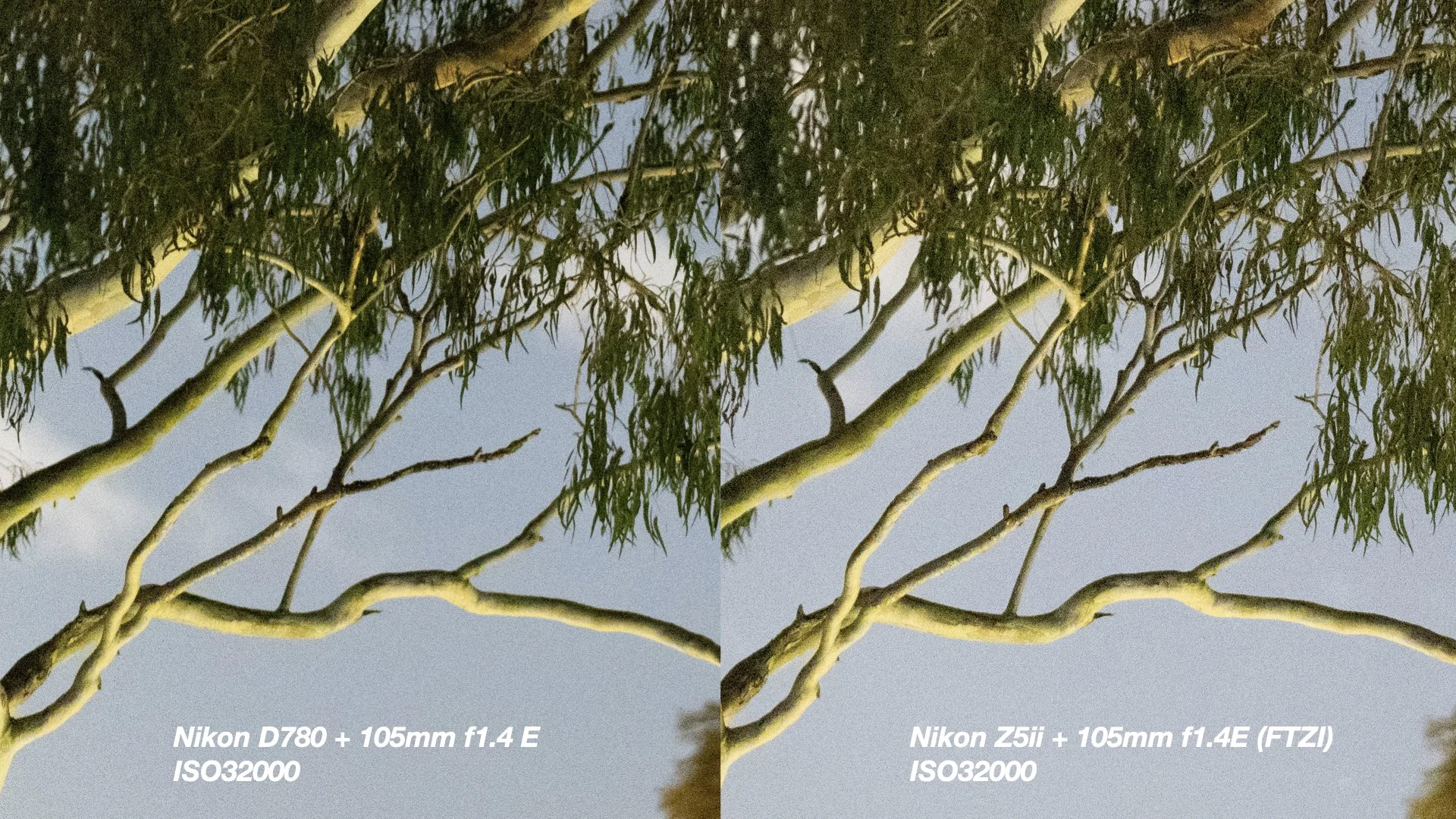
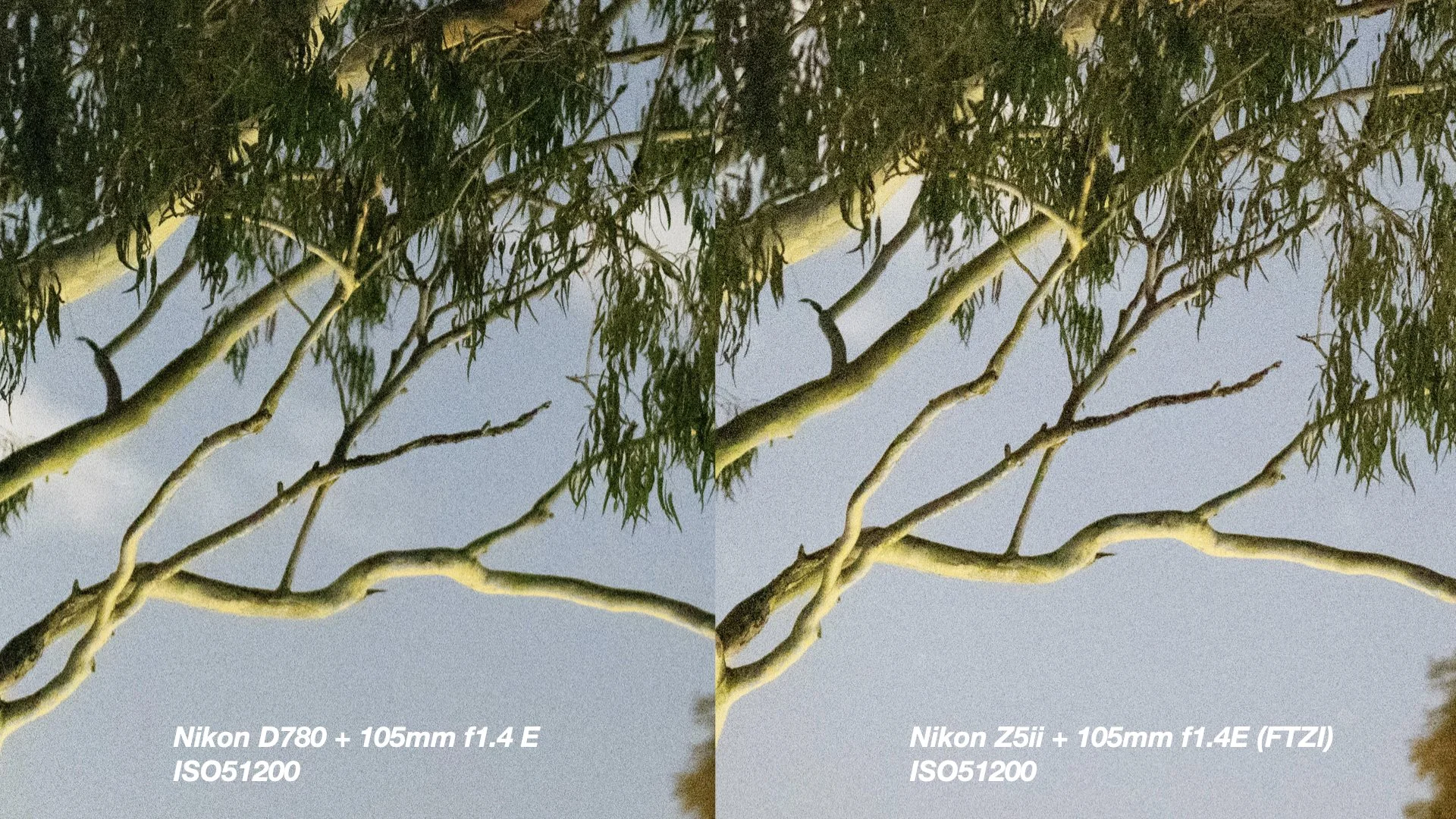
At ISO3200, 6400, and 12800 the files look clean enough without any noise reduction. ISO25600 is usable at a push even with the extra shadow noise, even up to 32000 I’m okay with (your personal noise tolerance may vary). At this point dynamic range is all but gone though, no rescuing highlights or lifting shadows. The level of grain is very manageable - even at 51200.
(I was testing these camera from morning to night - D780’s battery was still going strong, Z5ii battery was down to the last bar.)
The updated Expeed 7 processor doesn’t appear to manage noise differently than the older Expeed 6, IQ isn’t the reason to pick one camera over the other. But the choice of using this legendary 105mm 1.4 without an adapter is a reason to choose the D780 over mirrorless, until Nikon releases a Z-mount version not just of the 105mm, but also the next legendary F-prime.
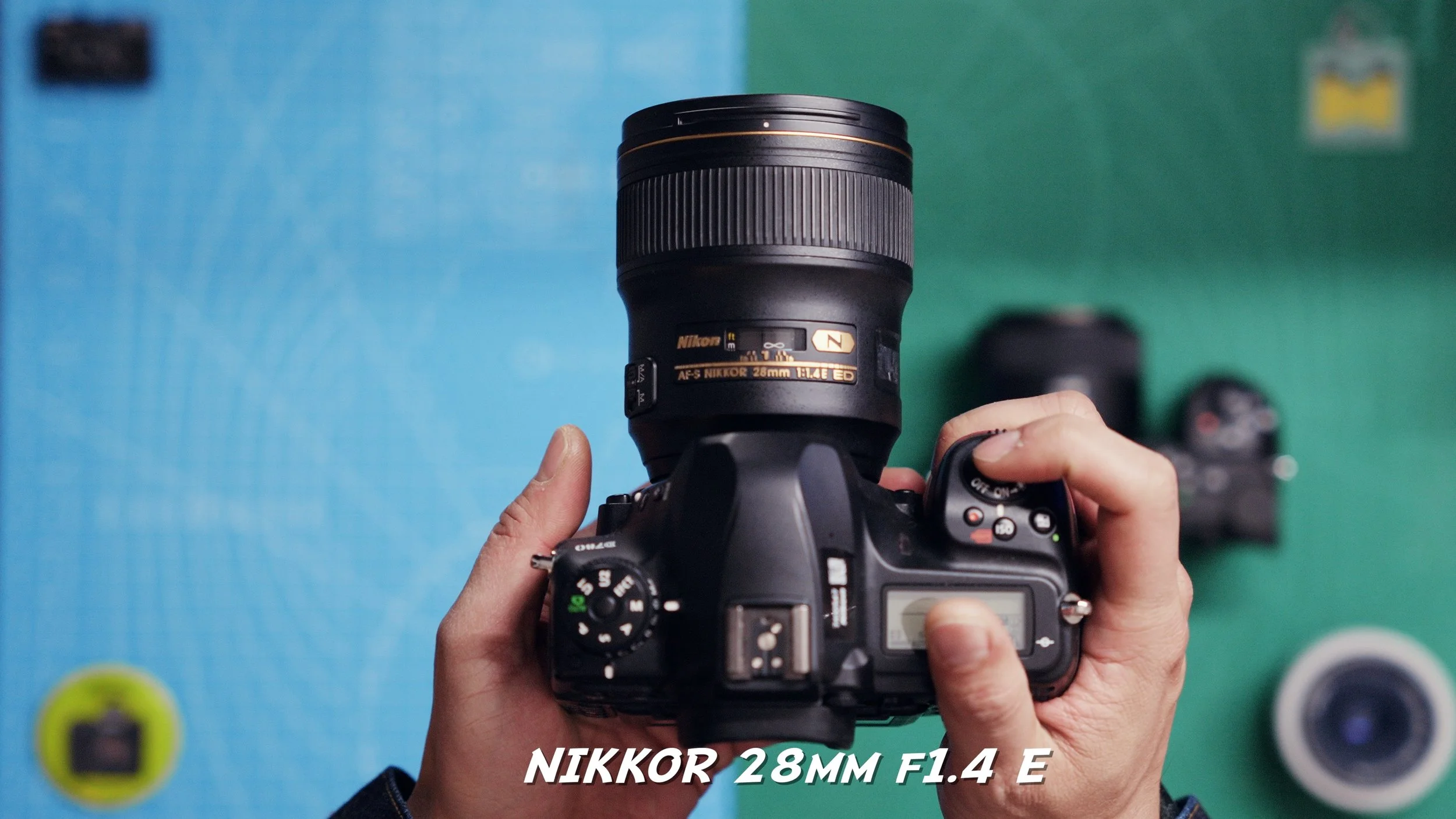
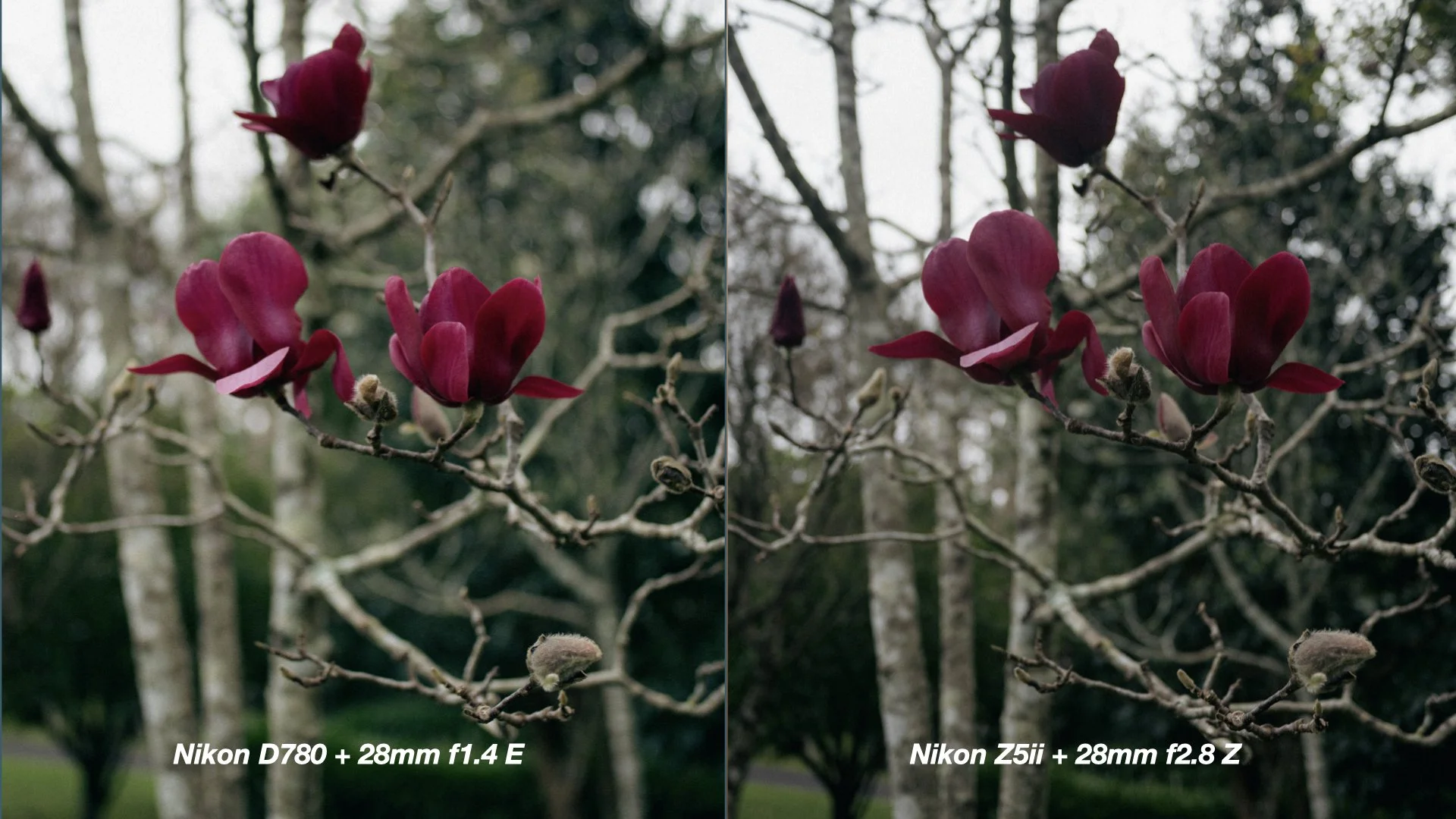
The 28mm f1.4 E is a very distinctive offering - other than Sigma’s heavier 28 1.4 art, no other brand makes a fast 28mm with autofocus. This unique lens has been relegated to DSLR offerings, for some reason companies have stopped making fast 28mm lenses for mirrorless?
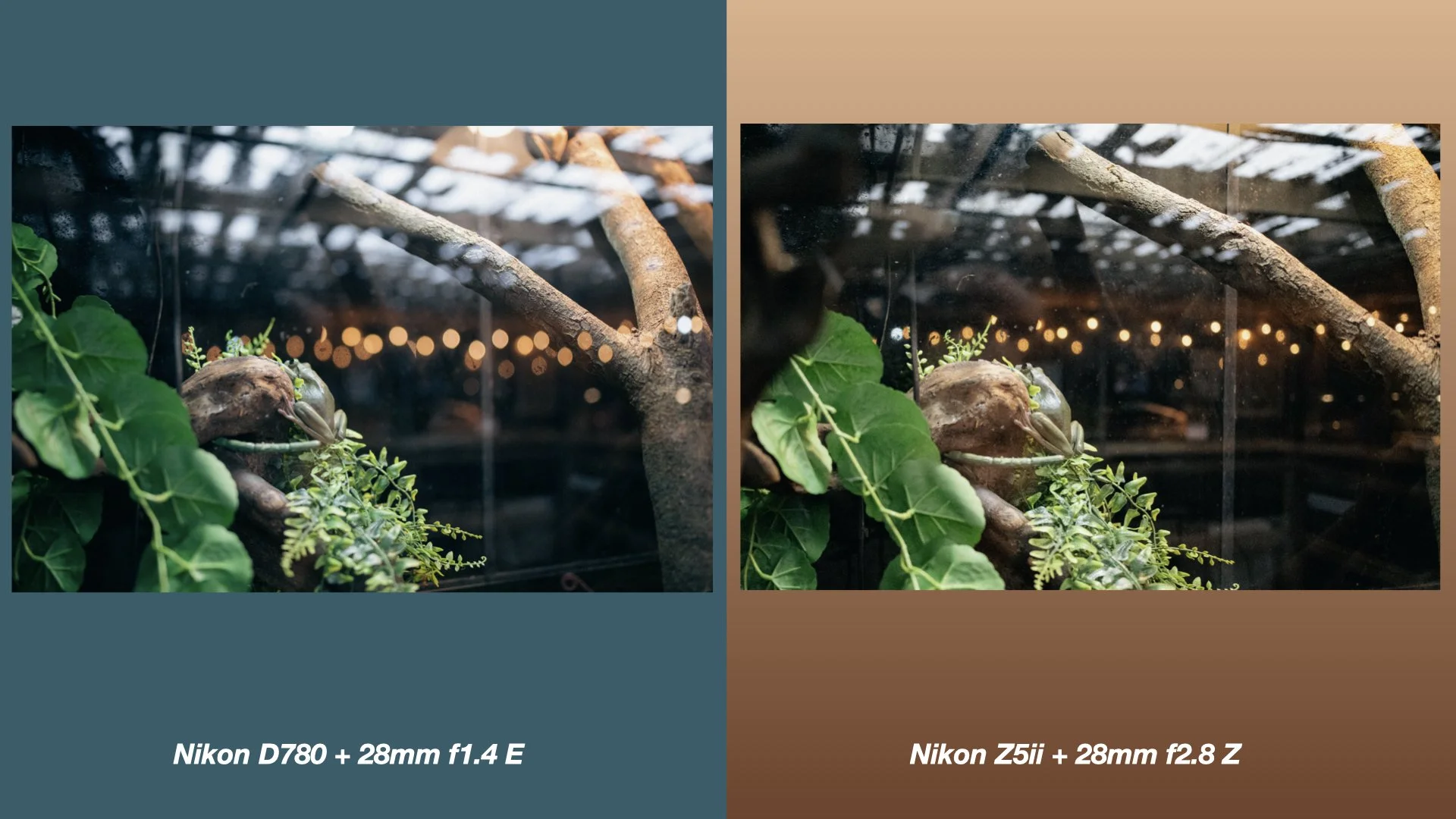
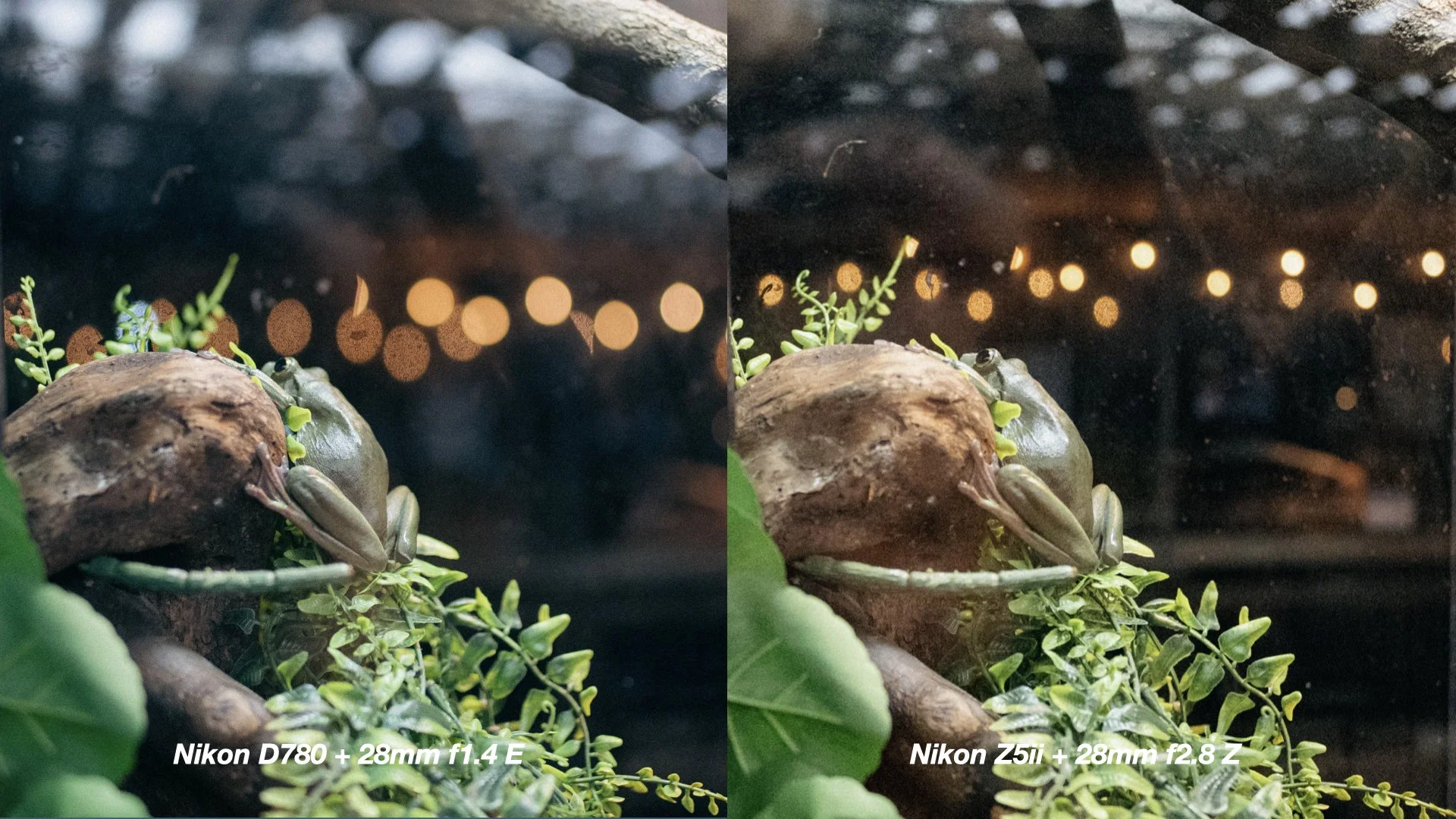
But having a 28 that’s this fast is incredibly handy - much less distortion for portraits than say a fast 20 or 24mm, which are very common in the market. It’s much easier to get closer composing via the screen than with your eye up to the viewfinder. Especially using 28mm.
Granted the D780 has great live-view vs viewfinder switching. Its live-view autofocus is as good as any Nikon DSLR, if not the best. The switch is quick, there’s very little lag. But it’s not as fast as the instant switching between EVF and screen on the Z5ii.
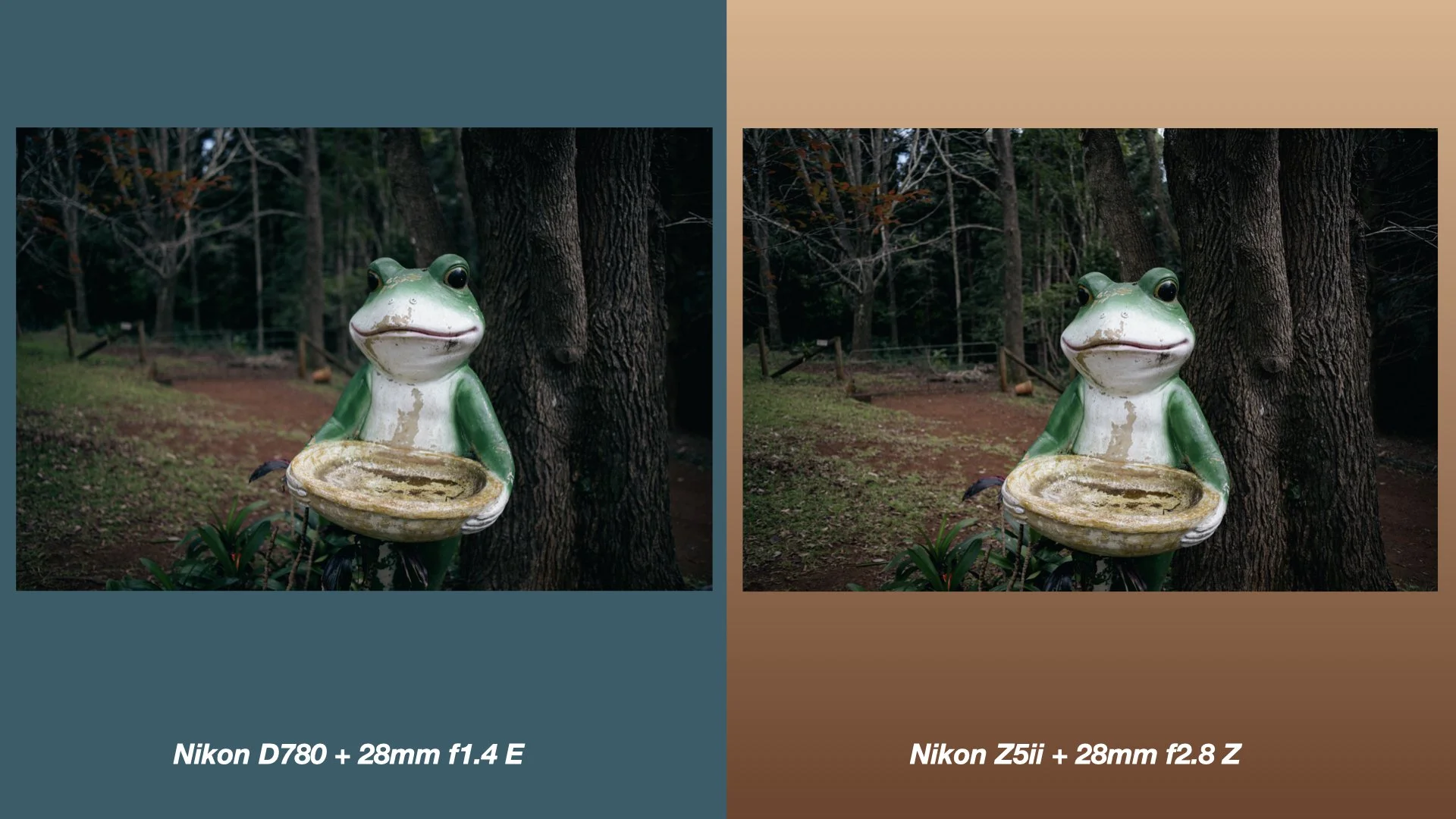
Z5ii is amazingly responsive, and it has IBIS, which didn’t matter at all for any of these indoor shots - I could hand hold 28mm down to a 60th of a second, high ISO performance of these sensors can handle it no problem. The only frame where IBIS did matter is hand-held long-exposures. I tried to get a bit of water smoothing in this creek, handheld shutter speed of 0.5 to a second was doable on the Z5ii no problem, and too shaky for me on the D780.
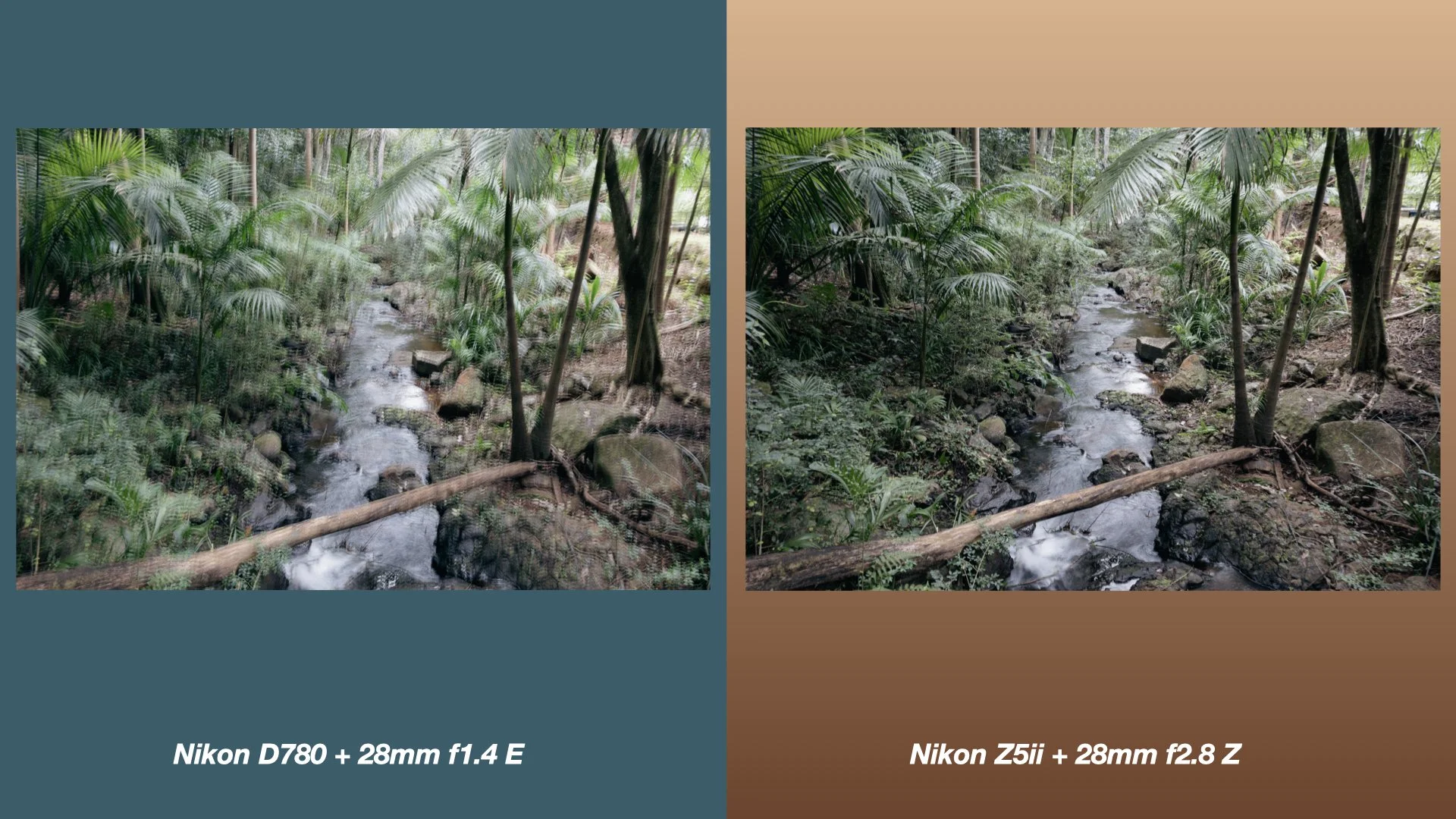
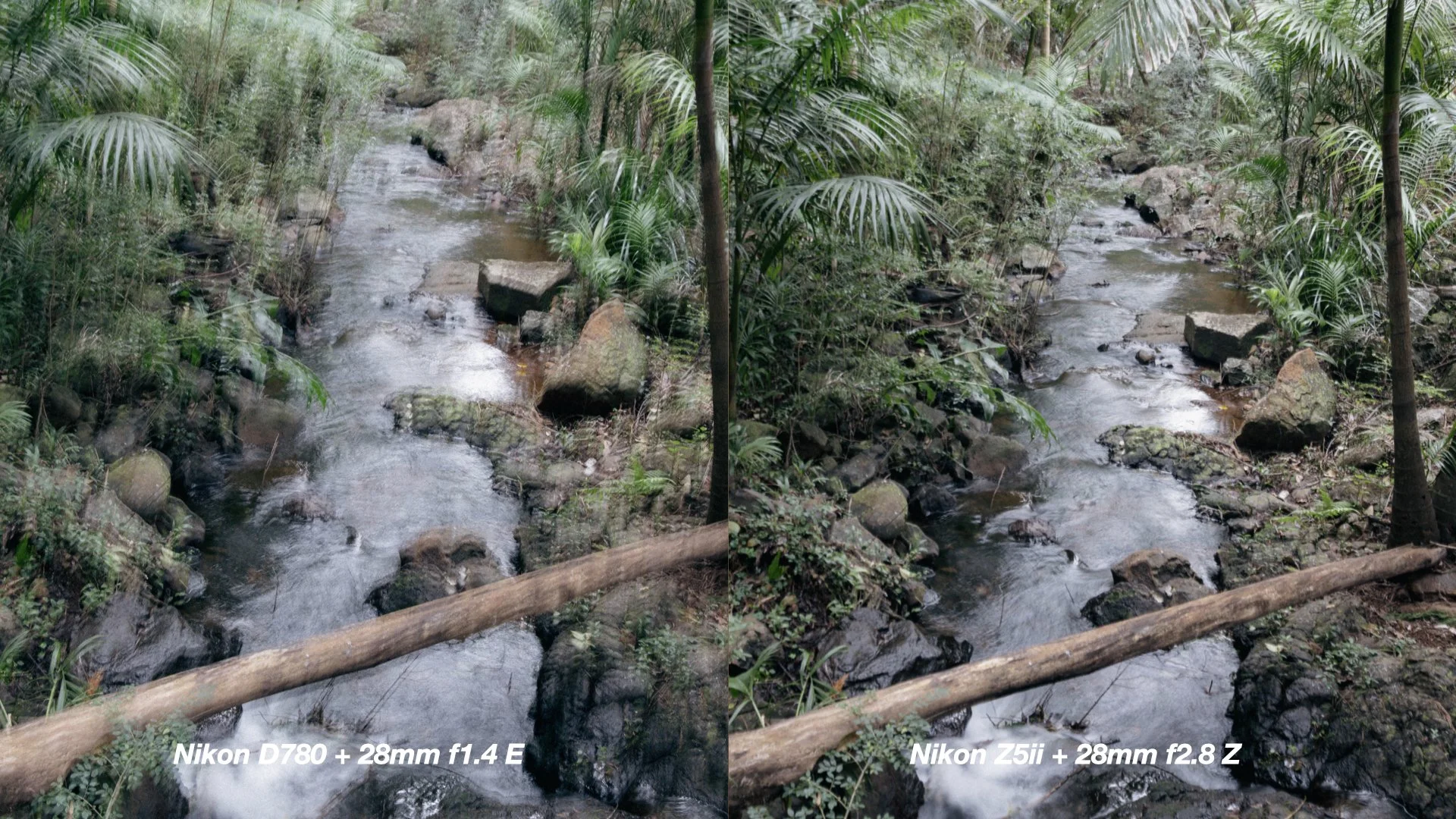
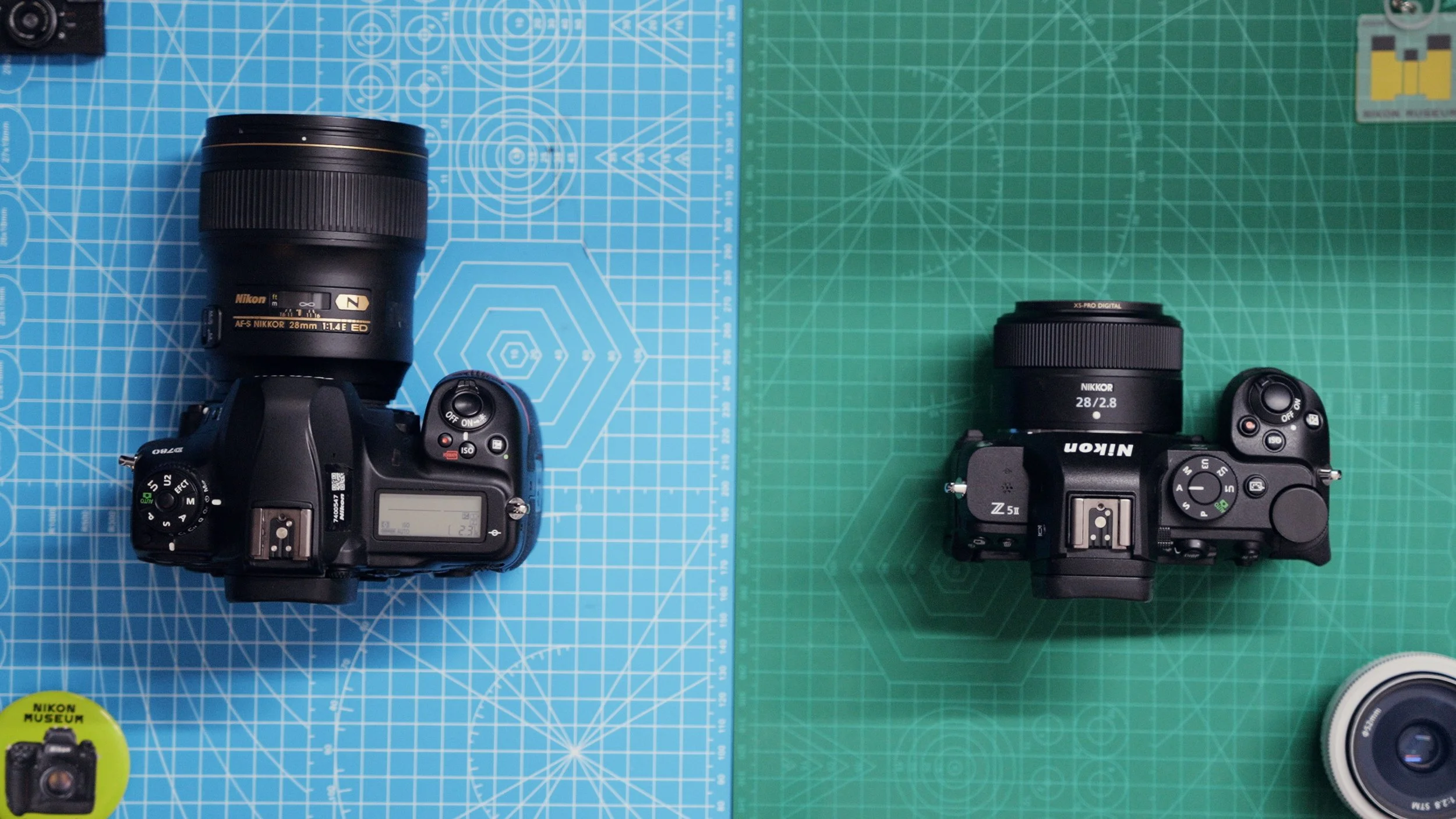
But the main draw again, is the look of this beautiful 28mm 1.4. It’s heavy at almost 700 grams, workable on the D780, but too front-heavy when adapted on the FTZ.
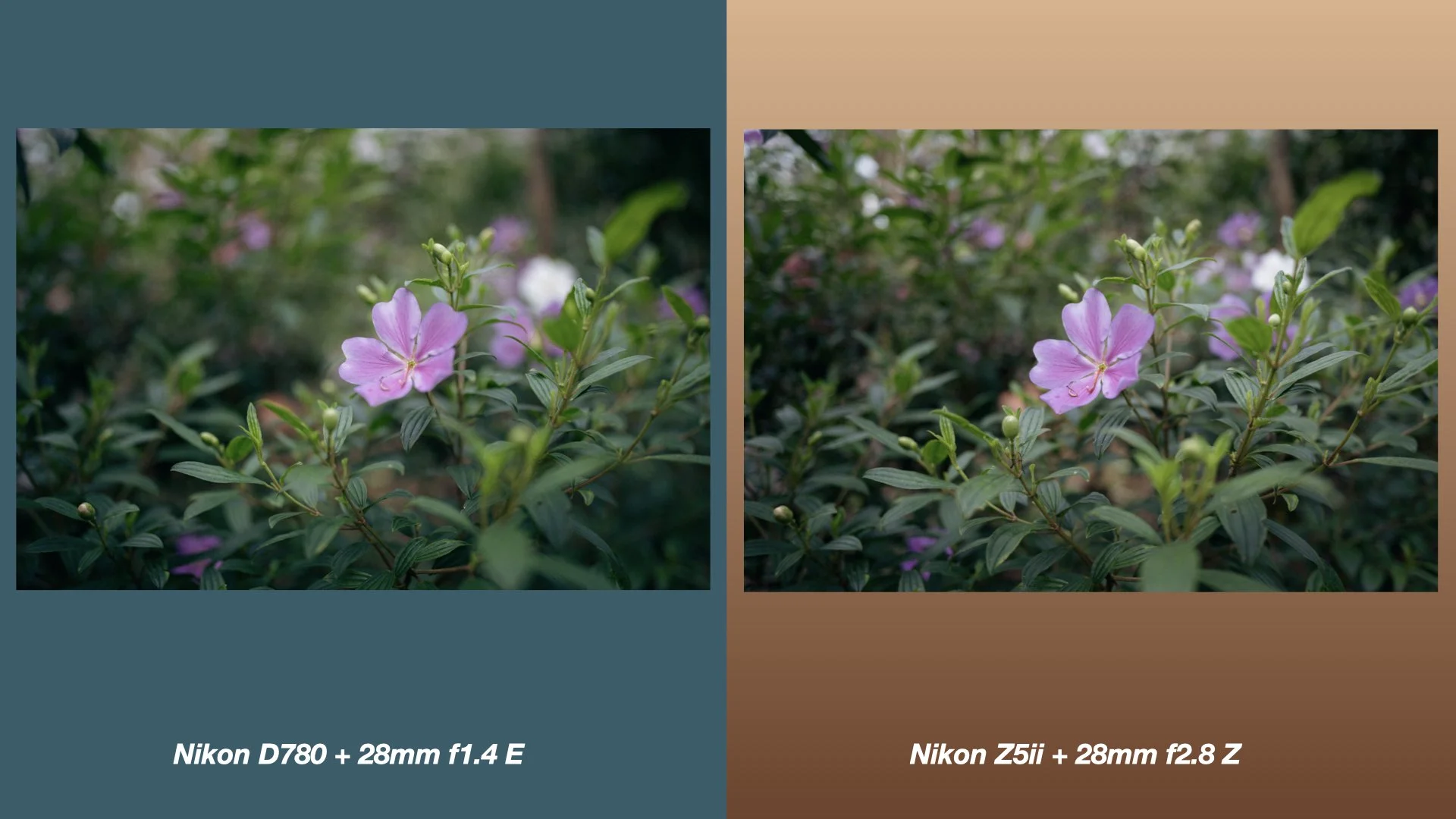
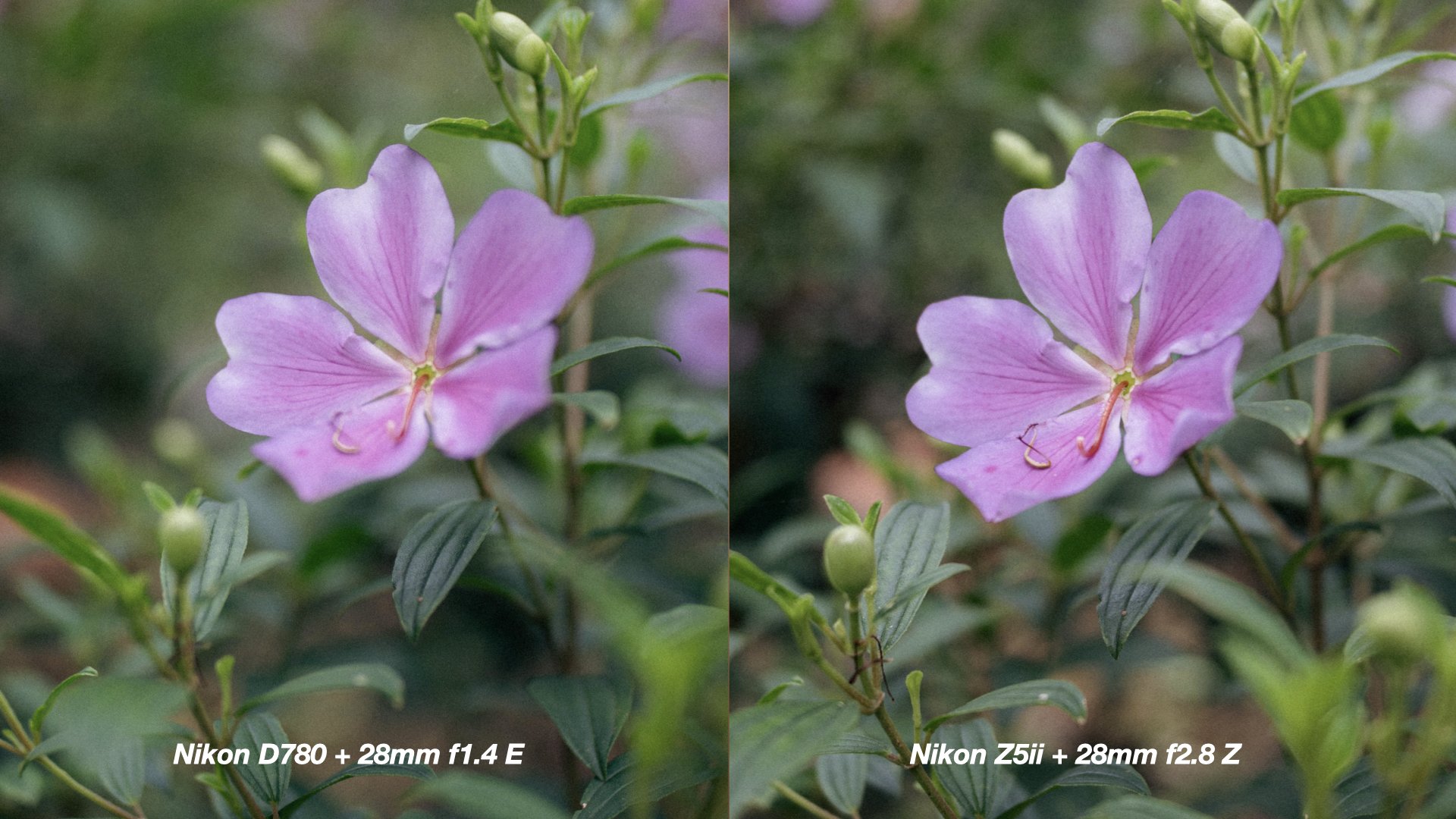
The lens I’m comparing it against is very sharp, but much less dreamy, it’s the only 28mm currently available on Z-mount - the f2.8 muffin. Surely advancements in optics can make a much smaller 28 1.4 on Z-mount? Nikon have an amazing history of 28mm lenses, I’m hoping they add another one to their legacy shortly.
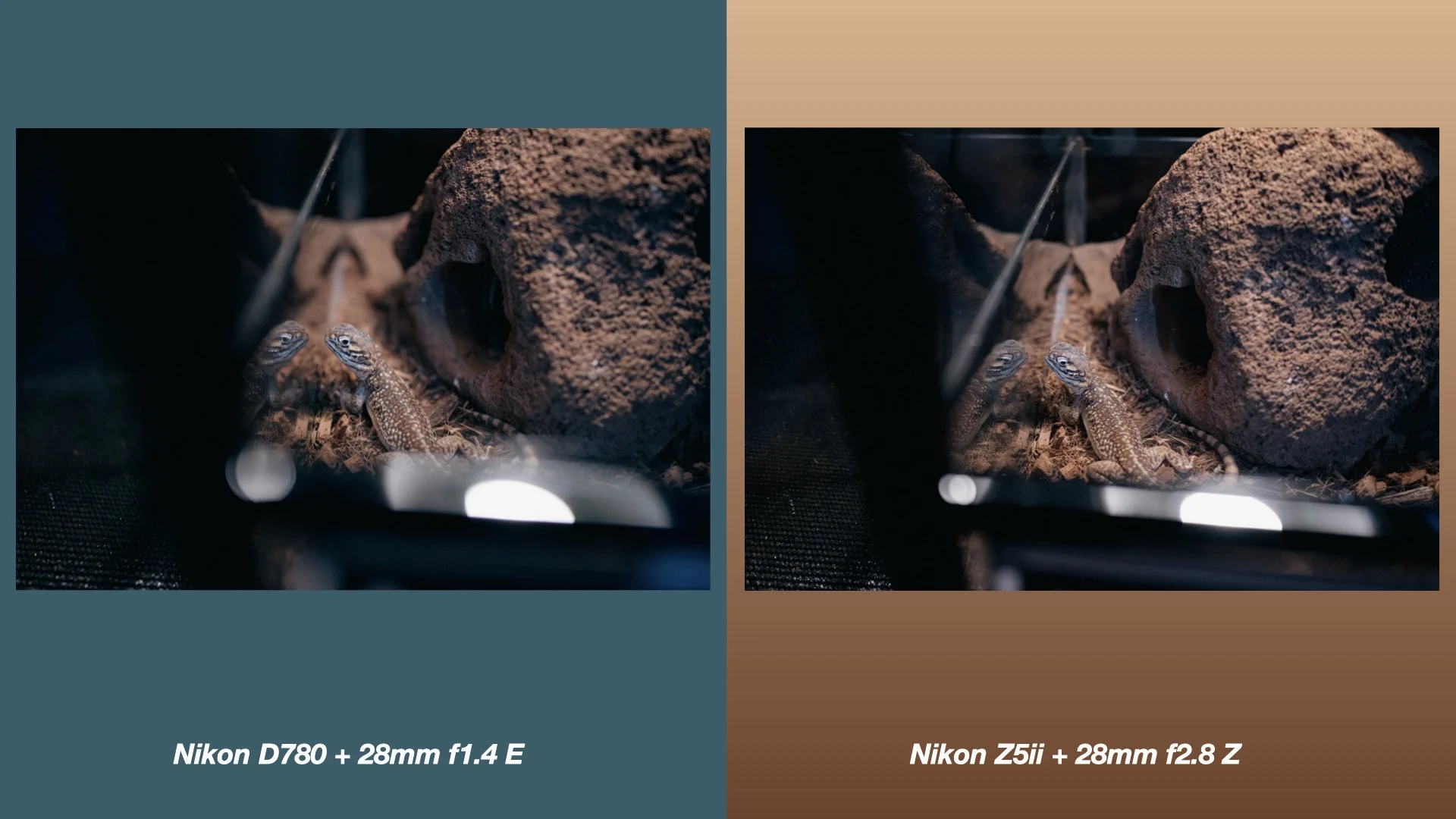
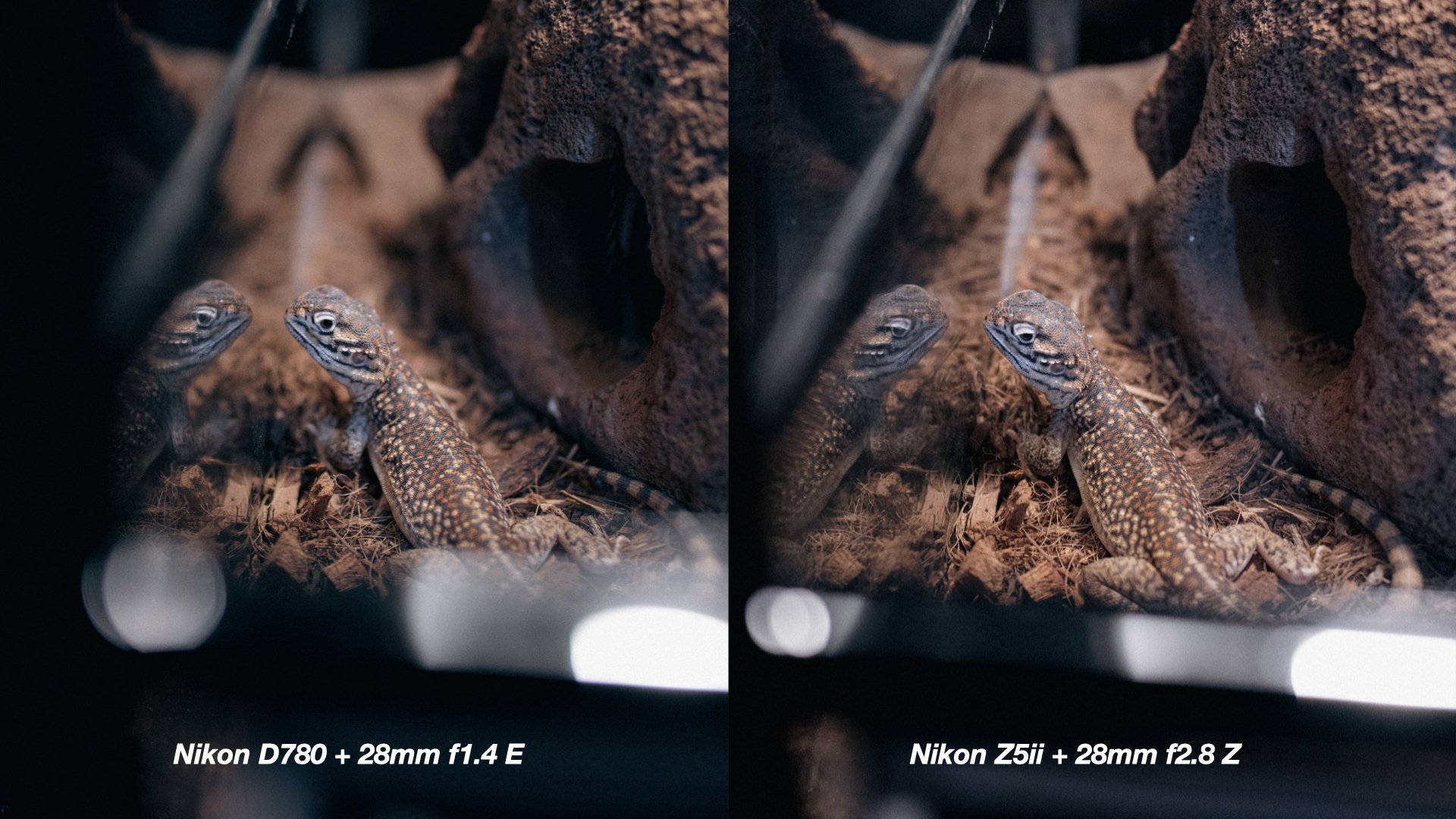
After using Nikon’s last DSLR, and the Z5ii for a month - do I still think DSLRs are the best option for beginners? D780 is a great camera. You’ll get a beautiful OVF, learn to compose and expose, as close to mirrorless without its downsides. But the D780 is significantly more expensive than older, also great DSLRs - D600, D610.
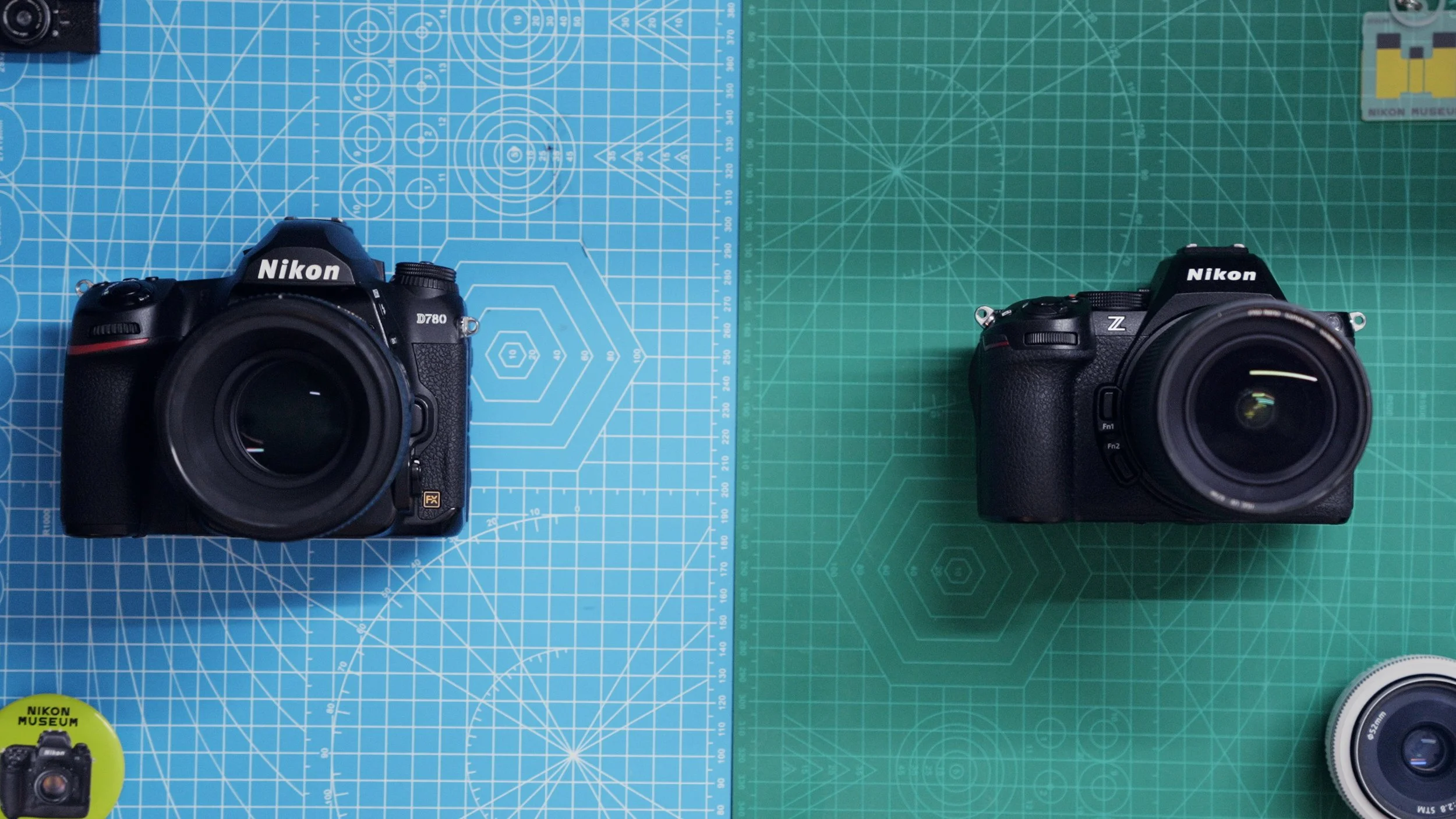
Eventually you’ll want to invest in mirrorless, and the Z5ii is a no-brainer pick for most. It’s so good for photography you won’t need to upgrade for the foreseeable future. It makes photography accessible to more people, it’s now my default camera recommendation.
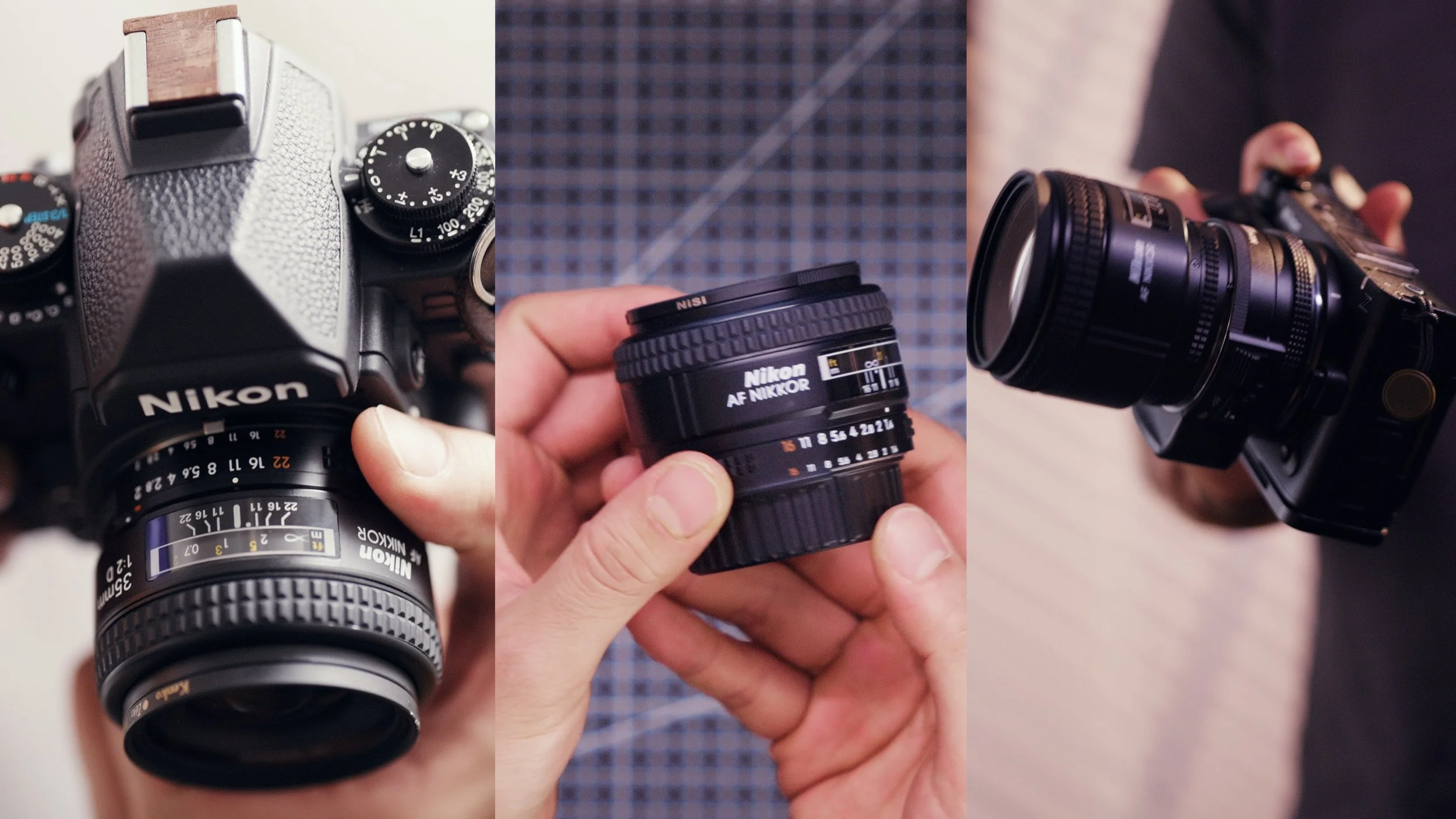
The D780’s for lens junkies like me, who prefer old things, born 20 years later than I ought to be? I love screw drive lenses like this trio of 35mm, 50mm, 85mm AF-D lenses that only work well on DSLRs. Everything from film-era manual lenses to these 3 F-mount masterpieces all work on the D780.
Choose whatever kit you like, as long as you keep making time for photography?
Jack.
All my sample images in this blog post were edited from RAW files using my free Chrome emulation preset. They work with most RAW files from different cameras as long as you use “Adobe Color” as the starting base. Download it for free here.
If you’d like to support my work please consider purchasing gear through my affiliate links:
Nikon D780: https://geni.us/h6Etst
Nikon Z5ii: https://geni.us/BTirqqP
58mm f1.4: https://geni.us/xDC6
105mm f1.4 : https://geni.us/BIATov
28mm f1.4: https://geni.us/2EJ9BNi
Wotancraft 10L Messenger bag: https://geni.us/wotancraft-salt-pepper
Wotancraft leather strap: https://geni.us/wotancraft-leather-st