28mm Made Me Question Everything about 35mm?
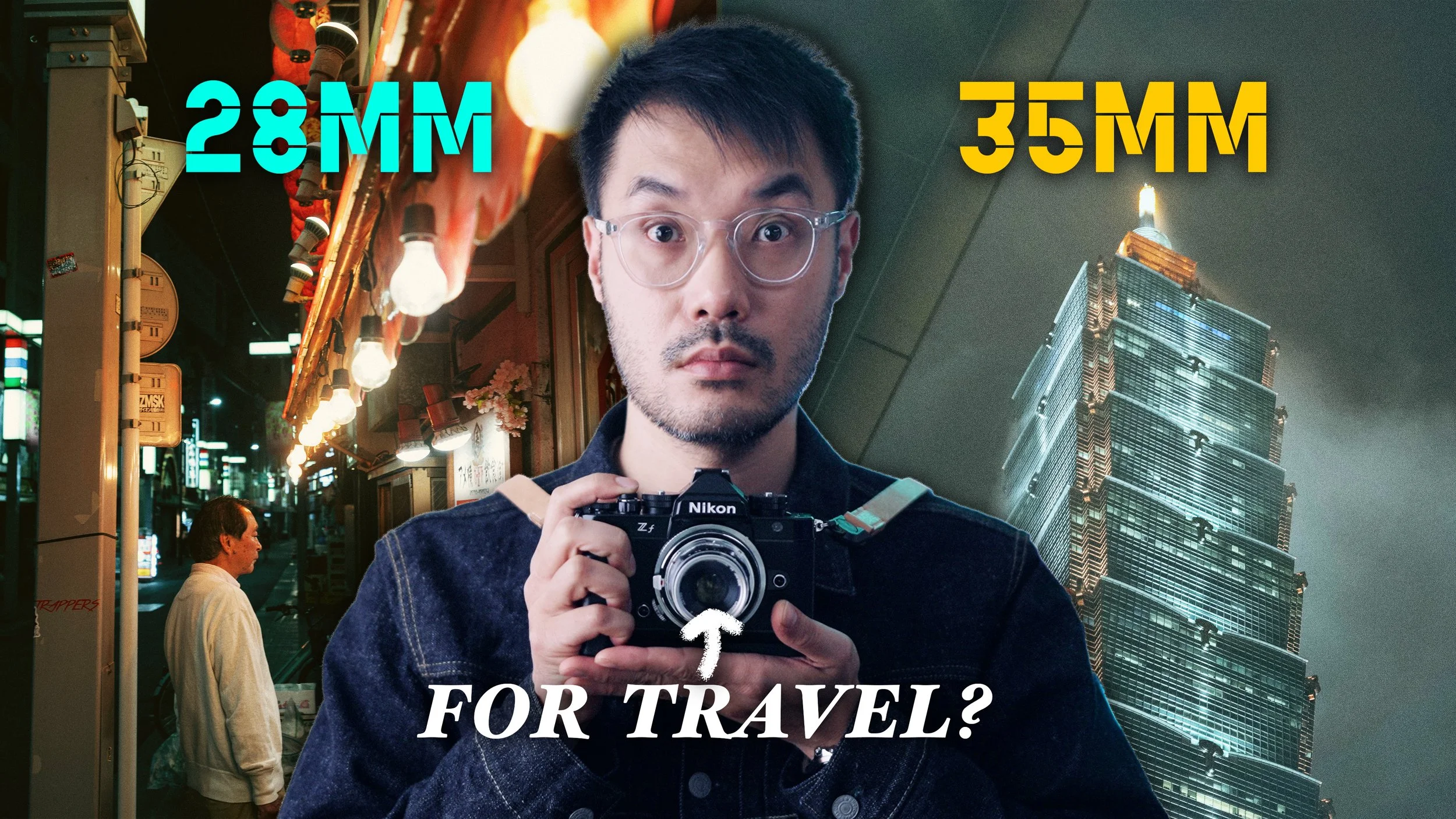
My go-to travel lens has been 35mm.
After going through all your 28 mm photos, I questioned everything I thought I knew?
Which is better for familiar locations versus brand new destinations, which do I pack if I can only pick 1?
That was my dilemma across Taipei and Tokyo.
Finding a place where you belong is not trivial. Neither is picking 1 lens for travel.
I tested a modern 28mm versus a vintage 35mm to come up with 5 new rules.
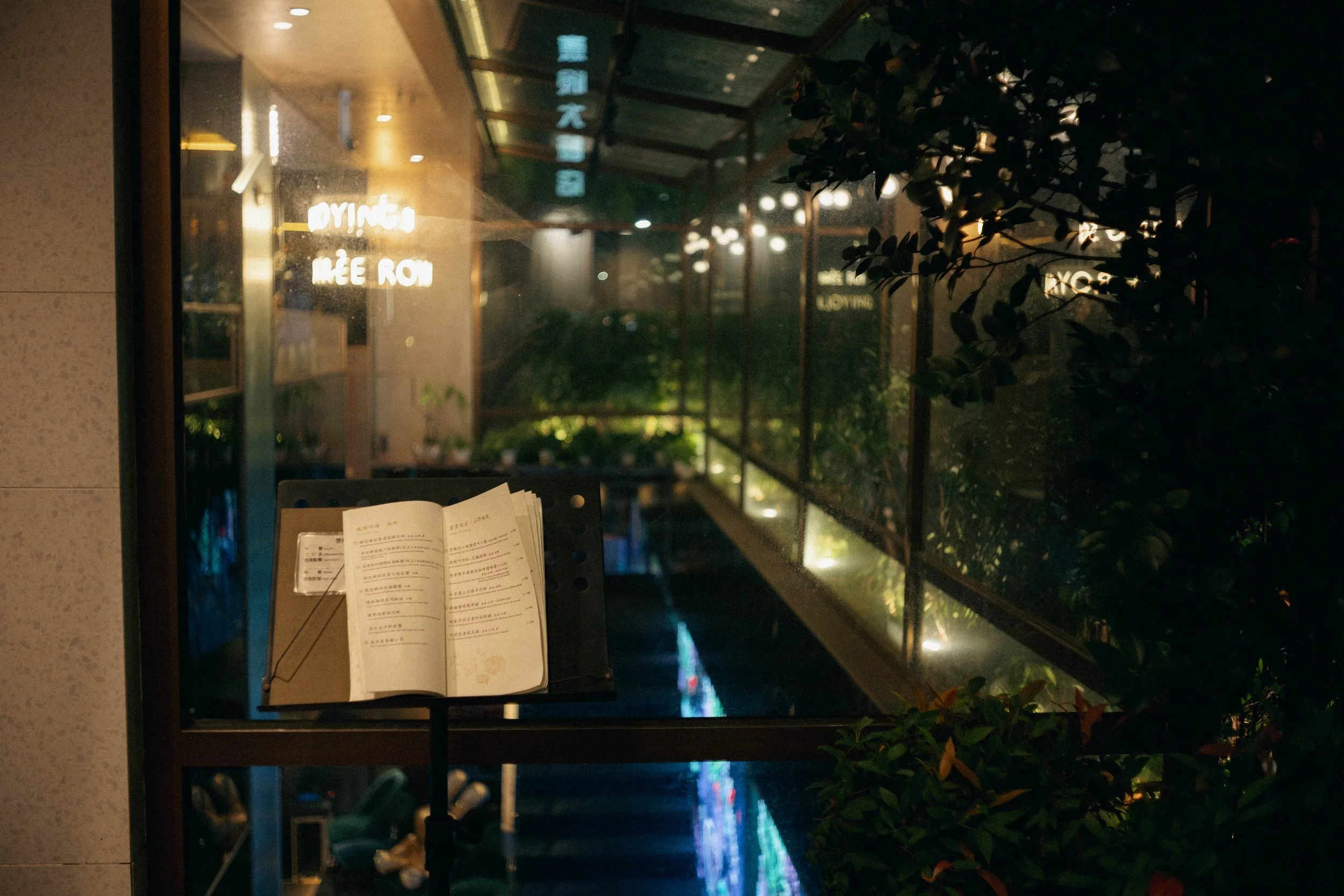
This is Episode 2 of our LensLab Series.
How to get travel photos you're happy with, 1 focal length at a time, to keep this hobby fun.
Since the last episode, all your 28 mm photos inspire me to not only update my 5 rules for 28 mm (I did make 1 big glaring mistake in particular), but also change my mind on 35mm.
The first 28mm rule from the last episode was “An Arm’s Length away”, but because of this photo from Stephen Spiteri, it’s changed into:
Just Within Reach.
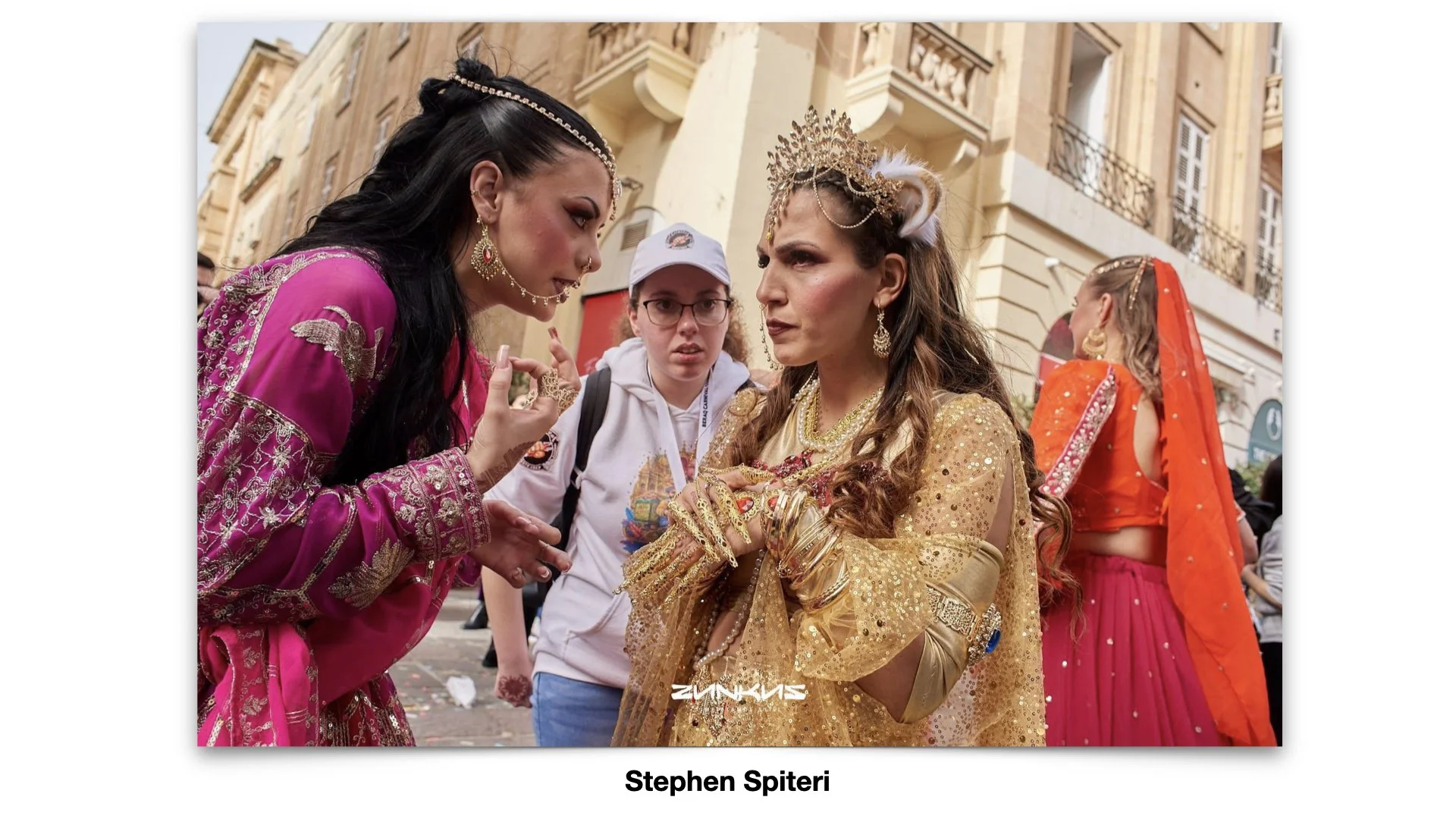
What Stephen describes as his objective for this photo was to get really close to the main subject. In particular with this shot, you can see all the faces nicely coordinated and balanced across the frame side to side. Stephen says 28mm and finding that proximity was hard at first, but he's now more used to it.
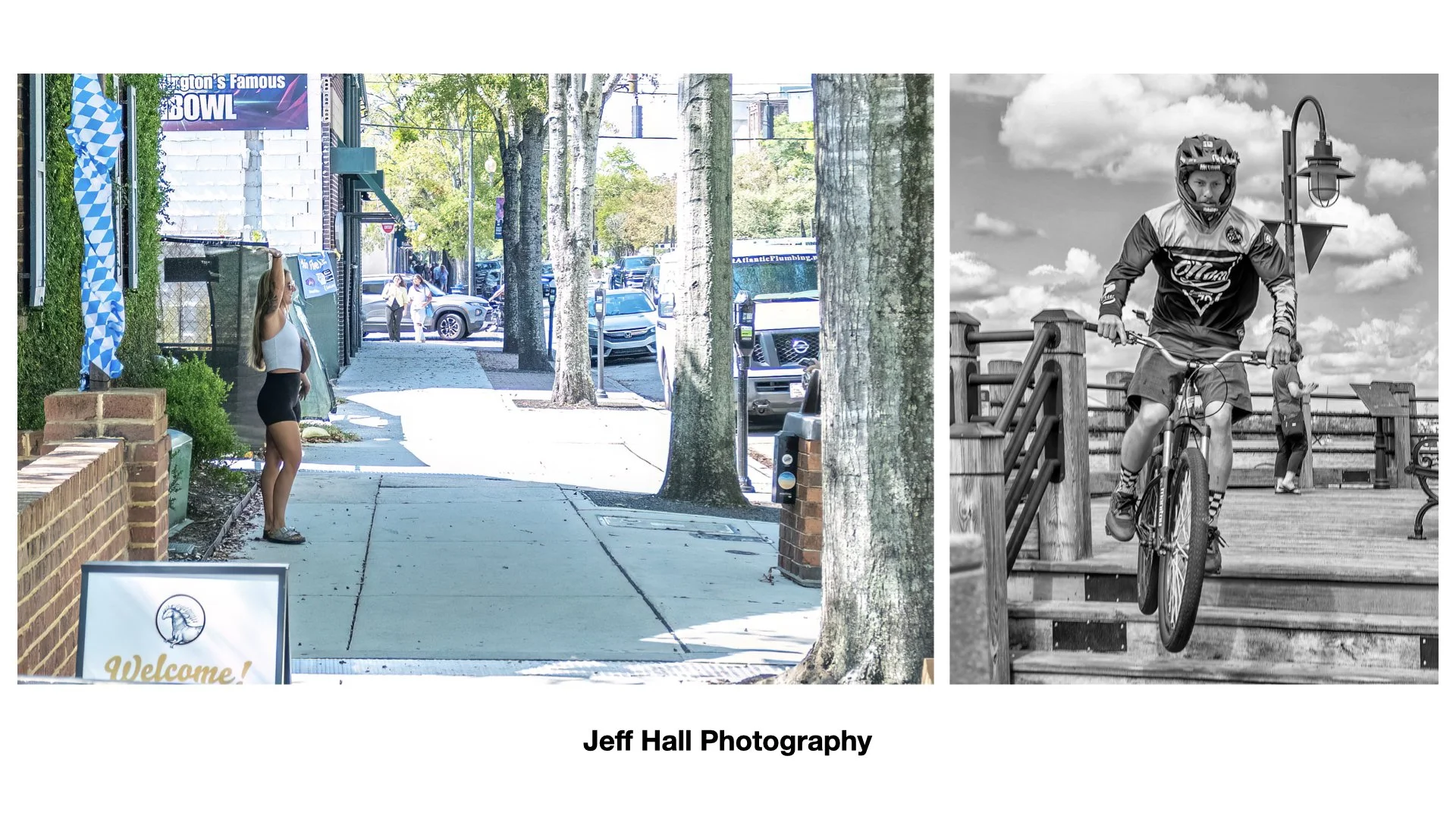
Another way to get used to that proximity is through quick reactions, just like Jeff Hall did in the motorcycle frame to the right. Jeff says that the motorbike just popped up in front of him, and he took that shot without even thinking. No time to overthink about the close distance to the subject. In comparison, the shot of the girl waving on the left side was too far away despite having more time to plan the photo.
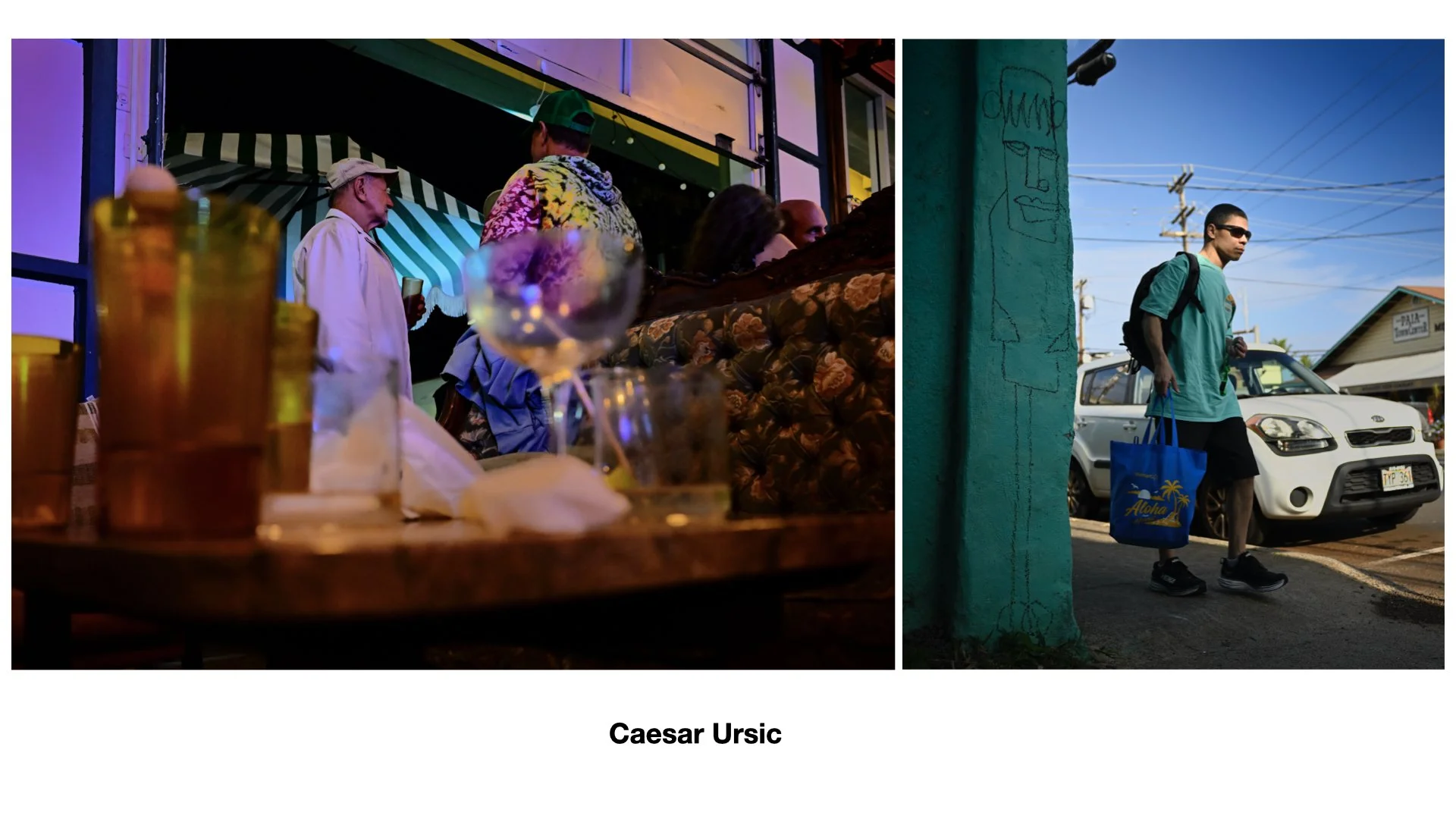
Caesar Ursic also described a similar quick reaction scenario. The man's shirt matched the color of the wall. Caesar also thinks that this man looks a little bit like this Frankenstein graffiti (I’ll leave that for you to decide). Caesar got close and tried to take a chance.
Managing distance, speed and timing, it’s much easier in familiar locations.
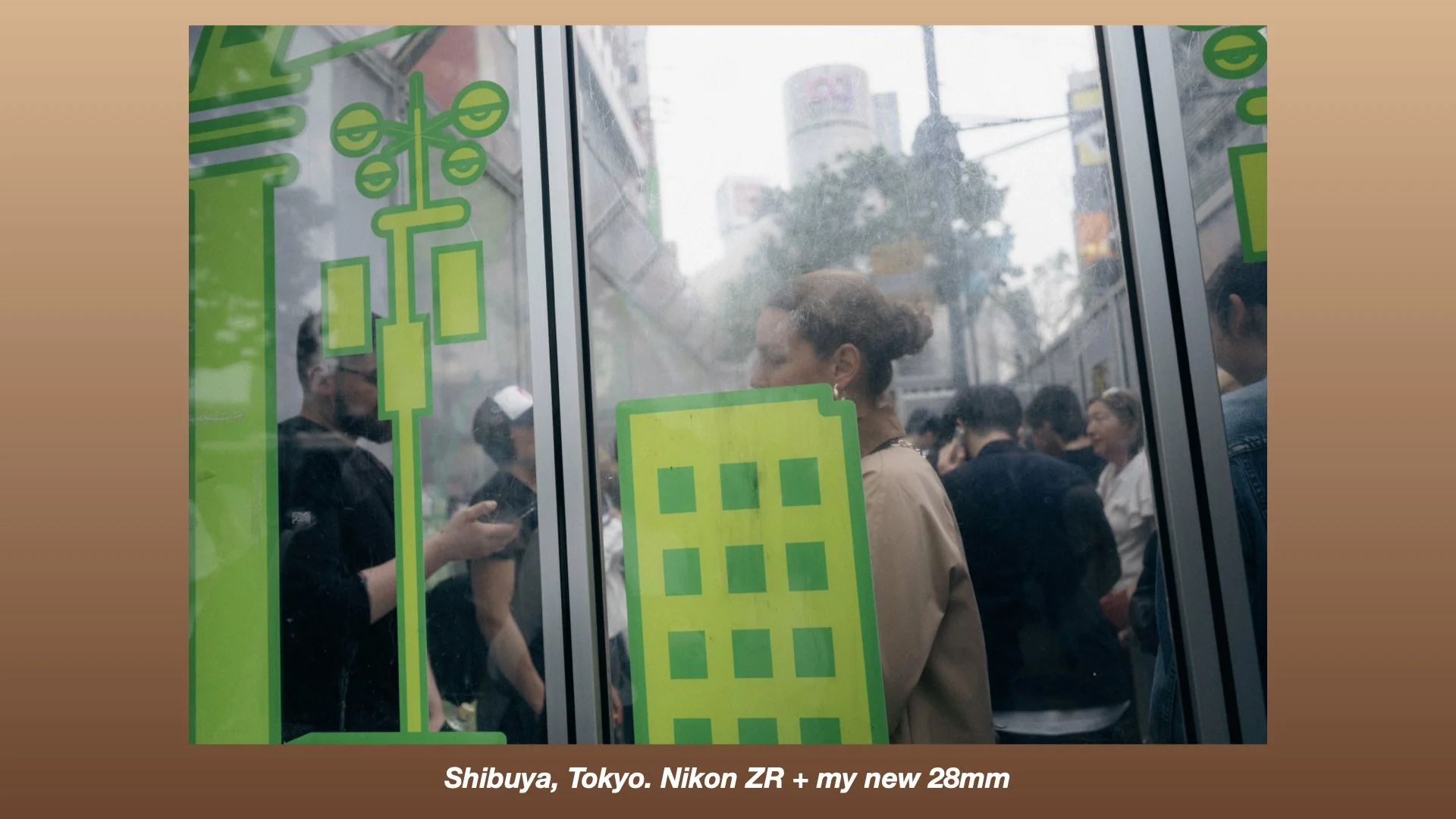
For me, it doesn't get much more familiar than Tokyo and Shibuya. I already knew about this smoking section, so I can get very nice and close to get a bit of compression.
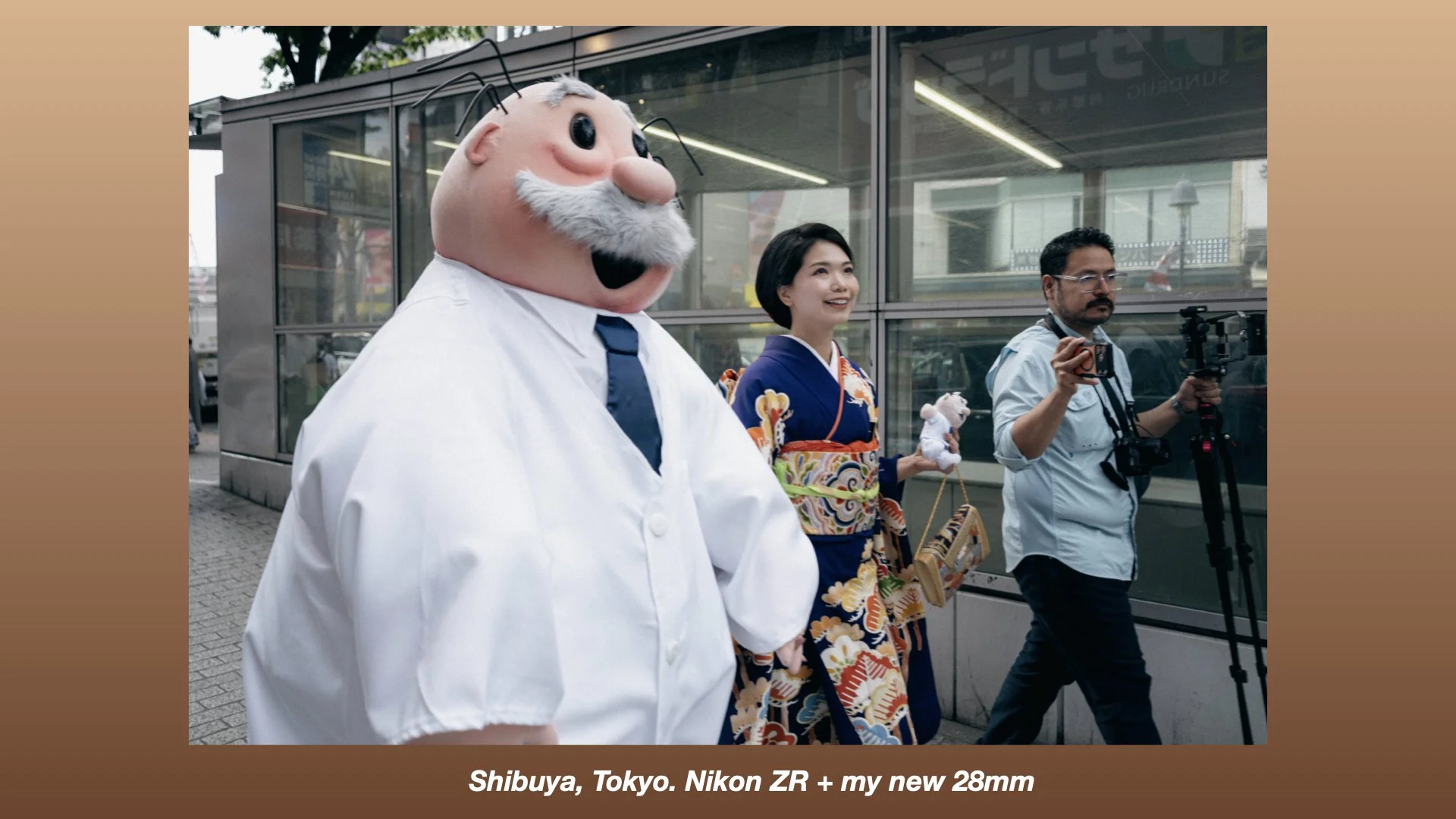
About 50 meters away from this smokers’ placard is a flood of characters dressed up for an ad campaign? I didn’t think, I just reacted. It was also how I got this next shot.
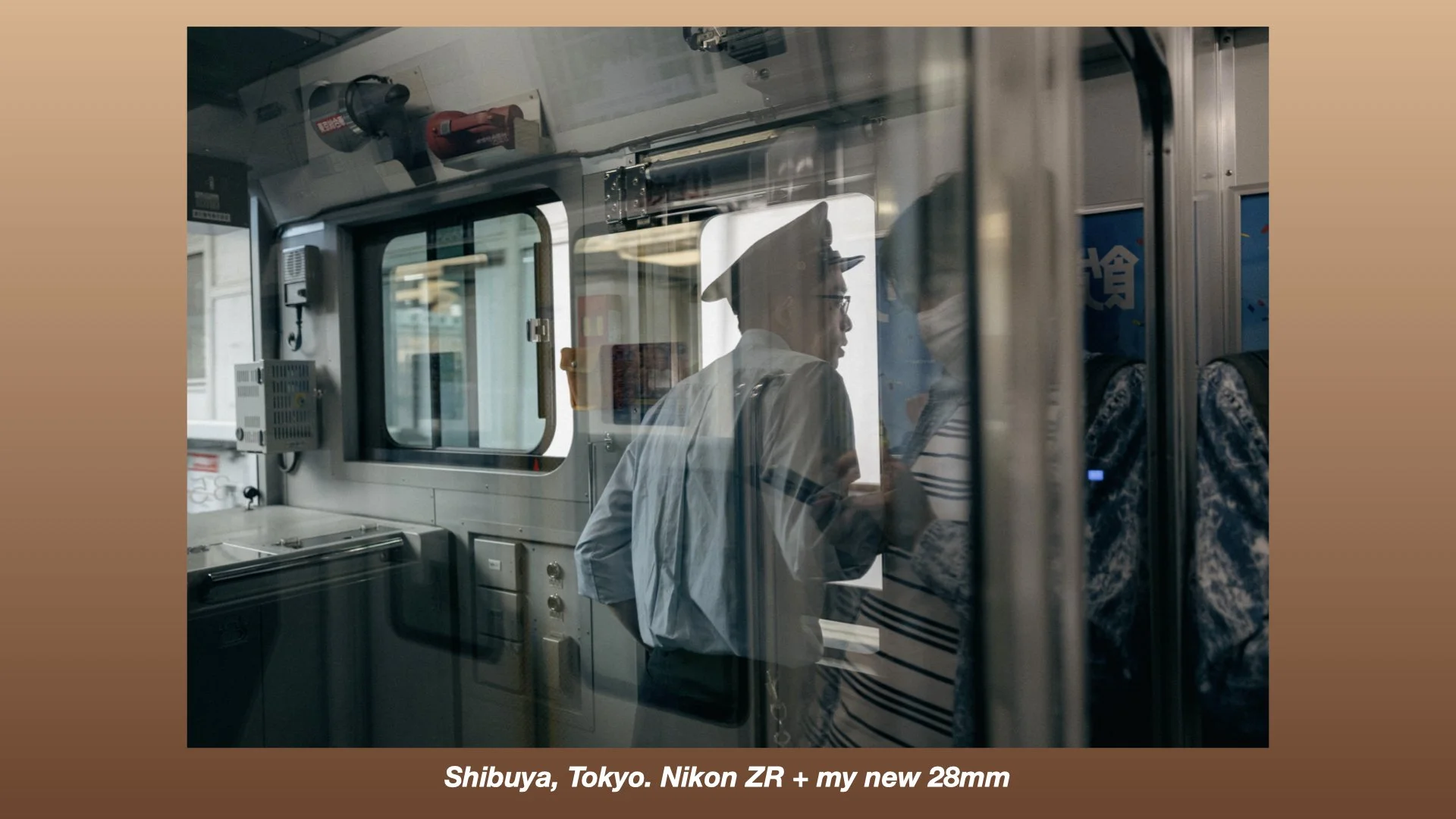
There was a layer of glass between us, but I could get so close, and it was scared to get close, because Shibuya, Tokyo, and Japan is familiar to me, location.
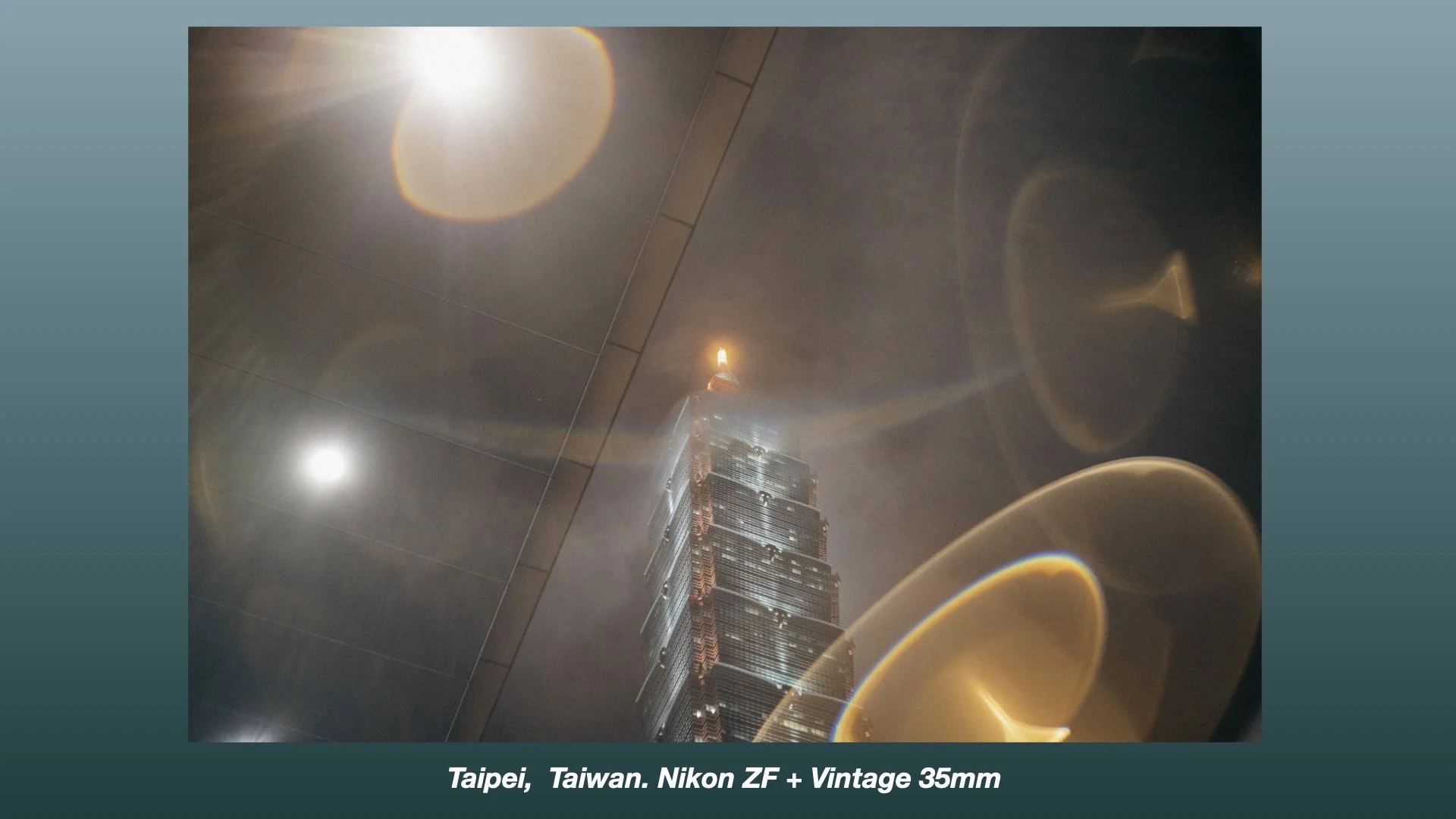
Well, I should be familiar, but sadly isn't, is Taipei. I lived there briefly 30 years ago but coming back I was basically a stranger in my own land.
Straight off the plane, I wasn't comfortable using 28 mm, rather than the ZR and my new 28mm, I brought out my ZF and a vintage 35mm. I was hoping the ZF’s friendlier retro shell plus a tiny 35mm would make me feel more at home.
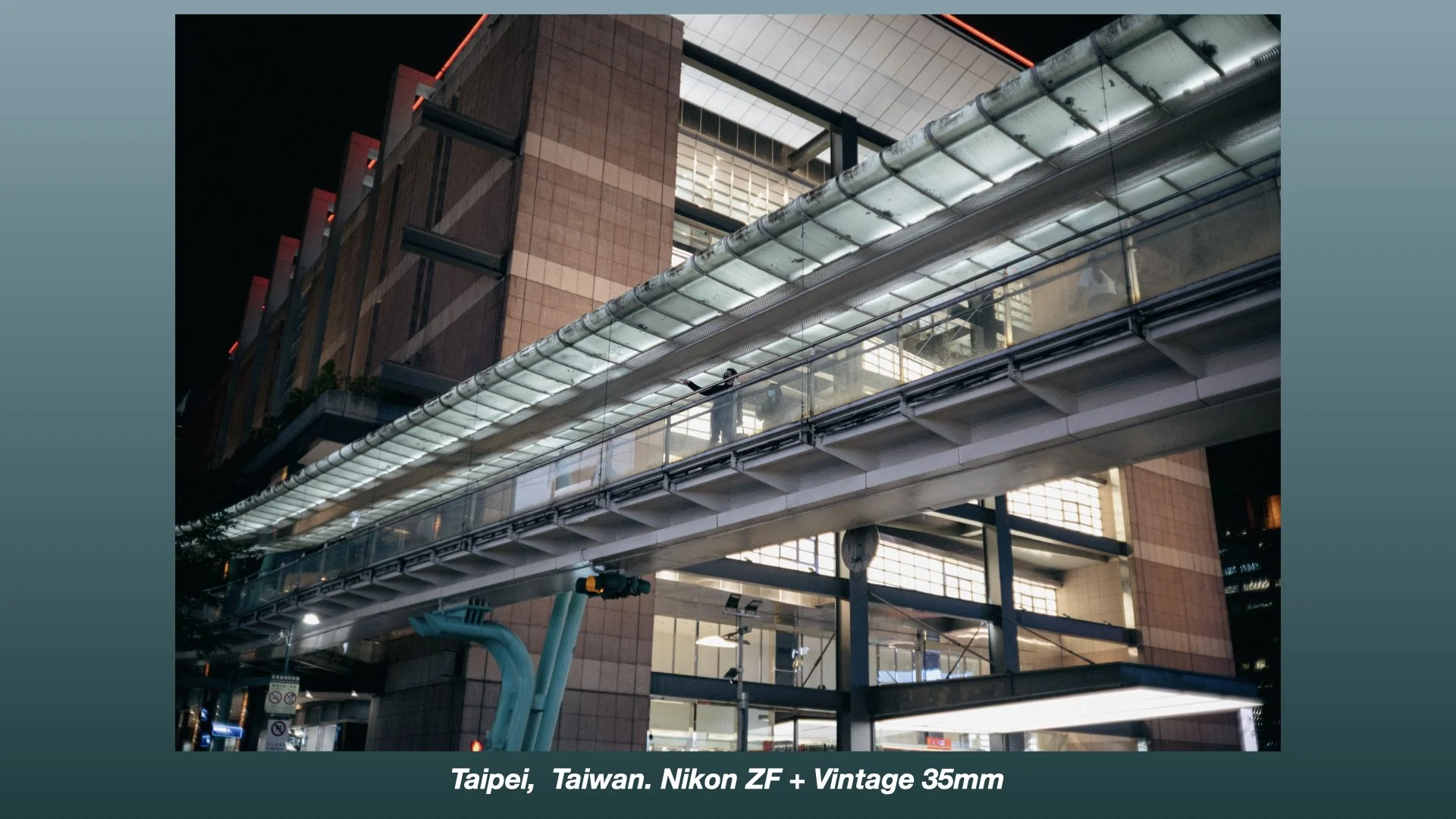
I thought 35mm should be easier to close the distance than 28mm, but why do my 35mm frames in Taipei seem further away?
The next comment may have taught me the most about 28 mm out of all the feedback I received from the last episode;
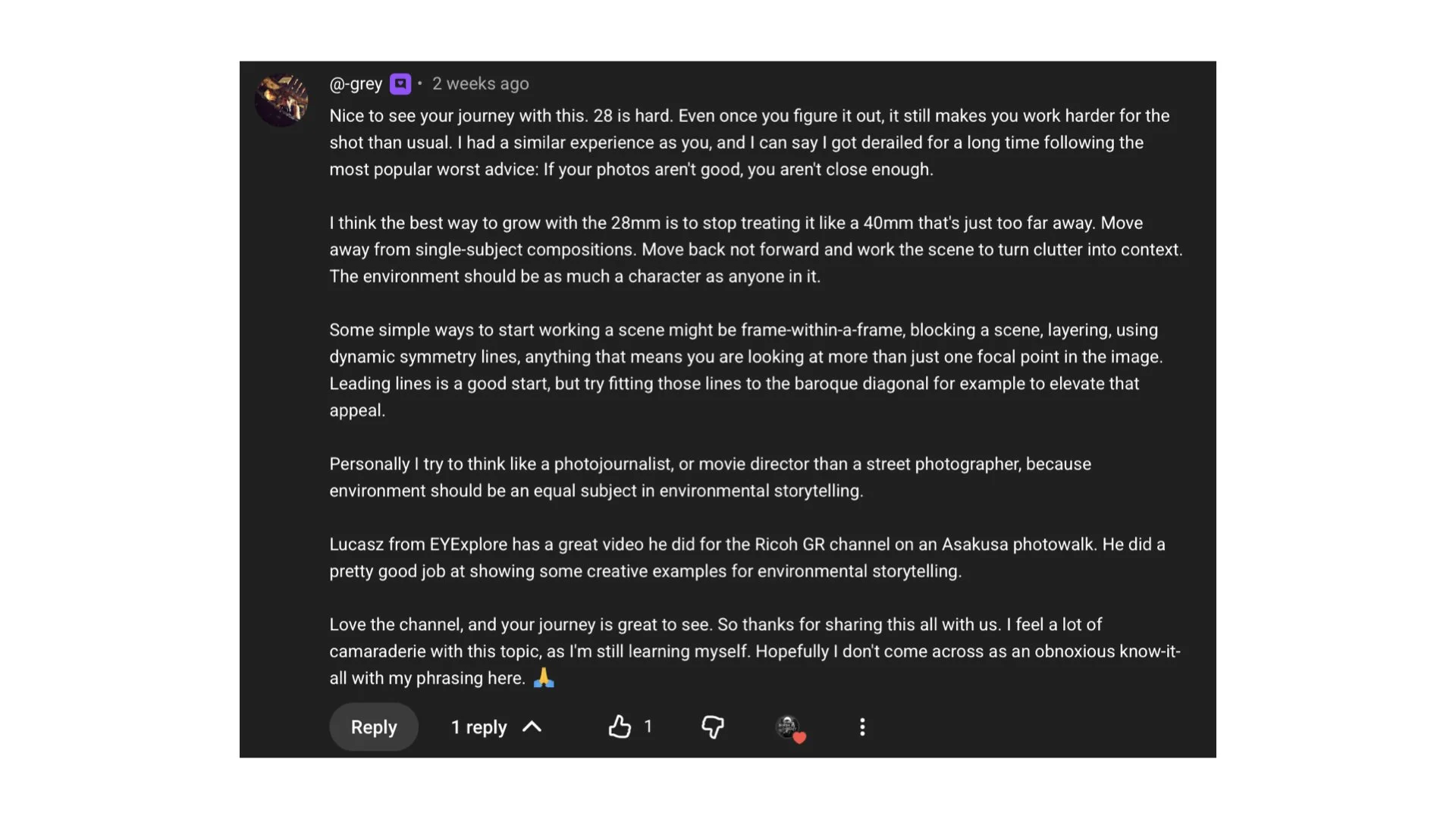
This made me change my second 28mm rule (originally “Mind the Gap” to focus on spaces than faces) has now been simplified to:
2. Take a Step back
The environment should be just as much a character as any one person. What types of spaces look interesting, and how do you add them to your frame? My friend Eric gave me a couple of ideas with 28mm, the first focal length that really made him consider layering.
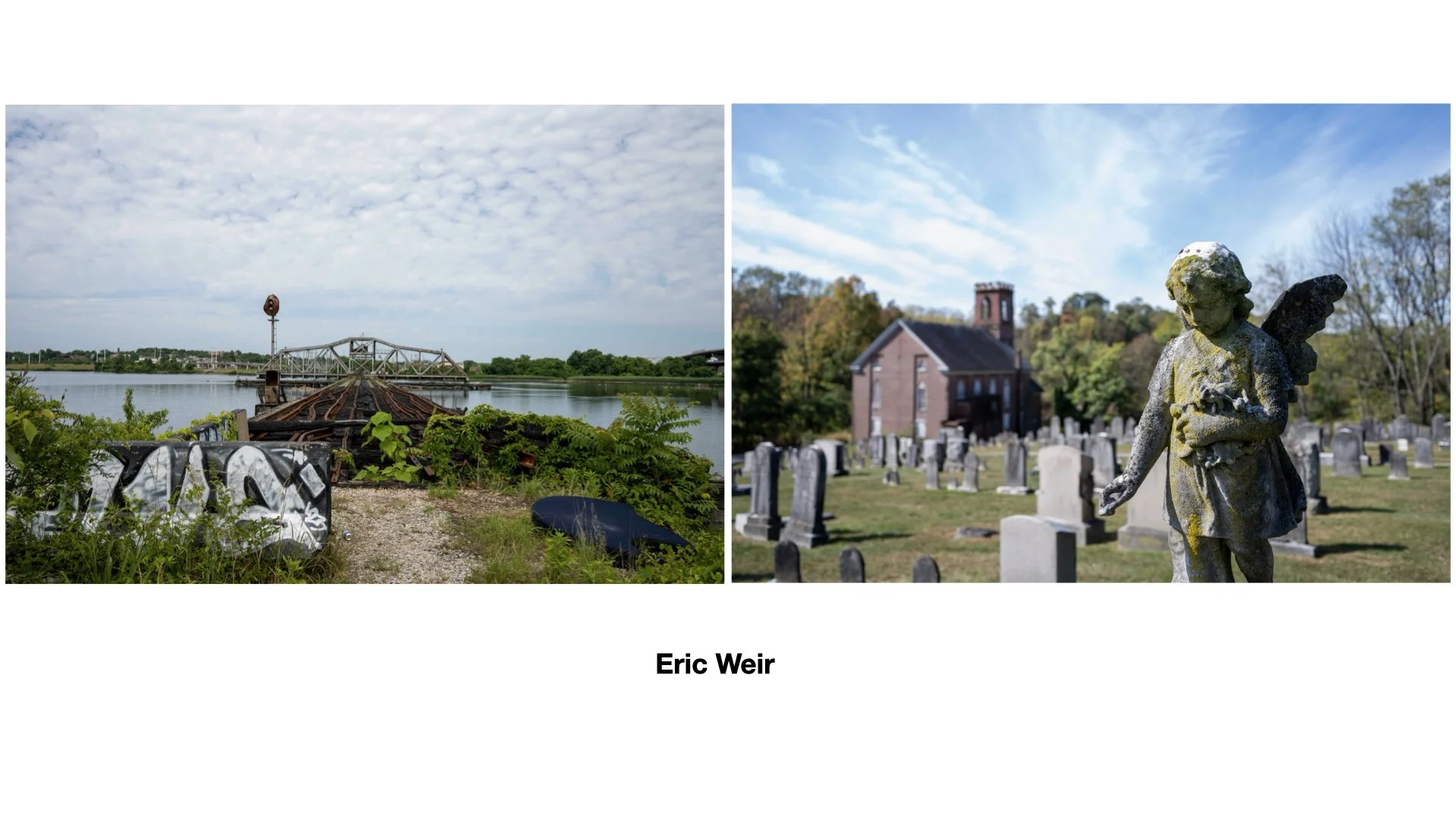
Even though the frame on the left isn’t one of Eric’s favorites, I still like the symmetry layering of elements, as well as the architecture in the distance. In the frame of an abandoned Church on the right, the statue was the focus, the tombstones and house sprawl out across the background, and there’s a bit of separation. I'm guessing this was taken at F2, or F2.8 but I do think this composition is strong enough that if this was taken at F4, F5.6, the image would have still worked.
Another way to fill in the space comes courtesy of Lg Anderl:
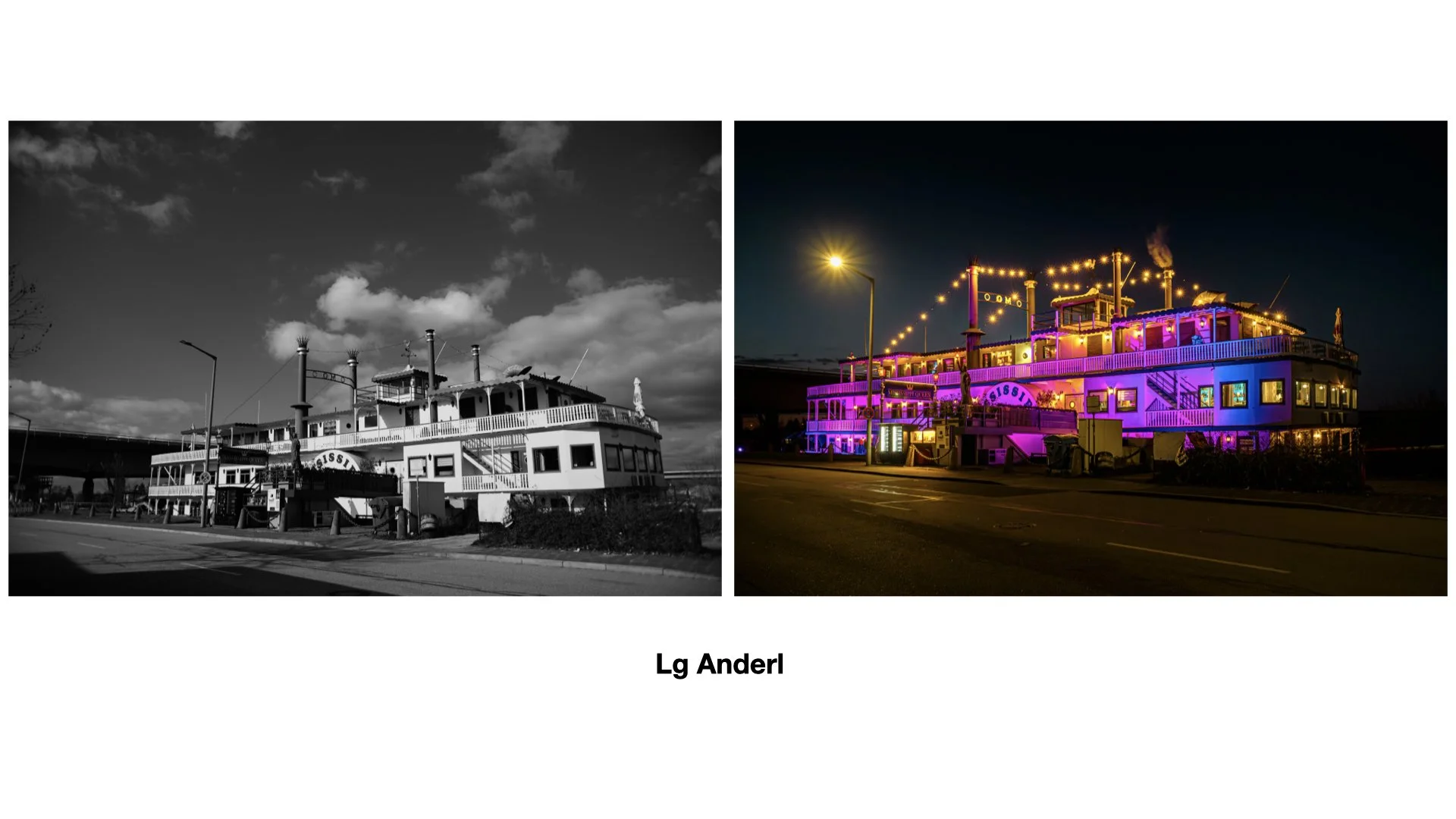
This is a steamboat restaurant in Nuremberg, I think, if I'm not mistaken, stopped down a little bit. The sun stars, not to mention the color and the vibrancy of these lights contrasting against the Dark Knight sky, adds more visual interest to the frame. It adds to the space, even without a face.
How I like to fill the space personally, is through exaggerated geometry, what I tried to do in Tokyo late at night.
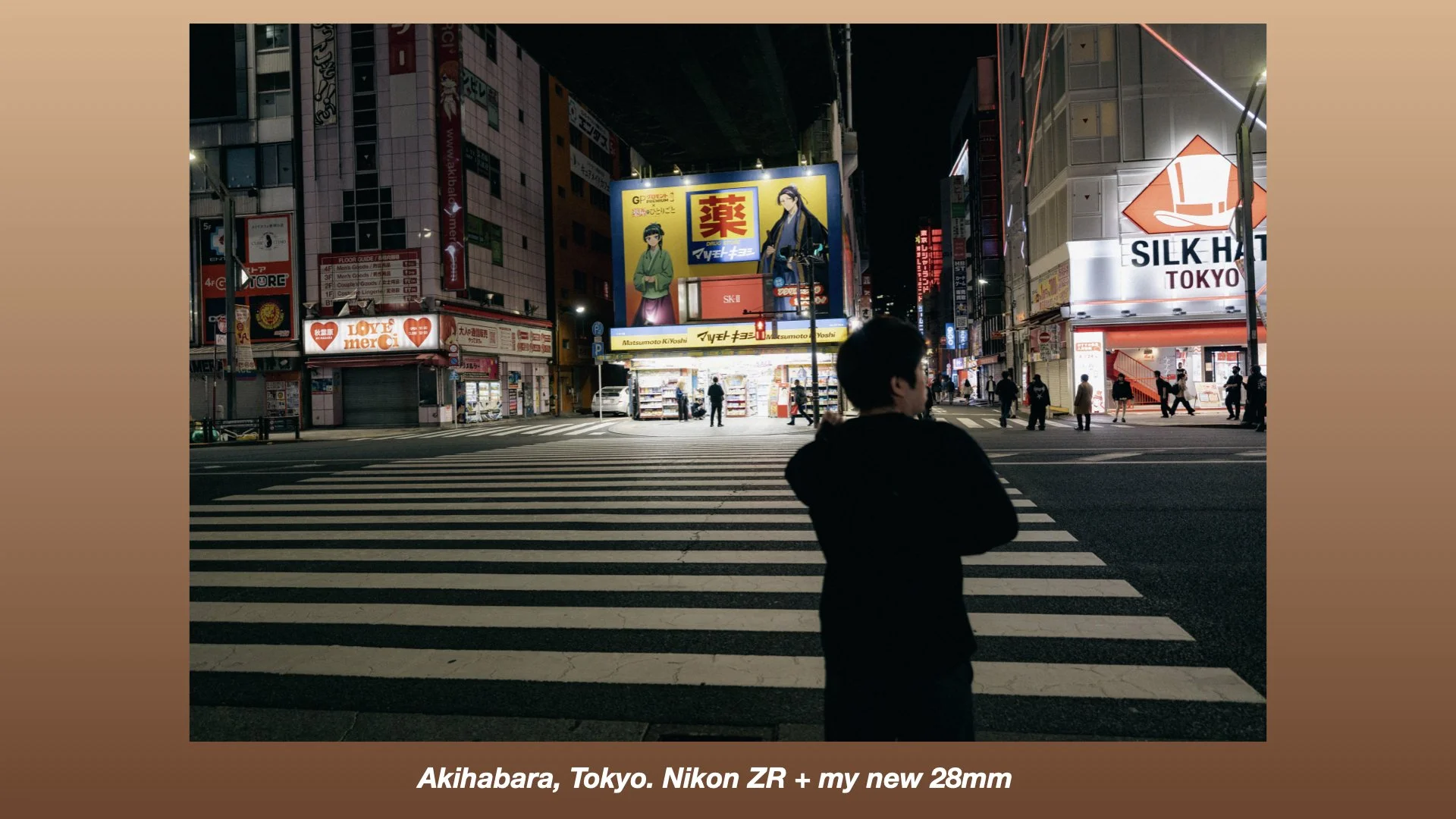
The ZR with my new 28mm, the geometry of these crossing lines, people in the background. They are just the ornament to the space, that wide open crossing as you exit Akihabara station into electric town.
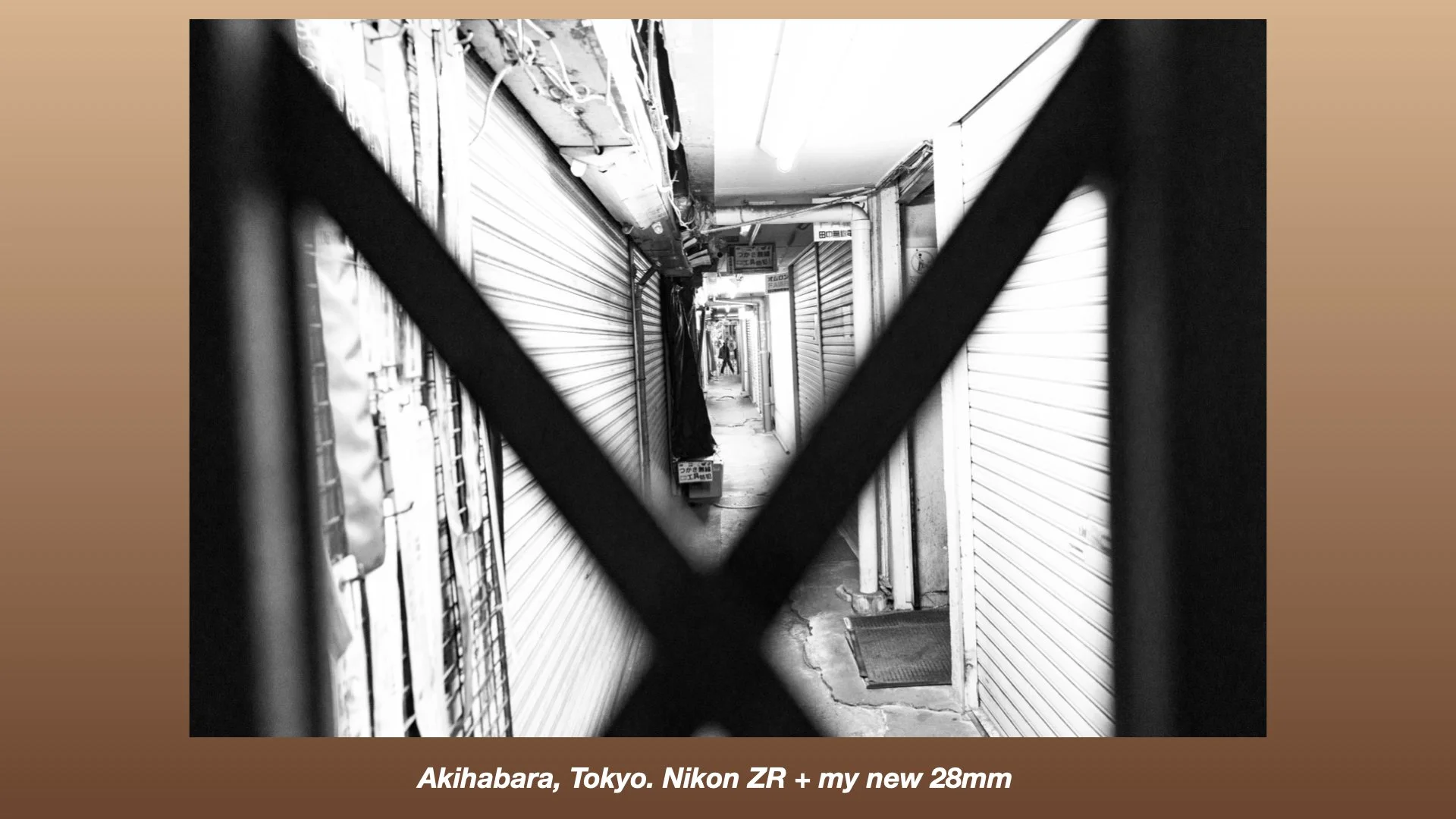
Another example of this are fences or placards, in this case, I used the X shape to create a subframe from the garage doors that were all closed. Guides your gaze towards this silhouette in the distance. But I think you get a good sense of the space.
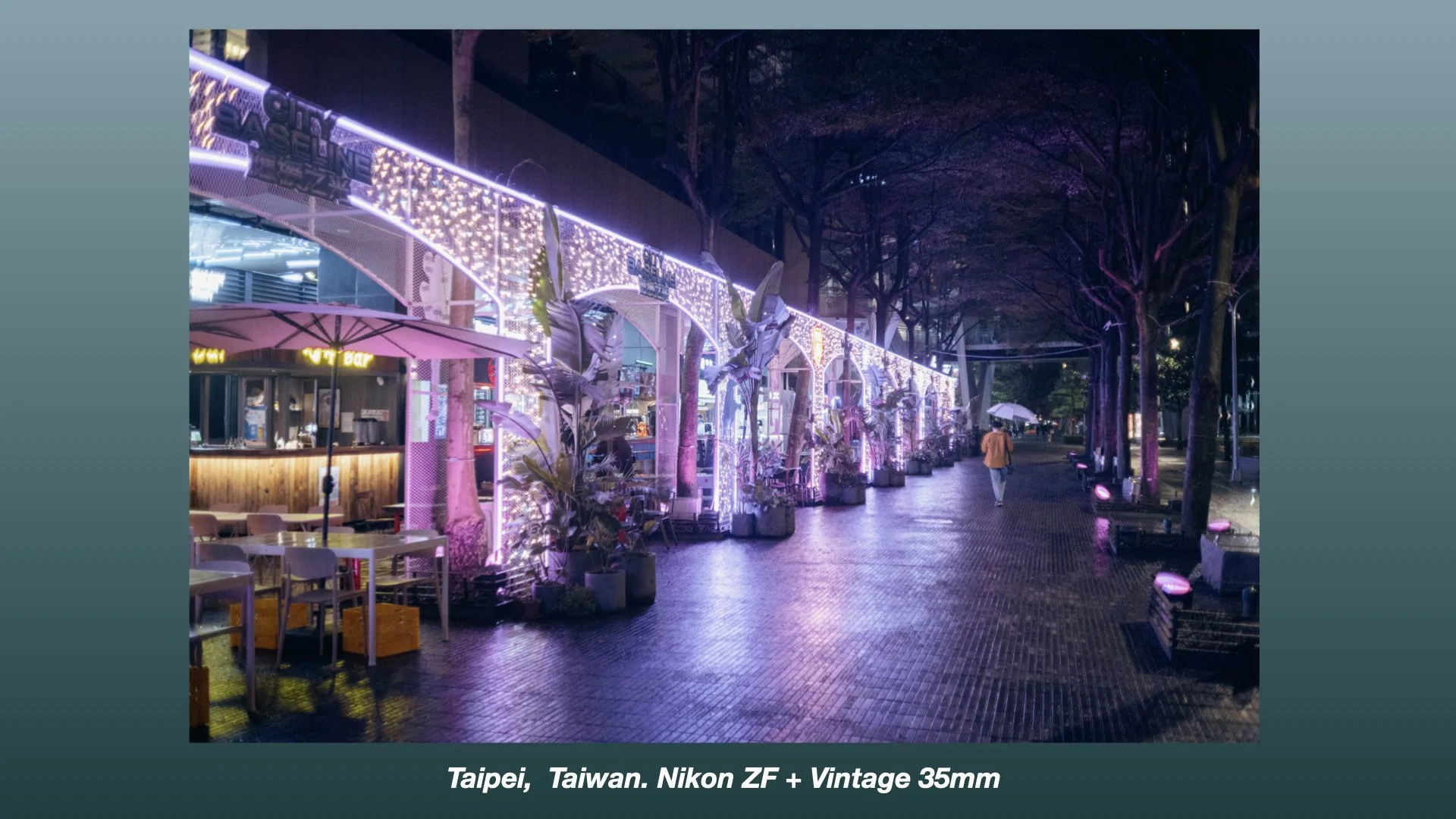
But in Taipei, on my second night there, with the ZF and the vintage 35mm, I wasn't quite getting the working distance right. I was used to shooting with 28mm at this point. Maybe that's why, on these frames, I took a step back, using that 28mm mentality, defaulting to spaces over faces.
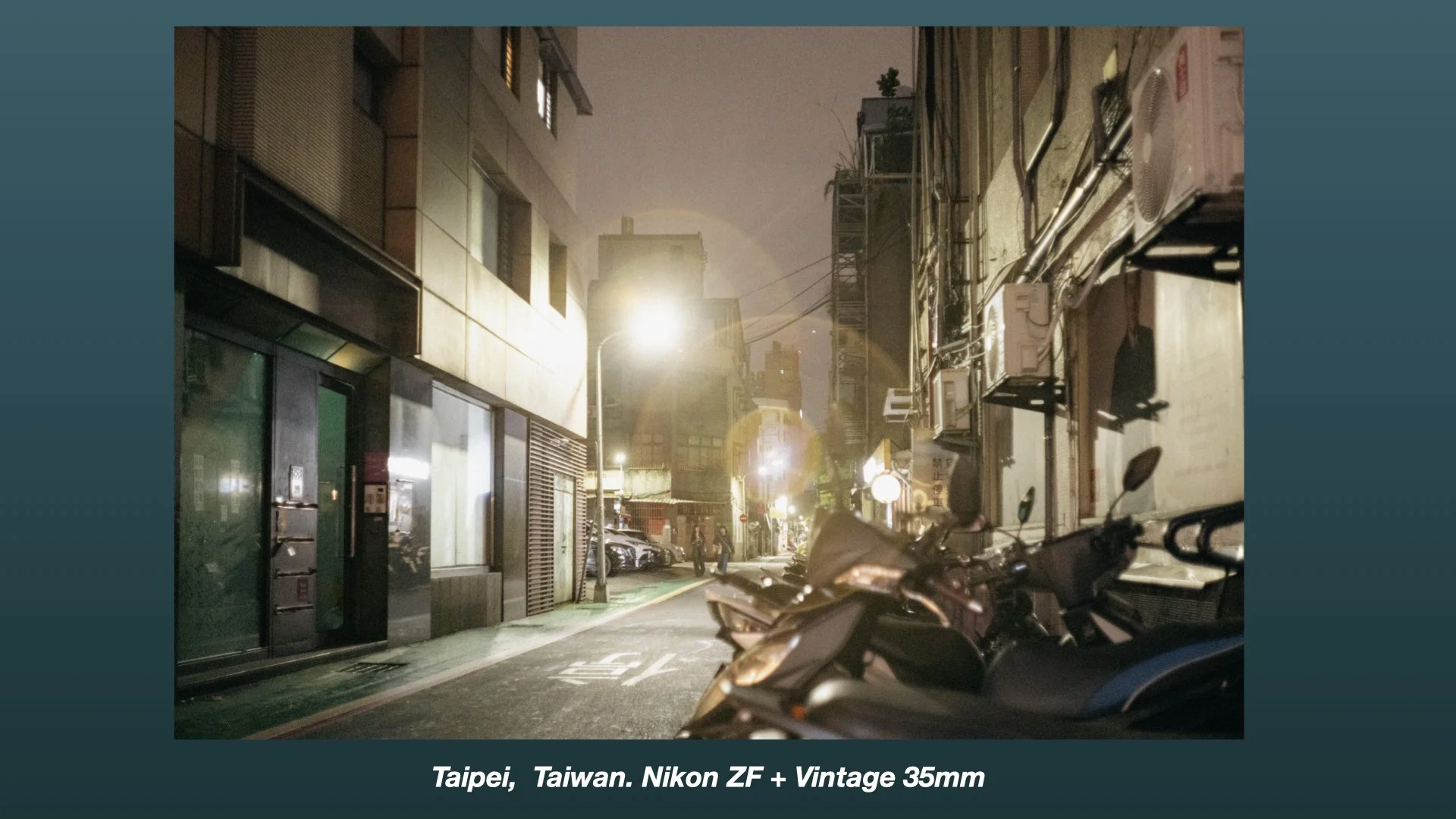
In an otherwise colorless back alley scene, using lens flares from this vintage 35mm to add more texture
A random field of poppies, in the middle of the city. Again, a few commuters here for scale, but it's really to contrast that dynamic urban setting and the randomness of a field of poppies.
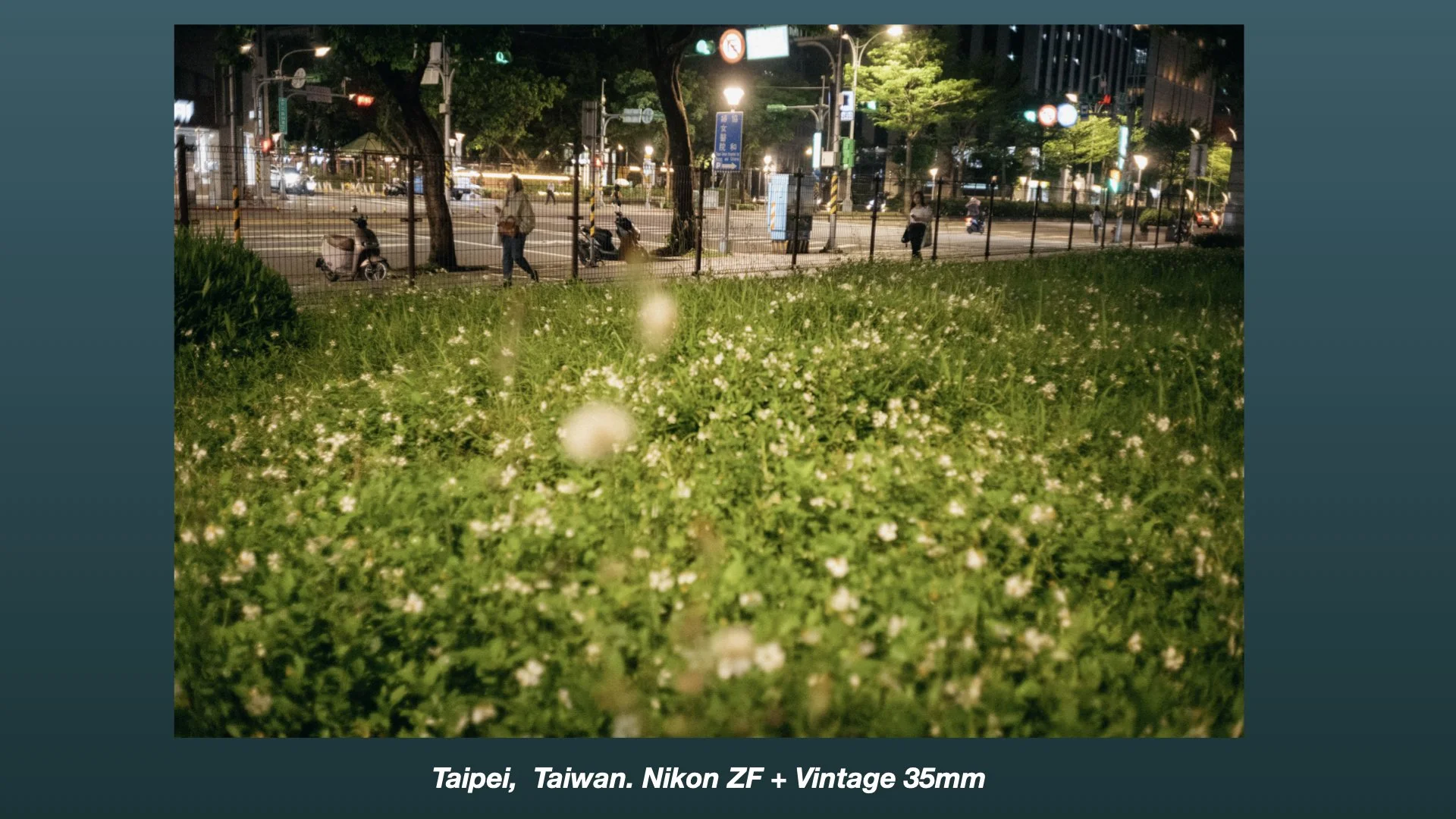
Just because a 35mm has a tighter field of view doesn't mean you can't capture spaces effectively, although there is less potential for the drama, the visual exaggeration, of a 28 mm.
There is a risk as Andrew “Jen” Wong showcase in the next 2 photos:
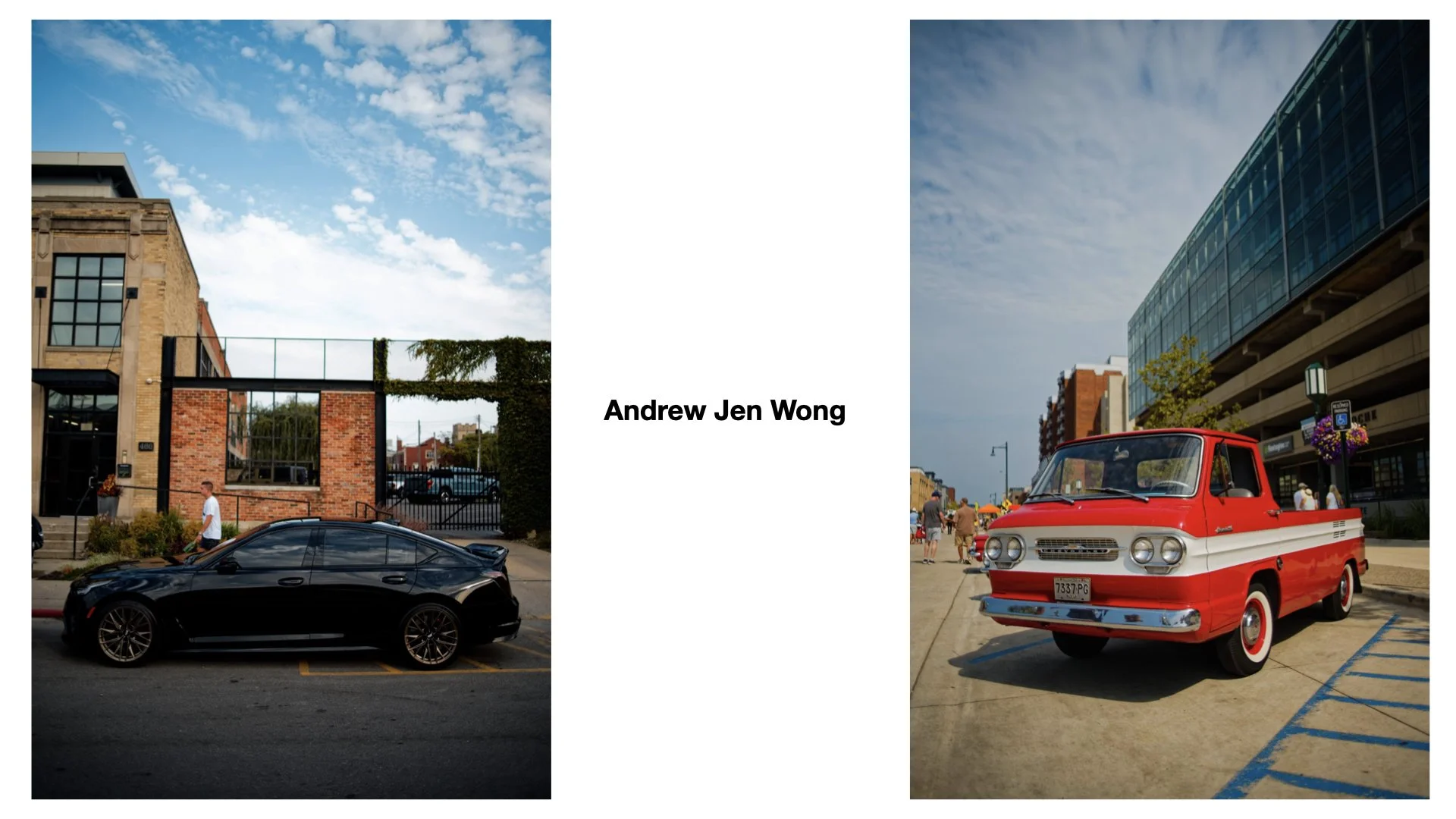
The first image, is at a lower height than your POV, which makes the car look a bit distorted in a natural way, relative to these buildings, and this person walking by. The comparison, and this second shot on the right, the POV is looking up at the car. This makes use of a distortion, expands the background, and the leading lines are emanating out from the car, rather than distorting the car, and our perception.
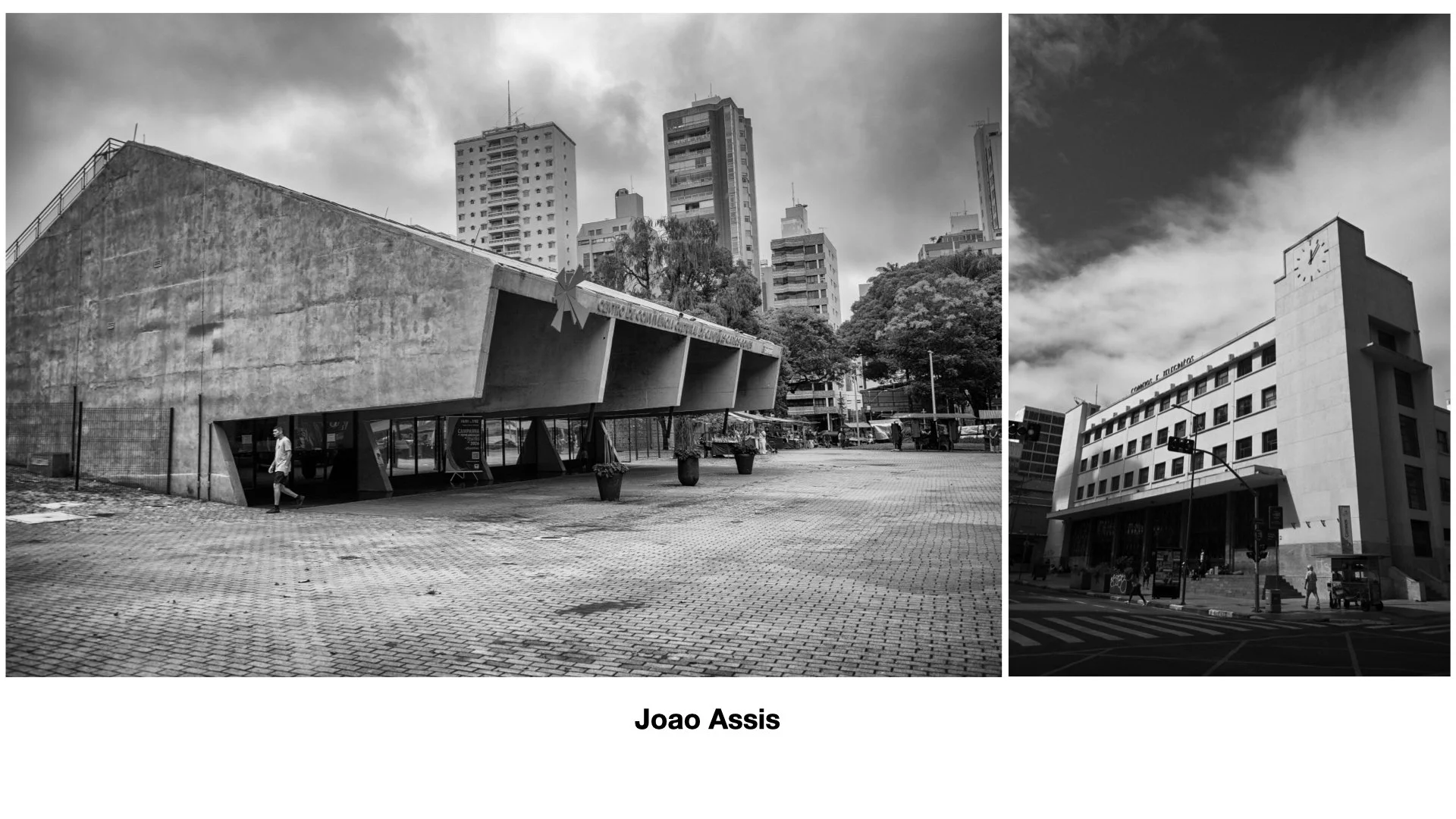
Joao Assis, in these 2 frames, also showed this architecture on the left. They look a little bit distorted. But you get the grandeur of the space. Same with this frame on the right. I really like the scale and the proportionality of 28mm. The grandeur of the space rather than the intimacy of any face.
A regular viewer MacMac6479, really gave me a lot to think about:
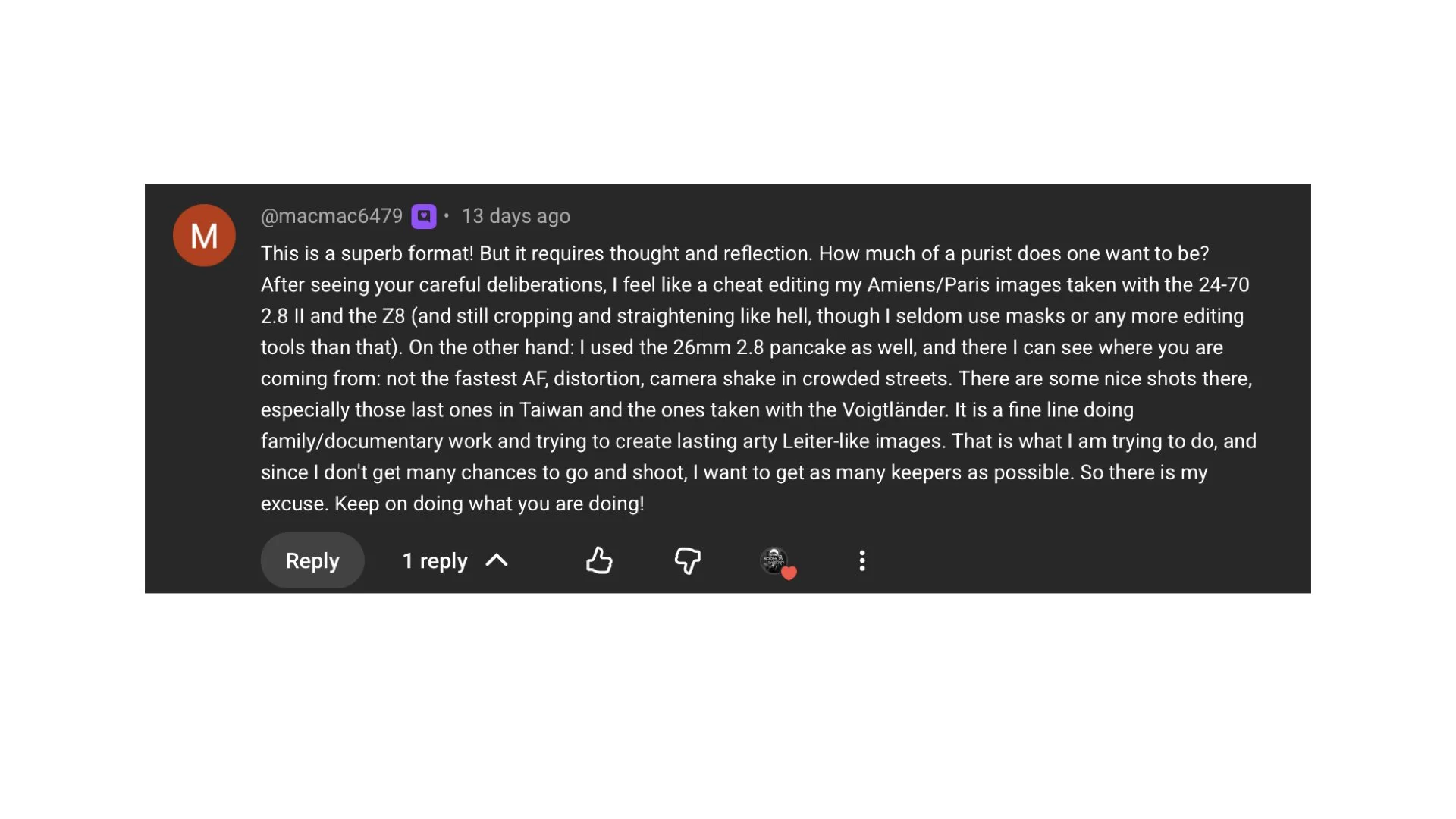
Of course, you could use a wide angle focal length on higher res sensors, after cropping and recomposing to fix the distortion the 28mm quirks are gone. But using distortion to your advantage is a feature not a bug of this focal length. My third 28mm rules used to be “find your level”, using in-camera tools to minimize 28mm distortion.
But now if I'm trying to embrace distortion where I can, that rule now becomes:
3. Leverage your level.
Back in Tokyo, I tried to leverage the distortion.
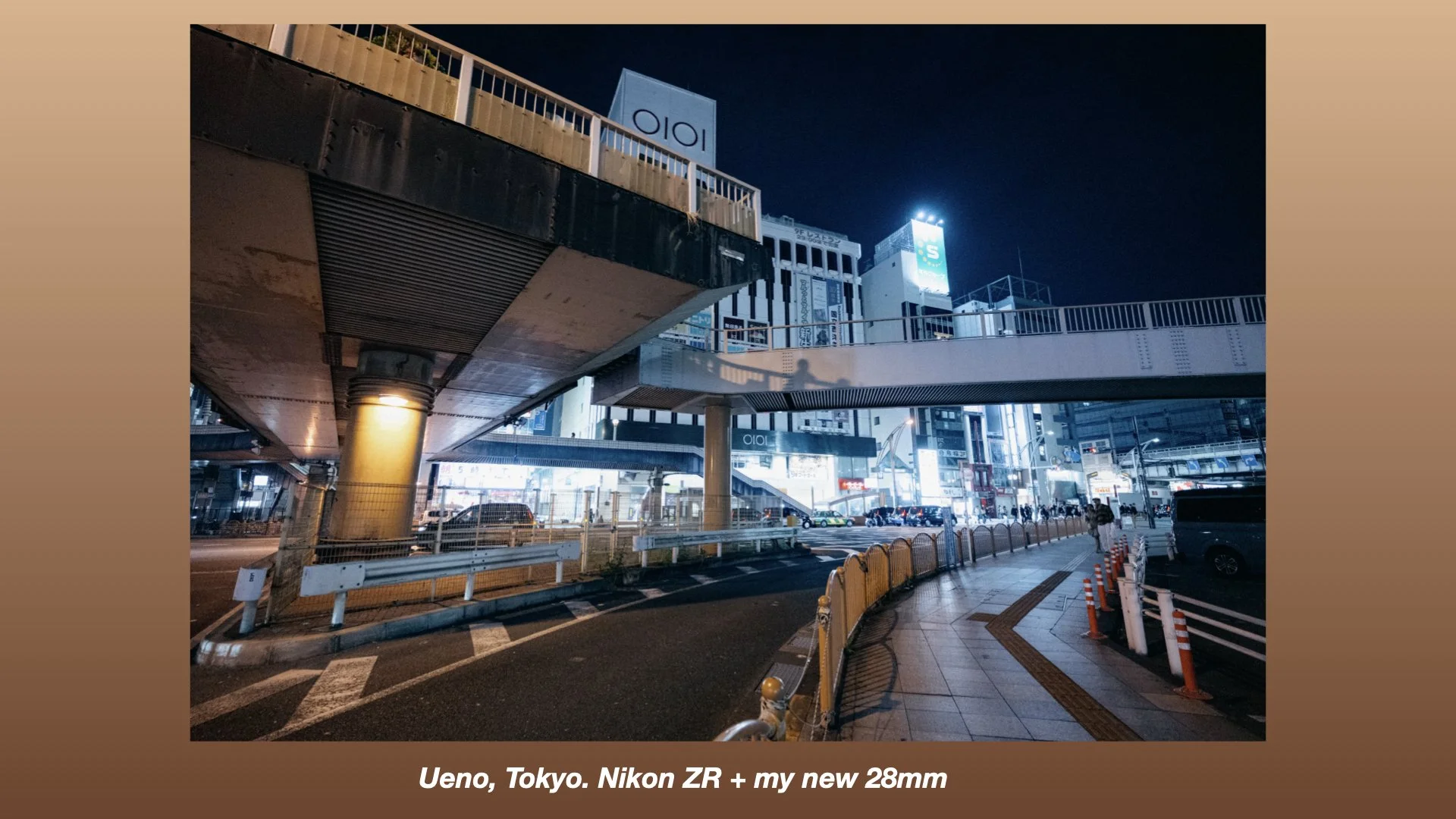
The shadows on this overpass was the focal point. Everything else or the other lines. The distortion there is trying to guide your gaze towards that shadow. So I don't mind if these lines look distorted. As long as it's getting your attention to the political point I want you to pay attention to.
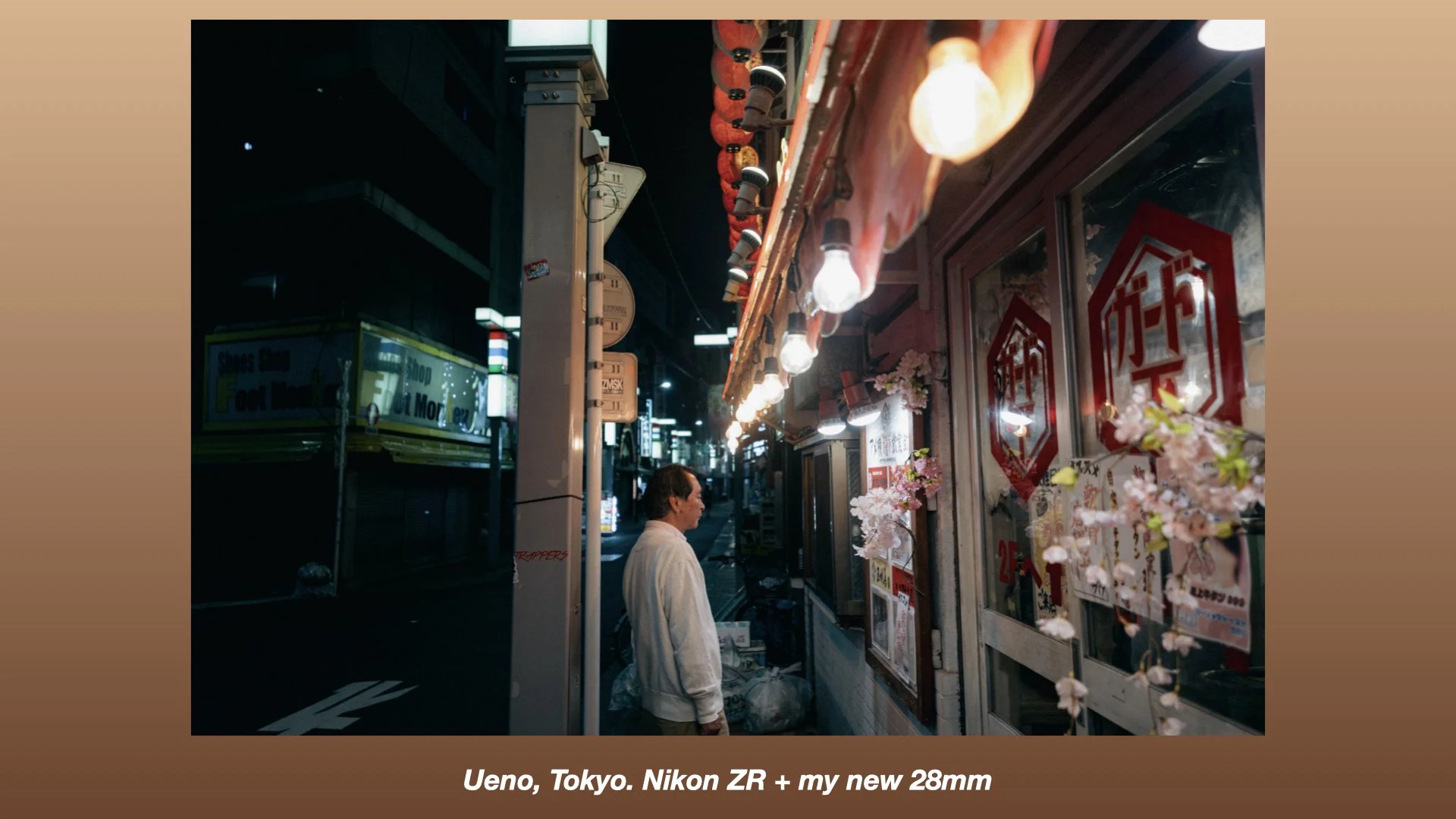
Same principle applies for this man looking at the menus on the wall of this izakaya. The lines of these buildings are not level, the leading lines of the restaurant doors, the leading lights, the lanterns, all eventually direct your attention to this man. As long as that man, that subject is not distorted, everything around him, everything around them can be distorted.
That's the beauty of 28 mm and wide angle focal lengths.
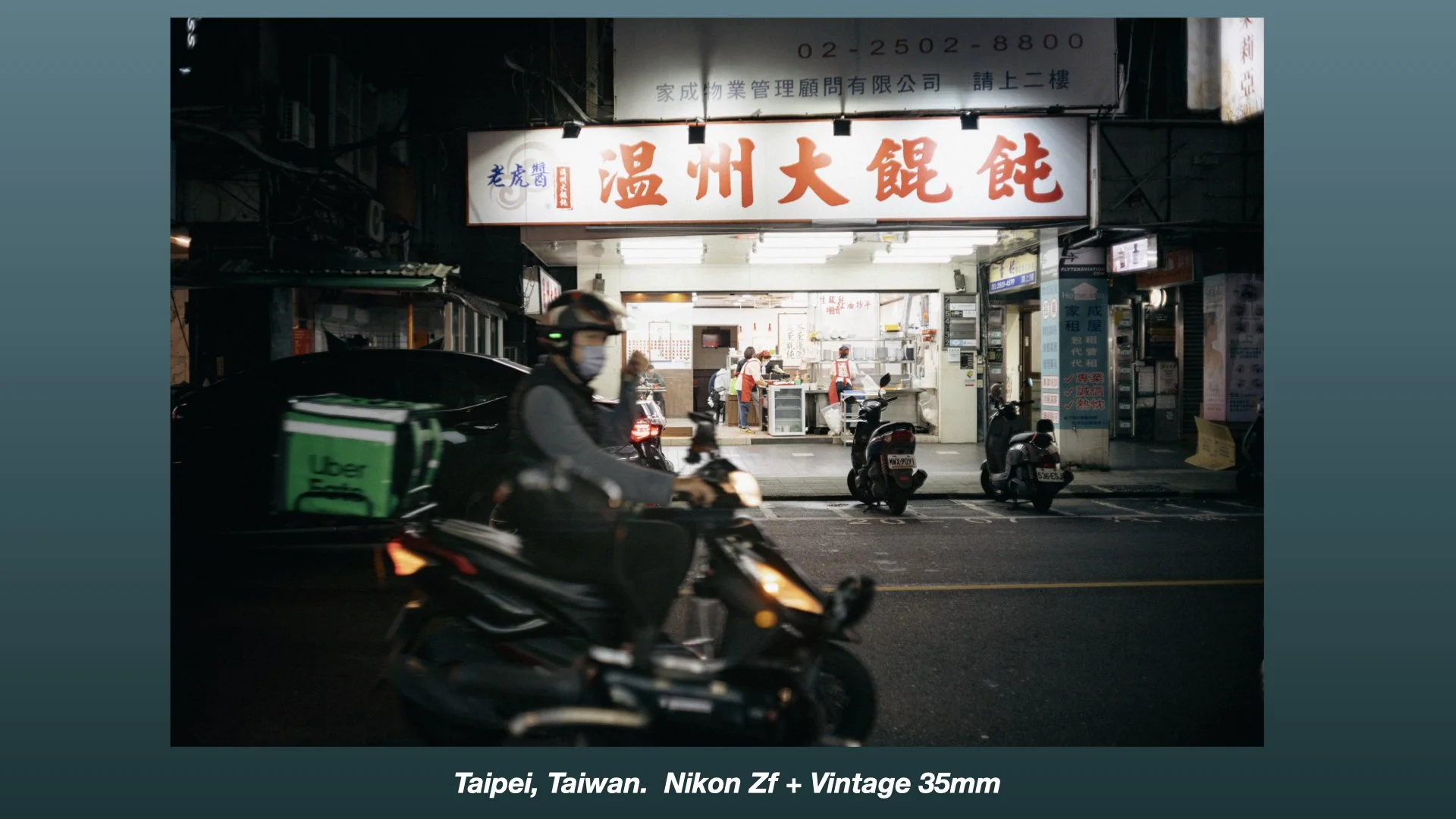
In a similar restaurant district in Taipei, with my ZF and the Vintage 35mm, as much as I try to pack the frame, there's very minimal distortion. These motorbikes here, crowding the frame here, all the lines and objects look natural even around the edges.
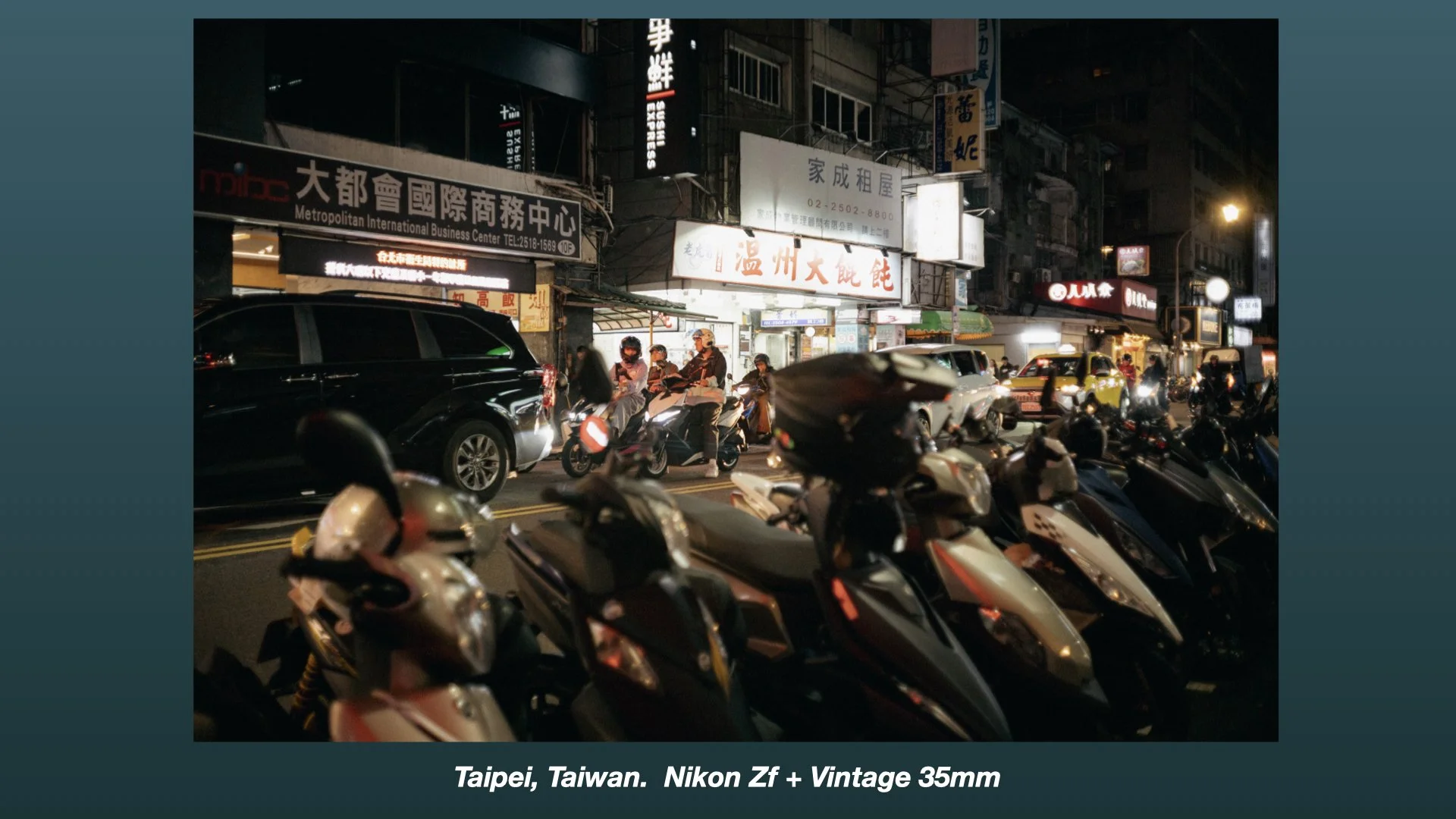
Though I was warming up to the scene by this point in Taipei, as much as I like 35 mm, I did miss a bit of that distorted 28 mm drama.
My fourth 28 mm rule was “back and forth reflections”. But the next to the photos prompted me to revise this rule, sometimes it's:
4. Best just to keep it simple.
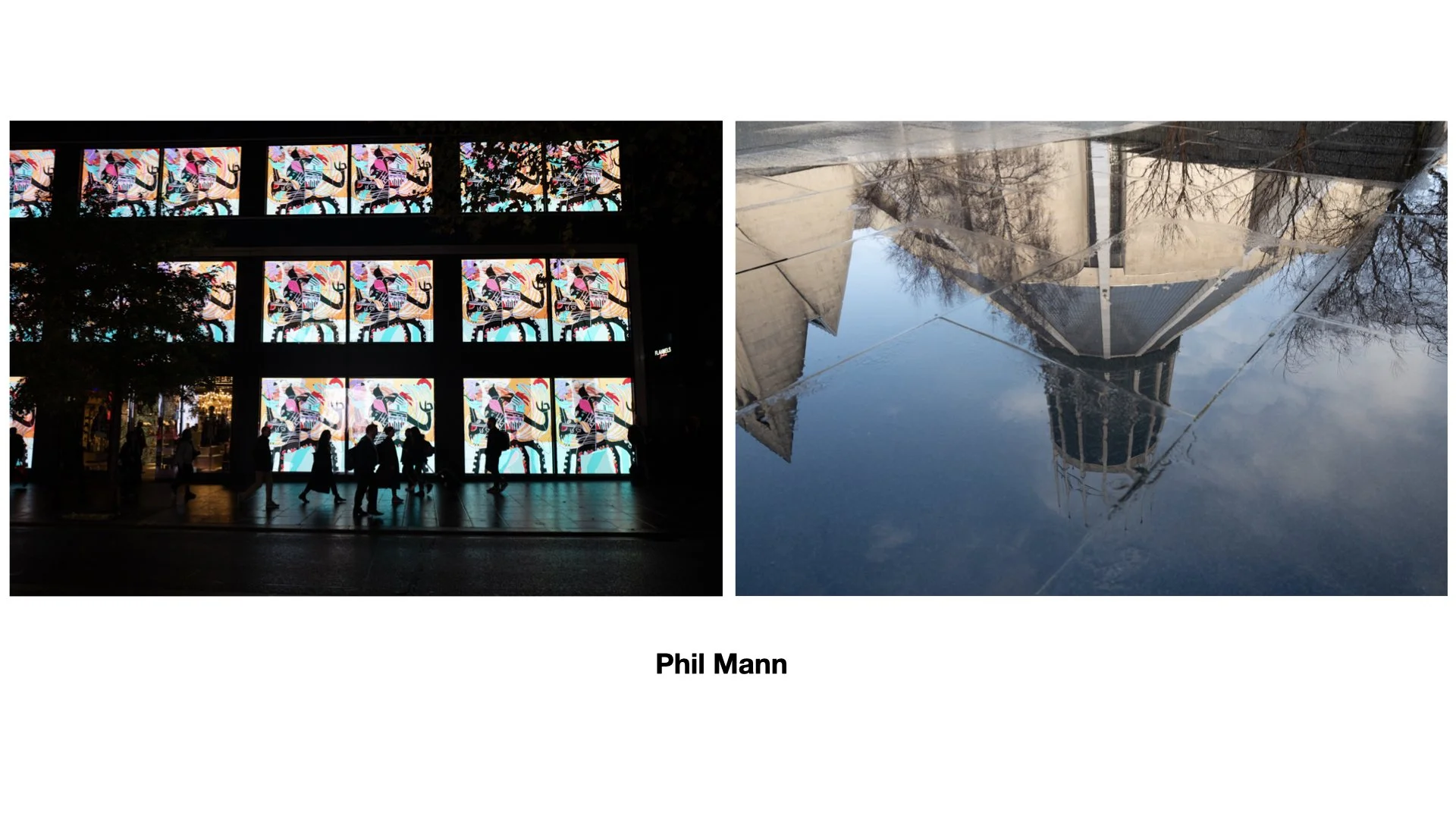
That's what Phil Mann showed me, the frame on the left has the potential to be a very interesting image but for Phil? Too much complexity, too much potential for distortion. Sometimes it's just nice to take a elegant image of a building reflected in a puddle on the left.
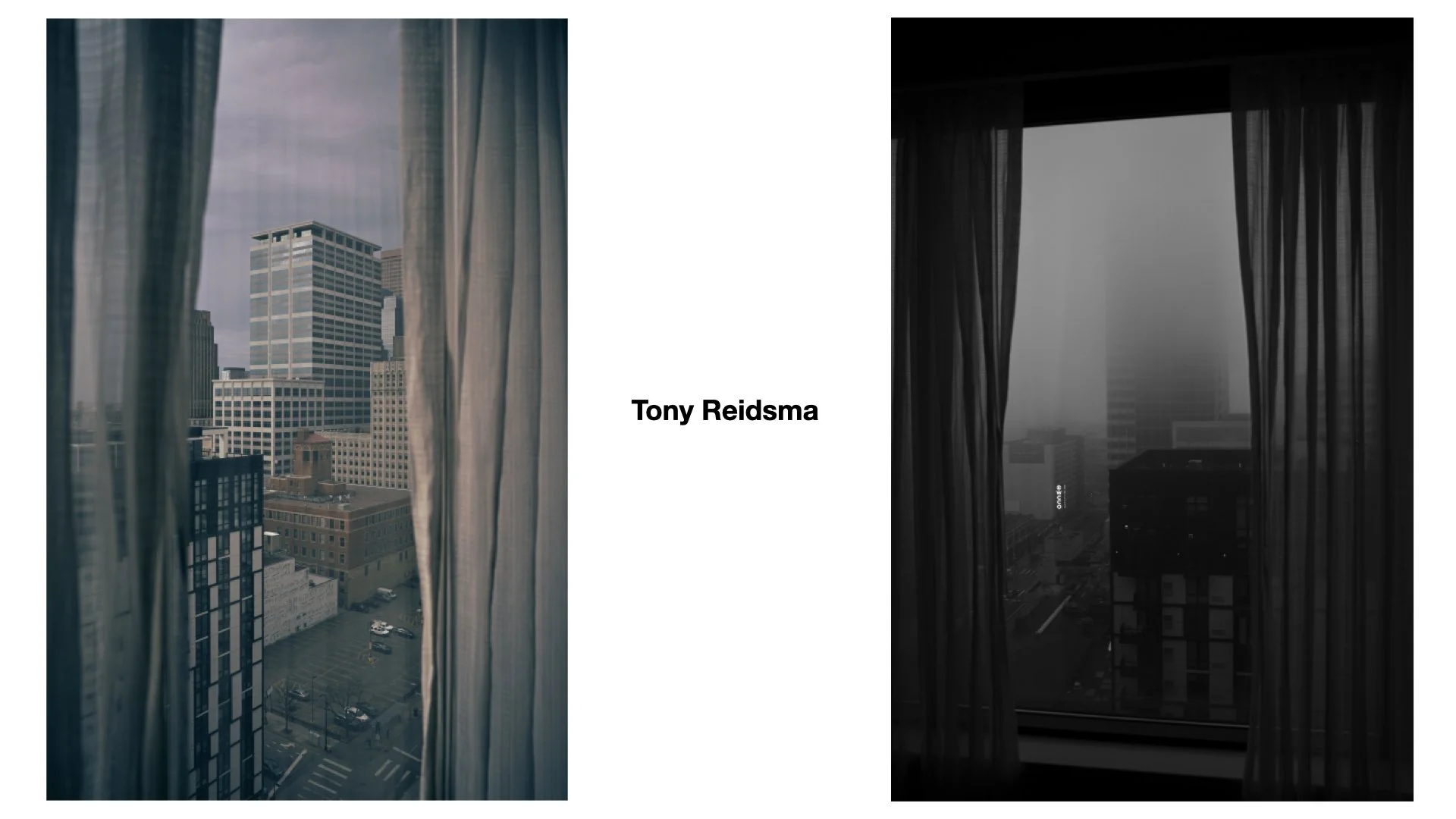
Tony Reidsma has the same philosophy. He says he was working at a convention and only found time for a couple of frames. Both are minimal, both are simple, and I think we've all been there, right, while traveling? So busy with a packed itinerary that we forget to document what's simple.
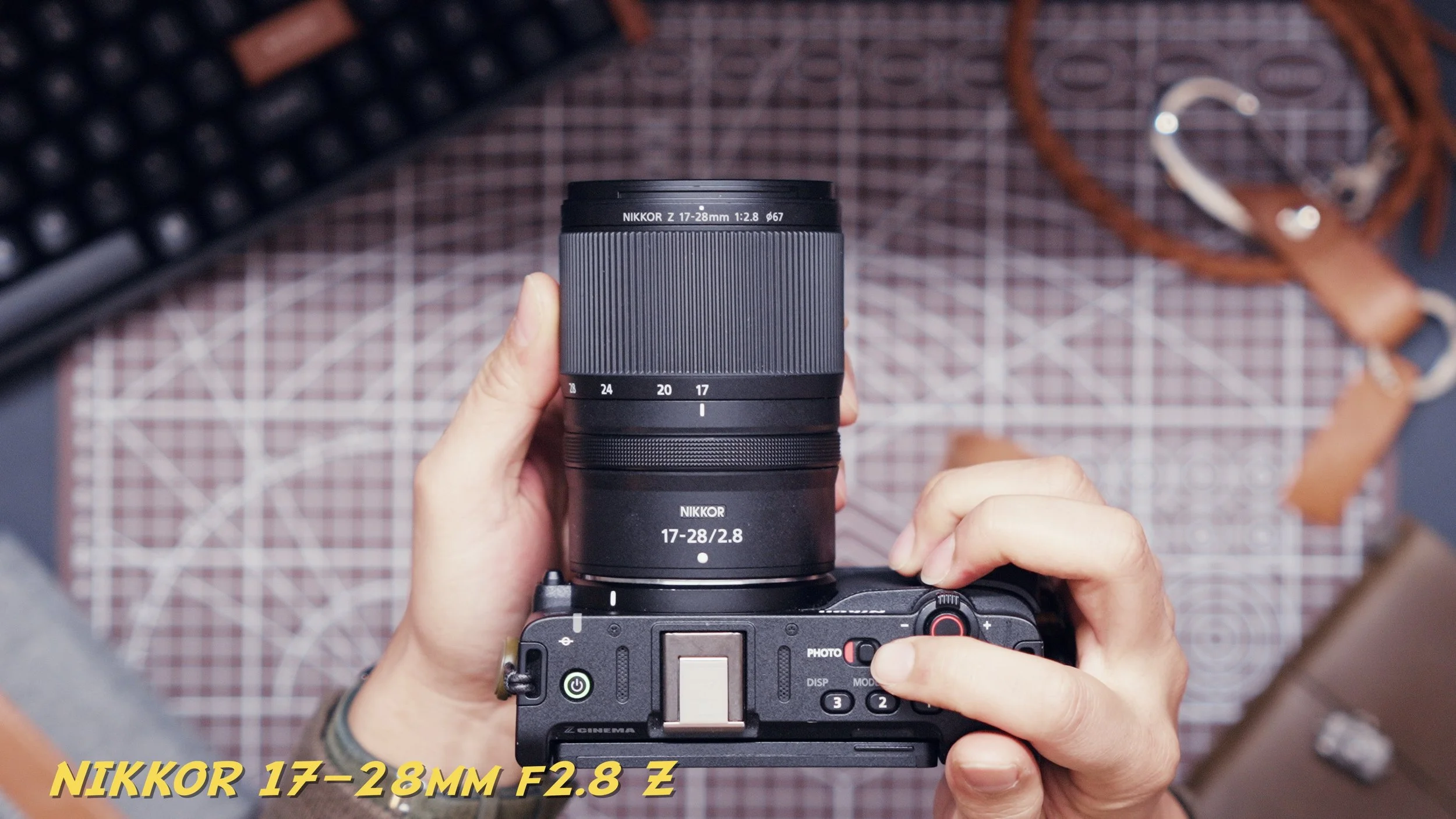
That was my intention when I bought this new 28mm in Tokyo. The 17 to 28 mm F 2.8 Z that I primarily want to use for video at 17mm, and for photo at 28mm. I don't have to change lenses for making these videos, and I like that Zoom's size, weight, the resistance of the Zoom ring, I still have a lot more testing to come on these ultra wide zooms before I decide which one’s for me.
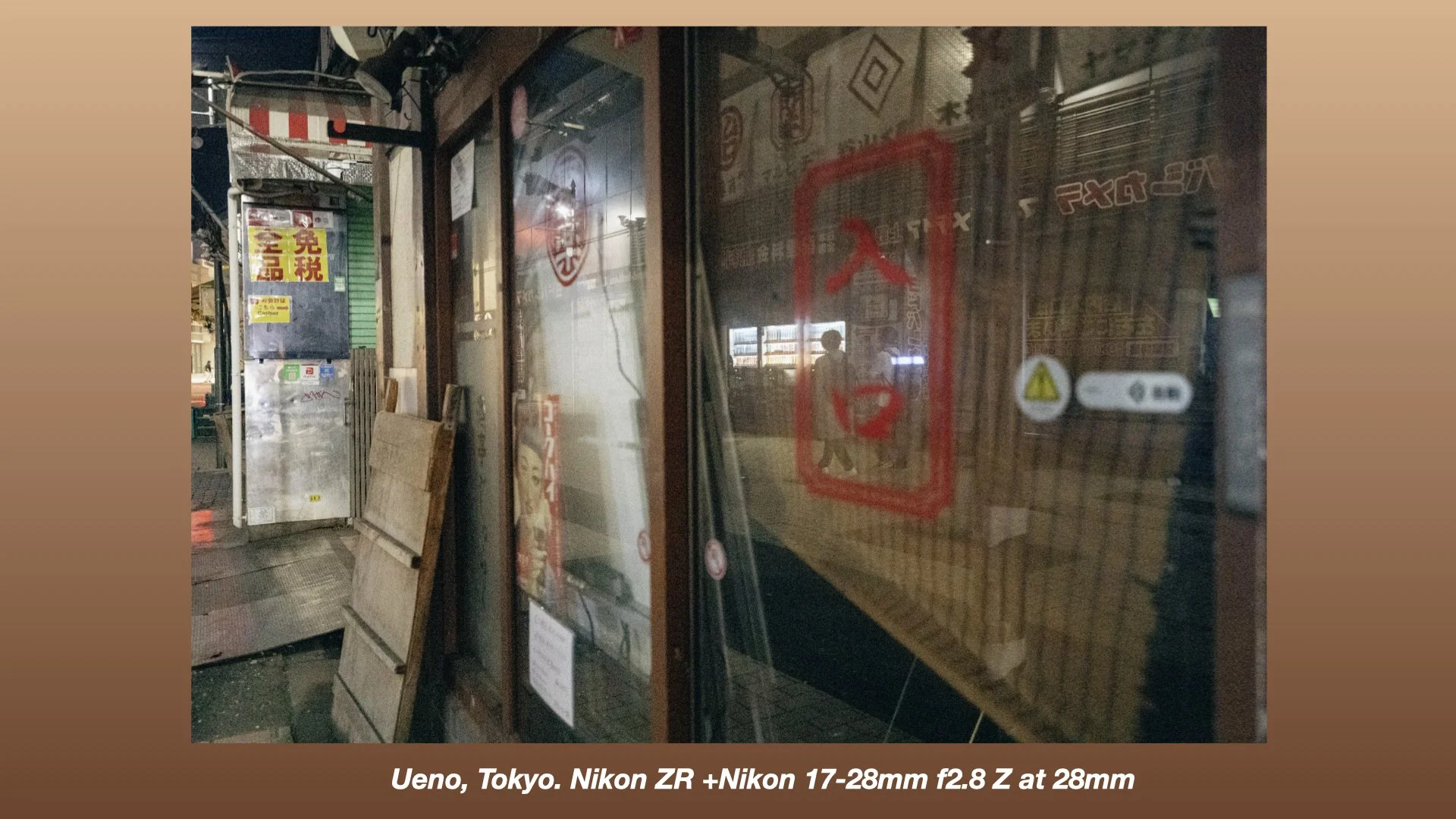
These are my attempts at simplicity in reflections in Tokyo. I found this red sign on the shop window, and I was waiting for people to walk through so that I could catch them in the reflection. It was just one reflection, the rest of the frame seemed busy enough.
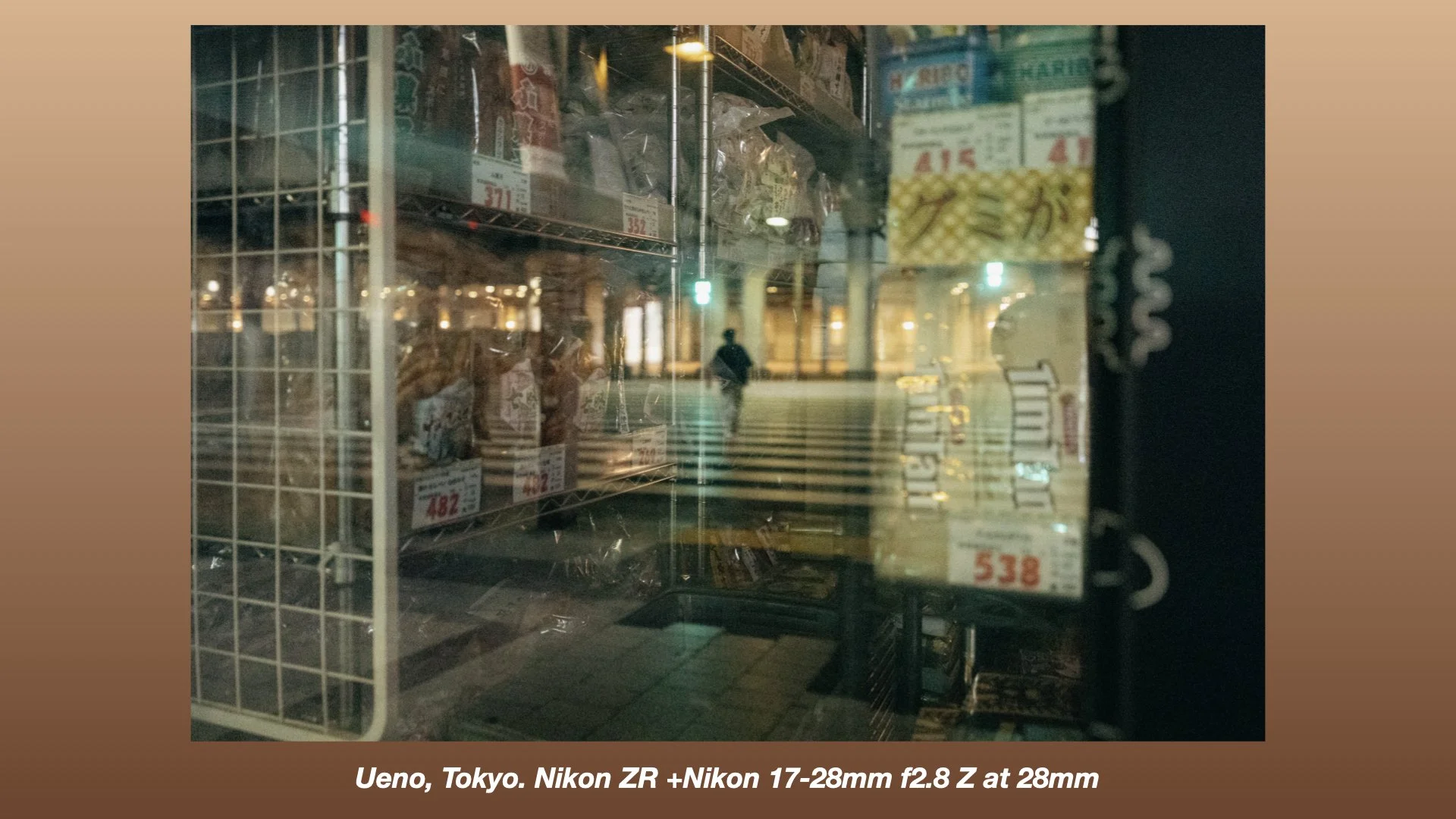
The next frame was a little bit more minimal, just a single silhouette. I used these other reflections, which are essentially priced tags of snacks in this shop, which was well and truly closed by that point.
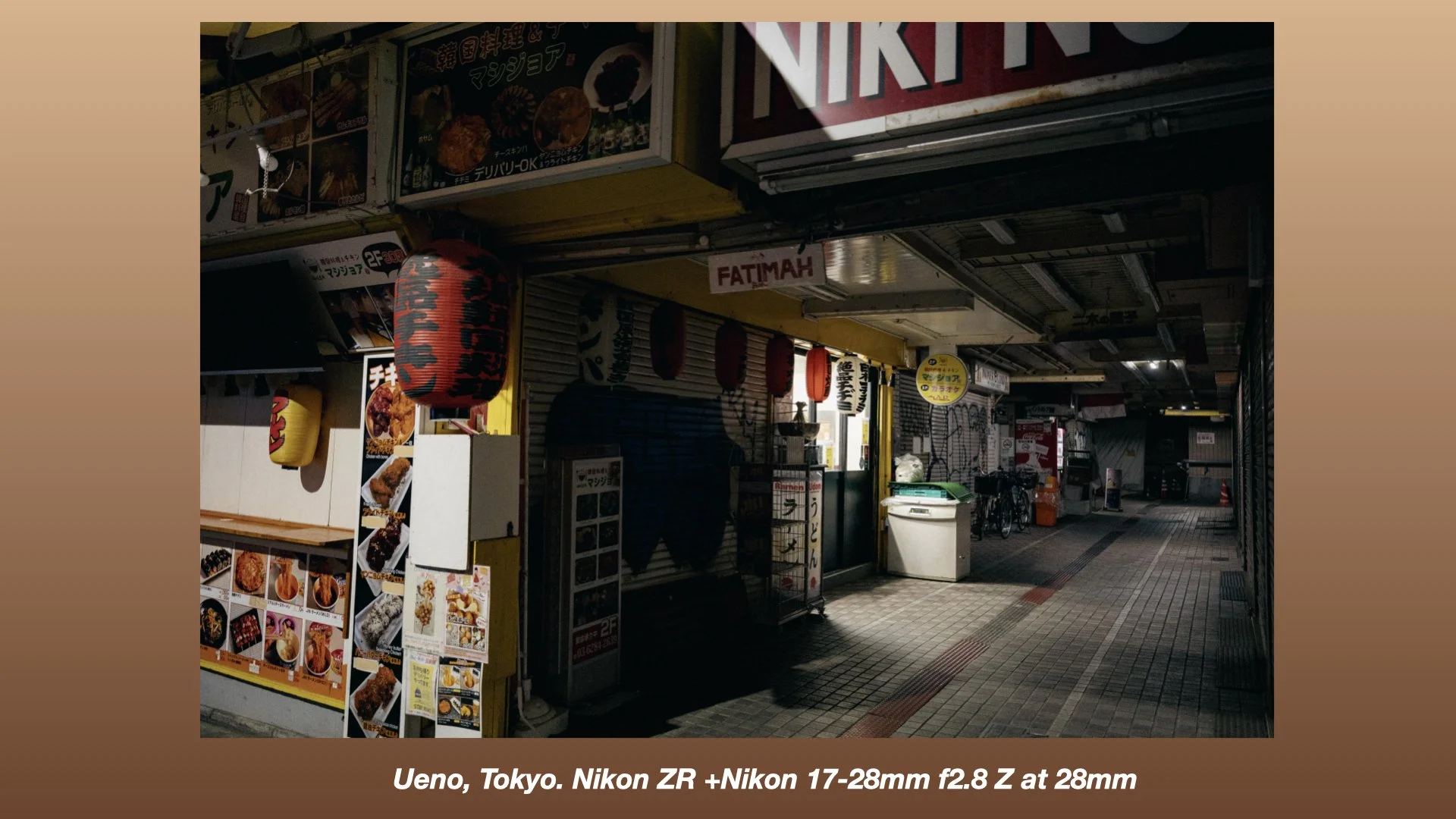
Travel photography can be minimal and peaceful.
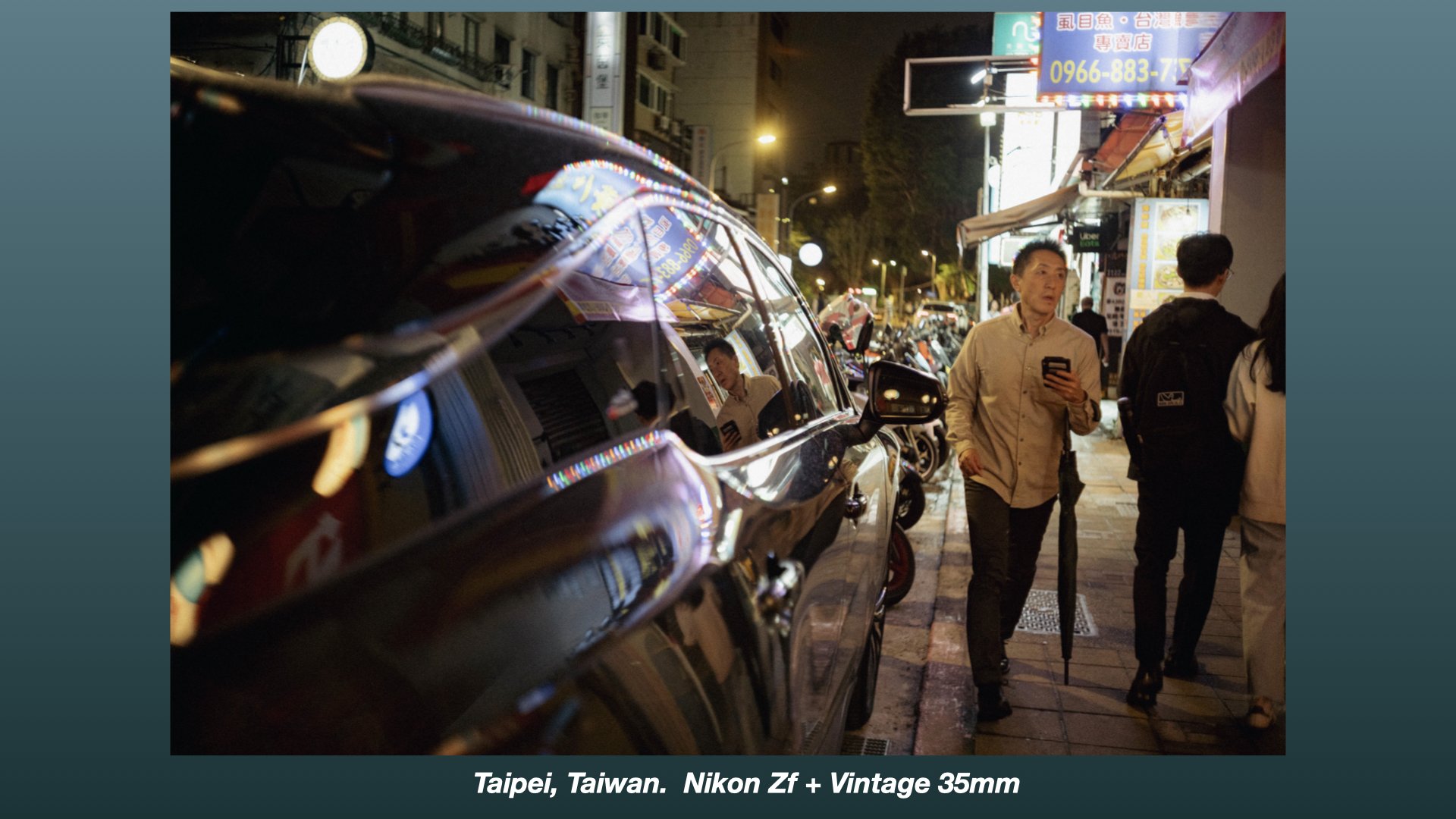
In Taipei, I'd finally gotten closer on my vintage 35 mm, a few off angle reflections of commuters. I liked how close I got to this man, but I was really focusing on his reflection.
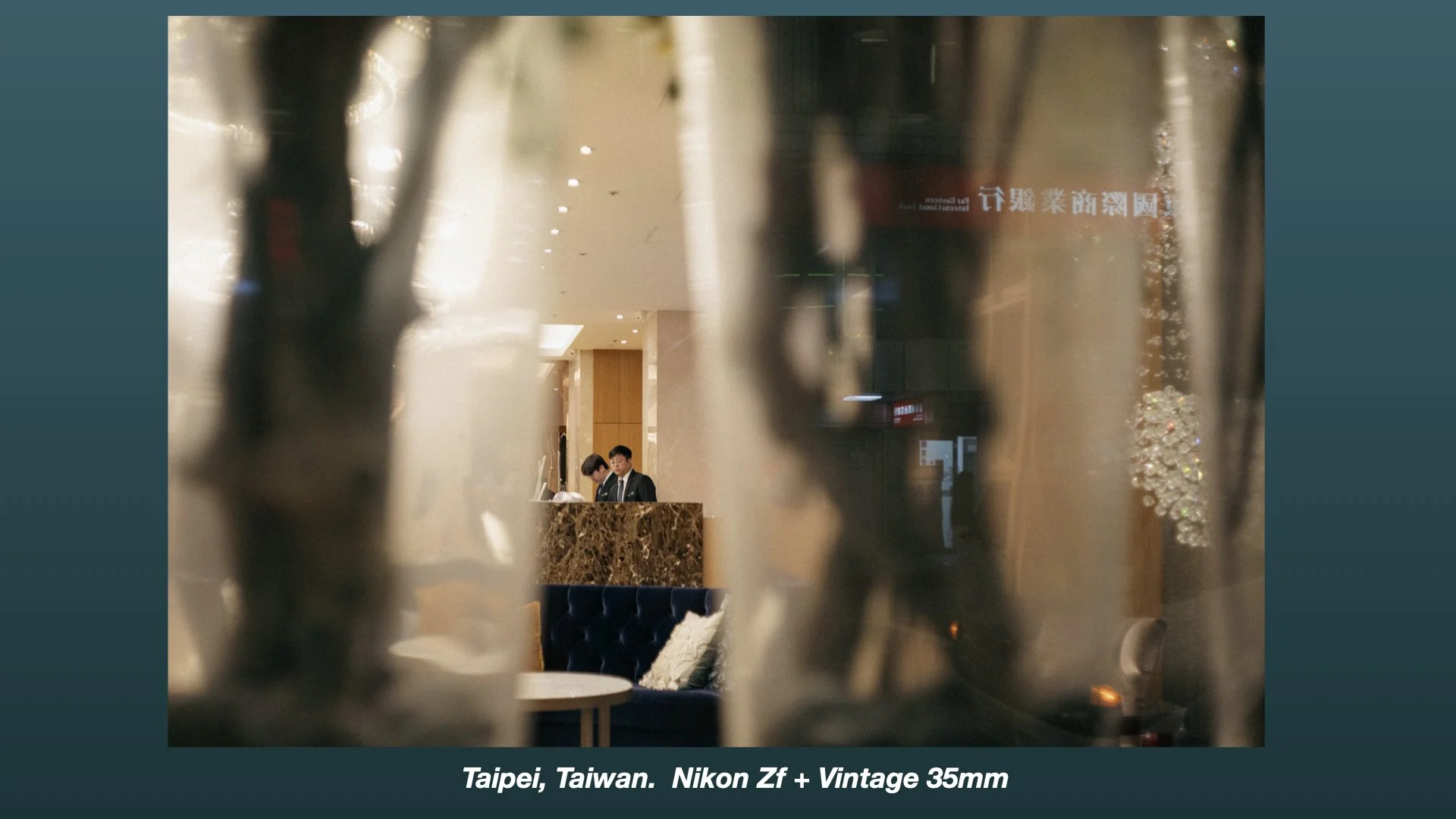
Subframing hotel clerks through this window reflection, these curtains, these elements here. I could see the faces much more clearly on a 35mm, because its working distance is easier to find than on 28mm.
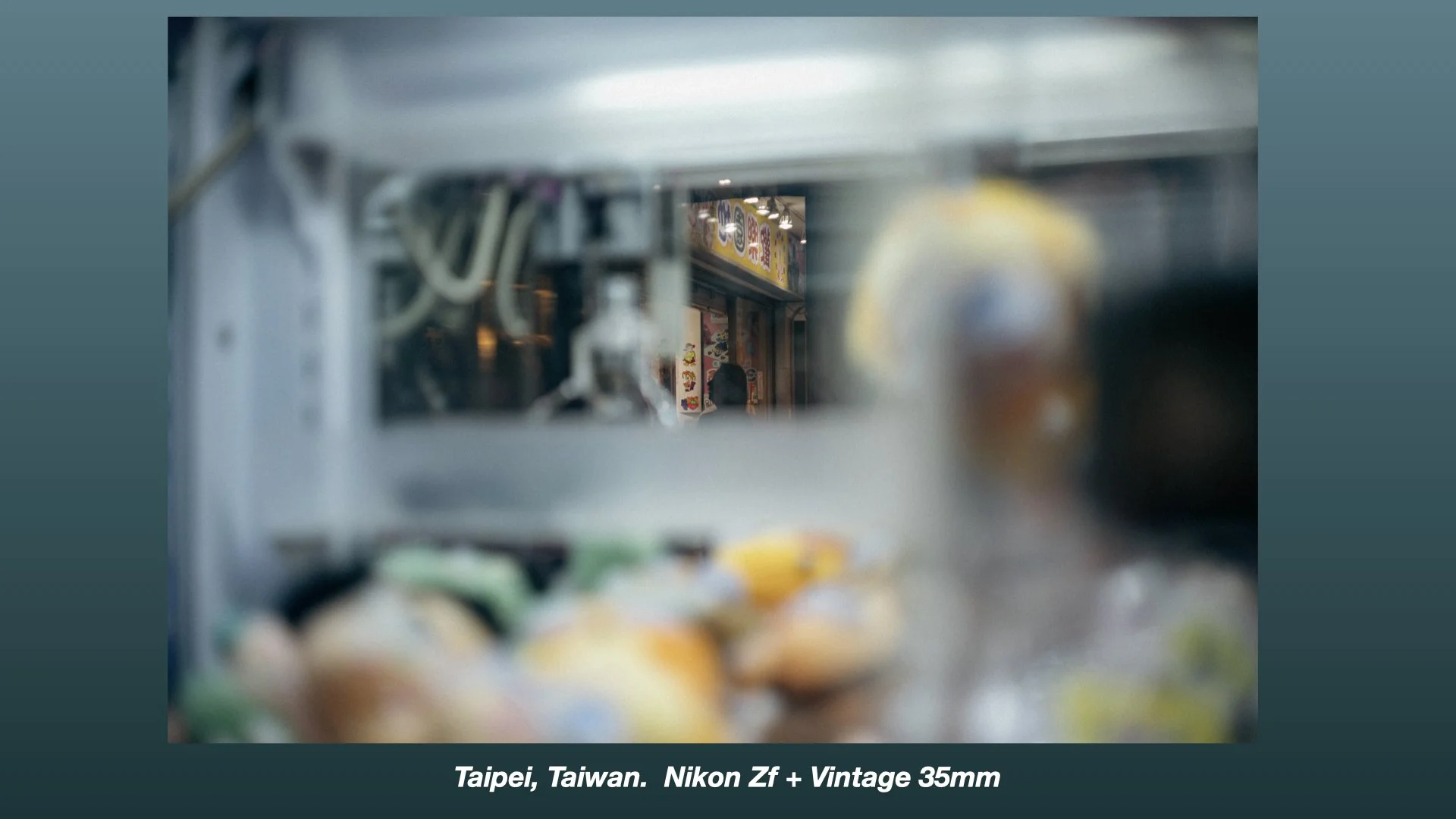
But that was the one big, glaring mistake I made in the last 28 mm episode.
I thought, unless there's a face or frame, the space alone doesn't hit home.
Fresh off those 2 short trips to Taipei and Tokyo, my original, and adopted homes away from home. The wider spaces are just as meaningful to me as the tighter shots of faces.
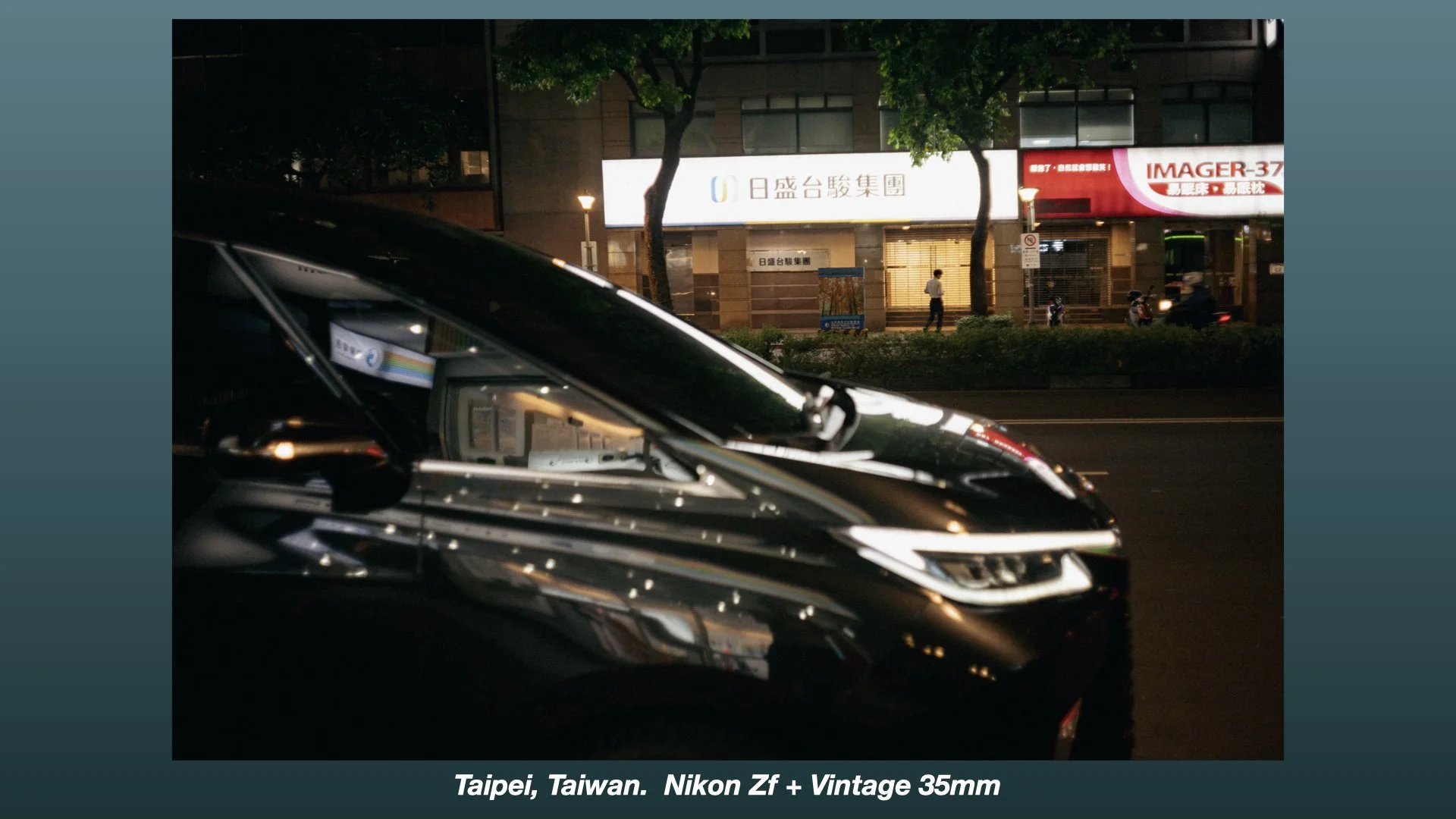
Finding a place where you belong is not trivial.
Neither is picking one lens for travel.
And I think I might prefer 28 mm, over 35 mm. But I have to lean even more heavily on the 5th 28 mm rule.
One I didn't actually have to change from the last video, just transpose:
5. Minimalism and Geometry
Minimalism and geometry work amazingly well on 28 mm, especially in other genres, and these shots from Alexandre Perron blew me away.
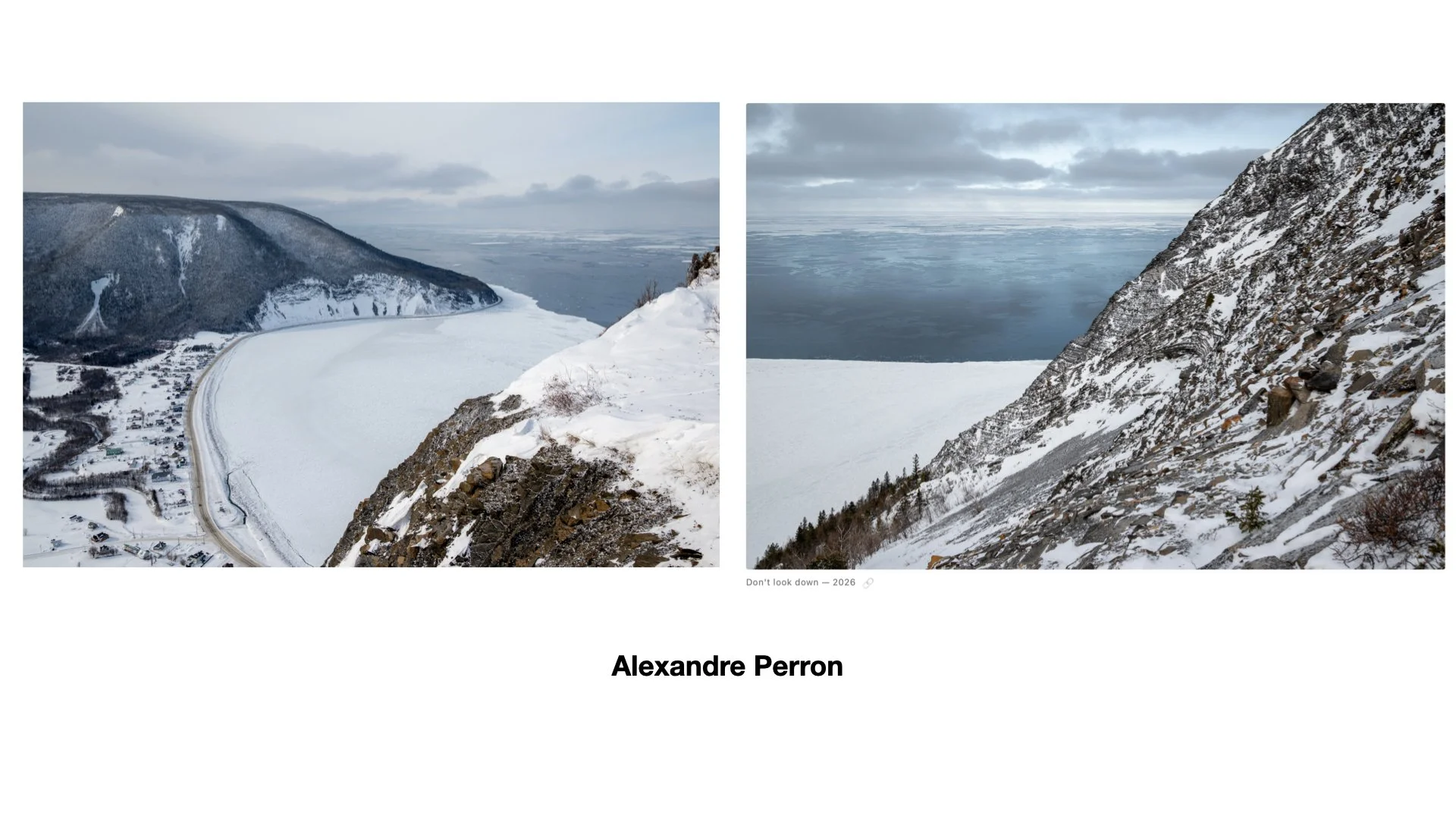
Very large shapes work when the scene is simple on 28 mm, the subjects are large. This allows very far away objects without falling into the complexity of wide angle lenses.
It's absolutely beautiful. Yet another reminder, to keep it simple, with 28 mm.
I'm inspired by these frames in all of your photos.
It's not easy to find a place where you belong. Thank you to everyone who is generous enough to share their 28 mm photos.
Before I crown 28 mm as my preferred 1 lens for travel, I'd like to do a deep dive on my favorite 35 mm frames and lenses.
One of them is this vintage Canon 35 mmm F2 (the one I brought to Taipei).
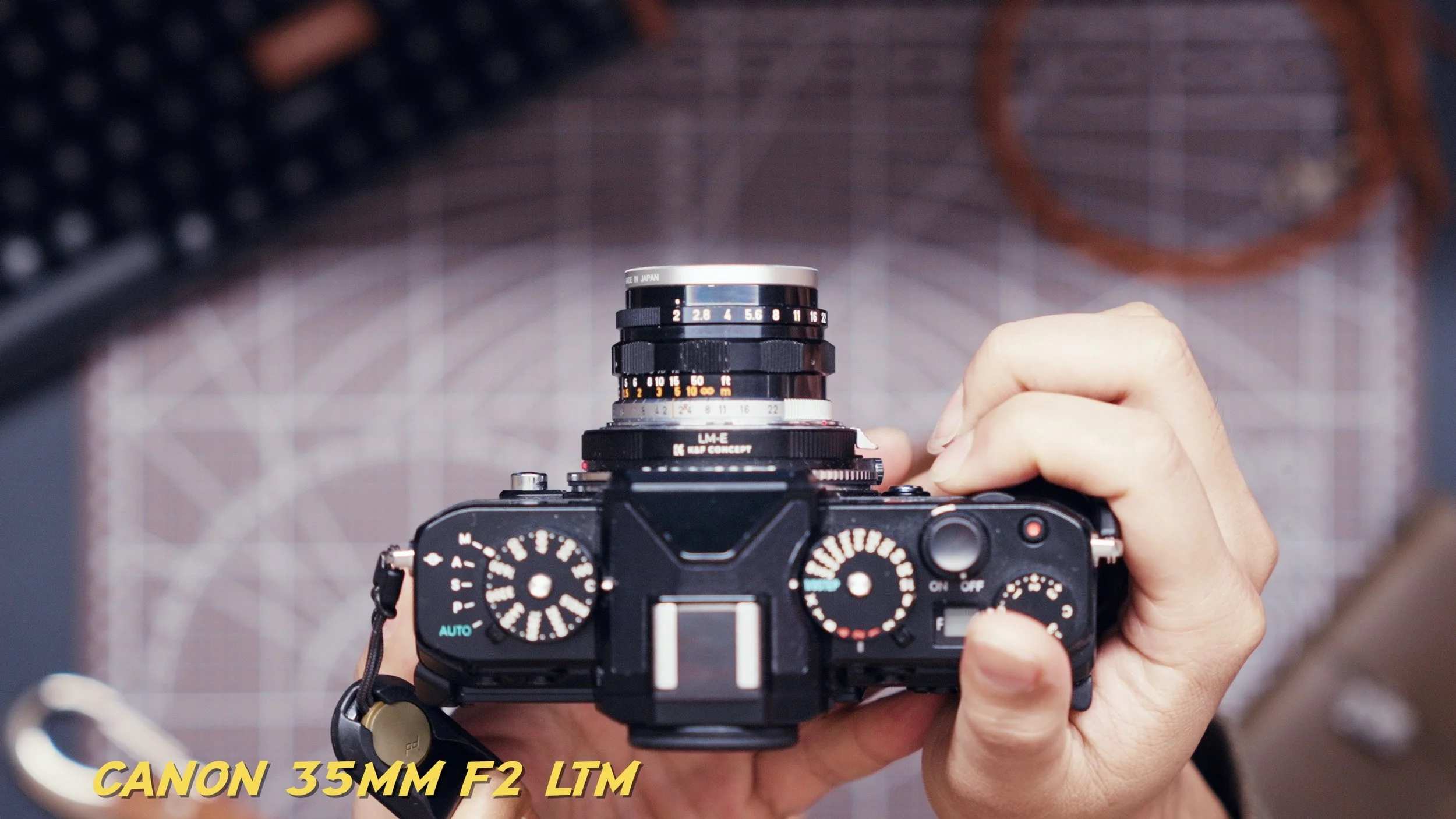
Other than crazy lens flare, it performs like a model lens, despite being crazy small.
If you'd like to share your 35mm photos with me and this community for the next episode (>20K YouTube, 1K newsletter)?
Fill in the form below:
Let me know if you like this new Lens Lab series?
Jack.
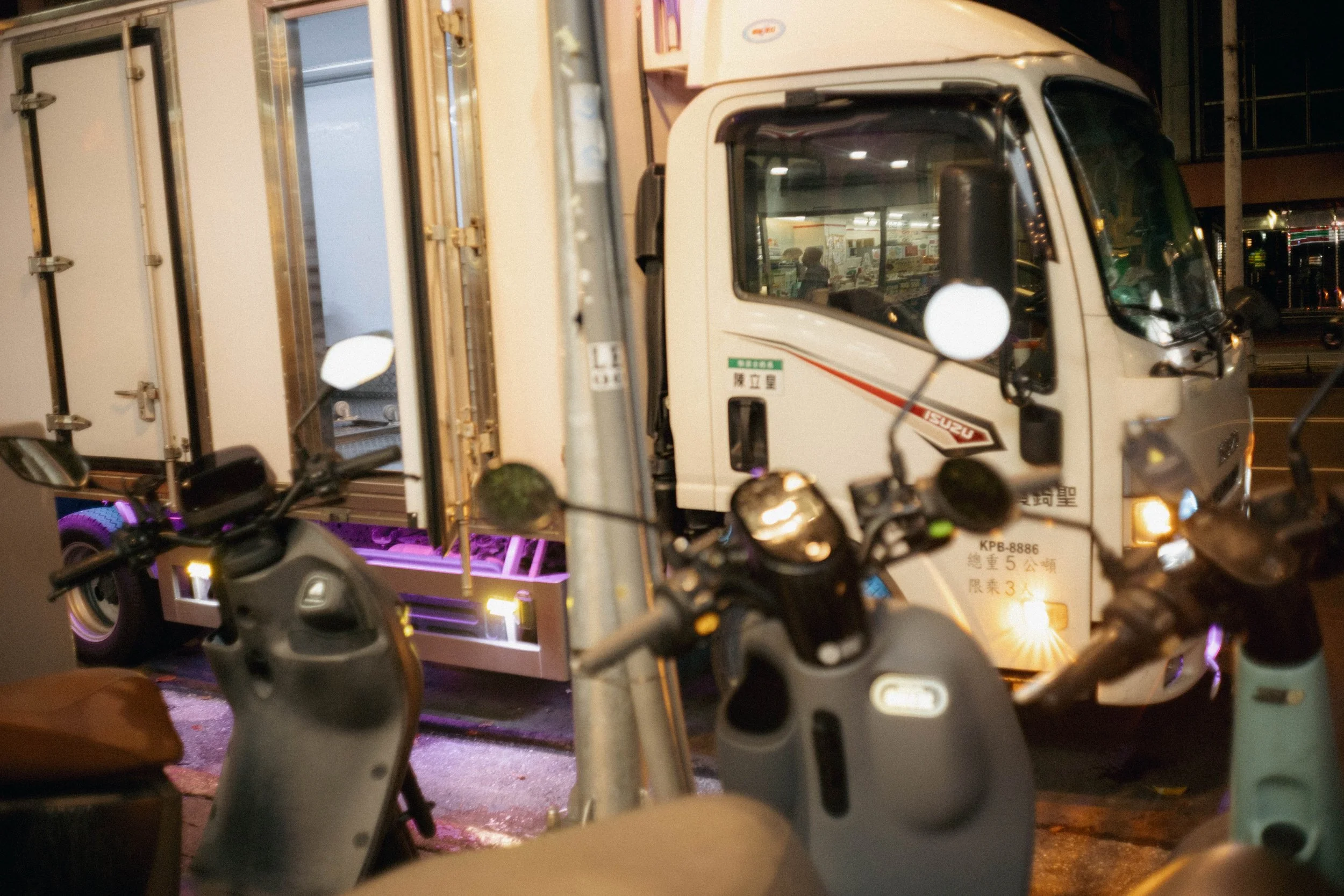
All my sample images in this blog post were edited from RAW files using my free Chrome emulation preset. They work with most RAW files from different cameras as long as you use “Adobe Color” as the starting base. Download it for free here.
If you’d like to support my work please consider purchasing gear through my affiliate links:
Nikon Zf: https://geni.us/YOH8bh7
Nikon ZR: https://geni.us/KH4uMvX
ZR wooden grip: https://geni.us/ZR-wood-grip
Nikkor 17-28mm: https://geni.us/MnNbu
Wotancraft 10L Messenger bag: https://geni.us/wotancraft-salt-pepper
Wotancraft leather strap: https://geni.us/wotancraft-leather-st