Zf vs ZR: A Day In the Life for Travel
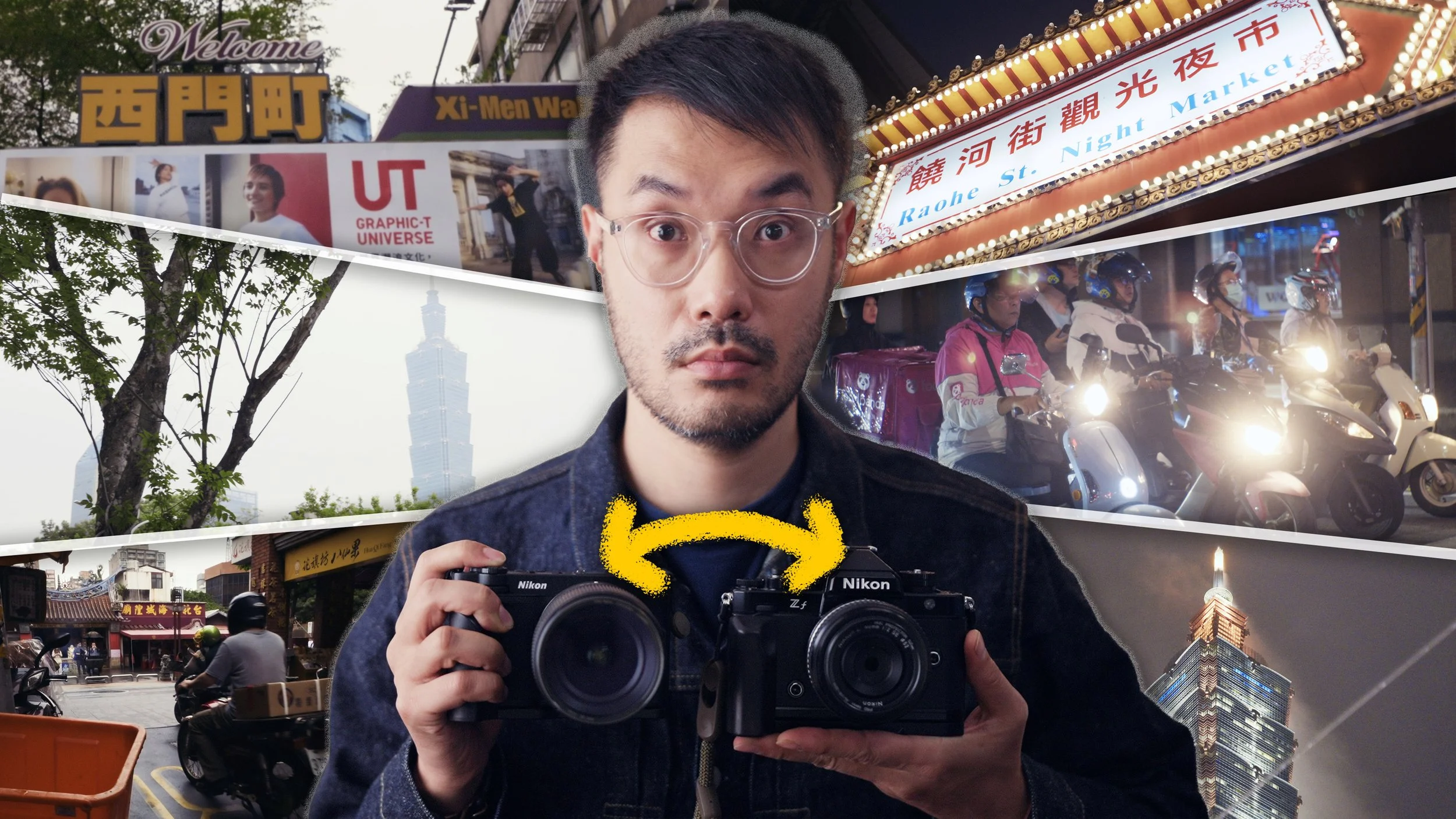
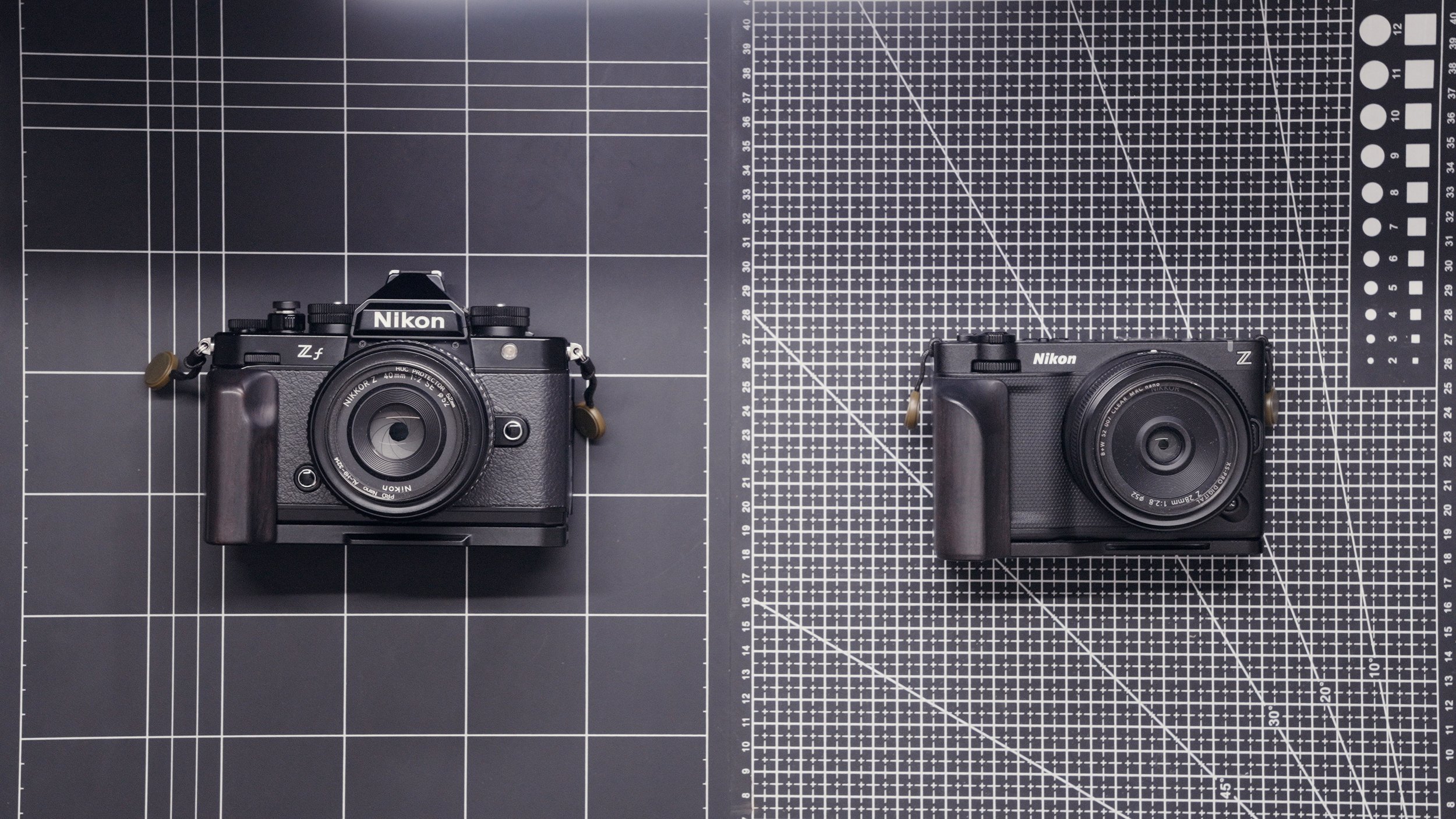
For travel, I thought the ZF and ZR are interchangeable. So why on my last trip did I use 1 of these so much more?
It was a work trip, and though I'm not a pro photographer, cameras are essential for my day job. I have 6 travel use cases that are specific to my work, and a little odd.
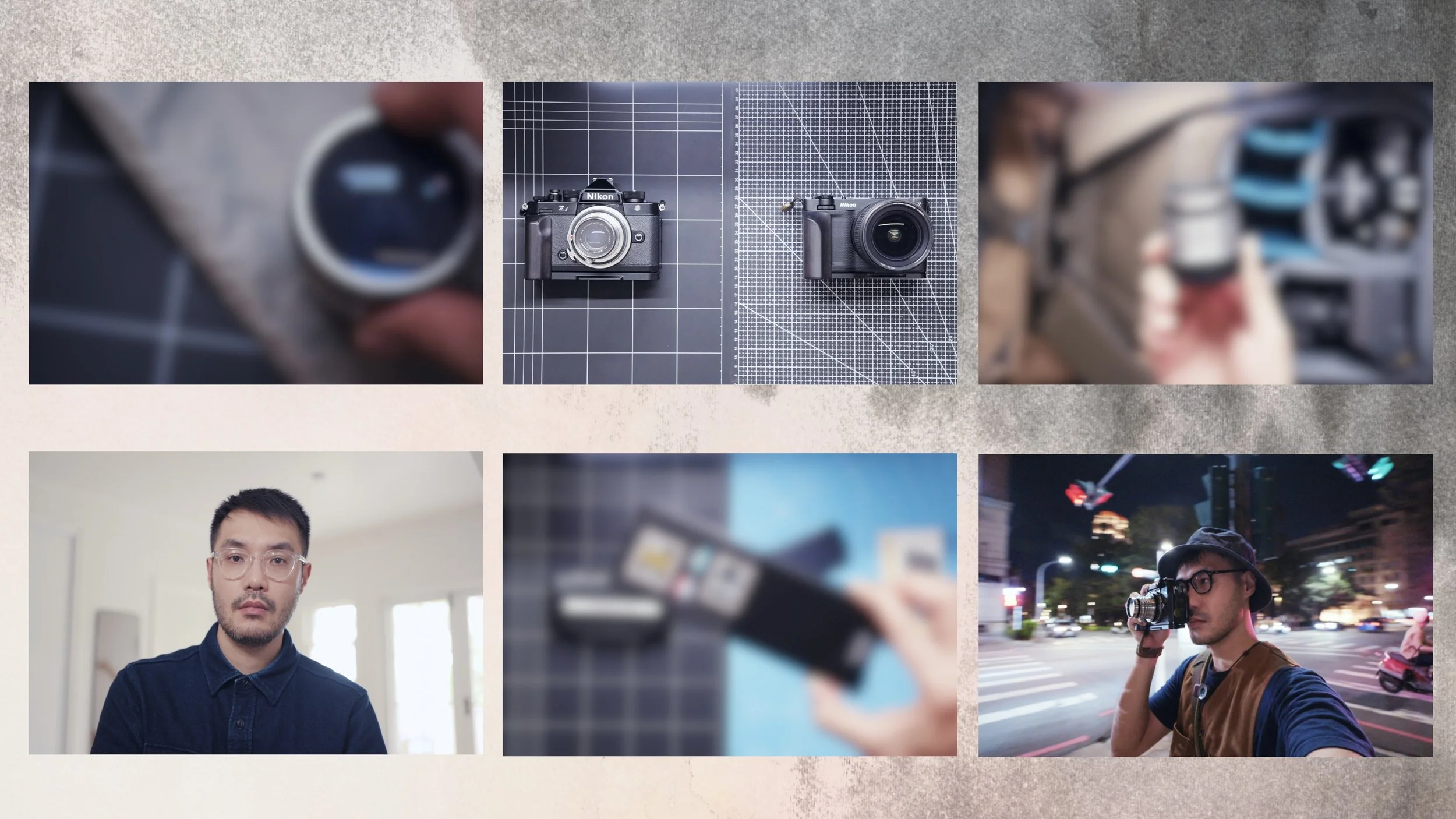
Did a ZF or ZR meet my needs better? Let me show you over a jam-packed 24 hours.
A day in a life traveling for work in Taiwan.
Too Many Lenses
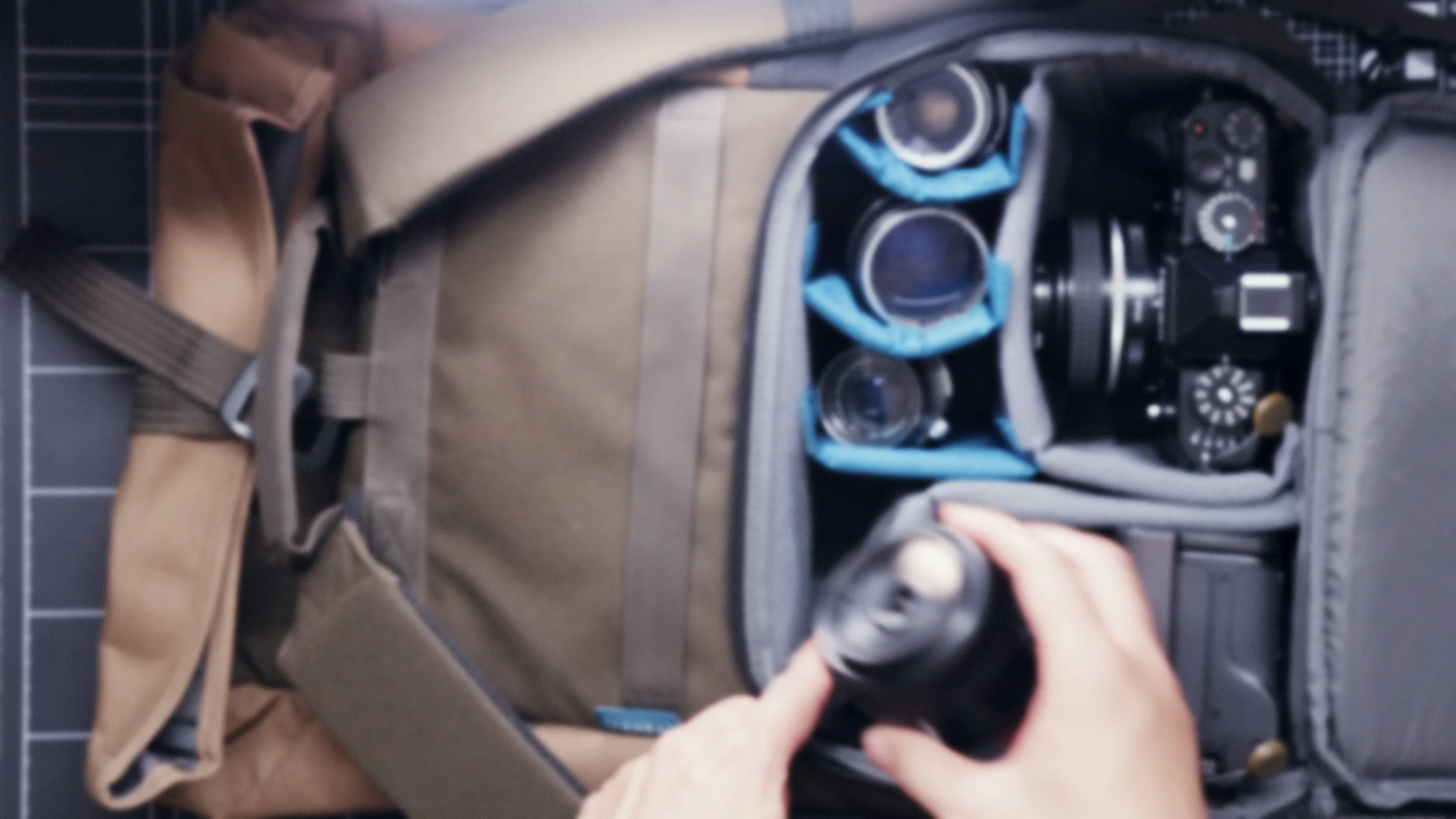
I do this to myself, along with the ZF and ZR on this Taiwan trip I packed 6 lenses:
2 lenses I use to teach online classes (I’m a college professor)
The lens I used to film 90% of the videos on this trip (one I’ve since sold).
3 extra vintage lenses I use just for fun.
Everything has to fit into my new travel backpack, the Tenba 14L Fulton in the Olive/Tan colorway. It matches my Wotancraft Khaki pilot slings down to a tee, and is what I need to do my job.
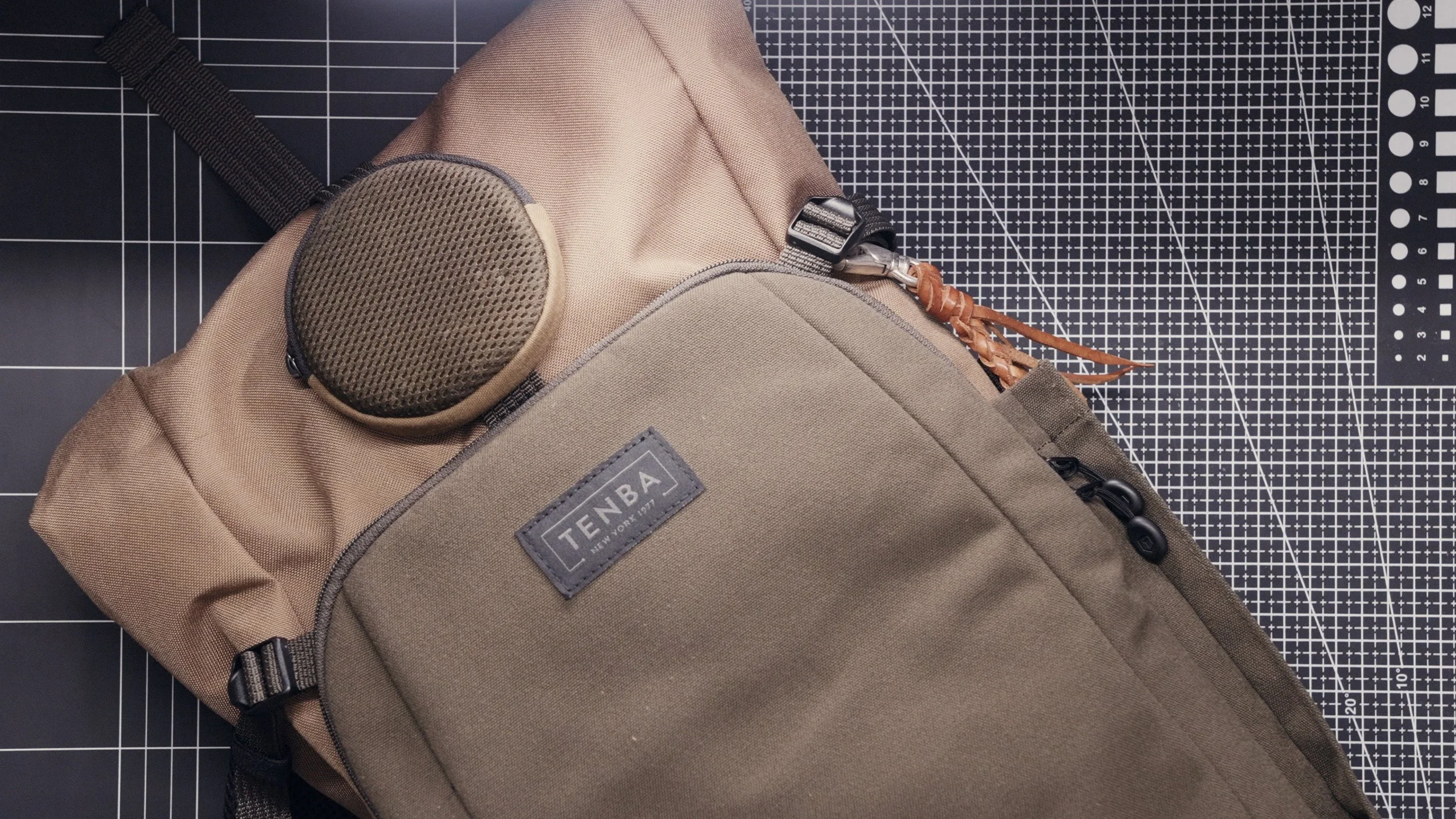
How does the ZF perform for travel with all these lenses versus the ZR?
This day in the life starts at night, in Hsinchu.
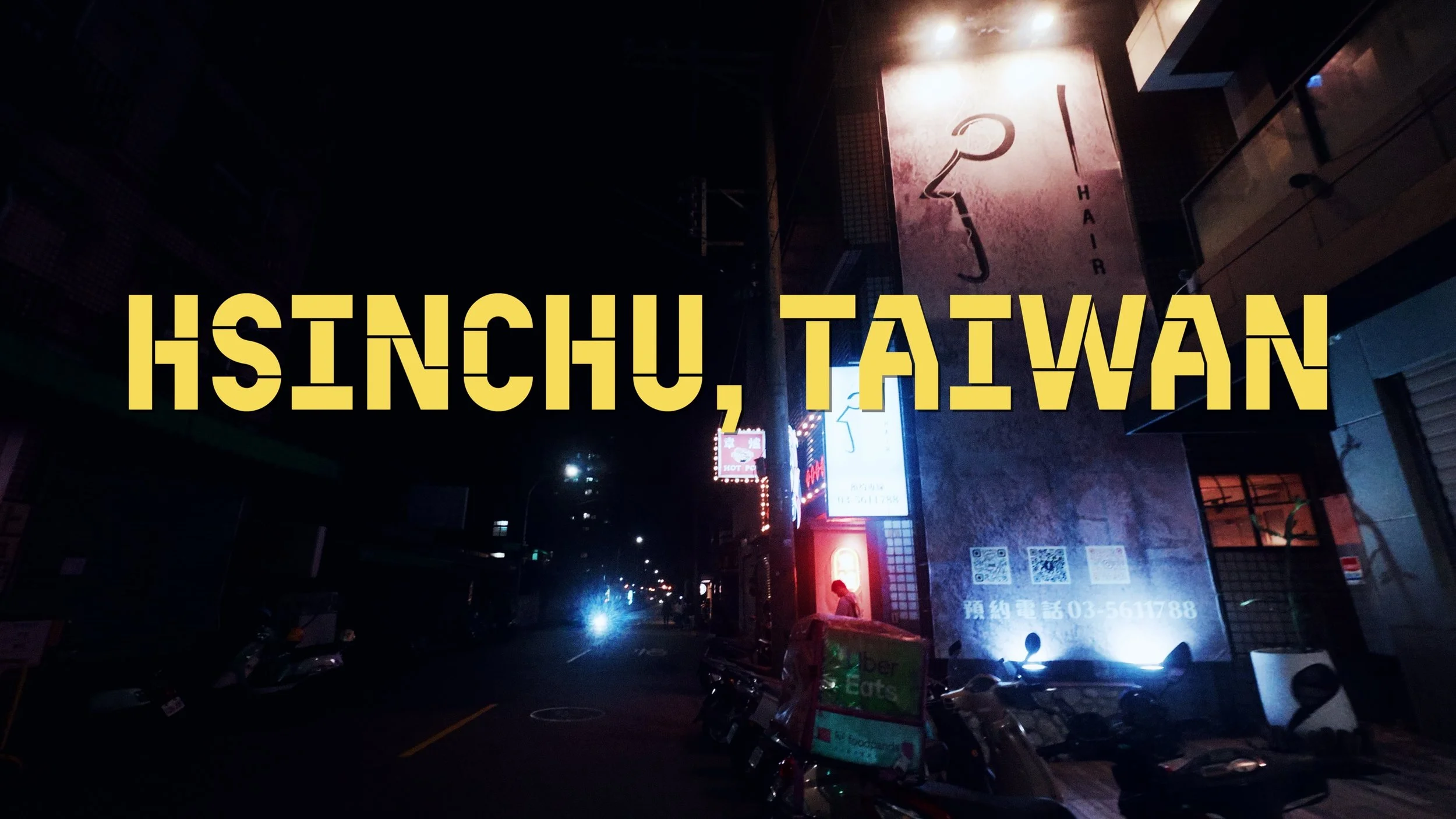
I was filming an episode of my Lens Lab series in Hsinchu’s city centre, the next episode is on 35mm. There’s a link at the bottom of this post to submit your 35mm photos.
My timing that night was tight. After visiting family for a few days, I had to leave the next morning. All I had was 1 hour to document what's around me.
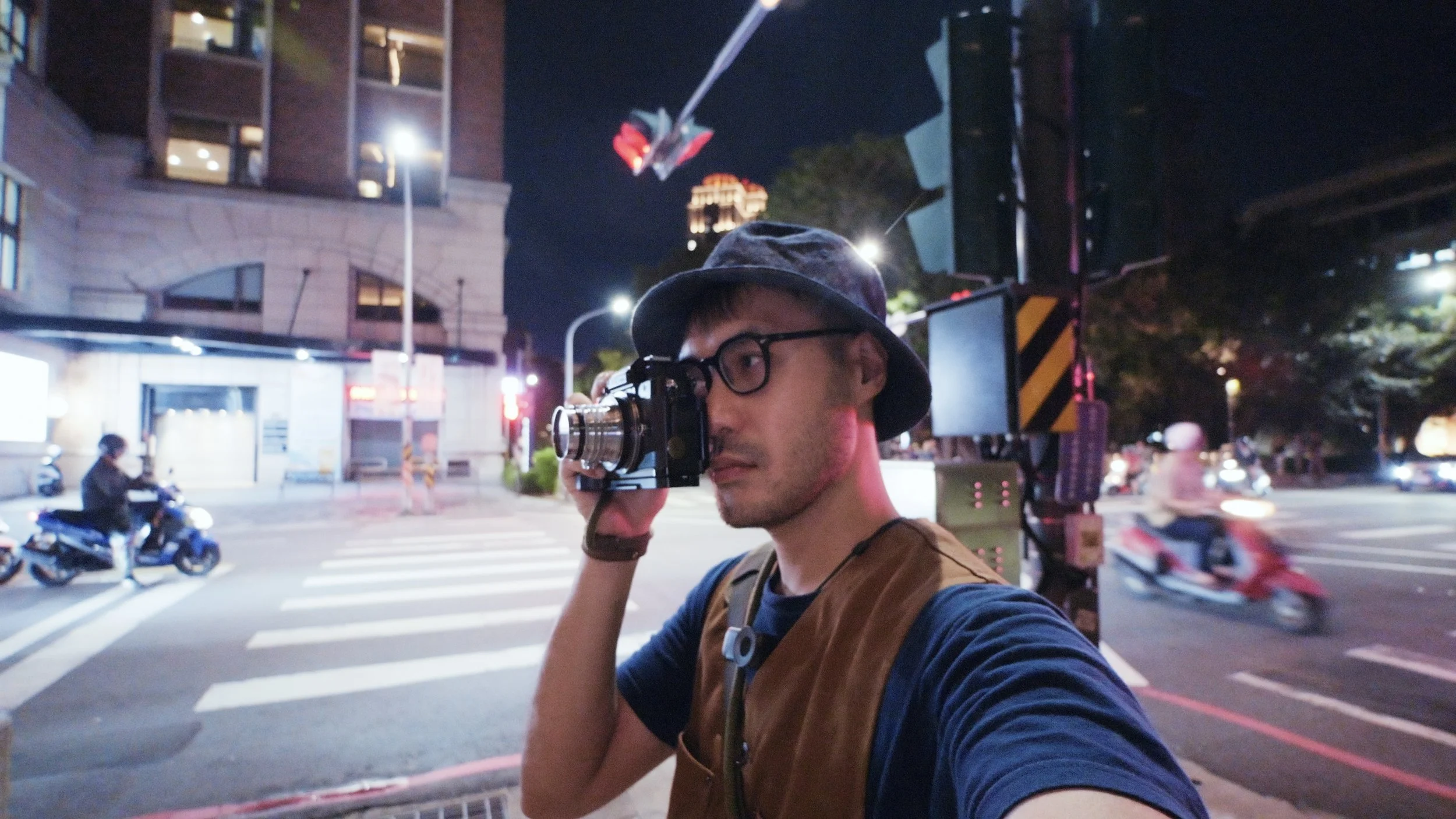
This is why my second unusual travel use case exists:
2. A 3 Camera Setup
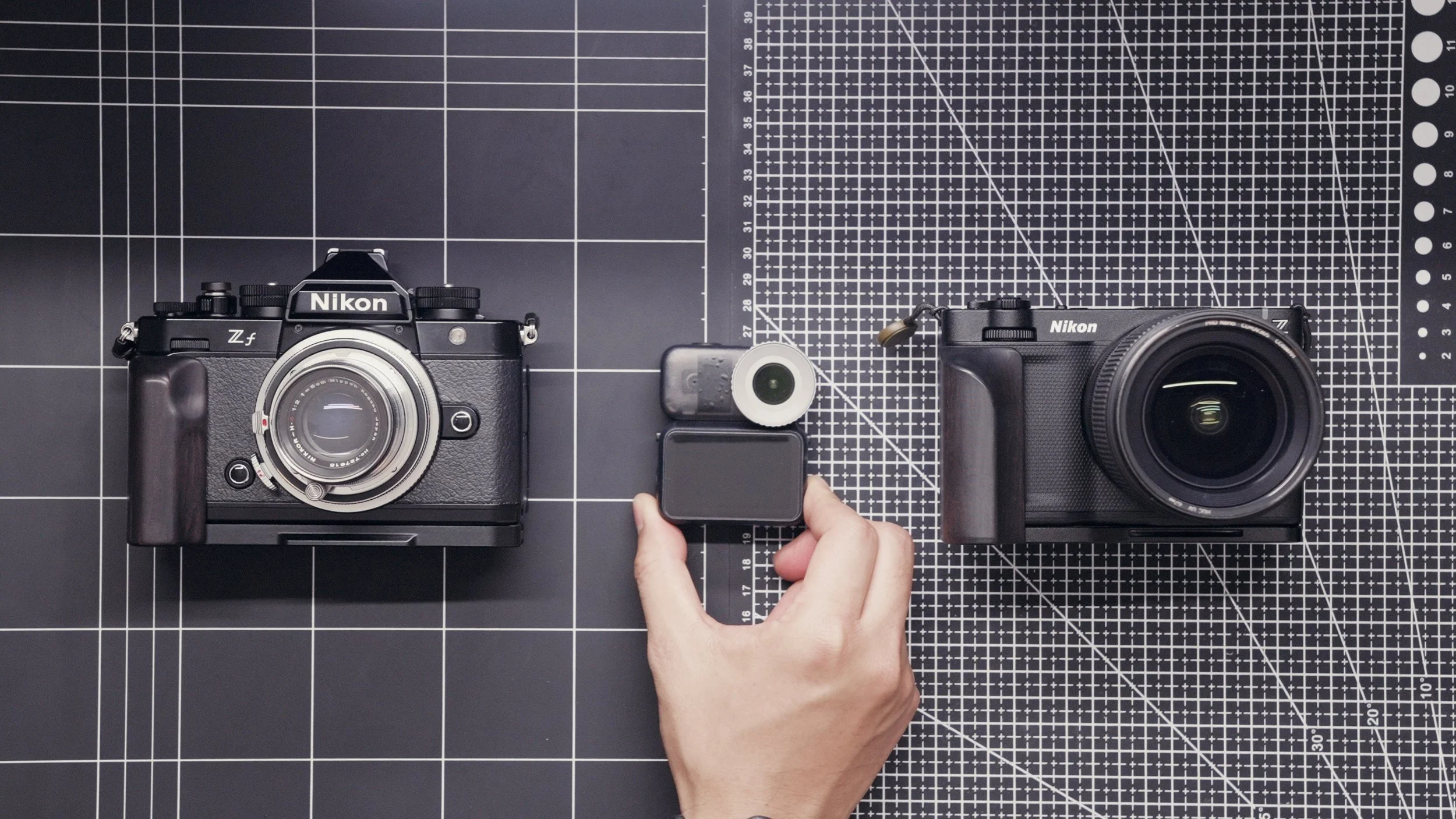
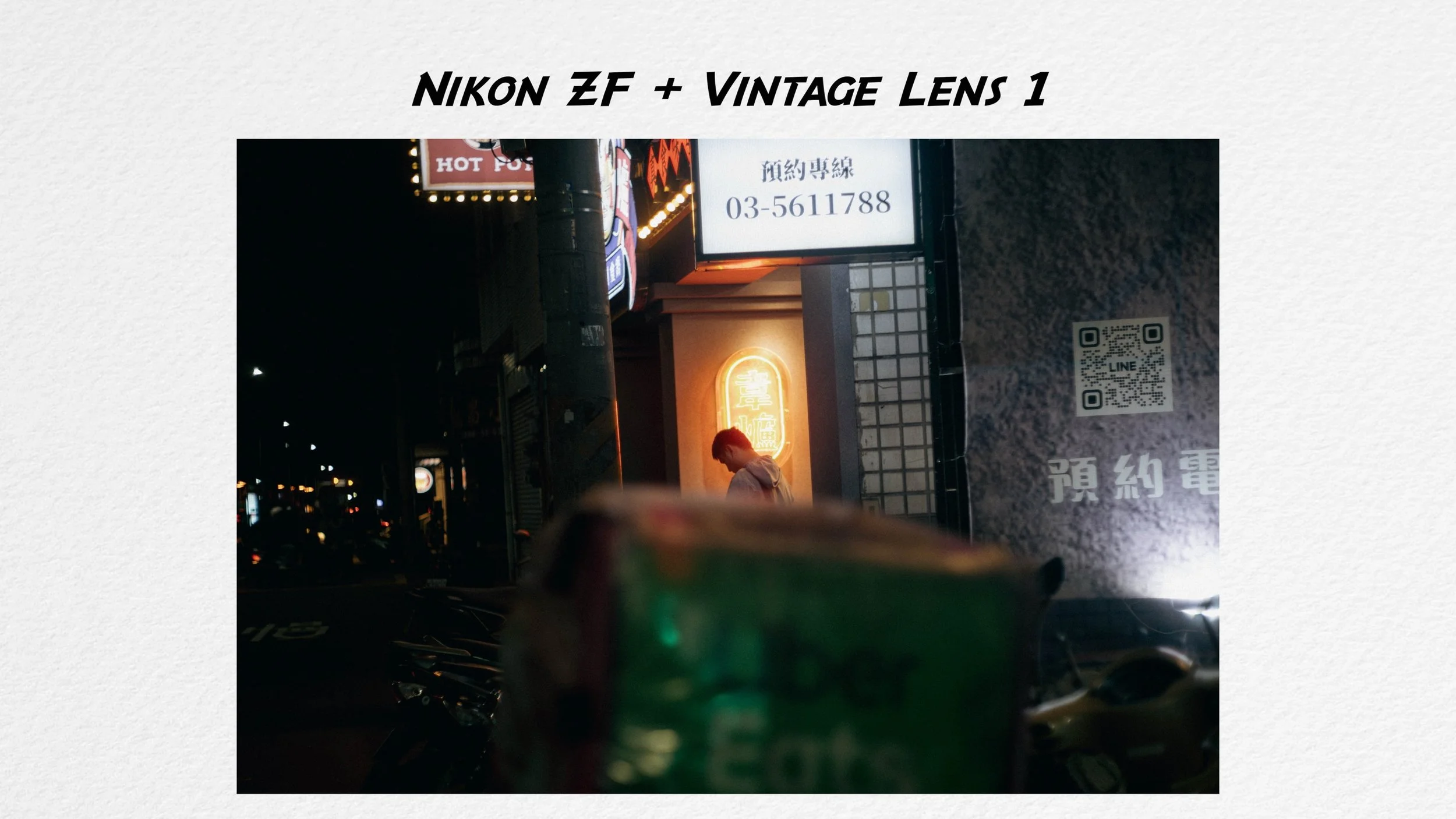
A Zf for photo paired with vintage lens 1
A ZR for photo and video, paired with an autofocus lens I used to film 90% of the videos on that trip.
A dedicated POV camera, the DJ Osmo nano.
The only way I don't get overwhelmed with all this gear is to avoid diving into menus.
I switch between aperture priority and manual mode for photo, here are my settings for both:
Aperture priority, Auto ISO (Max ISO=32000), minimum SS 1/500, exposure compensation -0.3
Manual mode: Auto ISO (max ISO=32000), manual shutter speed (1/250th at dusk ,1/100 at night), exposure compensation -0.3 to +0.3 depending on available light.
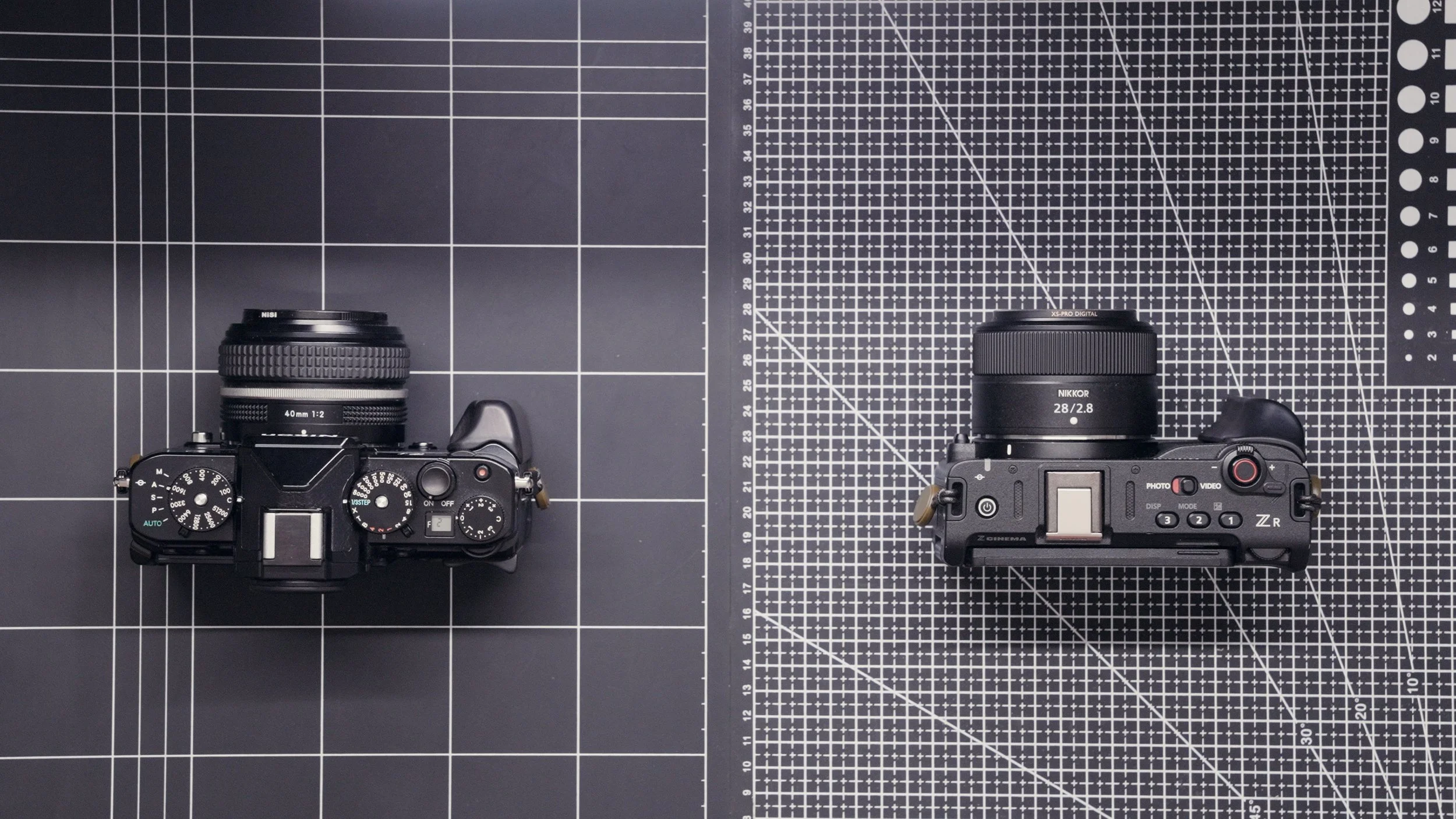
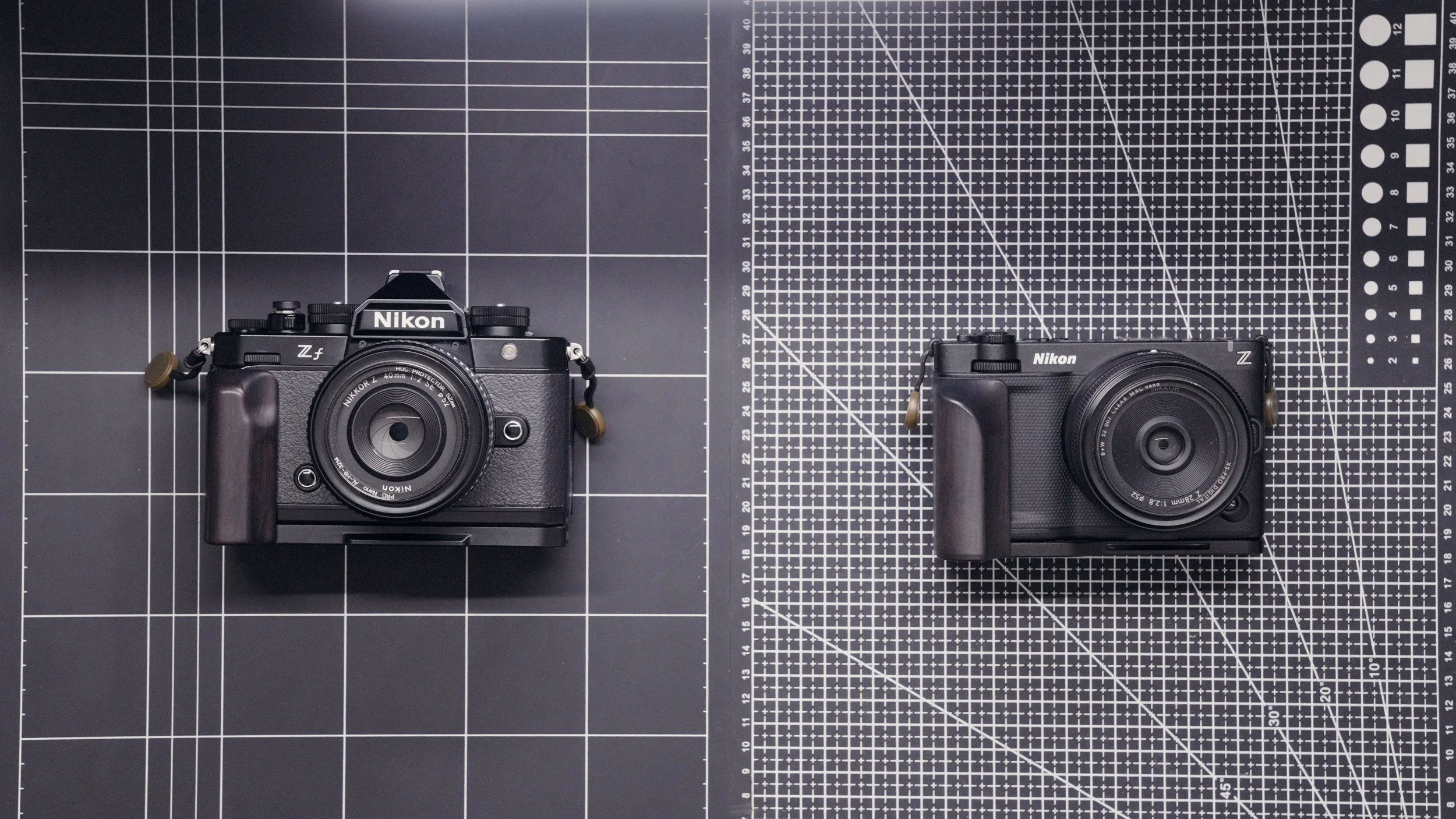
The Zf’s dials, let me see what's setting them on without turning the camera on. It's very quick and easy, it’s also easy on the ZR once you set it up. On the ZR I have user mode 1 set to aperture priority, user mode 2 set to manual, but I don't know which mode I'm in until I turn on the camera and look at the screen on the ZR. The ZR’s ergonomics also mean it's hard to back button focus.
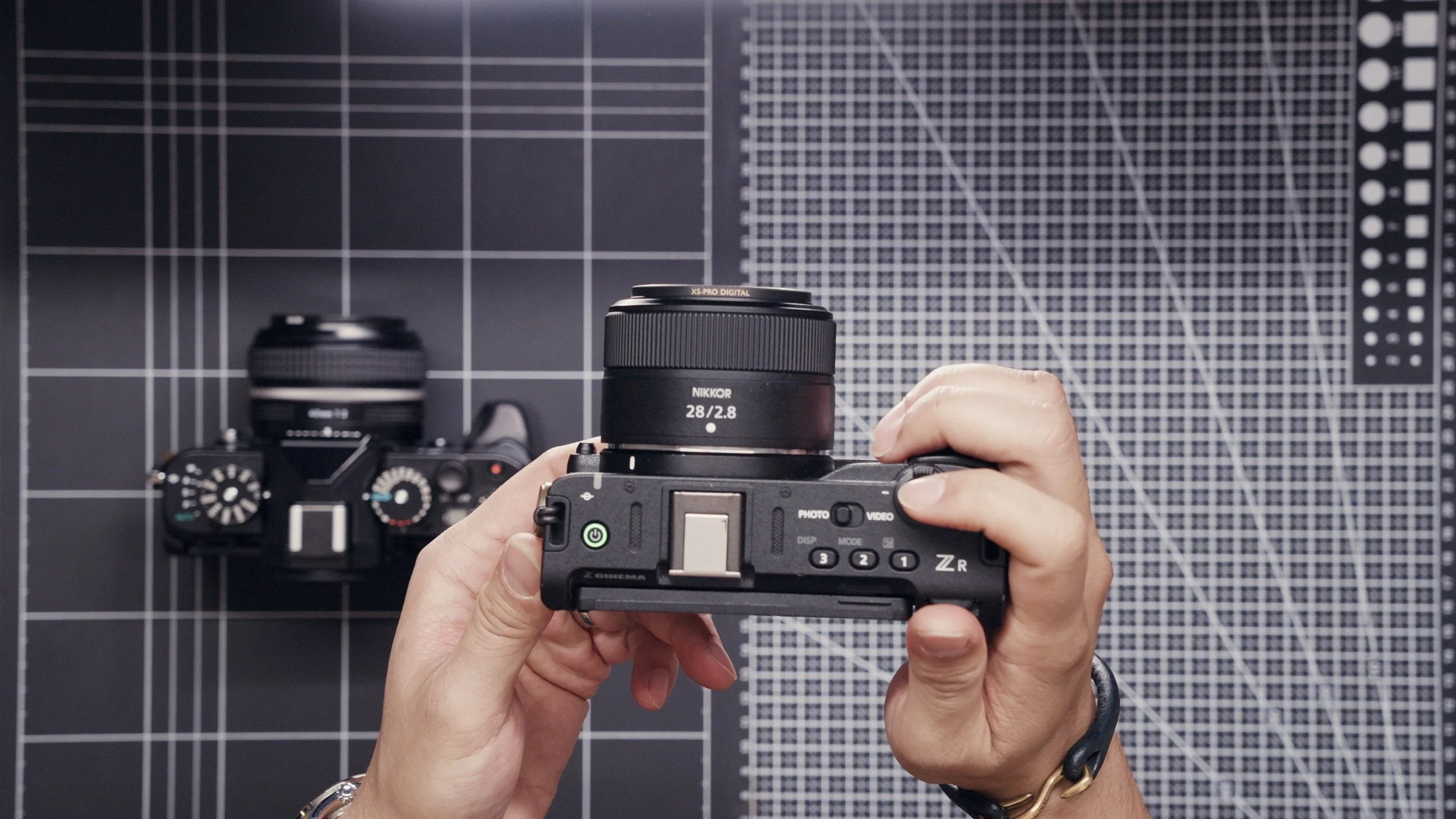
I prefer the power button setup on the ZF right next to the shutter, the ZR's power button’s on the other side. You can't use the shutter to half press and wake most of the time. Occasionally, one of the ZF's dials would be in a different position after I'm running for a train or taxi, it bumps around. The ZR’s boxy form factor and lack of physical dials mean there's fewer accidental presses.
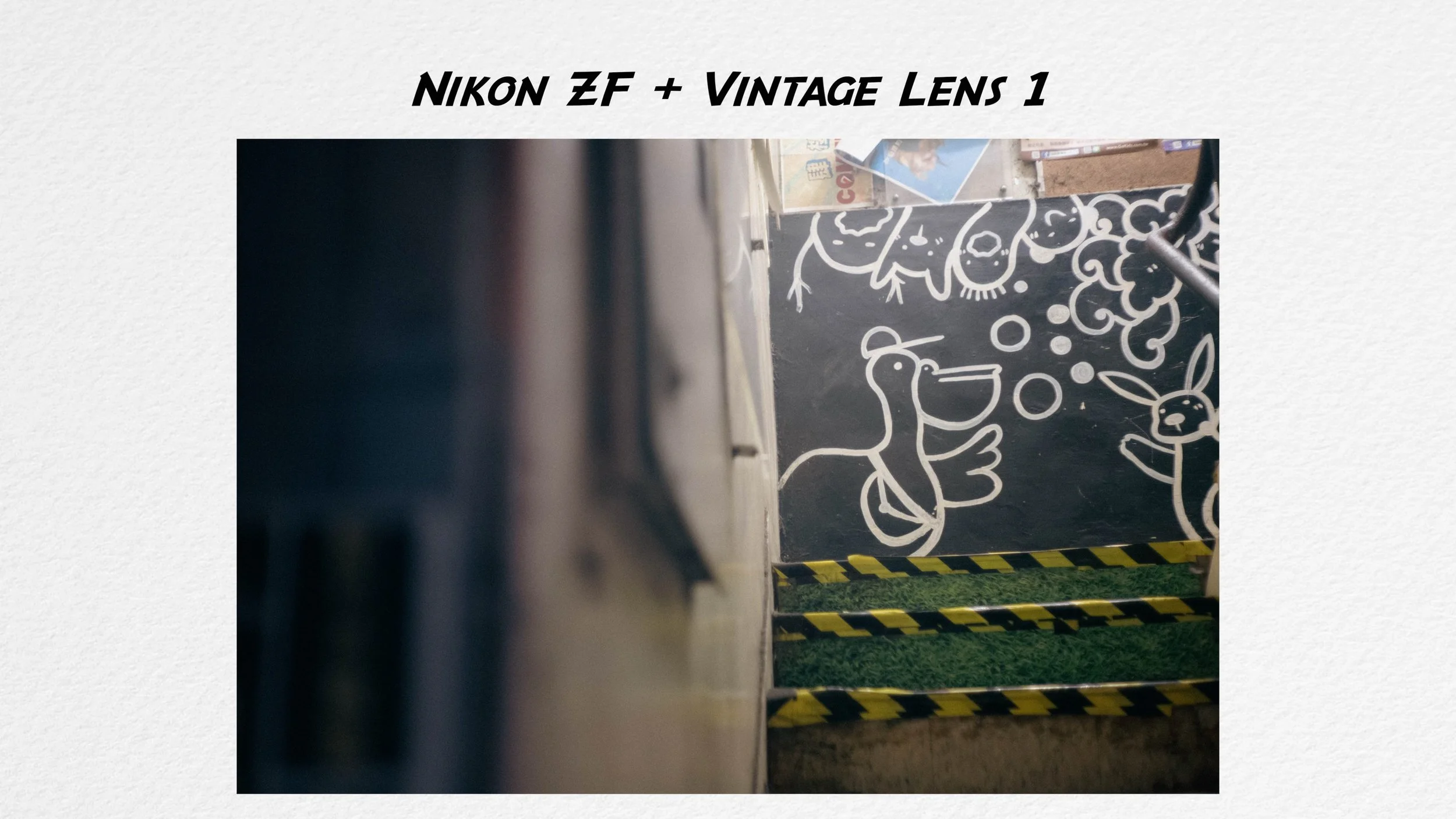
Hsinchu is home to hundreds of tech companies (including TSMC). Technology has delivered billions to the country.
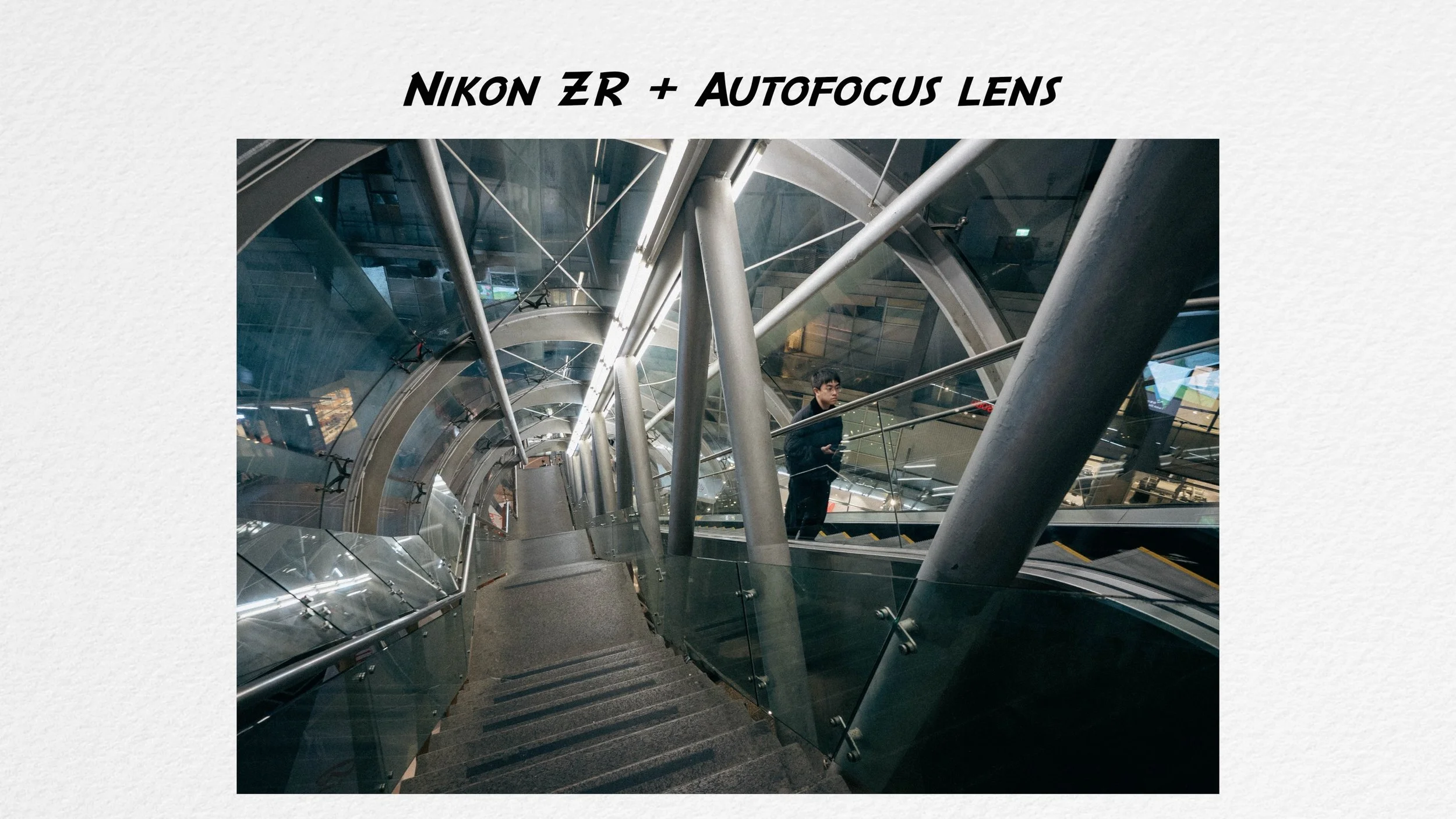
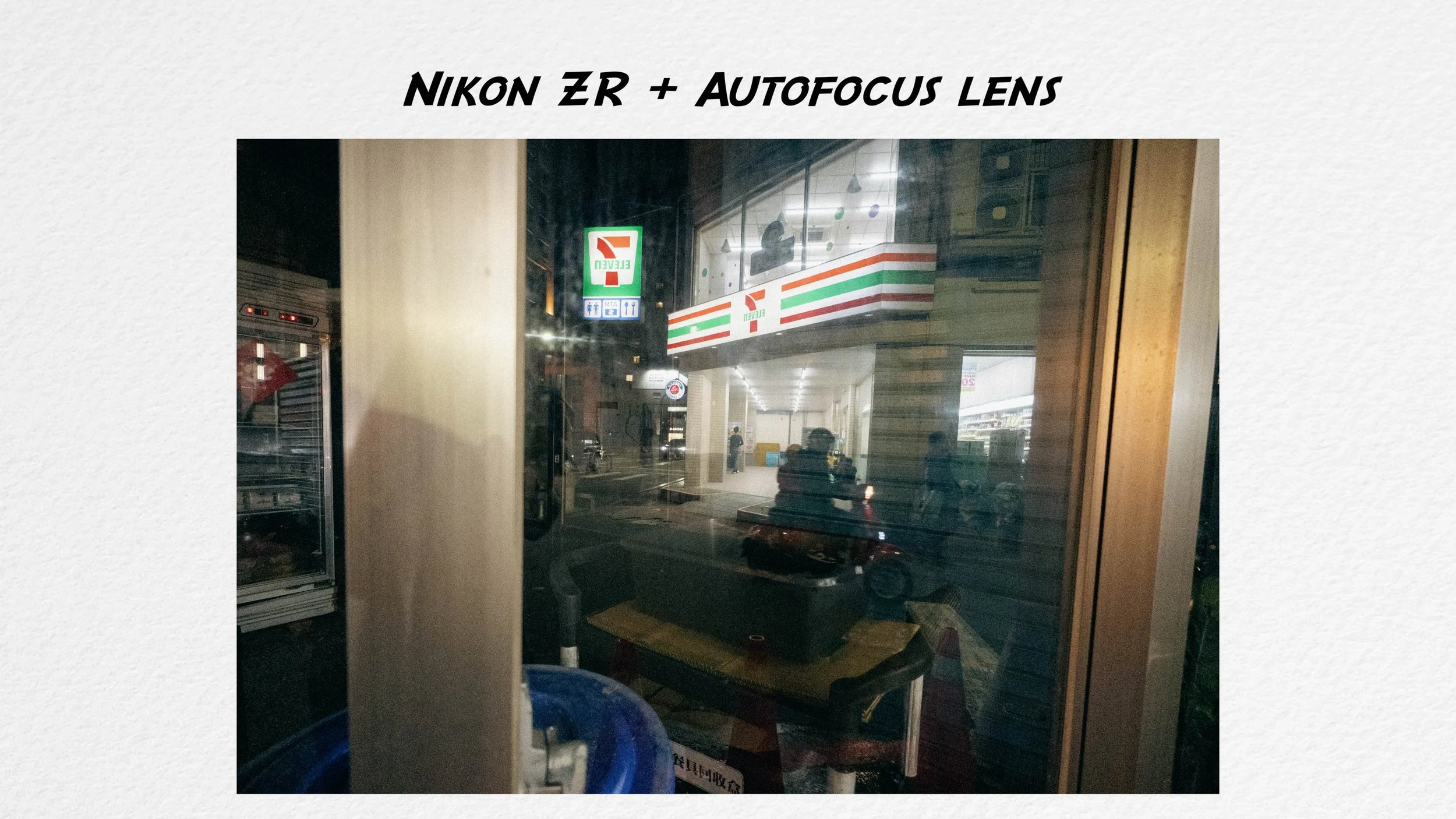
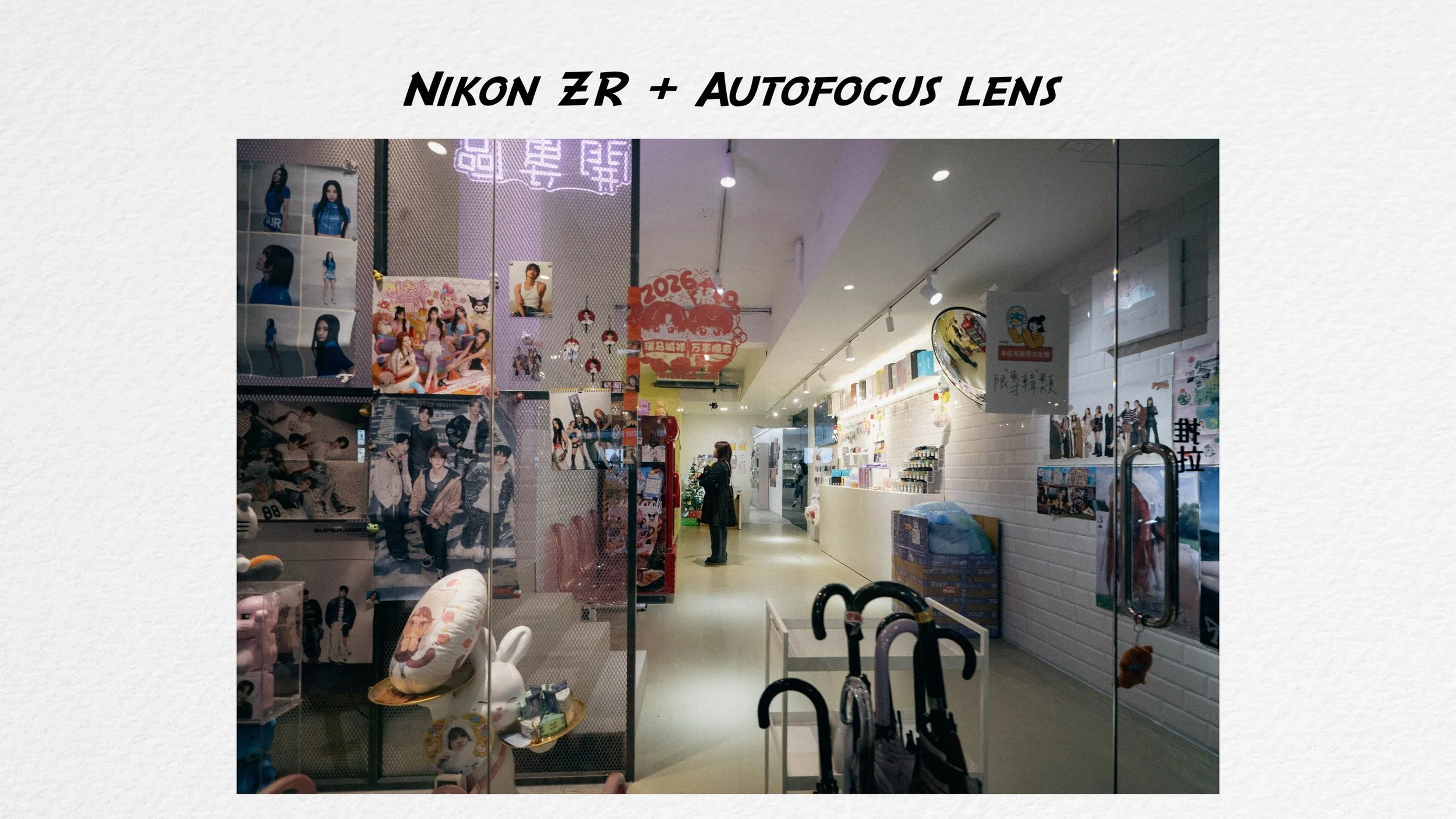
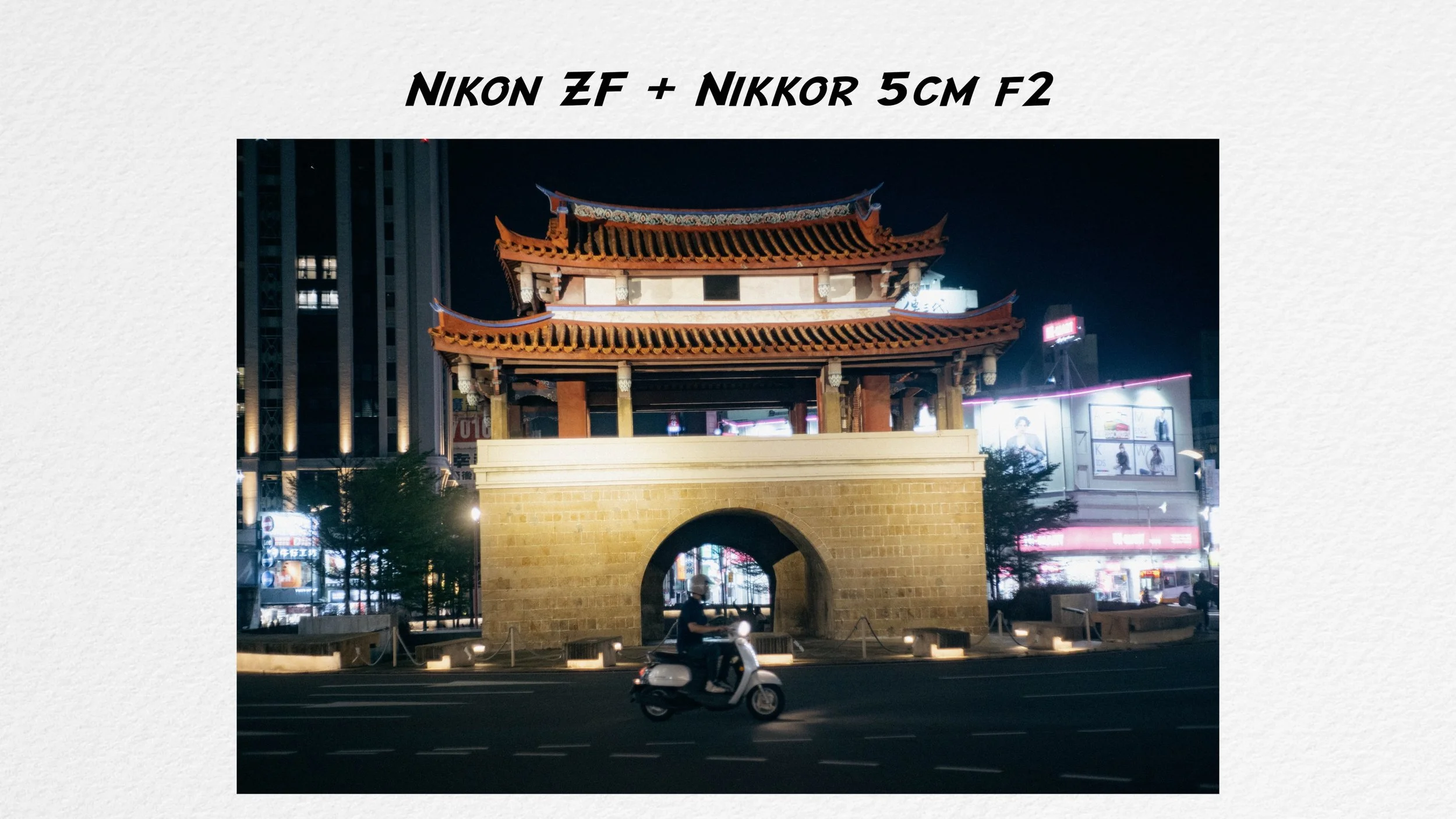
A city primed to take the next step. Modern architecture versus old school alleys, which I tried to document on vintage lens 1.
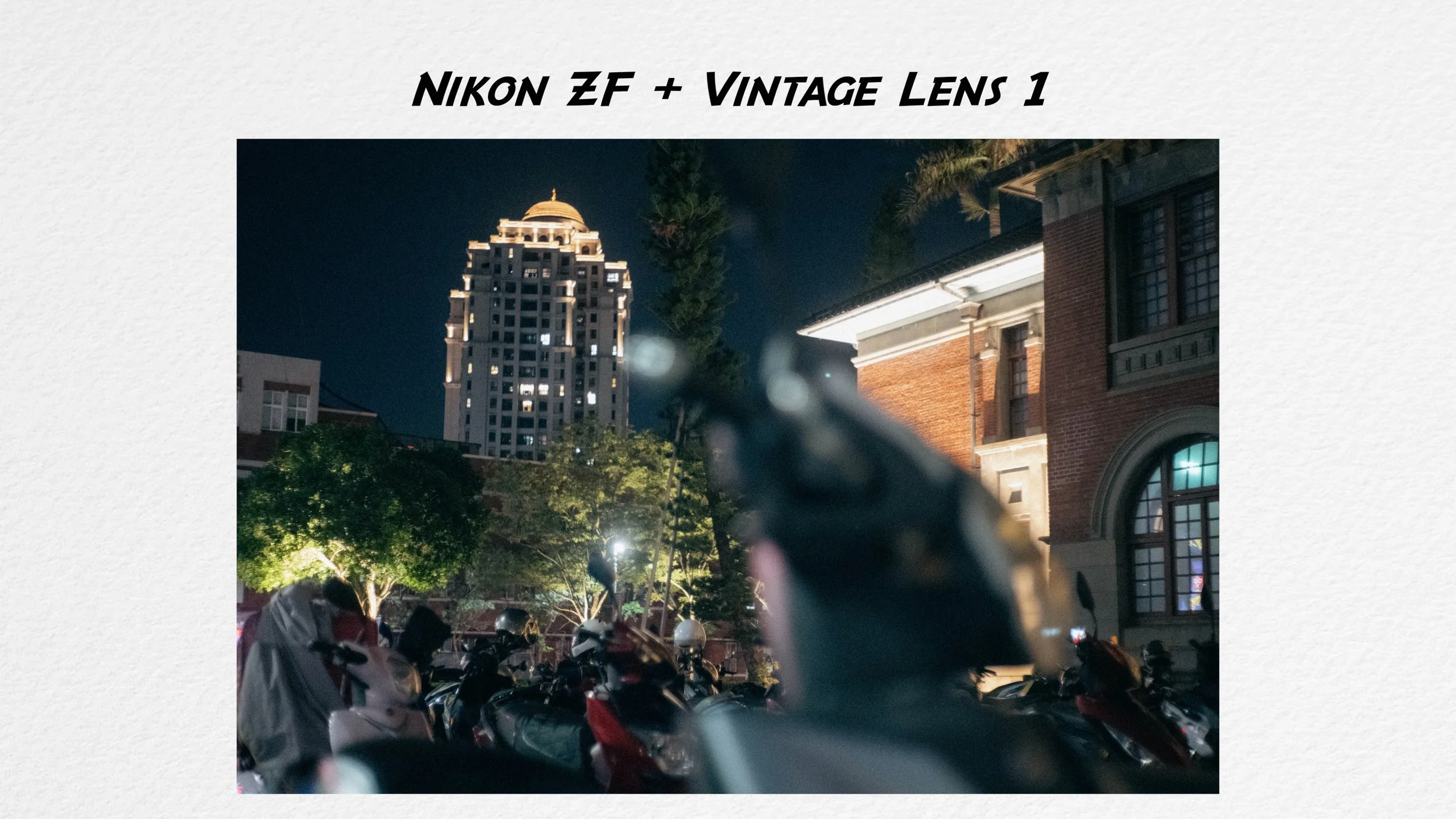
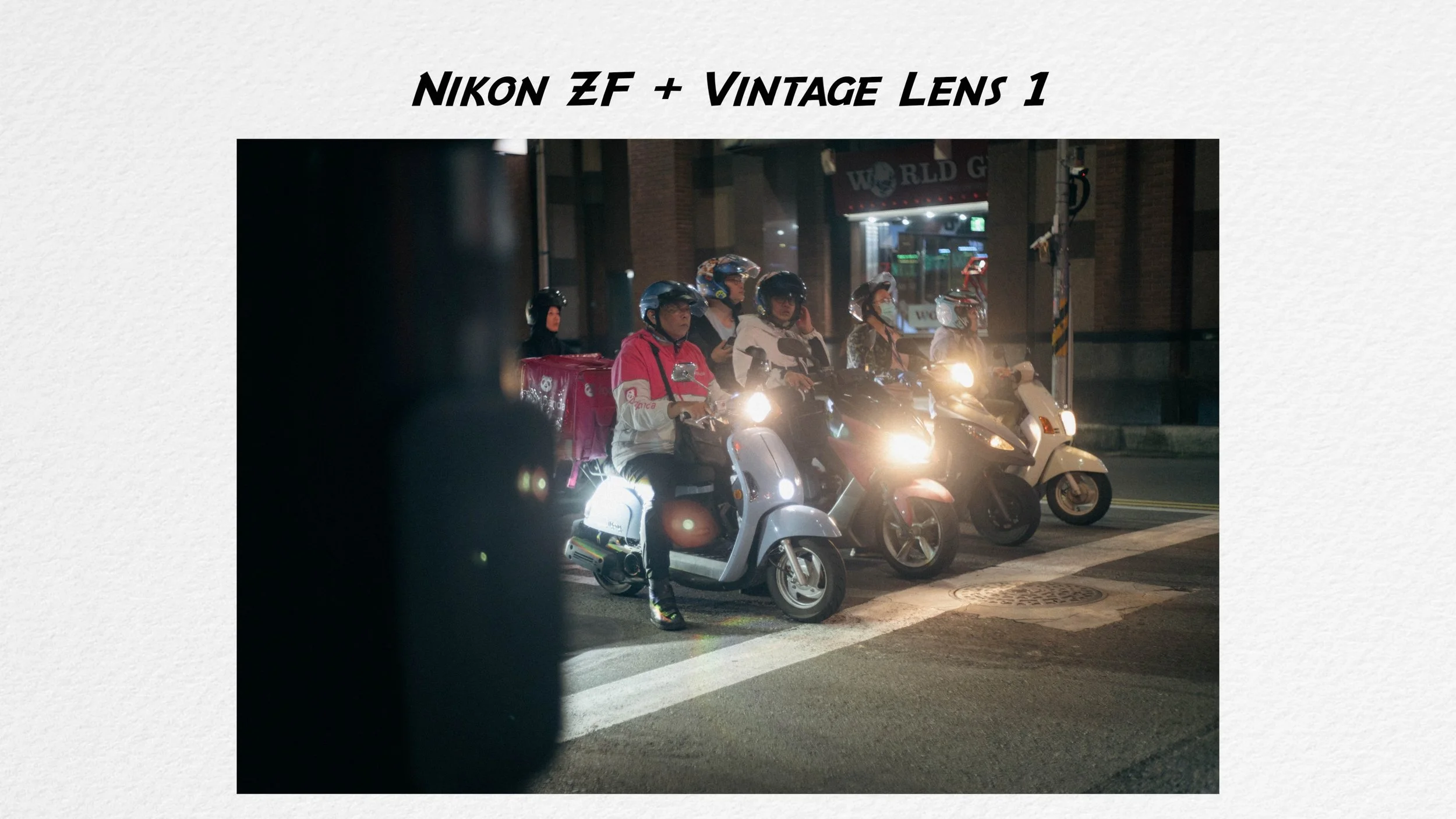
Vintage lens 1 is Nikkor’s 5cm f2, in Leica thread mount.
A beautiful panda finish with a glow I can't get in post.
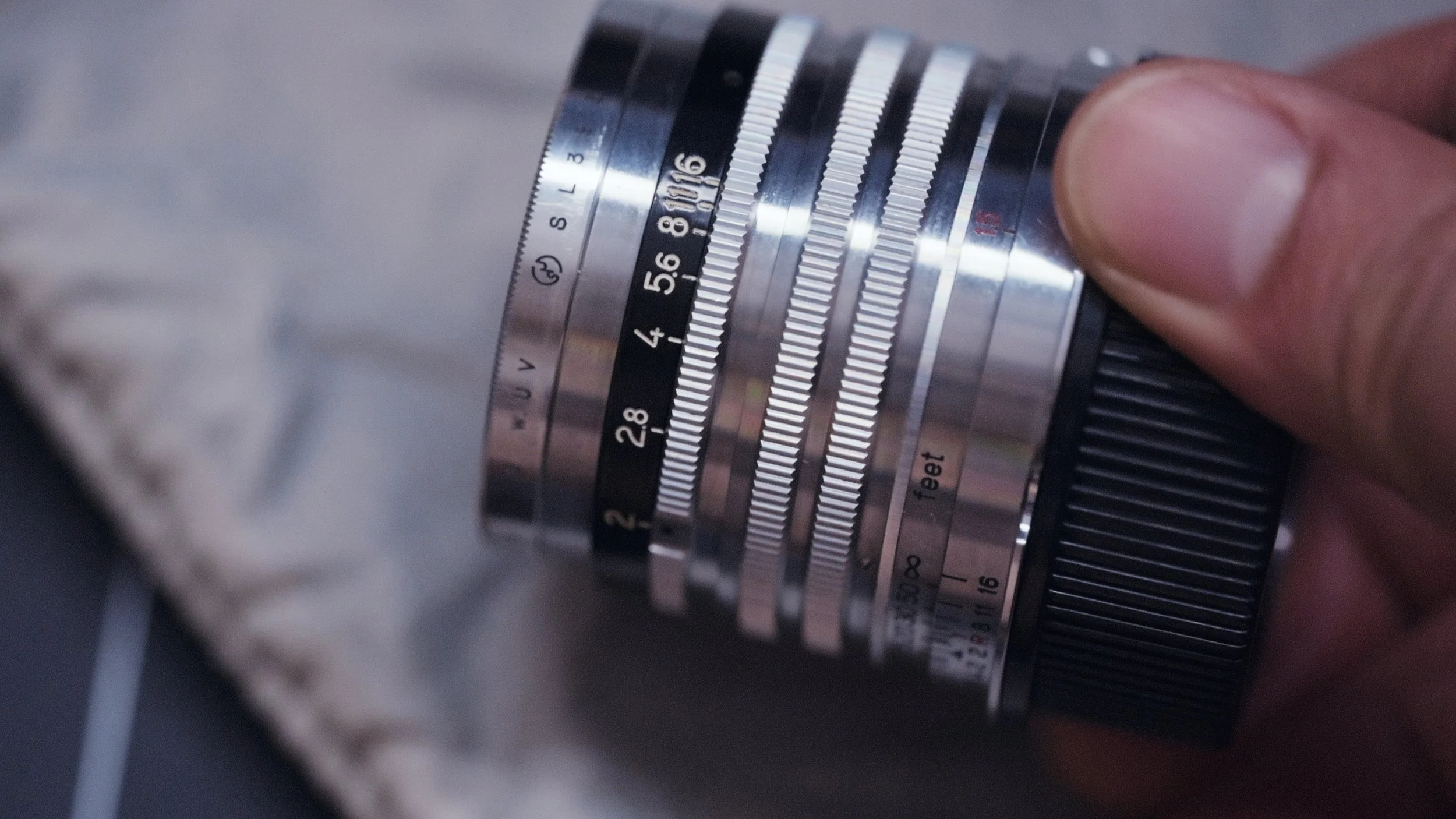
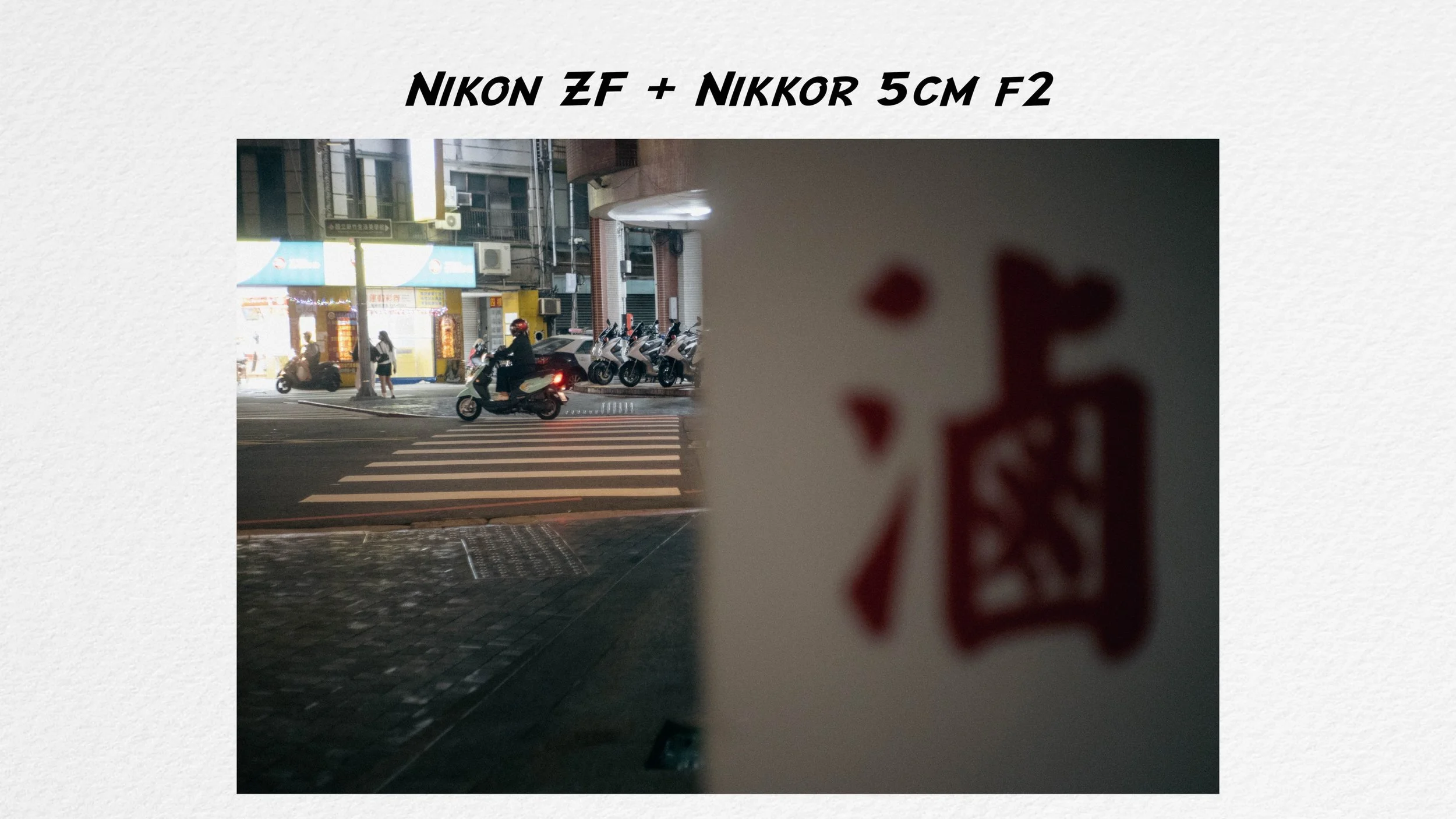
I love adapting old lenses on mirrorless cameras, which brings me to my third unusual travel use case:
3.Manual > Autofocus Lenses
Out of the ZF and ZR, which camera is better suited for manual focus?
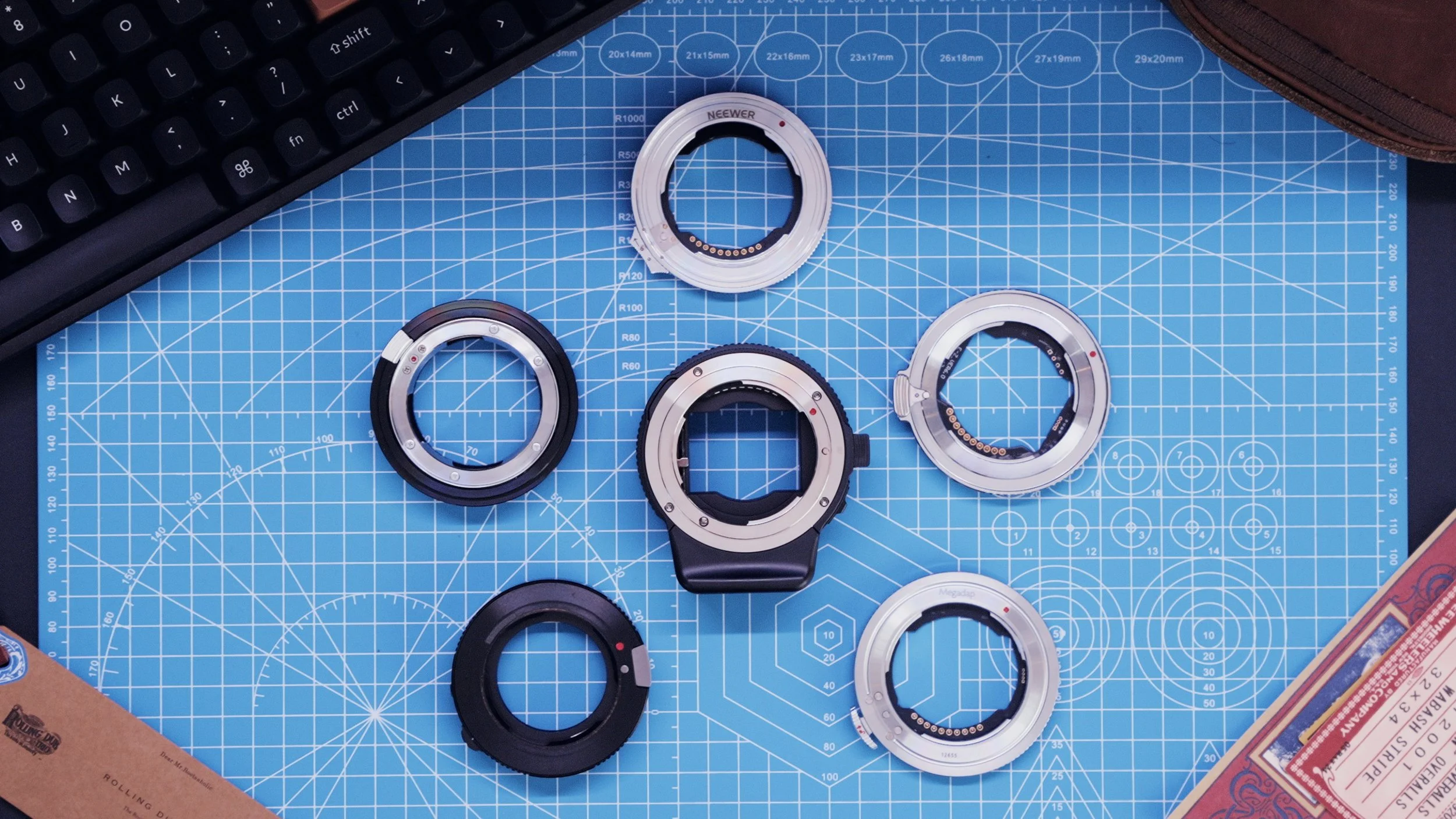
Both have the same focus assist tools, focus peaking, punch in magnify. Both can use face and eye detection to help you predict where to punch in directly. With a chipped a manual lens(E.g. Voigtlander), or a chipped adapter (E.g. Megadap), both cameras have boxes that turn green when you nail focus.
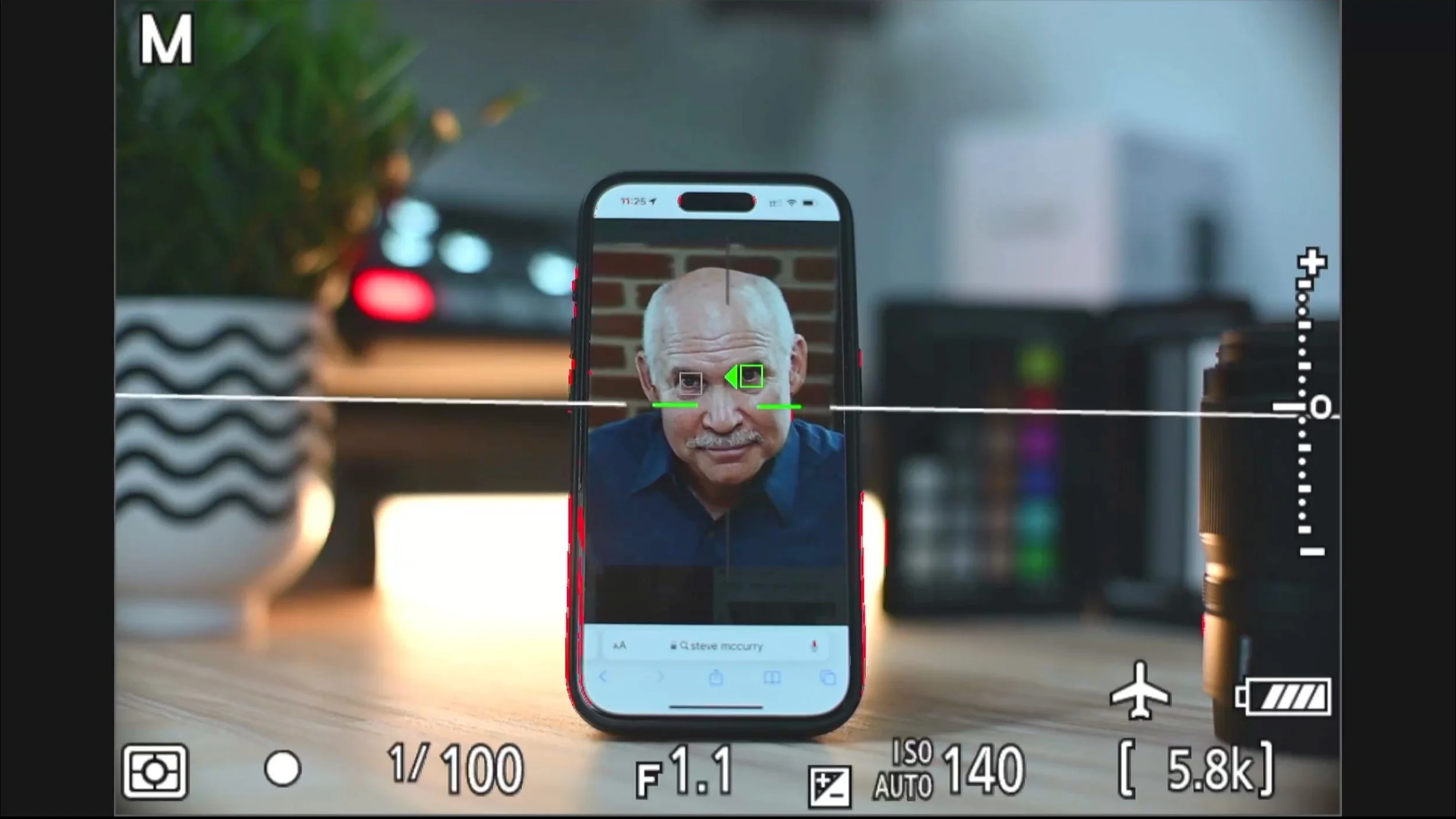
So it comes down to the handling?
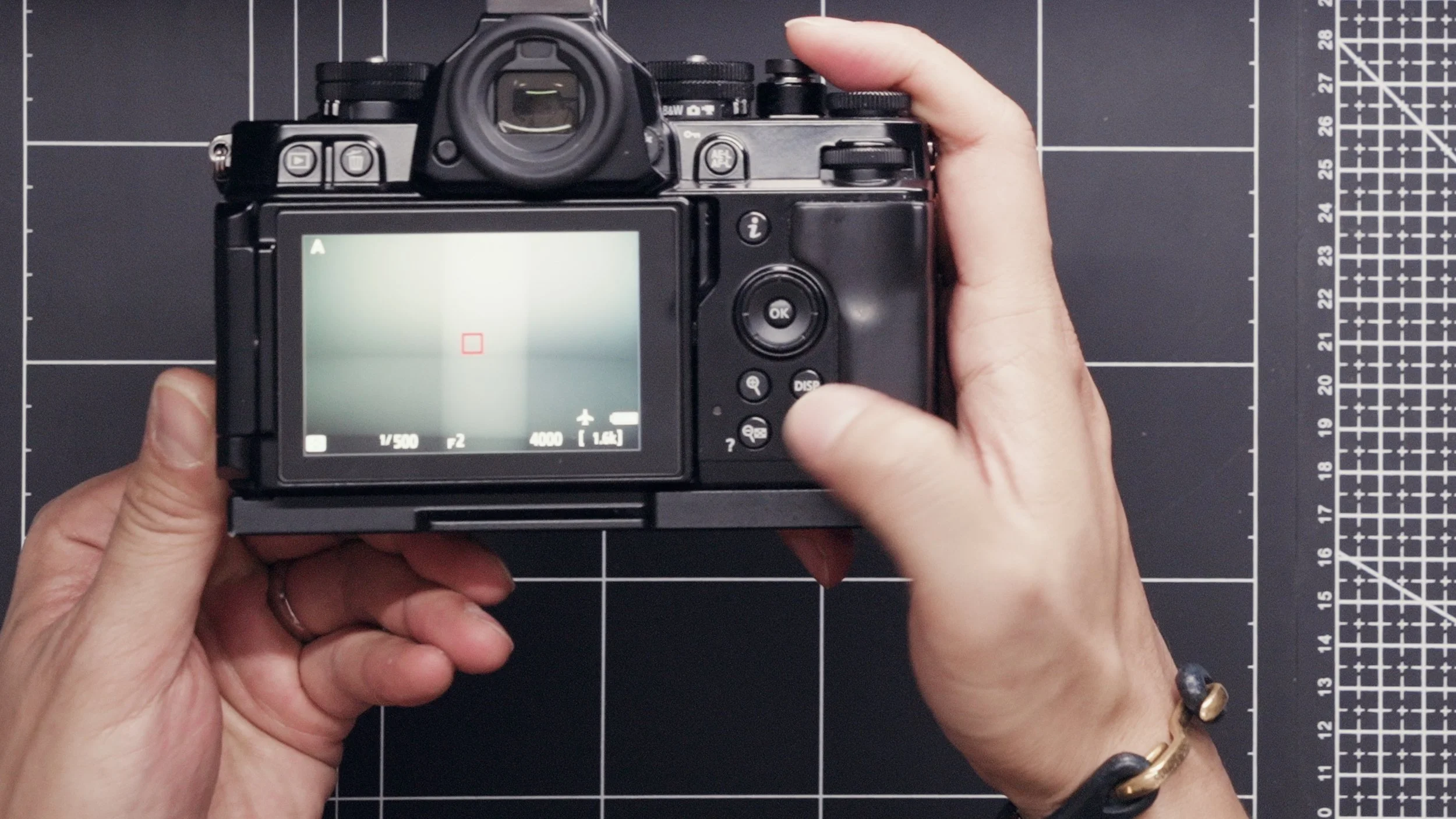
The ZR has a punch and magnify Zoom rocker, a bigger screen, but for manual lenses, I think I prefer the ZF. It’s a pleasure to use for my personal work, and I wish I could just travel with vintage lenses.
But my fourth unusual travel use case, forces me to pack at least one auto focus lens.
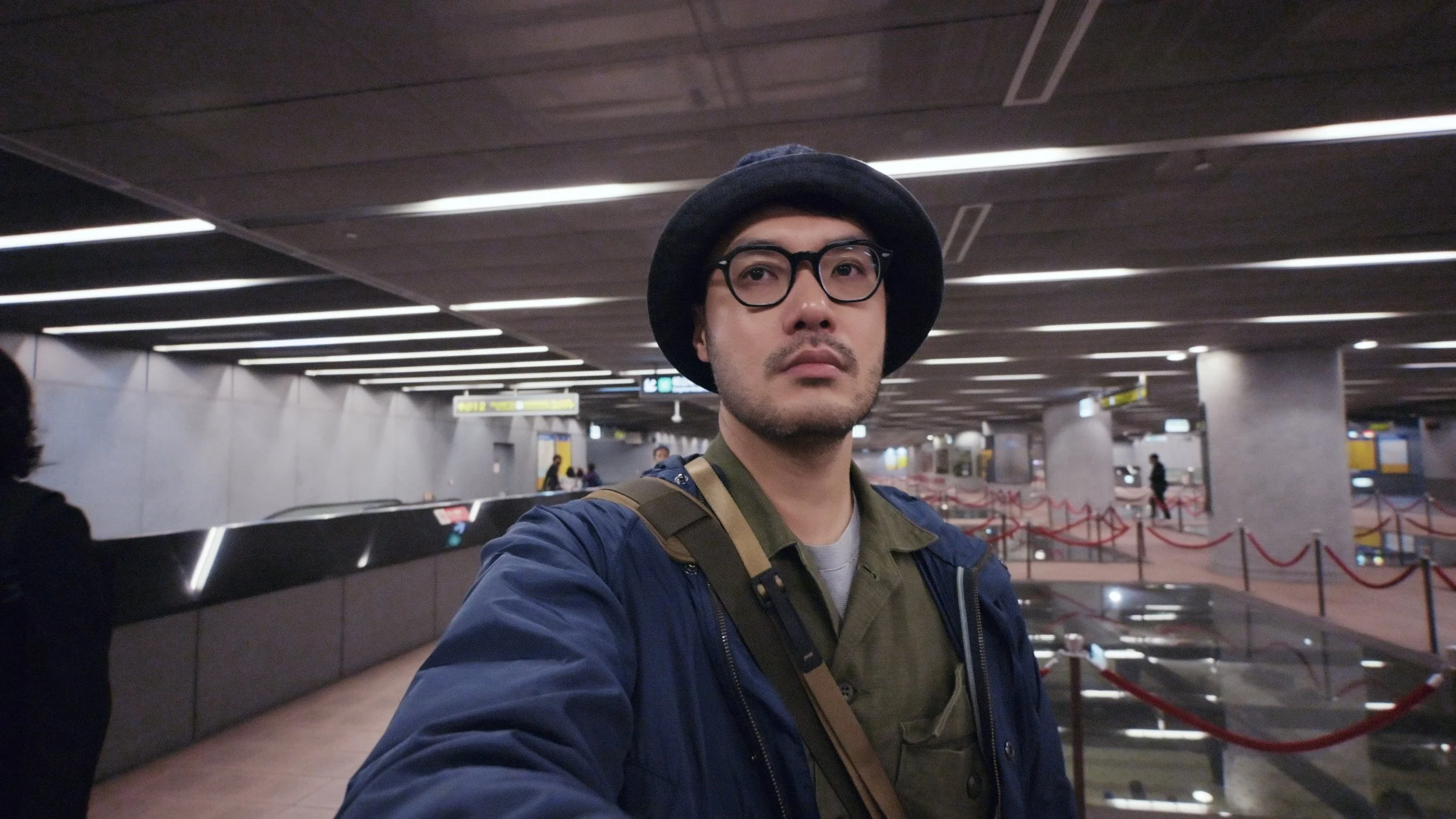
The next morning, I had to catch a cab to Taipei, but I left early so I had enough time to visit 2 sites before my next work meeting.
Taipei's oldest and youngest districts.
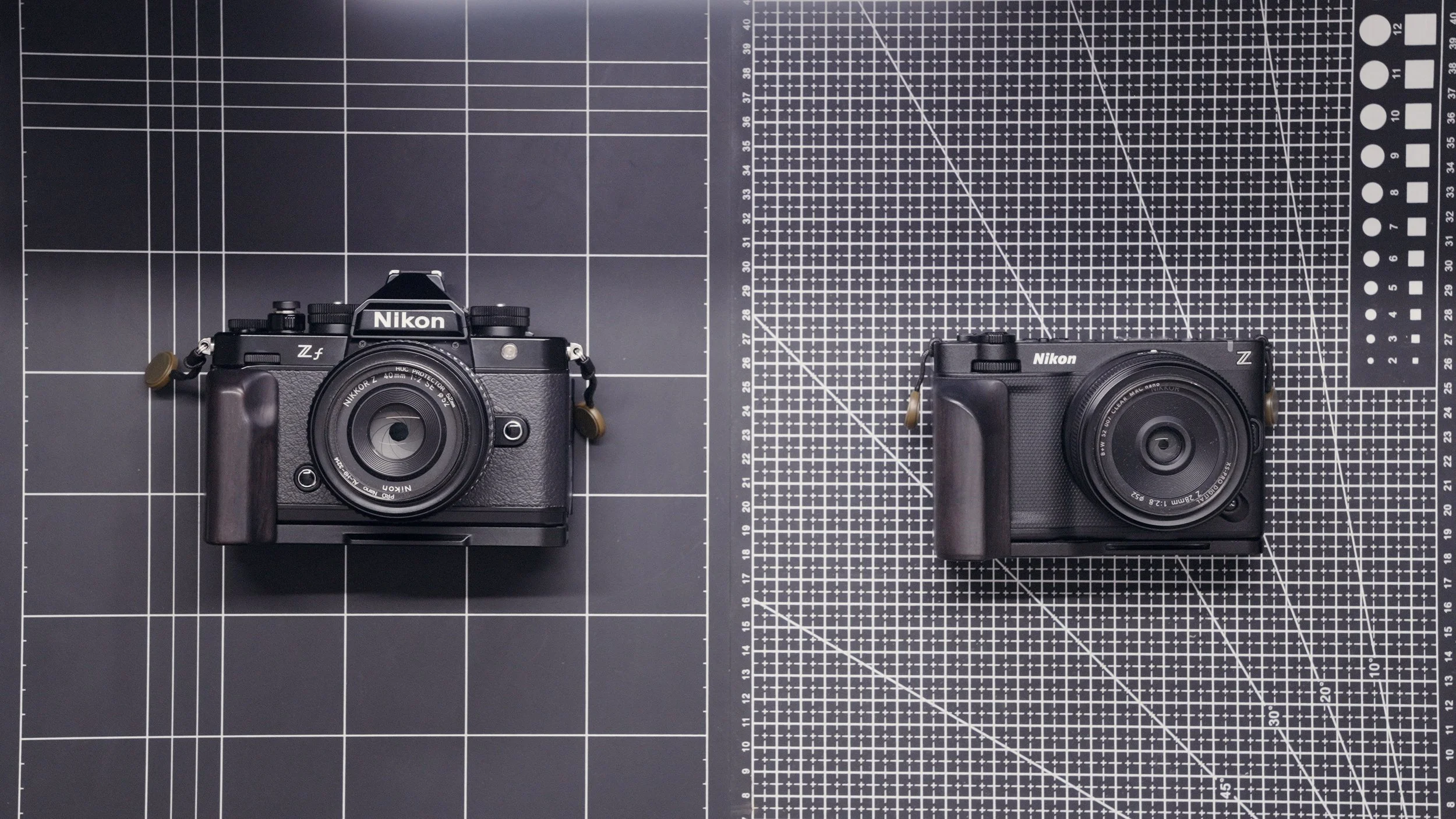
This time, I grabbed the ZR paired with the lens I no longer own. Weight and ergonomics wise, neither camera is perfect for travel, both are a bit bigger and heavier than most prefer? The ZR is a little bit lighter but the biggest difference is its flat top plate. Easier to get in and out of bags at the cost of losing an EVF.
If Hsinchu’s the new hub of innovation, Taipei in comparison, is old money.
Enough time and resources to build an amazing infrastructure. The MRT is fast, efficient, super clean.
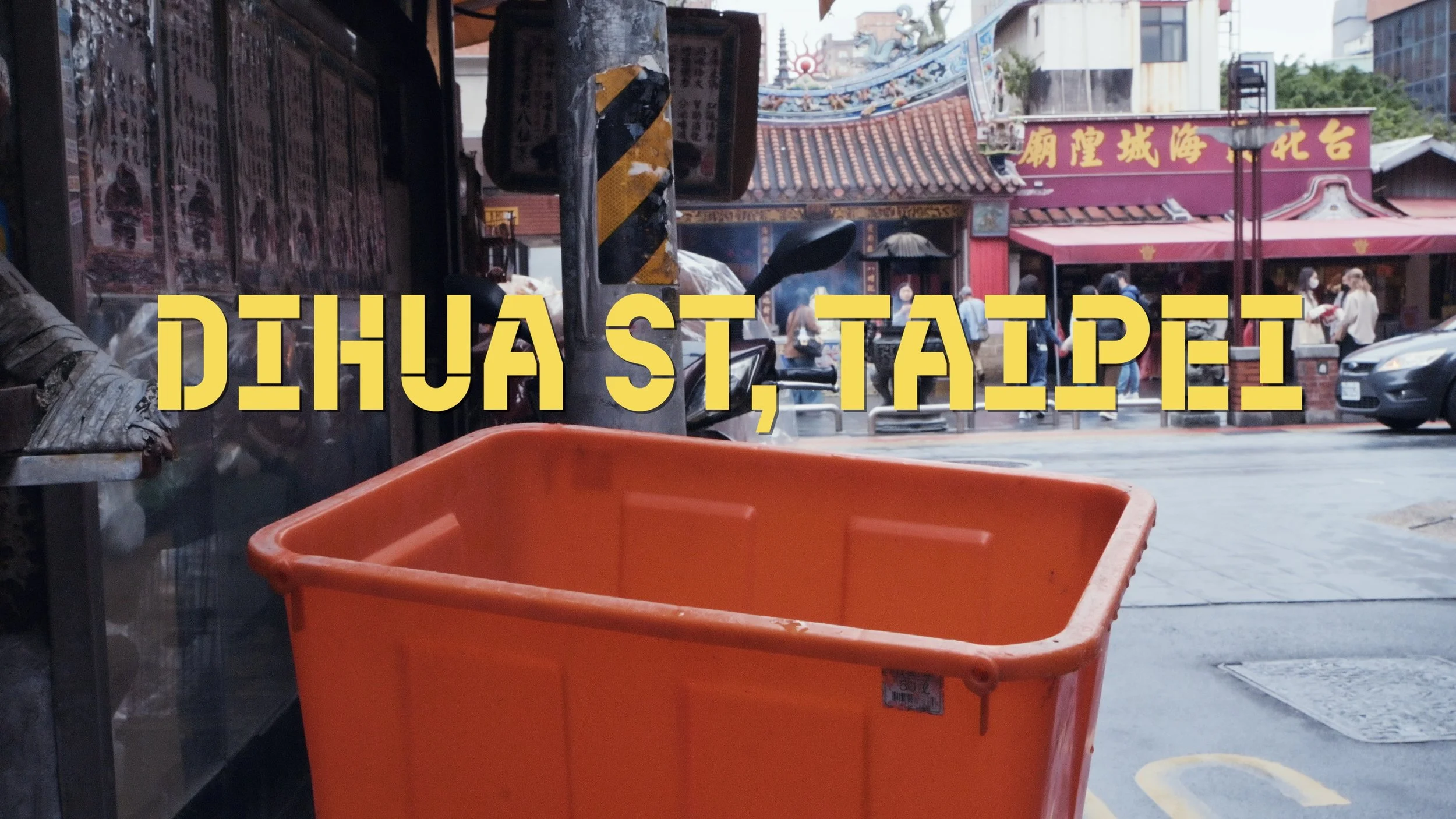
About a 15 minute ride away from Taipei, main station is Di Hua Street. Taiwan's oldest street, first established when the Dutch colonized Taiwan in the 1660s.
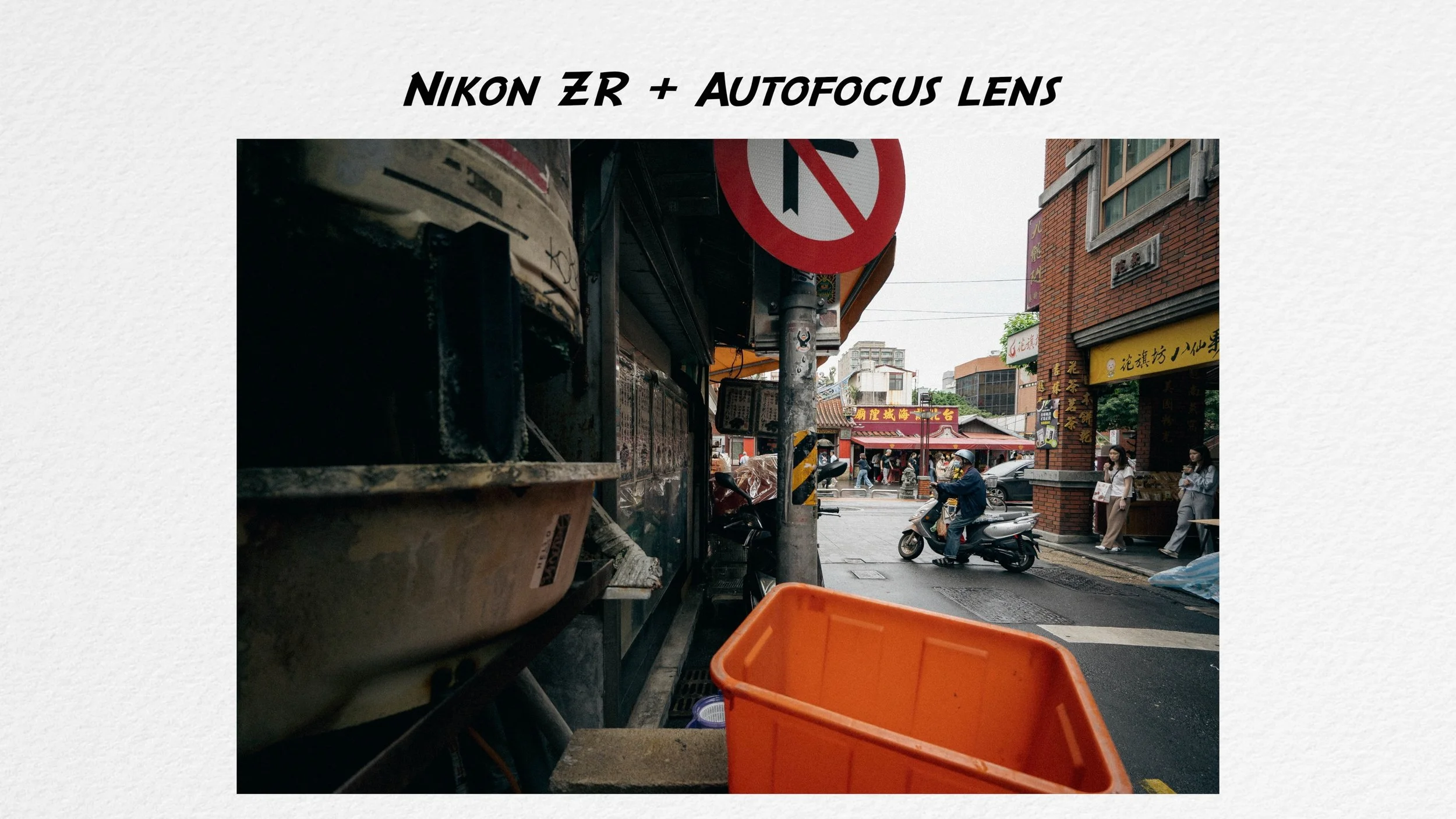
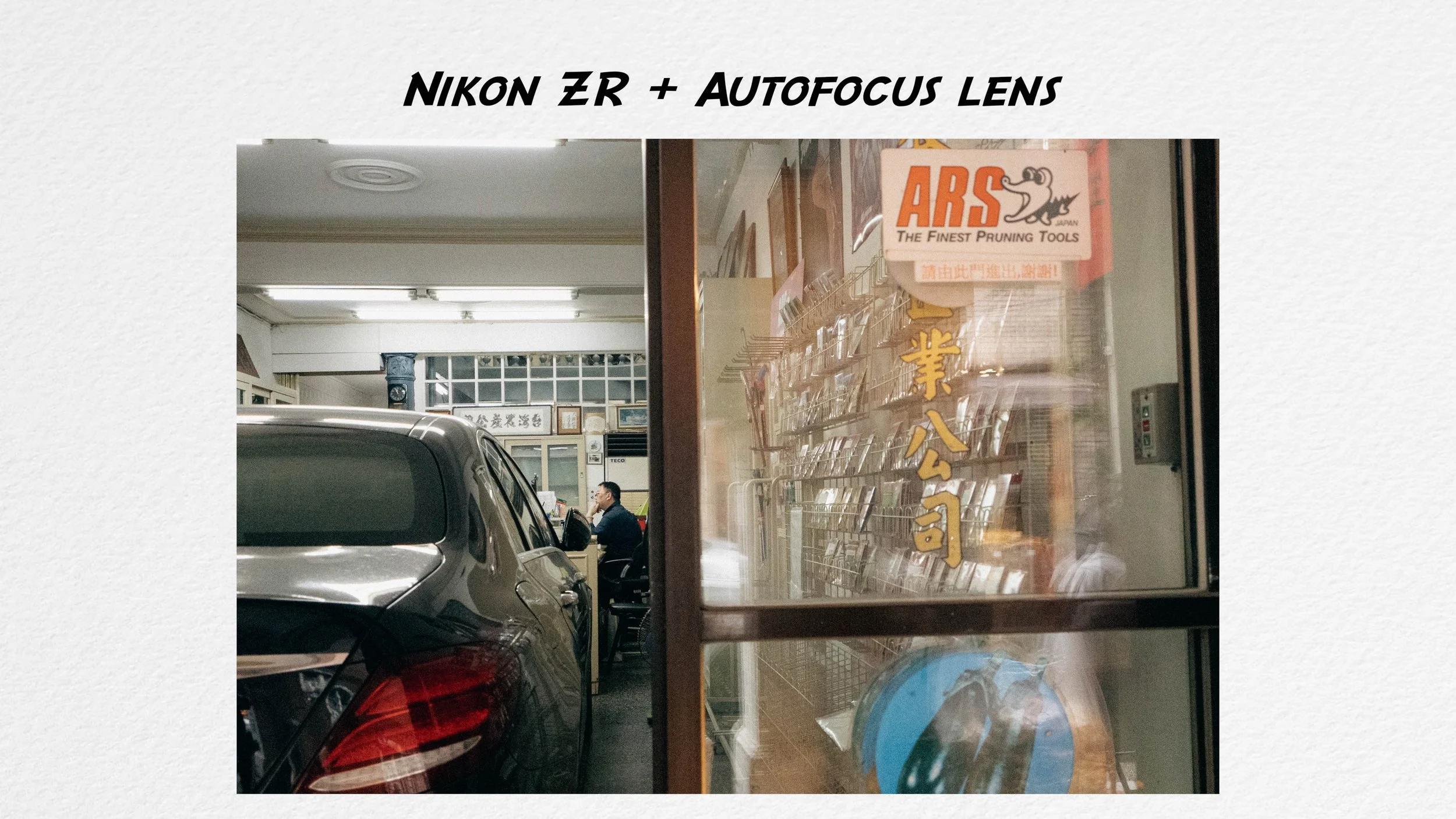
You can see traces of that architecture all around these streets, along with traditional Chinese herbs, authentic food, and plenty of unique souvenirs.
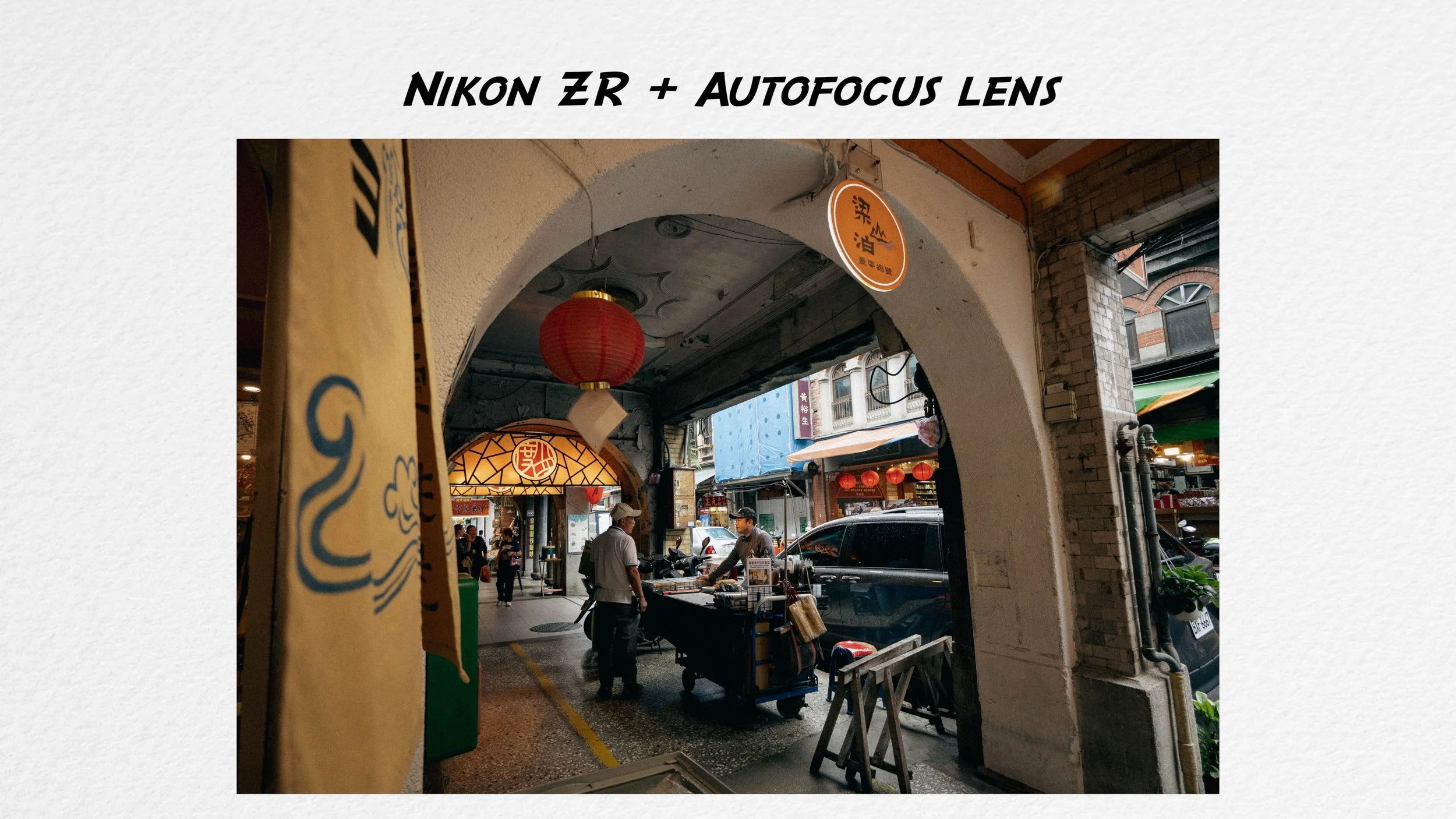
Ximen Ding was the next district.
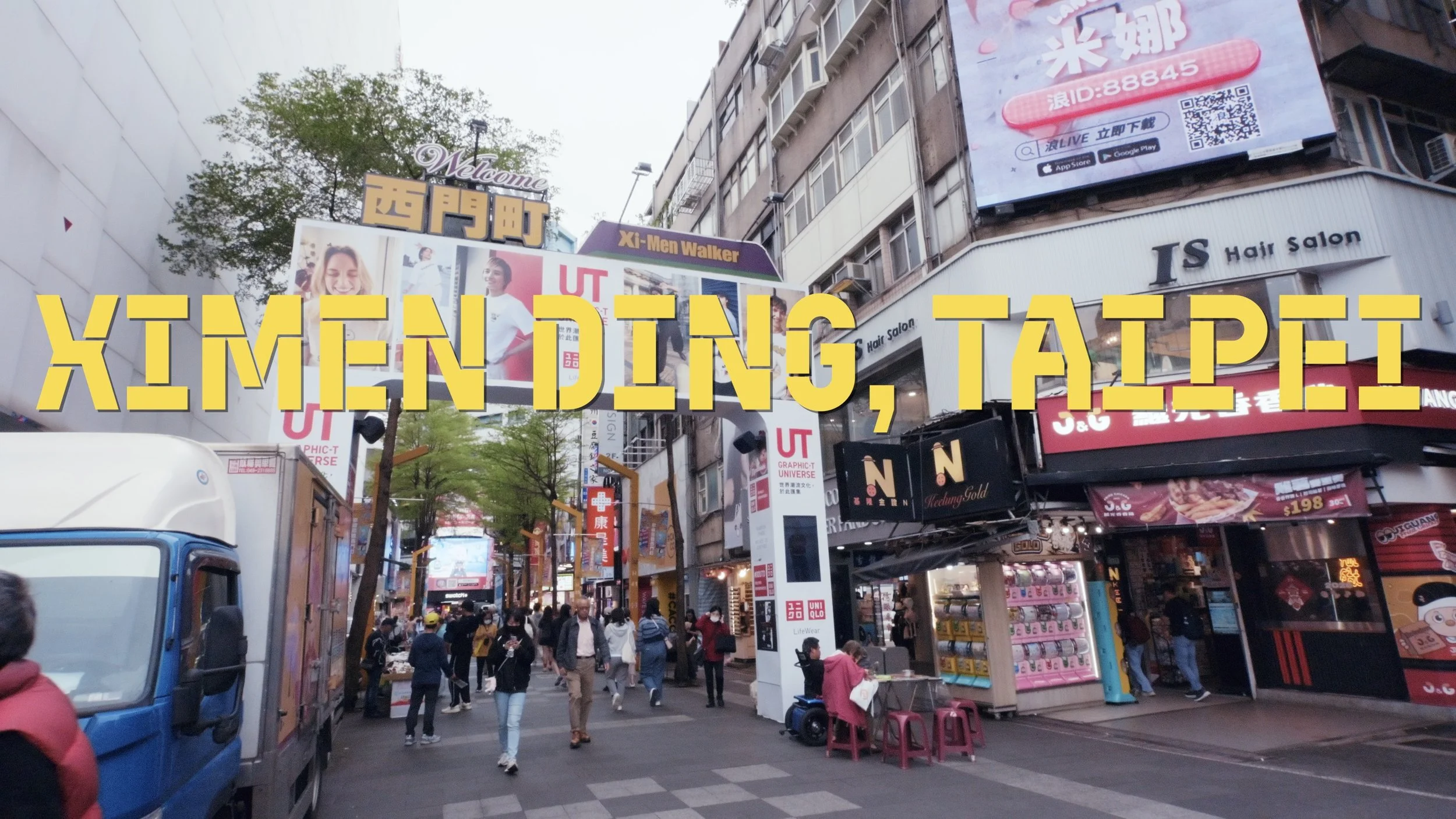
Taiwan’s Harajuku, a hub of crazy shopping and youthful energy. It's changed so much compared to the last time I was here?
I was just a 5 year old, catching a bus to after school tutoring.
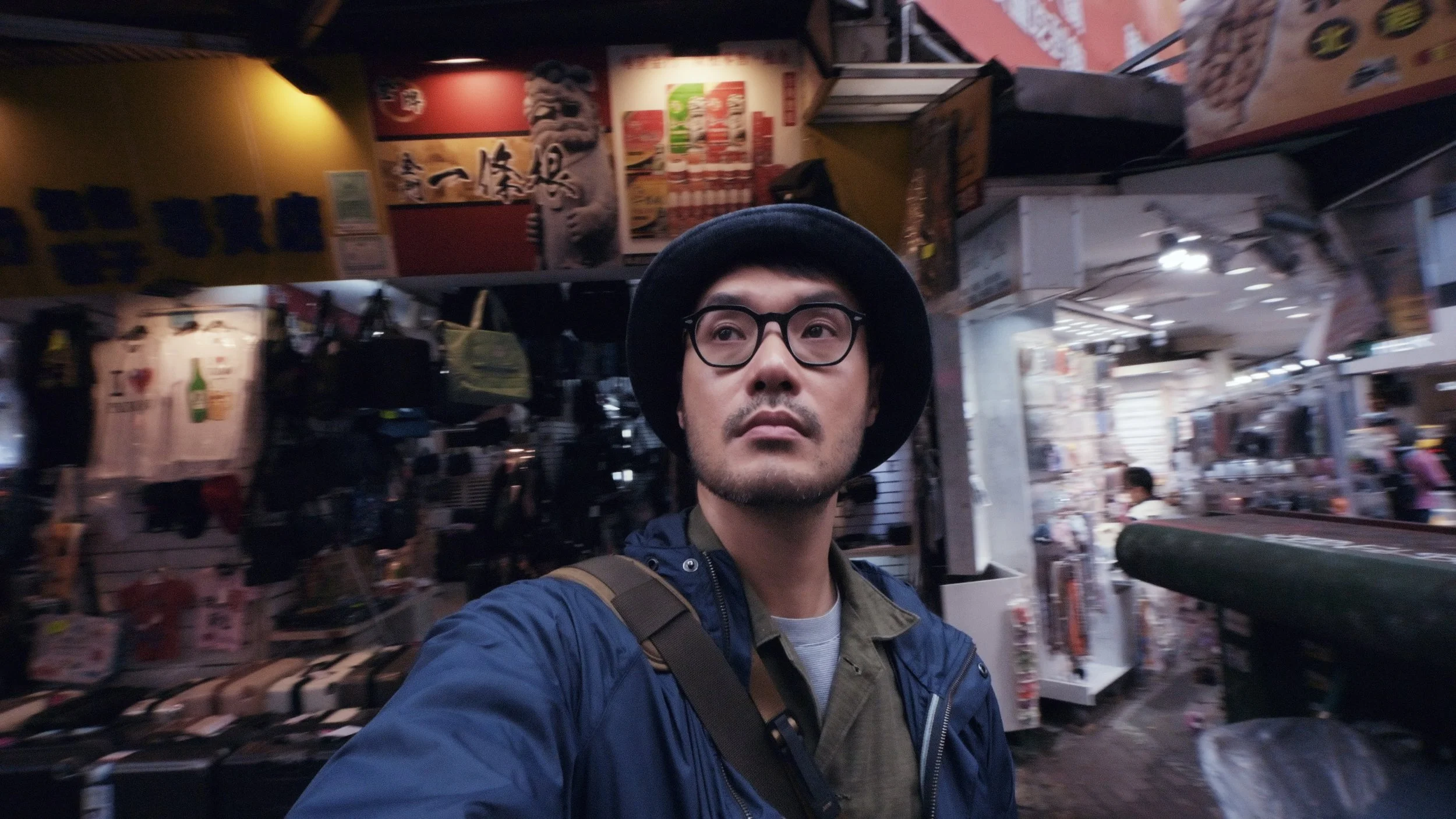
All that chaos around me, and the fact that it was raining meant I was limited to one hand shooting. This is where the ZR is better than the ZF, especially paired with a lens I no longer own:
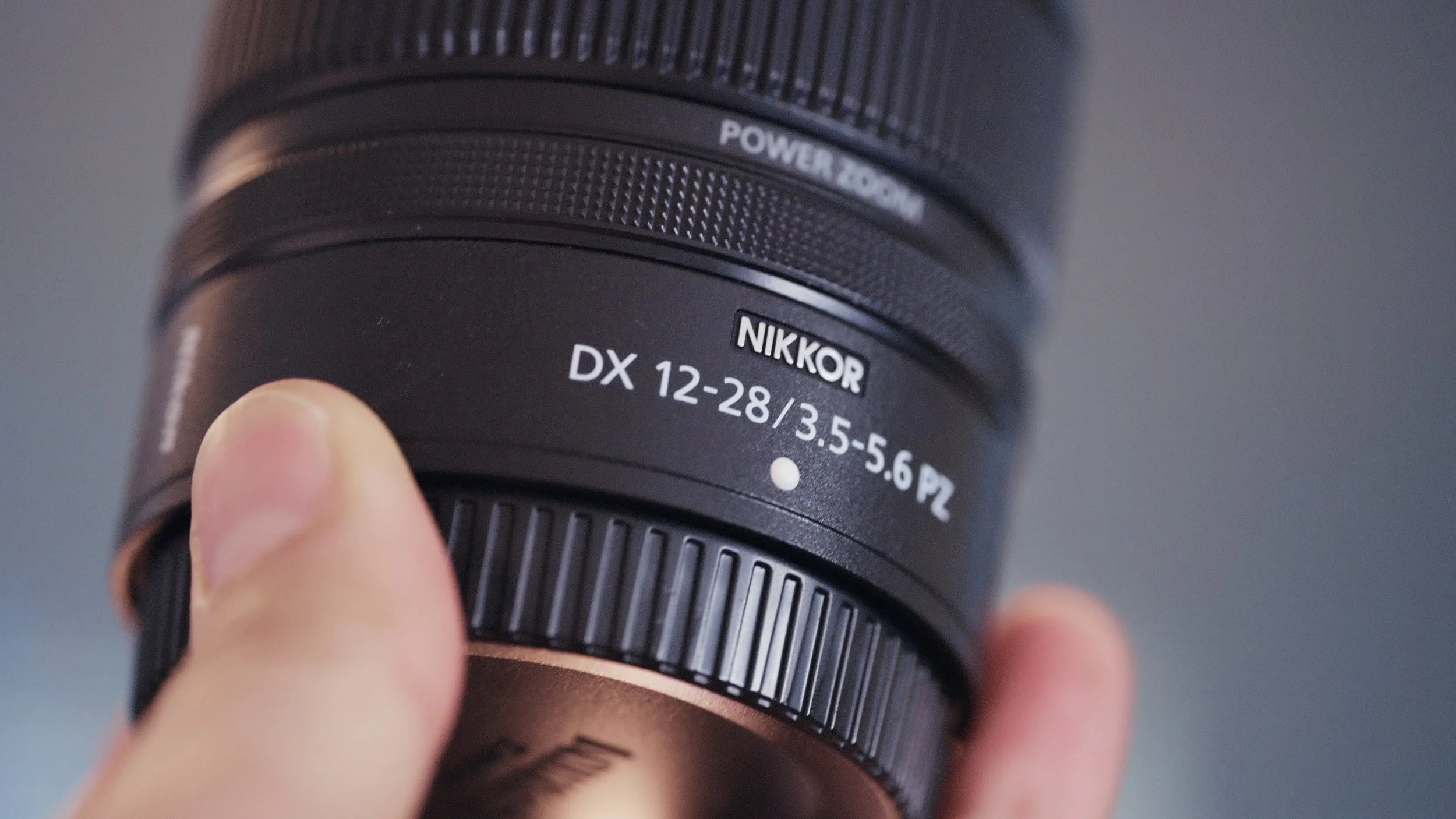
The 12-28mm f3.5-5.6 DX lens for Z Mount.
It has a power zoom function, which is much easier to access on the ZR, although I'm not the biggest fan of power zoom. I like to see the zoom range on the lens directly rather than see it on a screen or menu.
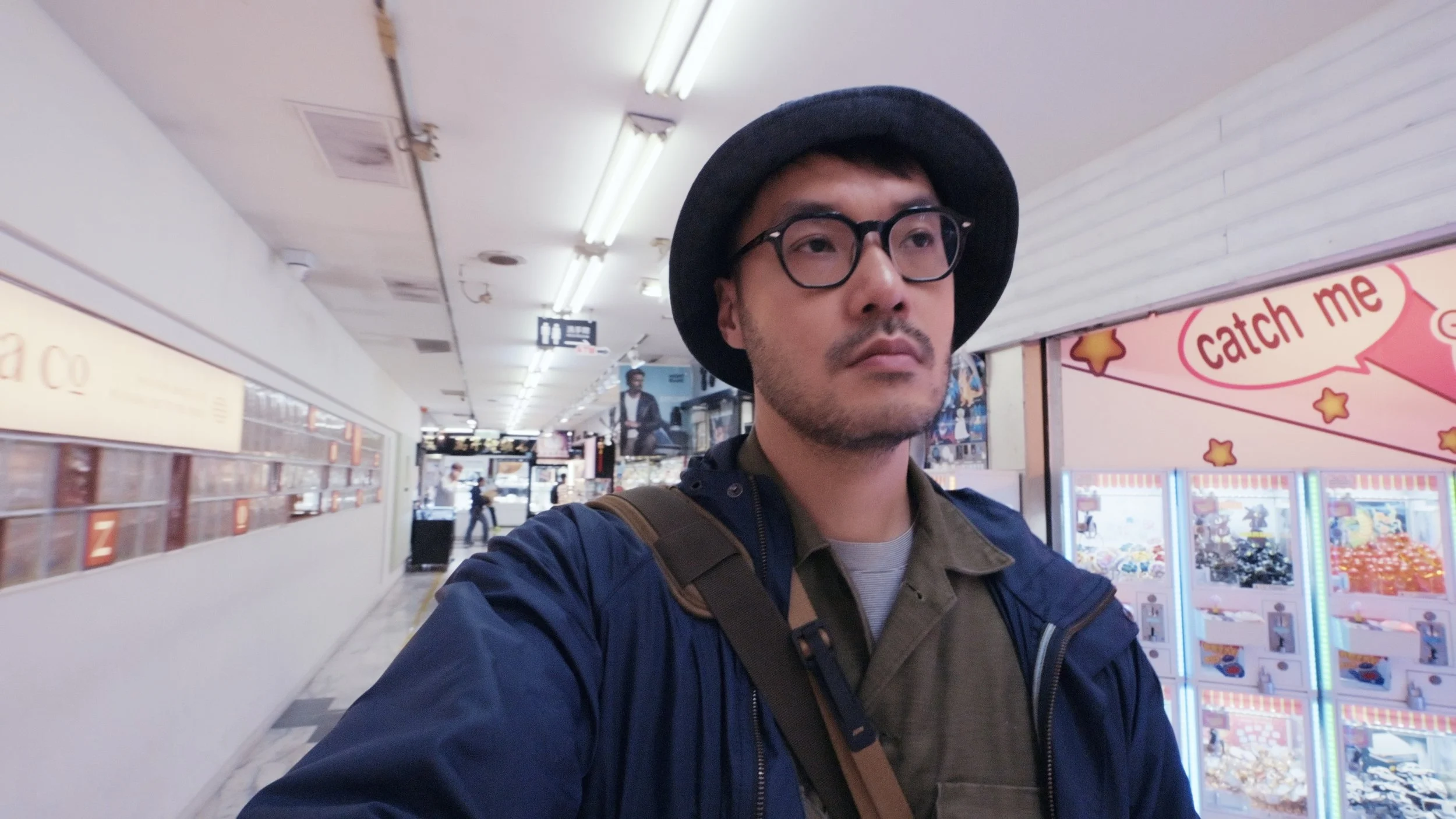
But on this day, with how quickly I had to move, zooming in and out with the zoom rocker using one hand (the other holding an umbrella) was appealing.
I ended up selling this lens after the trip ended for the 17-28mm f2.8 Z. I still prefer full frame lenses on full frame bodies.
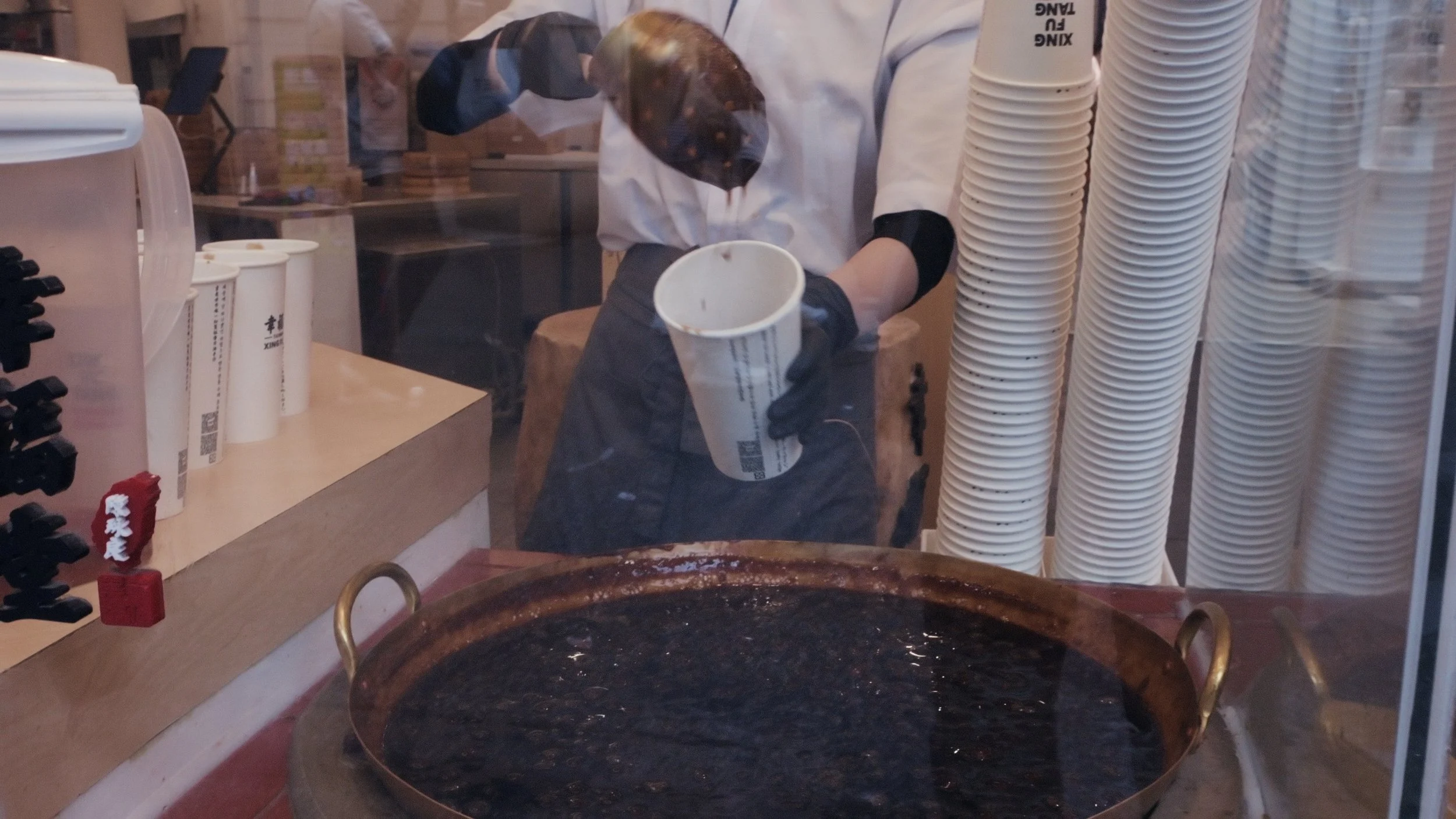
After a quick lunch, I had to rush back to the hotel for my fourth unusual travel use-case:
4.Online Classes
I'm a college professor, who teaches microbiology to science and medical students, while I'm traveling. I not only need to keep on teaching, I also need to film new classes.
Sure, I can use the webcam built into my laptop, do a low resolution screen recording but everyone already feels disconnected online. Not being able to see or hear your teacher clearly makes things feel a 100 times worse. So I use my mirrorless cameras as my webcam to teach over Zoom or teams or teleconferencing while I'm traveling.
Is the ZF or ZR more useful for my unusual use case for travel?
Both cameras can be recognized as a webcam via USB-C. You don't need a capture card or any micro HDMI cables, just go to the network menu, USB, and select USB streaming. On these cameras (Expeed 7 seems to be the difference maker) you don't need the Nikon webcam utility anymore.
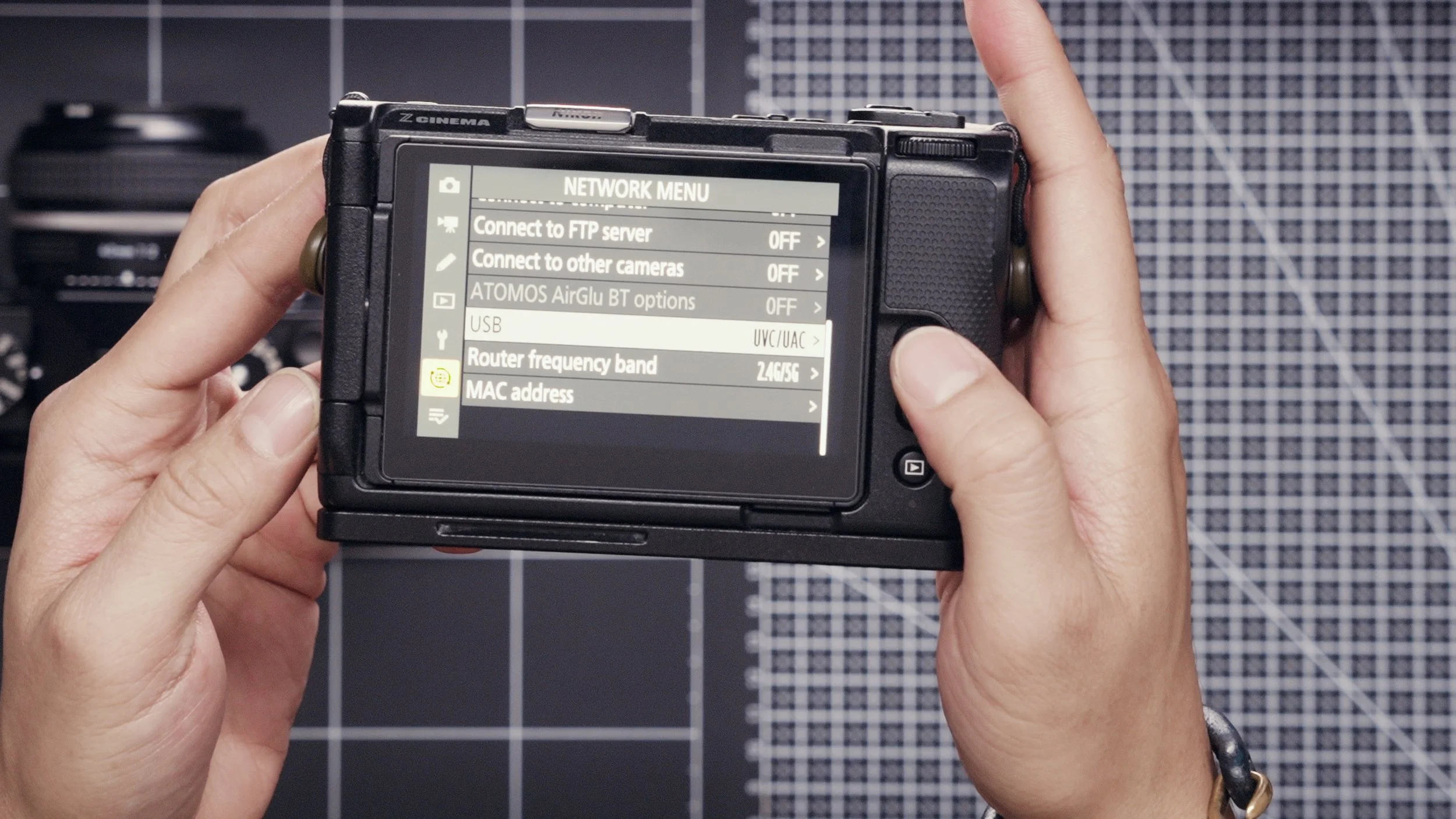
I move any table in my hotel room close to a window, use natural light for my face to look professional on camera, and start filming. It also helps that a ZR has a digital hot shoe to use a shotgun microphone. The ZF does not have a digital hot shoe, so I need a separate microphone and microphone cable.
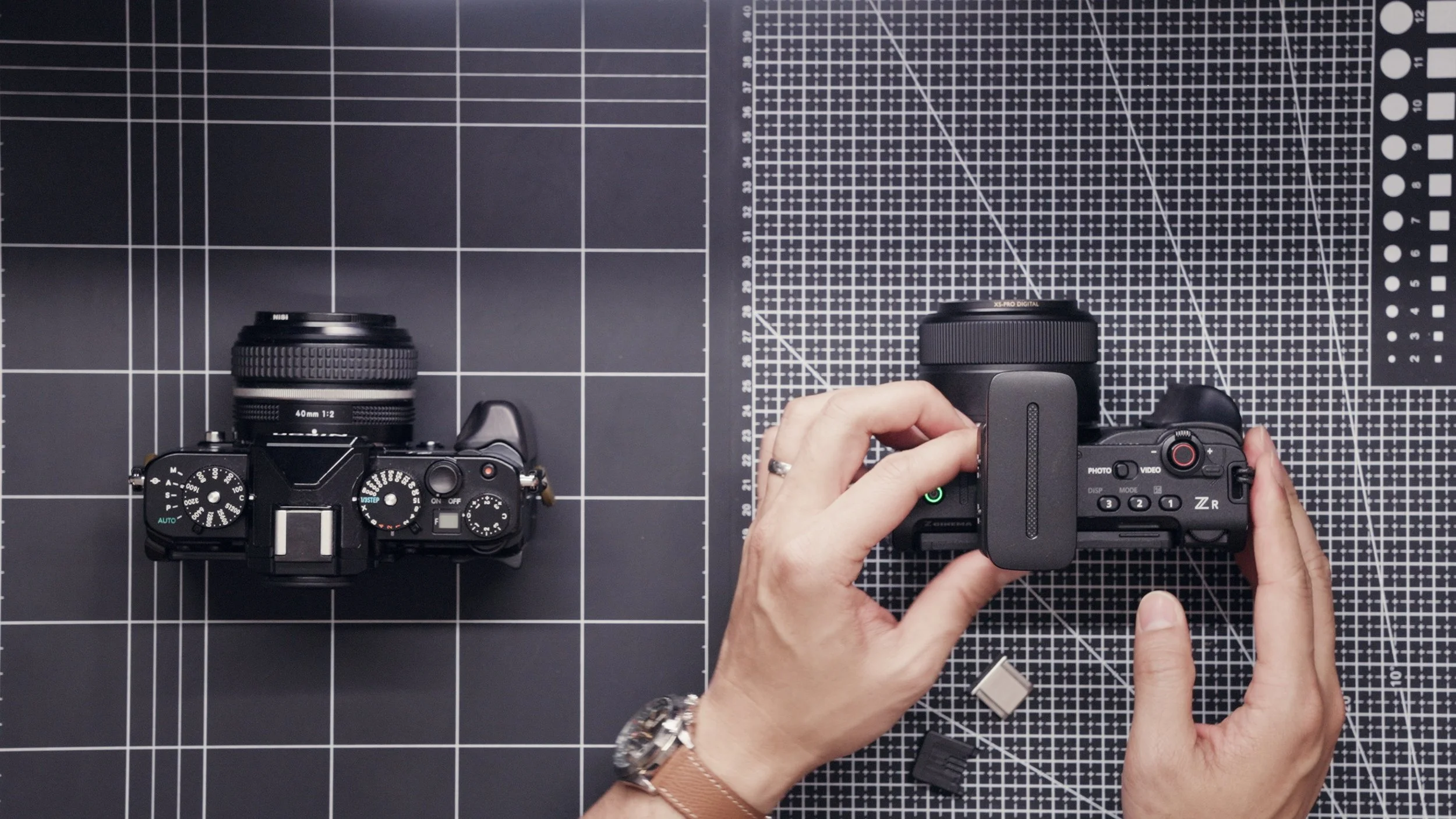
Which lens did I pick for webcam use? The 40 mm F2 Z, autofocus on AF-F means I don’t have to worry about adjusting focus manually. F2 is fast enough of an aperture to blur out the hotel room background without resorting to crazy blurring filters that look fake.

If it's a smaller hotel room with less space, I use a 28 mm 2.8. It’s why I packed both auto focus lenses for the trip.
Once the class is finished I packed up my gear, but before I go, I need to go through my fifth unusual travel use case:
5. Backing up enormous files
Hour long 4K video files from the ZR, plus my computer's screen recording, which I need to splice together for my online classes to make an even bigger project file.
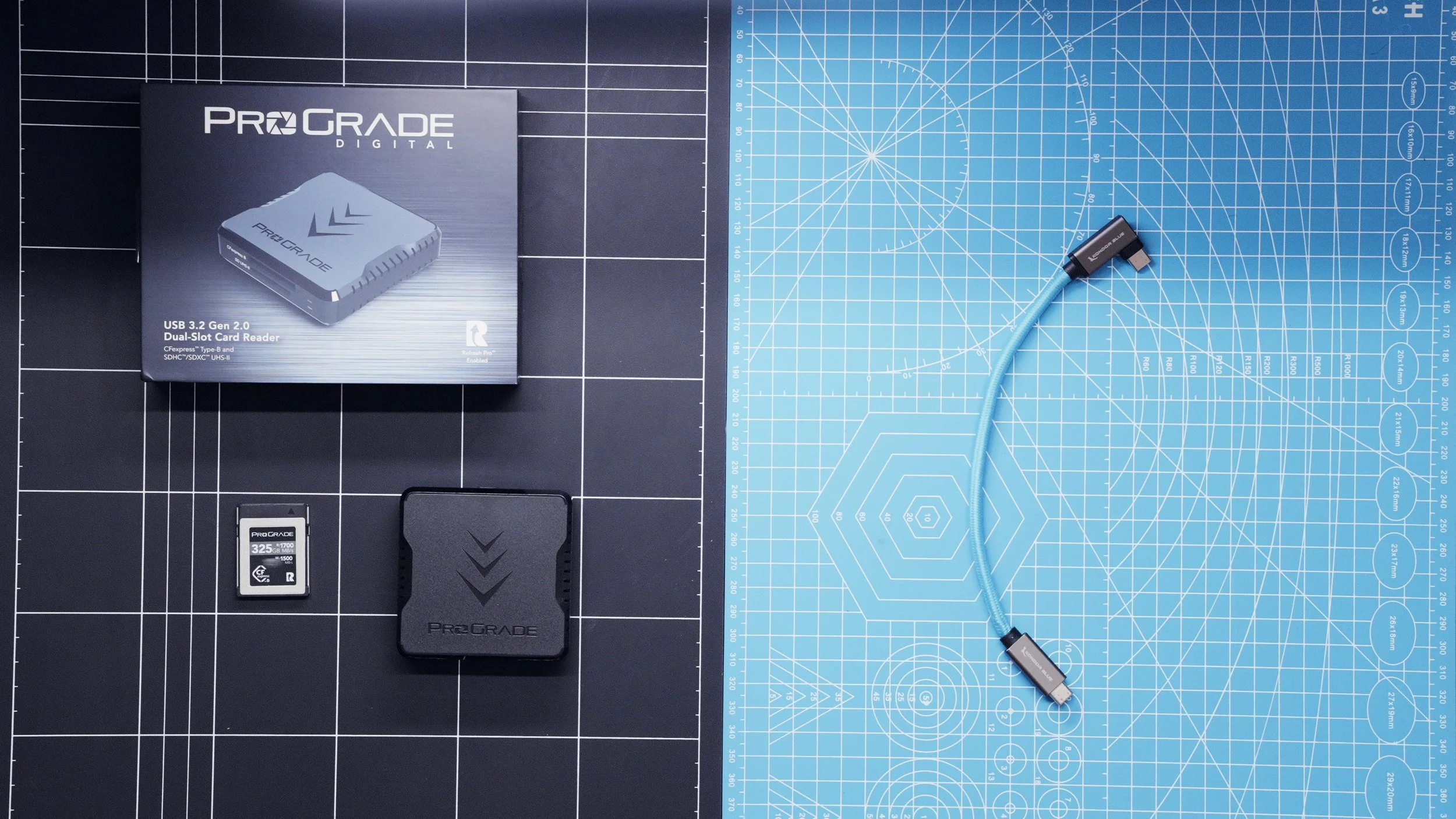
Anywhere from 50 to 100 gigabytes per video project, you would think the CF Express B Cards in the ZR are better suited for this, but I can't carry as many of them? I also need a separate card reader, the SD card slot on my Macbook Pro doesn’t work for this media. It's much easier to pack SD cards for my ZF. What I don't love on either camera is that you can't do redundant video recording across both card slots. We're still waiting for this to come to any Nikon Z camera.
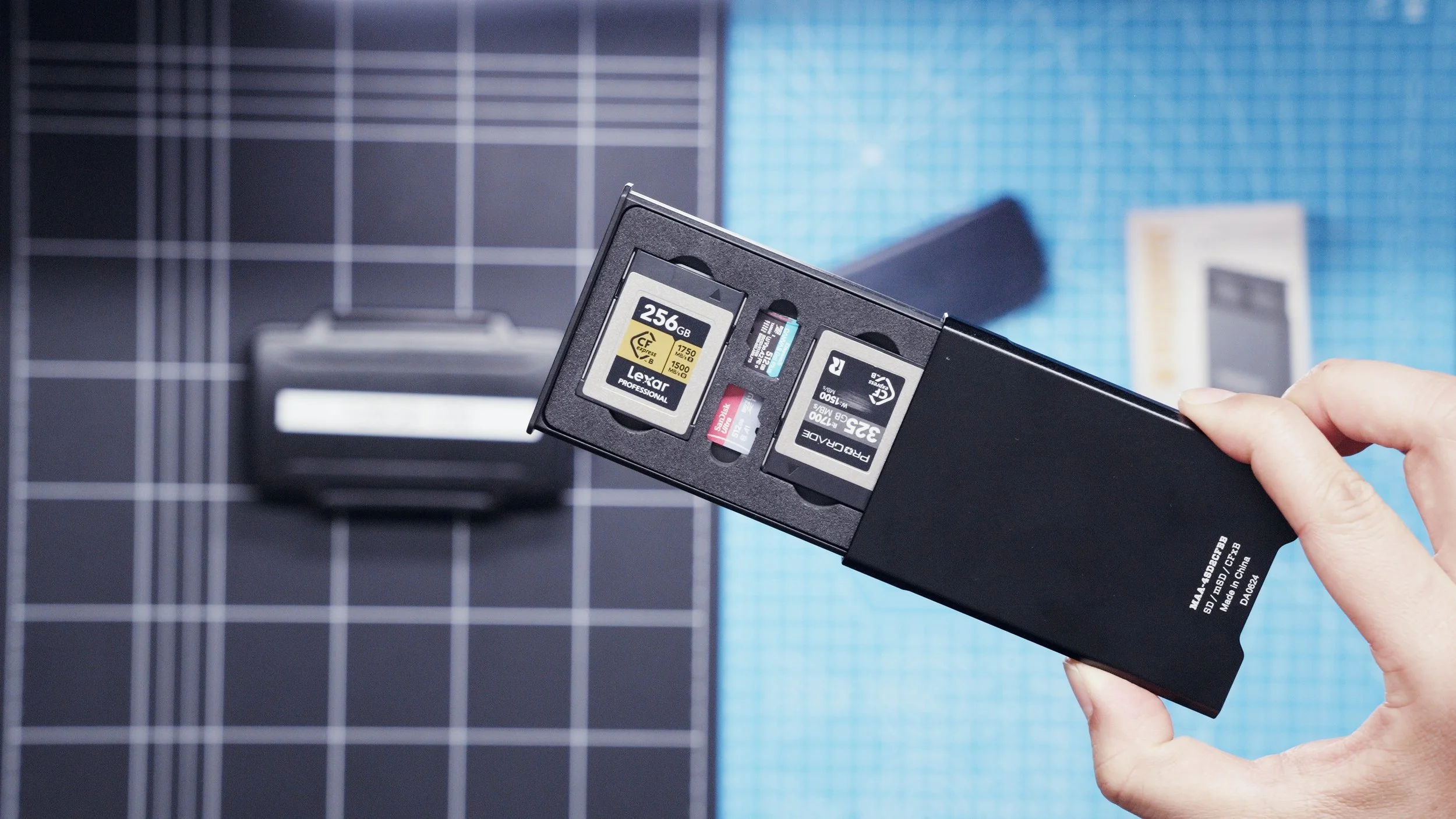
I try to have three physical copies of my video project files (SD/CF express card, my laptop SSD, an external SSD) and at least 2 online backups (icloud/dropbox). I put the SSD in my suitcase not my camera bag just in case one of them gets lost. If both get lost I’ll still have my online backups (paranoid much?)
With the backup done, it's off to my next work meeting, and though I don't need any cameras, I'll still bring one along.
Together with vintage lenses 2 and 3.
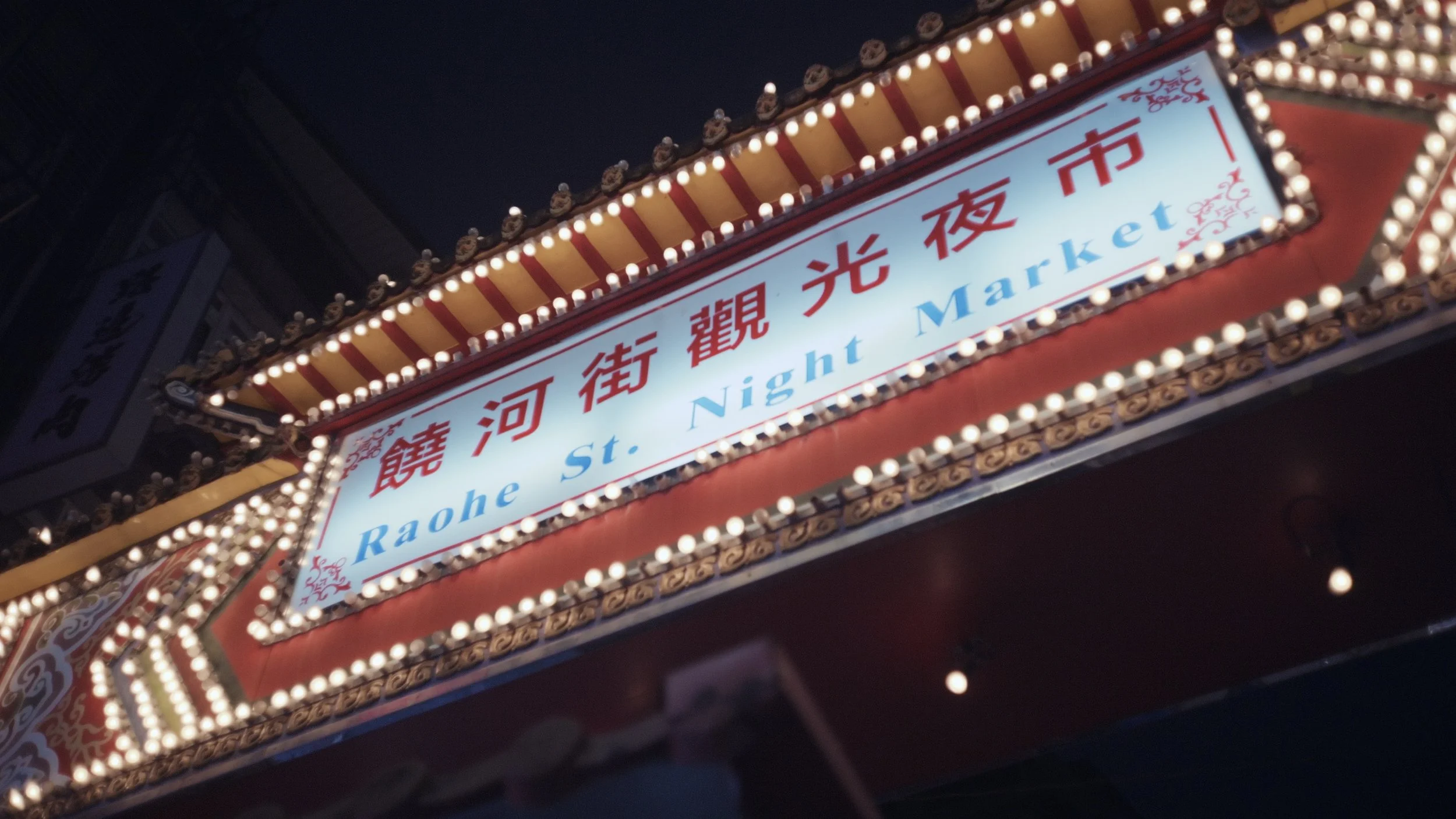
Taiwan's famous for the ambience of their night markets, and it doesn't get much more famous than this one.
After my work meeting with Taiwan colleagues, we walked around to the Raohe night markets. A crazy confluence of commerce, shop owners selling pepper buns, and milk tea, are wearing two tone Rolexes.
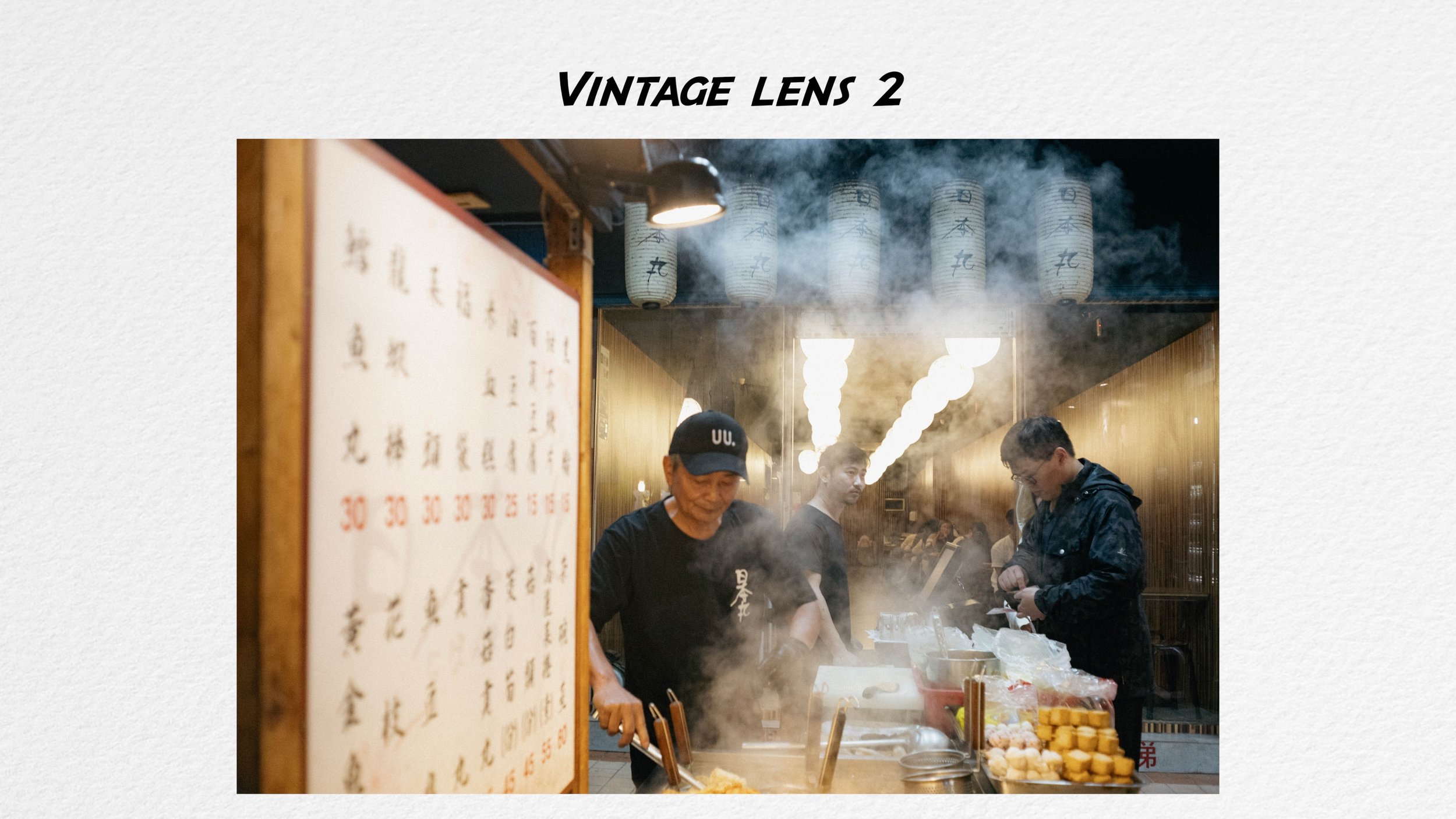
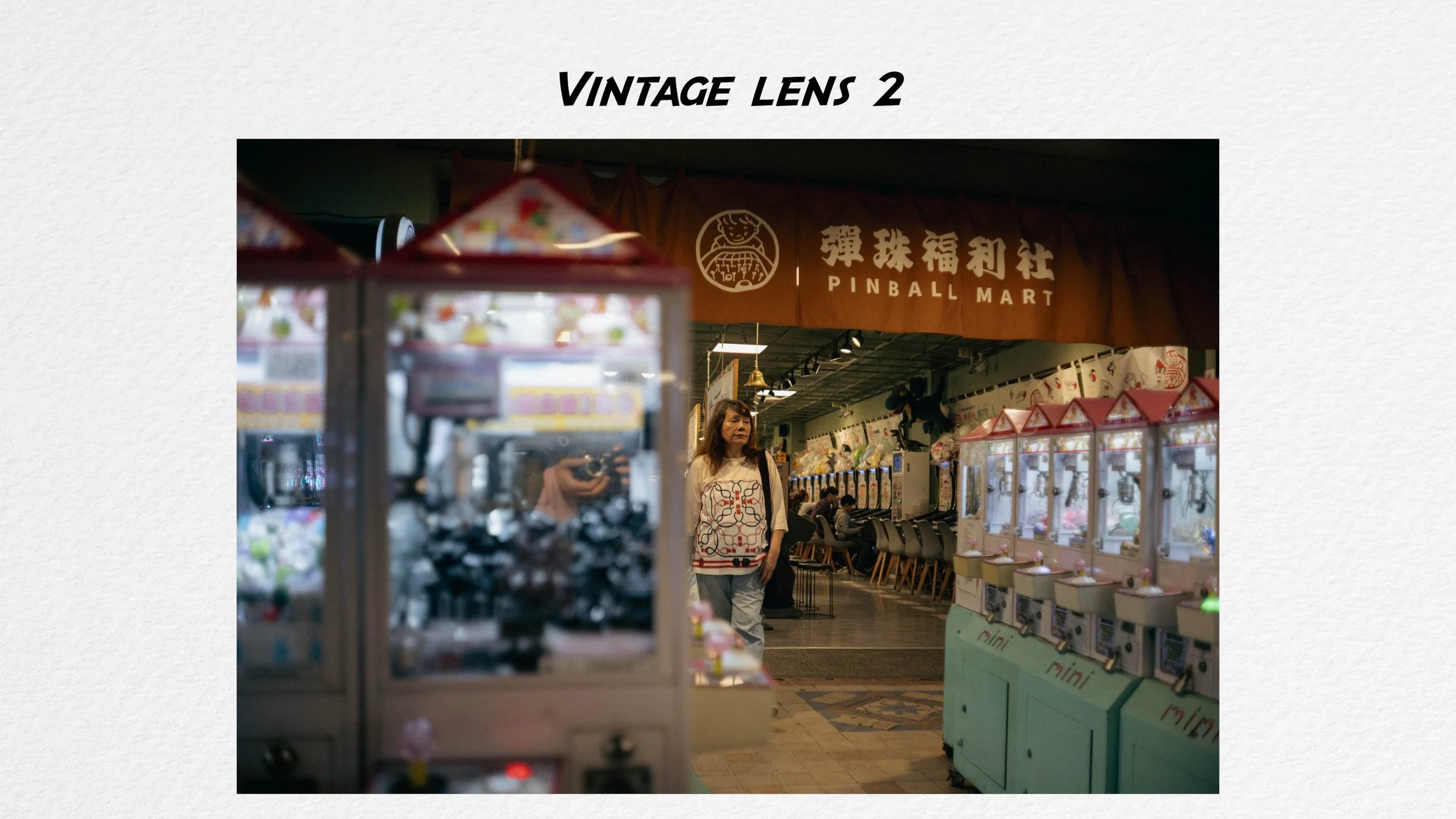
It was a weeknight, my Taiwanese host said these crowds were very tame in comparison to the weekend. I think I captured that authentic vibe on vintage lens 2?
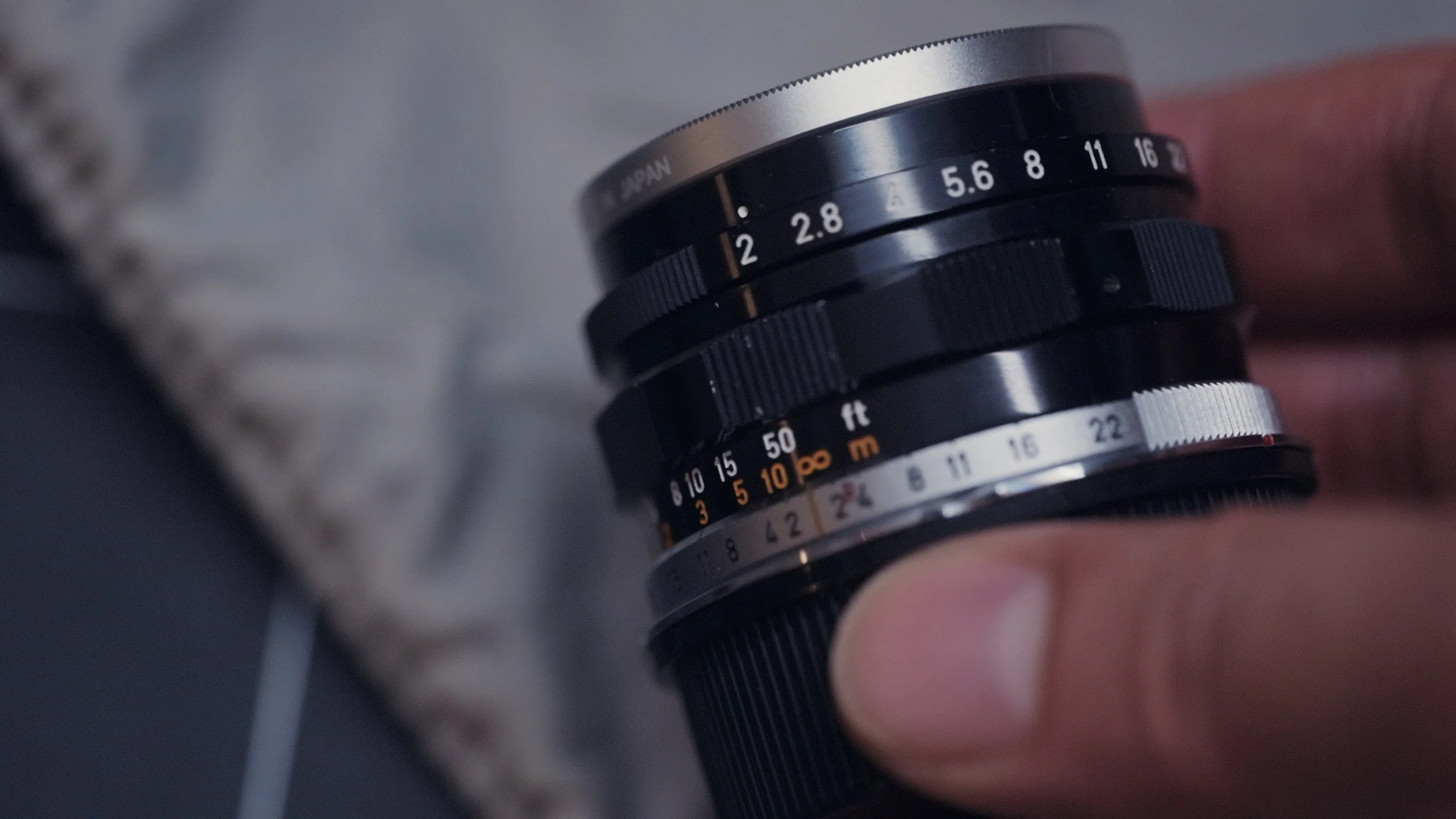
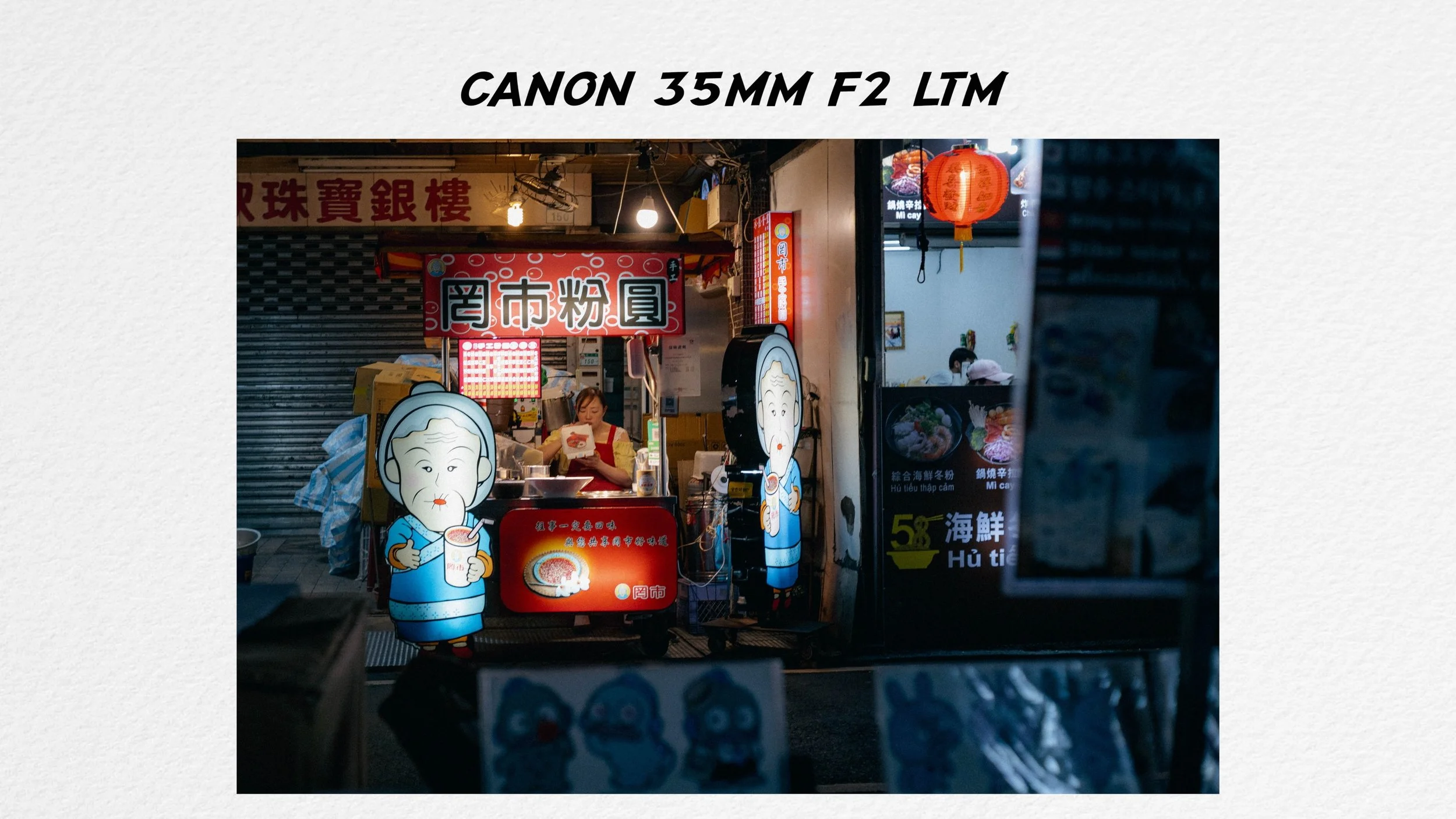
The Canon 35 mm f2 in Leica thread mount. Even after all these years it still holds up. Very modern rendering under all those neon lights, the flares and diffractions add a bit of glow.
35mm LensLab
While we’re on the topic of 35mm lenses, it’s the focus of the next LensLab episode.
If you'd like to share your 35mm photos with me and this community (>20K YouTube, 1K newsletter)?
Fill in the form below:
Which camera that I paired this lens with on a social work setting late at night?
There's only one choice, which brings me to my sixth travel use case, which I hope isn’t unique to me:
6. Cameras as Icebreakers.
You feel the need to protect your cameras, especially while traveling
But it's a wonderful way to connect to others in a time when we're all too disconnected. I want to talk to anyone, and everyone I see, holding a camera. Not just while I'm making videos on the street, also at work functions entirely unrelated to photography.
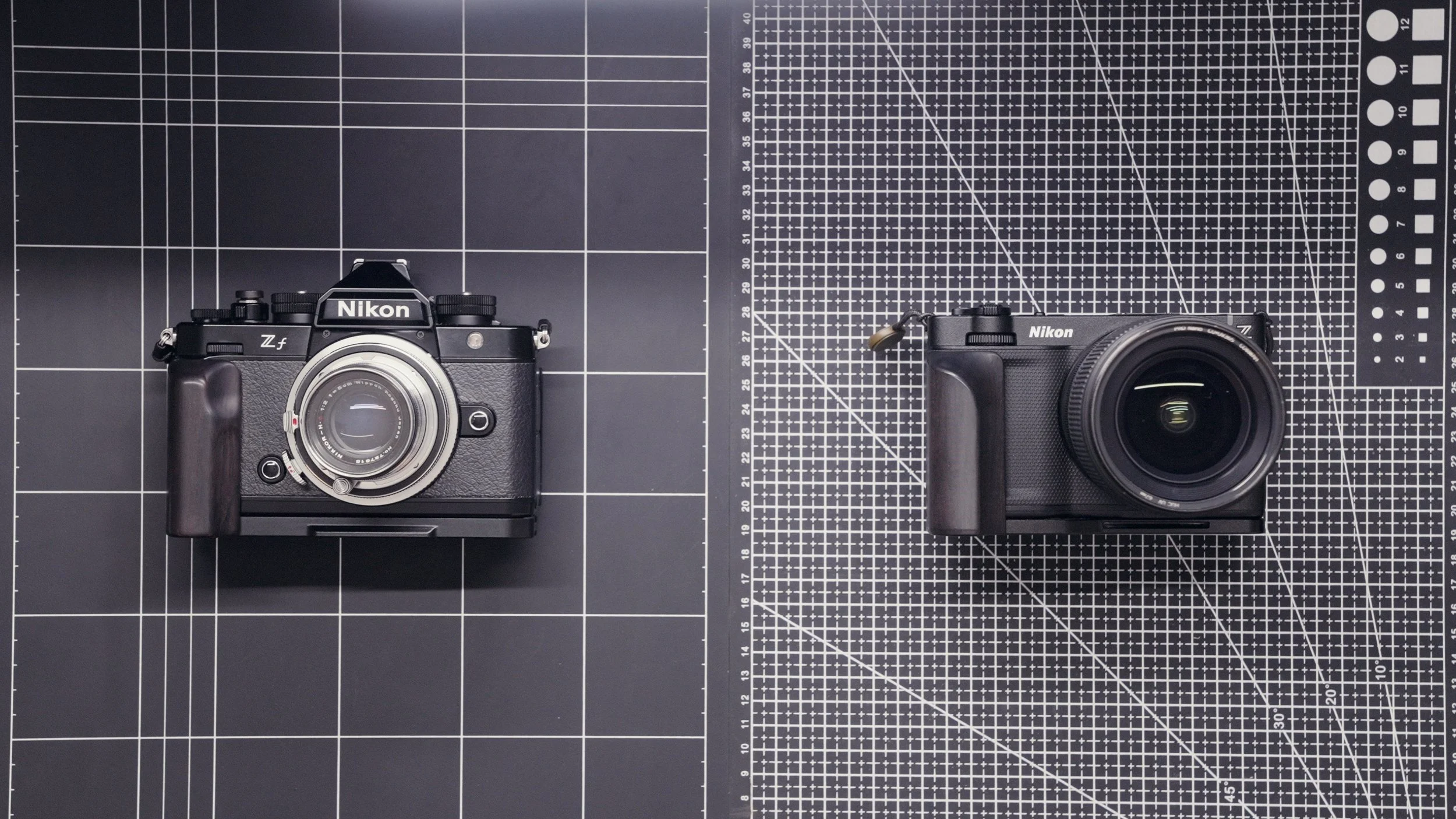
It's such a huge part of my life, I like to know that's the case for you, too.
Having a good looking camera and a tiny vintage lens is a great icebreaker, which is why I brought the ZF out to those night markets.
An easy conversation starter to introduce these new colleagues to what makes me, me.
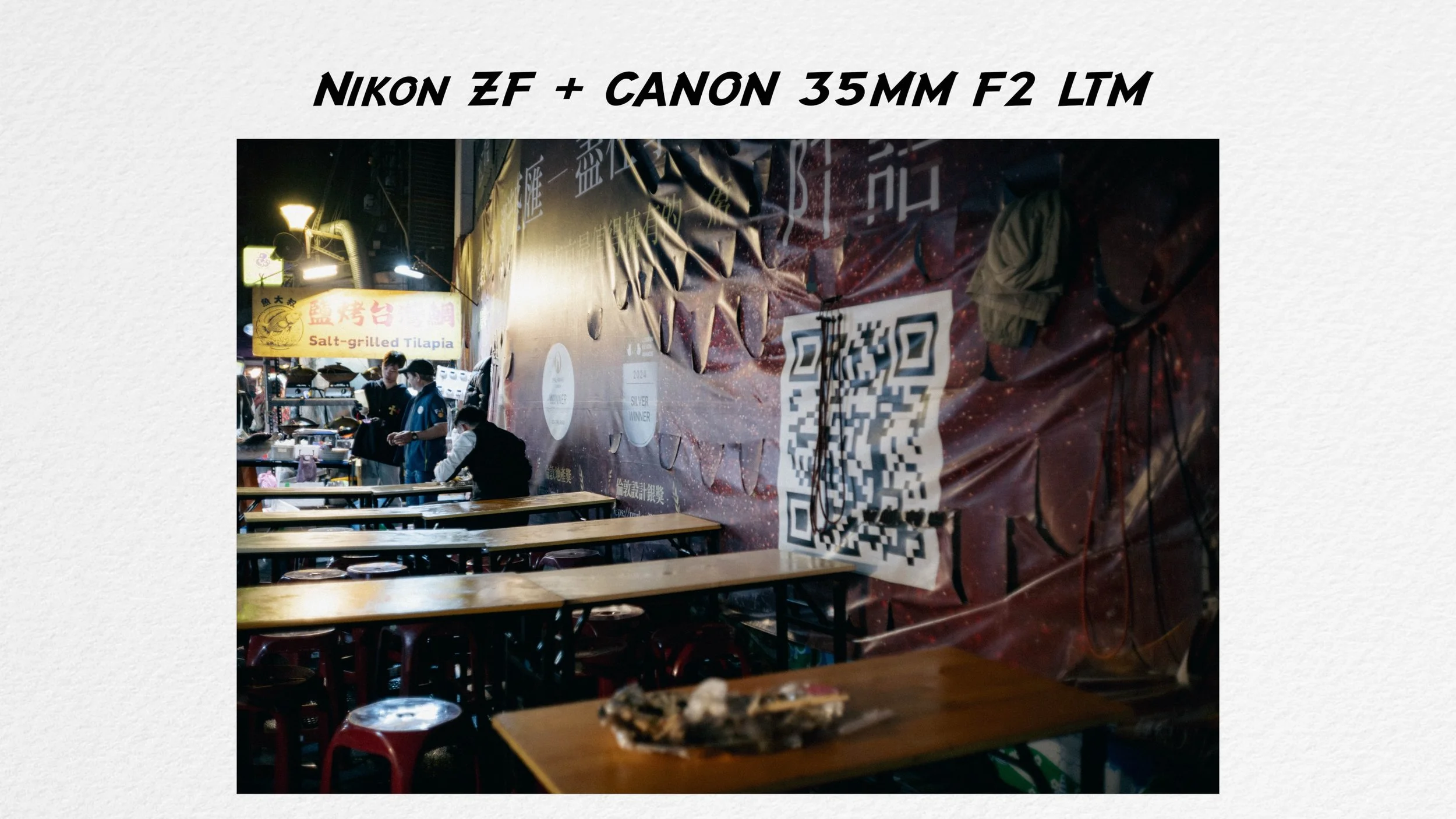
Even after the work portion of the day, these crazy 24 hours is over. How I relax is to once again, hit the streets.
This time with vintage lens 3, in Xinyi district.
The heart of modern commercial and finance industries in Taiwan. Wide open roads, huge storefronts, skyscrapers all around me, (including their famous 101 that Alex Honnold climbed).
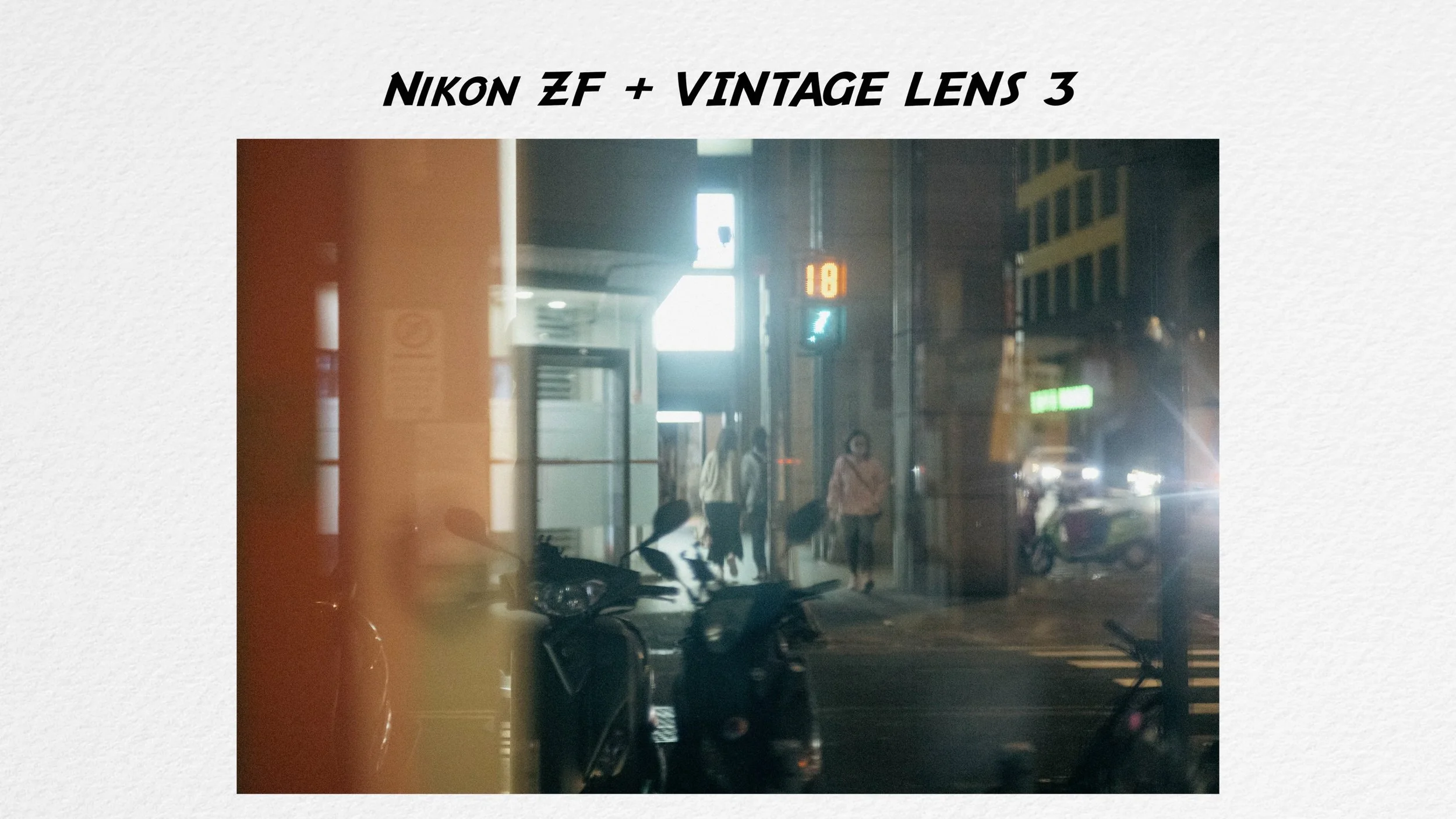
What's more interesting to me: where the locals go after hours in this rich financial district?
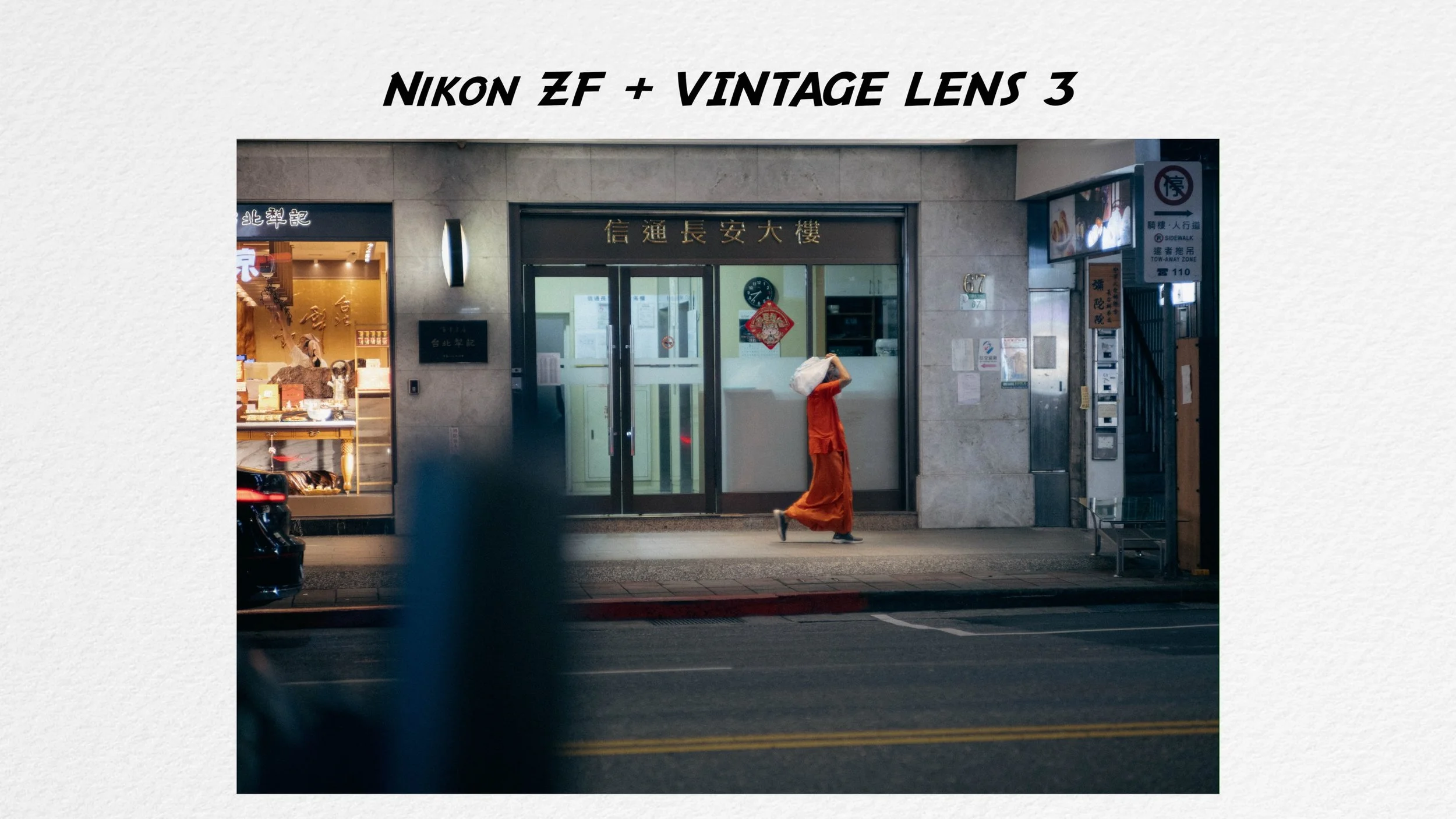
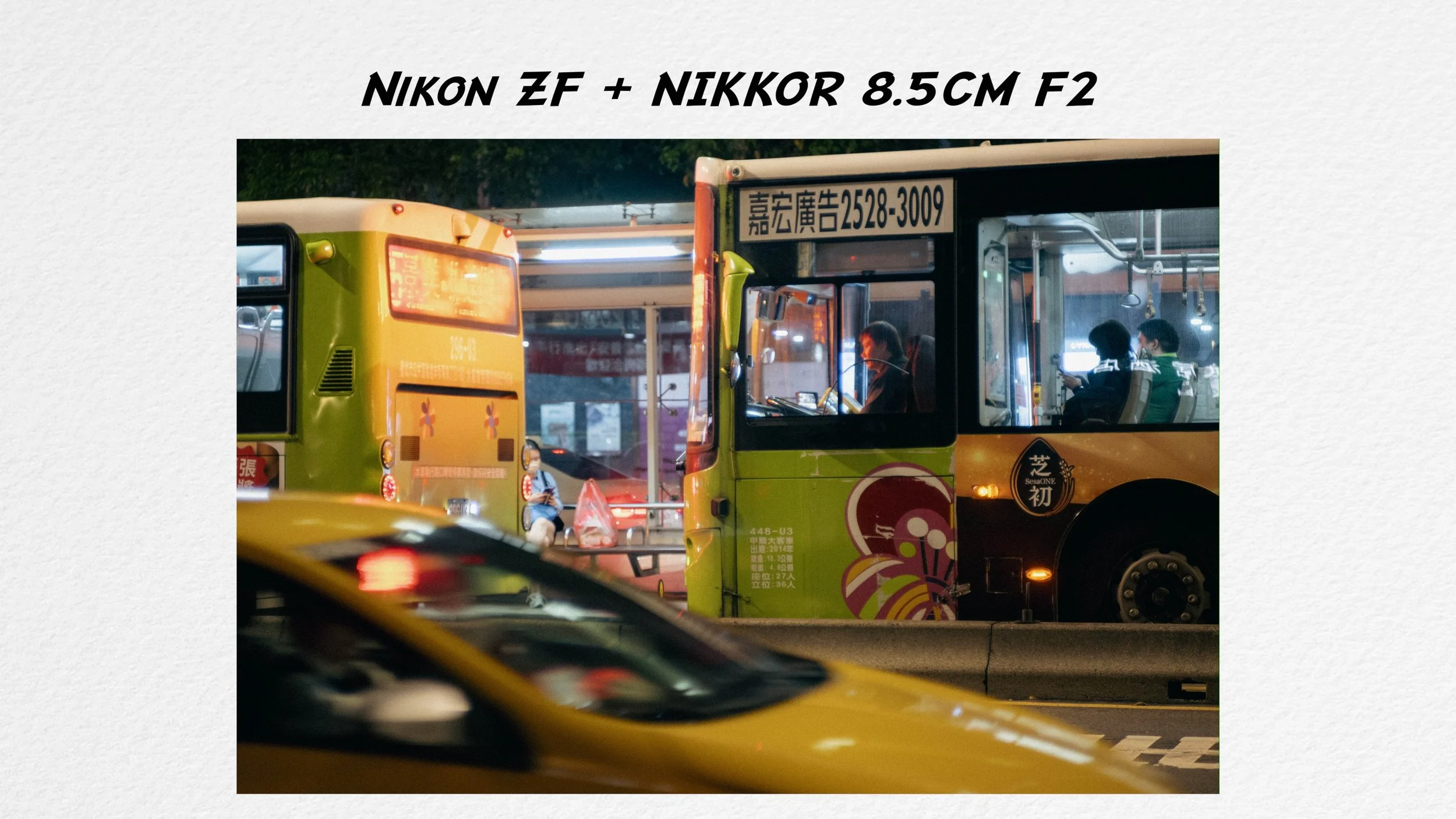
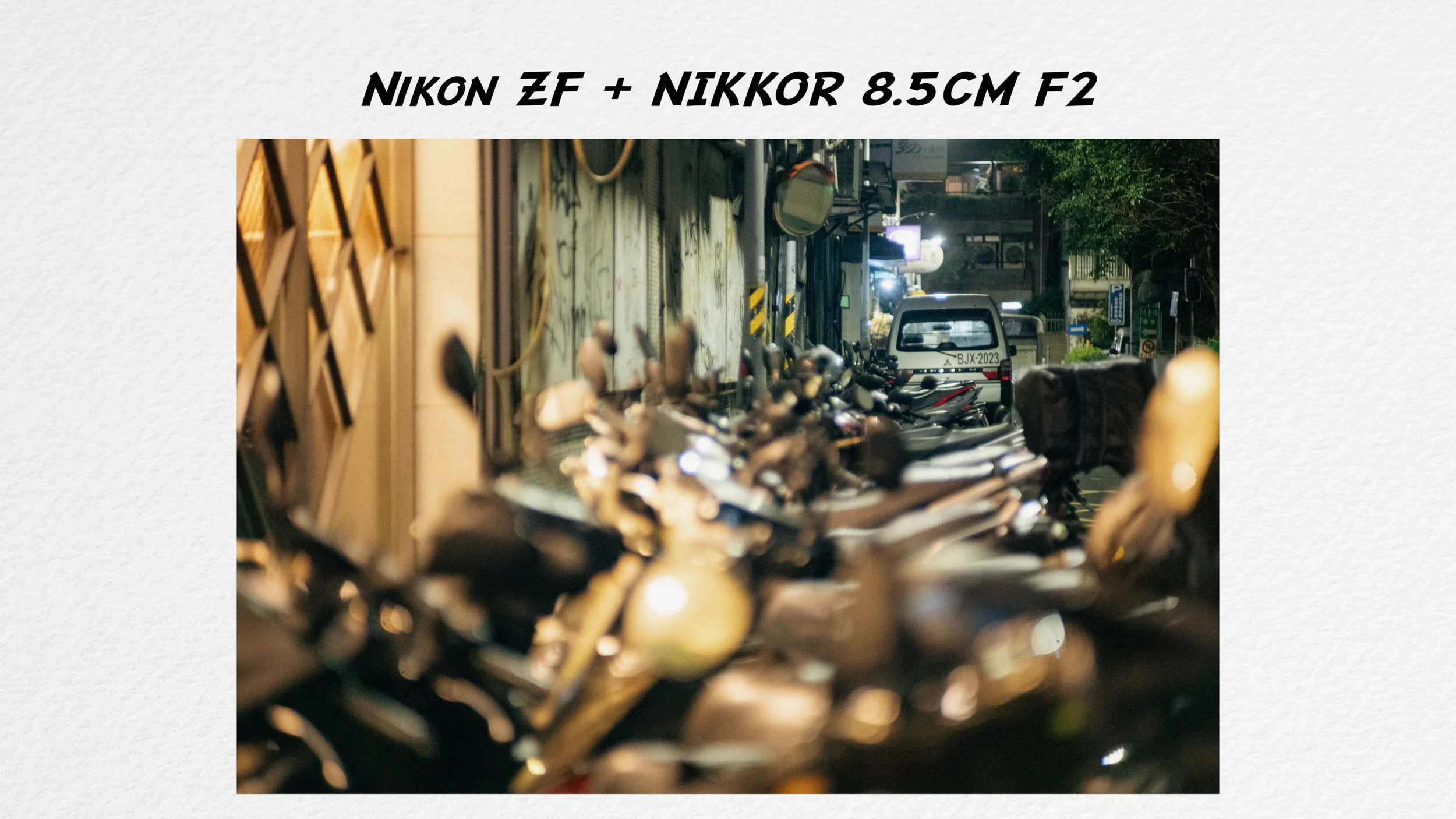
A hint of rain, diffracted lamps and closing restaurants pair especially well with vintage optics.
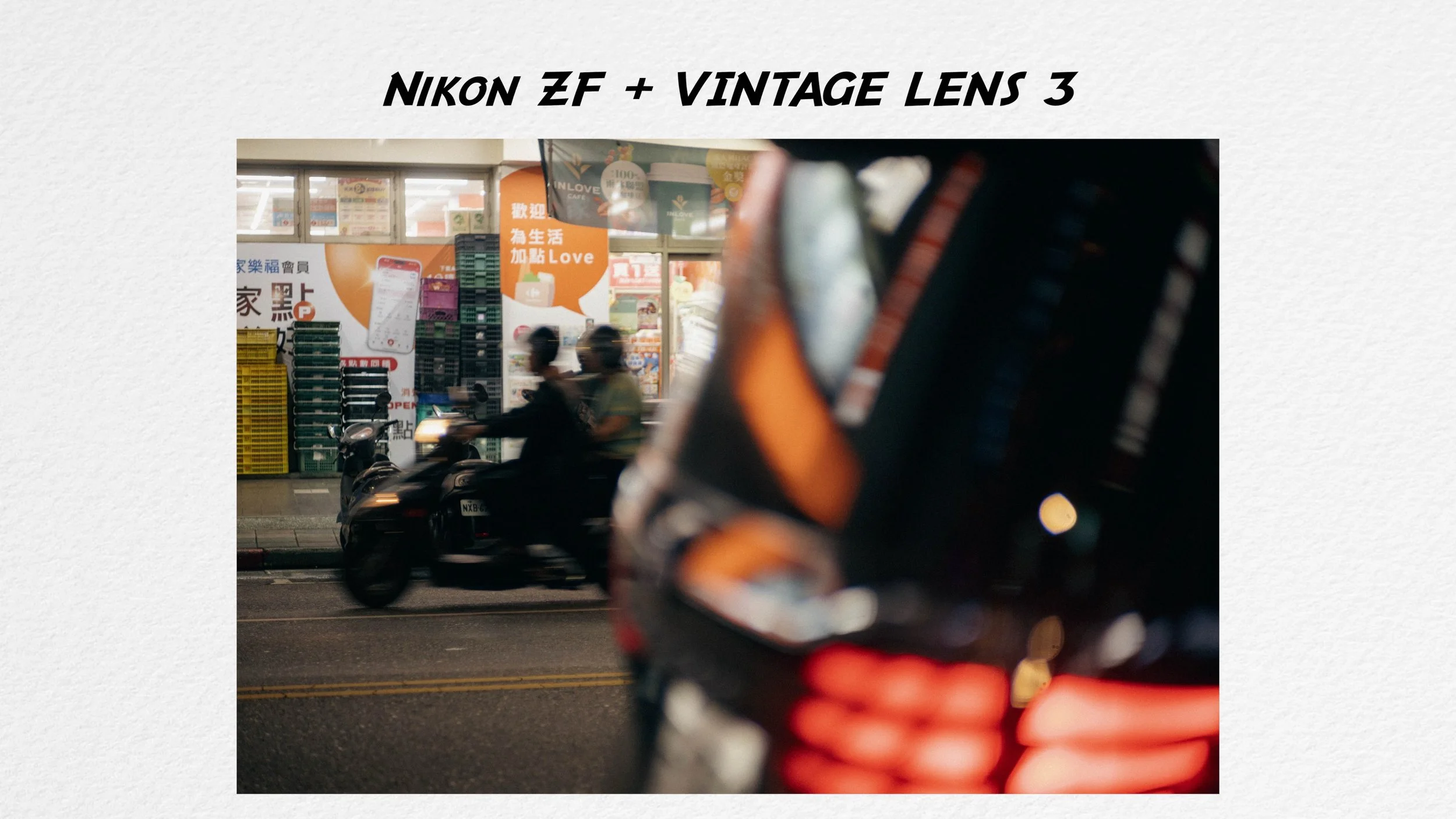
Vintage lens 3 is the Nikkor 8.5 cm f2. A lens with incredible history.
It brought Japanese optics to the world. The lens David Duncan Douglas was shocked enough by to demand a visit to Nikon's factories. He switched from Leica to Nikon, and the rest is history.
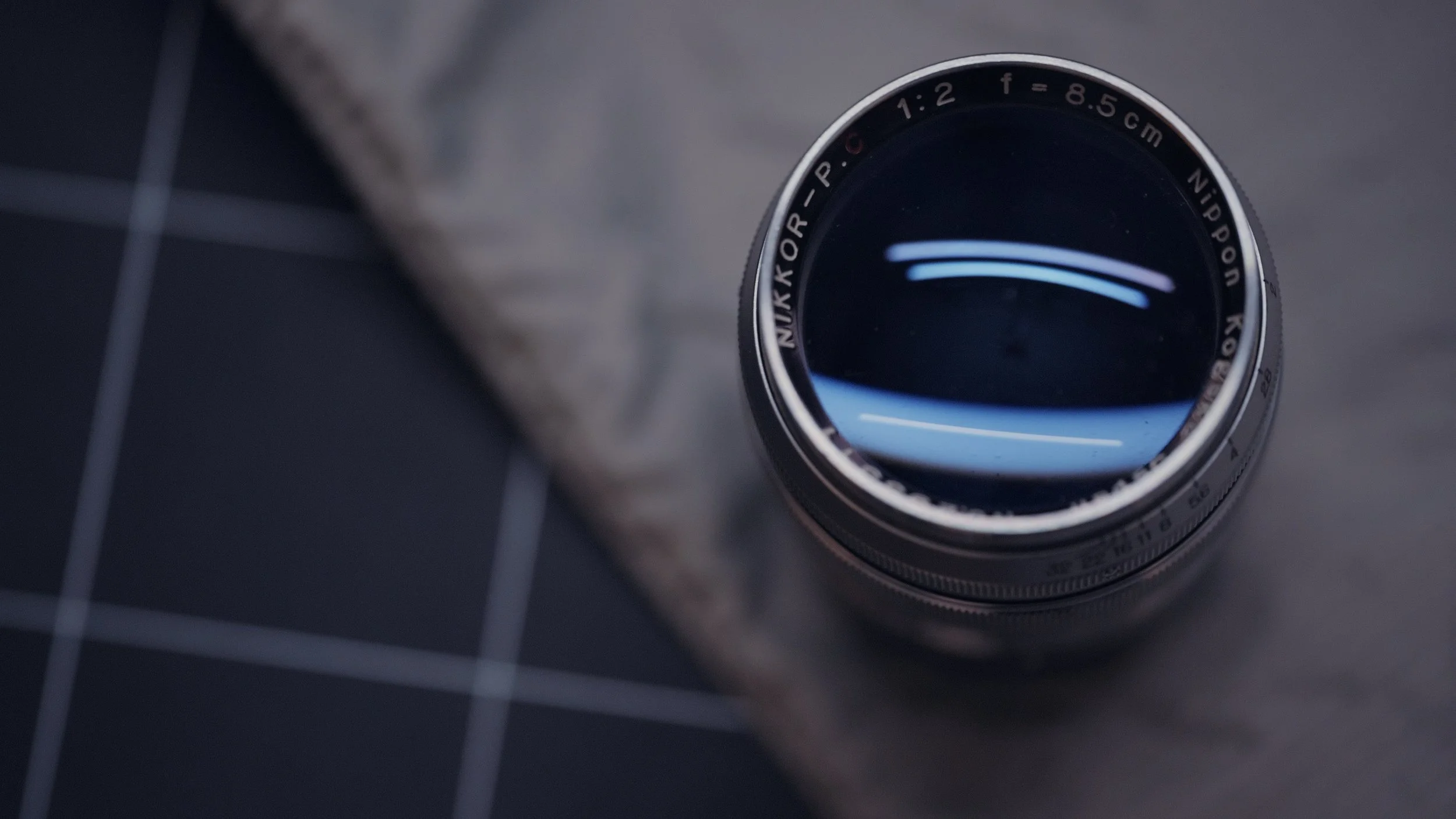
It's so old, I couldn't find a front filter for it? It has a weird size and filter thread pitch. I found this old Canon filter that fit ina junk shop at the back alleys of Nakano in Tokyo. A vintage lens on modern streets does all the heavy lifting.
It brings out a texture that's always been there, but not so easy to see.
Which is why the ZF, together with its retro shell and EVF, is the one I keep reaching for while traveling. Even though it's heavy, much less versatile for my work, in almost all my travel use cases, the ZR could and should have been my pick.
But the stories, old and new, are why I keep coming back to photography. Having an EVF, along with that manual lens focus haptic feel, helps me feel more connected.
I get it, if you don't like retro cameras. Many think they’re just for hipsters and ”posers”. But whatever brings more people in is a win to me. I'm hoping more cameras come out that get non-photographers excited about this hobby.
Hopefully, the Nikon rumors are true, and a photo-centric ZR is on its way. I'll preorder it in a heartbeat. But for now, the ZF is what I'd use for work and fun if I can only have one.
Talk soon,
Jack.
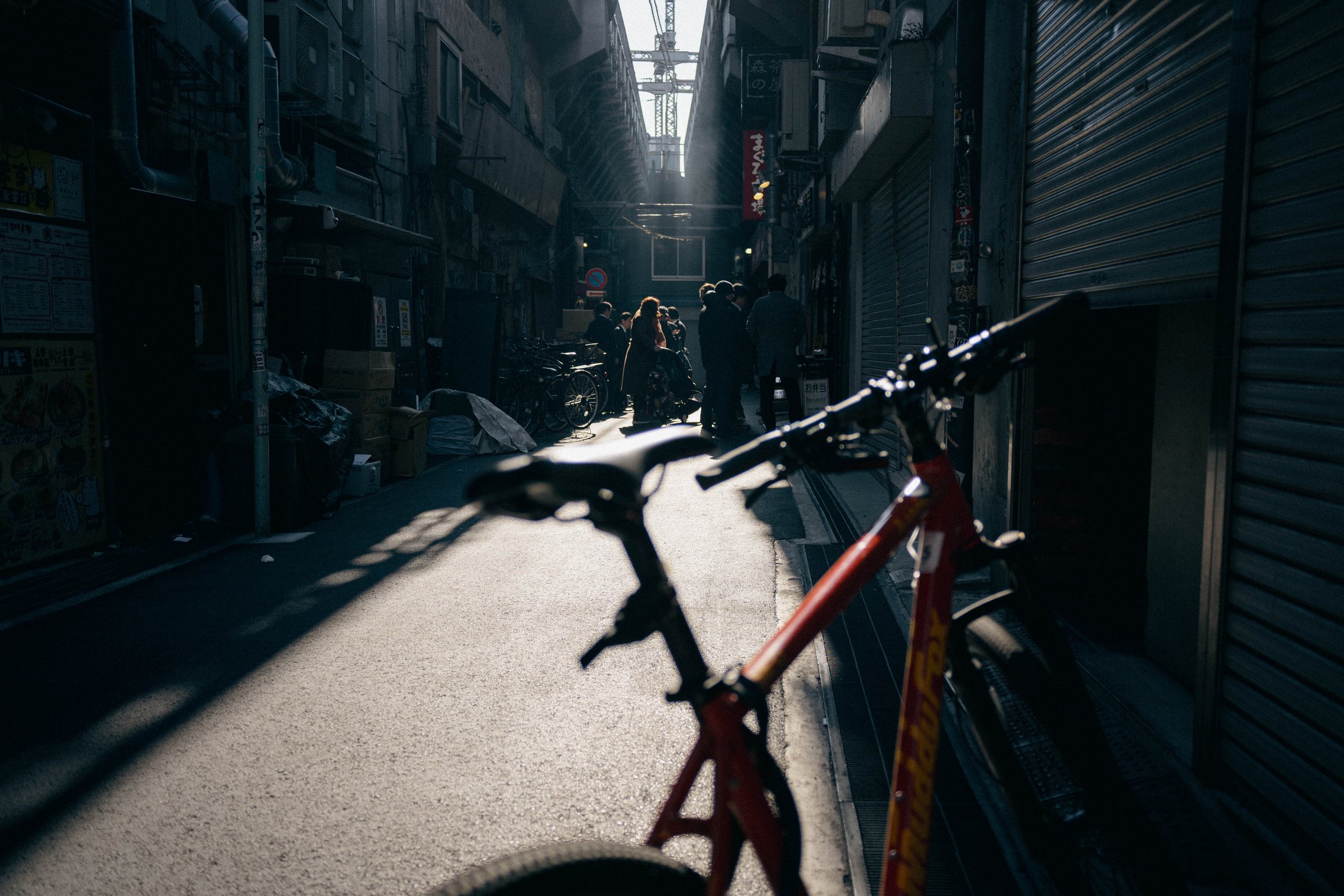
All my sample images in this blog post were edited from RAW files using my free Chrome emulation preset. They work with most RAW files from different cameras as long as you use “Adobe Color” as the starting base. Download it for free here.
If you’d like to support my work please consider purchasing gear through my affiliate links:
Tenba Fulton 14L backpack: https://geni.us/tenbafulton
Nikon Zf: https://geni.us/YOH8bh7
Nikon ZR: https://geni.us/KH4uMvX
ZR wooden grip: https://geni.us/ZR-wood-grip
Nikkor 17-28mm f2.8: https://geni.us/MnNbu
Wotancraft Messenger bag: https://geni.us/wotancraft-salt-pepper
Wotancraft leather strap: https://geni.us/wotancraft-leather-st