Nikon ZR: The Full Frame GR?
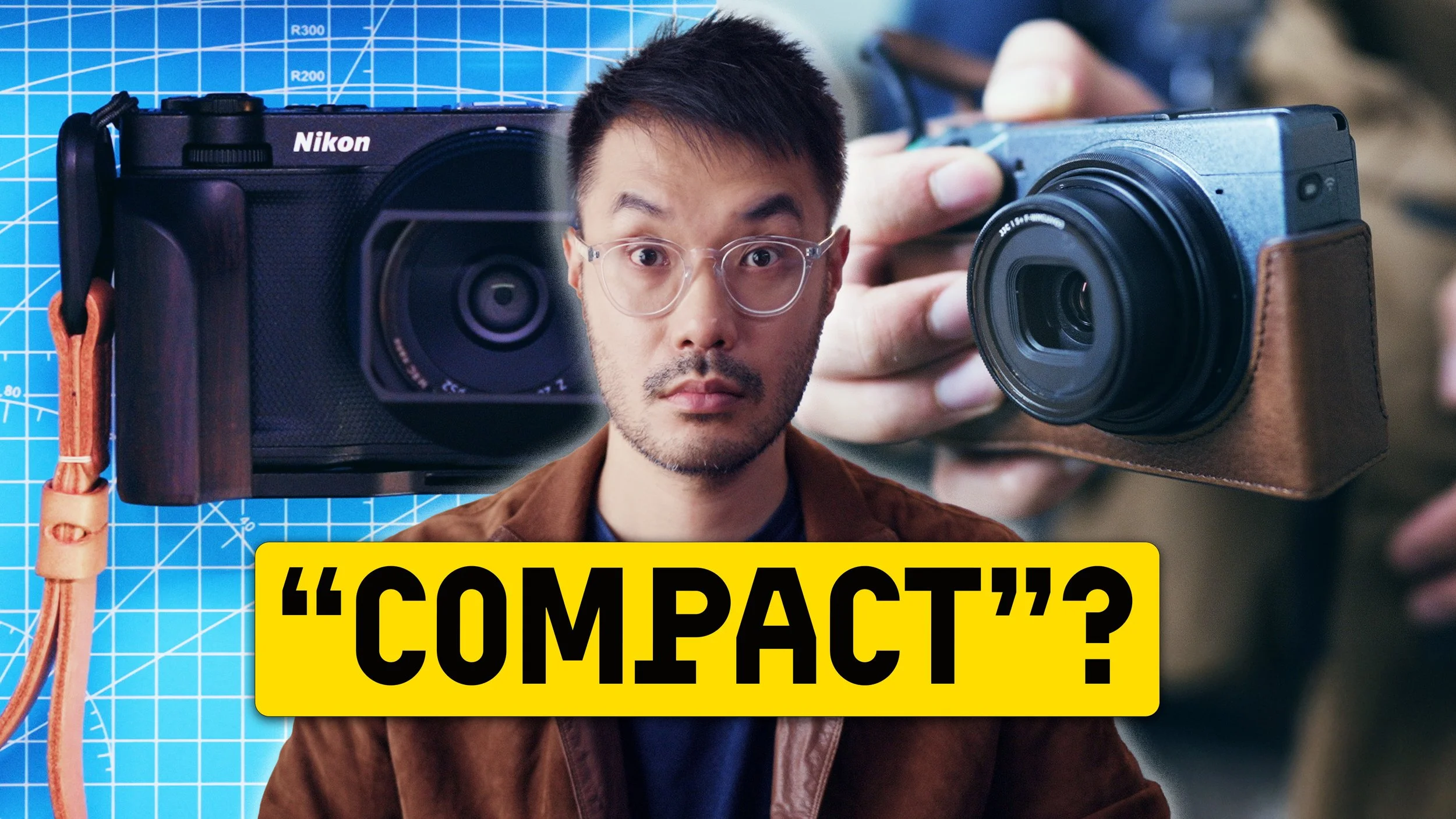
For the past month I’ve been trying to make the ZR my Ricoh GR:
Combo of 28mm and 40mm lenses? GRIII and GRIIIX
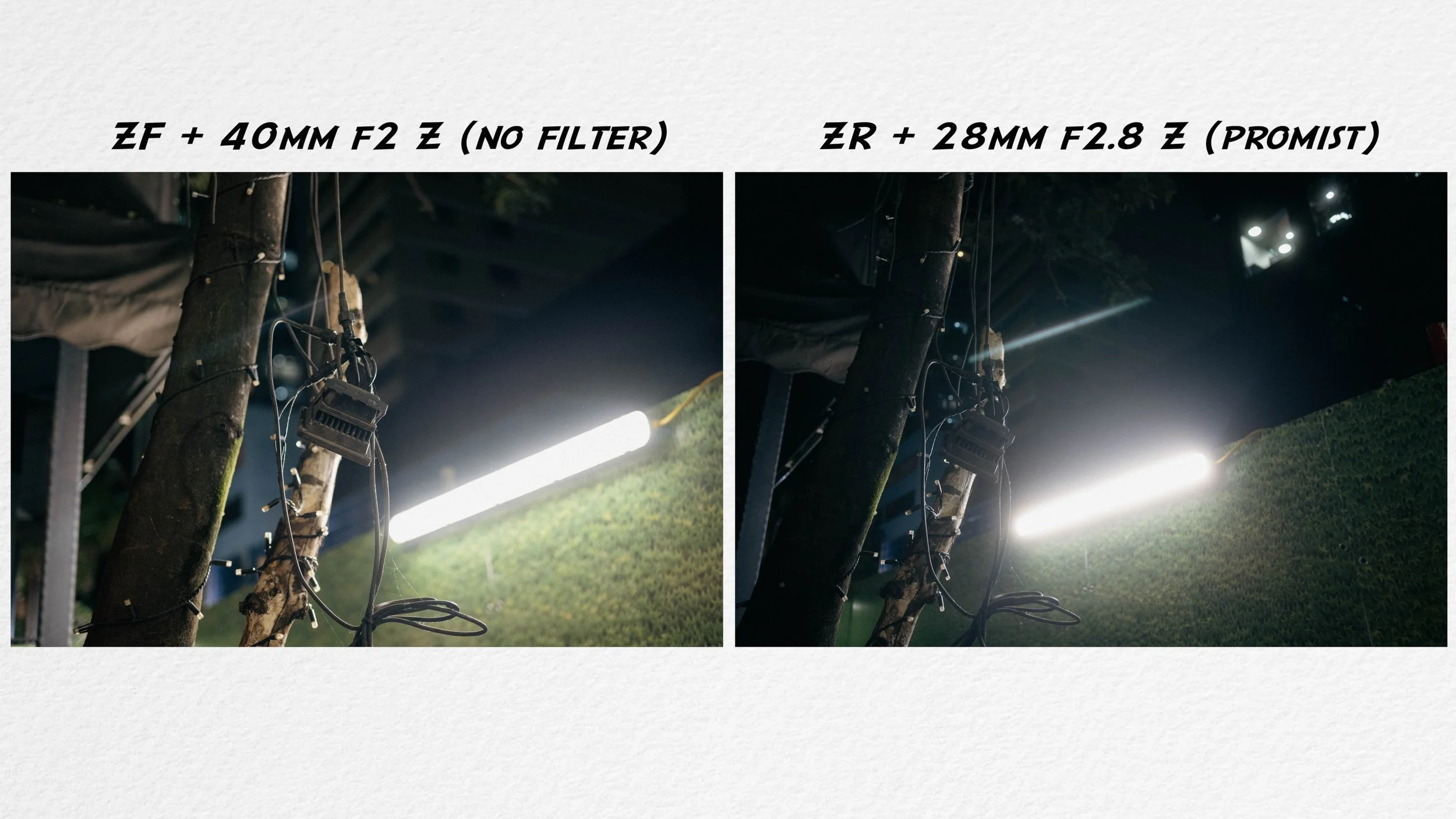
Promist filter? Like the HDF
I even went to a GR gallery to check?
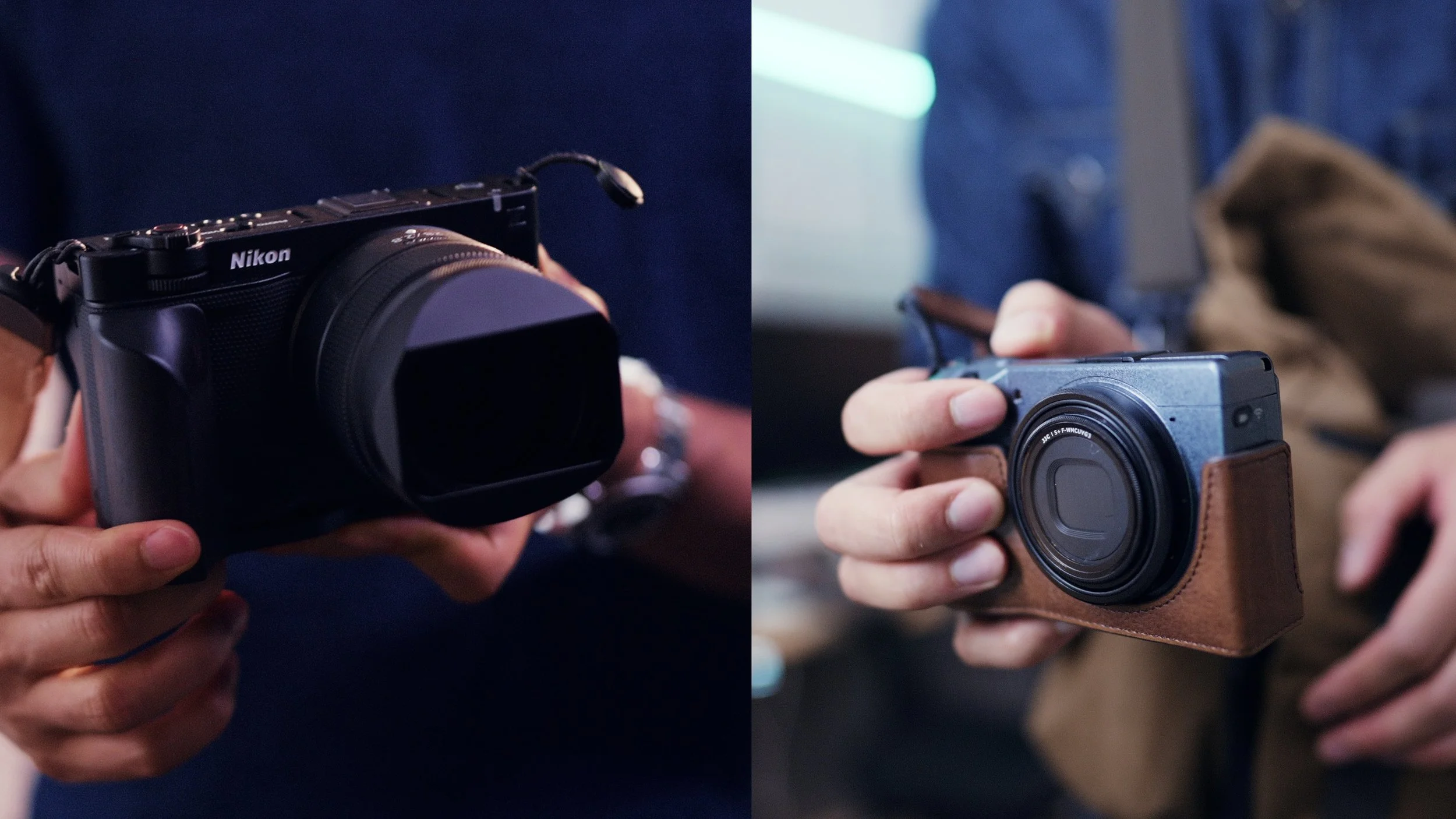
Despite its overspec’ed internals, the ZR - like the GR - forces you to keep it simple.
It even has “snap focus” (sort of).
The simplest ideas are the hardest to get right, and the ZR changed how I compose cross 3 photography scenarios. Turns out the ZR’s much more than a full-frame GR.
It’s good enough (for me) to replace two of my other cameras.
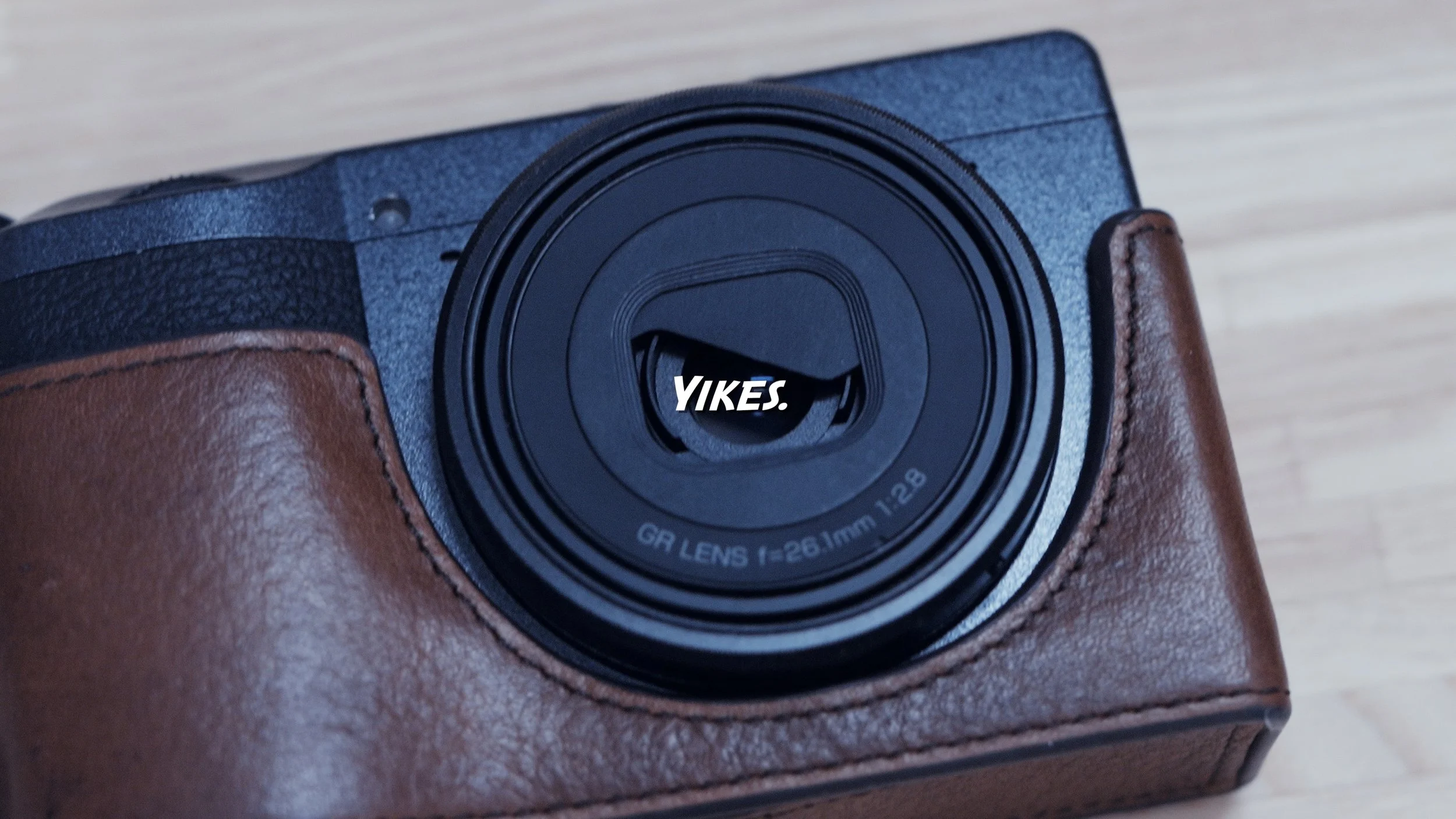
As a street photographer I’m not allowed to say this: I’ve never gotten along with the Ricoh GR.
I don’t own one any more, my GRIIIX was fun while it lasted (the front lens element literally snapped off), I don’t need a GRIV, I just prefer bigger cameras?
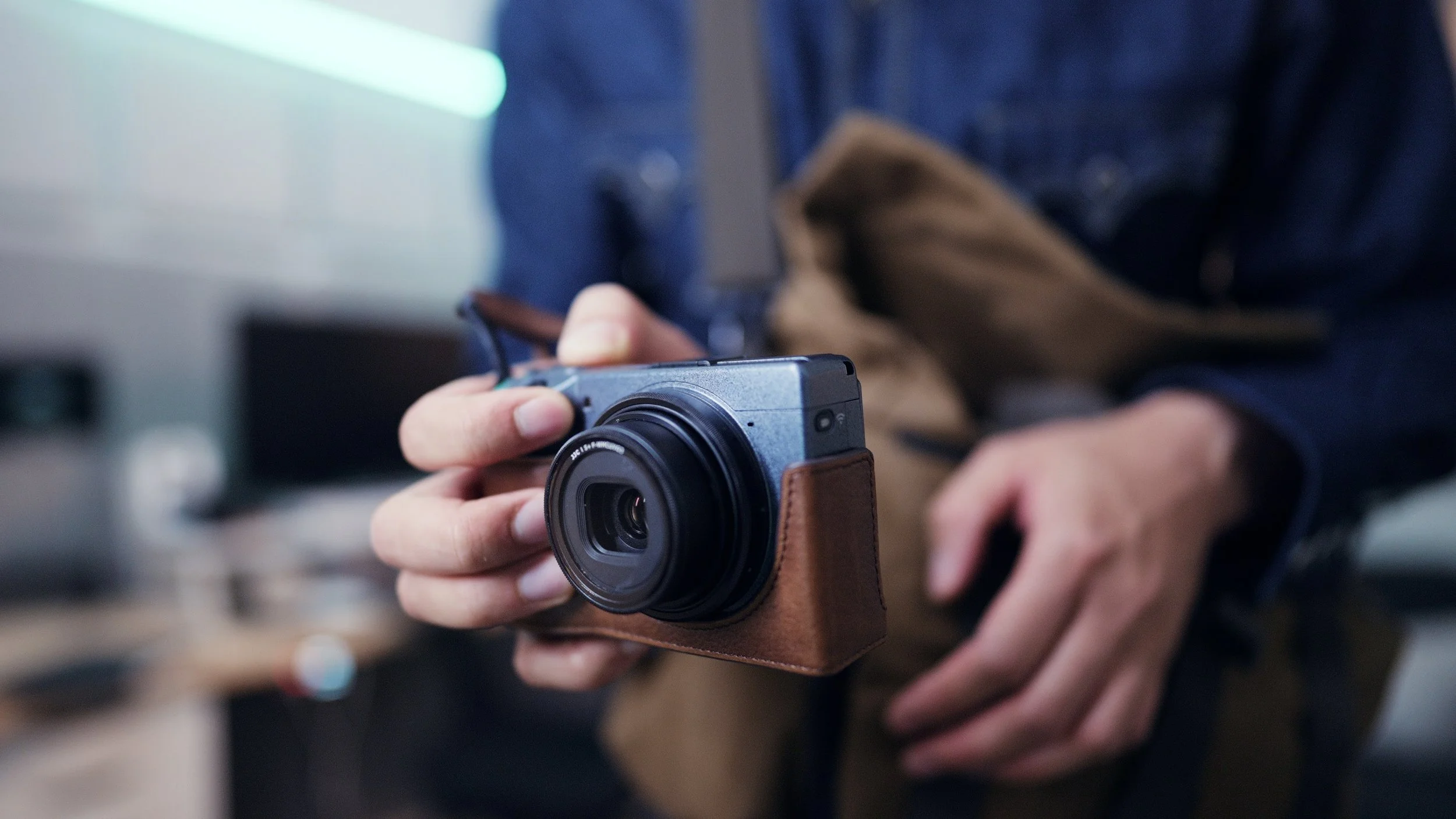
The full frame Z8, Zf. Even my crop sensor OM3, XT5 - all feel more substantial? Everyone else loves the GR - but after my first ZR photowalk I knew this is what I was missing. The ZR paired with the 28 2.8 Z, 1/8 strength Promist for that HDF look, a tight and dense full-frame package.
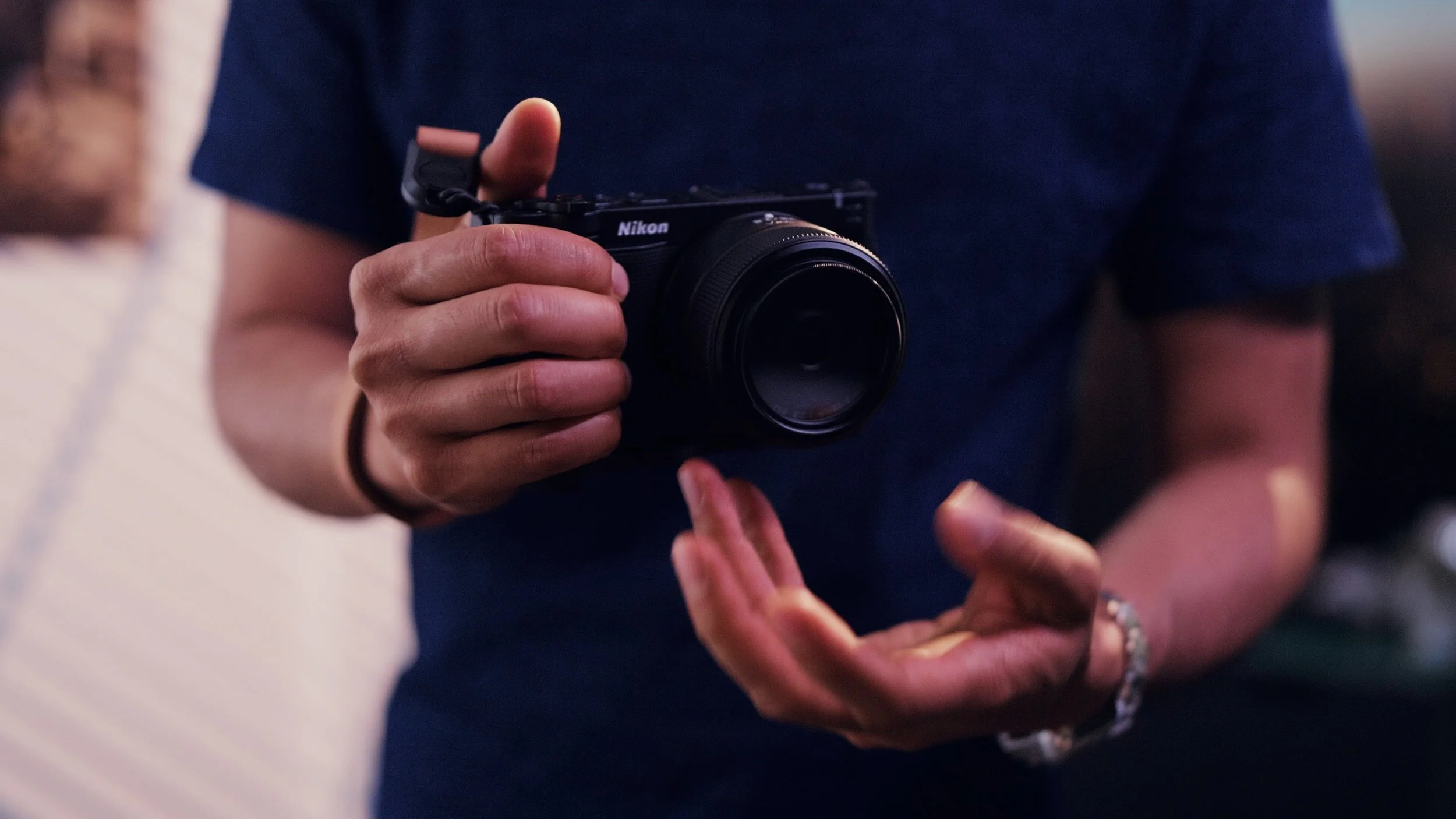
A full frame compact camera sounds simple enough, the Panasonic S9 and Sigma BF both tried, but Nikon’s the first to put a partially stacked sensor in a body this size.
***
The simplest ideas are the hardest to get right.
Just like this photo (my second favourite) from Martin Parr
A perfect cup of English tea.
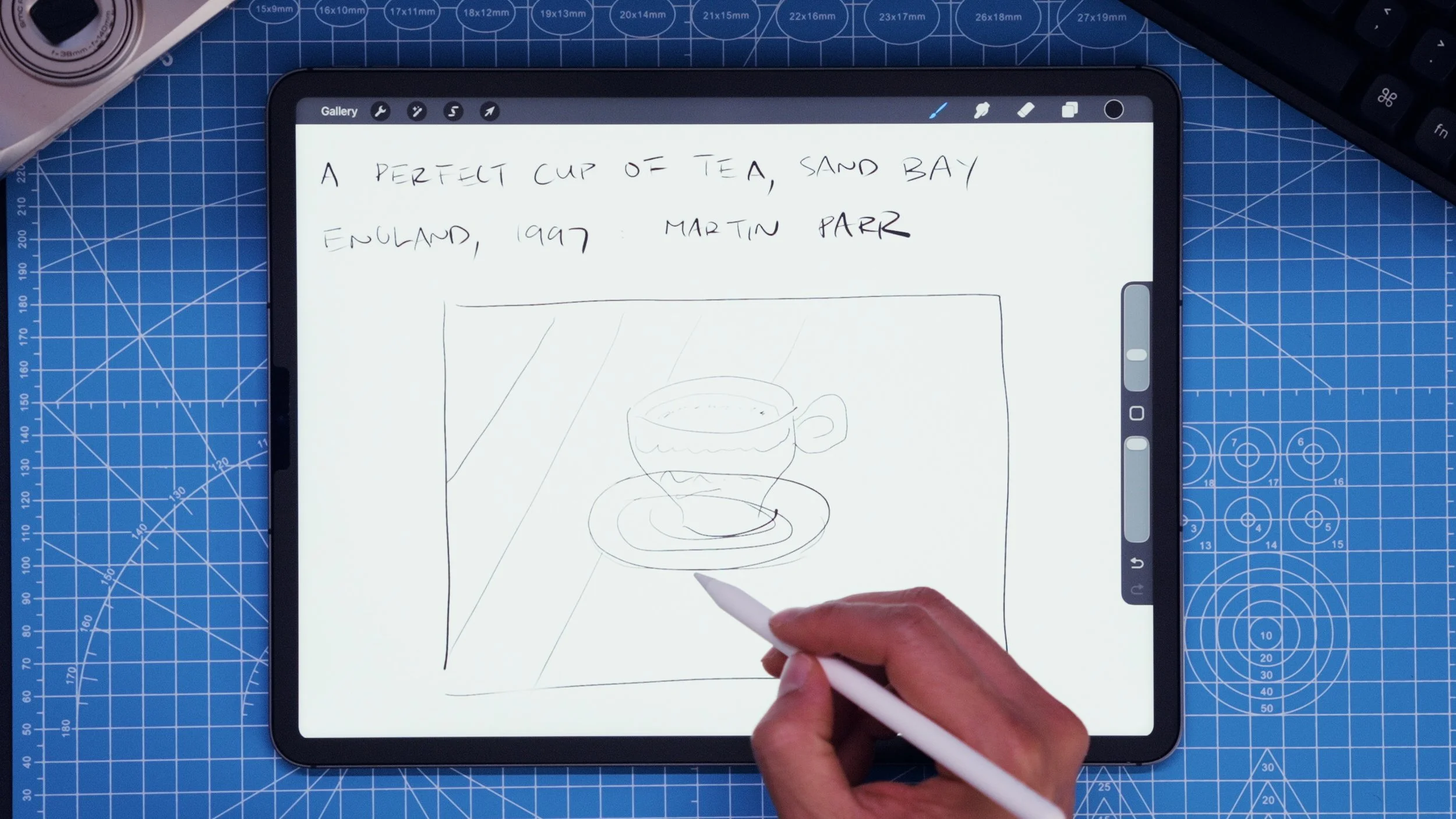
Wedgewood cup and saucer, red gingham table cloth.
A strong cuppa with a dash of milk and social commentary.
The fact Parr took the time to get the perfect framing and lighting.
For a humble cup of tea is revealing.
What’s simple isn’t easy.
***
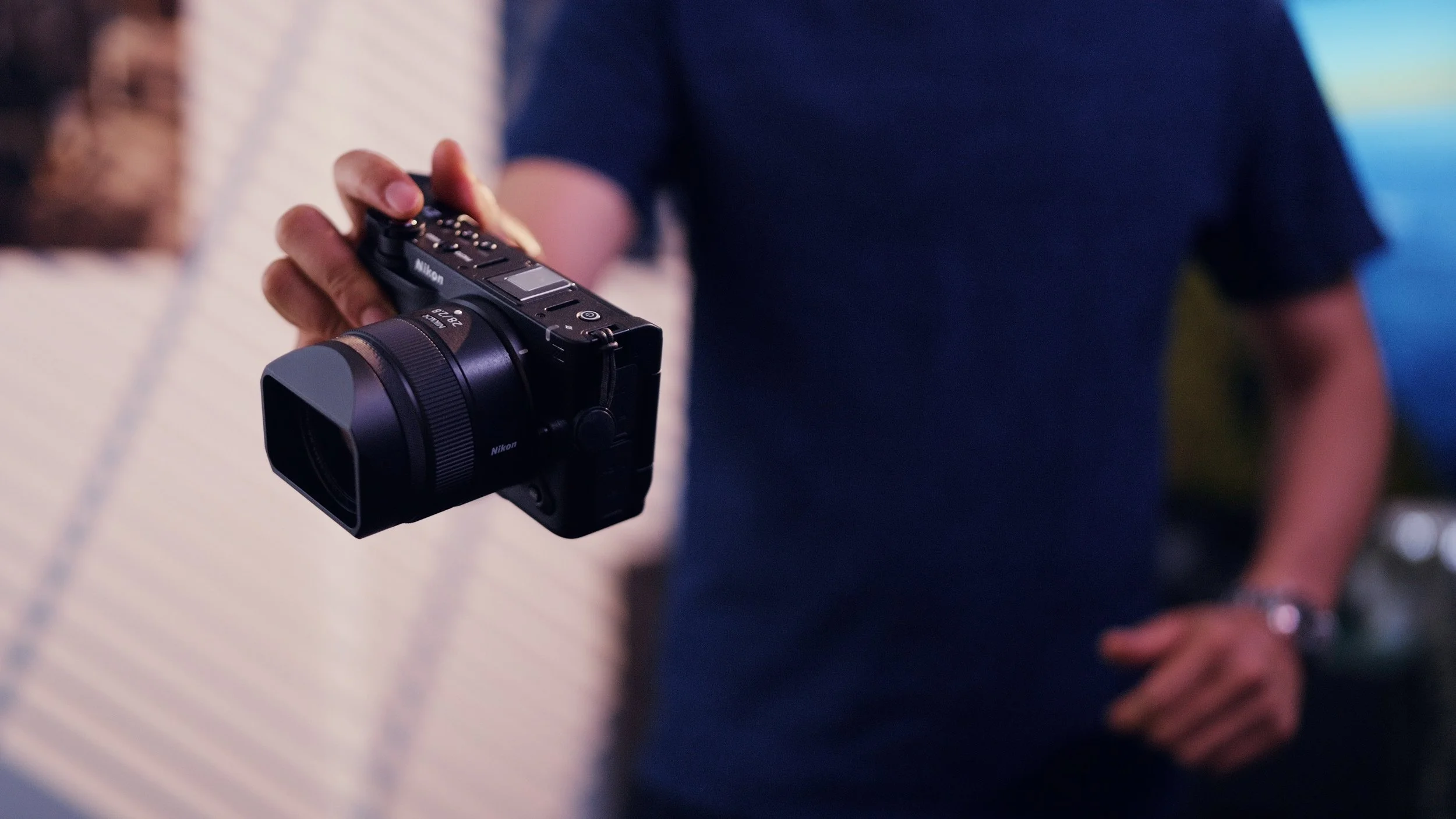
1. Ergonomics
Simplicity lies at the heart of compact cameras, but designing the GR can’t be easy.
There are so many moving parts to deliver advanced features in such a small package, but its main critique has always been build quality. The retractable lens sucks dust onto the sensor, whereas the ZR is weather-resistant, if not weather sealed. With interchangeable lenses you can clean the sensor easily. no such option on the GR. But all these tradeoffs are worth it for the GR’s size and it has a super fast startup time.
Thankfully the ZR is very responsive, starts up in less than a second, I haven’t yet accidentally bumped the power button to turn on or off the camera in the past month.
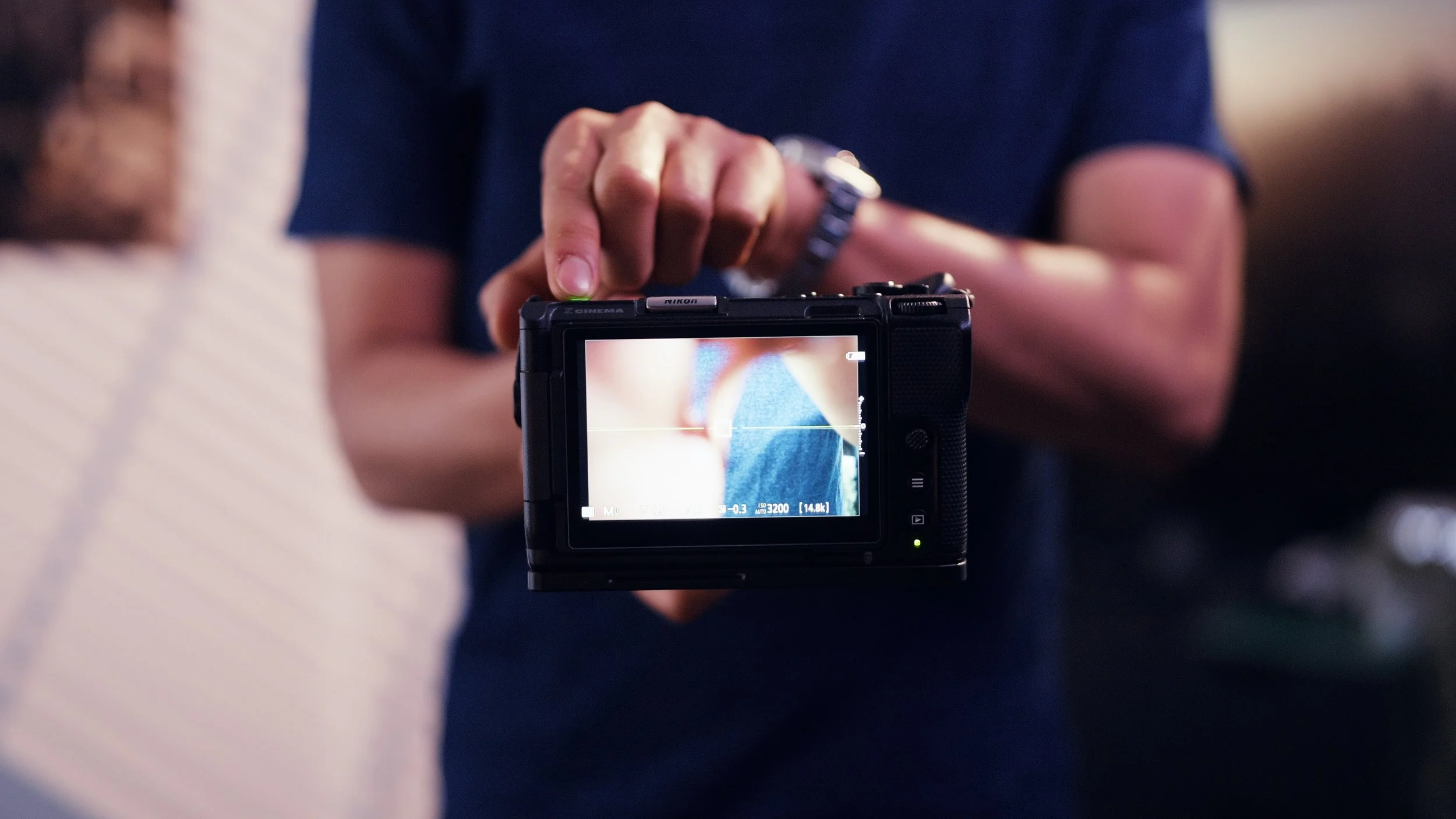
But early in my first ZR photowalk I realised its controls are too far to the right. So much of the back of the camera is taken up by the screen, so to adjust the front and rear command dials, joystick, top mode buttons, I have to stop and loosen my grip. It’s hard to shoot in manual mode on the go. Once you have your settings dialed in it’s fine on auto like a point and shoot - aperture priority, wide area autofocus tracking.
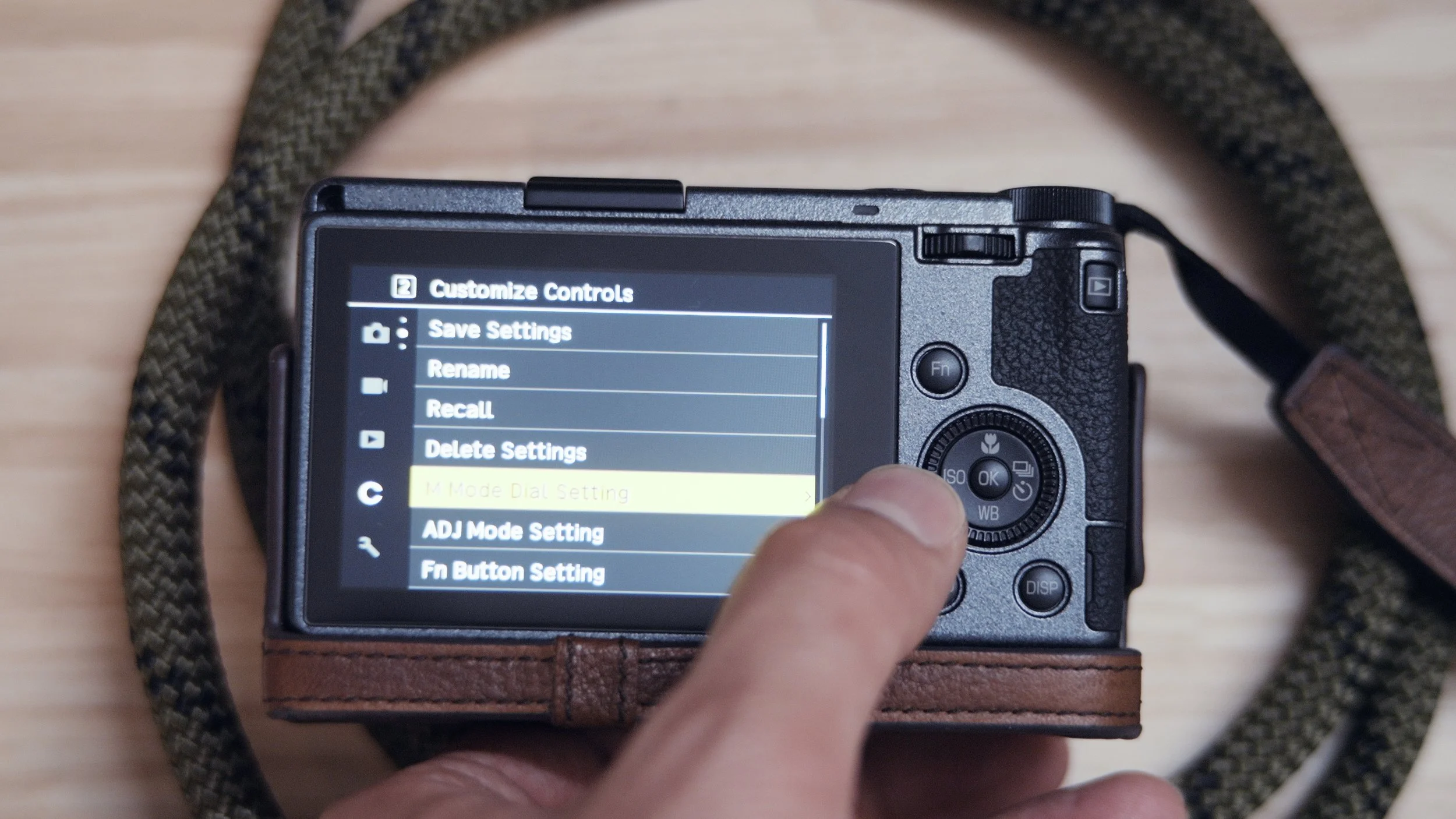
That’s where the GR has the ZR beat though - Ricoh calibrated the position of the dials, d-pad, and shutter perfectly across the camera’s limited real estate. This brings us to the first way the ZR changed my composition:
2. That (Massive) Screen
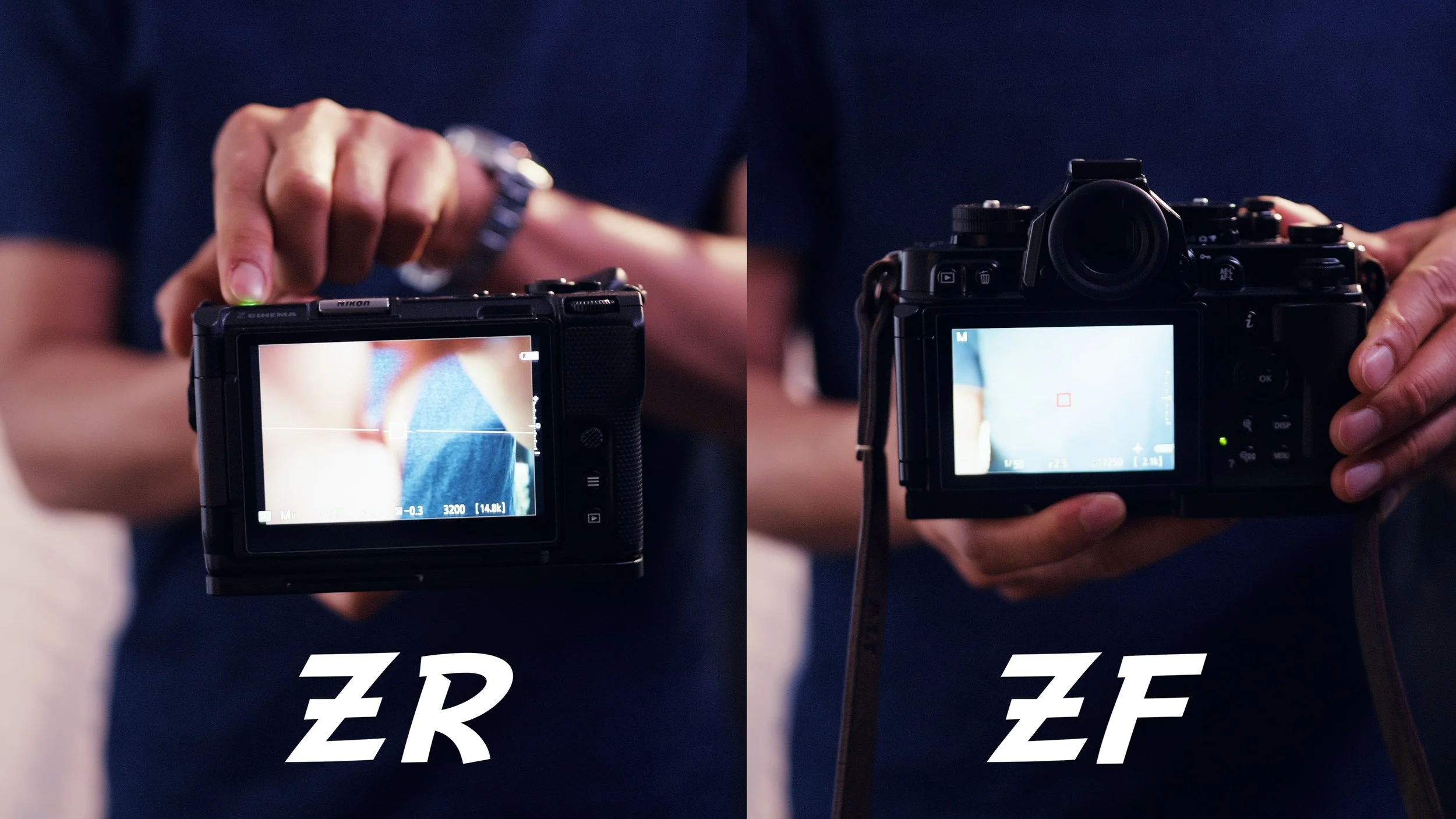
Just looking at the screen to compose, when the camera’s on a wrist strap? I can hold the camera much further away from my body. There’s more freedom of movement on a wrist strap versus a neckstrap, I can get a step closer without moving my feet. This is especially useful on a 28 mm field of view - a quick flick of the wrist closes the gap to get closer to that 35 mm perspective. Easier to fill the frame compared to using the viewfinder alone.
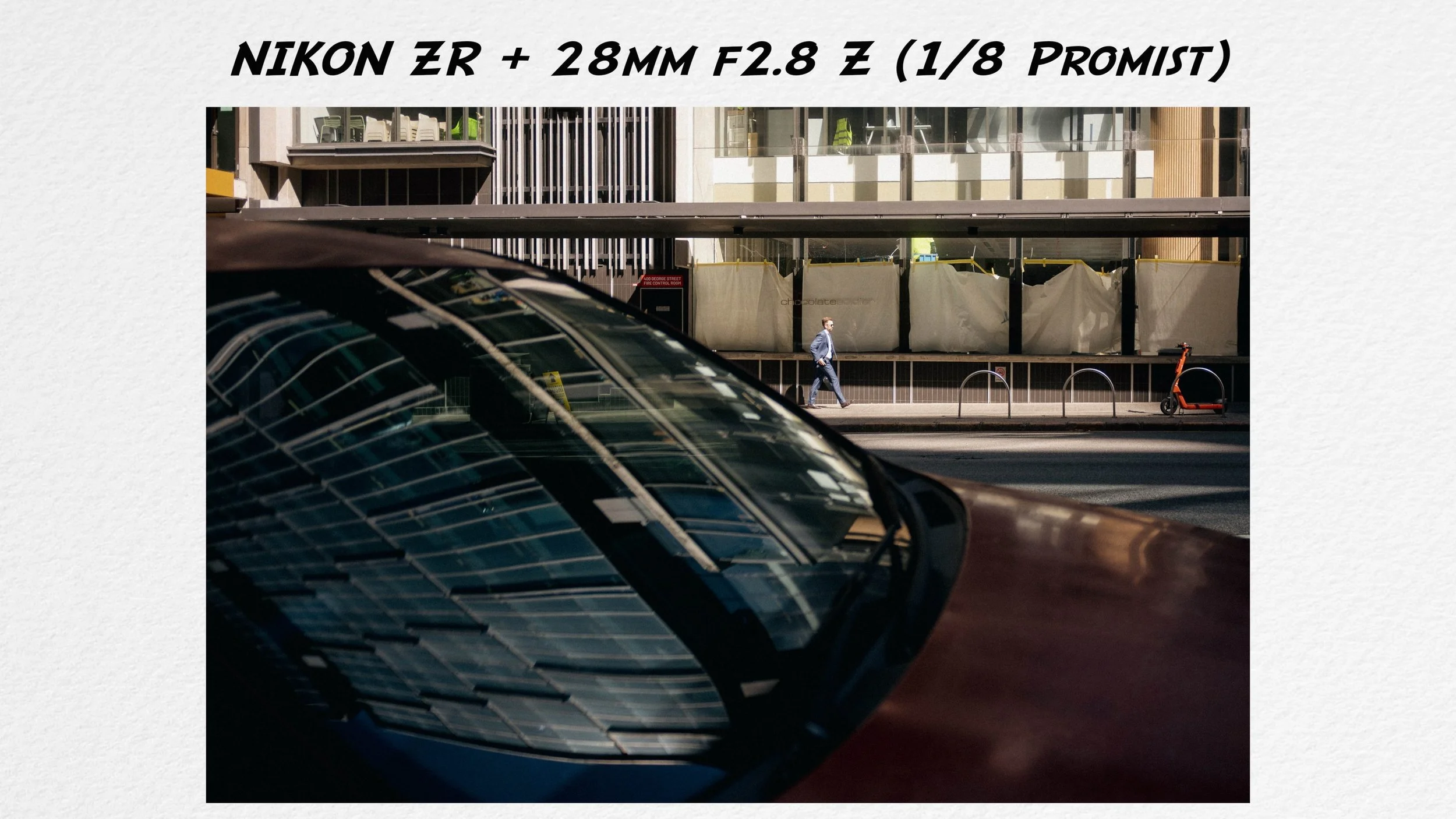
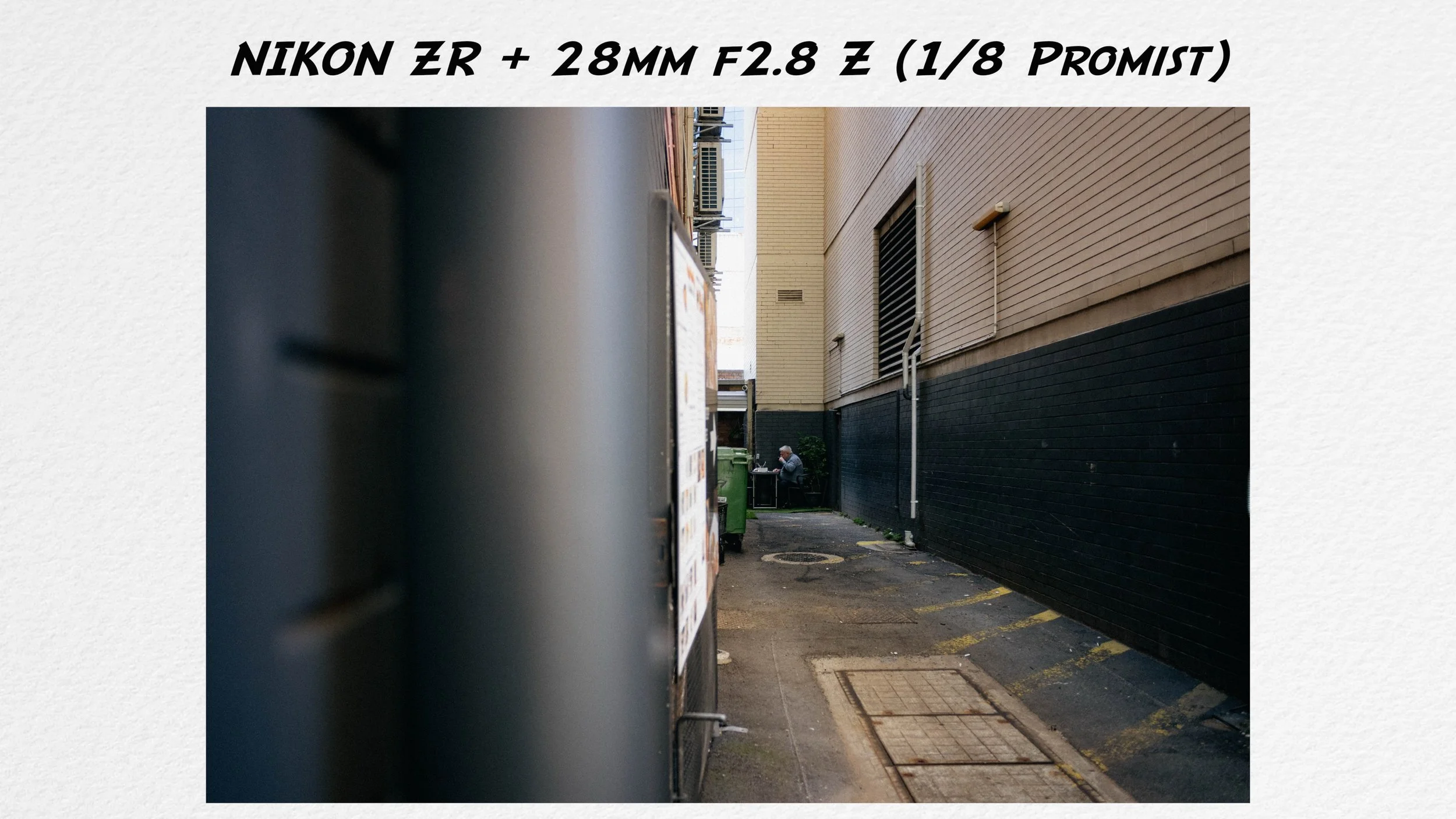
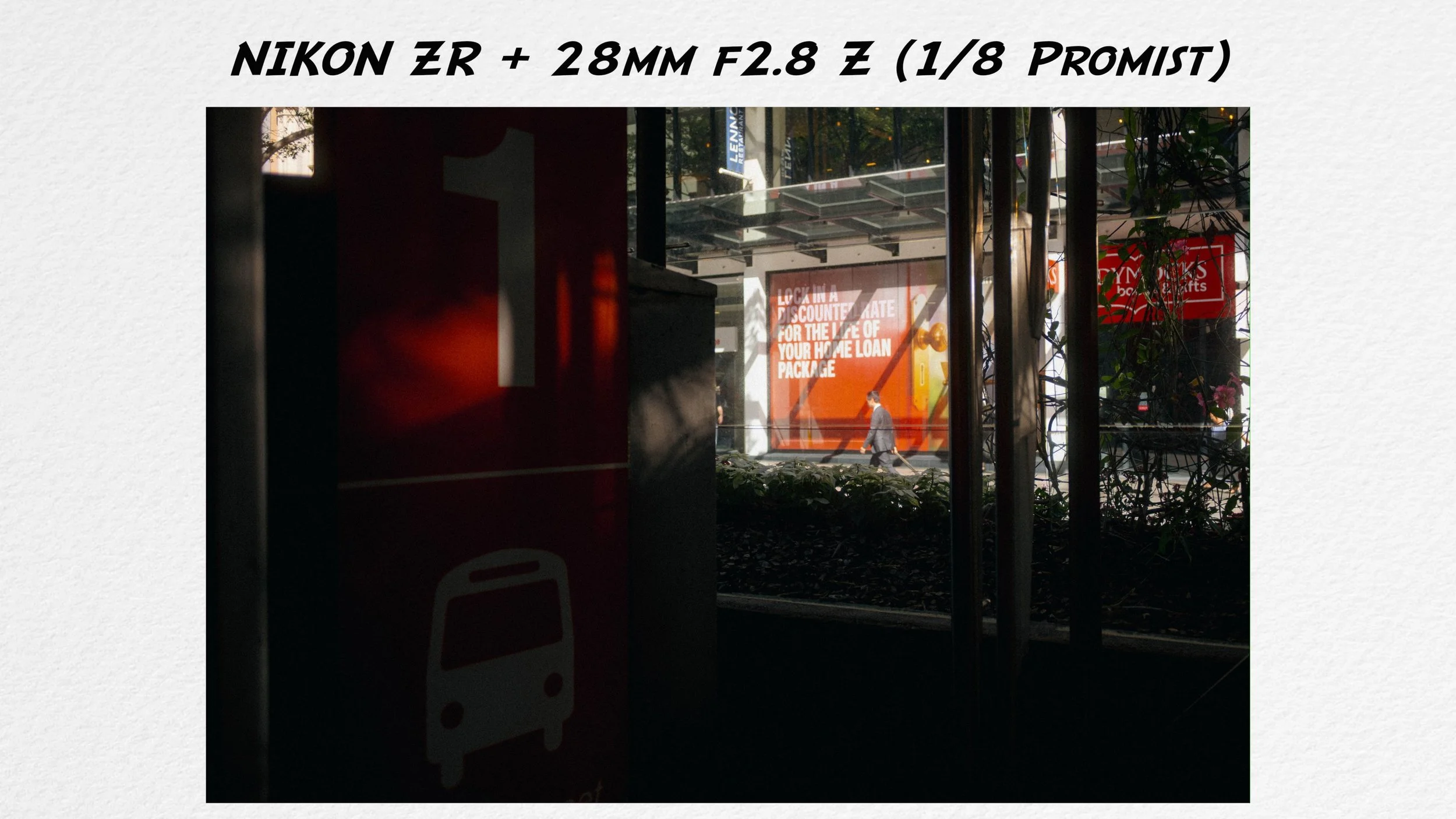
All the photos in this post were edited using my chrome emulation or black and white Lightroom presets. They work with most RAW files from different cameras as long as you use “Adobe Color” as the starting base. Download them for free below:
This is easy to do on a lightweight GRIII, how about the ZR? Though the right-side controls are a bit hard to grasp on the ZR, I improved the ergonomics with this wooden handgrip.
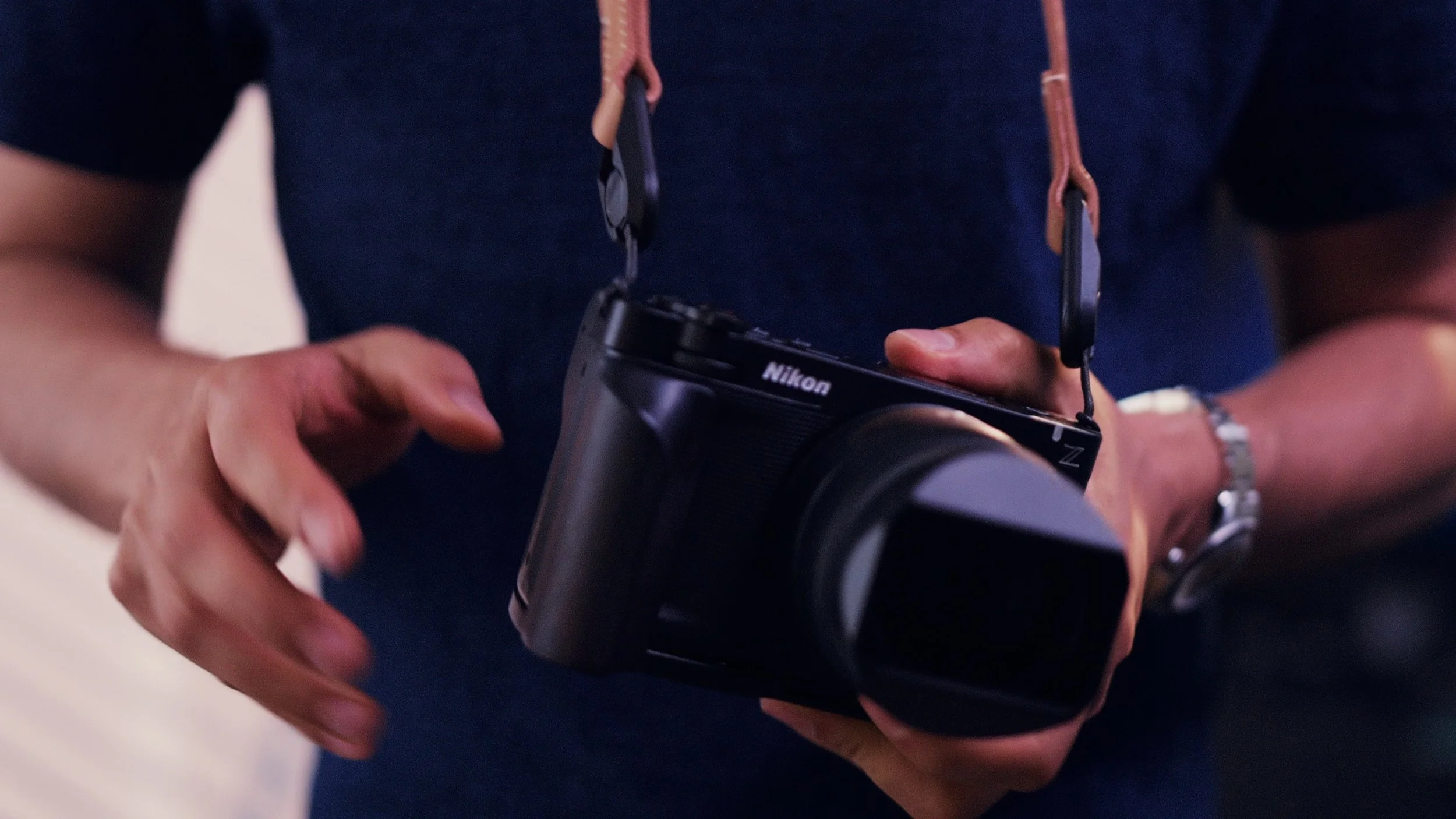
I can hold the camera even further away and get close because of that massive 4” screen. The most spoken about video feature is very useful for photo. I know it’s a flip screen, but when the screen is so big I don’t need to tilt much to see most of the frame.
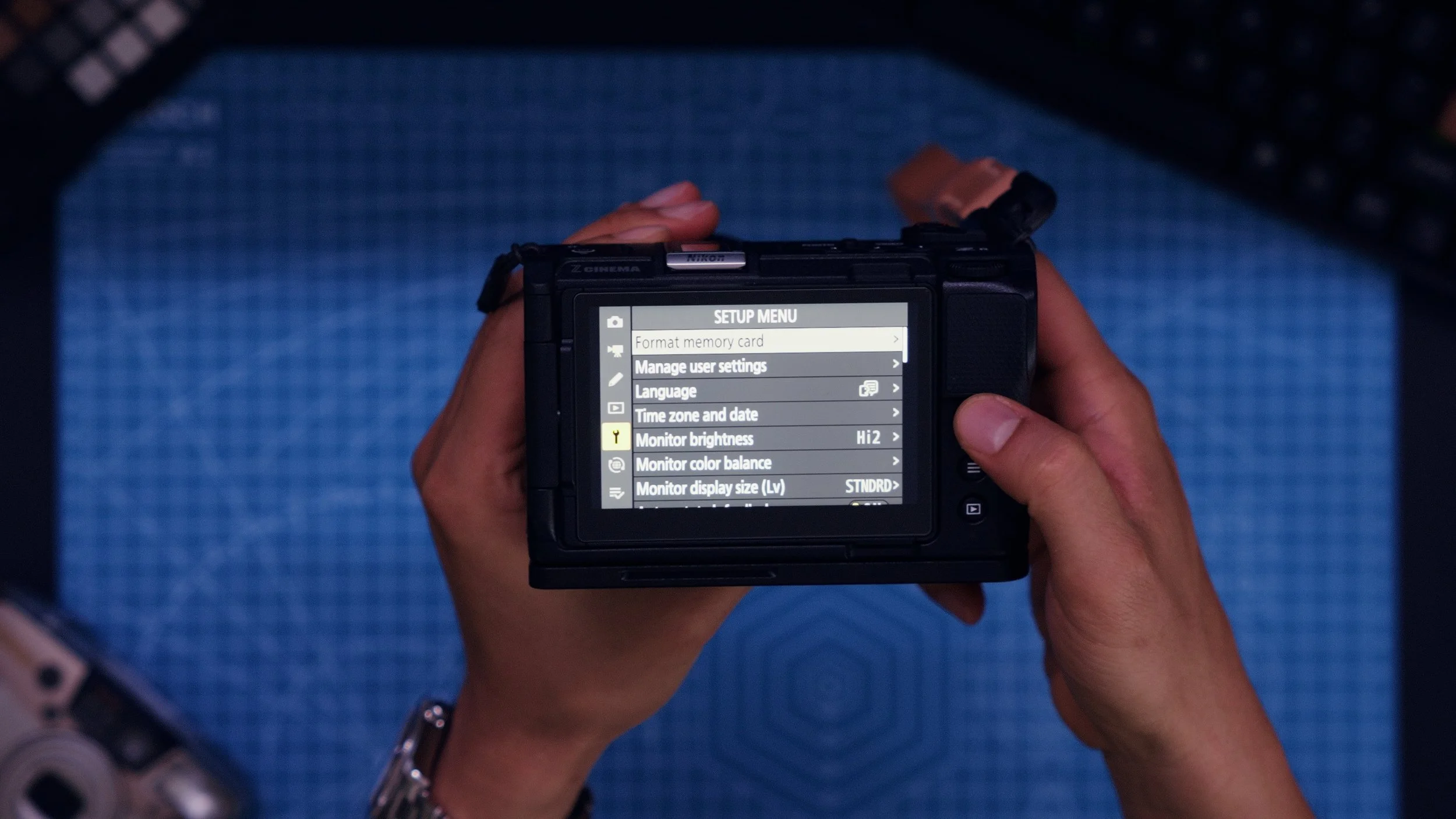
I’ll show you all my ZR photo settings in a second, but the ZR’s screen isn’t just big it’s also bright. I wear sunglasses on daytime photowalks, no problems seeing or composing, if you go to the wrench setup menu and set Monitor brightness to “Hi2”.
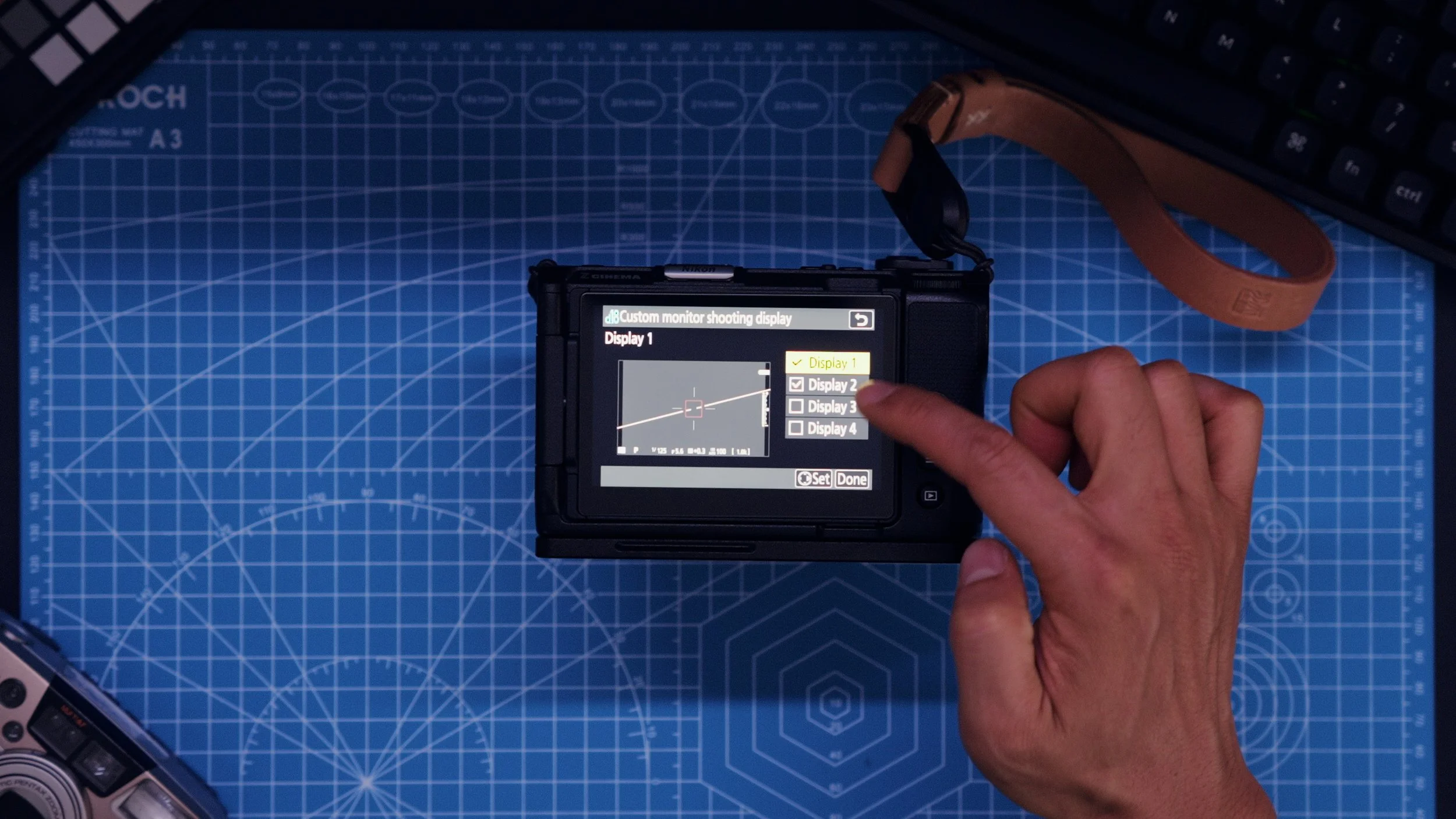
I like to remove as much information from the screen as possible so it’s a clean canvas. Just the horizon level and basic exposure information. Toggle on the 3x3 grid for when I need the rule of thirds to avoid corner distortion on 28mm. On Nikon Z this is all tweaked in the pencil menu - d18 “Custom monitor shooting display”, but a minimal LCD setup work on any camera.
3. Blackout Free?
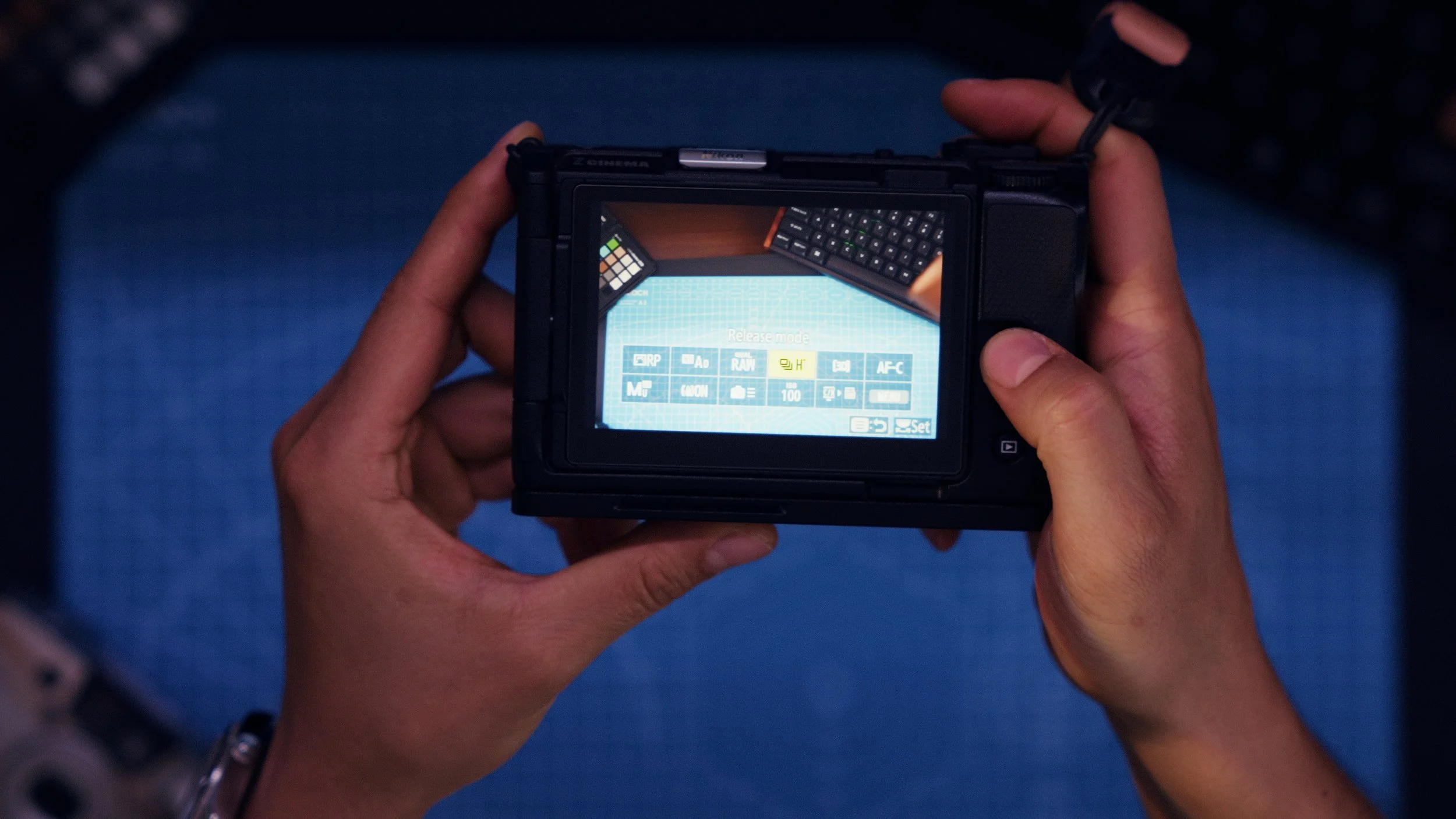
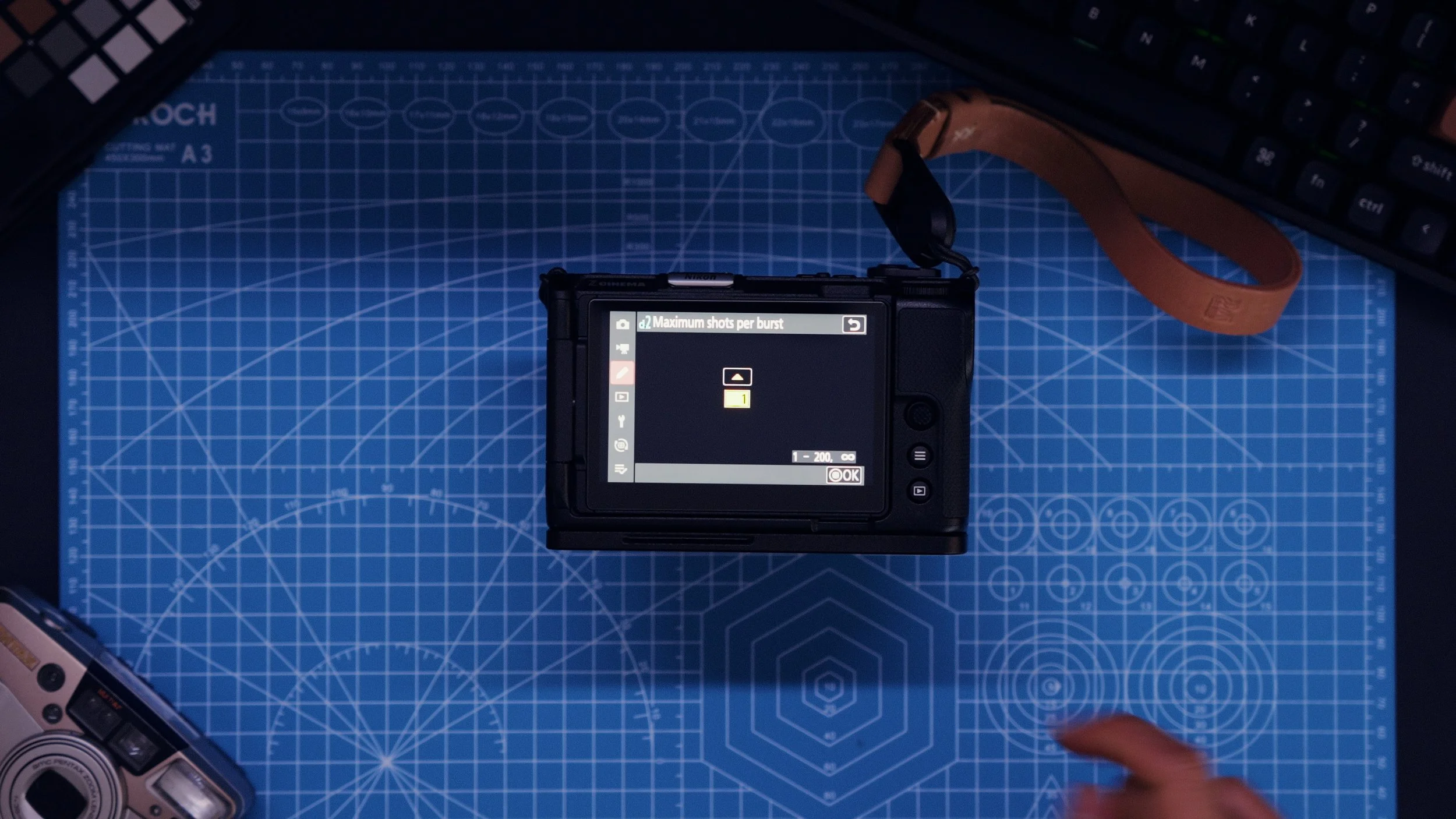
What’s unique to the ZR though is the screen size AND blackout free shooting combo. In continuous high extended - H+ mode on the ZR the view on the screen is never obstructed even as the shutter fires. The downside is H+ mode shoots 20 frames per second - a lot more files to store, but I limit the maximum shots per burst to 1 on d2 - all the benefits of blackout free shooting without the extra photos. I don’t even need to tilt the screen 95% of the time because it’s so big; an immersive blackout free experience.
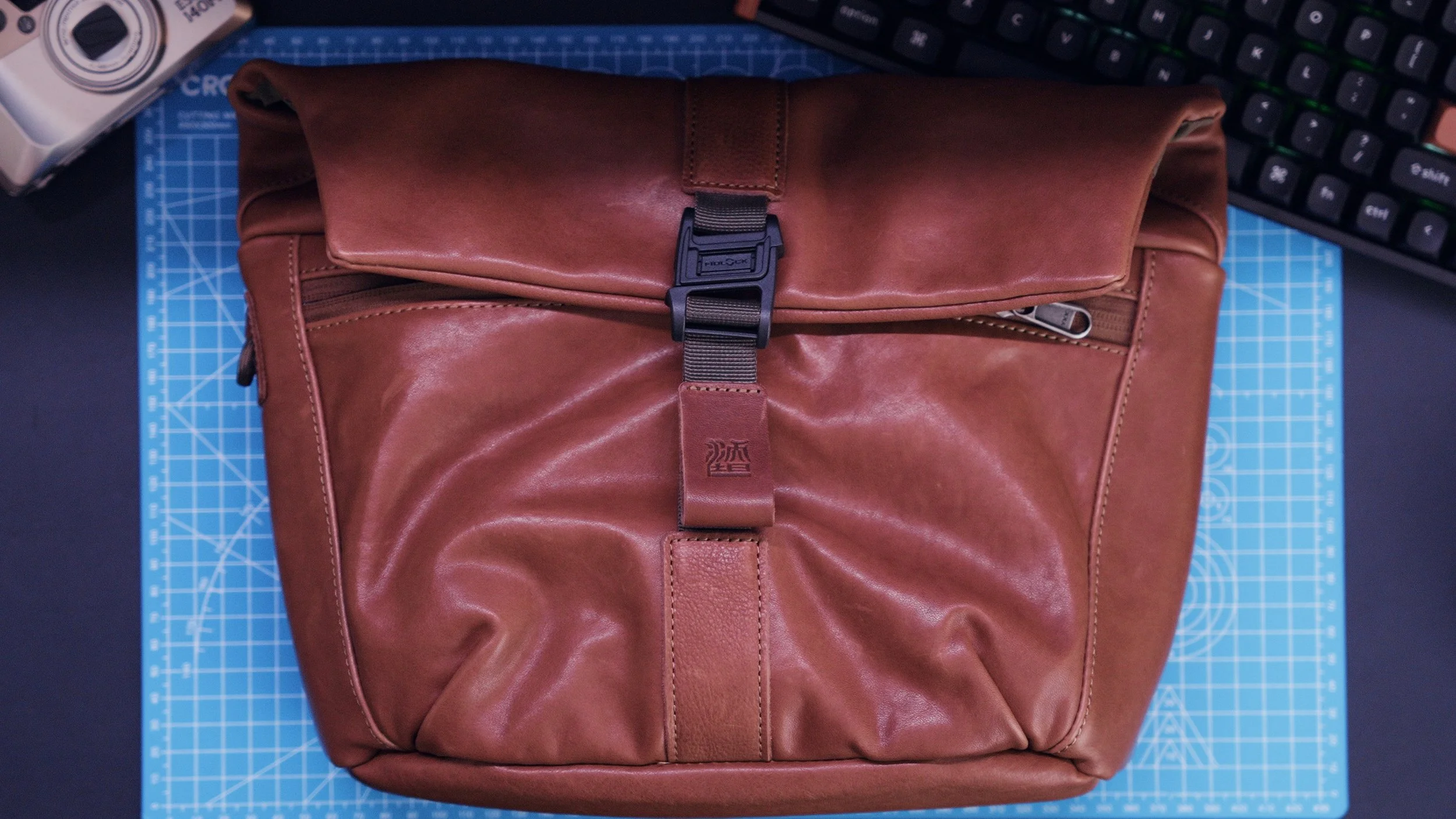
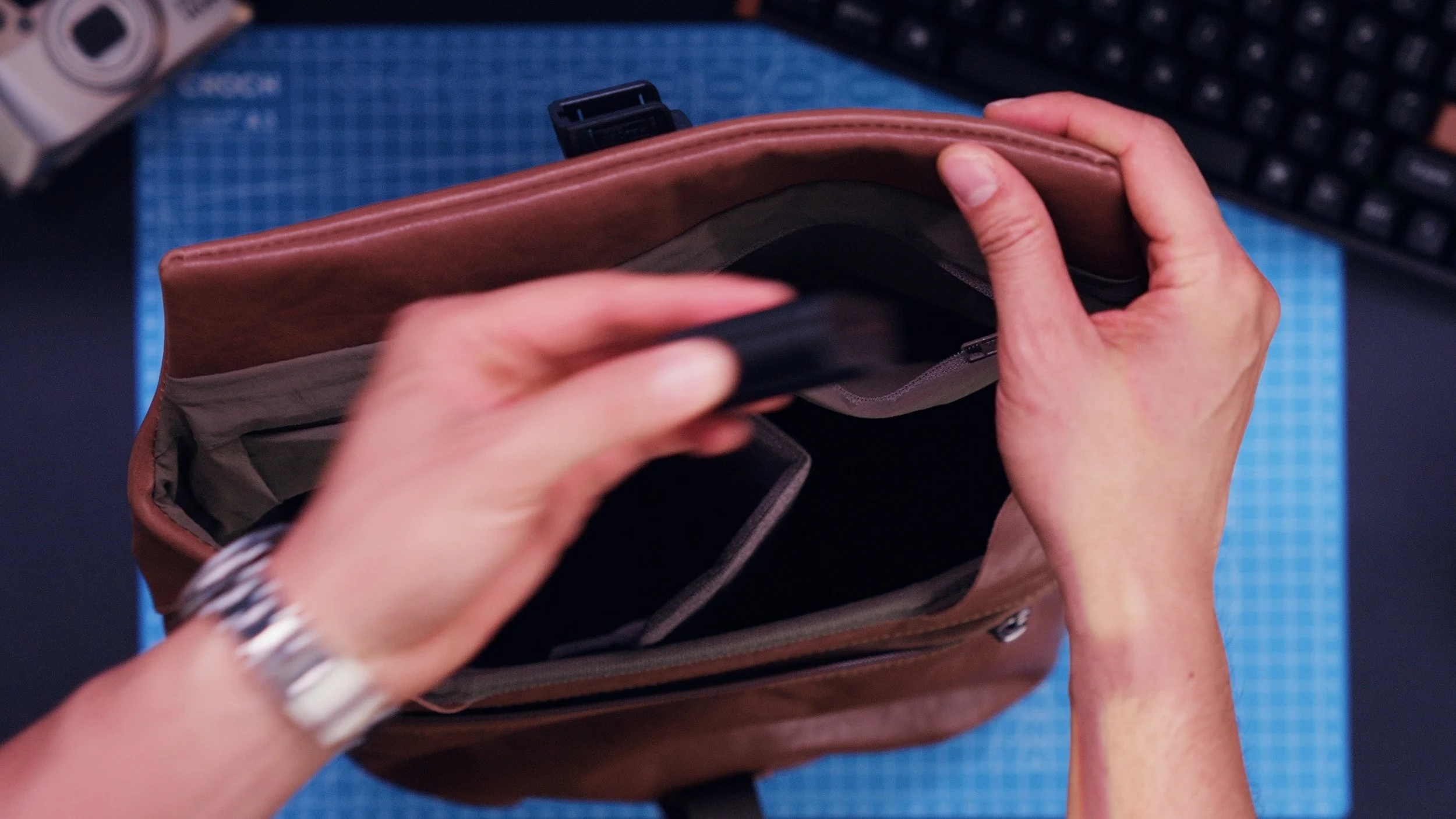
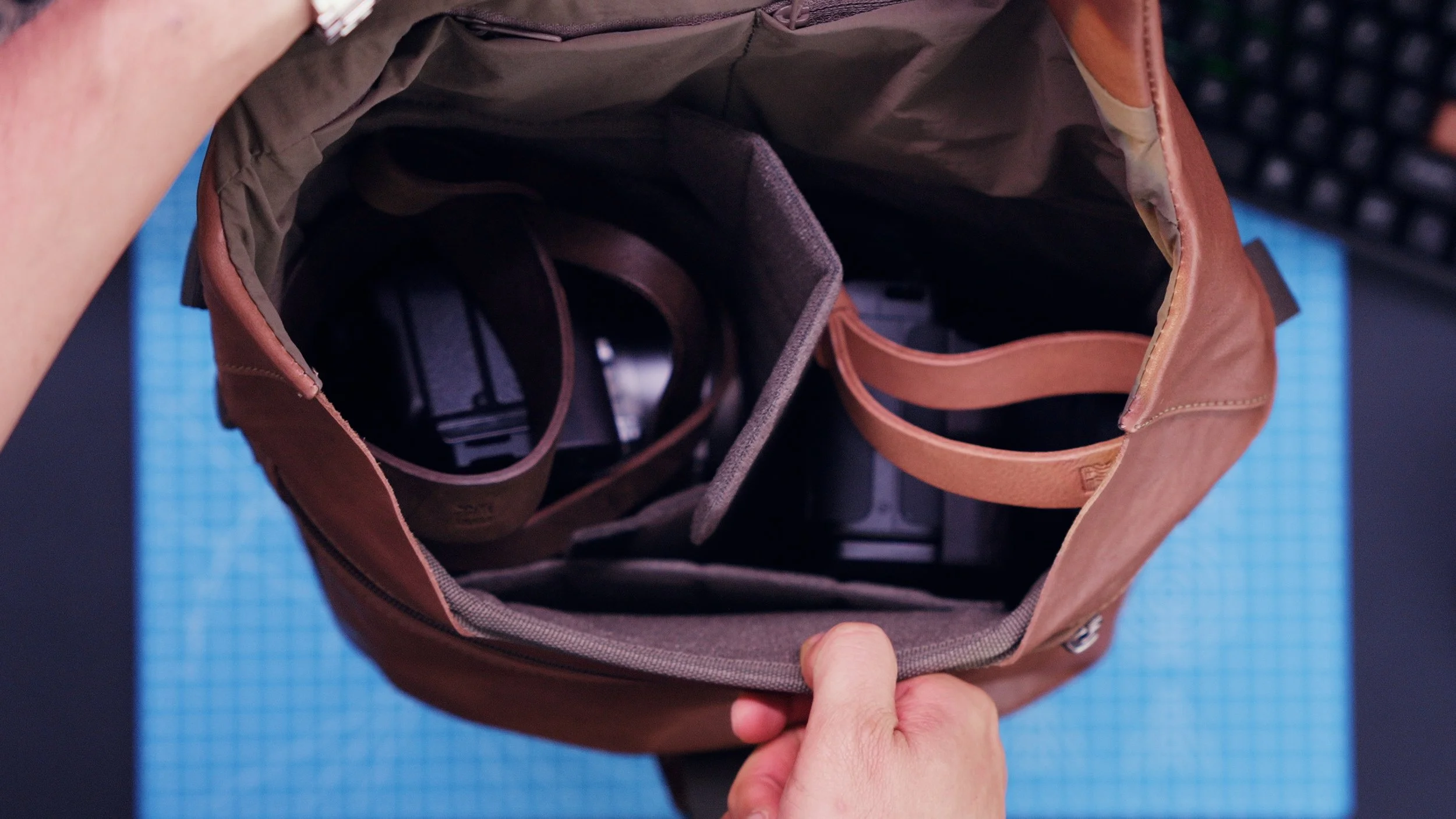
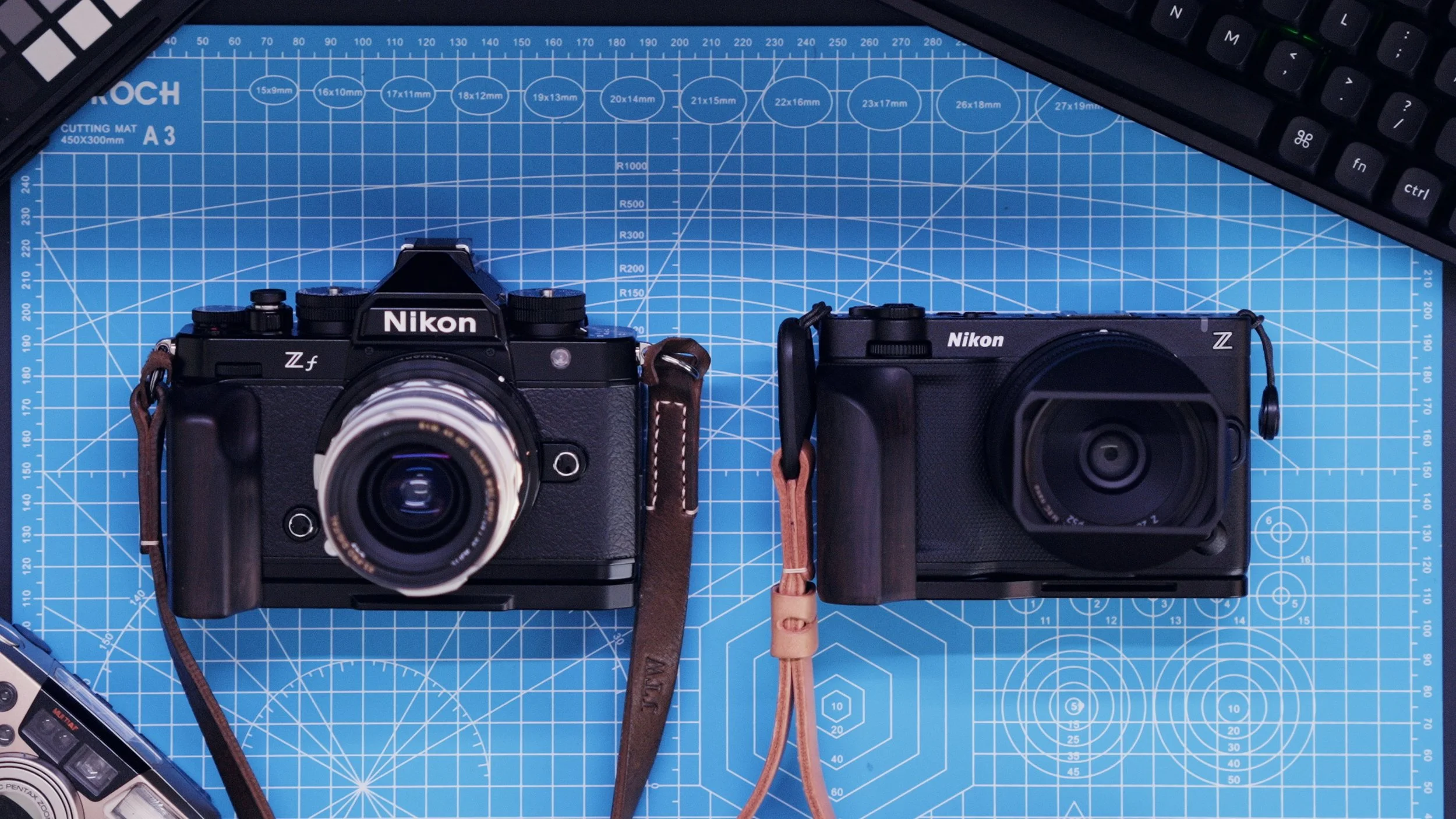
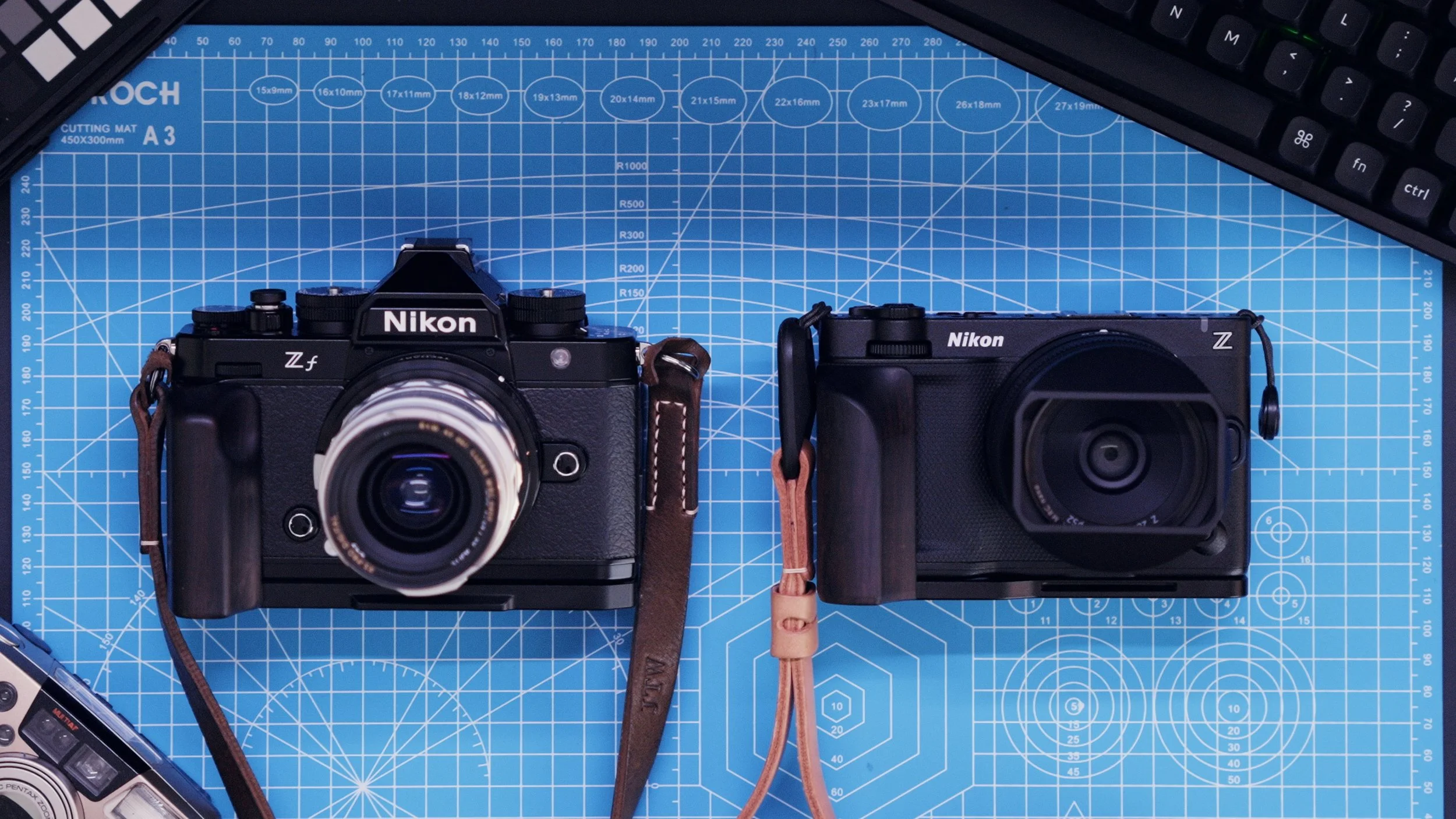
I still love viewfinders but that SLR hump takes up more room than an offset viewfinder. While I wish the ZR was a ZS with an EVF, the rear screen is so much bigger by sacrificing the EVF. Despite its full-frame sensor the ZR is smaller than most cameras. I can fit the ZR and ZF side by side in a bag - this one’s the 7 litre brown leather Wotancraft Pilot sling.
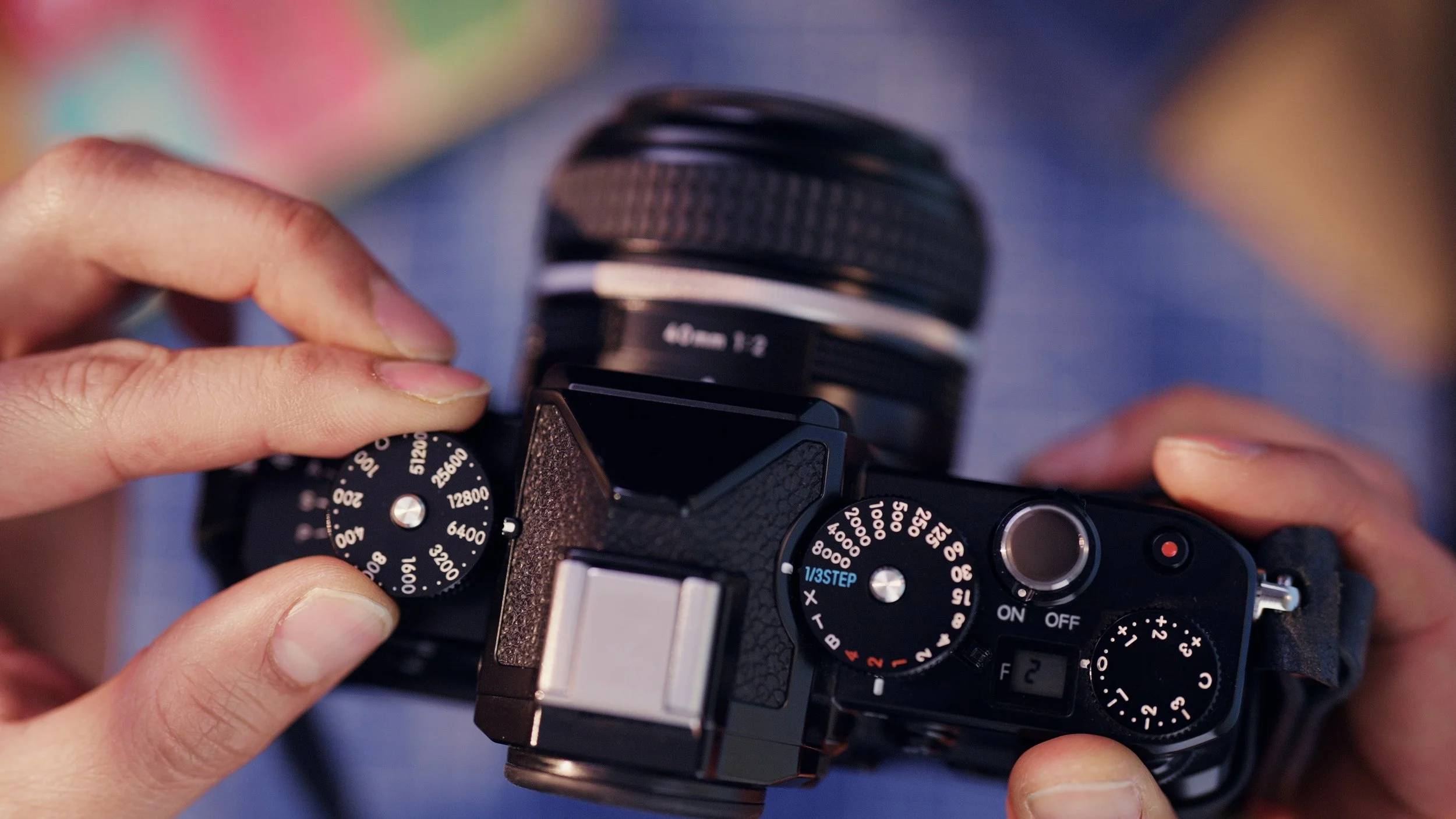
I can use the same batteries too - stored in this hidden compartment, share the same lenses - a much easier workflow, which made replacing 2 cameras in my collection with the ZR a no brainer.
What the ZR can’t replace (or at least what I thought it couldn’t replace), was the GR’s proprietary feature:
4. Snap Focus (and User Settings)
On the GR a half press of the shutter engages autofocus, full press of the shutter moves the lens to a preset manual distance ala zone focus. Hybrid of auto and manual focus squeezed into a tiny form factor, just as well because autofocus is not the GR’s strong suit. Single point focus and recompose works best, tracking didn’t work very well on my GRIIIX, I believe it’s better on the GRIV but Nikon’s tracking autofocus is better. I knew about Nikon’s manual focus assist tools, but I only recently found their version of “snap focus” on the ZR: “Move to infinity focus position”.
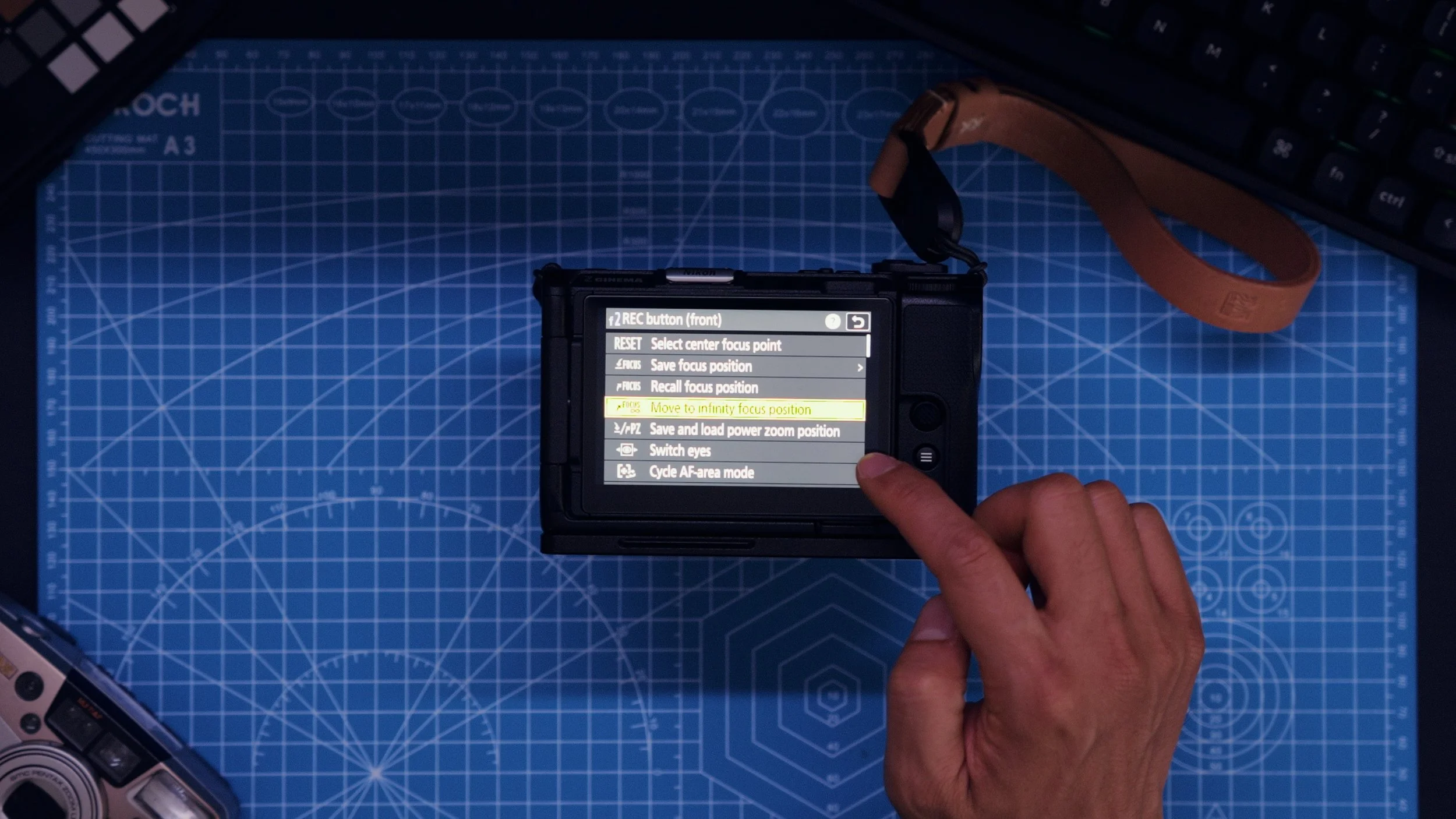
No matter the autofocus mode you’re in, when you press a button with this programmed function the lens focuses to infinity. You can shoot wide open, f2.8 with autofocus, and with a couple of buttons now you’re at F11 manual focused to infinity, thanks to the ZR’s User settings. Similar to user banks on the Z8, it’s in the setup menu, “Manage user settings”. You can even toggle “Keep changes” on and off to remember all your settings where you last left them - or reset back to the original settings each time.
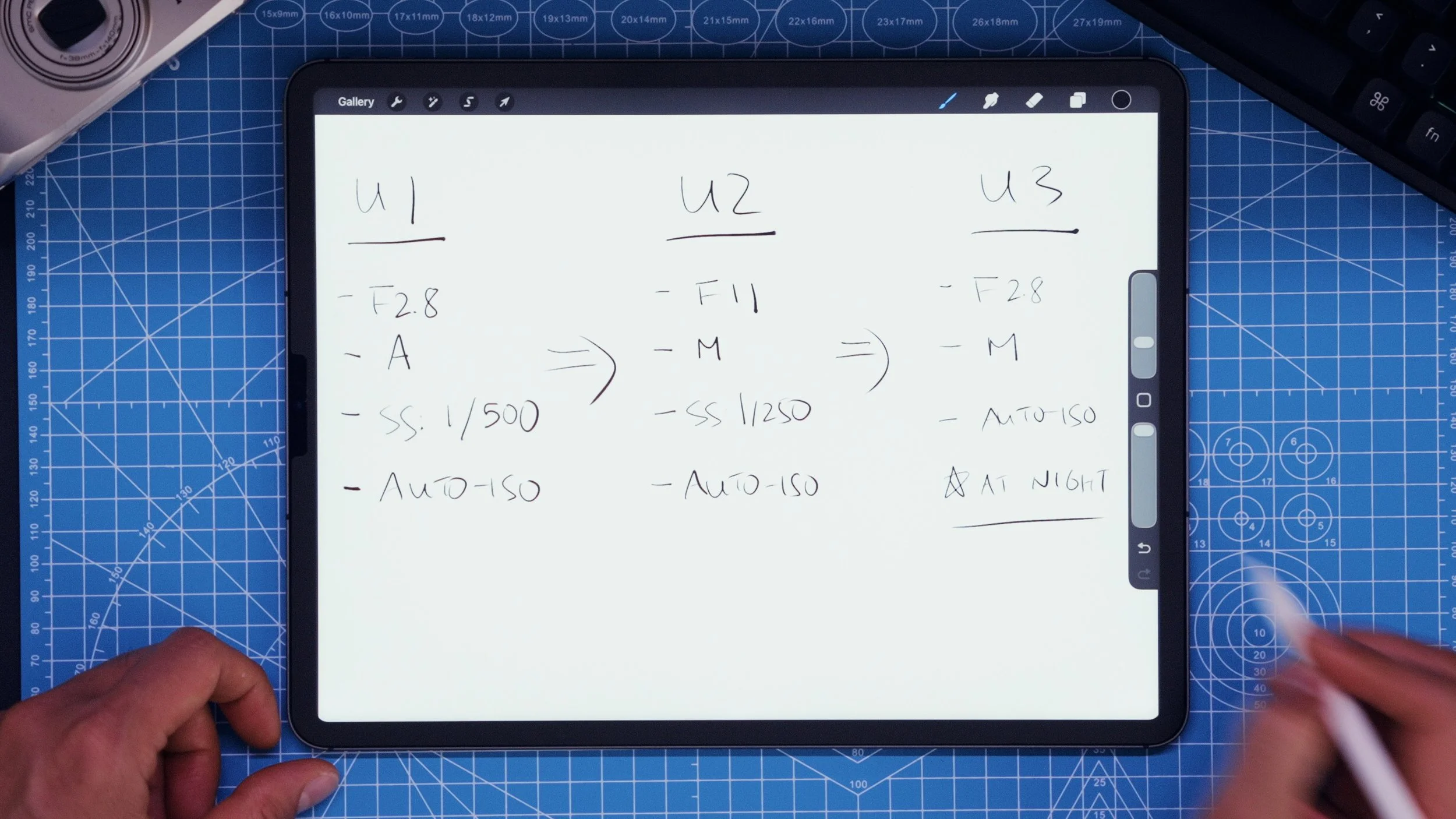
To move between the user settings I tap Mode button 2 on top, and scroll right or left. I still like the GR’s snap focus setup better, but the three user settings I’ve setup on the ZR work well enough. The first is aperture priority, AF-C, wide open aperture, minimum shutter speed 1/500, Auto ISO. Second aperture priority, manual focus, f11, minimum shutter speed 1/250, auto ISO - a quick press of the “move to infinity focus” is all it takes for zone focus. Three is just manual mode with auto ISO at night.
5. Night-time Photography
The Ricoh GR’s have f2.8 lenses on APS-C sensors, even with IBIS it’s not the best for low-light photography. The ZR has IBIS too, rated to a higher number of stops, but the biggest low light advantage is not just the sensor size but also swapping to a faster lens if you need.
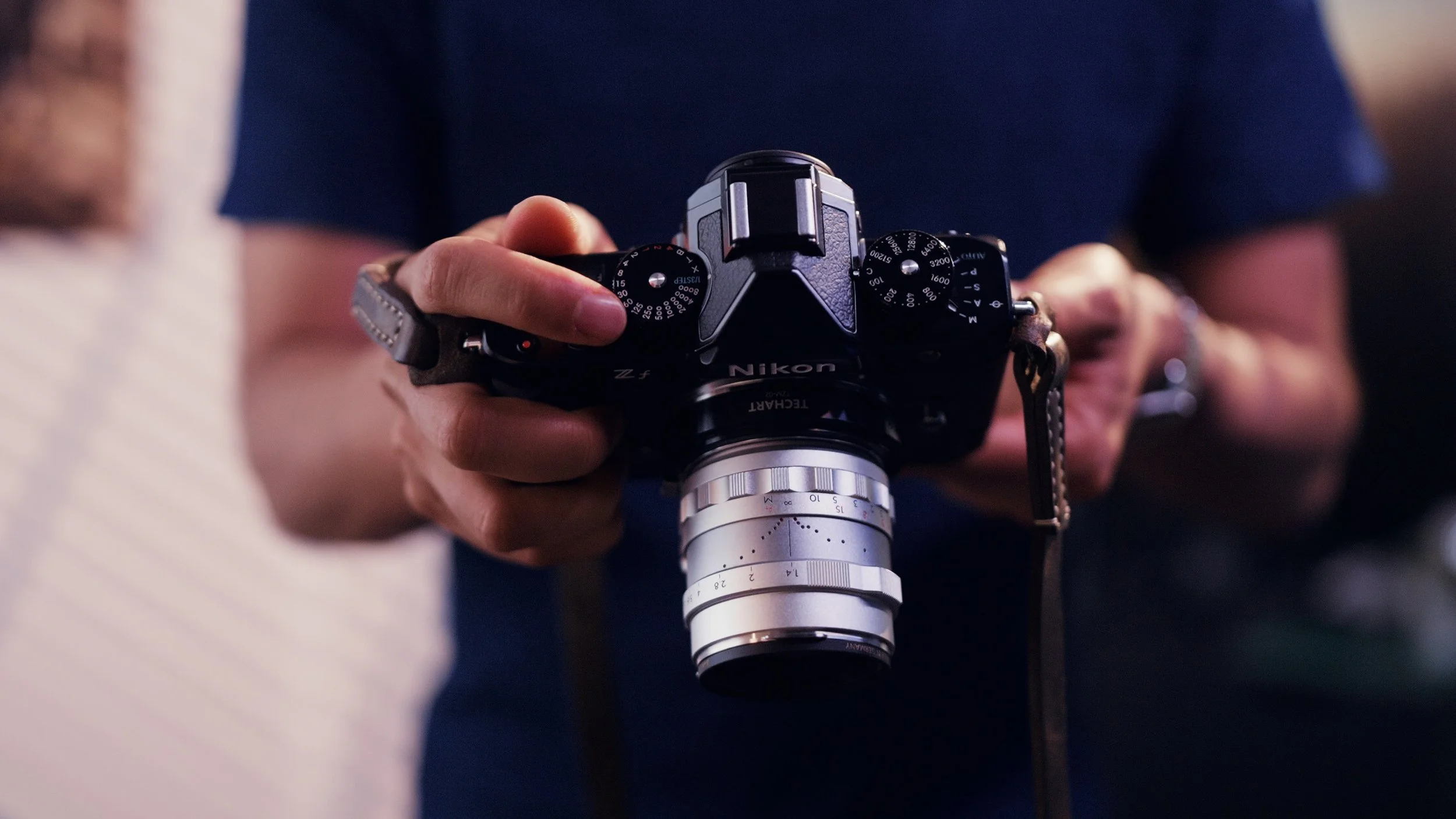
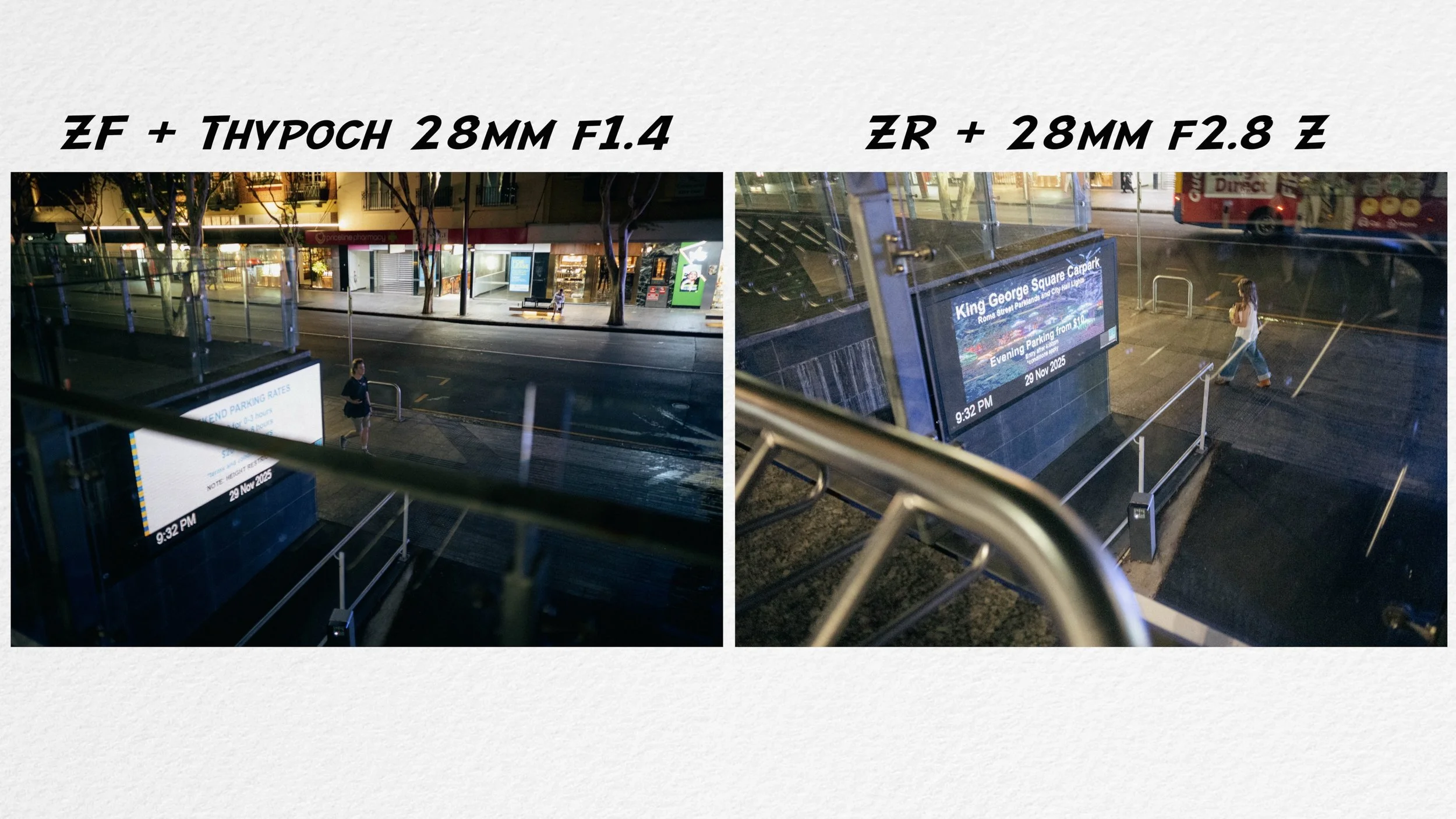
I’m using the Nikon 28mm 2.8 on the ZR, and on the Zf I have the Thypoch 28mm 1.4 Simera with the Techart TZM-02 adapter to autofocus this manual lens. 28mm vs 28mm, one composed on the LCD, the other on the EVF - I closed the Zf’s flip screen to force myself to only use the viewfinder.
This brings me to the second way the ZR changed how I compose - specifically at night. I’m much more likely to shoot in high or low angles on the LCD, than climb on a ledge or get down in the dirt in the middle of the night just to look through the EVF.
I quite like the more chaotic framing, especially on a 28mm, and coupled with extending my arm with the camera on a wrist strap to get closer - I was shooting through the holes in this fence, found the bins inside for a very different photo. In contrast on the ZF when I’m forced to lift the camera up to my eye, the lines look straighter, the compositions little cleaner, a more conventional look.
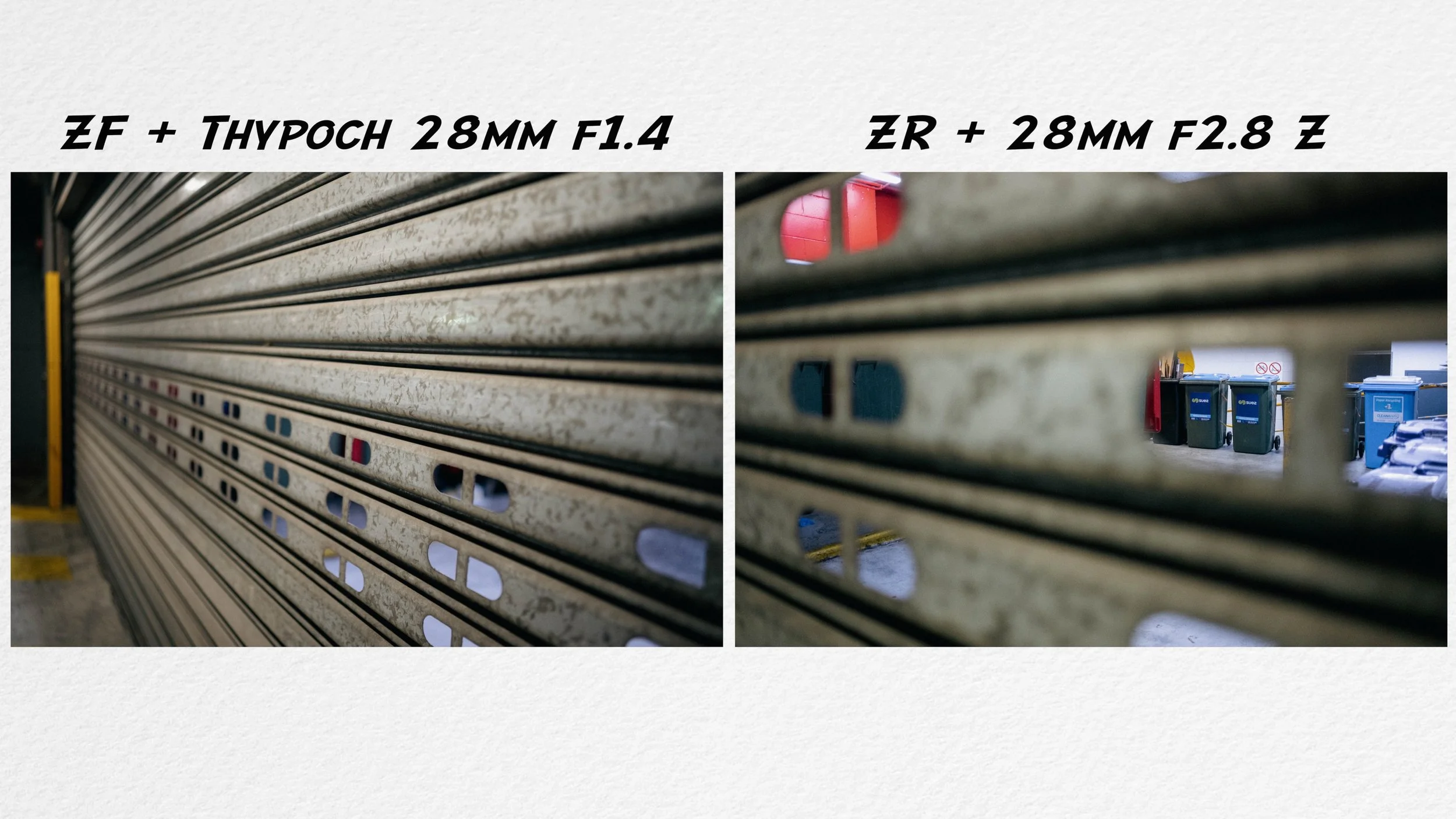
Given the extra camera movement though, some of the ZR shots are a little shaky, less sharp which is compounded by the slower 28mm f2.8 I was using on the ZR compared to the 28mm 1.4 Simera on the Zf. This Thypoch 28mm f1.4 Simera is not on loan, it’s my own personal copy. I bought the discontinued infinity lock version on sale from B&H and I didn’t use any filters on either lens to better compare the image quality. Both lenses are very sharp at the working distances I favour on the street. Thypoch can give more separation, but it also has a hint of swirl, 28mm 1.4s are very rare, you can get close to that medium format wide but shallow dreamy look.
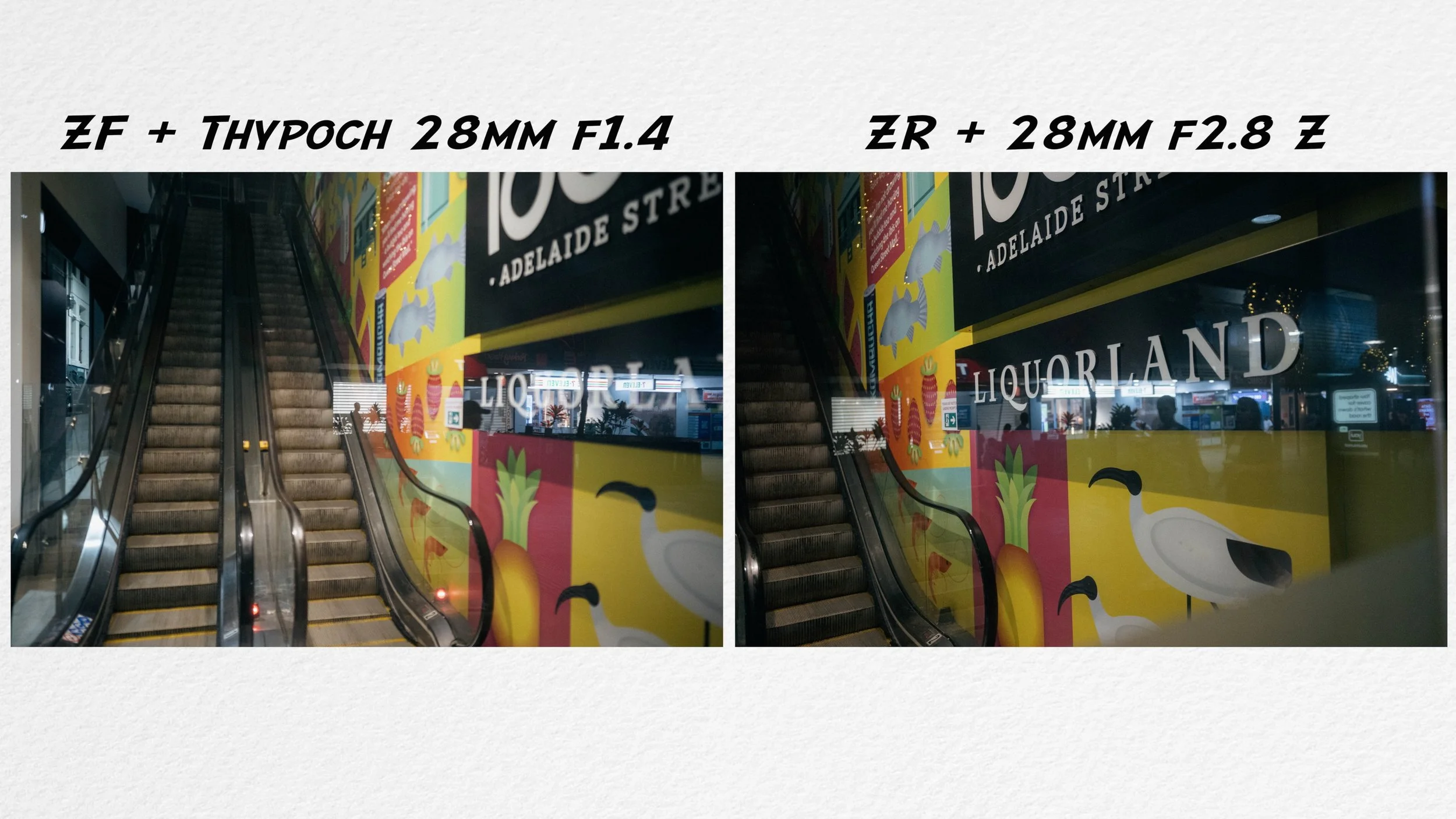
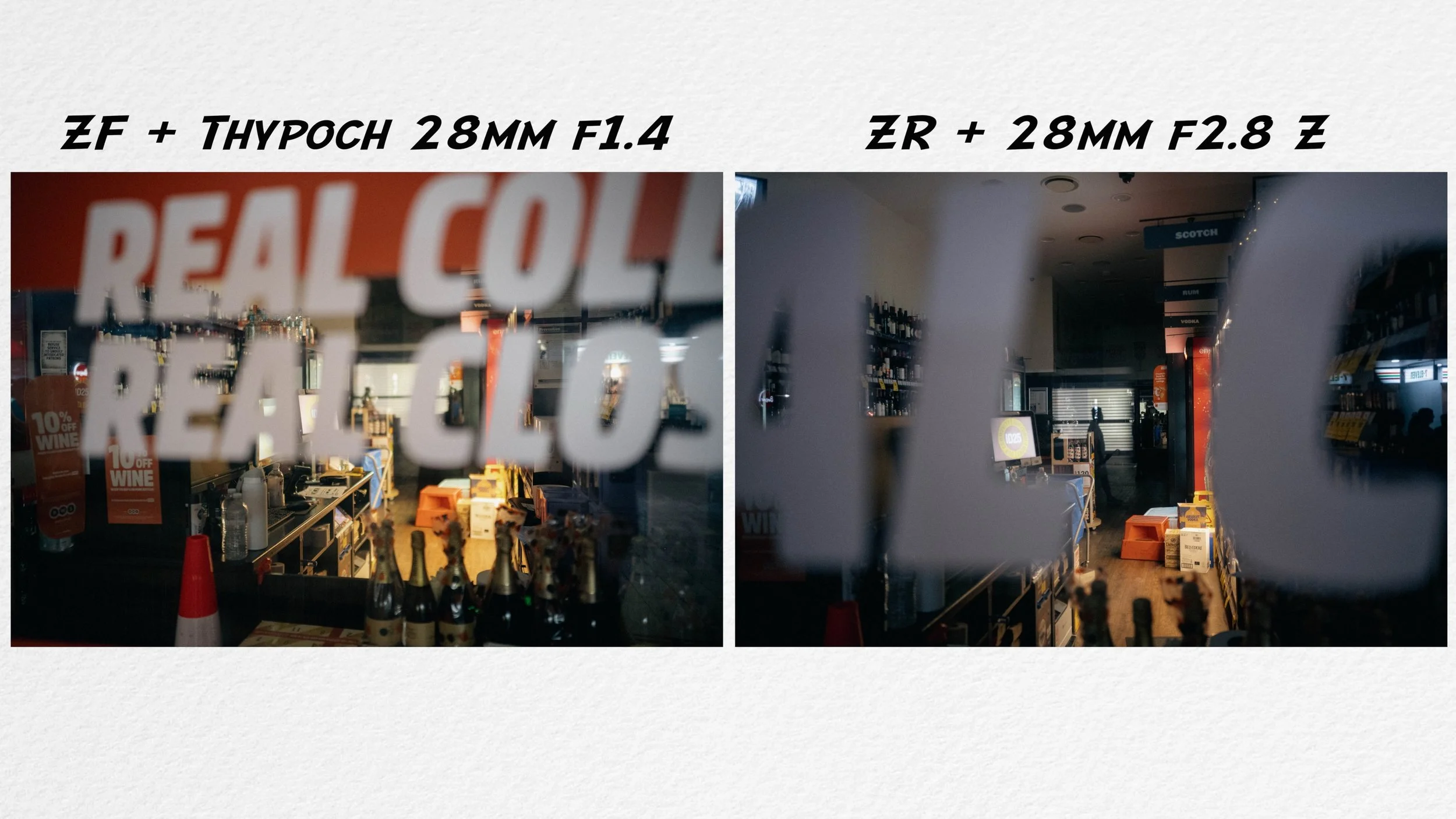
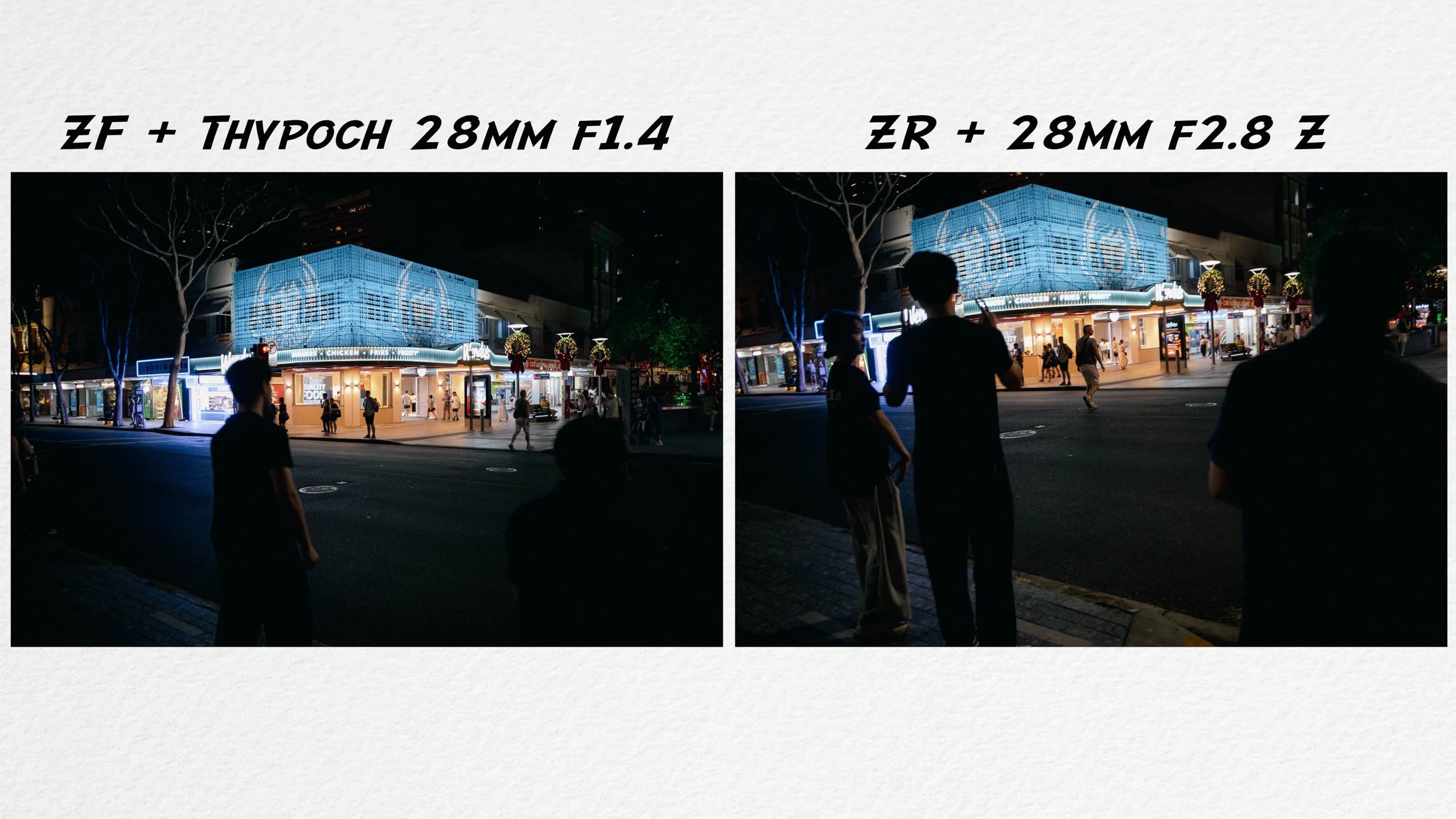
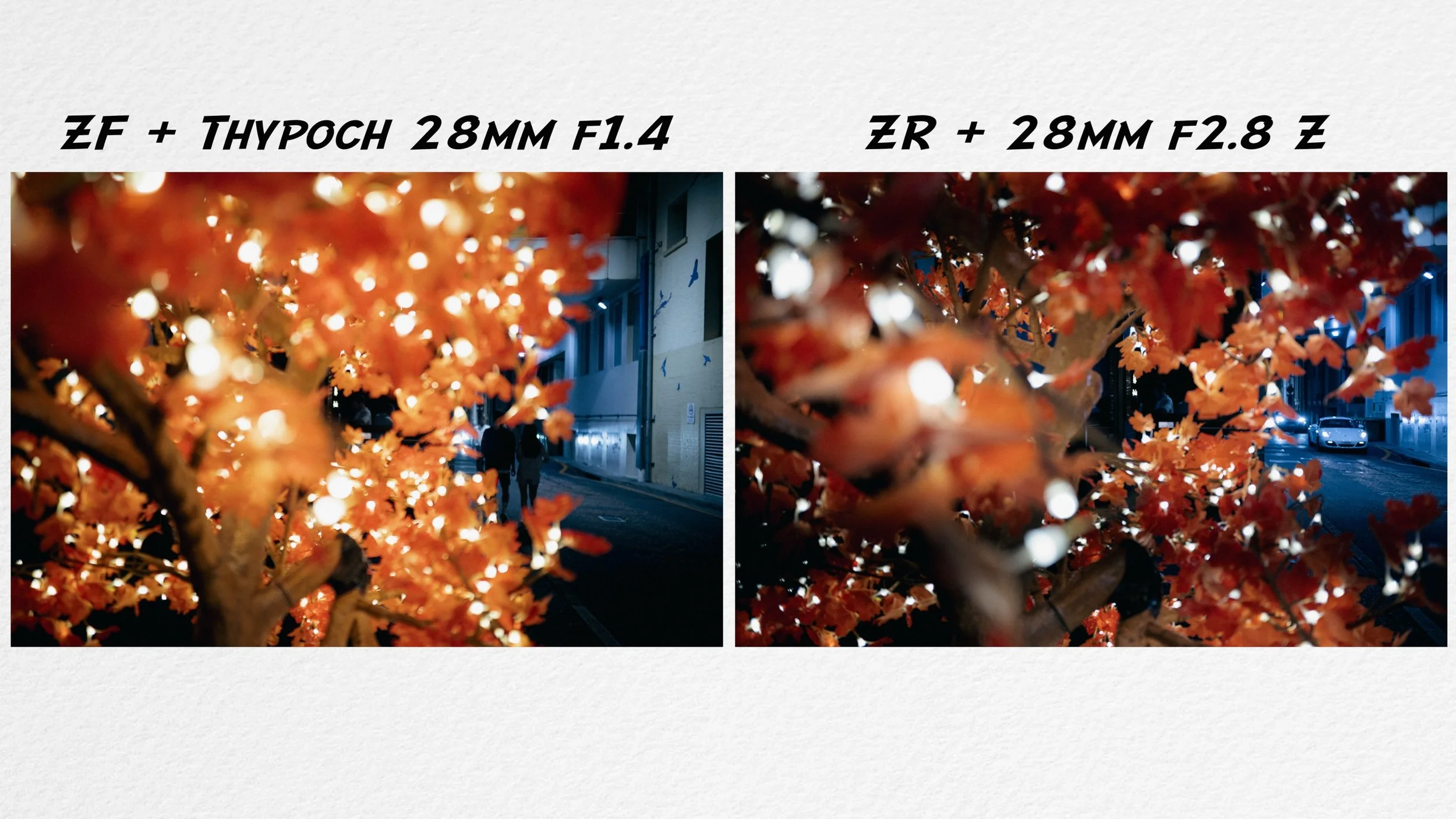
But there’s also one unexpected reason why the ZR frames are less sharp?
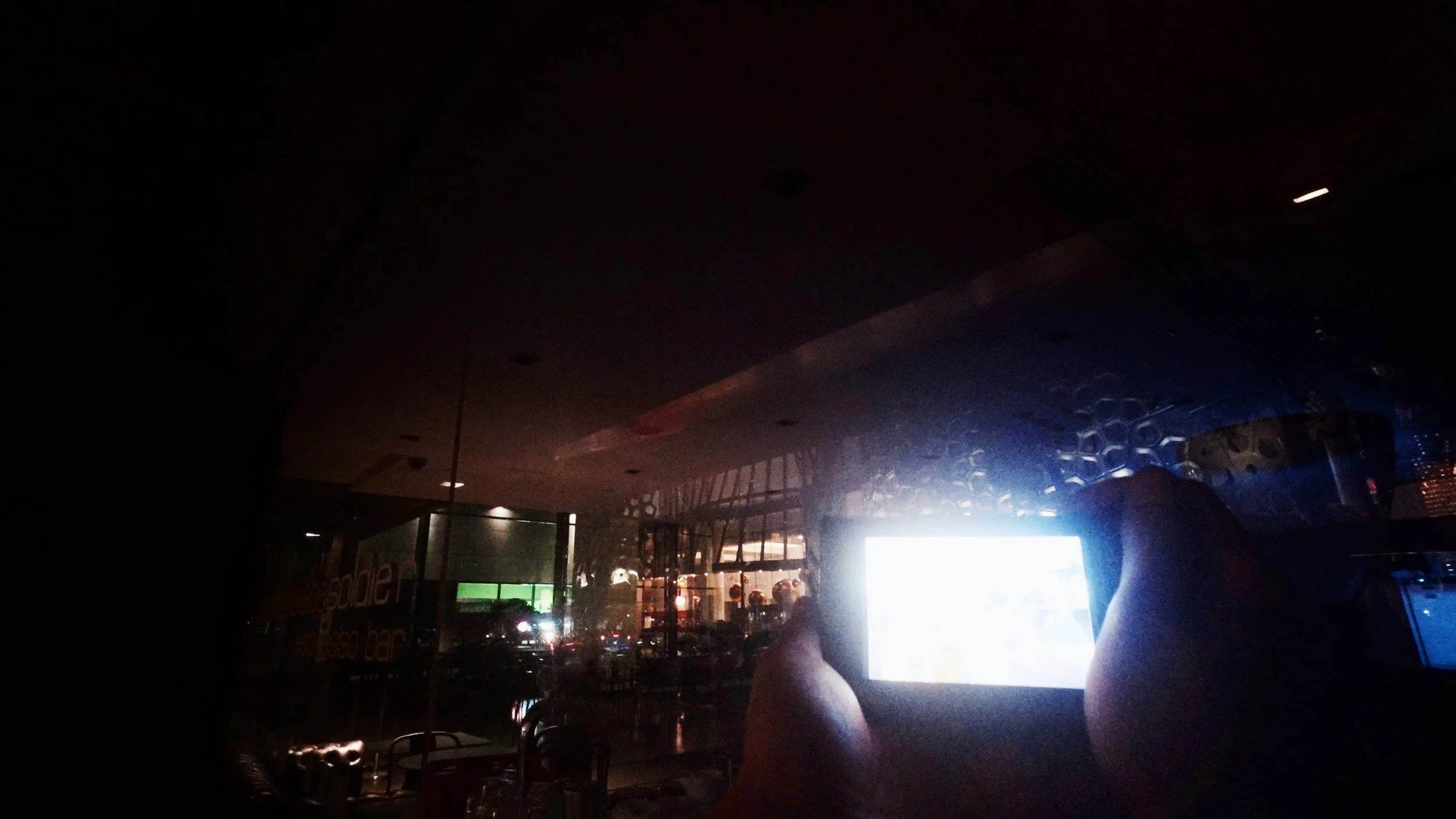
With how bright the ZR screen is at night, it lit up the surroundings, my face, especially when everything was dark. I felt I could take more time framing using the EVF, black camera up to my eye at night is fine, rather than a huge source of light via the ZR’s screen.

If you want an even dreamier look I could have added a Promist filter? But this is where the Ricoh GR bests the ZR in convenience - the HDF version with a built in promist filter for that glow in camera, or a built in ND filter. Which version would I prefer for the 28 mm field of view? The highlight rolloff from a diffusion filter combines nicely with a bit more blur, it would be a better fit for a Ricoh GRIIIX. On a wider lens the ND filter might be more useful for hand-held long exposures.
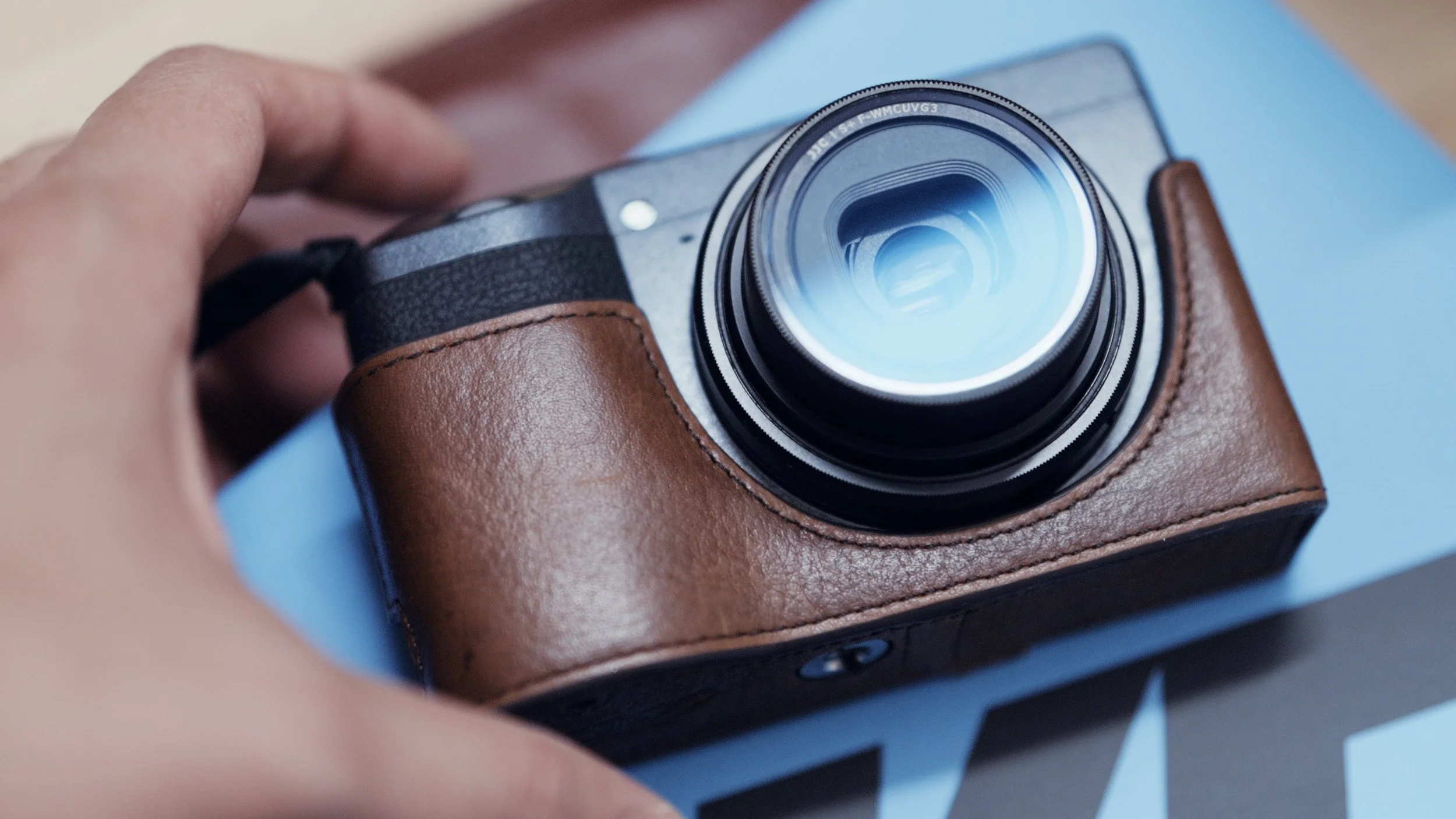
The ZR - and most interchangeable lens cameras don’t have any built in filters, and when you add the GR’s built-in storage, macro capabilities, it really is a very unique but simple package.
***
The simplest ideas are the hardest to get right.
Which is why the GR gallery I went to was so surprising?
One it’s in my hometown Brisbane of all places - not Sydney or Melbourne.
Two it’s hard to find - a remote 20 minute walk from the central business district.
Not what you’d expect for an art gallery dedicated to a premium compact camera.
The unassuming location is on brand for a camera like the GR
Yet the quality of work on display was staggering.
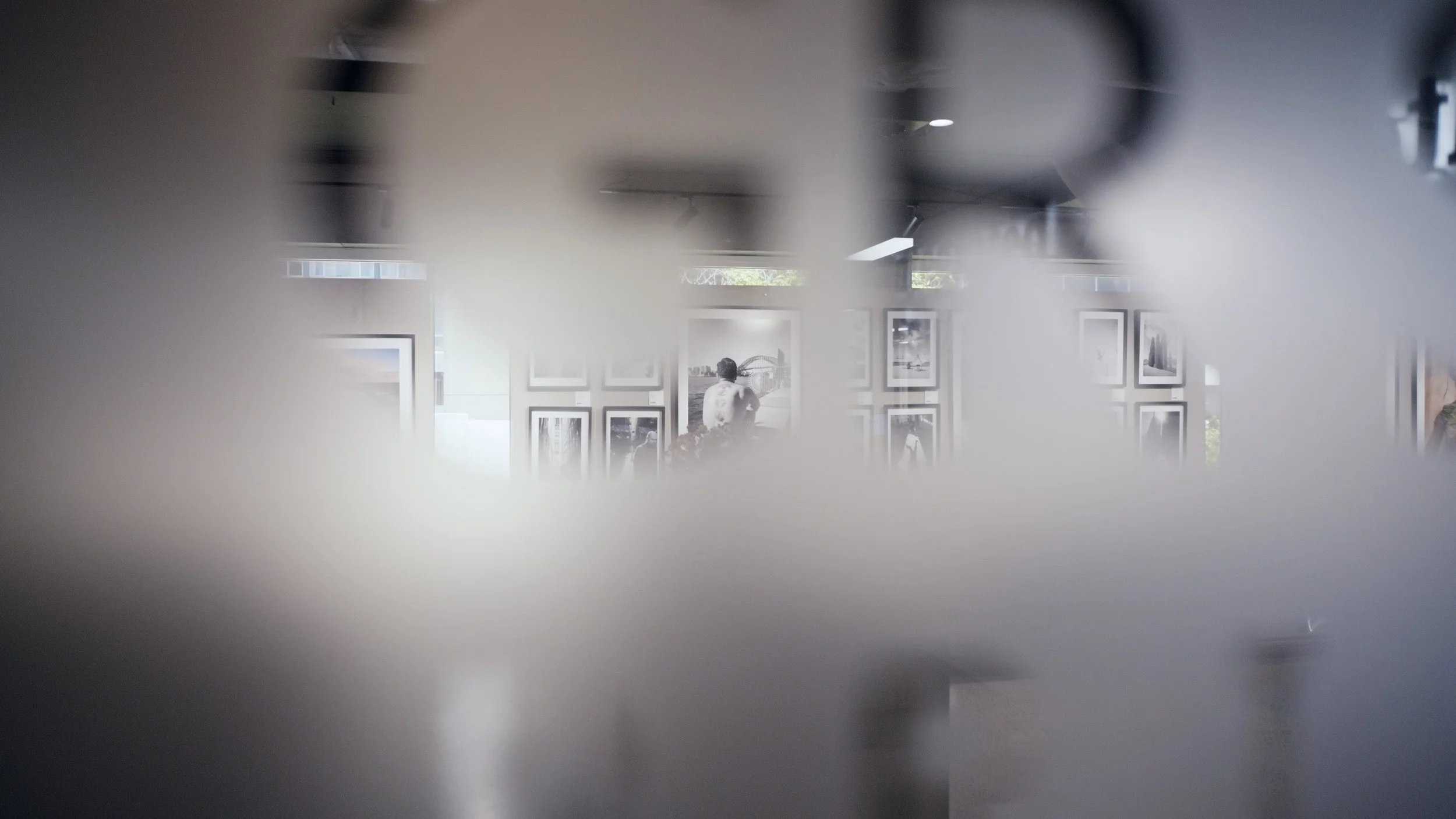
Its simplicity keeps you creating anywhere, any time
Which is easier said than done in my favourite photo from Martin Parr.
The spiritual sequel to the perfect cup of tea.
This time an imperfect bowl of tomato soup.
The first food he was allowed in weeks
A bout with cancer rendered his appetite obsolete.
This photo taken from his hospital bed should not have even existed.
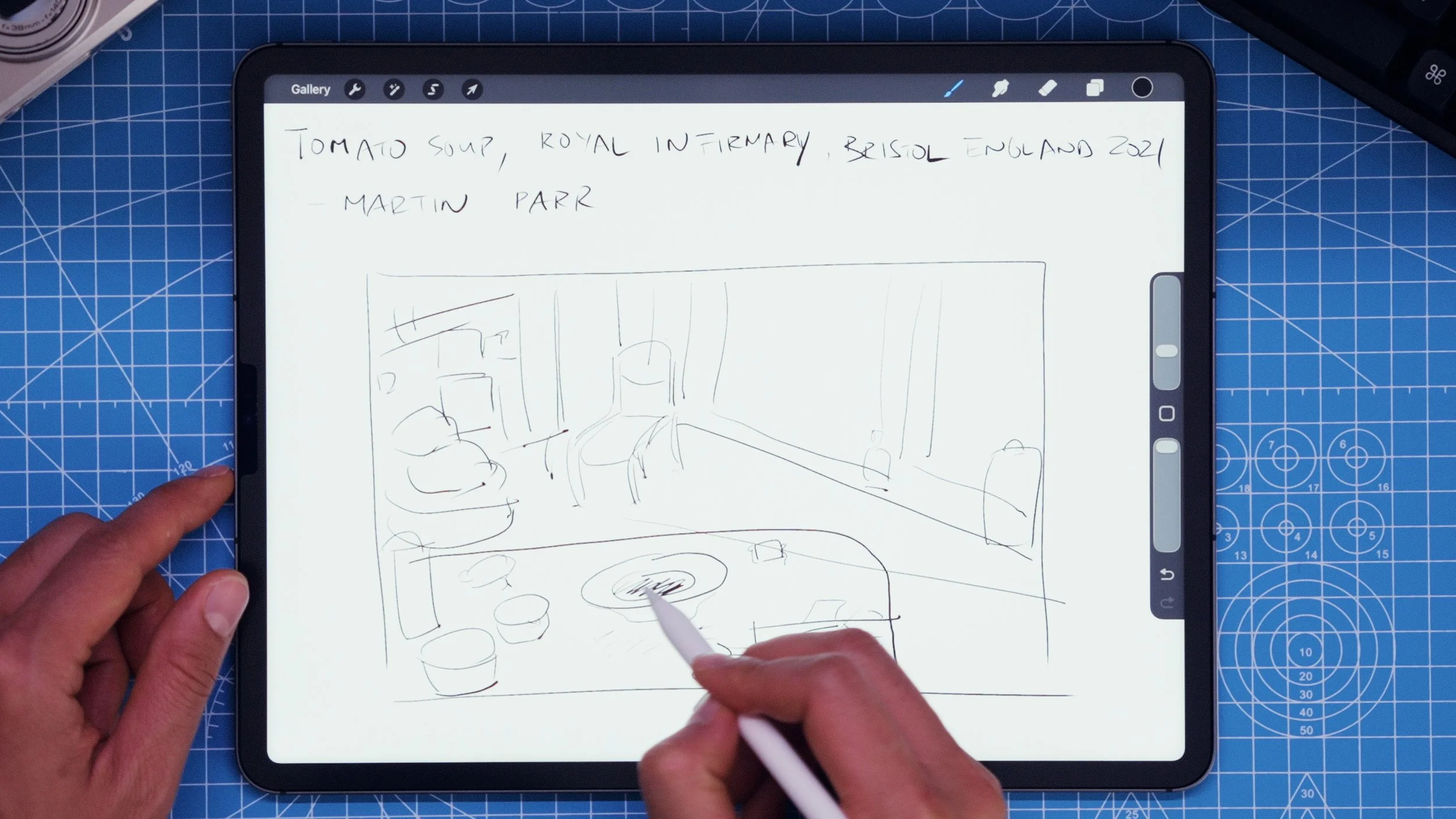
It showed Parr’s commitment - in agony no less
To make the boring interesting.
What’s simple isn’t easy.
***
6. Incognito?
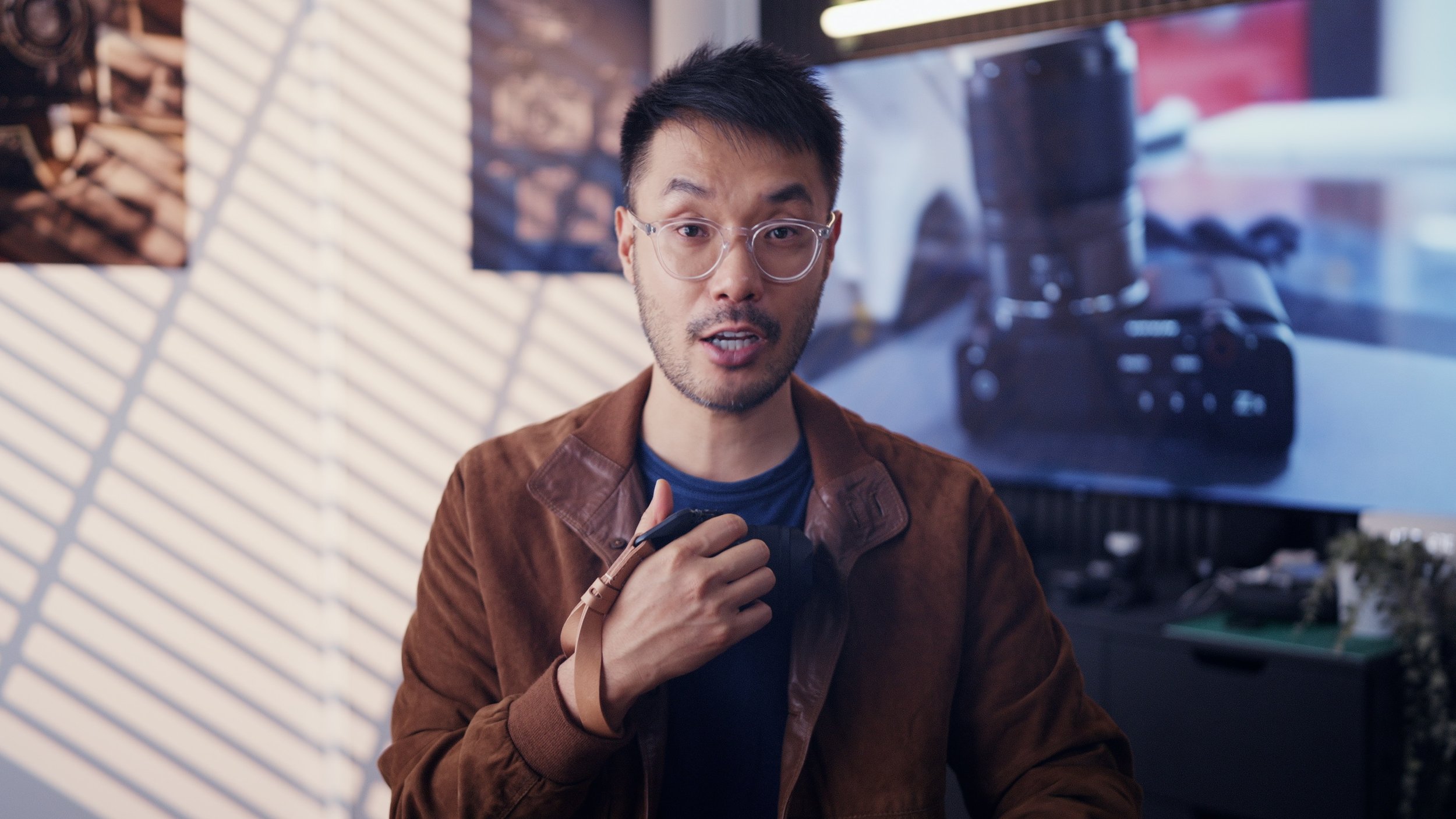
The third and last way the ZR changed how I compose is again due to that massive LCD screen.
I would put the side of the ZR against my chest for an extra point of stability, and quickly tilt the camera a couple of degrees and shoot around corners. It’s a little more incognito, more discrete, if that matters to you, and the angles I’m getting shooting through windows and telephone booth reflections are quite interesting because of the technique. The visibility of that screen really changes how you can use the ZR for photo.
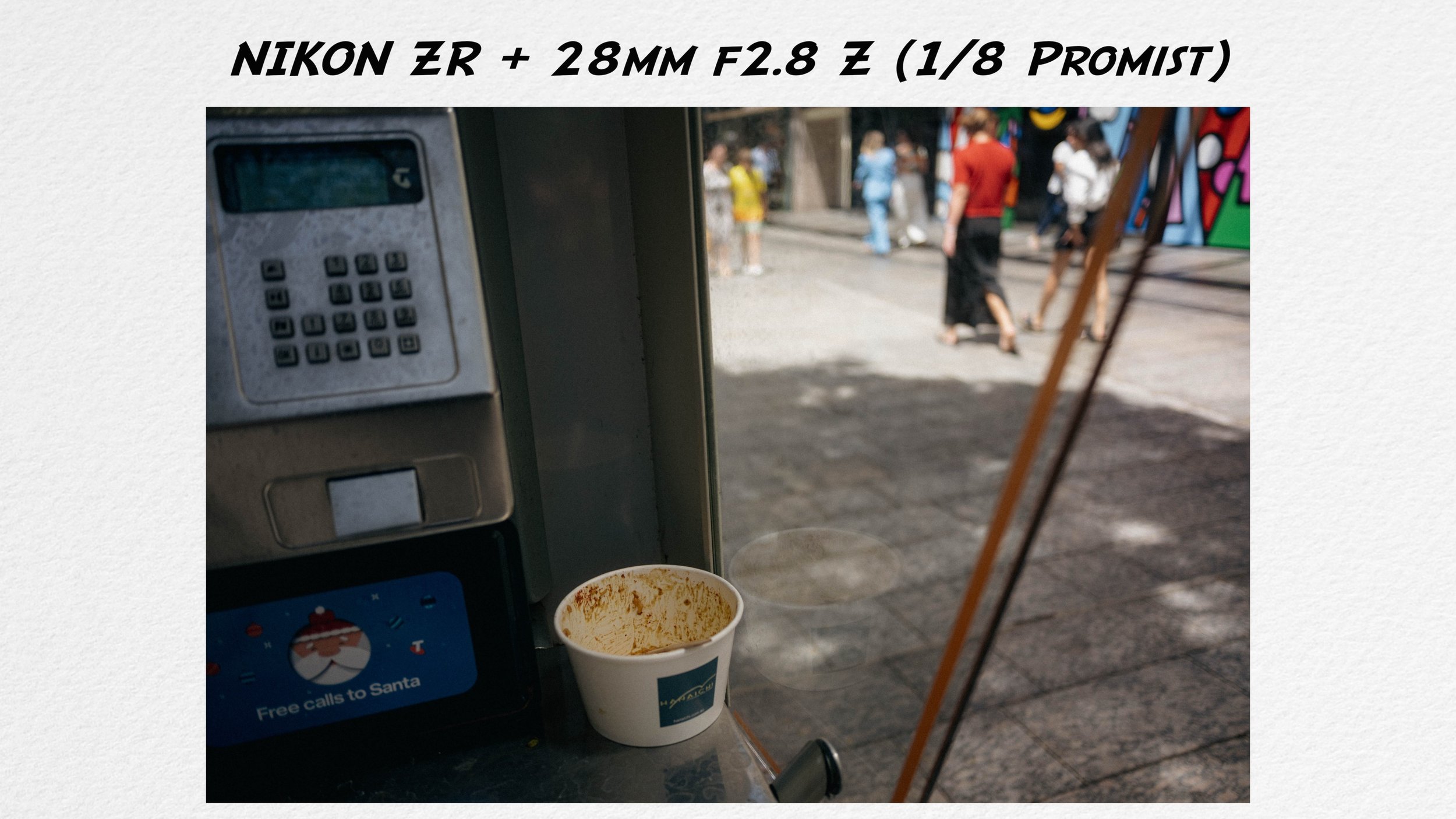
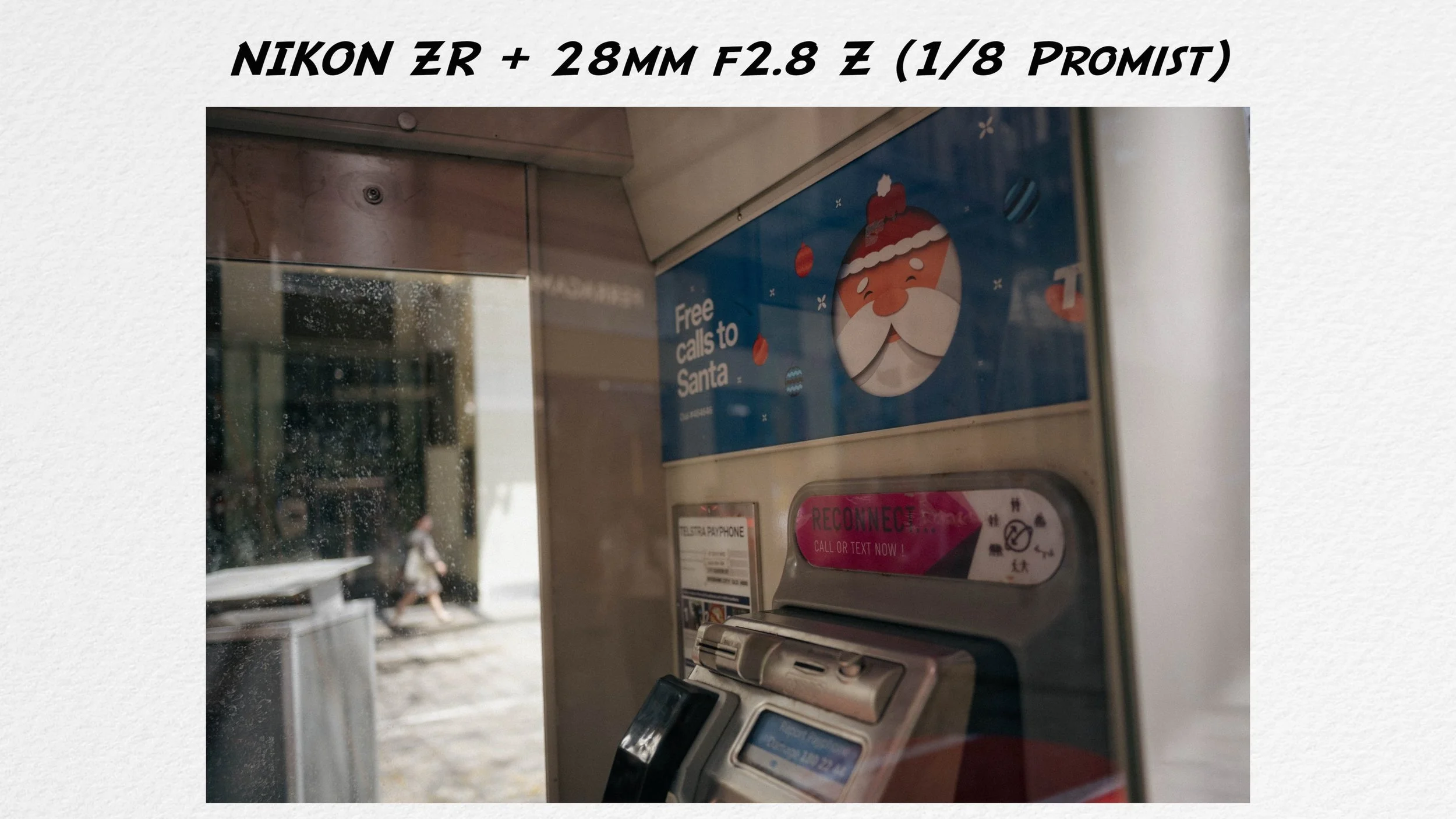
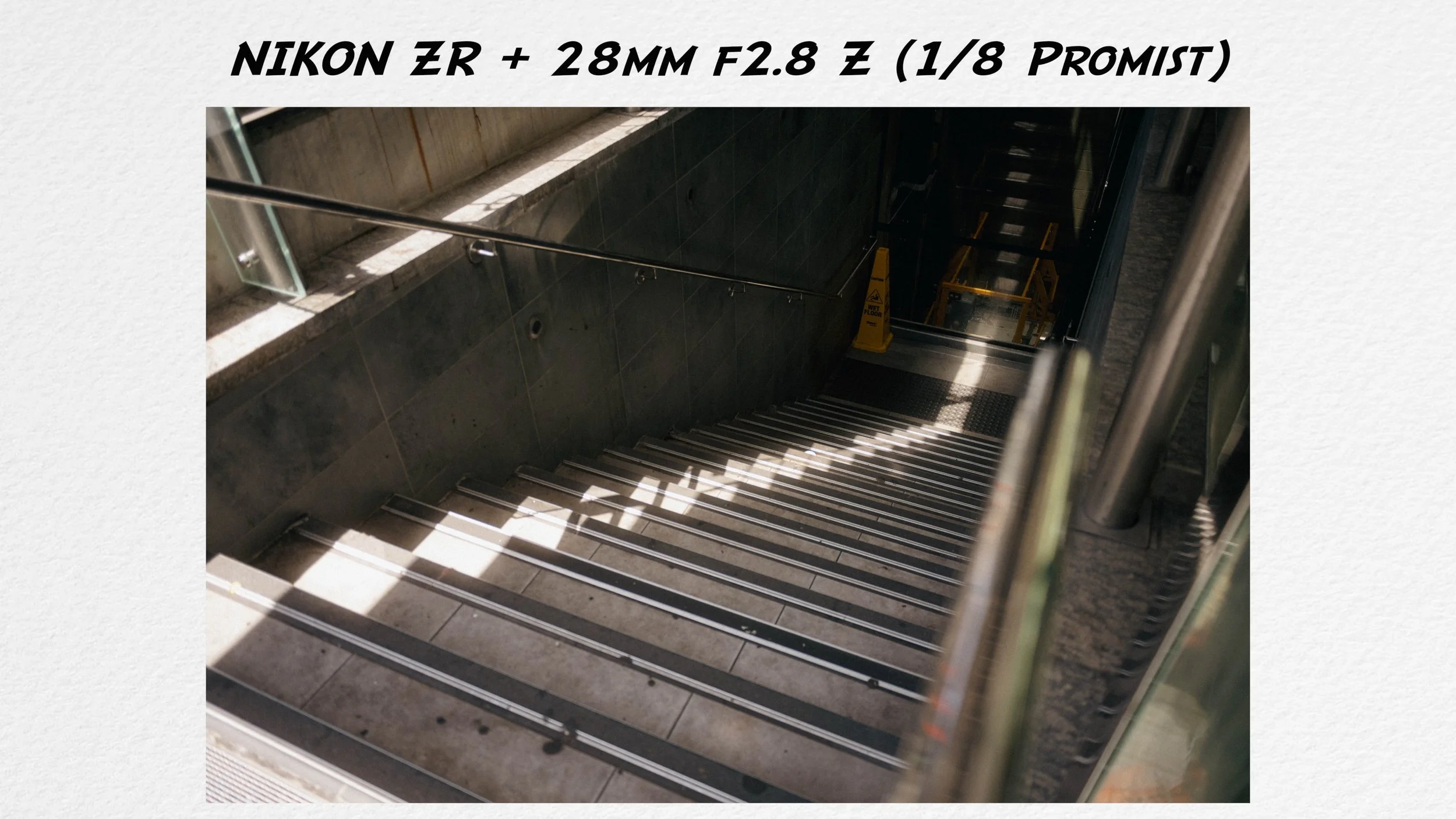
Clearly given its size, with any lens bigger than the 26, 28, or 40mm Z primes, it won’t replace a Ricoh GR for anyone who wants that minimal GR experience. But if you’re like me, someone who already shoots with Nikon Z, doesn’t want or need their cameras to be that small, the ZR is not just good for video it’s also a great backup body for photo. The lack of function buttons forces you to use the camera a certain way - a point and shoot the vast majority of the time, but if I want the full EVF, custom function button experience I have other cameras for that.
7. What the ZR will replace?
The first camera the ZR will replace for me is NOT the ZF.
I bought The ZR specifically to pair with it, both have 24 megapixel sensors. It’s so small that it pairs with the ZF in a camera bag incredibly well, and any time I’m worried about flickering lights and the banding courtesy of the ZR’s electronic only sensor, I can switch to the ZF.
I’ve realised I prefer a 2 camera daily setup, which is why the first camera I did replace the ZR with is one I’m still sad about.
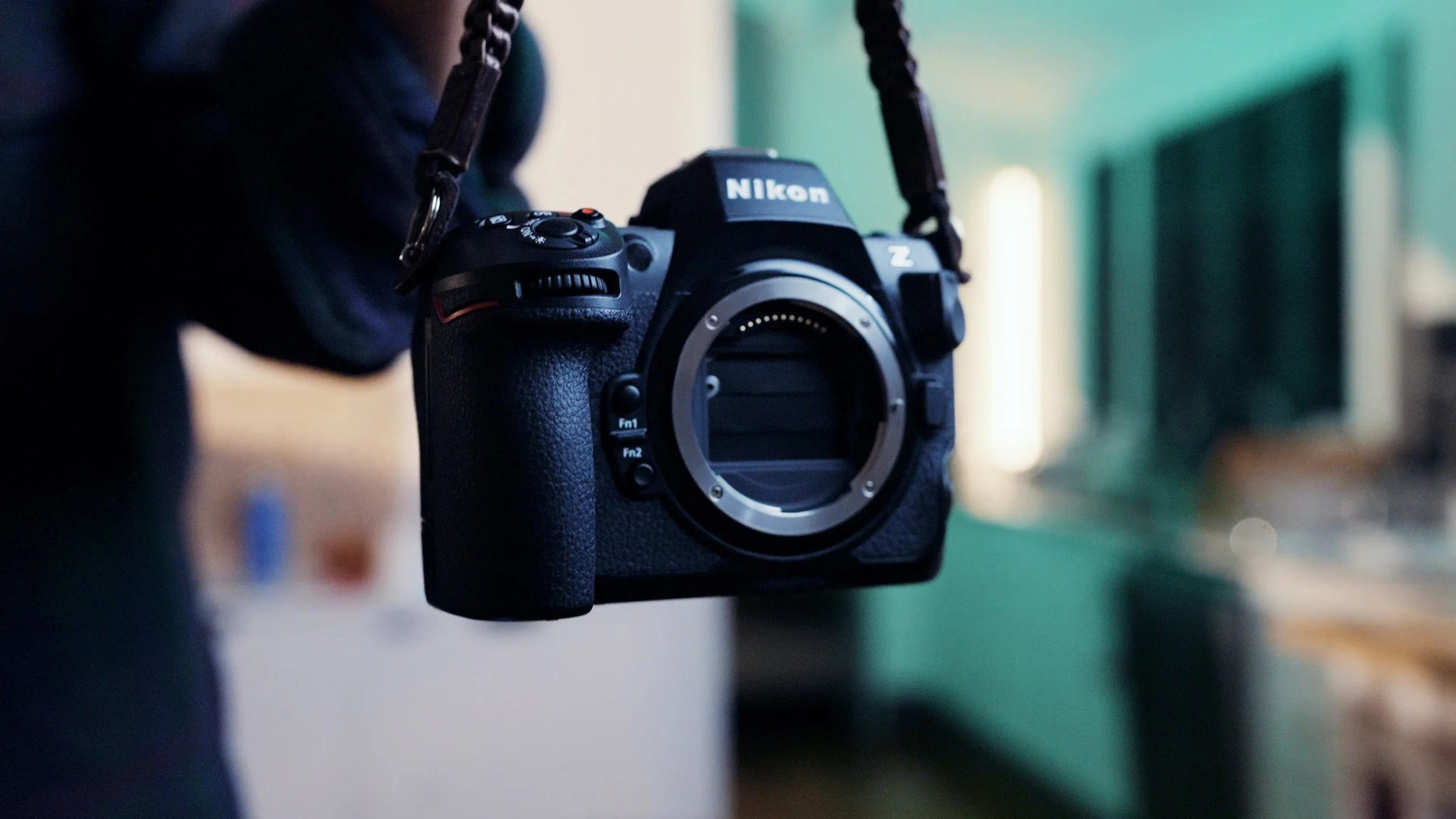
If I only needed 1 camera - it’d be the Z8, I love everything about its the speed, screen, EVF, even the chunkiness, not to mention how good the files look. But I sold it to a friend of mine who shoots events and gets the most out of the Z8’s pro features.
What I need for street work, and to make the videos on this channel? A smaller camera to use and compare to the ZF - a fast prime on each, and for this the Z8 makes things more complicated while taking up more space in the bag.
It’s my attempt to simplify the workflow heading into next year, but what’s simple isn’t easy?
***
Martin Parr’s whole career was dedicated to celebrating the mundane.
His work was so deceptively simple but contained layers upon layers of meaning.
Something we can aspire to but never achieve.
What’s simple isn’t easy.
***
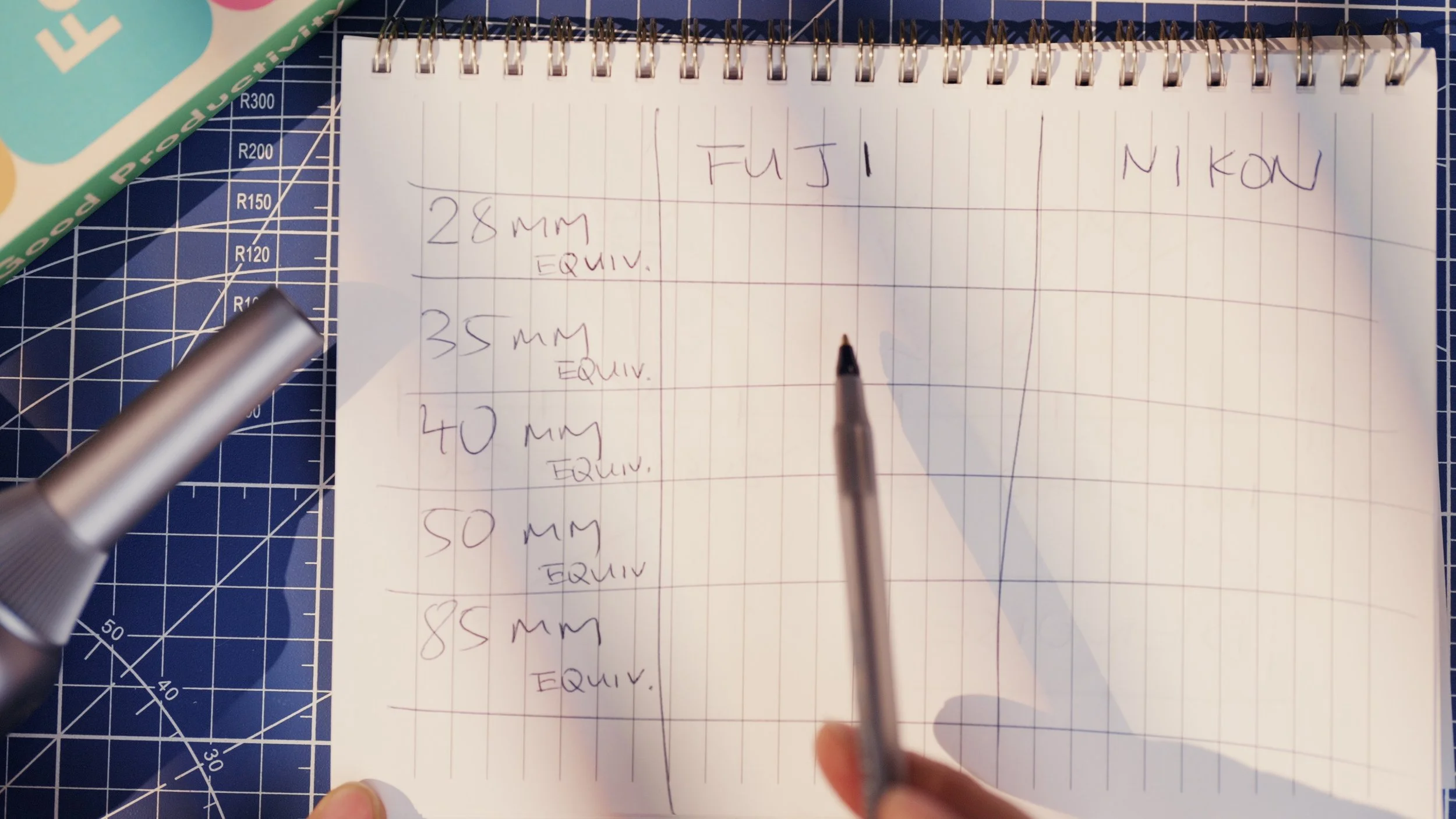
The second camera the ZR replaced in my collection comes on the heels of a 10 lens round-robin comparison between Nikon and Fujifilm. The results are subjective based on your taste in glass. For me it was a necessary exercise before I could move on from the XT5. You can find that post here if you’re interested?
Happy shooting everyone, talk soon.
Jack.
If you’d like to support my work please consider purchasing gear through my affiliate links:
Nikon ZR: https://geni.us/KH4uMvX
Nikon Zf: https://geni.us/fRFp
Nikon 28mm f2.8: https://geni.us/tyZX2A
Nikon 40mm f2: https://geni.us/0AAhXJ
Thypoch 28mm f1.4: https://geni.us/zjPaLdn
Wotancraft leather pilot slings: https://geni.us/m210n
Wotancraft leather pouches: https://geni.us/vzyZHq