Street Photography Changed How I See Mt Fuji?
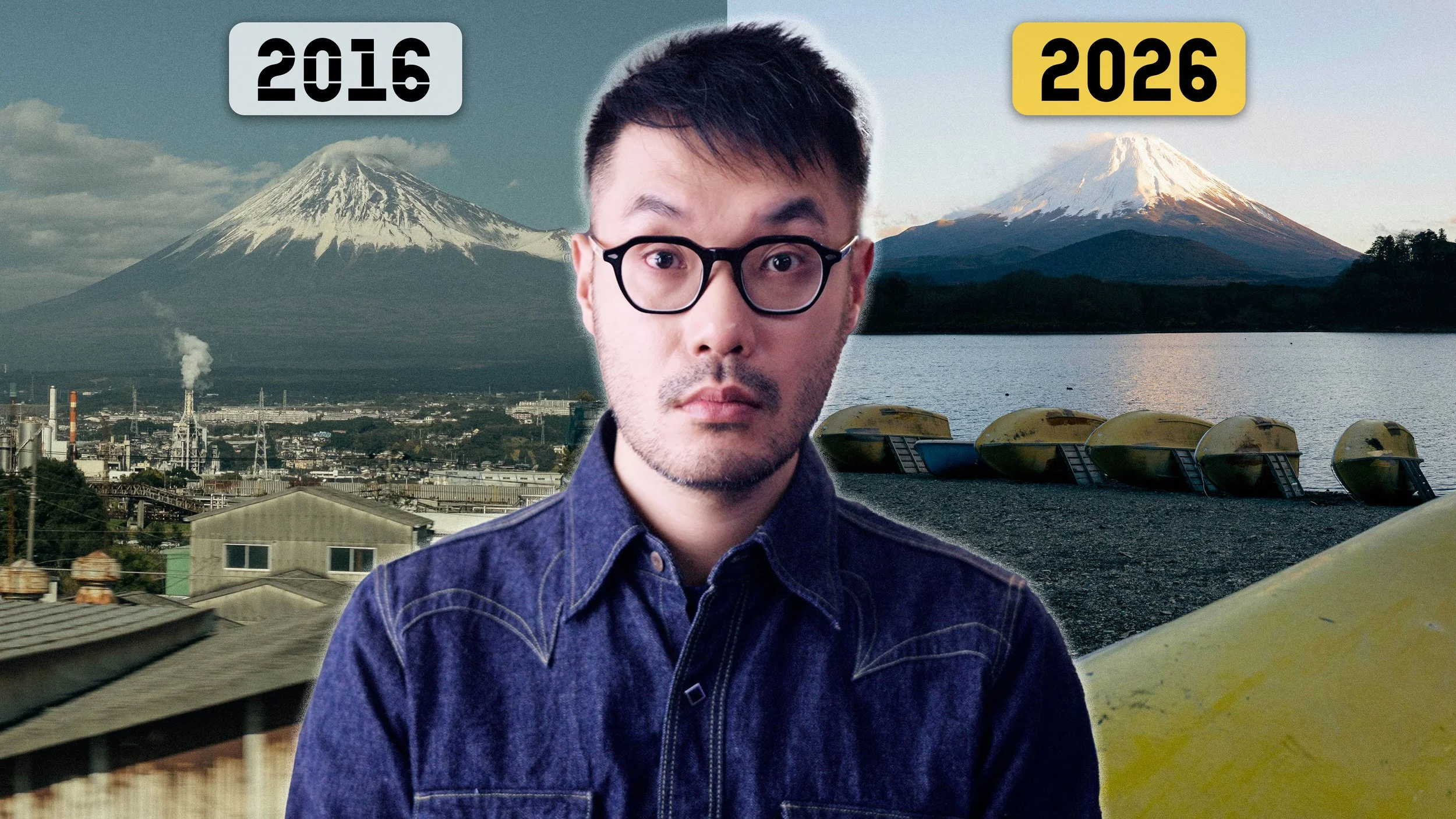
Clean and minimal is how I’ve always pictured Mt Fuji, so why don’t my photos ever look postcard-worthy?
I could blame the crowds or bad weather, maybe landscapes just isn’t for me?
Using every lesson I learnt from a decade of street photography, last month I finally went back to chase that peak.
This time I tried to copy 5 Fuji postcards using prime lenses only.
Don’t be dumb like me - you should just use zooms for landscape photography.
Why am I using primes? It’s the only kit I have for street, I didn’t even pack a tripod.
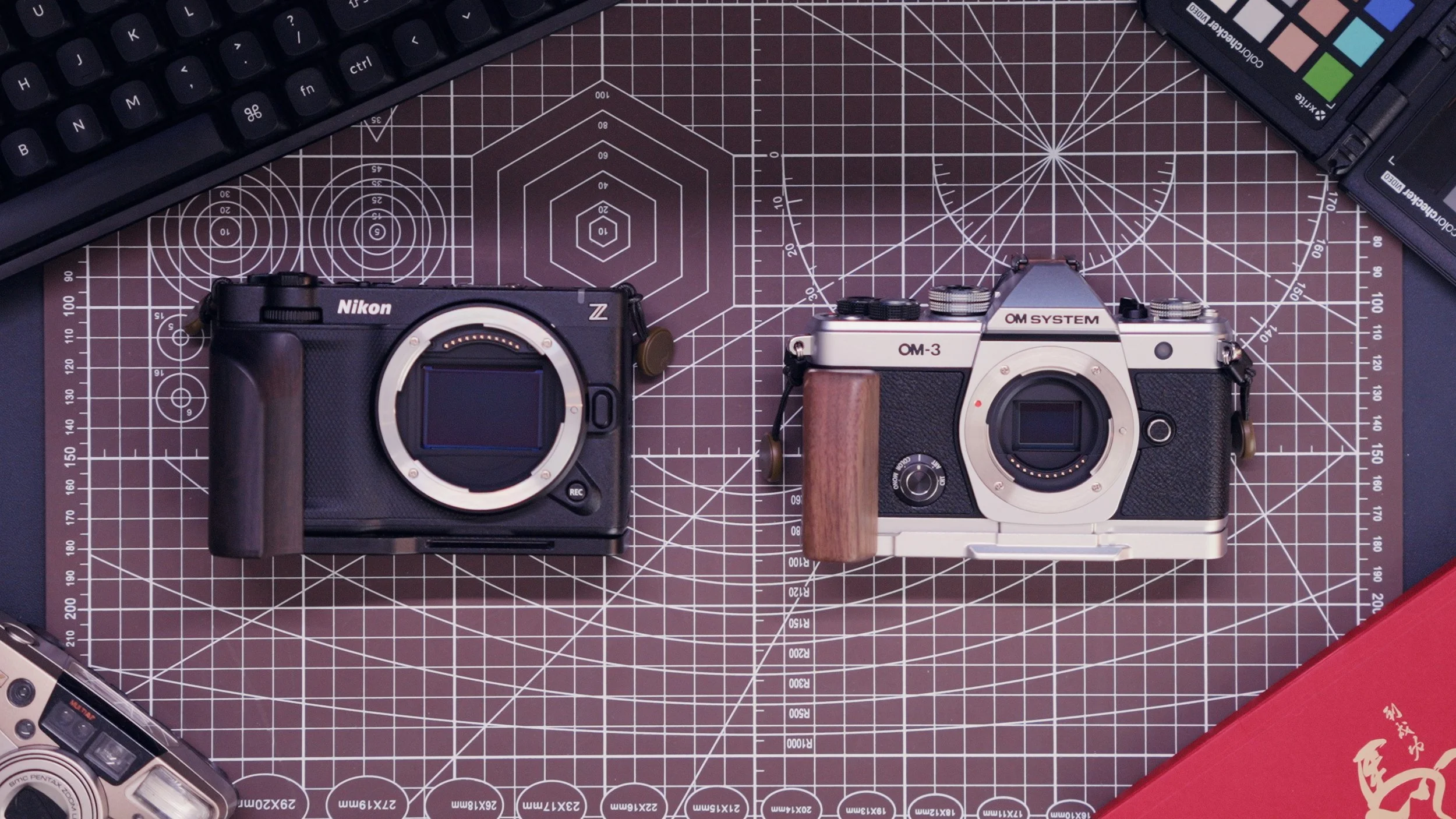
The cameras I did pack - the Nikon ZR and OM3 aren’t ideal for this work either, but they each have 1 feature I’ll need for the last postcard - Fuji Postcard 5.
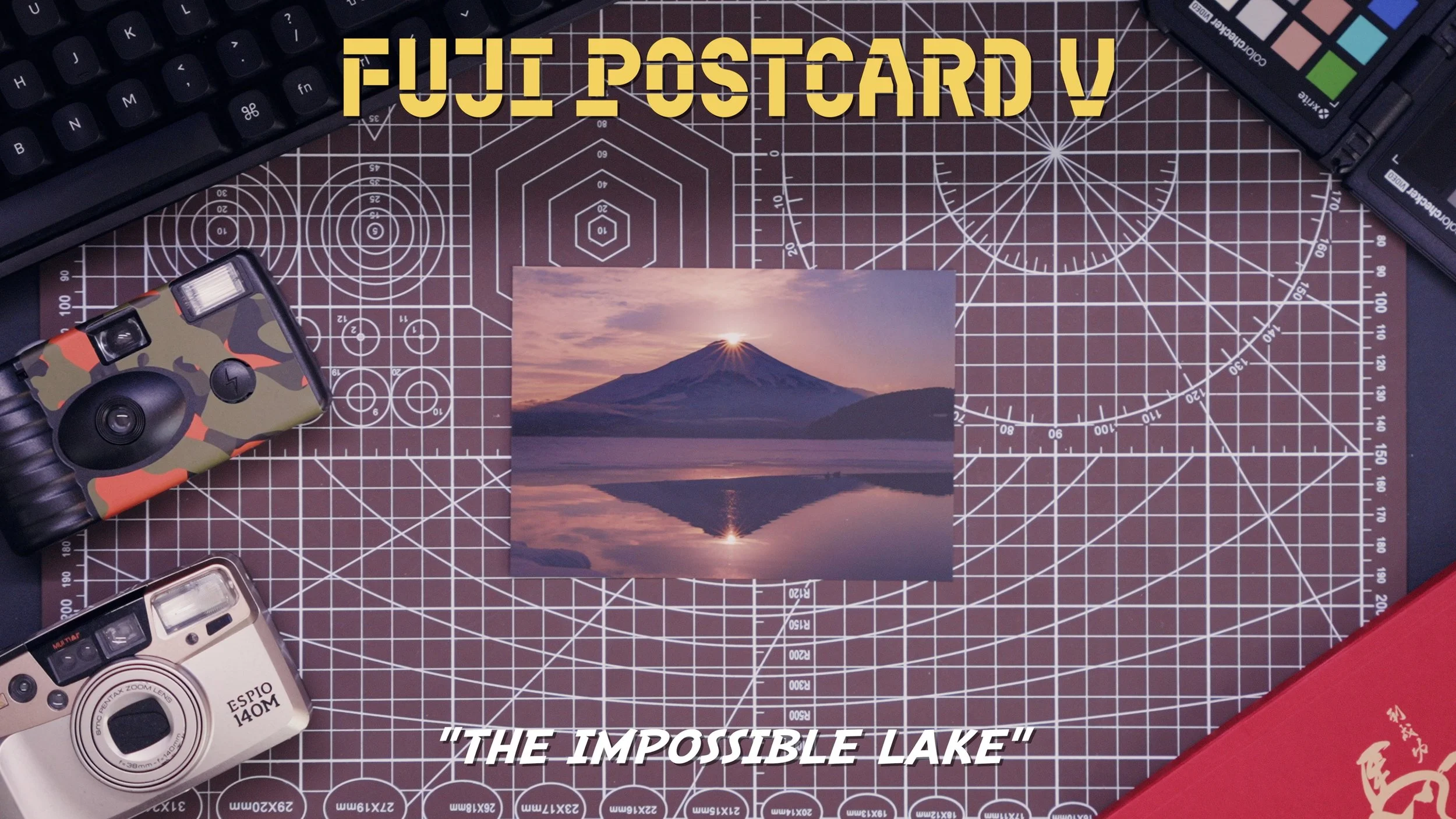
It’s the most ambitious, backlit by sunstars, perfect symmetry between the lake and Fuji, every condition needs to be perfect.
But it’s been 10 years since my last landscape attempt, when I failed to copy…
Fuji Postcard 1: Shinkansen Magic
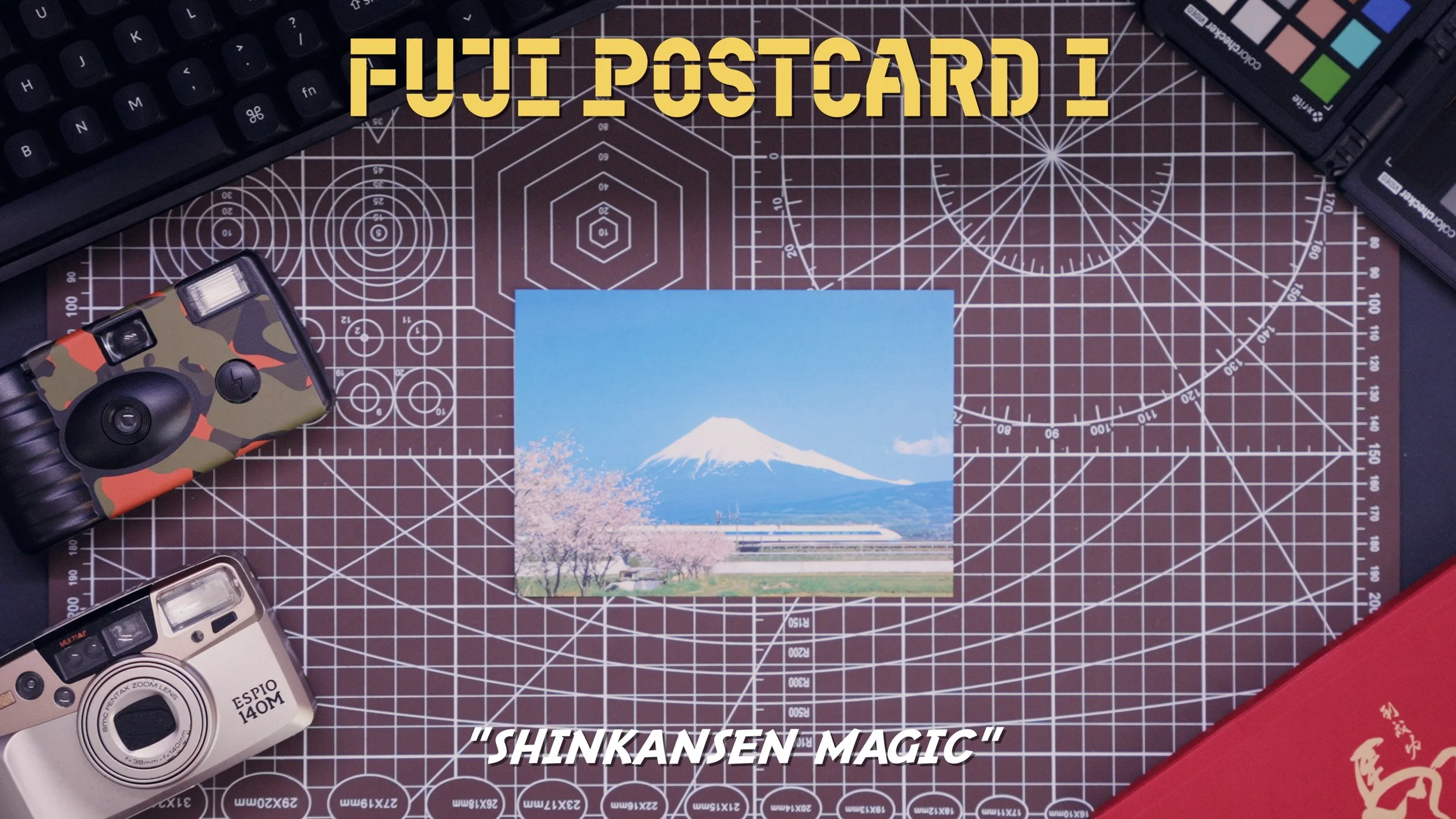
Snow-capped peak, foreground Sakura, everything’s sharp despite the Shinkansen screaming along the Tokaido line. Super close to the tracks, you’d need special permission to setup right there, if tourists or YouTubers tried that today we’d make the local news for all the wrong reasons. What I did instead in 2016 is ride the Tokaido line from Tokyo to Osaka and wait for Mt Fuji to pass by.
I made sure to ask the ticket vendor (maybe the grumpiest man I’ve ever met in Japan having to deal with tourists all day), which seat is on the Mt Fuji side?
That’s how I got this shot 10 years ago.
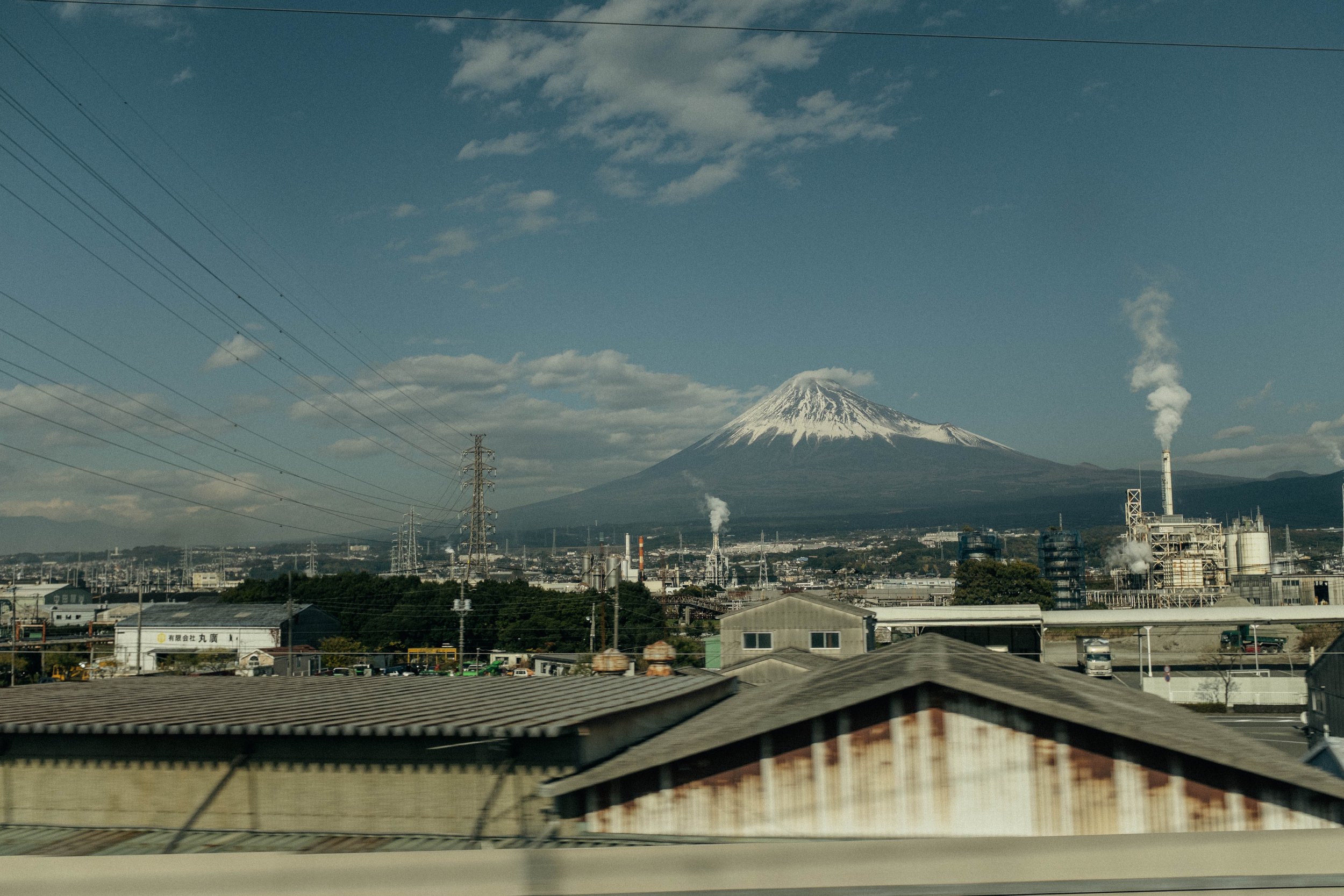
Crooked.
The depth of field too shallow, shutter speed too slow.
A failed attempt.
But my worst mistake? Relying on autofocus.
Out of the hundreds of shots I took trying to balance the camera as the train bumped and shook, less than 10 were in focus? This was on an older Fujifilm X100T, but any camera would struggle to autofocus when the scenery was changing so quickly.
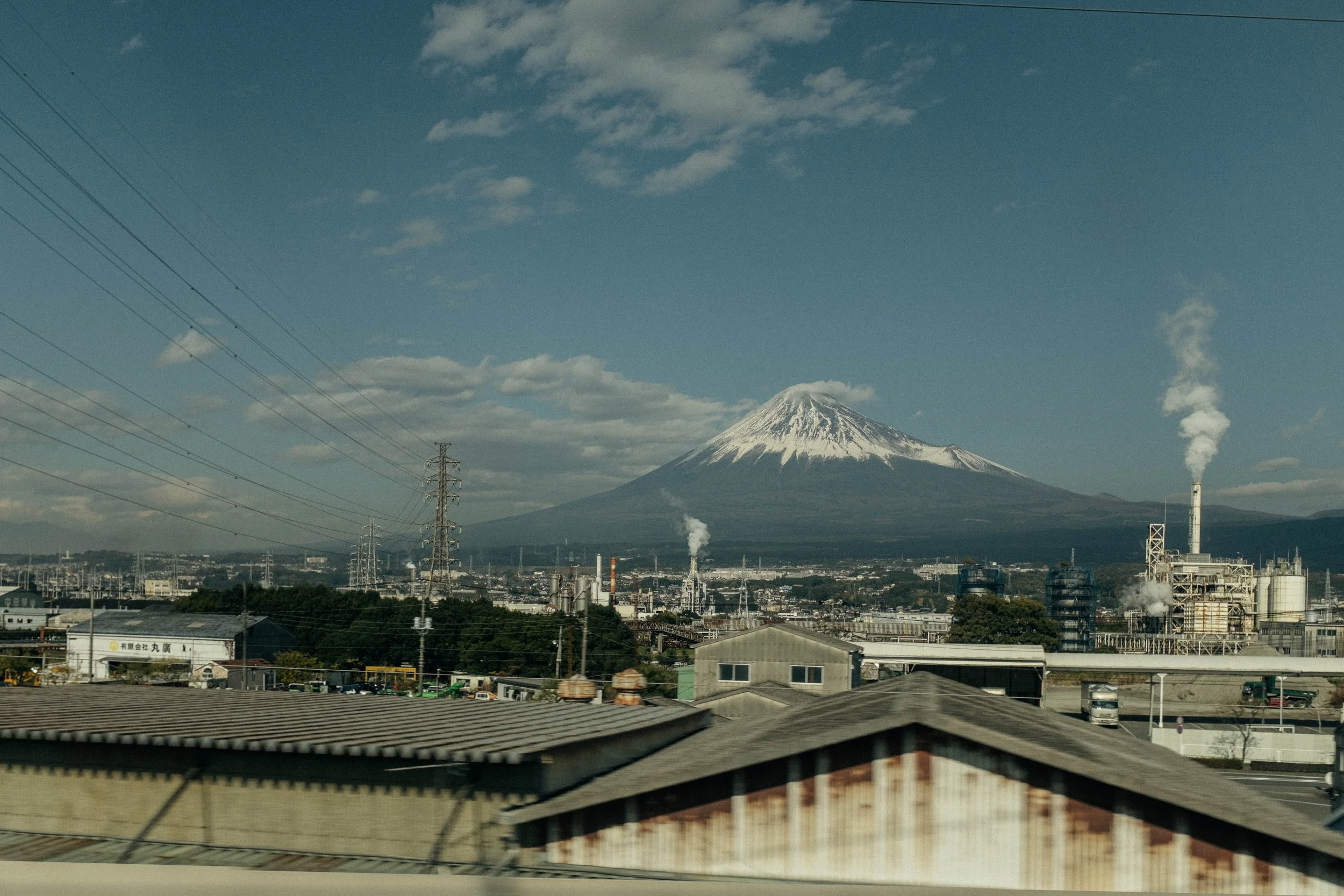
Straightened
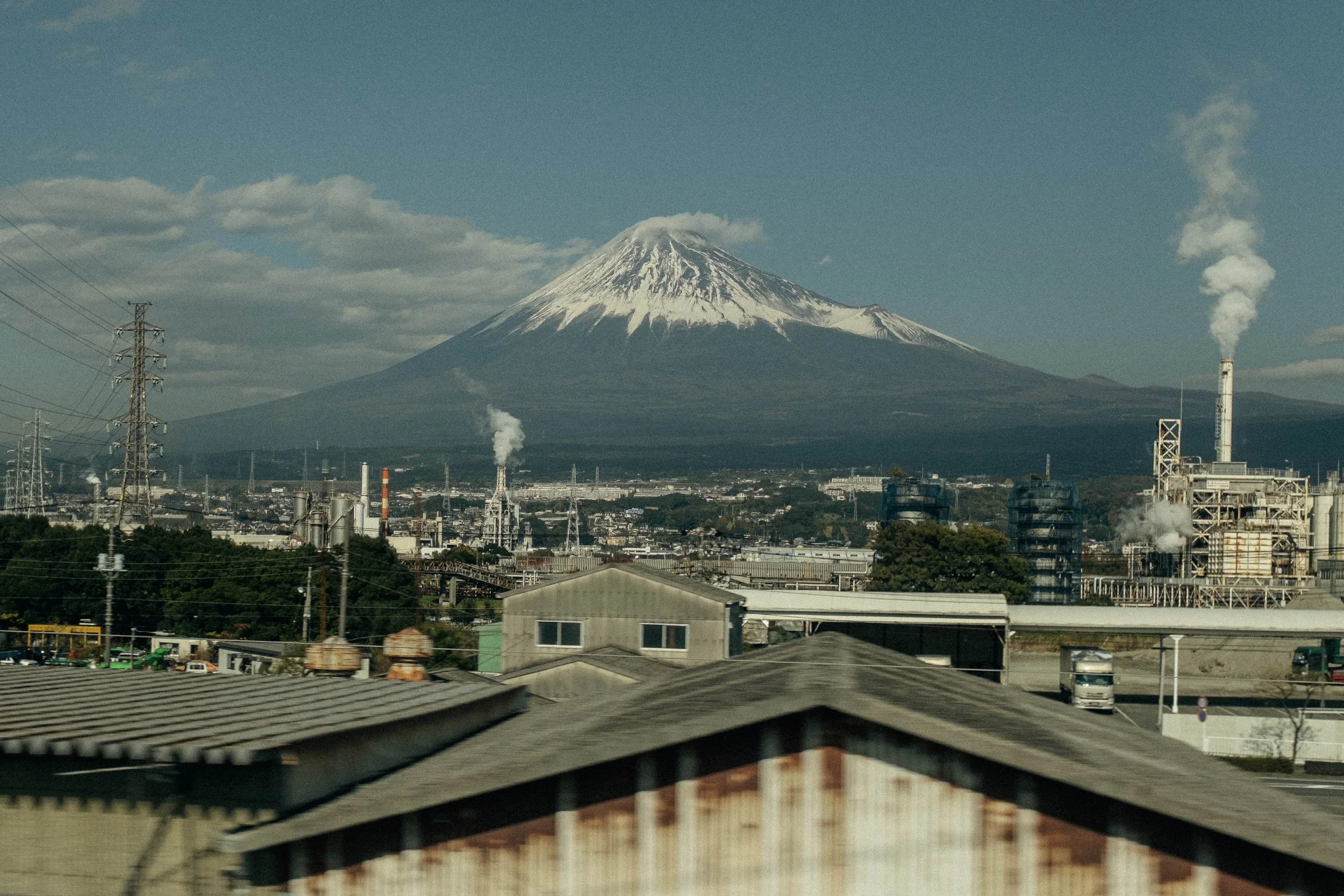
Cropped and Recomposed
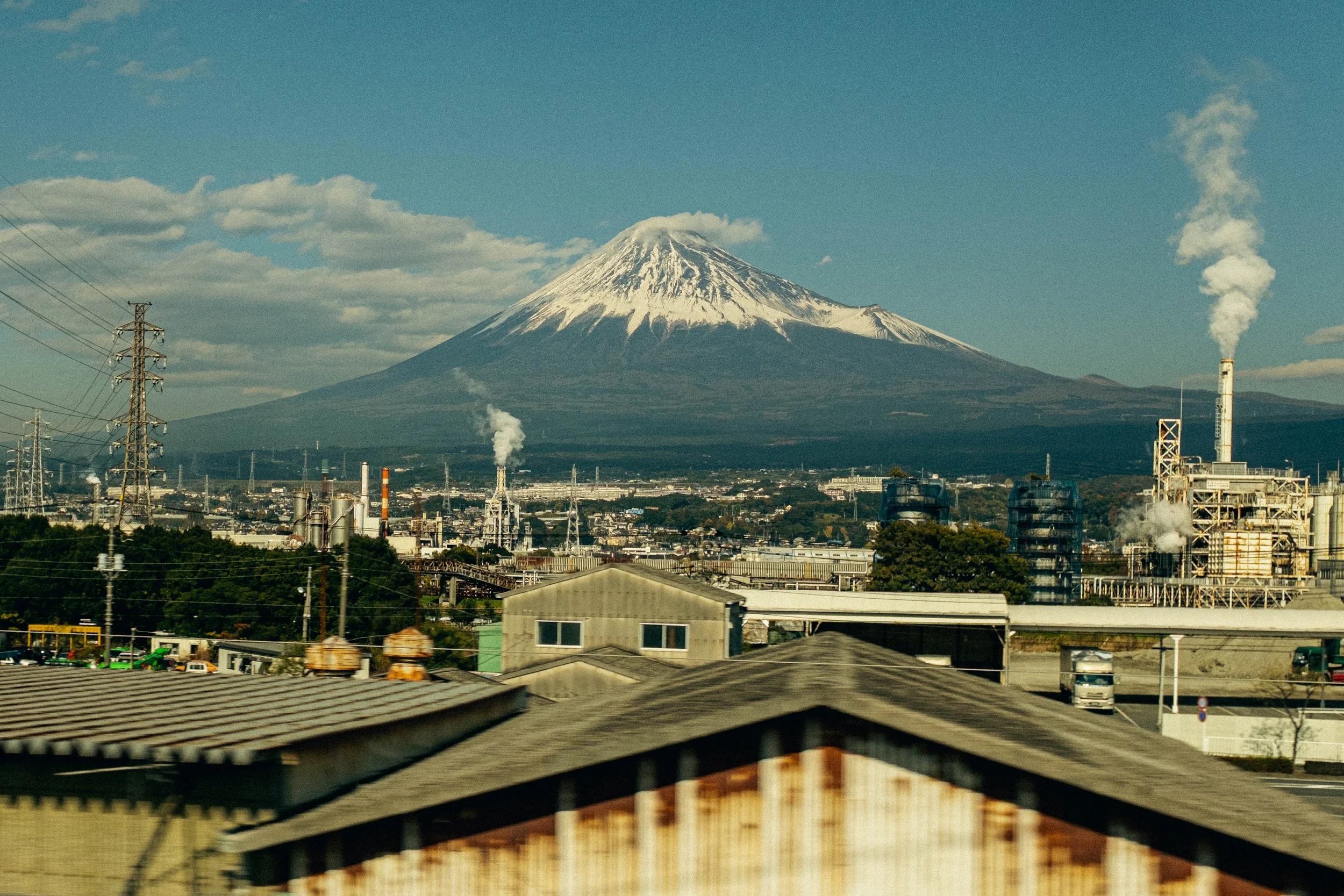
Applied my Classic Chrome emulation LR preset (free to download at the bottom of this post)
A fixed 35 mm equivalent, no zoom to punch in more, but in post I straightened the horizon, crop and recompose, flanking power lines and factory smoke, at least I didn’t waste that clear Fuji peak.
Surely I’d get another shot? Then suddenly it was 10 years later.
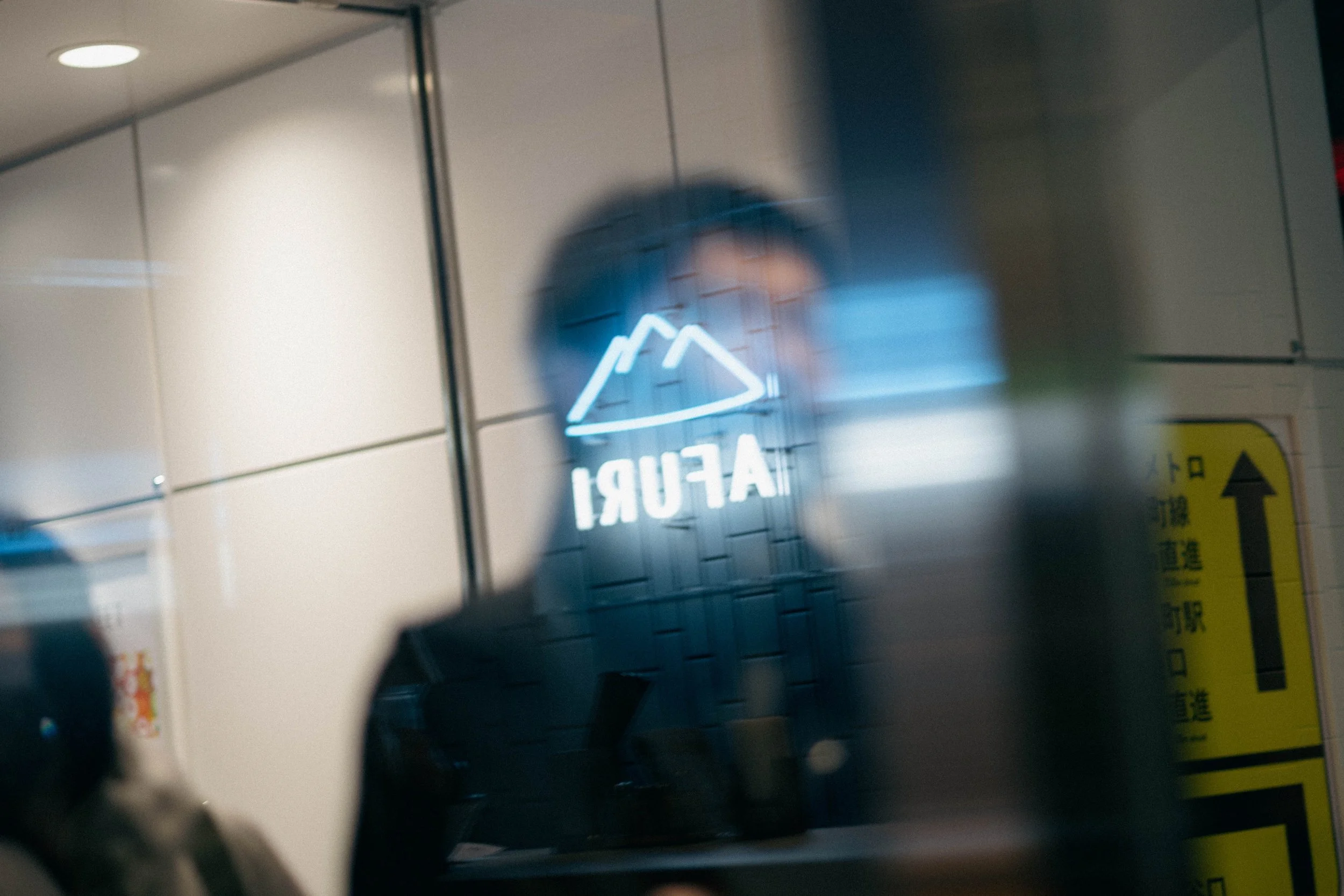
The reason I prefer street? Speed.
Any time, any where, the worse the weather gets, the better it looks, the complete opposite of landscape photography.
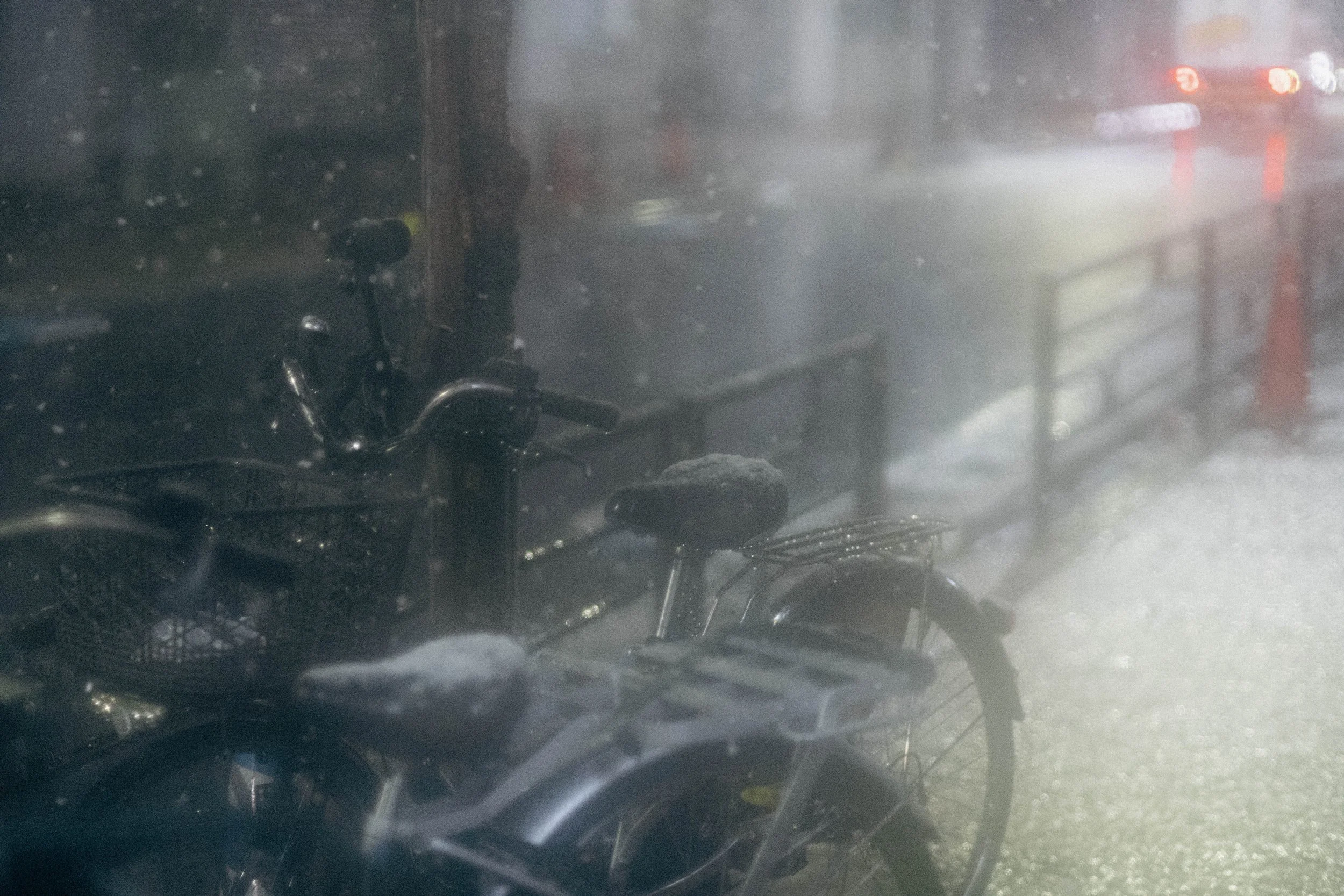
The real reason I stopped shooting landscapes?
Chasing sunrise and sunsets is a bit too lonely for me, and is there even a point when these postcards already exist?
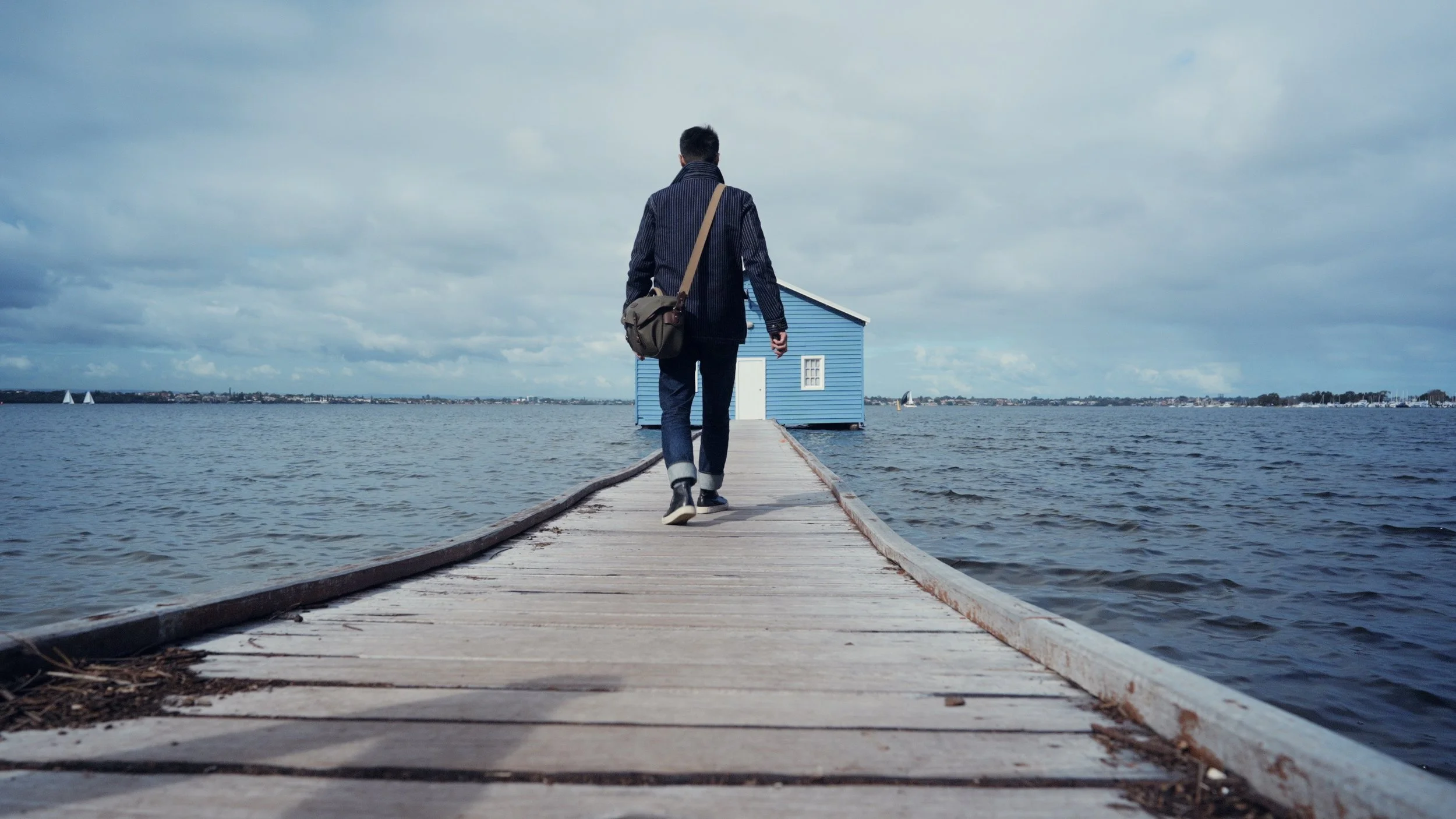
The reason I prefer primes? What you see is what you get.
No second guessing, even if you lose that zoom flexibility.
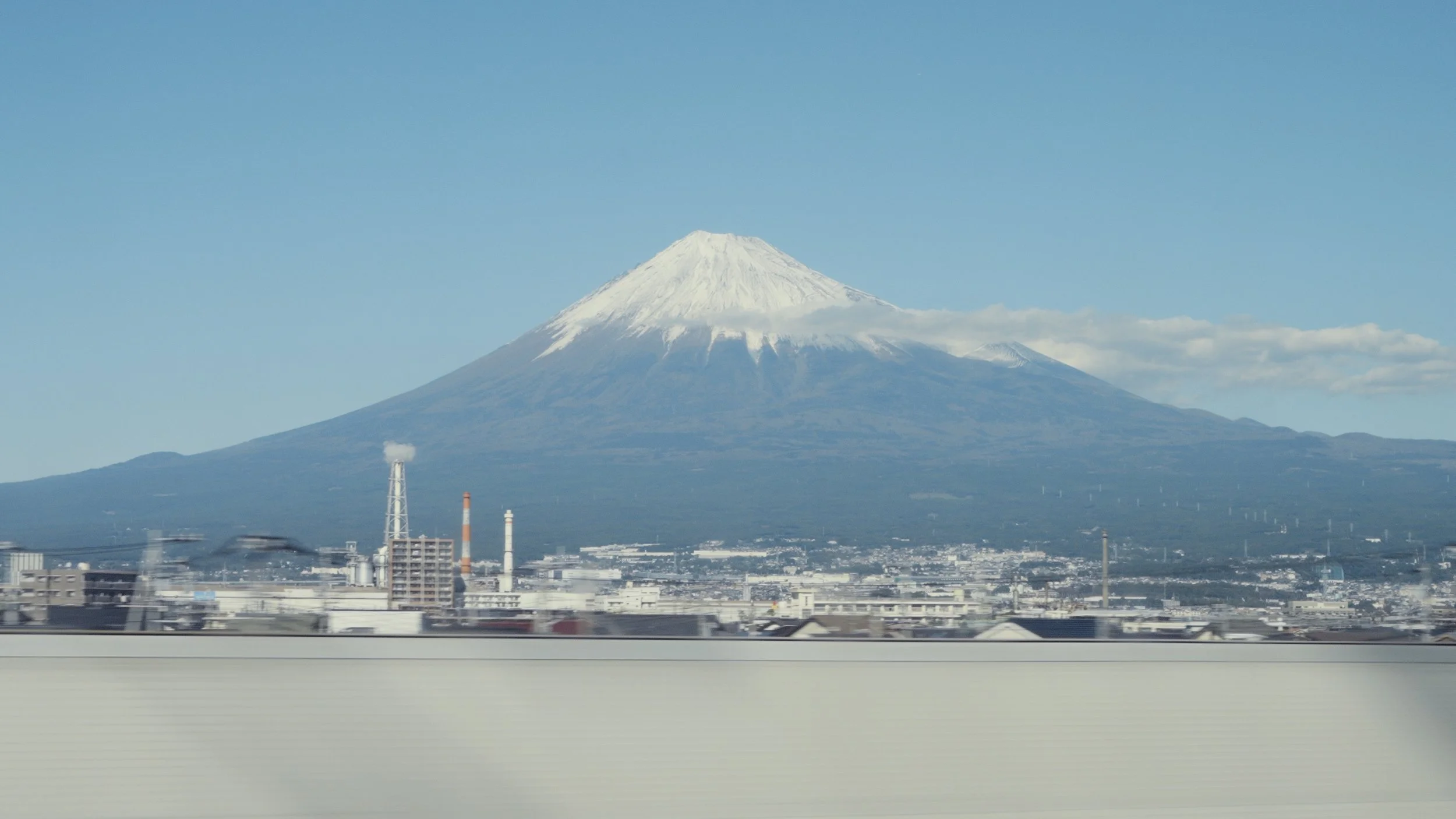
On the train I couldn’t physically move closer - a Zoom would have been handy, but the street photography lesson that helped the most 10 years later? Zone focusing. Mt Fuji’s distance from the train won’t be changing - just what’s obscuring my view in front of it, and for locking the focus at infinity manual focus beats autofocus. Taking the time to learn distance scales on a manual lens, where to set the focal distance for any given aperture.
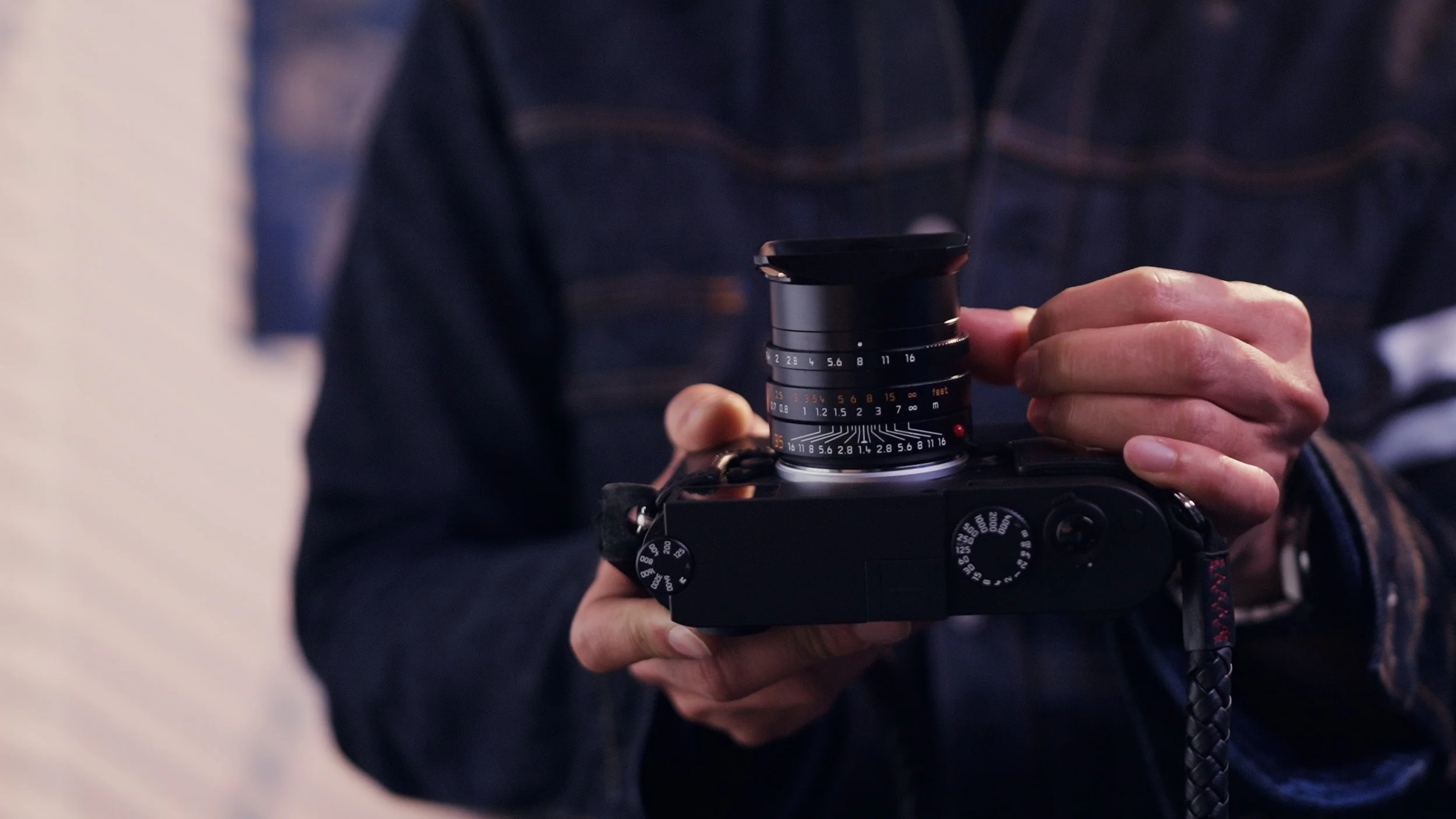
Like zone focusing on the street I want more things in focus, so f8 or f11? Shutter speed 1/500th of a second freezes almost any type of motion for me on the street - this should work to limit the vibrations on the Shinkansen too.
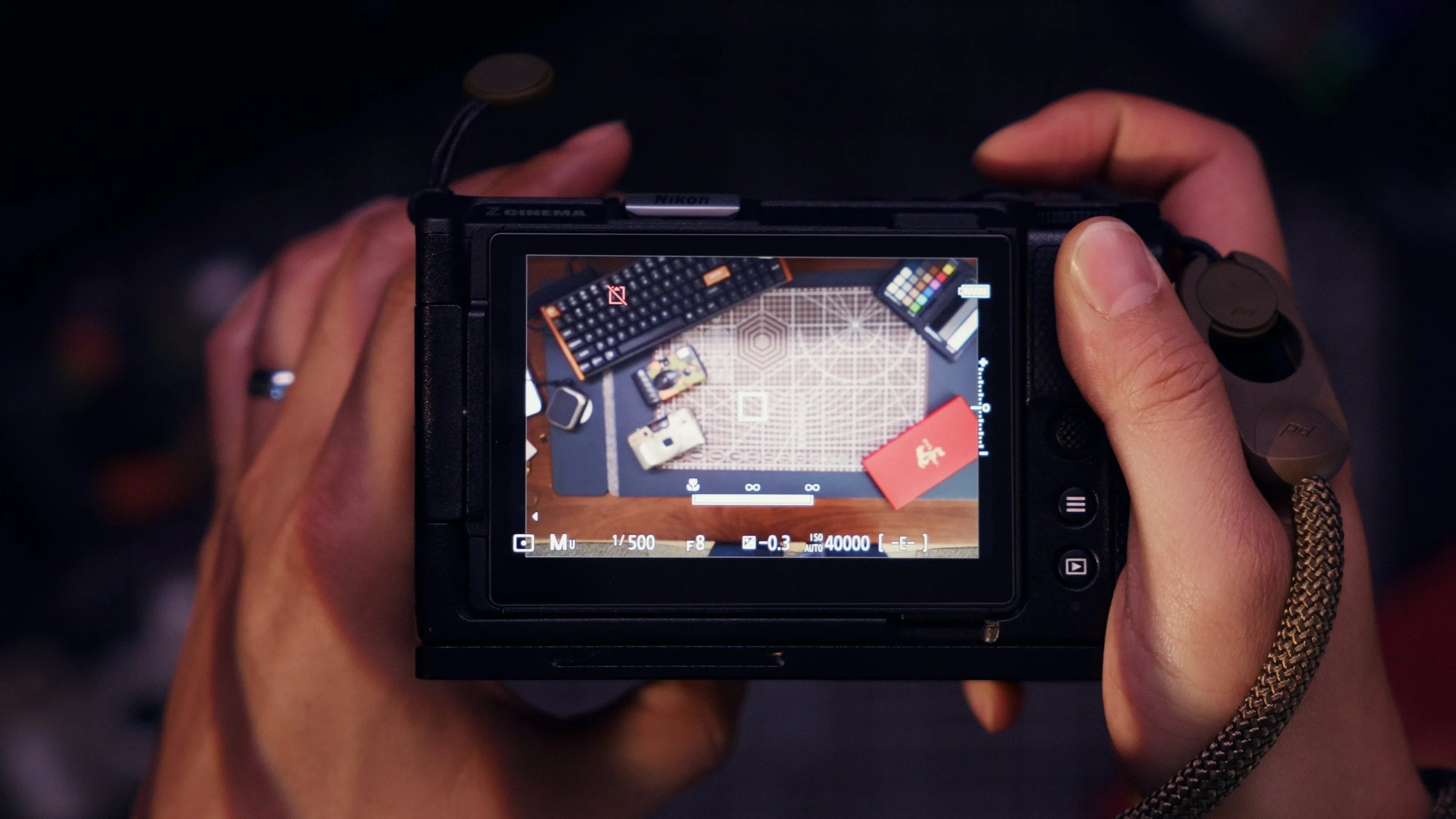
It is moving so fast though, blink and you’ll miss it, just like on the street, any slight blackout or the buffer not clearing - in my case too much caffeine - means I’ll miss the shot. The resolution and dynamic range of my ZR and OM3 are far from market-leading, but both can do blackout free shooting, you never lose sight of the scene - I’m optimising for speed.
For these 2 cameras I brought 3 primes. The first? The humble 28mm 2.8 Z for my ZR, wide but not ultrawide, small, compact, quick to react. I stopped it down to F8, turned the autofocus off, lined up to infinity - ready to go.
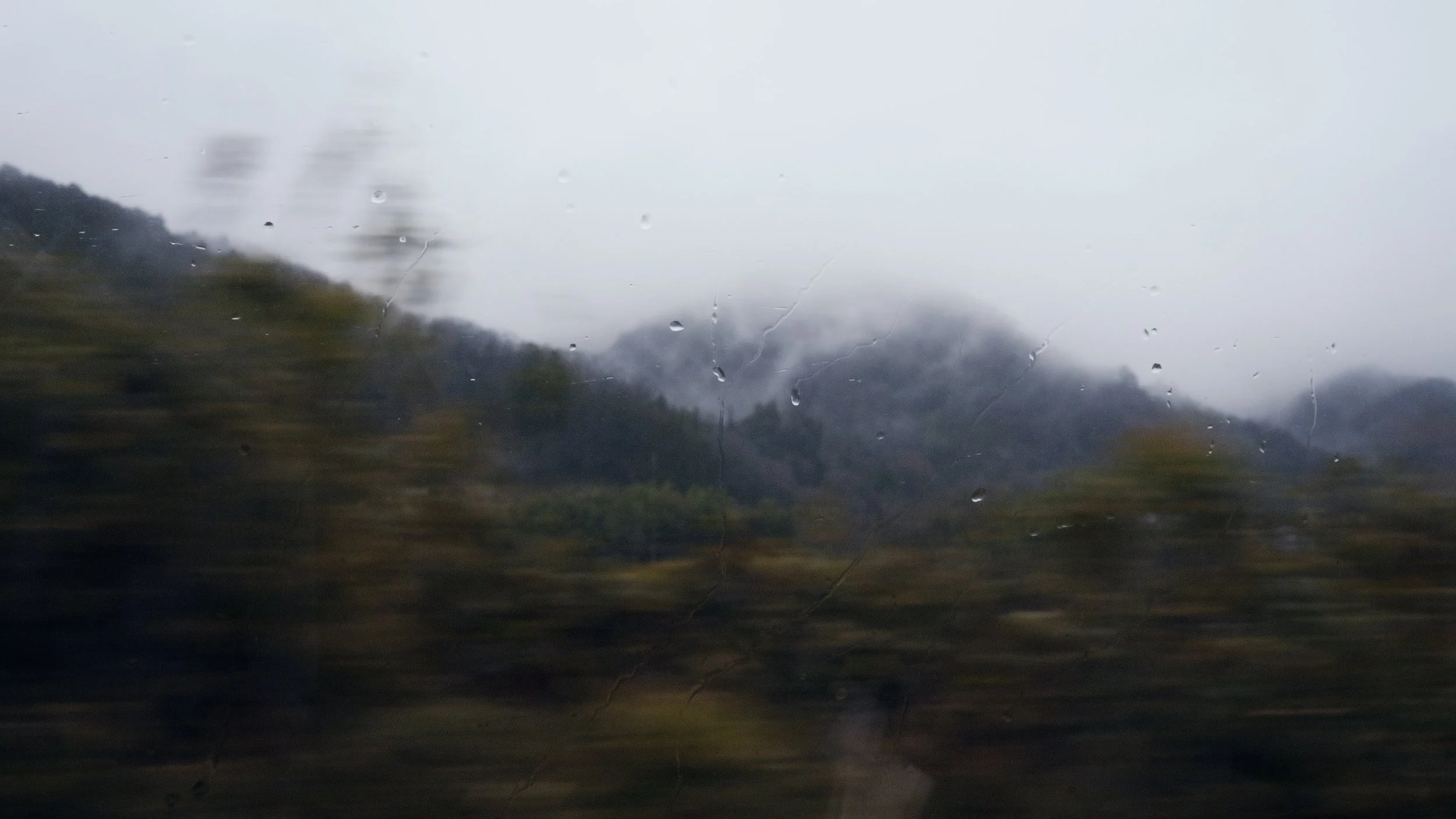
The ego, the hubris to think just because I was ready, the weather would be?
As soon as we got on the train clouds covered the sky and all of Fuji, they even made a sad little announcement over the train’s PA:
“Normally this is where you would see Fuji, but not today”.
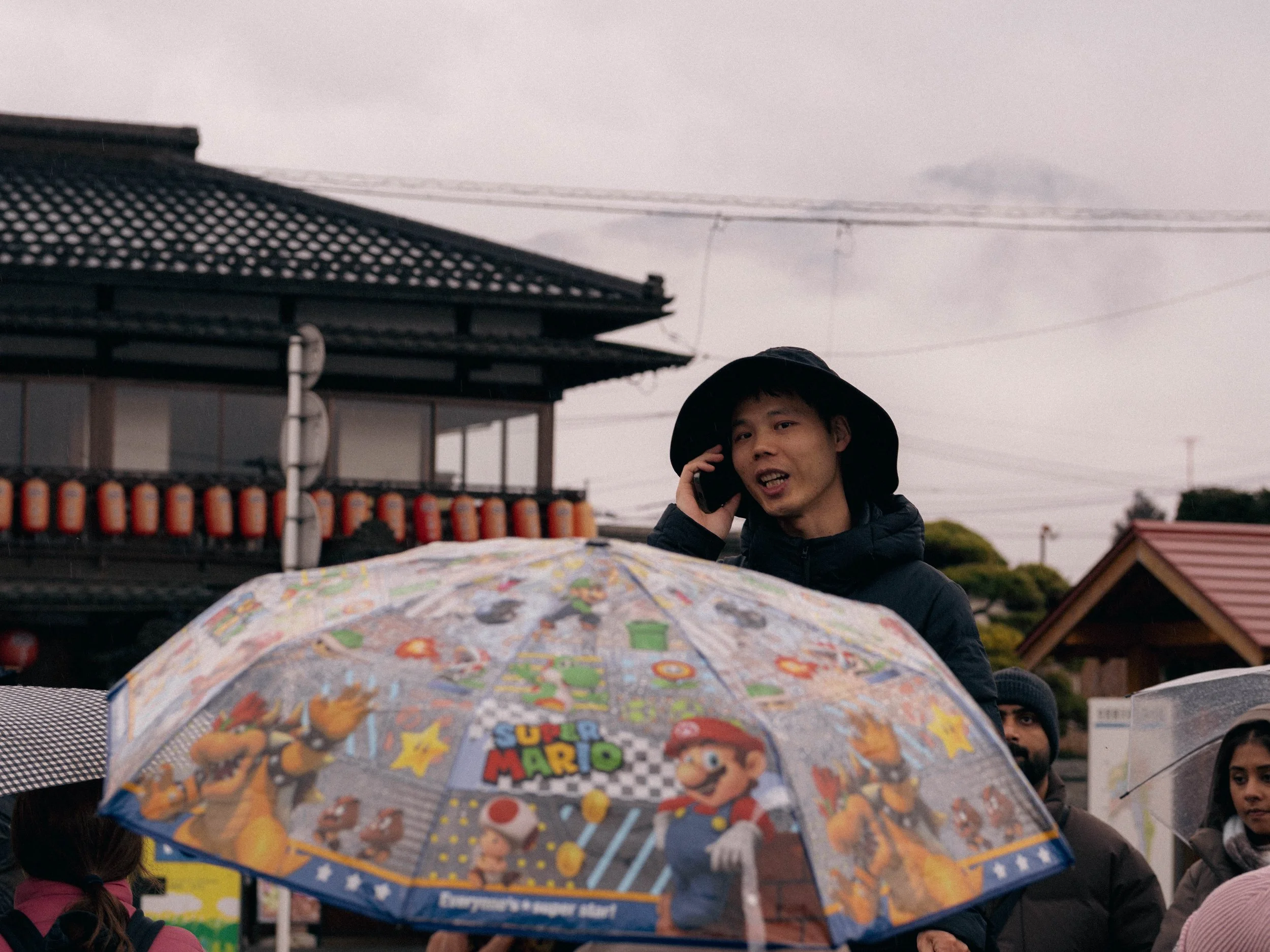
But a decade of street photography taught me there’s always a frame to find if you’re willing. Rather than pack the ZR away? Raindrops, conductors and commuters, I quite liked this vibe even though there’s no Mt Fuji in sight.
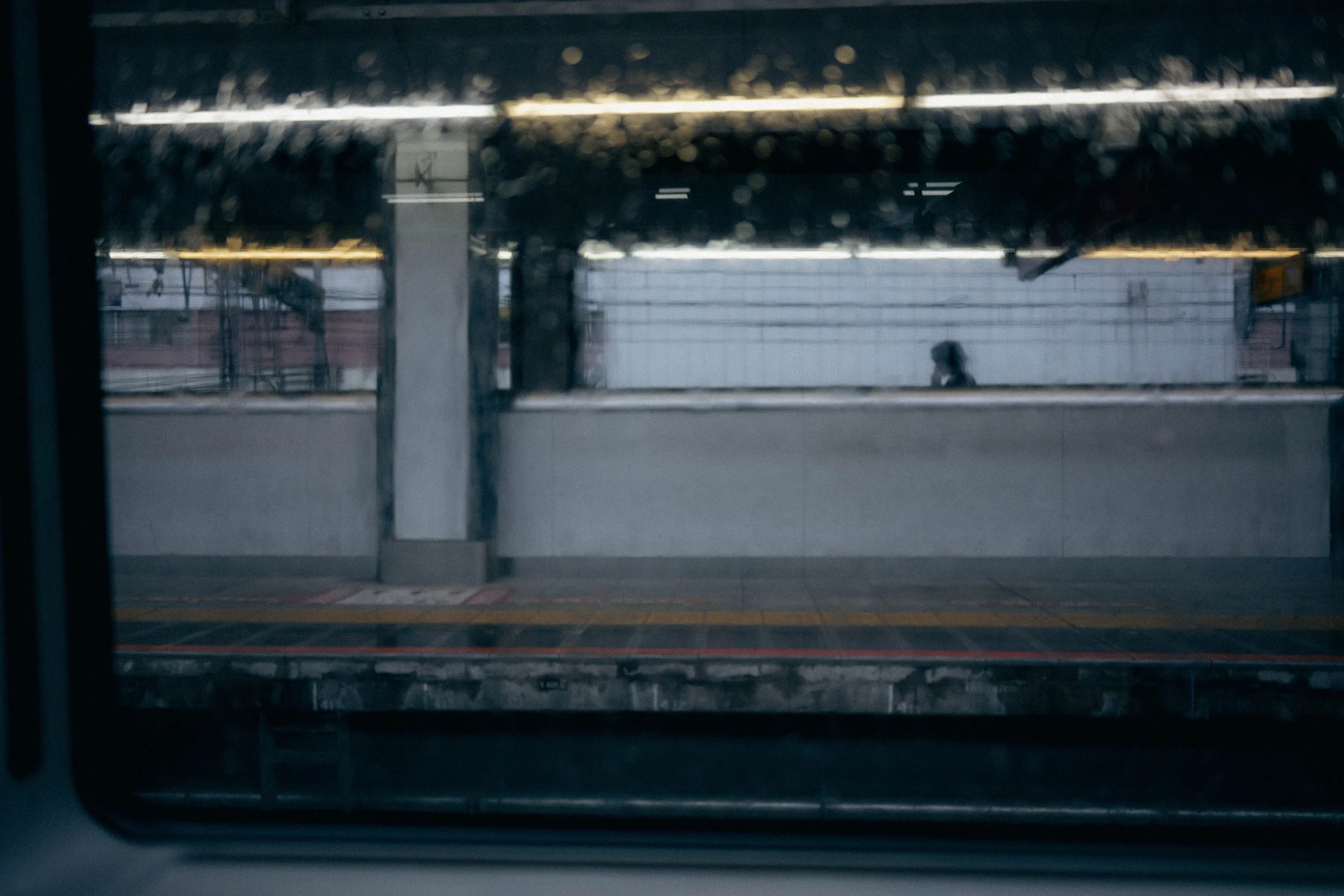
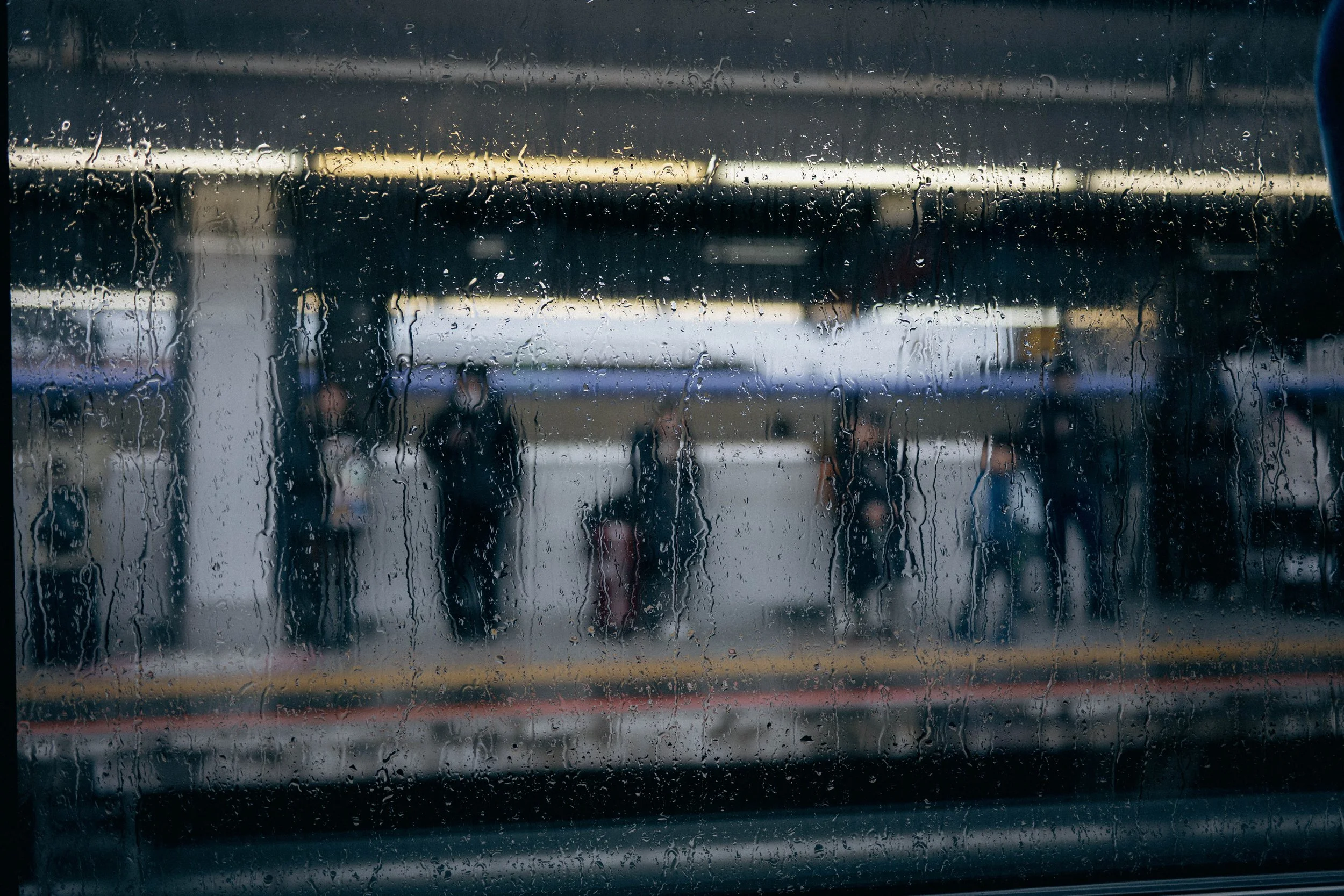
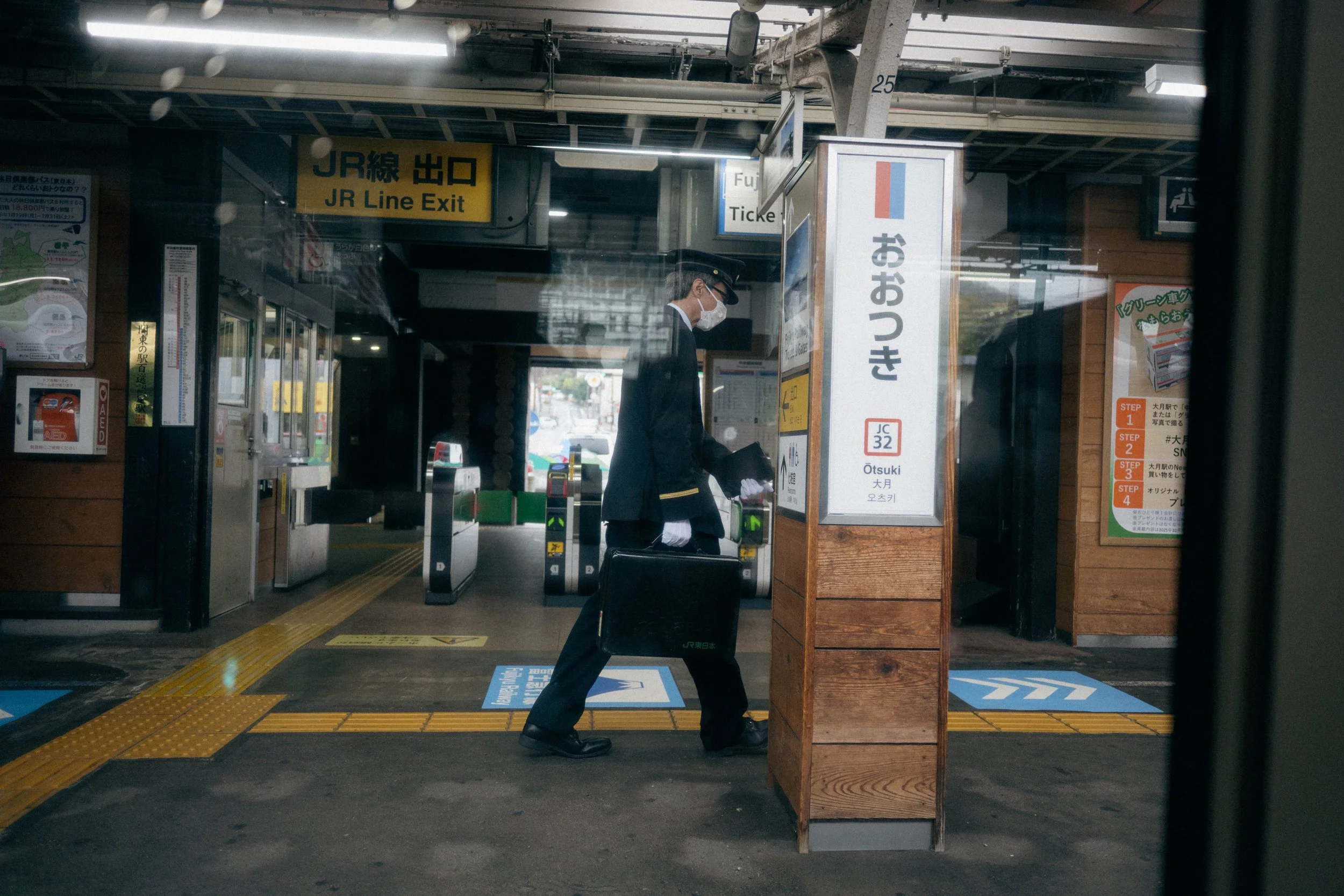
Nikon ZR + 28mm f2.8 Z
28mm is quite useful for this style of shooting, but I needed something tighter for:
Fuji Postcard 2: Honcho street.
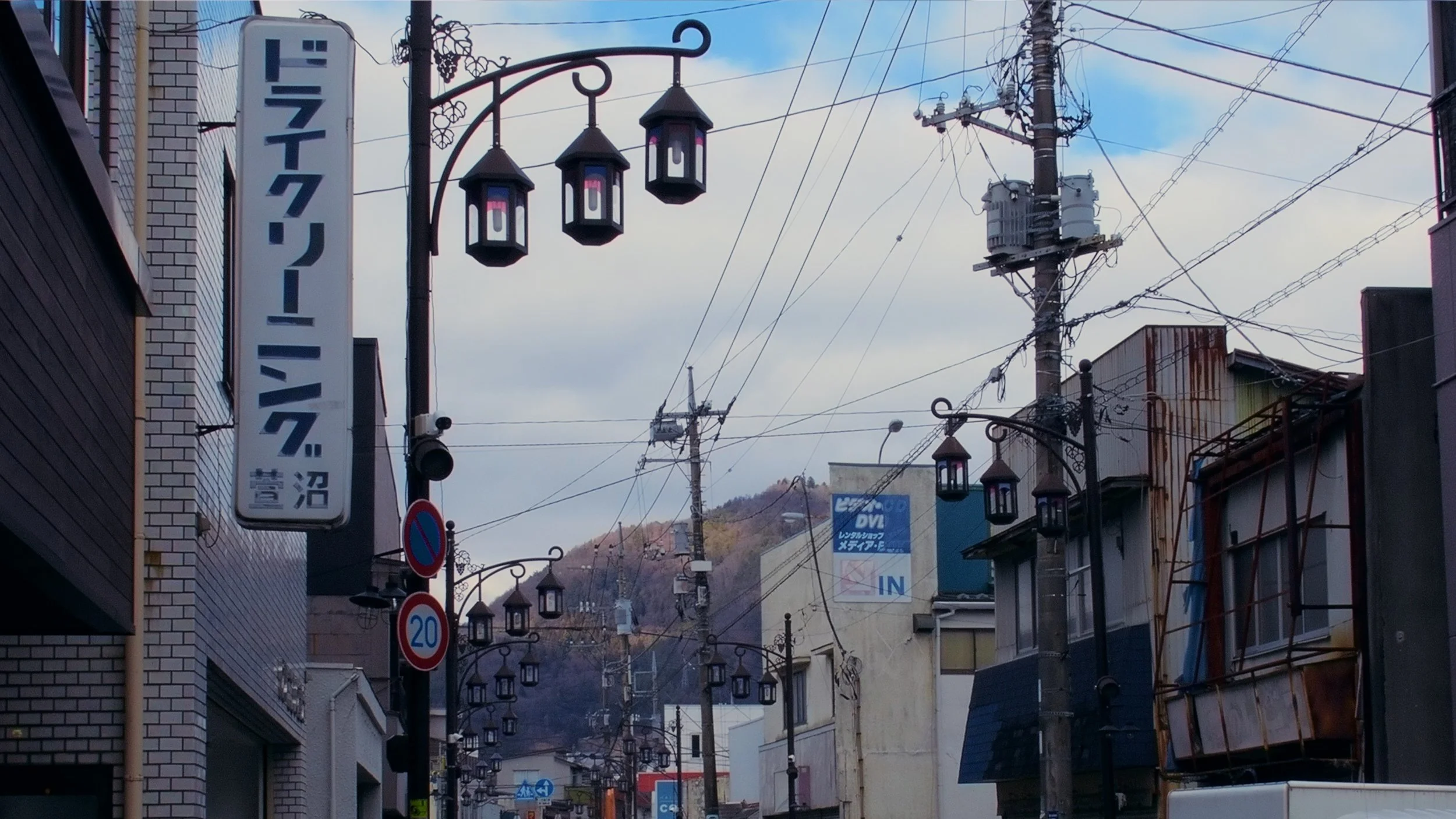
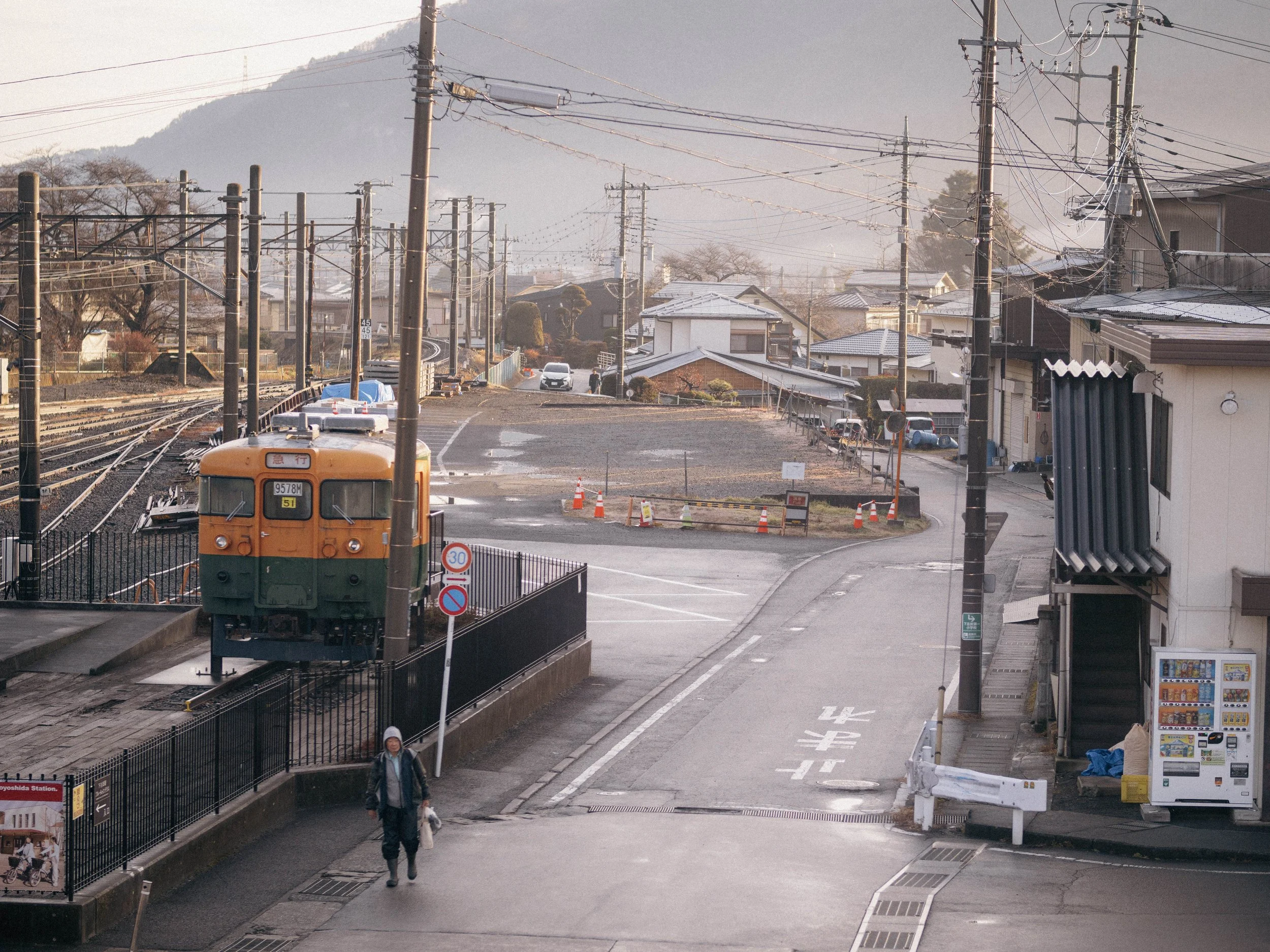
Street signs leading your gaze to an urban view of Mt Fuji, is typically shown through a compressed telephoto field of view. As our train arrived in Shimoyoshida station however, the day was over for photography.
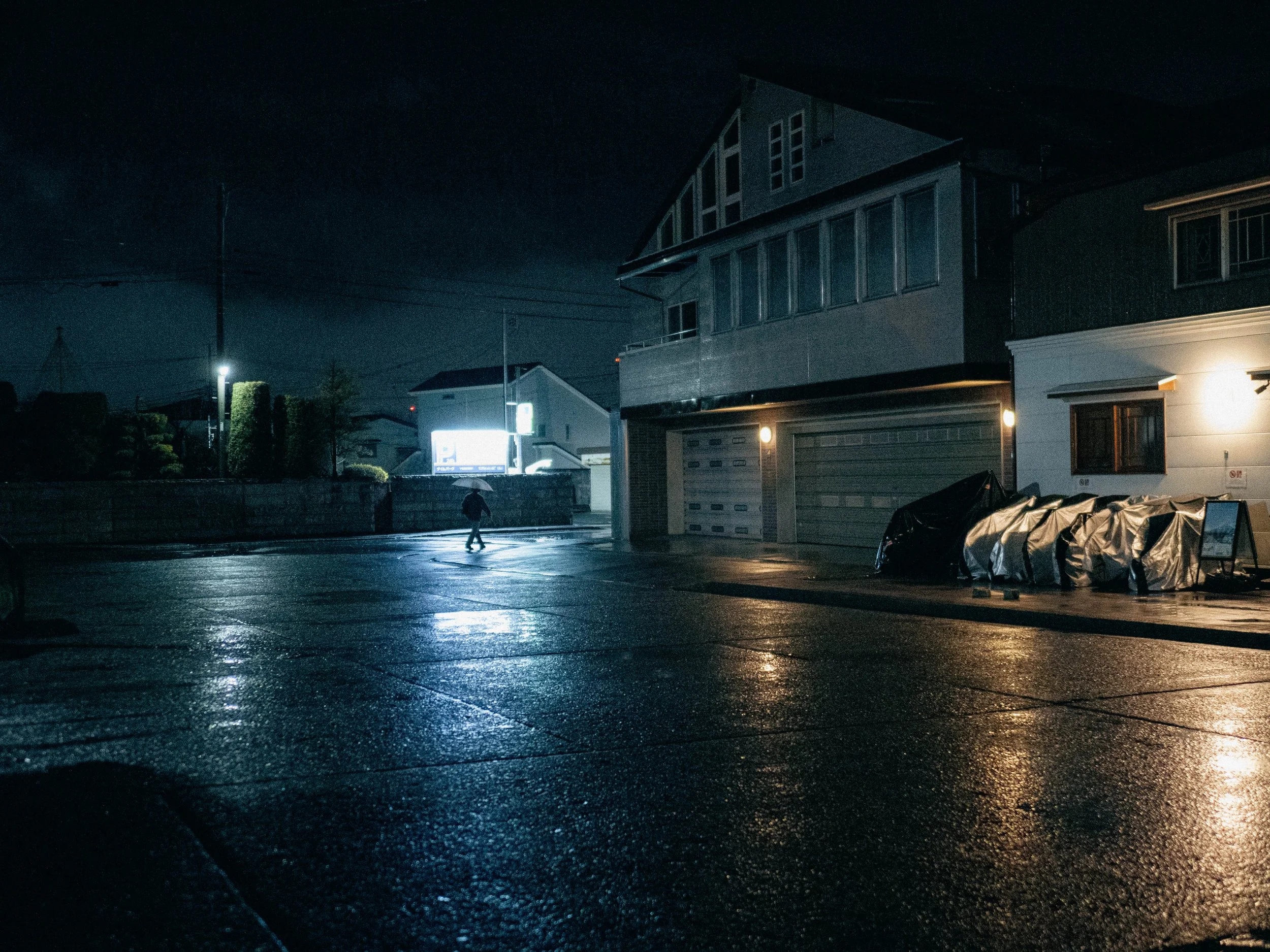
Miserable weather, not a hint of Fuji, at least we’re here for a few more days. Unlike landscape for street bad weather turns lemons to lemonade. Even stuck in the mountains there’s are frames to find.
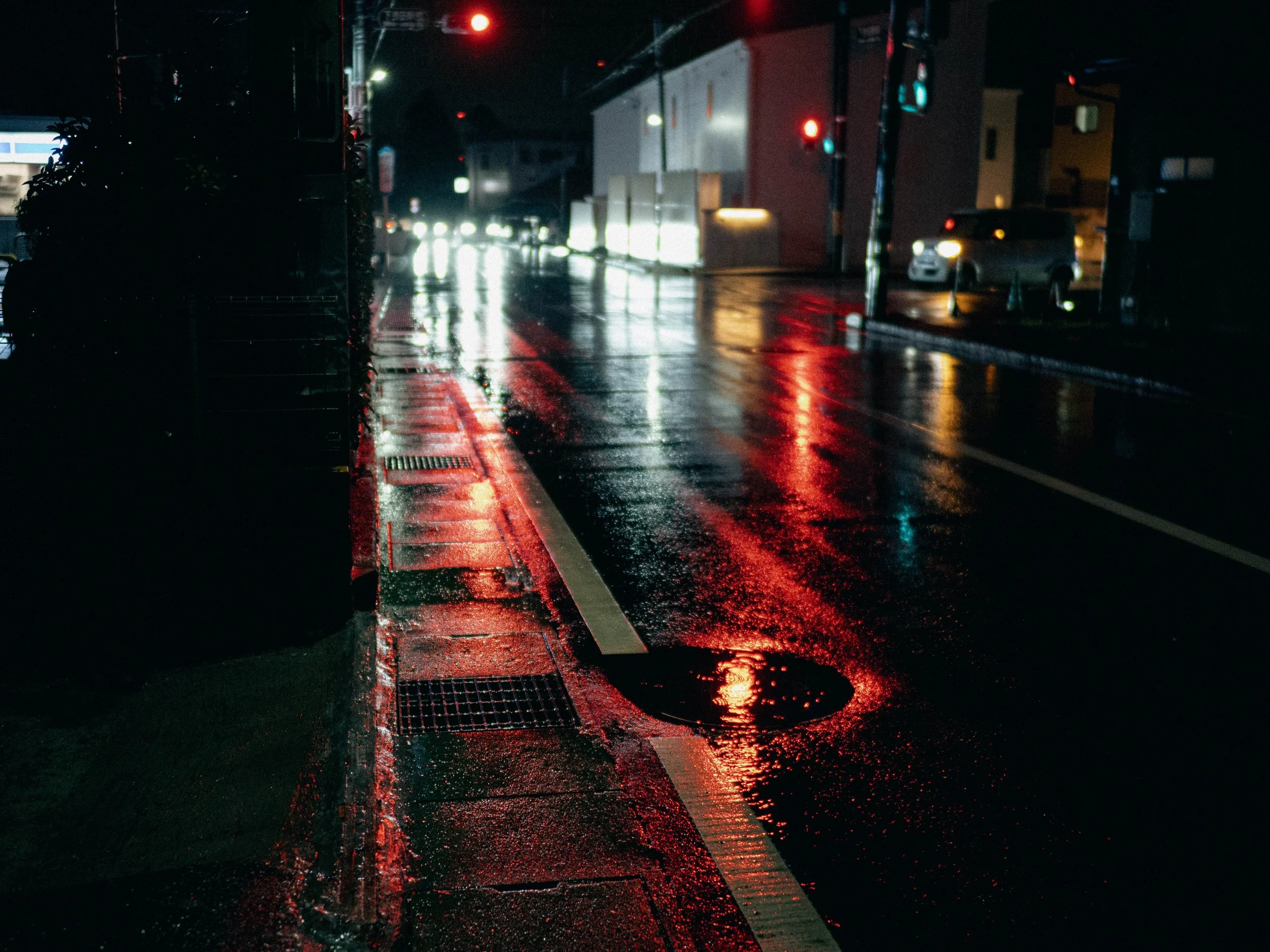
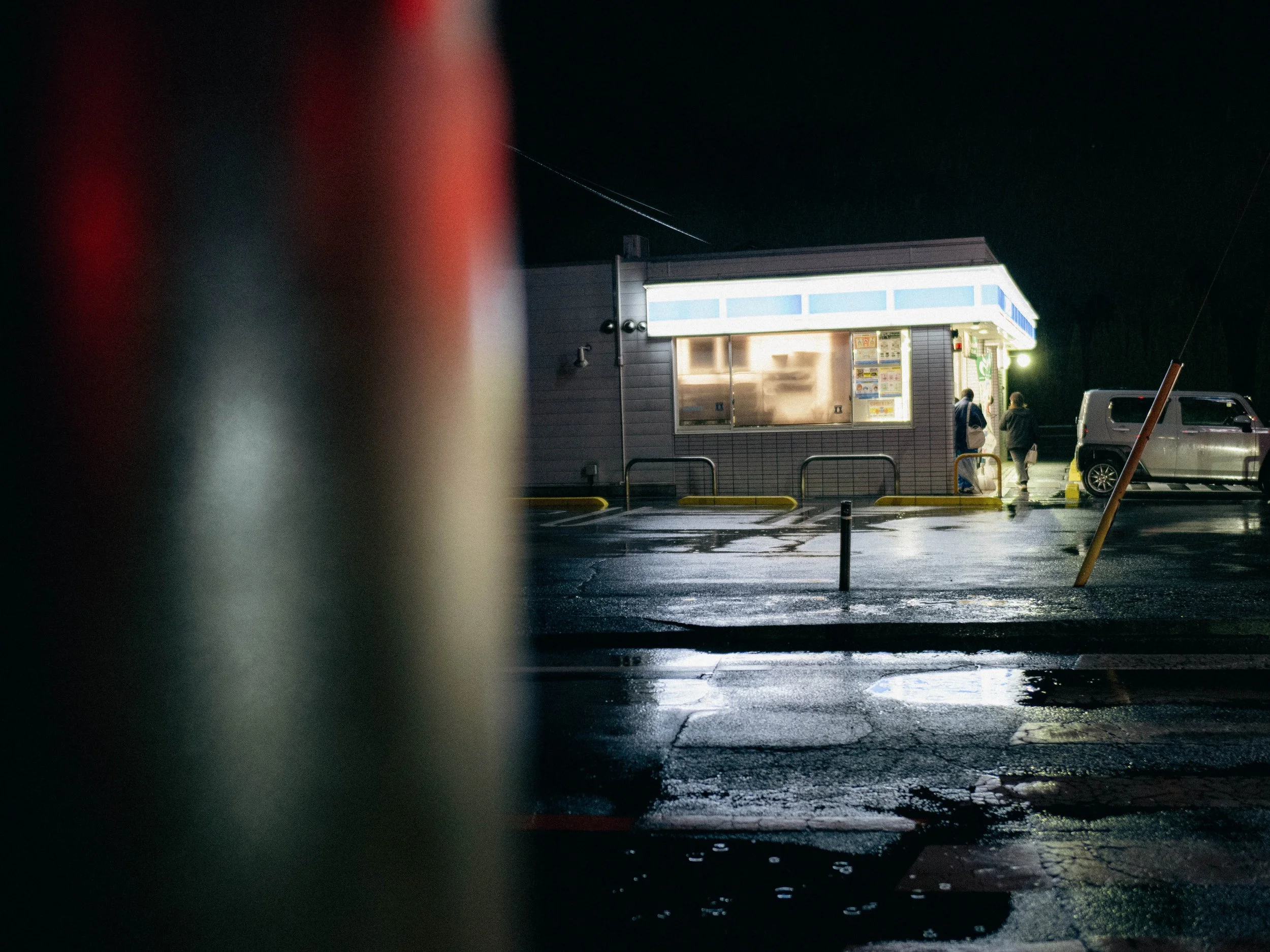
Hints of street lights reflected here, a neon convenience store sign there, not to mention umbrellas galore. Even though I was drenched, the OM3 and the second prime I packed are both thoroughly weather sealed.
After clouds and rain comes mist, so the next day on the way to Honcho street, Fuji postcard 2 seemed like a long shot. My daughter was bouncing off the walls by this point, we found a small indoor kids playground complex next to some woodlands on the way.
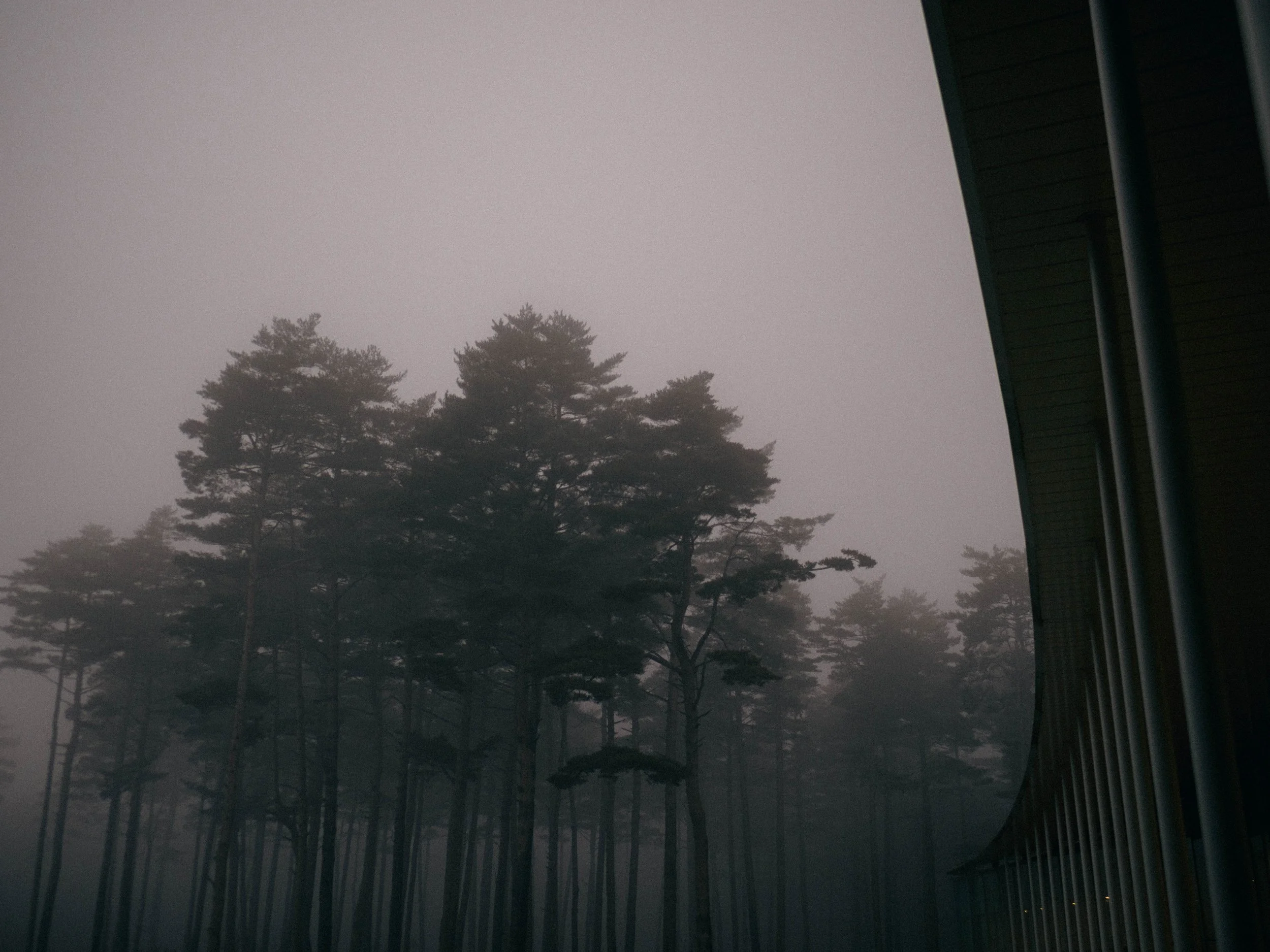
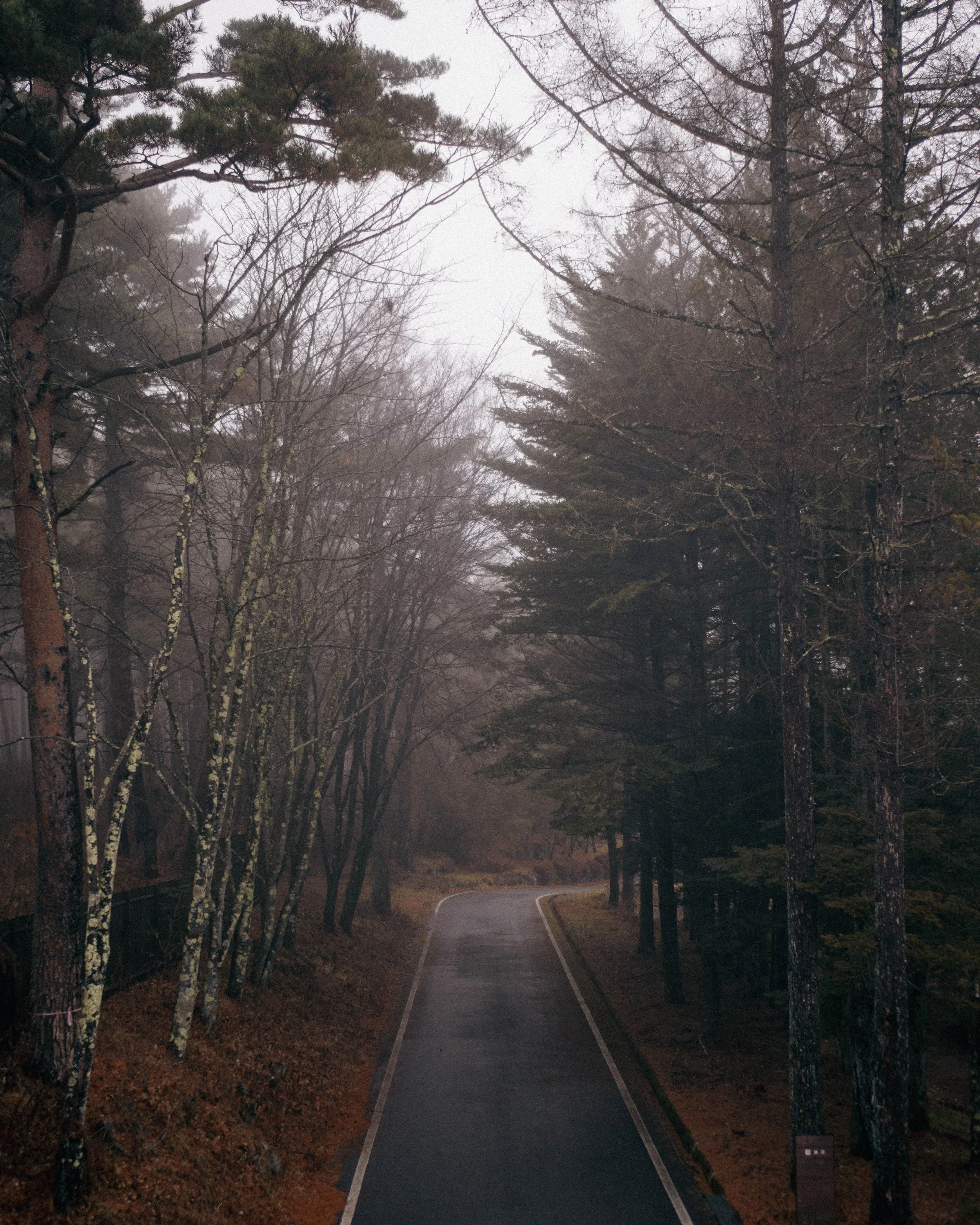
OM3 + OM20mm f1.4 Pro
Shooting wide open on the OM3 with the mist created a nice dream-like vibe.
Why primes, not a 70-200 zoom like the one you’d normally use for this shot of Honcho street? For street it’s more fun to make the mundane look interesting, and a neutral 40 mil equivalent from the OM 20mm 1.4 Pro is what I went with. I wanted to accentuate the leading lines of these street lamps, a 70-200 compresses them a bit too much for me. I thought I could play with some depth of field effects, some at f8, others at 1.4, maybe Fuji’s sharp, and a few of the street lamps would be slightly blurry, not too much so.
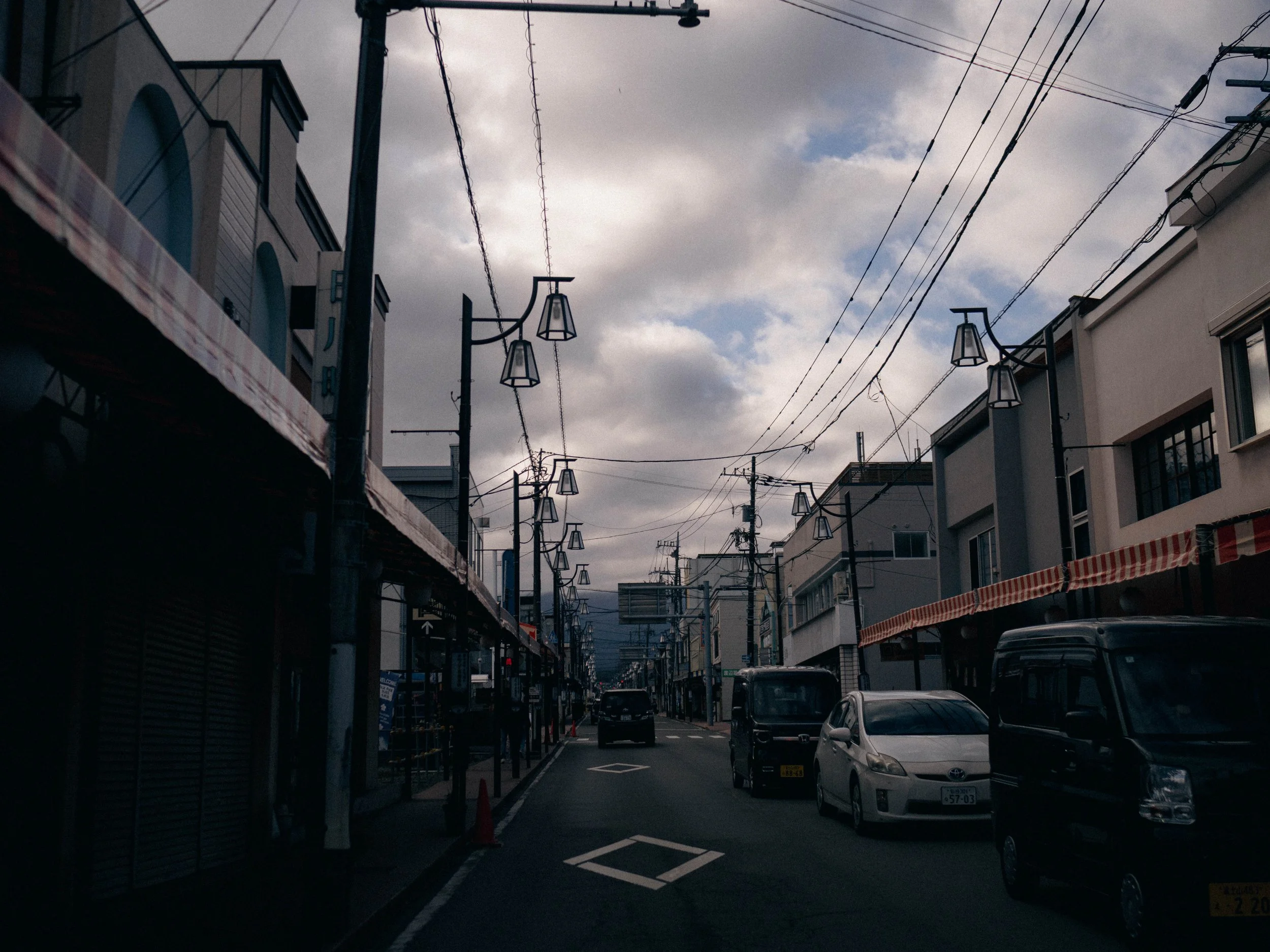
Again just because my gear and settings were ready, doesn’t mean the weather would be. It had stopped raining on Honcho st, but Fuji was completely blocked from view. It’s not a waste of a trip - there’s always a frame if you’re willing, but for Fuji postcards? I’m down 0 for 2.
If not Primes, which Zooms?
A zoom lens wouldn’t have fixed any of these missed opportunities, but which zooms would I choose if I didn’t use primes? For wide angle lenses I prefer them on full-frame, lens design is hard getting that wide on crop sensor cameras. I’d go with either the Nikon 17-28mm, or the newer Tamron 16-30 on the ZR, both constant f2.8, internal zooming, weather sealed.
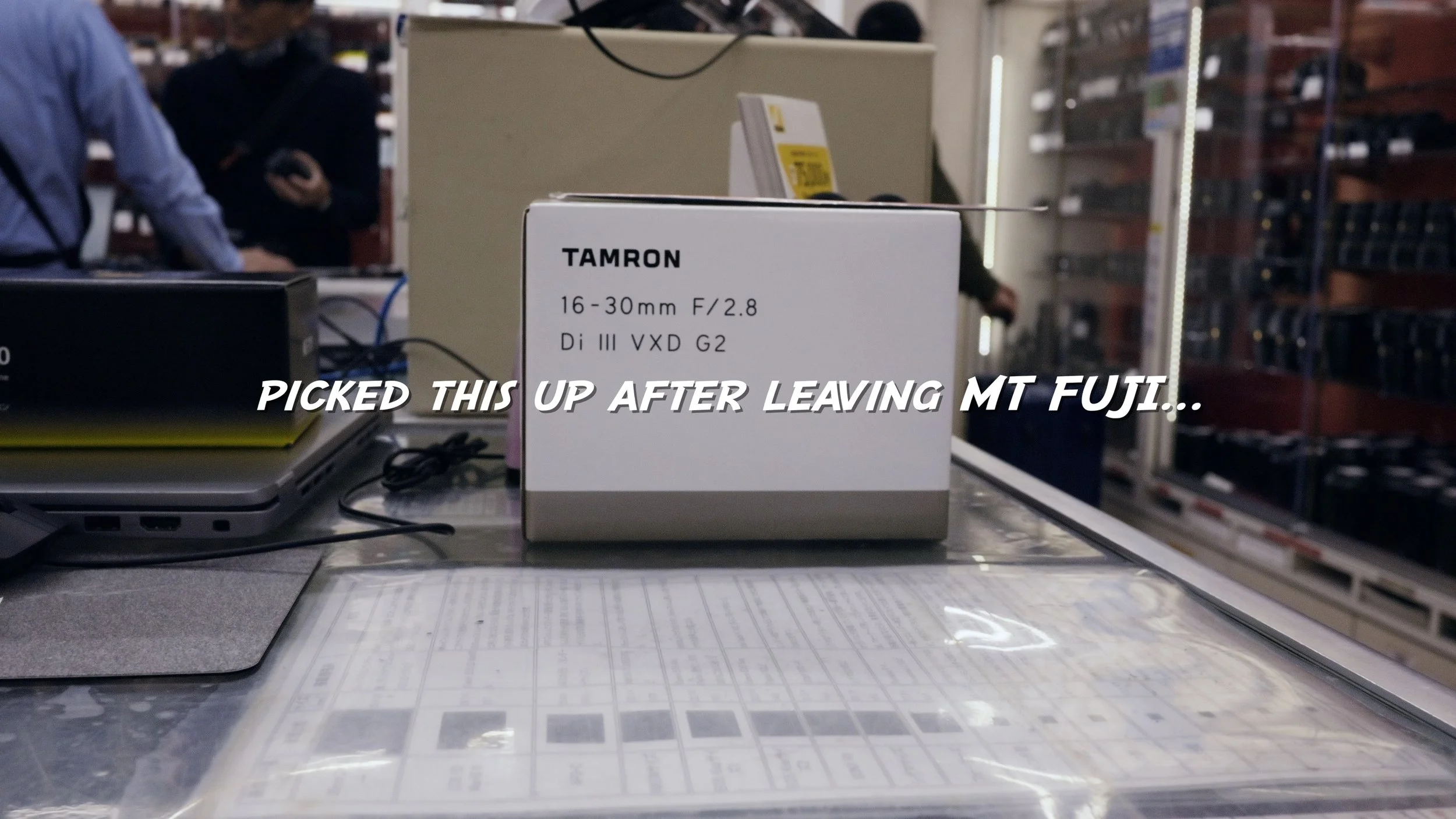
For a telephoto work this lines up with the biggest strength of micro four thirds. The Panasonic Leica 35-100mm f2.8 mark. Also weather sealed, internal zooming, a crazy small package considering it’s a 70-200 equivalent.
But again neither of these missed opportunities had anything to do with gear. It’s knowing your camera, being able to dial in the right settings quickly, timing, and good luck.
Landscape is more similar to street than I remembered.
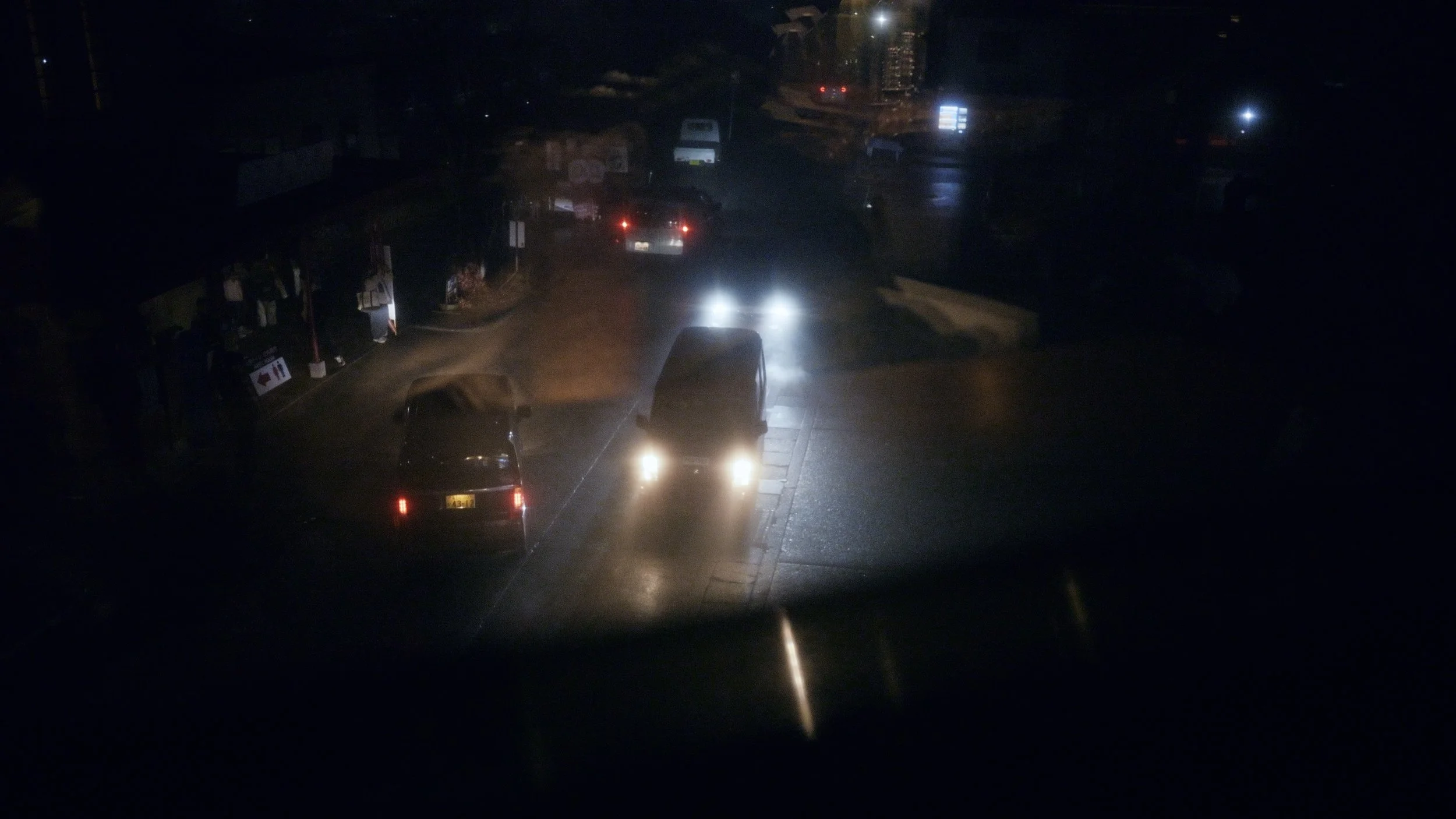
2 days in, no sight of Fuji.
It started raining again, everyone was miserable, so we stayed indoors that afternoon. Our accommodation had a direct line sight at Fuji, right out of the window on the top floor, so I could at least attempt some compositions for:
Fuji Postcard 3: Fuji and the City.
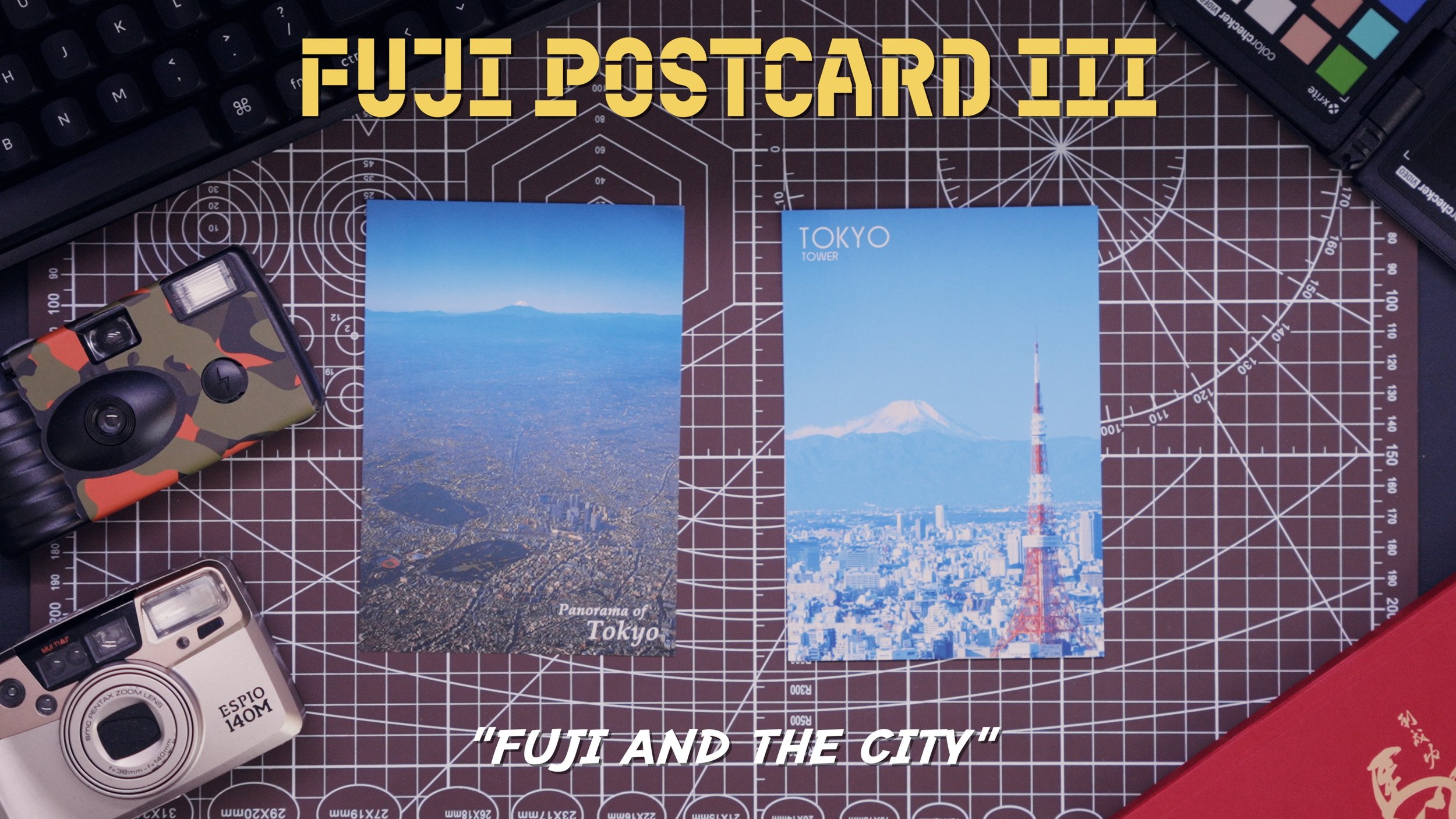
It’s an amalgamation of two different postcards, both featuring cityscapes, but 1 of these is impossible from where we were staying. There’s no chance we’d be able to see Tokyo tower, but it does highlight another street photography lesson that equally applies towards landscape.
Scale, proportion, geometry.
Using a wide angle lens to push the subject towards the distance, or a telephoto to compress it closer. The telephoto I packed for this trip leans into the strength of micro four thirds. That crop sensor doubles the effective focal length for a much tighter field of view, so my Sigma 56mm 1.4 becomes a 112mm while remaining tiny.
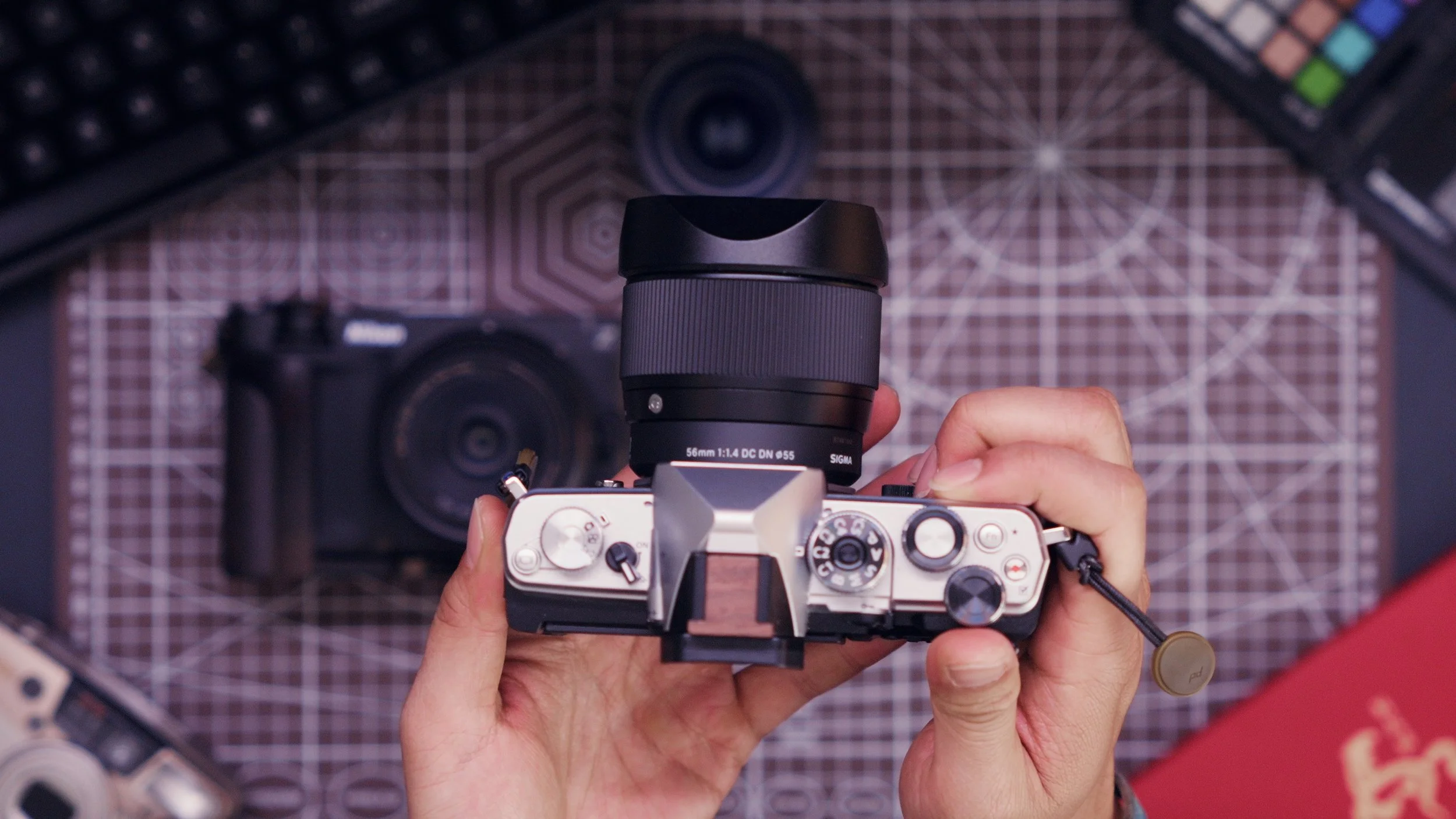
For a third party lens I was surprised at how quick its autofocus is, fantastic image quality, sharp, minimal aberrations, there is quite a bit of focus breathing though, not the best for video work.
OM3 + Sigma 56mm f1.4
Best part is for a 112mm field of view it’s absolutely tiny on the OM3. Mt Fuji wasn’t very visible - can see hints of it through the clouds, and while there was no Tokyo tower in sight I had to make the most of what’s around me - another lesson from street.
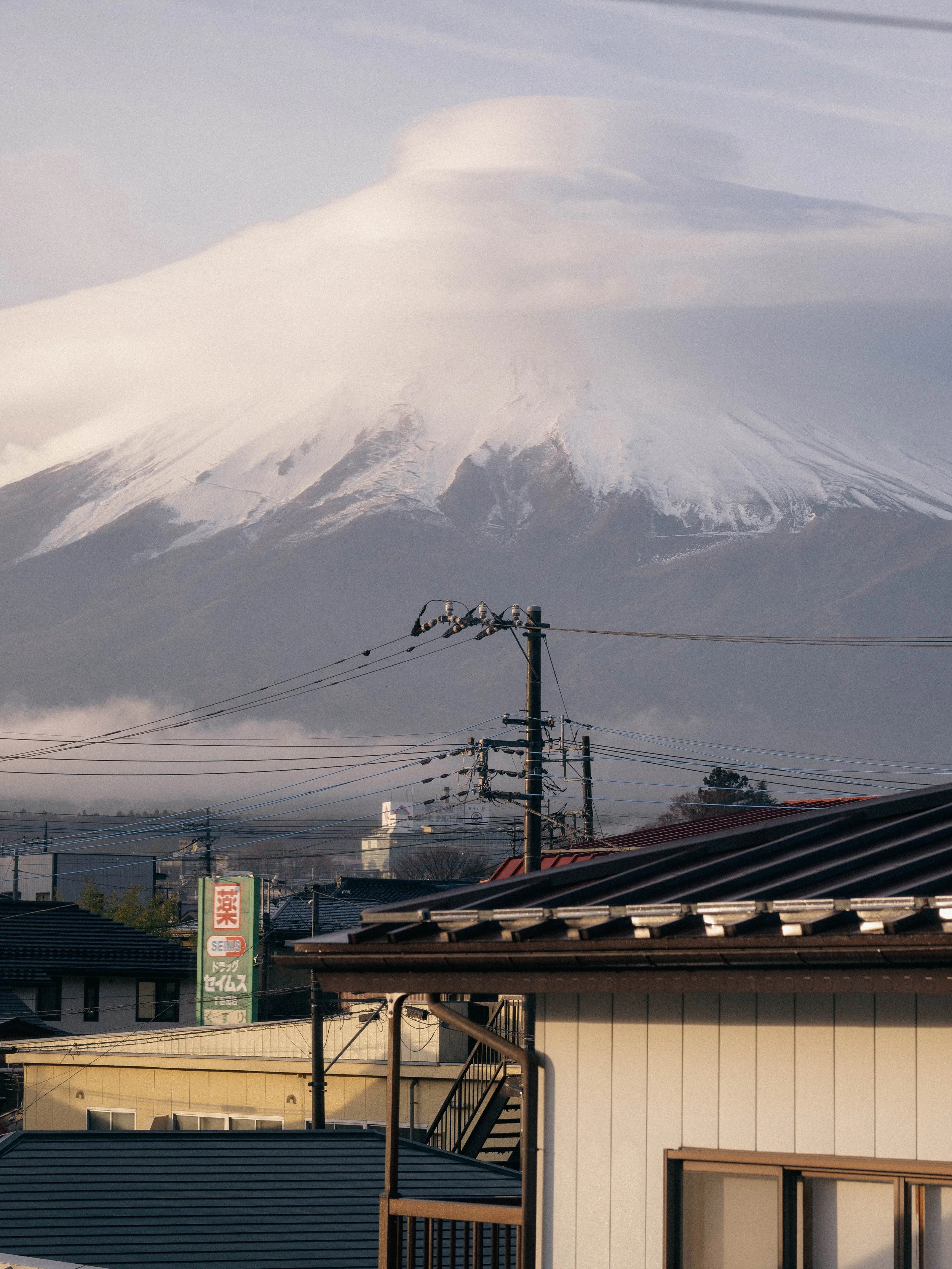
OM3 + Sigma 56mm f1.4
The rain had stopped, sun had just come out, light’s bouncing off this building, I like this red and green pharmacy sign and the power line in the foreground. But it just hints at Fuji. You can’t see its peak.
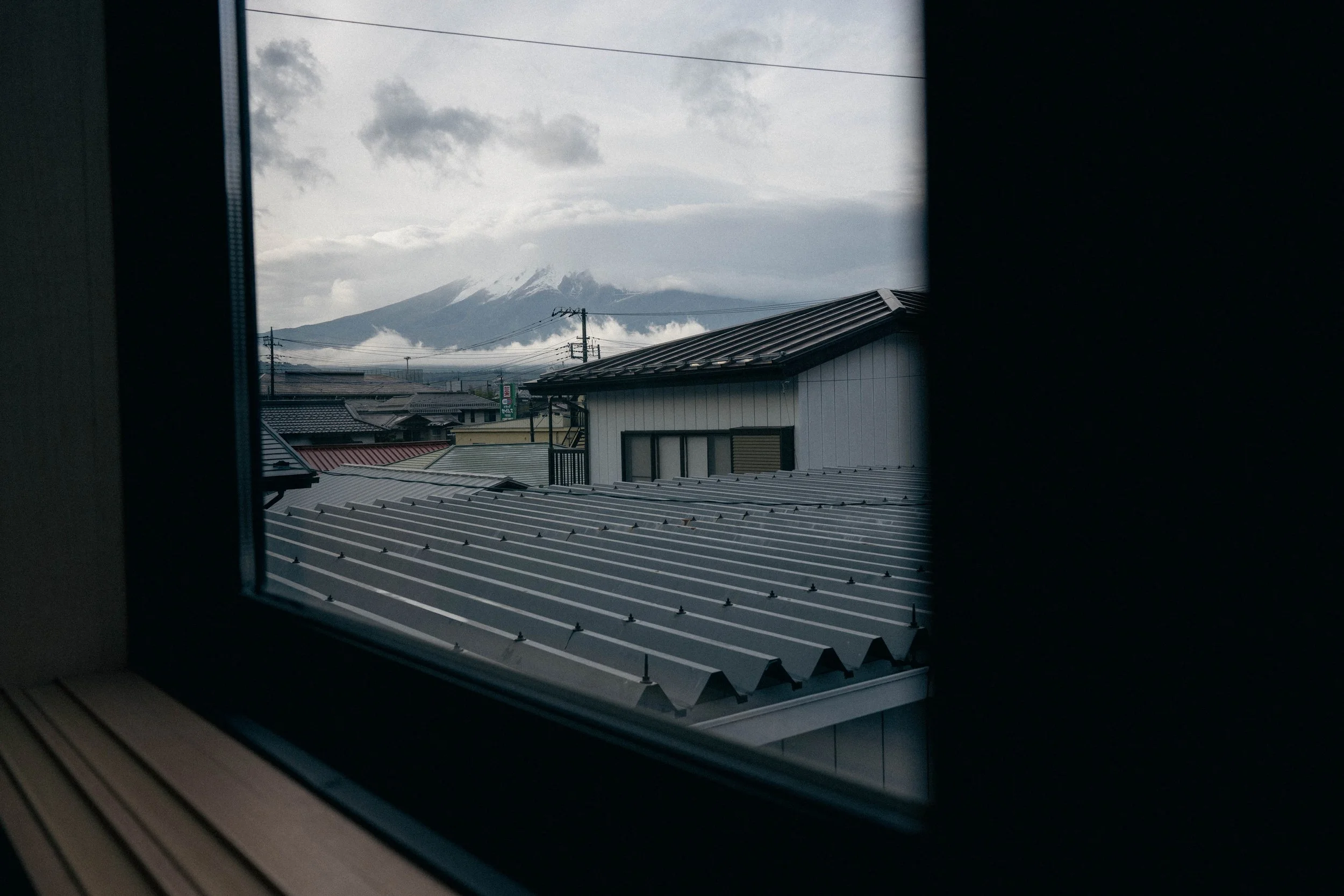
Nikon ZR + 28mm f2.8 Z
My ZR and 28mm can’t beat a helicopter panorama of Tokyo, but using the window for framing, pushing Fuji out towards the corner created some sense of scale out of a what is otherwise a throwaway day.
I live in Australia, extreme weather is part of our country’s identity, but I didn’t expect how sudden everything would shift around Mt Fuji. Just a few hours after this shot it started raining again, mist swirled, any glimpse of Fuji gone just like that. A few rainy 28mm street shots later it was off to bed.
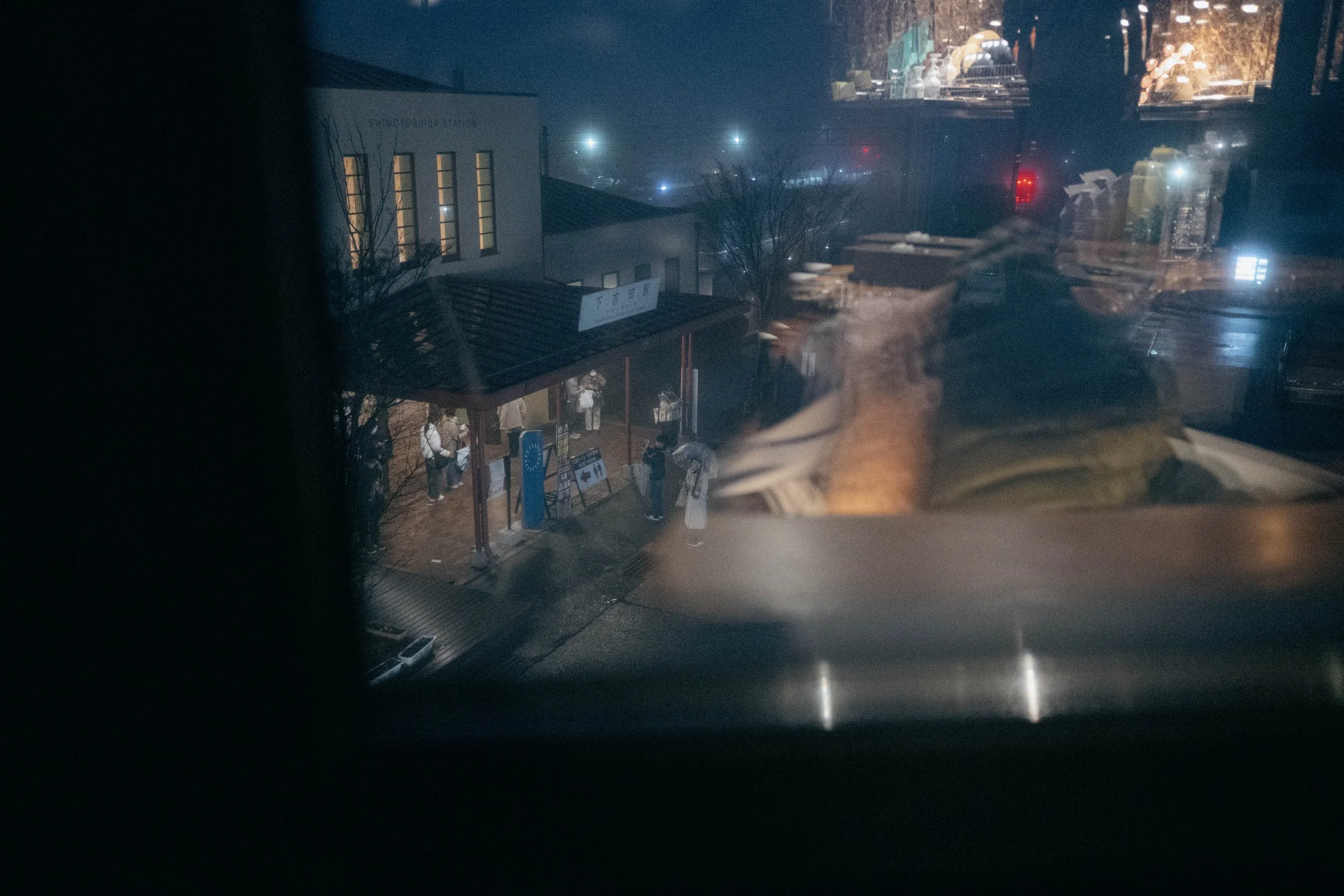
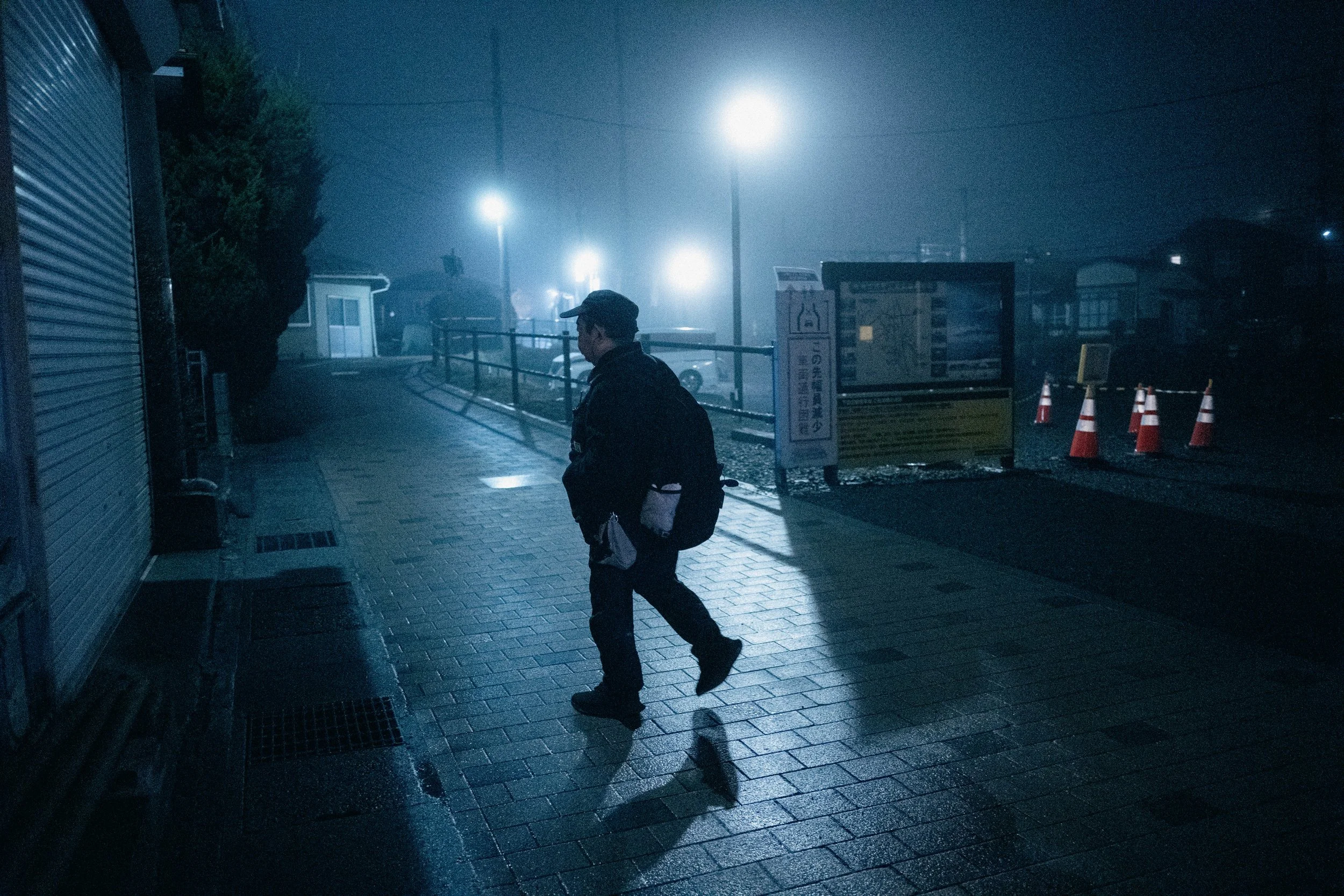
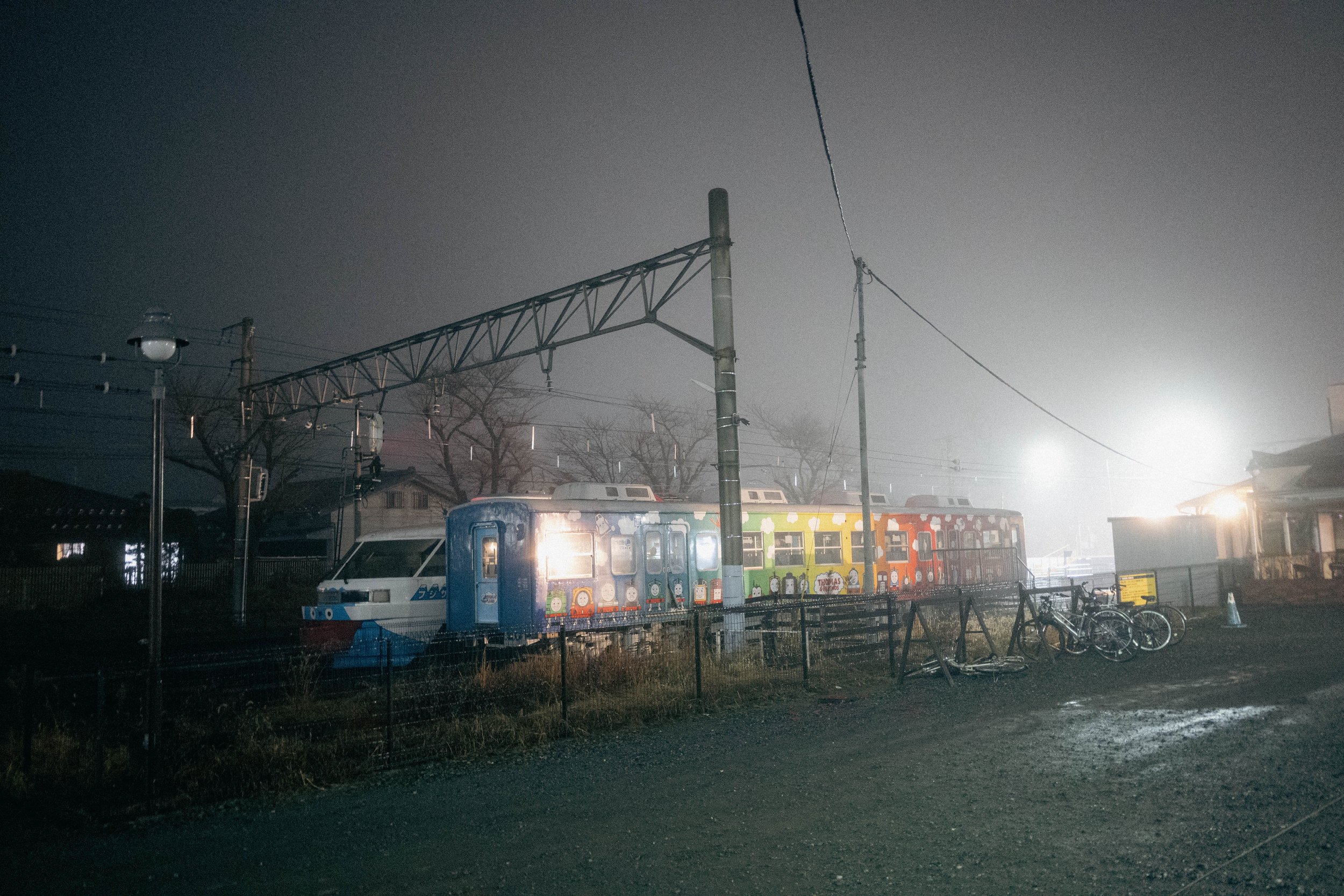
Nikon ZR + 28mm f2.8 Z
I desperately needed a win the next day for:
Fuji Postcard 4: Pagoda Classic.
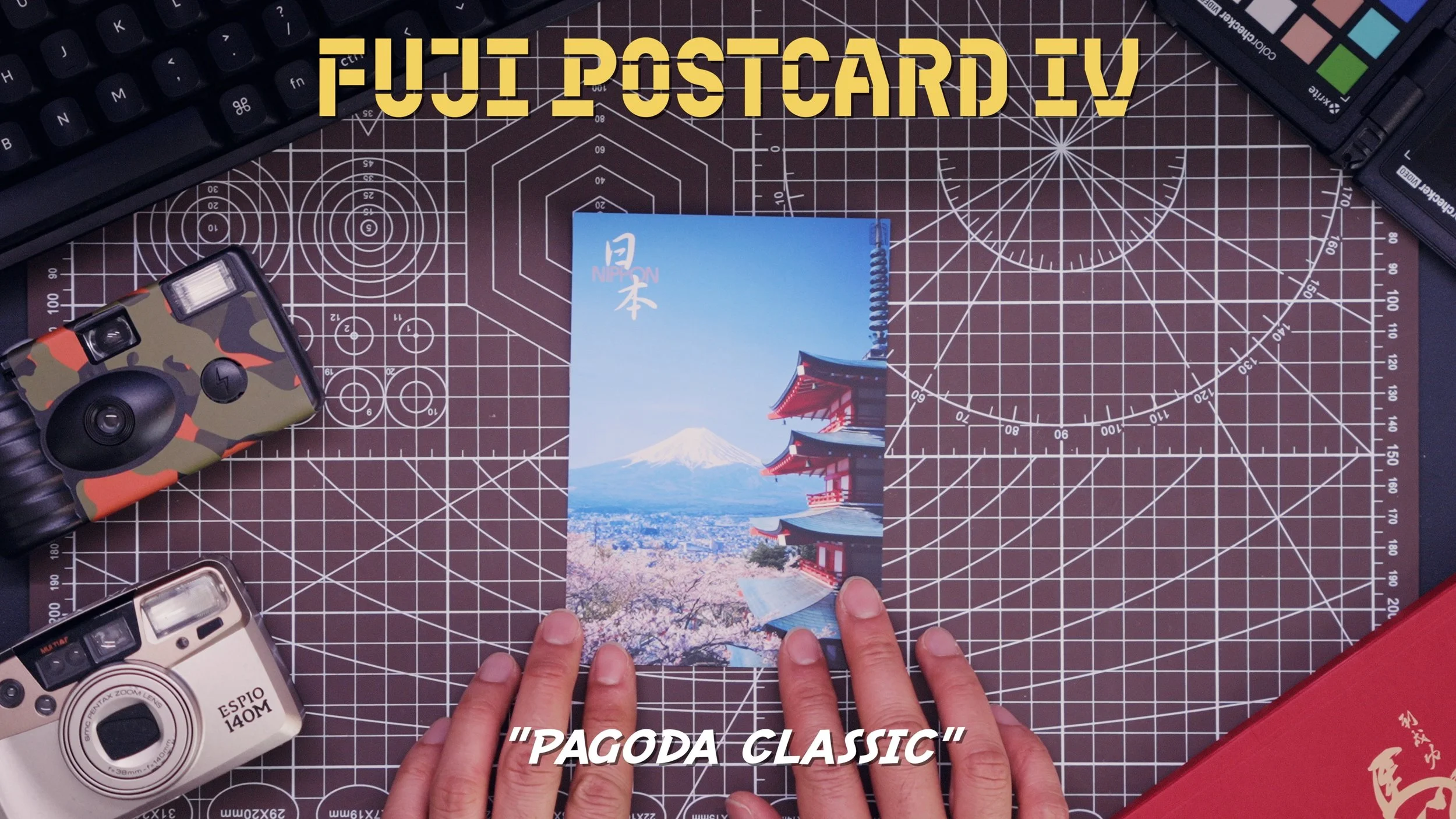
It’s arguably the most iconic out of this series. Chiyoda pagoda in the foreground, snowy peak of Mt Fuji behind it, this is why we were staying so close to Shimoyoshida station.
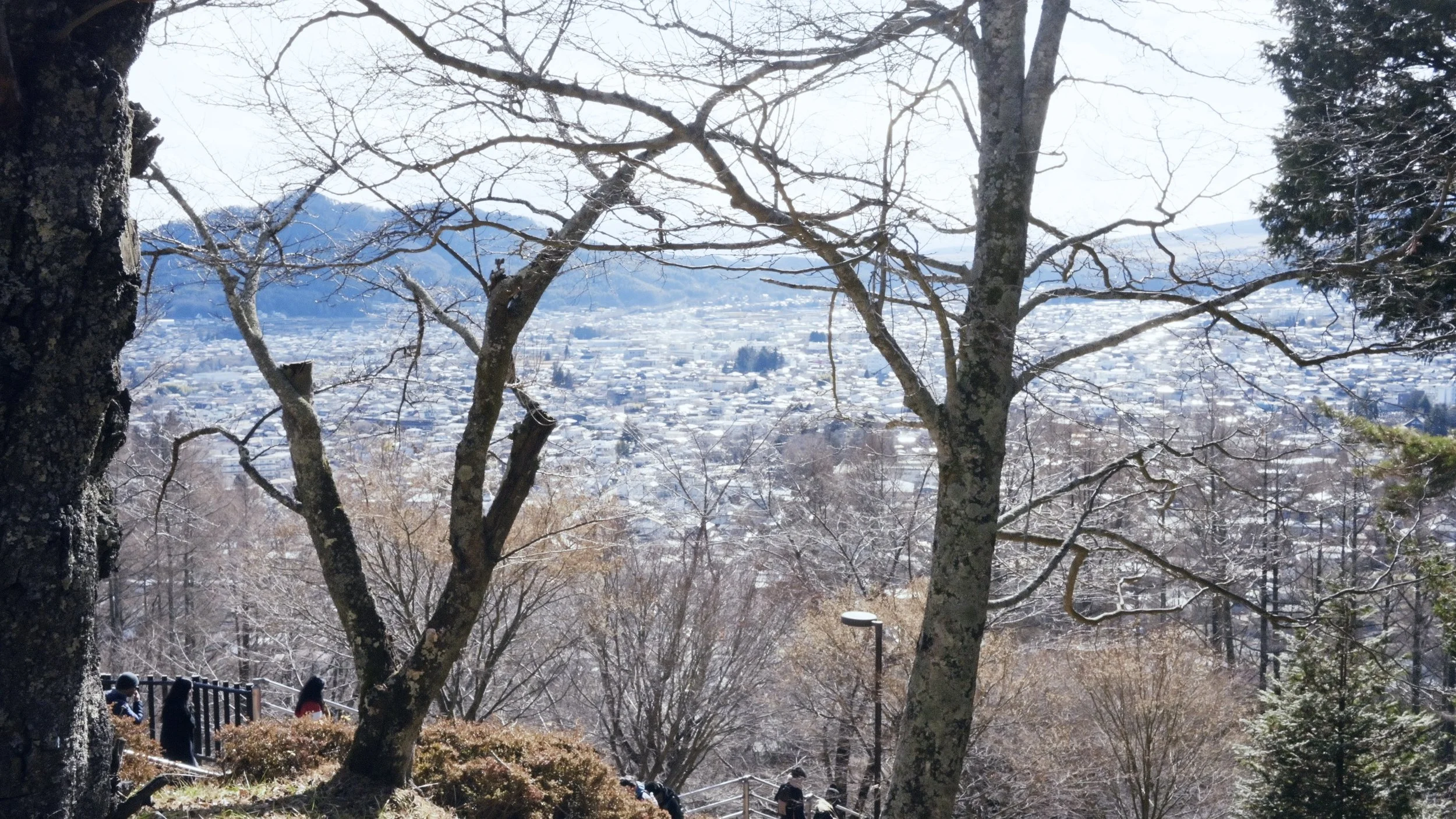
It’s at the base of a hill that’s 10 minutes away from the pagoda, although once you get there there’s still a thousand flight of stairs. But at last the weather was willing - those steps felt easy.
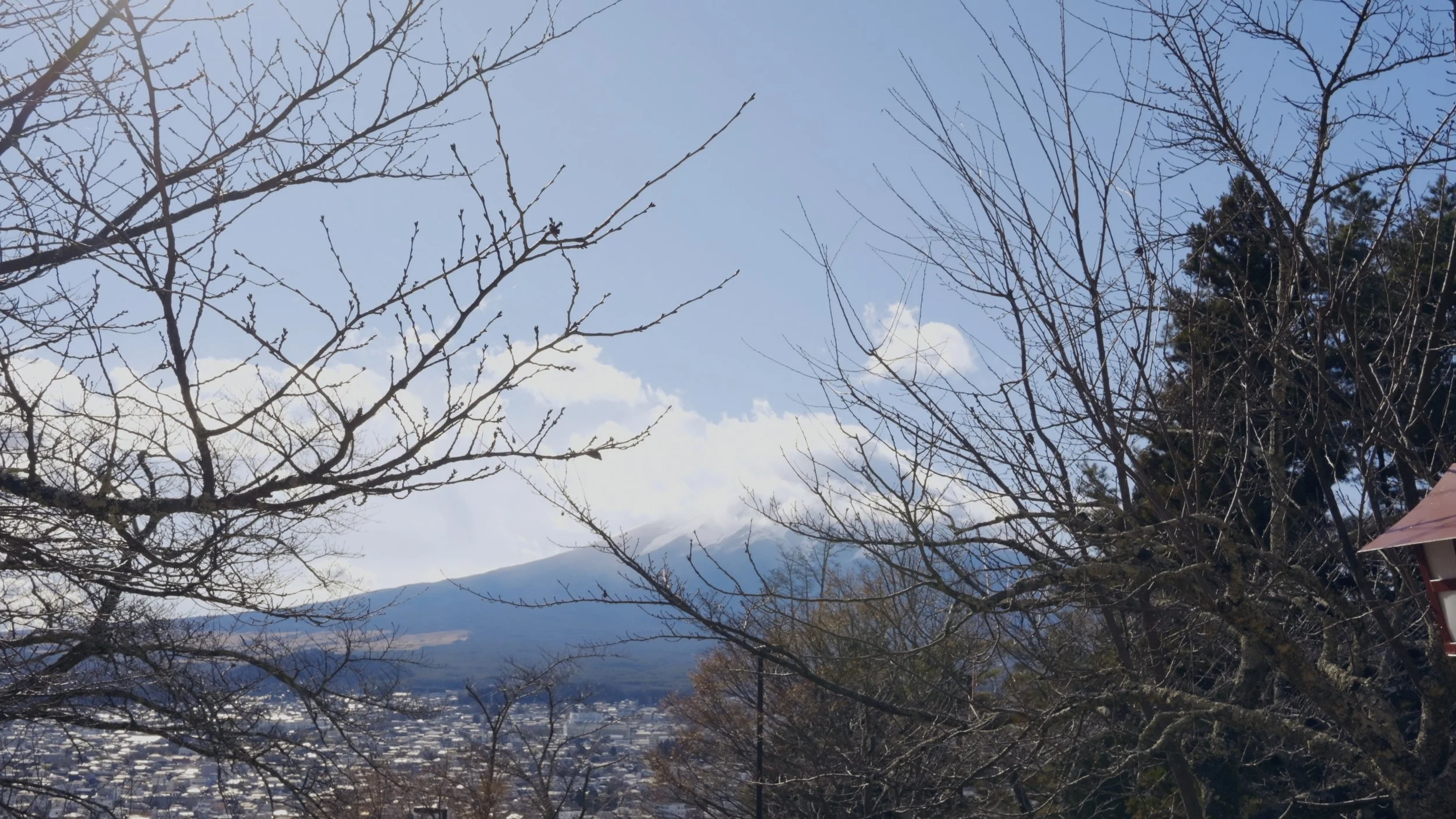
What’s not easy? I overheard a conversation between 1 married couple “What does that flashing No SD signal in camera mean?” They made it to the top, then started using their camera for what must have been the very first time - absolutely devastating.
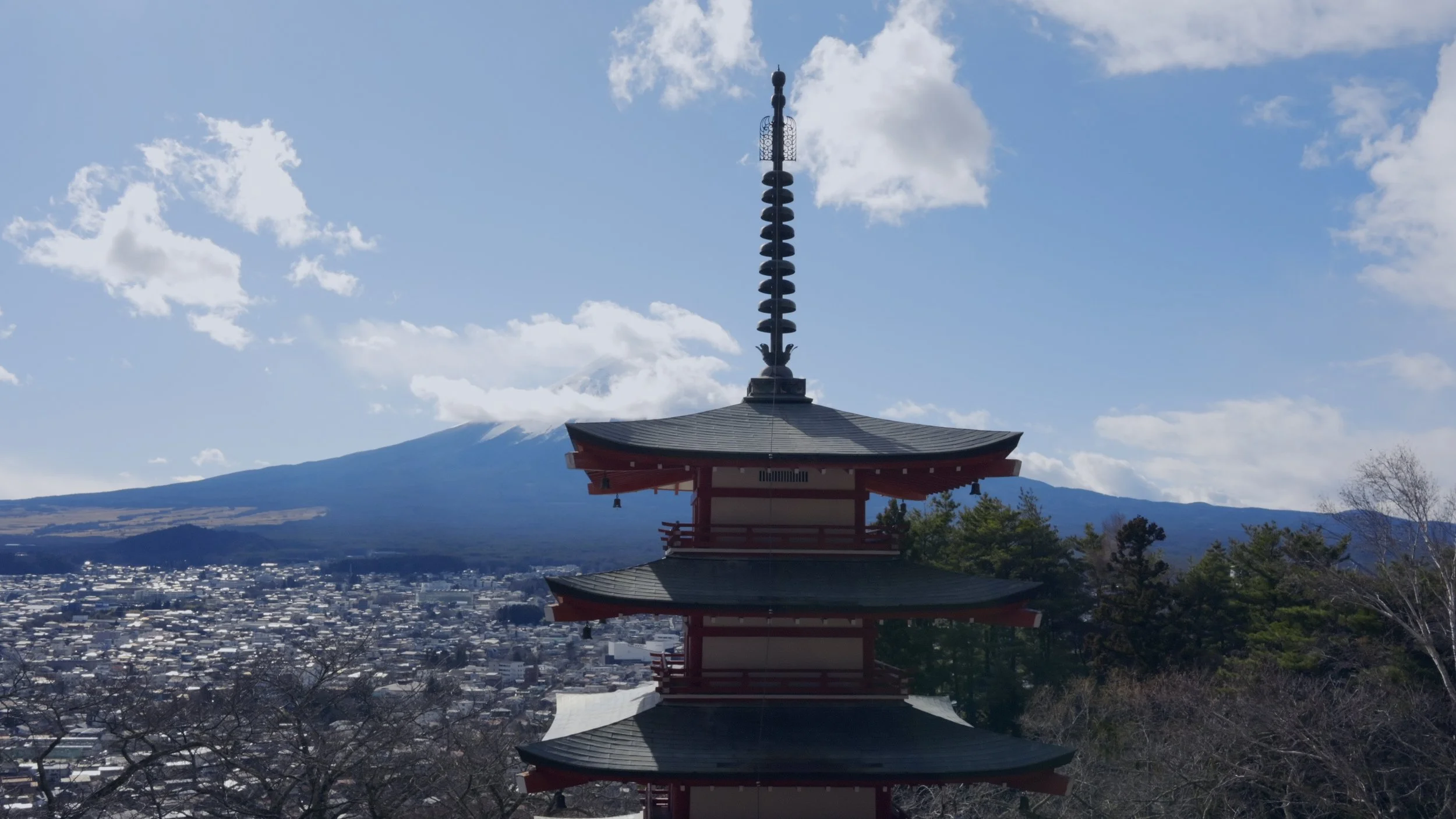
I’ve seen the pagoda and fuji combo a number of ways. The lesson from street? When in doubt, fill the frame, whether it’s the wider shot for the vista in the distance - or a tighter shot for the pagoda compressed against Fuji’s peak. I had the Sigma 56mm f1.4, 112mm field of view on micro four thirds, tight enough to mimic fuji postcard 4’s composition, although there were no cherry blossoms in season.
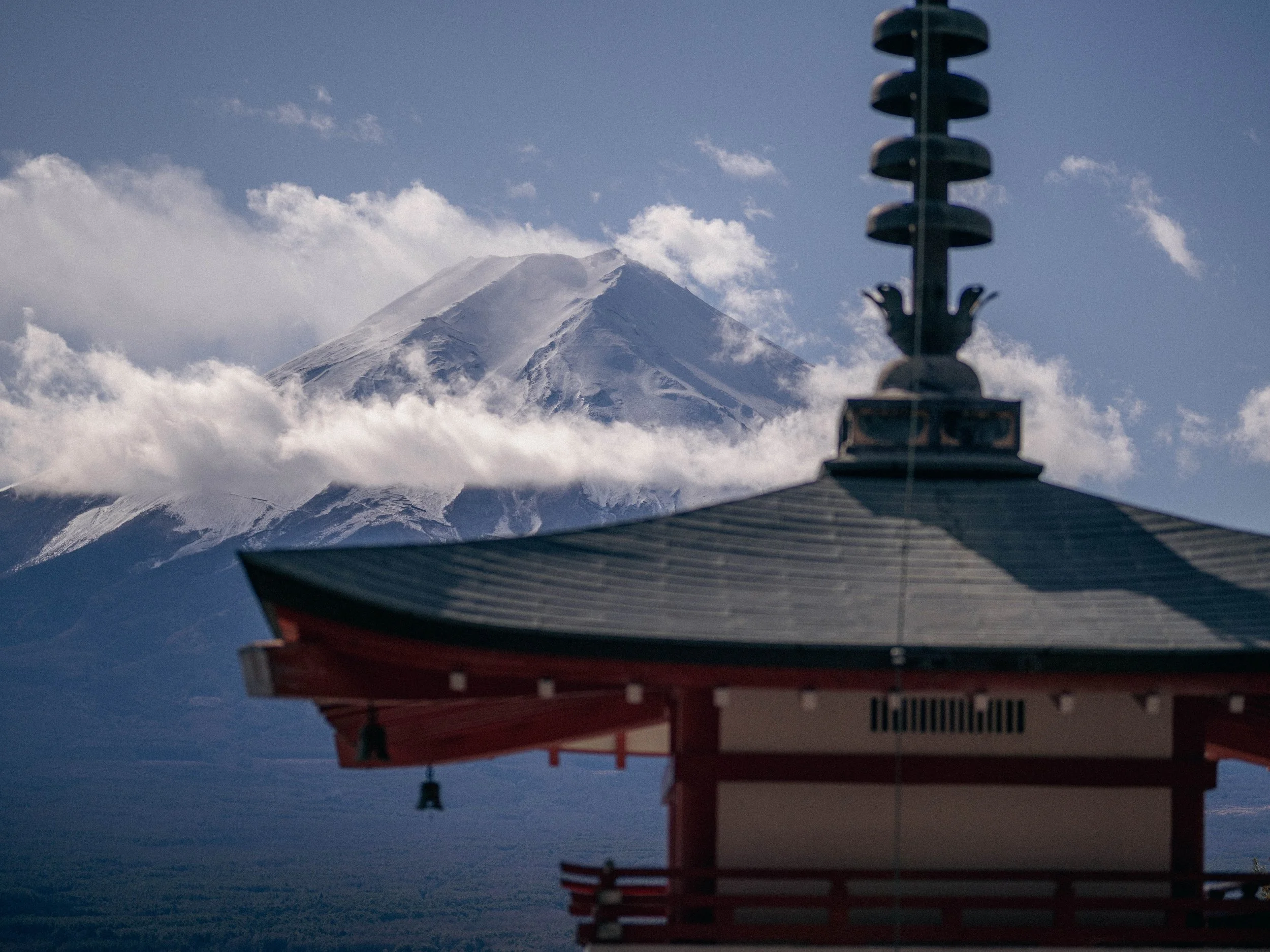
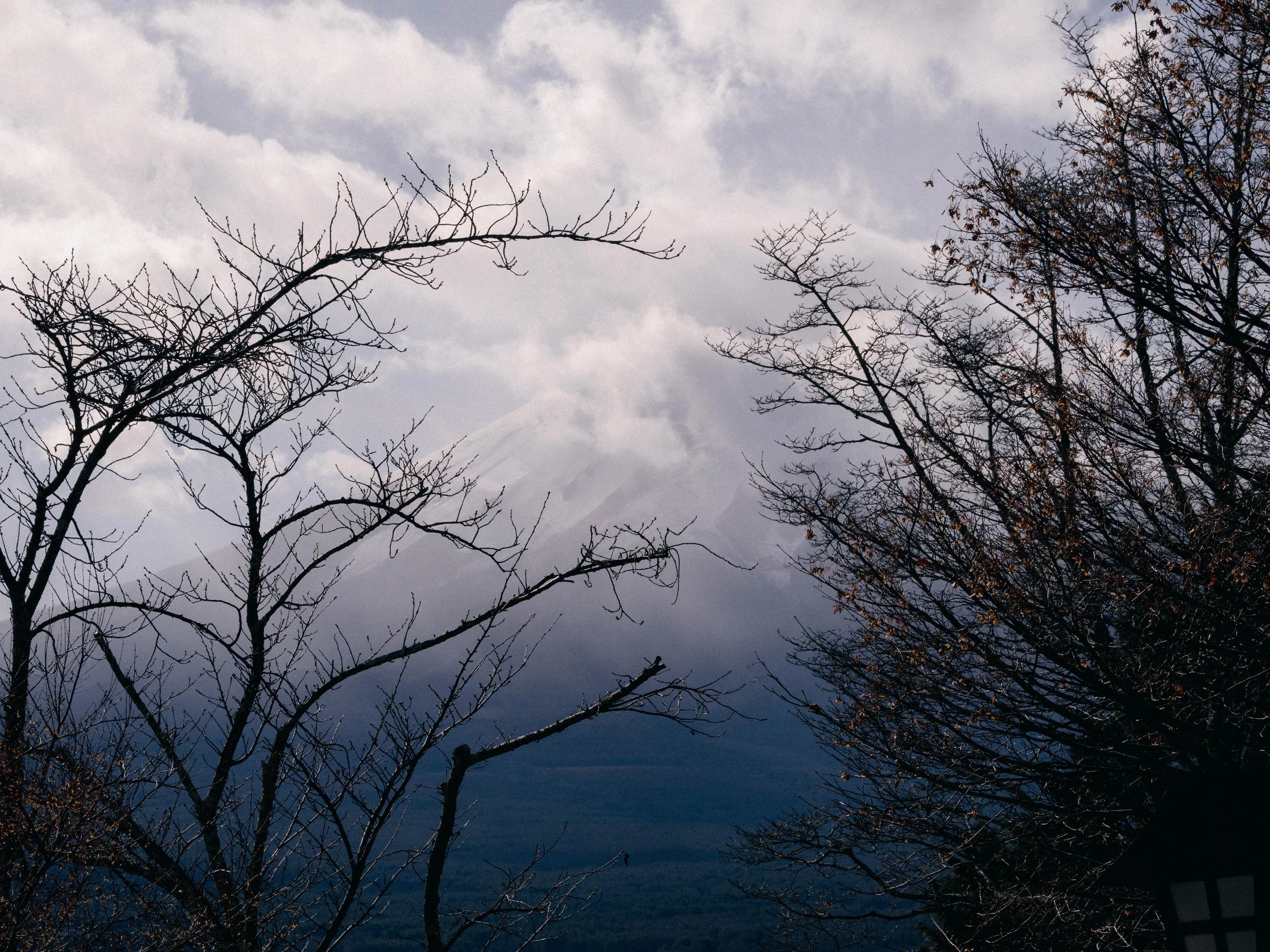
OM3 + Sigma 56mm f1.4
I tried a few compositions, not just with the pagoda, but also with different trees in the foreground, but the wind was shifting so quickly - within 5-10 minutes Fuji went from slightly exposed to completely covered. It’s not the best but I finally put a point on the Fuji Postcard board.
What I didn’t expect is what I found more interesting?
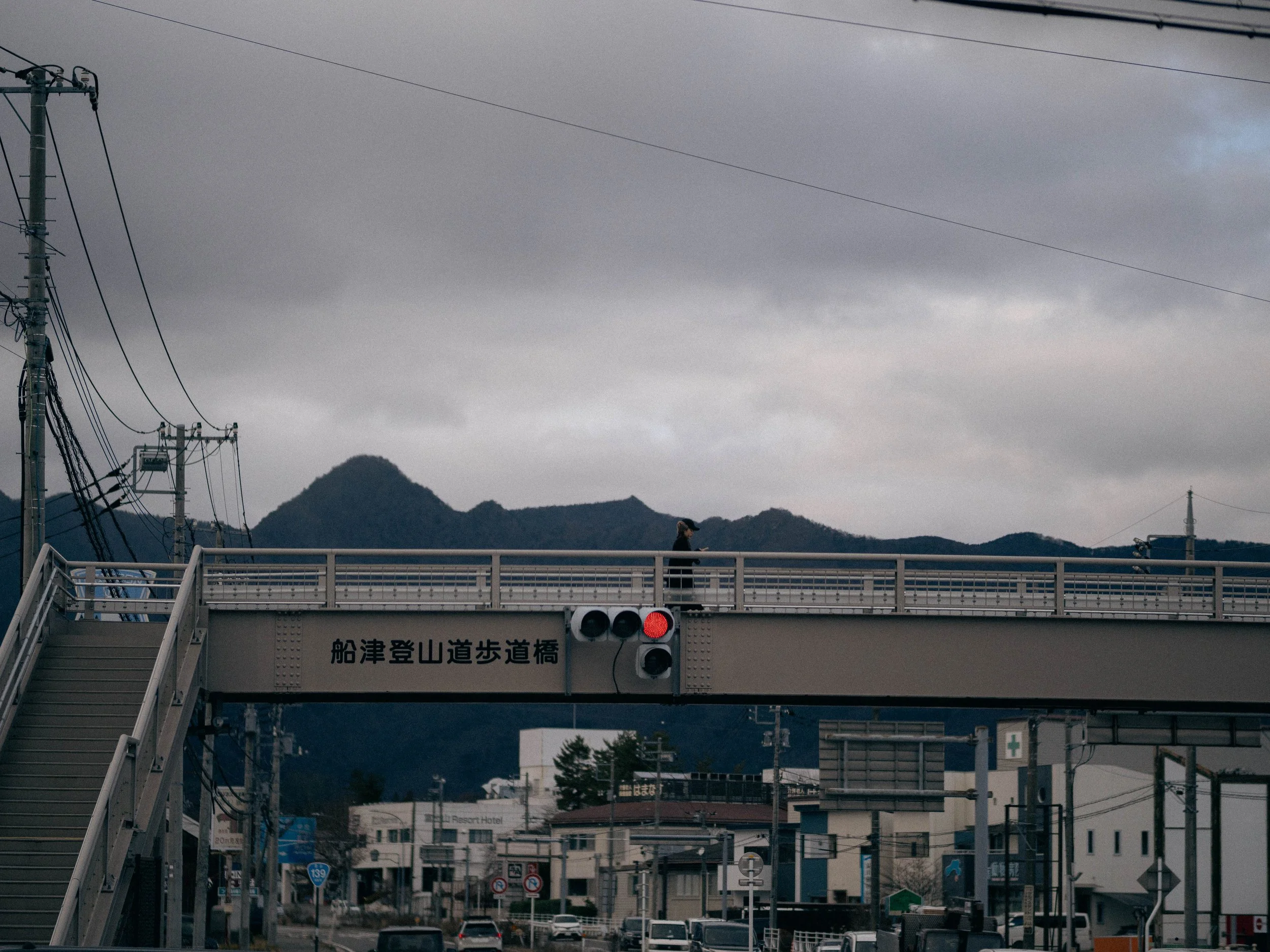
The best part about the OM3 in this setting? I could have used the graduated electronic ND feature to balance out the exposure in the distance versus the shadow, but the light was quite even there was no need. I also could have used the hand-held high res mode, but for me 20 megapixels is more than enough and given how bright it was I didn’t need that mode’s improved low light ability. The best part about the OM3 and this telephoto pocket rocket is the size.
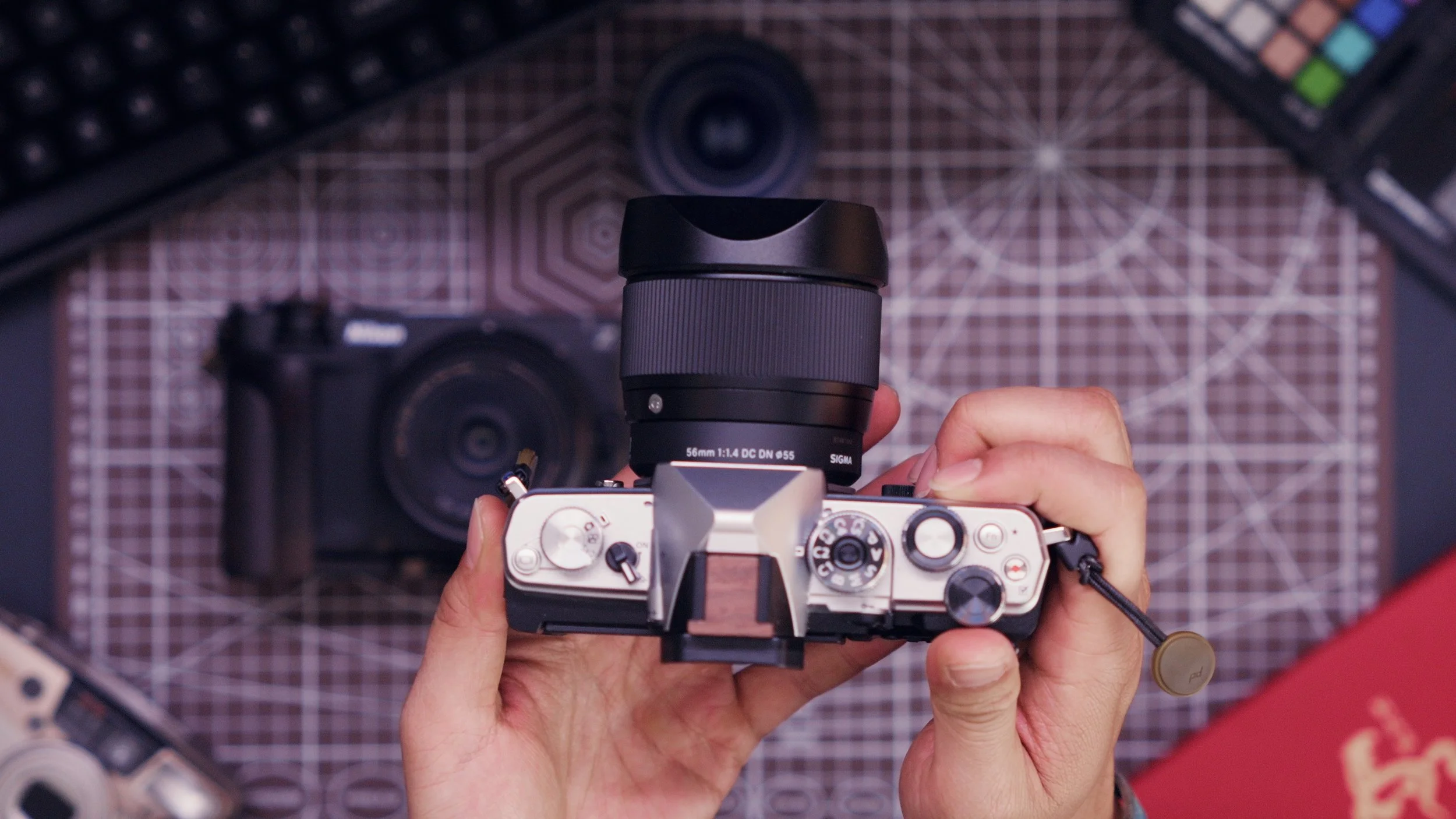
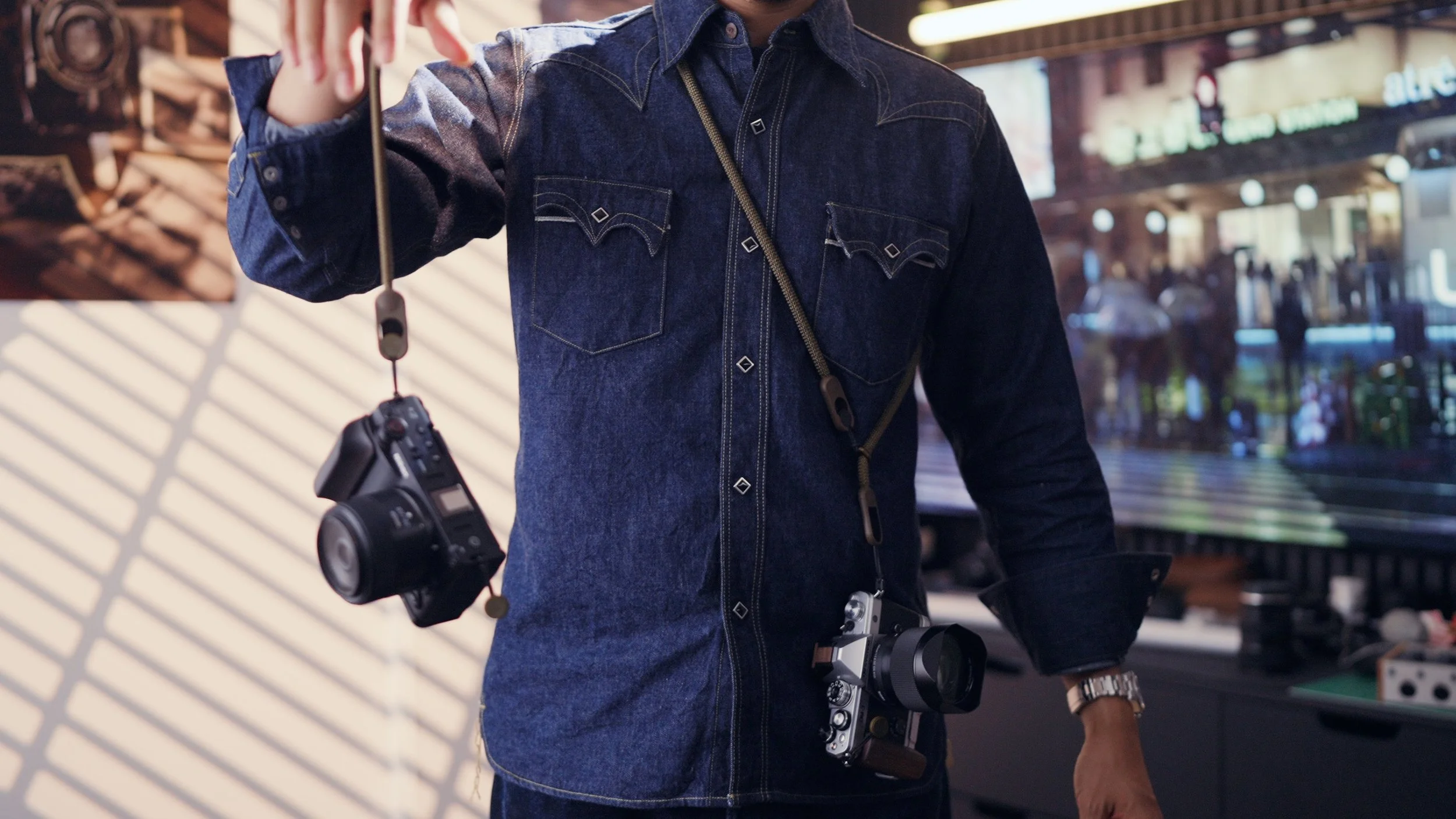
I could use it in a 2 camera setup - OM3 + Sigma 56mm for the shot of Fuji, ZR + 28mm for family shots and documenting the trip up the pagoda. This is how I carried everything - a peak design leash strap, most of us own one right? With an anchor looped around one of the tabs, so the OM3 was attached via one anchor on one side of my body. I like how out of the way the camera feels when not in use, the grip, screen, and EVF are never obstructed. My ZR and 28mm was on a wrist strap, switching between two cameras is quick, and secure, always ready to go.
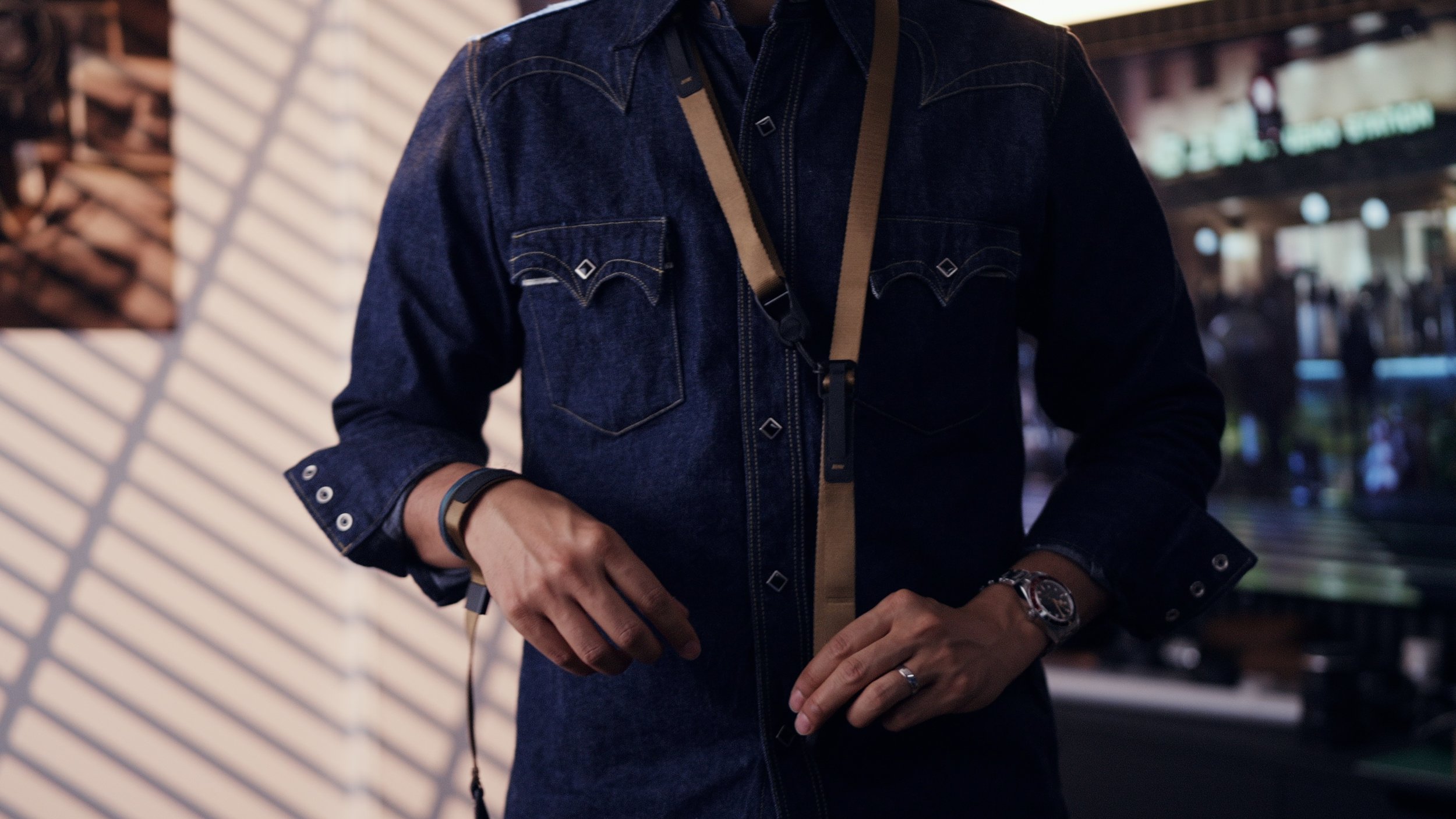
I learnt this lesson after 2 years of camera comparisons on the street, with how many tourists there were, how quick the weather was changing, this speed of switching cameras, no need to swap lenses - was pivotal to Fuji postcard 4.
As nice as it was to finally see Mt Fuji - documenting the climb up those steps was just as interesting. The limited edition Thomas and Friends train, someone’s cuddly cat, reflected shadows and puddles, the sharp geometry of all those steps. I didn’t mind all the other tourists - I don’t need a clean canvas, I preferred the ZR paired with the 28mm 2.8 to capture that chaotic sense of connectedness.
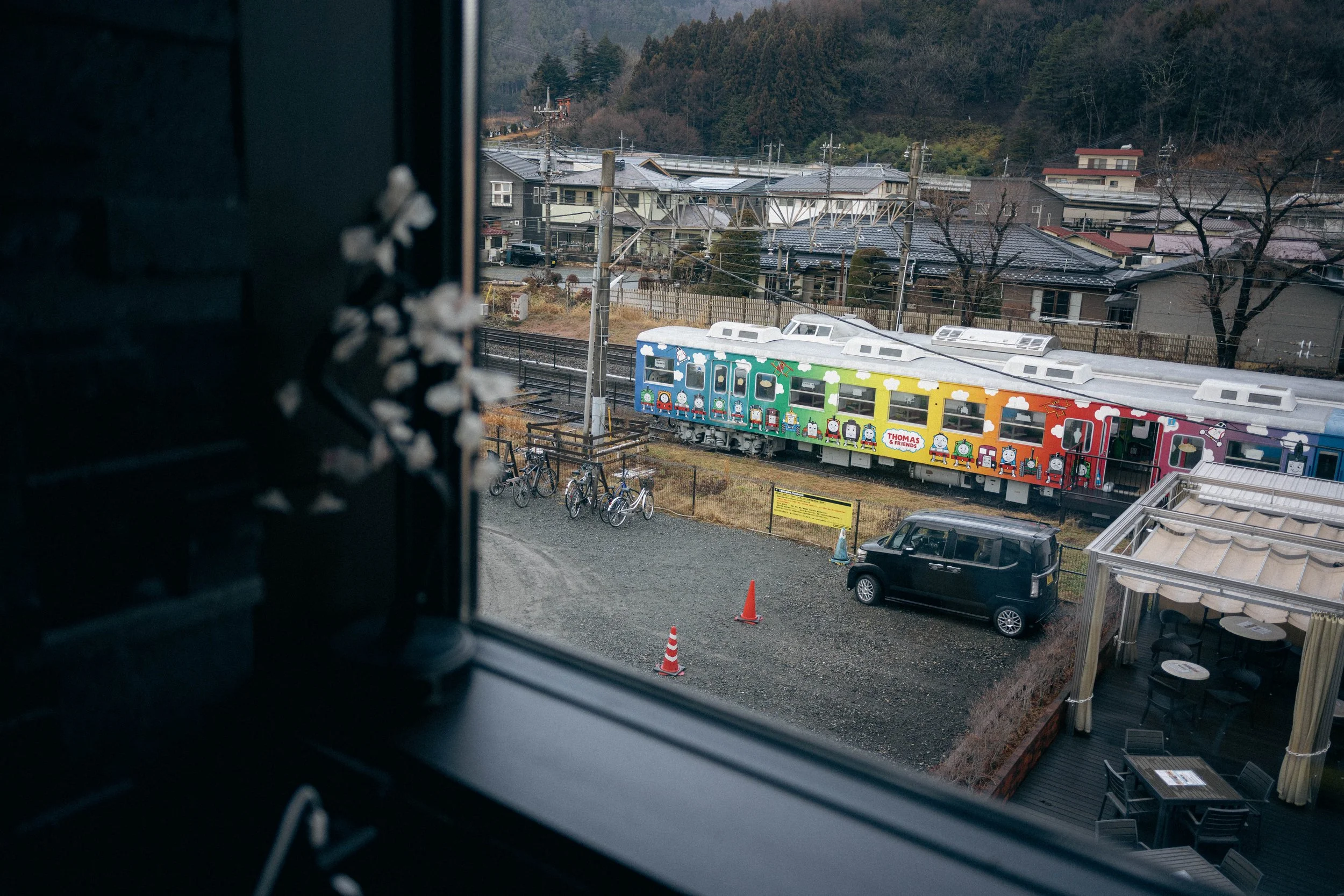

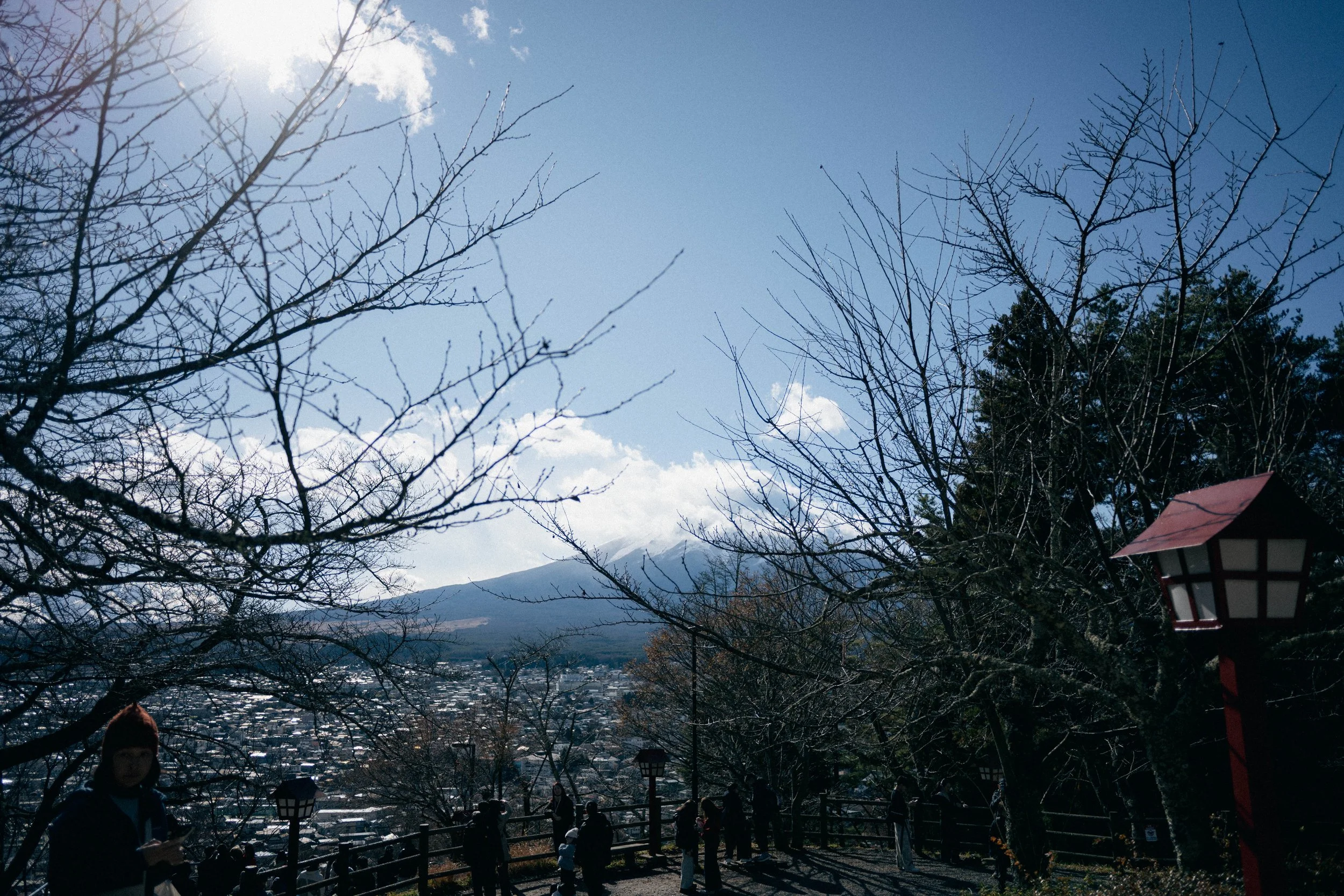
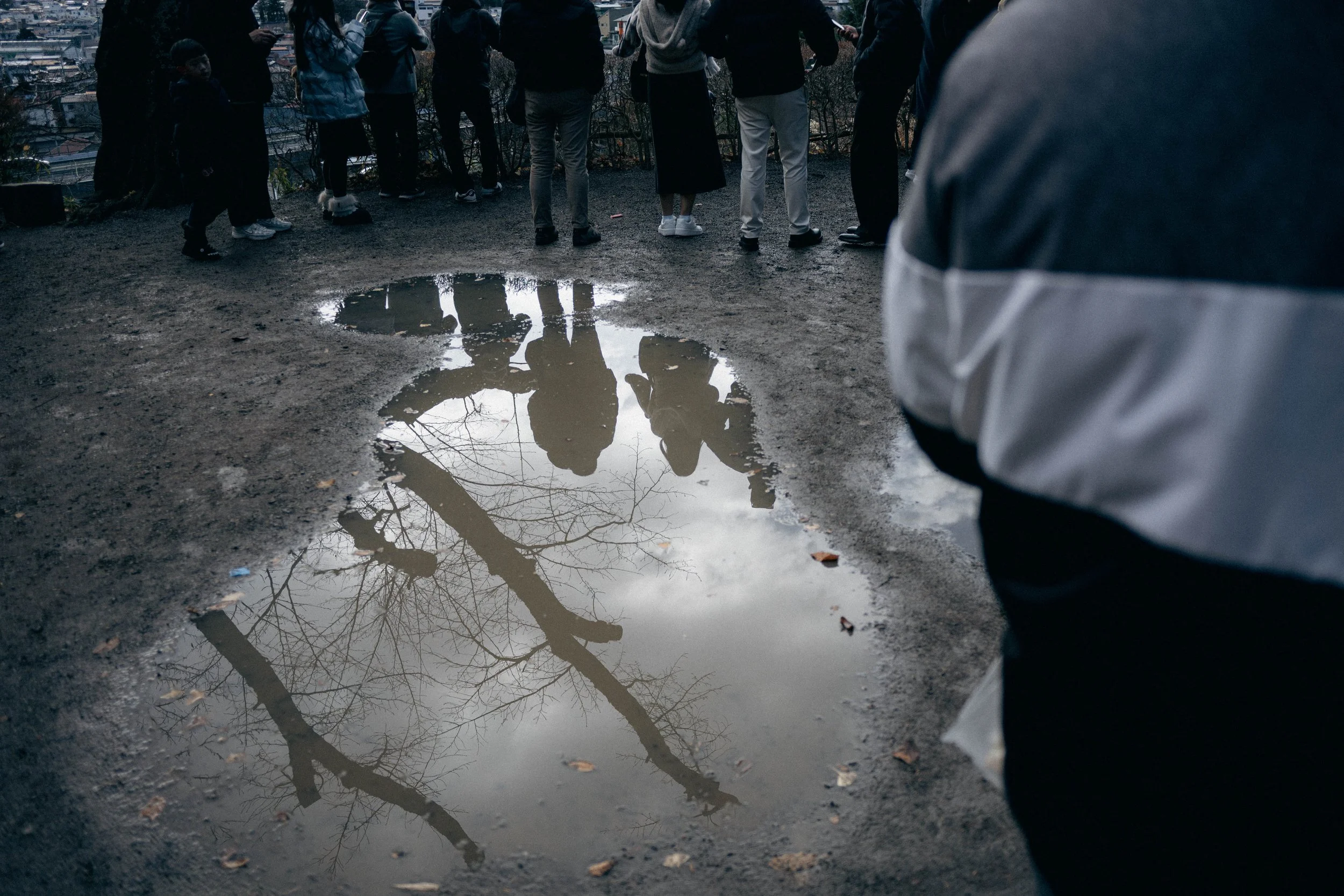
Nikon ZR + 28mm f2.8 Z
Even though this was a landscape outing?
My habits from street photography made it feel a bit less lonely.
All of this was a warmup for the grand finale:
Fuji Postcard 5: The Impossible Lake
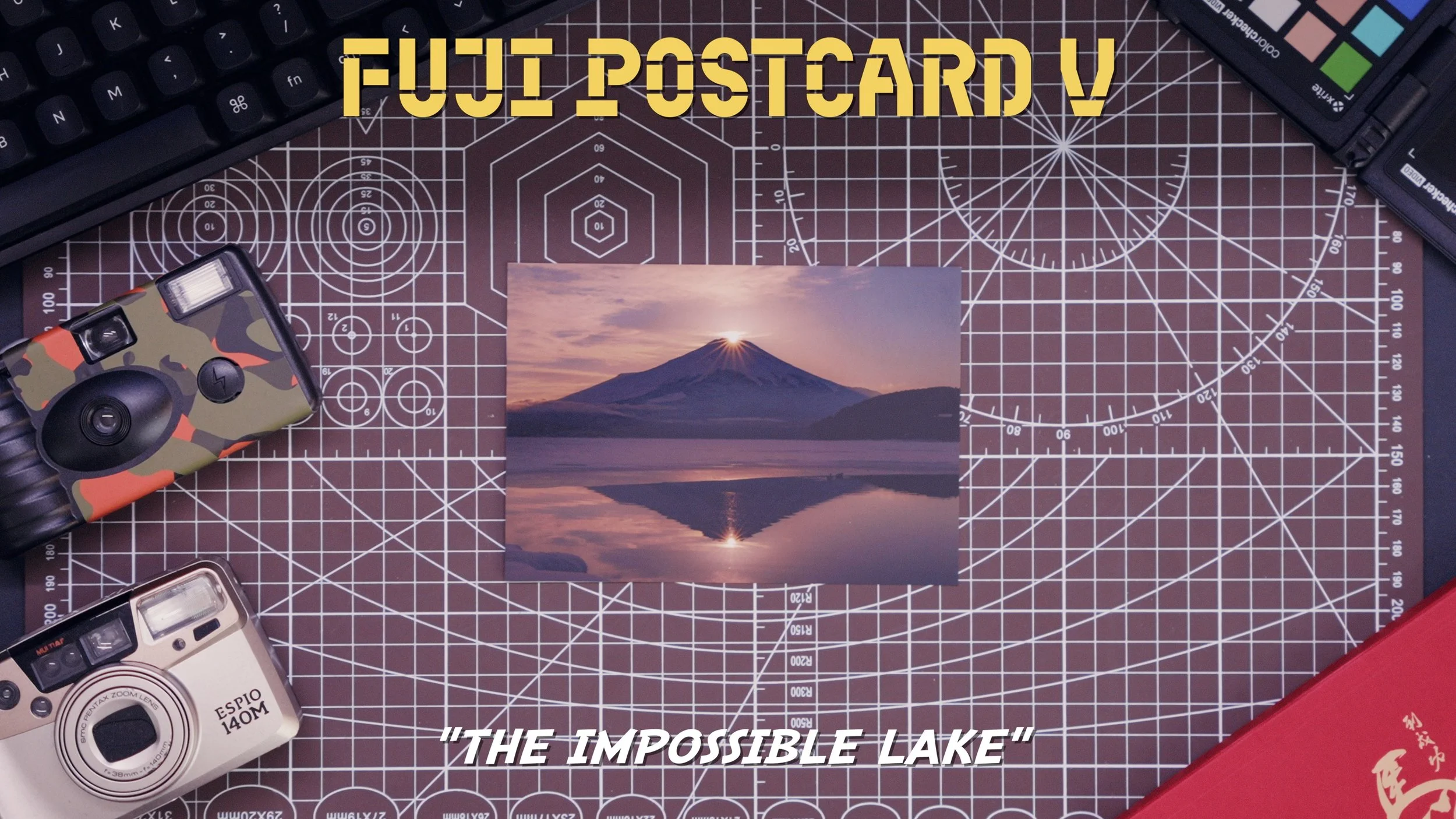
The longest shot amongst long shots, the perfect symmetry between the lake and backlit Mt Fuji.
Despite constant failures along the way, I have to admit this was much more fun than I remembered?
I used to hate that huge backpack full of gear, fussing over tripods and filters, just to wake up at the crack of dawn to spend hours alone, then hours in the edit. What’s different about it, 10 years later? It’s not the gear - although two features on the ZR and OM3 respectively saved my skin as you’ll see in a second, but expectations. I knew - no matter how bad the shots turned out, I’d be sharing them with friends I’ve met through the channel.
The connections - rather than any new gear or photography skills - are the most valuable part to me of the past 10 years.
Fresh off the descent from Chiyoda pagoda, the beautiful light we saw a minute ago turned into snow? There’s not much, it only lasted for an hour, but it cast a cloud over my chance at getting that beautiful lake postcard.
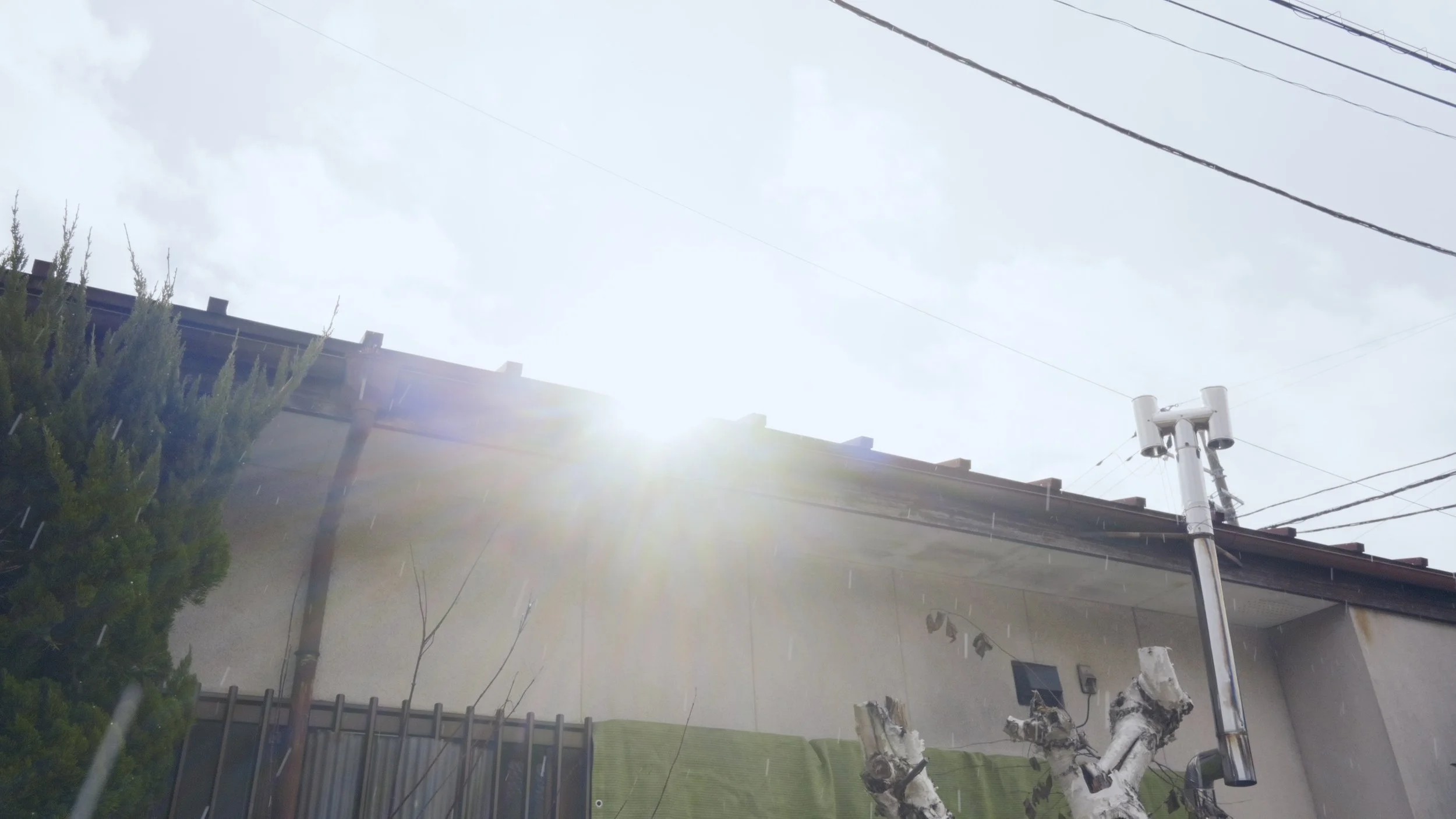
Classic Fuji weather - sun and snow at the same time
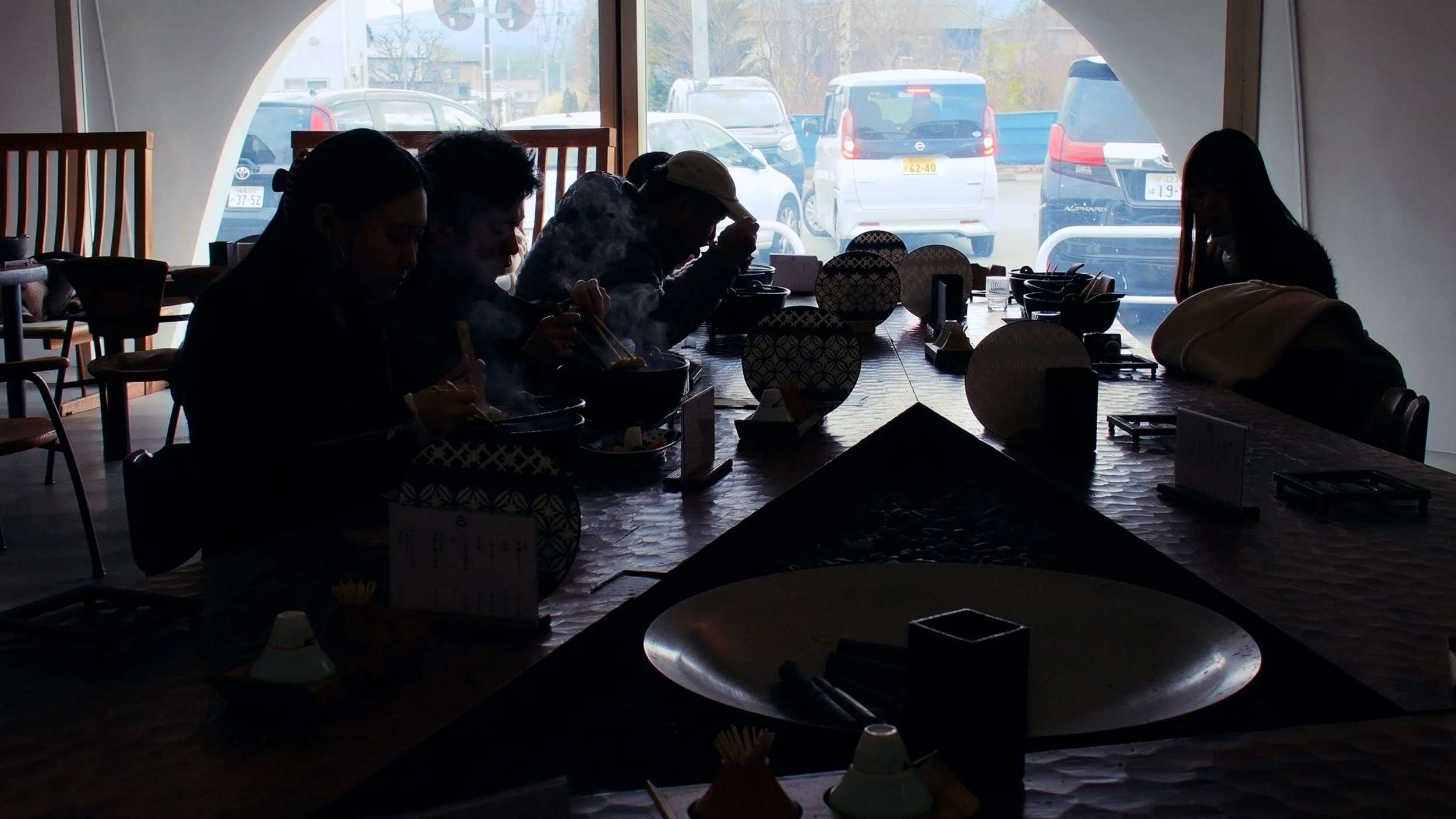
We stopped off for lunch at the famous Houtou Fudou - absolutely insane number of people in a giant igloo restaurant. The waiters were literally sprinting from table to table to cover the ground, carrying giant buckets of soup noodles sloshing around.
Then we had to go, the lake is about another 40 minute drive away. 20 minutes in though, Mt Fuji’s peak started to peek out. I actually had a legitimate shot at Fuji postcard 5, but as quickly as it came the weather could change and wipe it away.
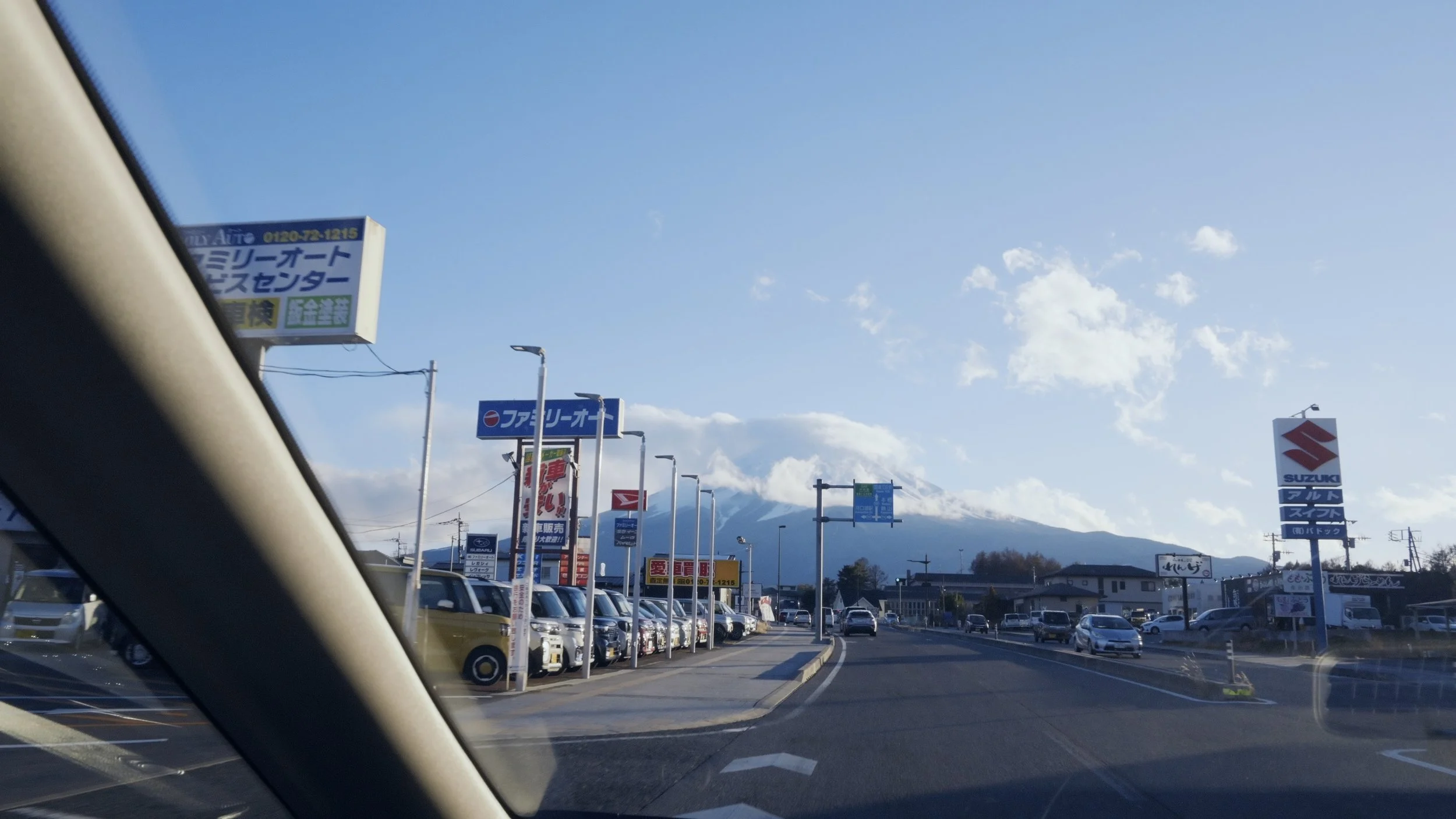
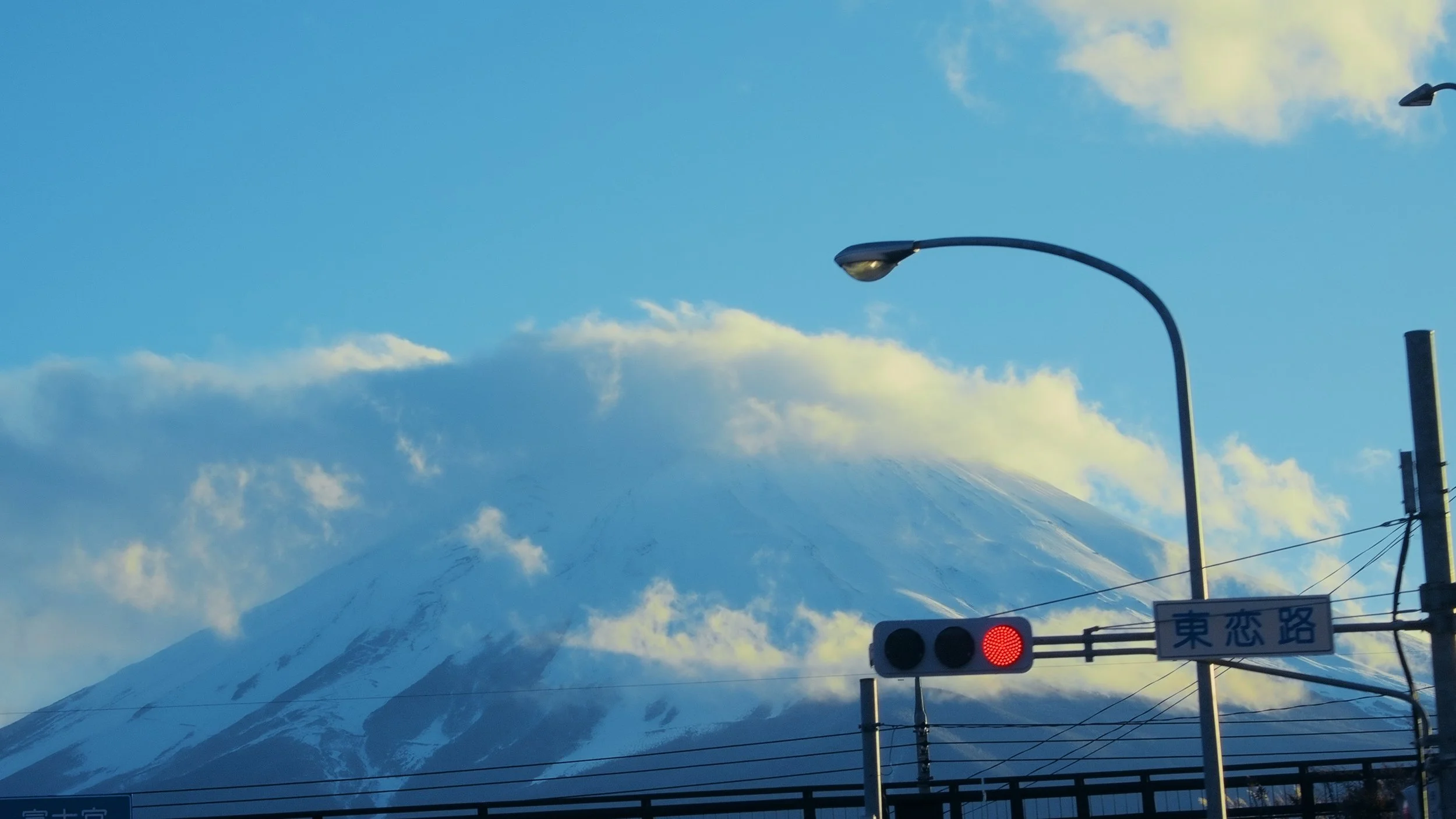
Another lesson from 10 years of street? Rather than waiting for that moment, I had to stay present in every moment, and even sitting in the car, waiting in traffic, I was firing away at the mundane.
I relied on my Nikon ZR - blackout free in H+ mode, even though I set the max number of frames to 1, I needed that clear unobstructed view to frame up each shot as the car was bumping along - at least I wasn’t driving. That along with the massive screen - is the best feature of the ZR for this type of candid, spur of the moment, half street, half landscape photography. Otherwise I never would have captured these candid urban Mt Fuji in its hometown setting.
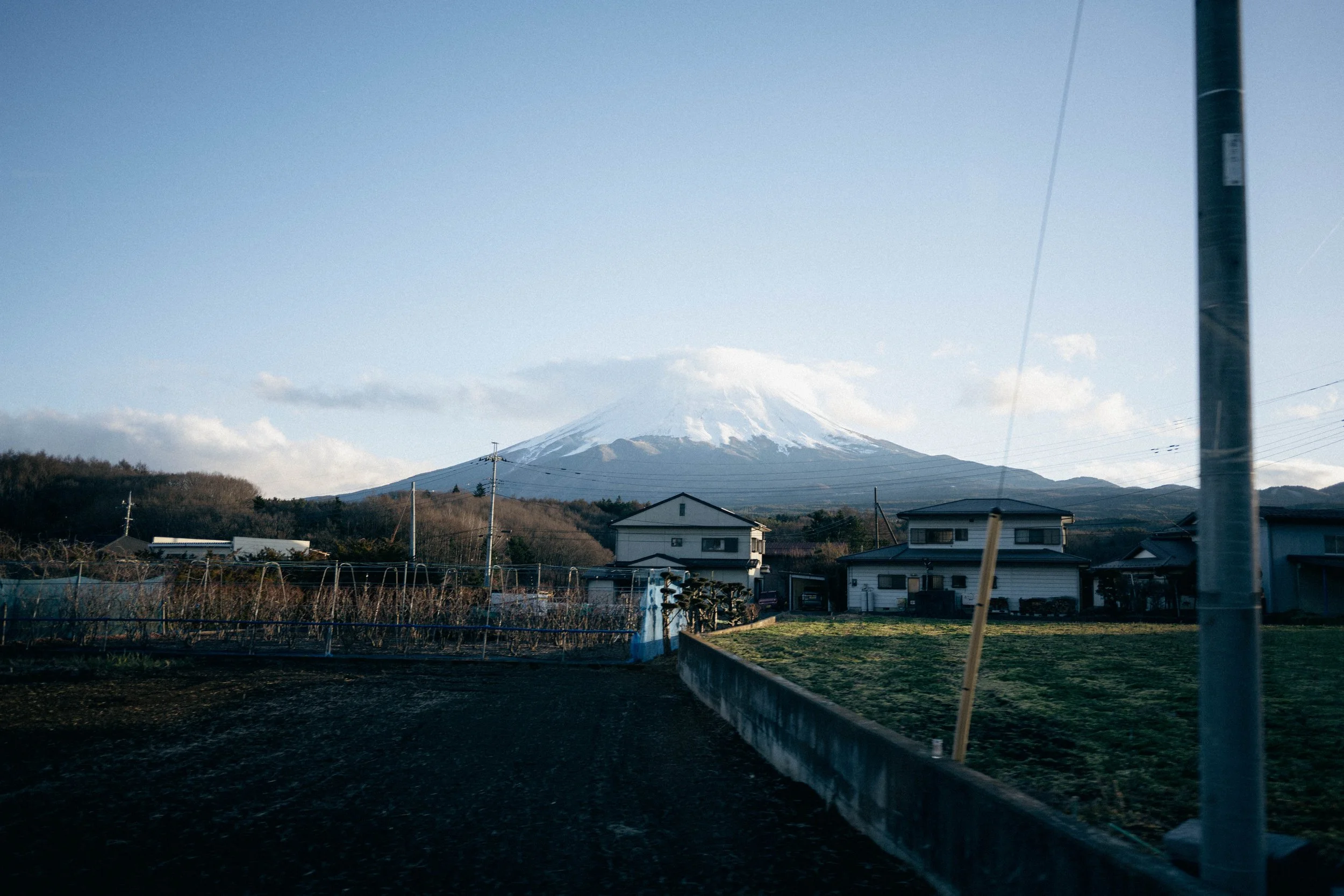
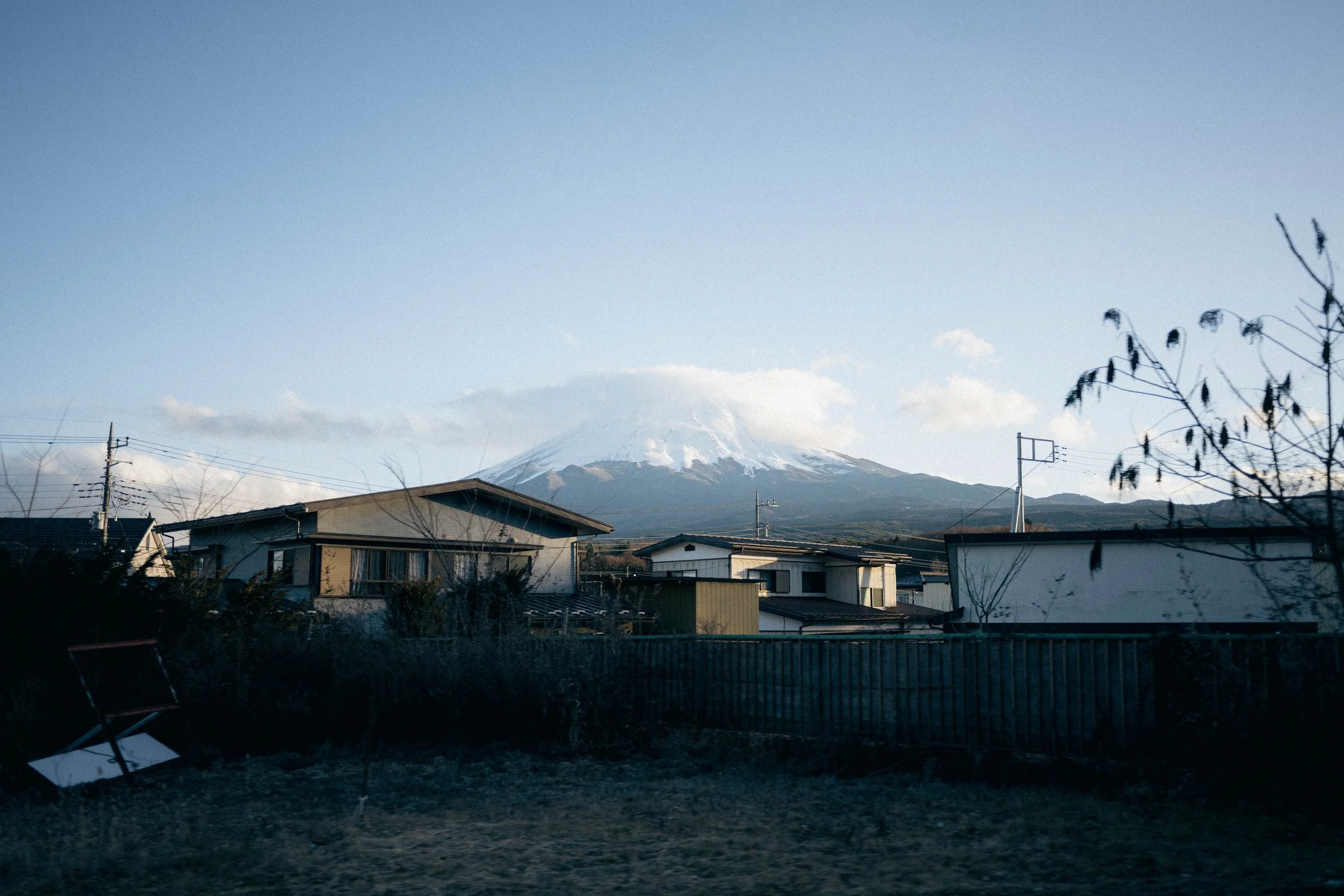
Nikon ZR + 28mm f2.8 Z
While not postcard worthy these mean a lot to me.
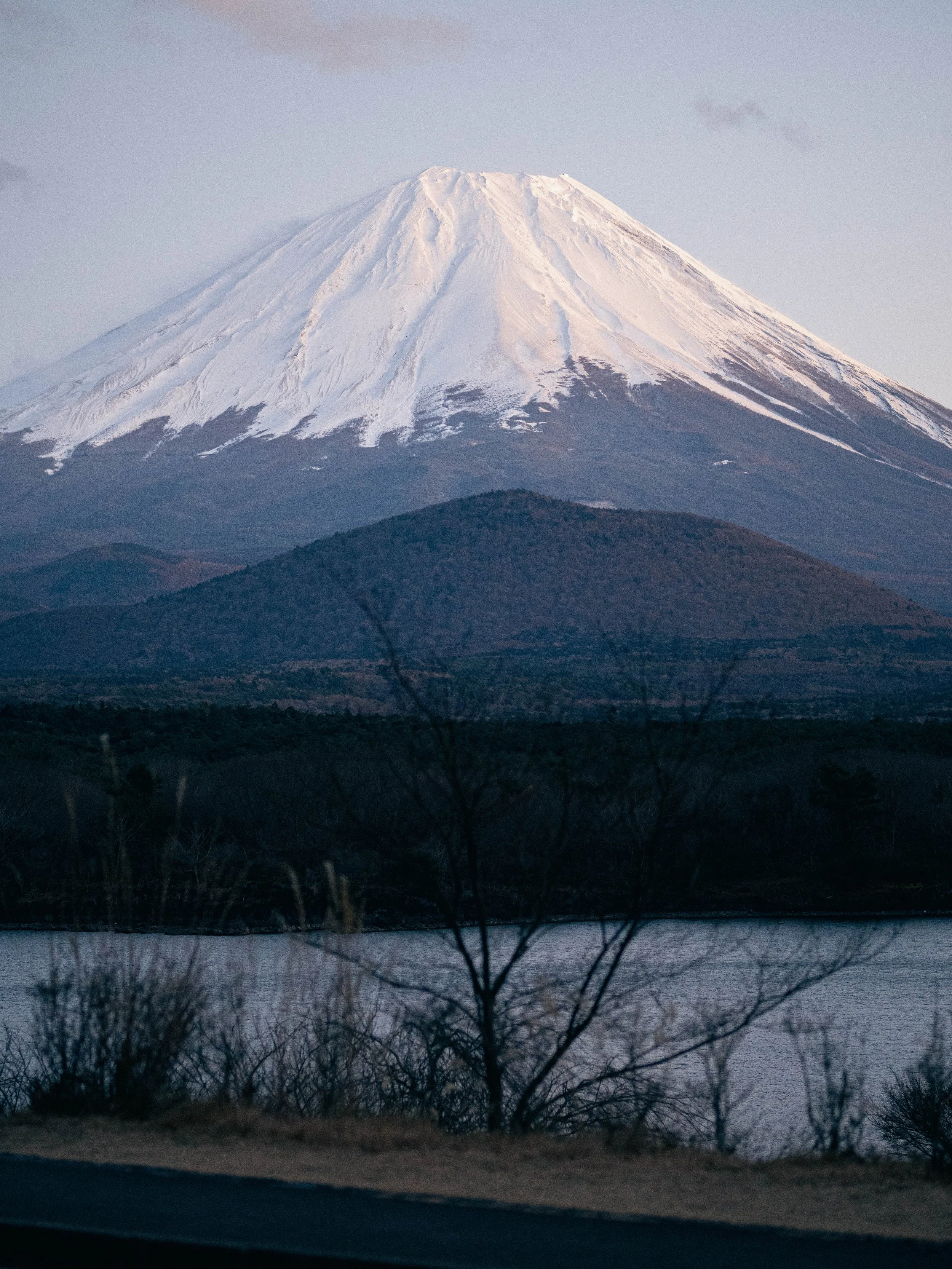
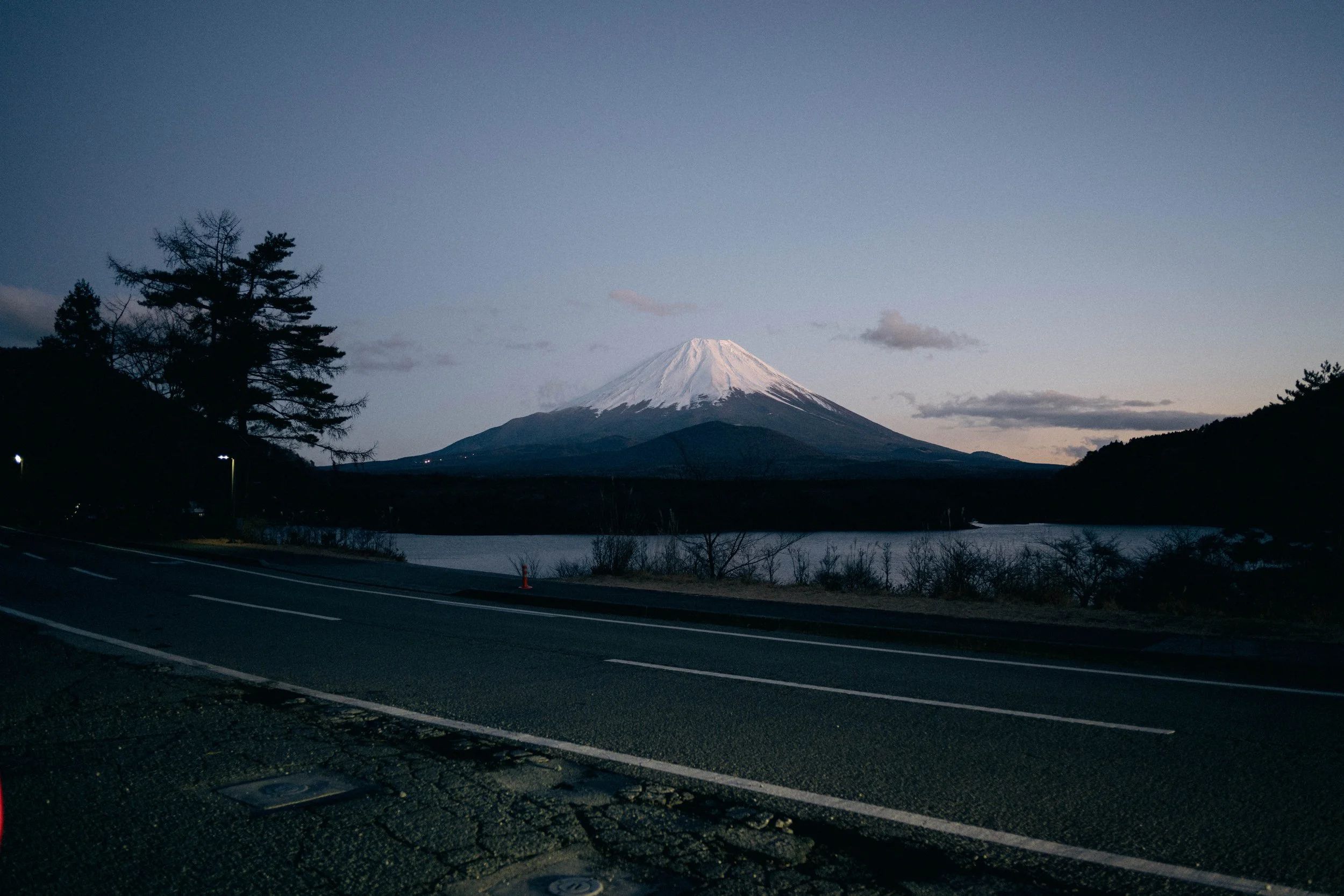
When at last, we got to the lake, even though Fuji wasn’t backlit like on the postcard, the lighting was perfect.
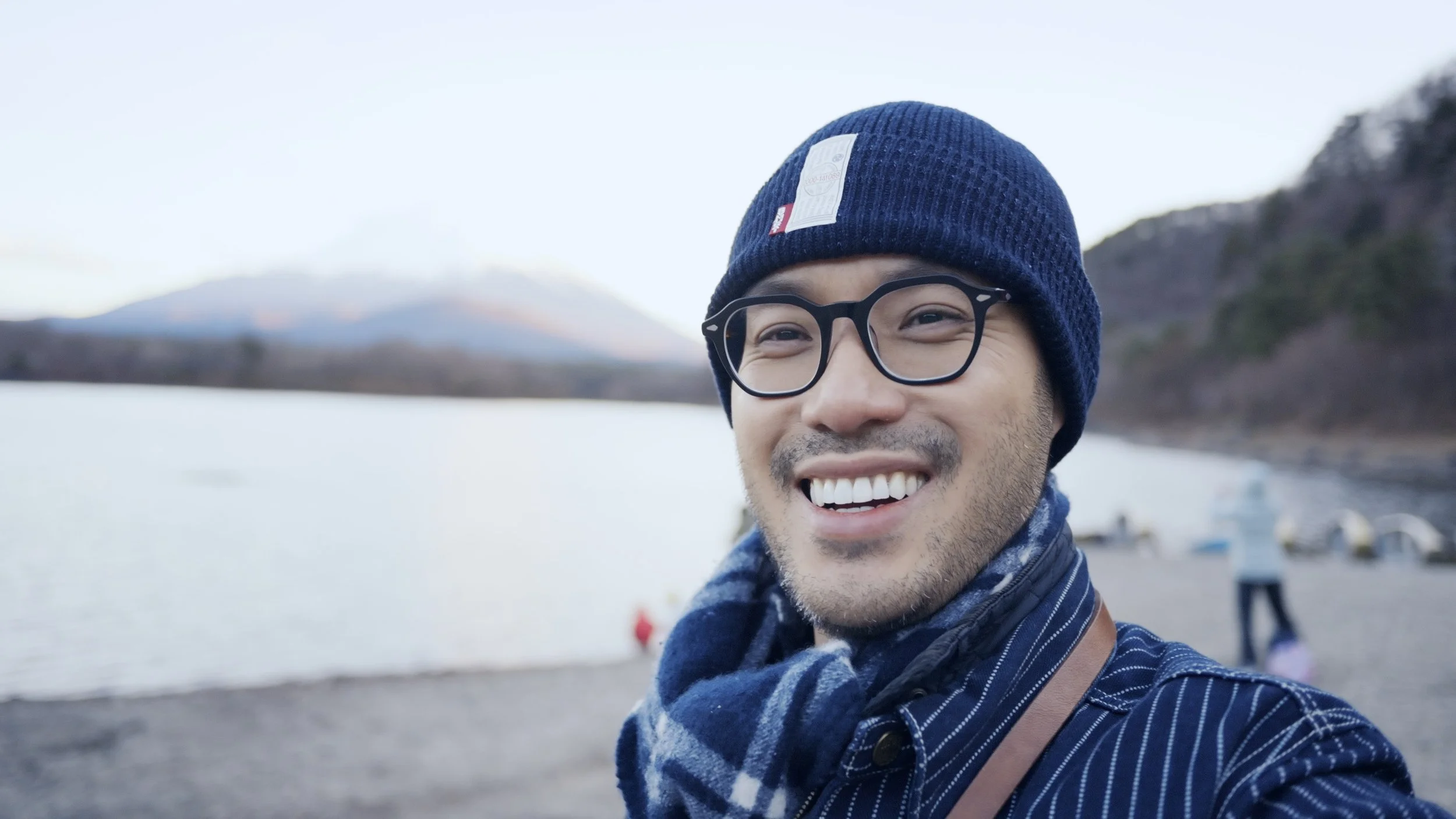
I couldn’t believe how clear Fuji looked!
I sprinted closer to the water, no tripods or filters, just the ZR and the OM3, and with the conditions being absolutely perfect I had nothing else to blame.
It was all down to me.
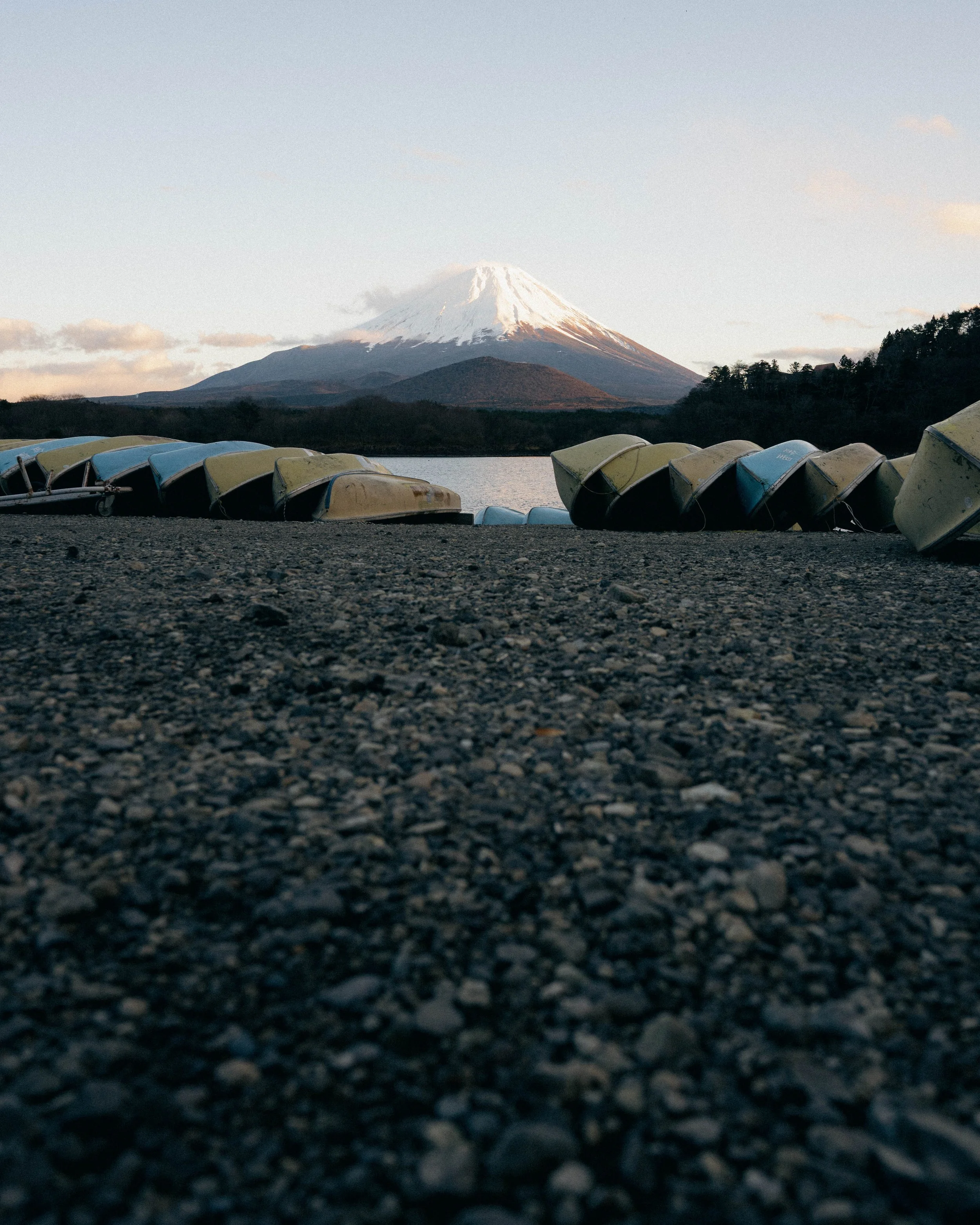
Again I tried to fill the frame - ZR and 28mm. I like the color of these boats.
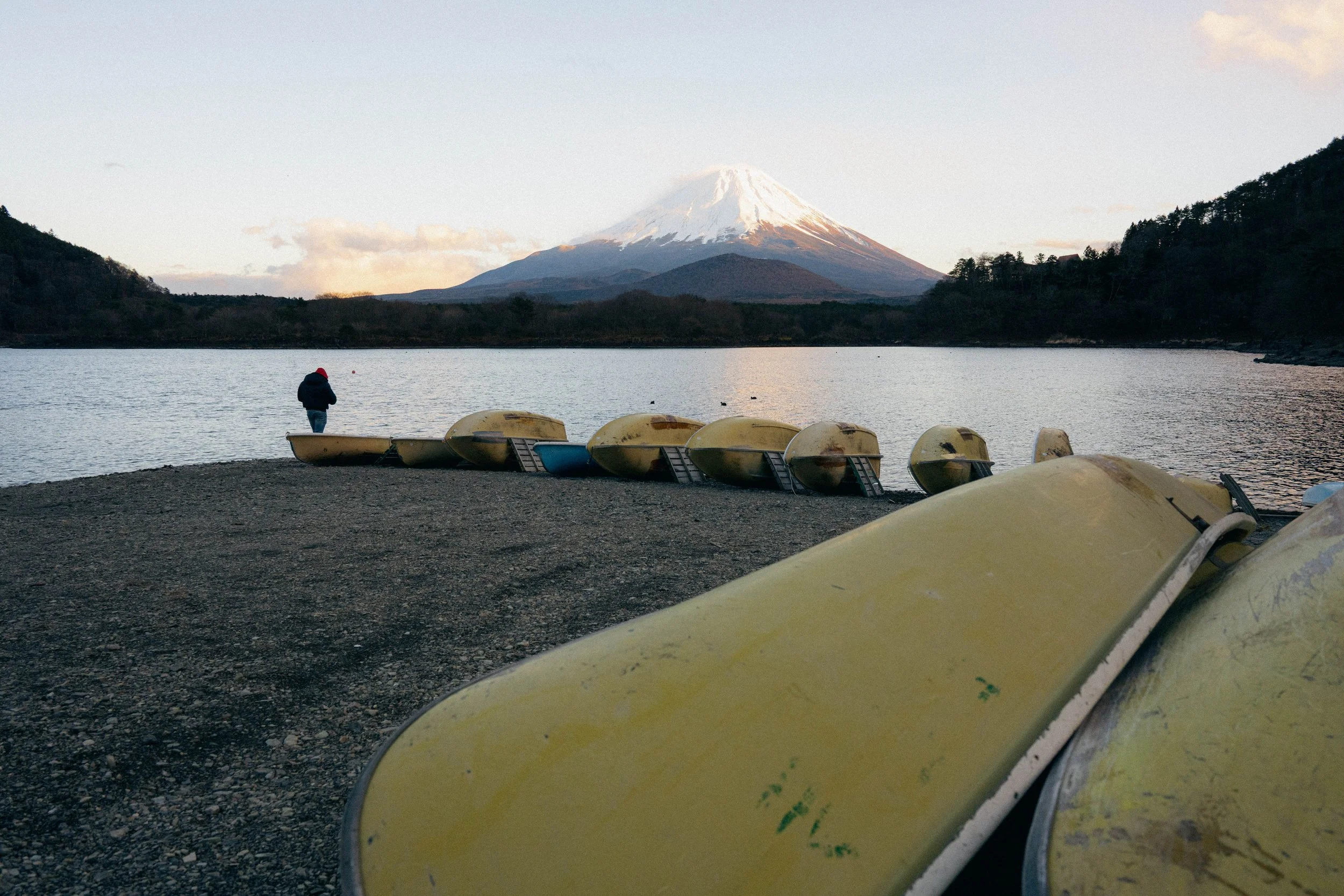
I like this guy’s red hoodie.
Even the car on the beach.
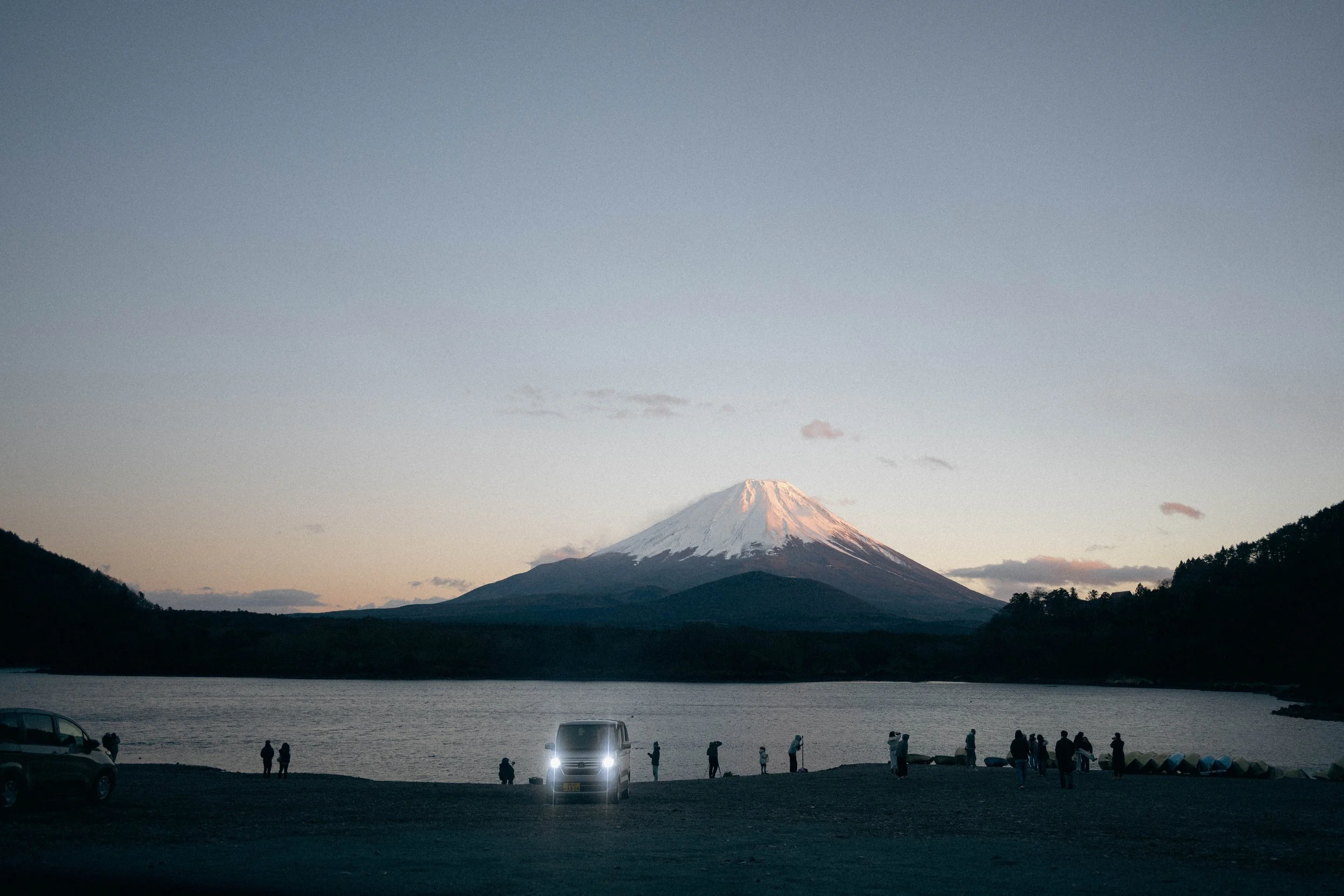
Nikon ZR + 28mm f2.8 Z
I got distracted by my street photography leanings.
But this shot - the money shot, would have to be pure, minimal, landscape photography.
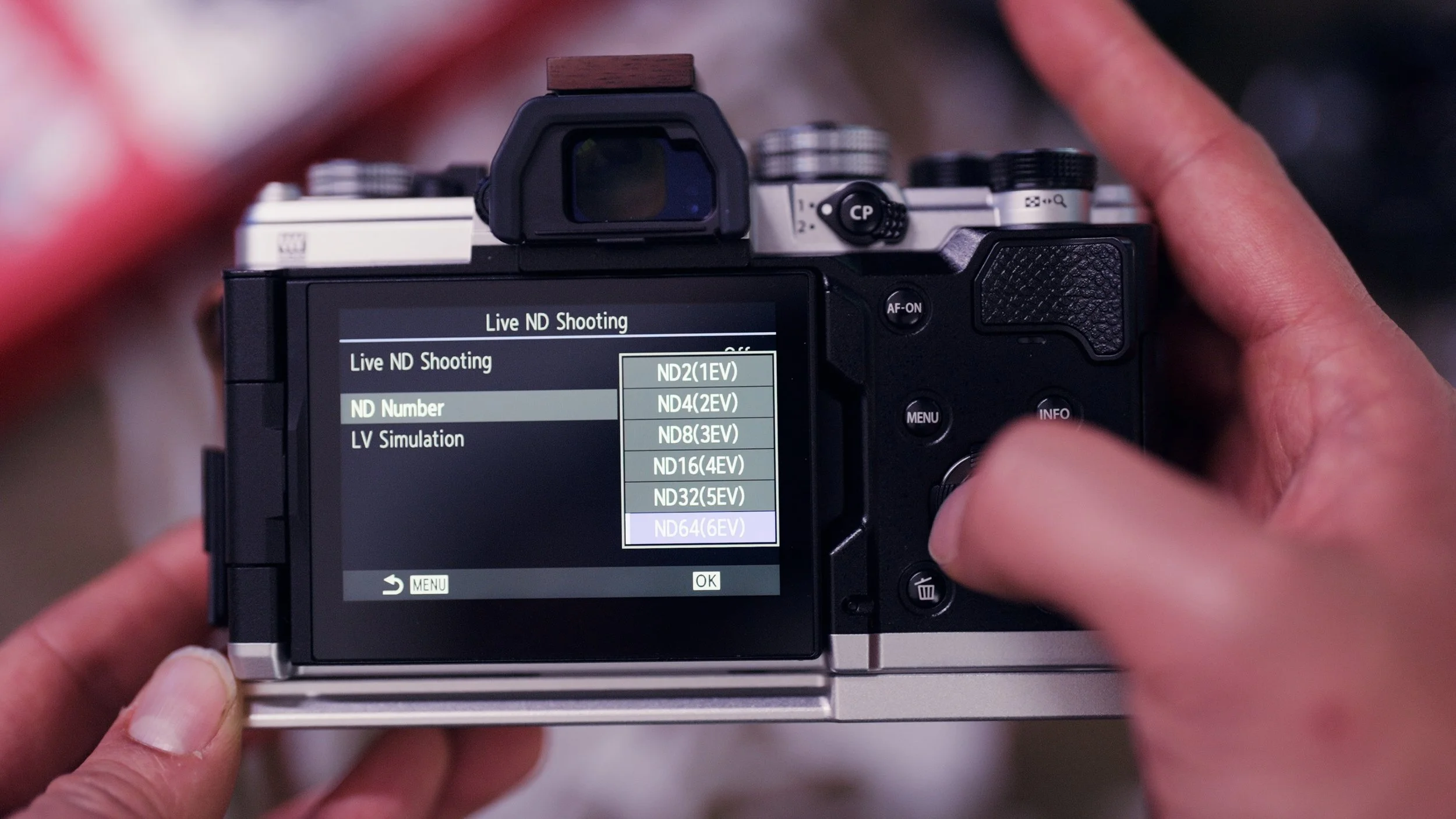
I practiced this shot a thousand times on the street - the OM3 and its live ND, I knew I could hand hold up to 1 second long exposures coupled with the OM3’s electronic ND filter at the maximum setting - ND64. I needed Fuji sharp, the water a little misty, I tried and failed a few times before testing different compositions. No tripods, no physical filters, just this tiny camera and lens setup handheld, as the wind chill felt like little knives on my fingers.
I’ve never worked so hard for a single image - but habits built from 10 years of street forced me to stay in that moment.
It changed how I saw Mt Fuji.
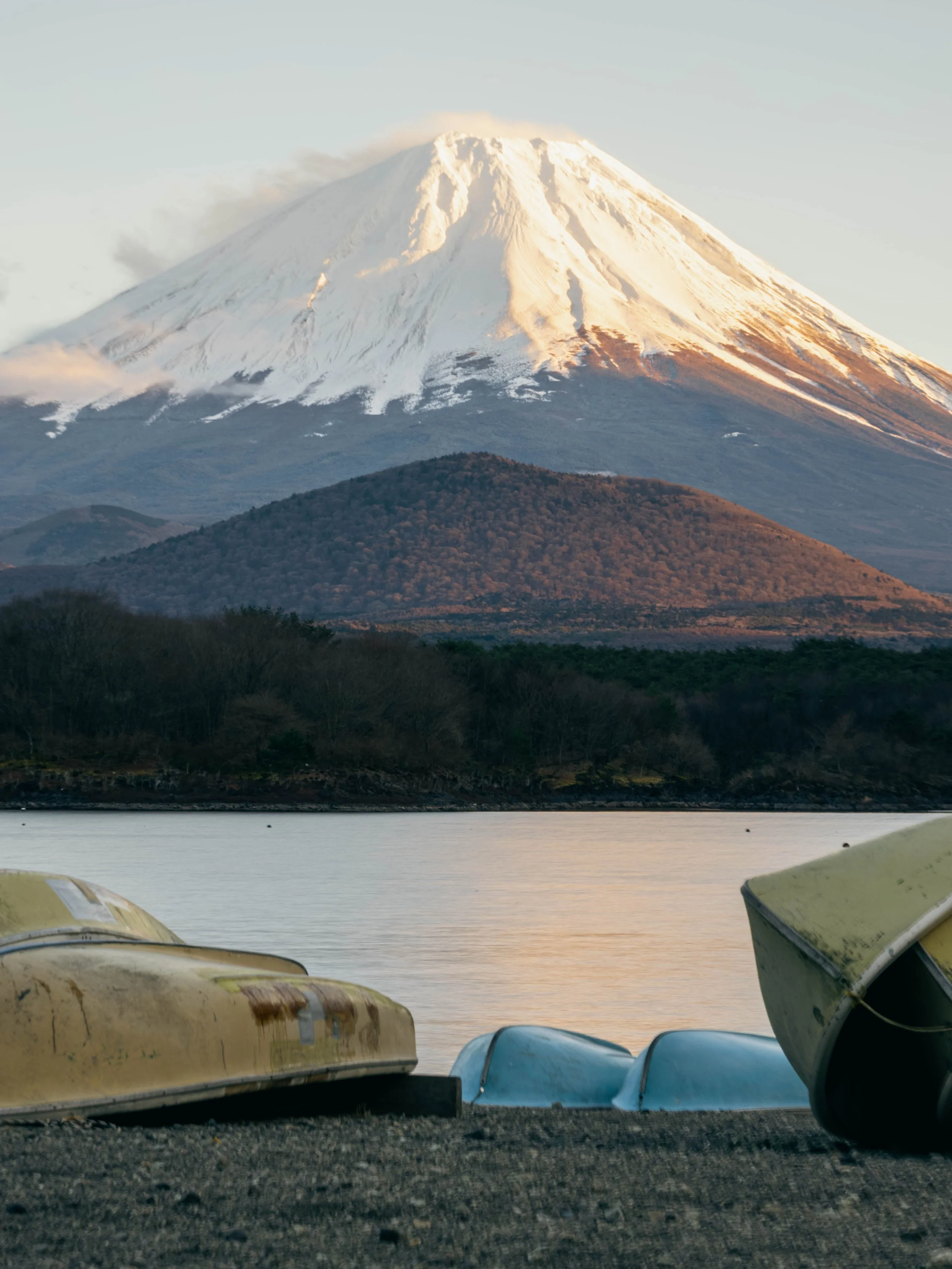
Because of the connections I’ve formed through this blog and the channel?
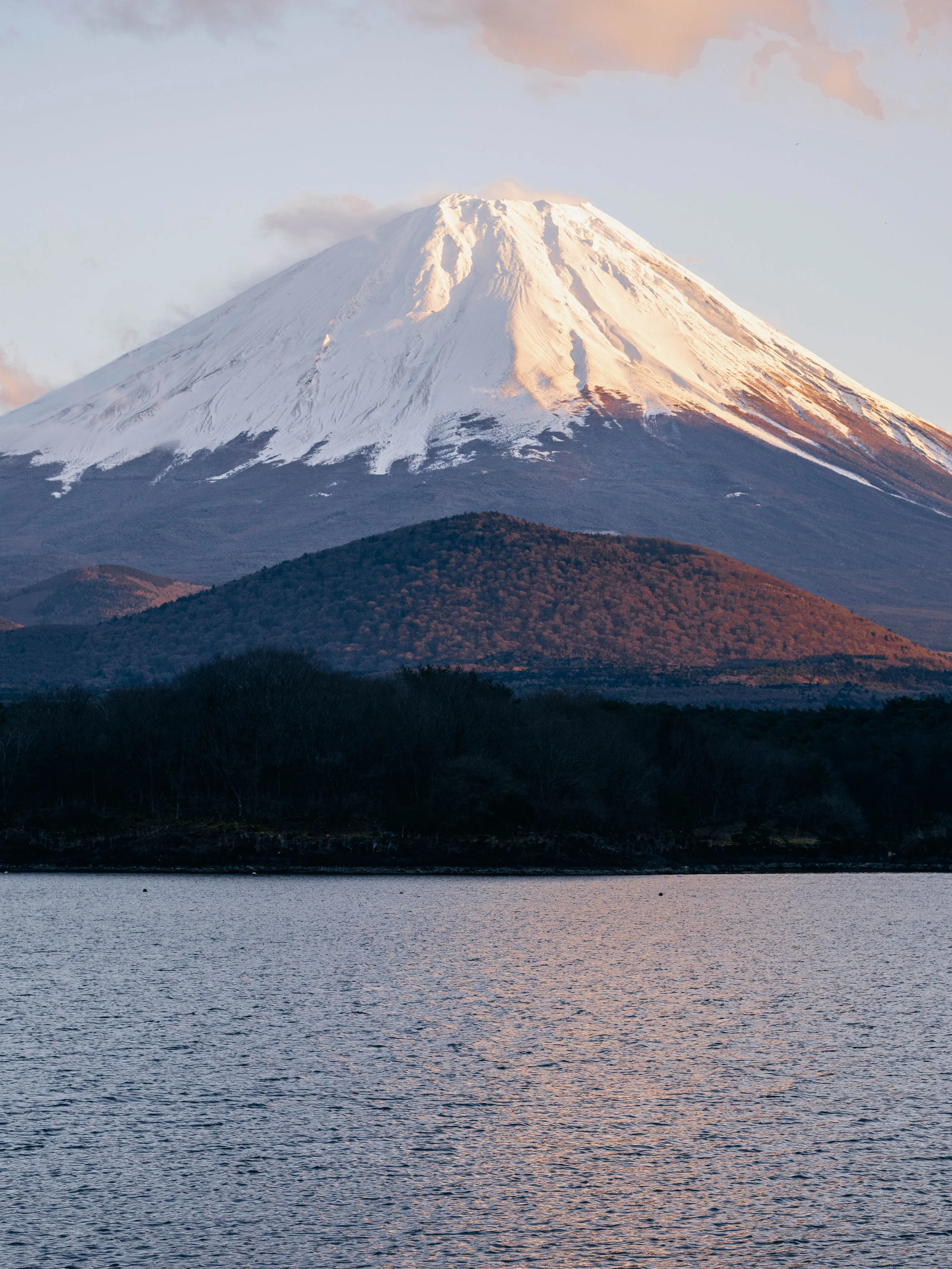
It felt anything but lonely.
Happy shooting everyone, talk soon.
Jack.
All the sample images in this blog post were edited from RAW files using my free Chrome emulation preset. They work with most RAW files from different cameras as long as you use “Adobe Color” as the starting base.
Download it for free here.
If you’d like to support my work please consider purchasing gear through my affiliate links:
Nikon ZR: https://geni.us/KH4uMvX
Nikon ZR wooden grip: https://geni.us/C6foew
Nikon 28mm f2.8 Z: https://geni.us/tyZX2A
OM 20mm f1.4 Pro: https://geni.us/Tn8DD
Sigma 56mm f1.4: https://geni.us/DxBWLA
Wotancraft leather pilot slings: https://geni.us/m210n
Wotancraft leather pouches: https://geni.us/vzyZHq
Peak design leash: https://geni.us/TgJKVnu